
Hi,
my photovoltaic system planning is likely going to end up at around 38 kWp (kilowatt-peak). The pitched roof will be fully covered on the south and north sides.
My main concern is that I was told (in the relevant forum) that the inverters get quite warm and that I shouldn’t install them in the utility room. We don’t have a basement, and our utility room is about 8.3 m² (90 sq ft). It will be a KfW 40 energy-efficient house. The garage is on the opposite side of the property and is planned to be built later, not directly connected to the house. A carport is planned directly adjacent to the utility room. Currently, I would probably try to install the inverters there. We will have two inverters because of the system size and string configuration. However, our house manufacturer uses a very light plaster, and the inverters are too heavy to mount directly on it. So I would need to mention this during the final selections and have wooden beams installed under the plaster, which would be expensive. Alternatively, I could somehow mount them on the carport itself, but I don’t want to significantly reduce the driveway width since it’s already quite narrow. I could also take the risk and install the inverters in the utility room after all. However, I have heard of cases where temperatures of 40°C (104°F) were reached there. Some people use fans to get rid of the heat. In our KfW 40 house, that probably wouldn’t even be allowed.
I can hardly find any information about this online. Some people report no problems even with 2 m² (22 sq ft) utility rooms; others have temperatures around 30°C (86°F). There is never information about the type of houses, and some posts are up to 10 years old. We are building a 103 m² (1,109 sq ft) bungalow for two people, with an Alpha Innotec Hybrox 5 (70 m² to 150 m²) air-to-water heat pump and a decentralized ventilation system.
Has anyone here had experience with inverter heat? How would you approach this issue? The battery storage obviously has to go in the utility room; it can’t be installed elsewhere.
my photovoltaic system planning is likely going to end up at around 38 kWp (kilowatt-peak). The pitched roof will be fully covered on the south and north sides.
My main concern is that I was told (in the relevant forum) that the inverters get quite warm and that I shouldn’t install them in the utility room. We don’t have a basement, and our utility room is about 8.3 m² (90 sq ft). It will be a KfW 40 energy-efficient house. The garage is on the opposite side of the property and is planned to be built later, not directly connected to the house. A carport is planned directly adjacent to the utility room. Currently, I would probably try to install the inverters there. We will have two inverters because of the system size and string configuration. However, our house manufacturer uses a very light plaster, and the inverters are too heavy to mount directly on it. So I would need to mention this during the final selections and have wooden beams installed under the plaster, which would be expensive. Alternatively, I could somehow mount them on the carport itself, but I don’t want to significantly reduce the driveway width since it’s already quite narrow. I could also take the risk and install the inverters in the utility room after all. However, I have heard of cases where temperatures of 40°C (104°F) were reached there. Some people use fans to get rid of the heat. In our KfW 40 house, that probably wouldn’t even be allowed.
I can hardly find any information about this online. Some people report no problems even with 2 m² (22 sq ft) utility rooms; others have temperatures around 30°C (86°F). There is never information about the type of houses, and some posts are up to 10 years old. We are building a 103 m² (1,109 sq ft) bungalow for two people, with an Alpha Innotec Hybrox 5 (70 m² to 150 m²) air-to-water heat pump and a decentralized ventilation system.
Has anyone here had experience with inverter heat? How would you approach this issue? The battery storage obviously has to go in the utility room; it can’t be installed elsewhere.
Bierwächter schrieb:
Here is a small picture because it looks so delicious.
The roof will be dark gray/black. Completely black Aiko Neostar 3s+ panels are planned.
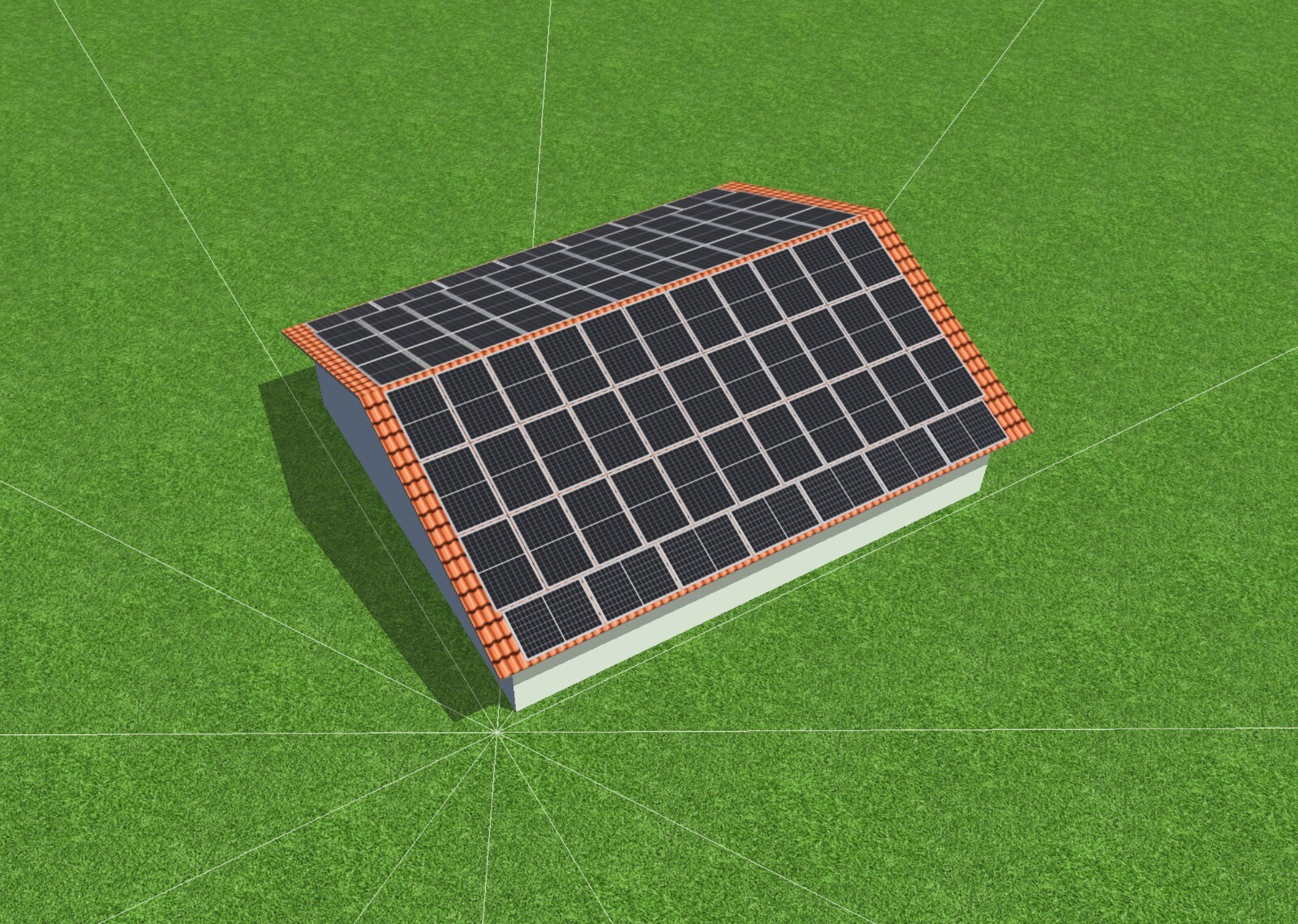
Personally, I find it very disturbing when photovoltaic modules are not arranged evenly. I would carefully consider the horizontal bottom row and make sure it does not affect the appearance, meaning no visible transitions.
W
wiltshire9 Jun 2025 14:32Bauer123 schrieb:
Personally, I find it very disturbing when photovoltaic panels are not arranged evenly.I agree, but with photovoltaics, economic viability usually takes precedence over aesthetics. This is often reflected in the finishing of the substructure, the workmanship on the roof, and the "somewhat fitting" arrangement of the panels. I can understand that, although I chose a different approach.B
Bierwächter9 Jun 2025 23:03Actually, I wanted to squeeze that row in there as well because I probably find it more appealing if the entire roof is covered with panels and no part of the roof is left bare.
B
Bierwächter28 Jan 2026 03:34Here are some pictures and updates on how the system has turned out so far.
I’m very glad I added the cross row; I really like how it looks, and the bird protection requires somewhat less attractive brackets on the short module side, which aren’t visible with cross installation at the bottom.
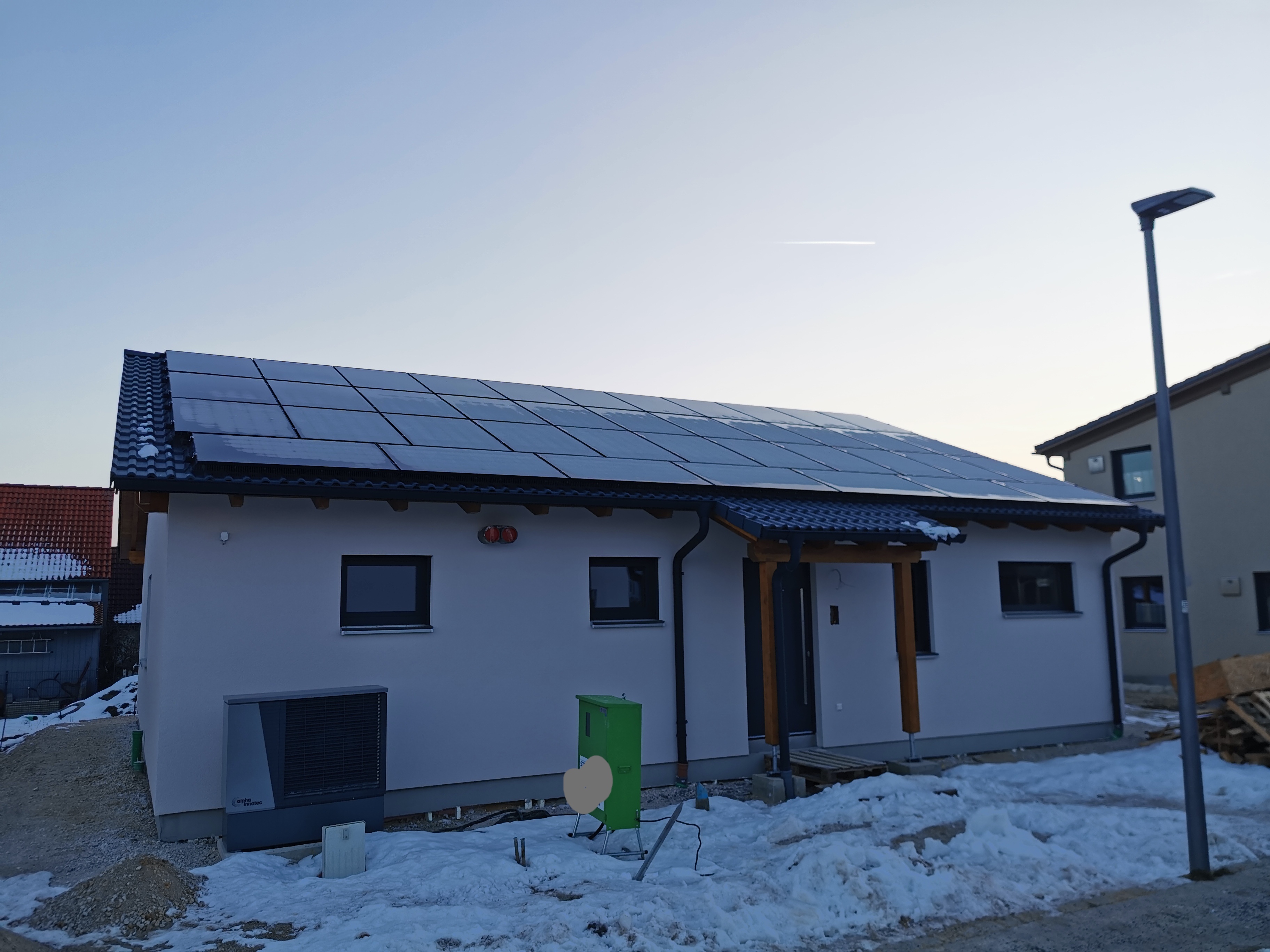
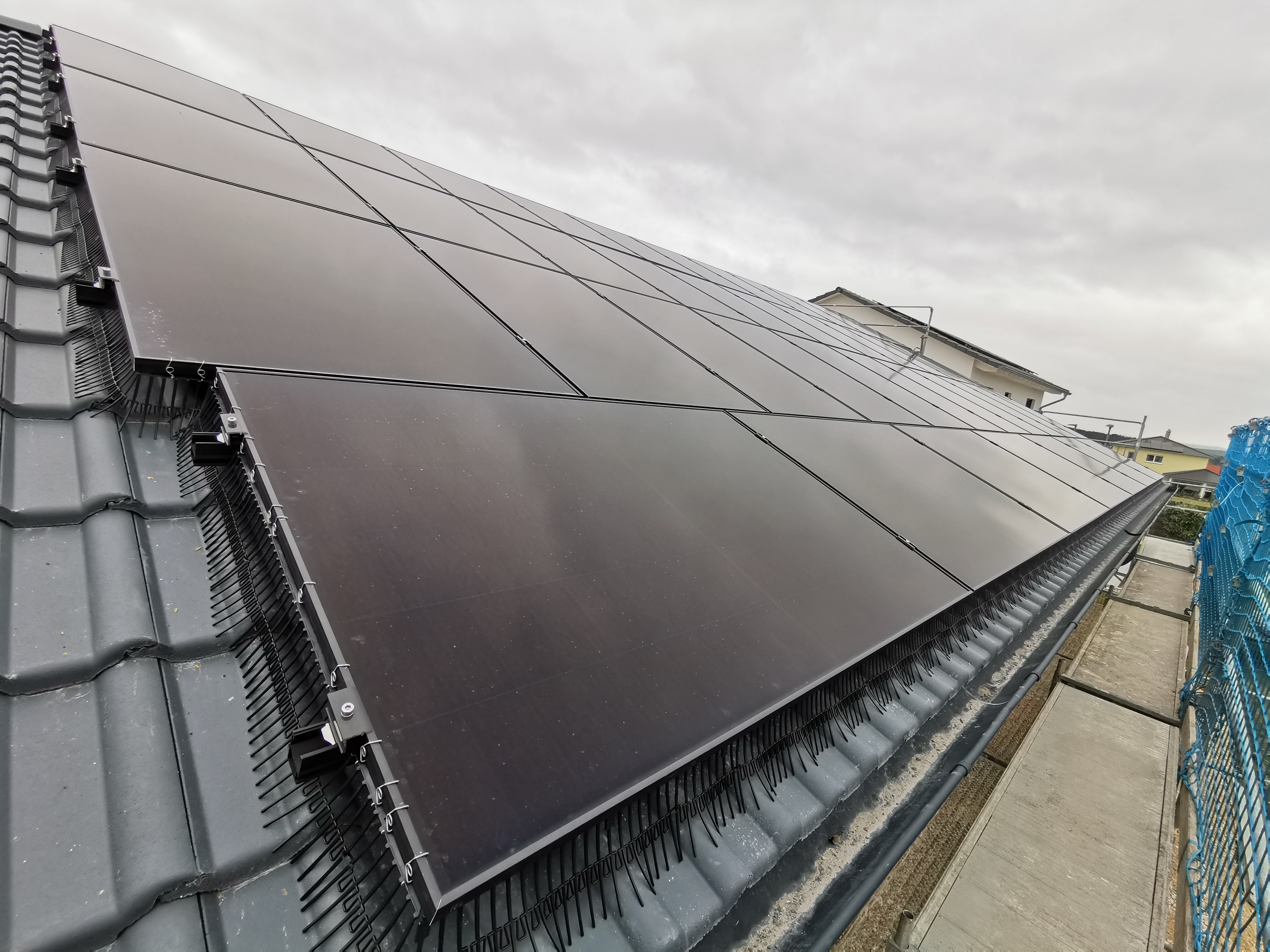
(The last three panels in the left corner are still missing in the third picture.)
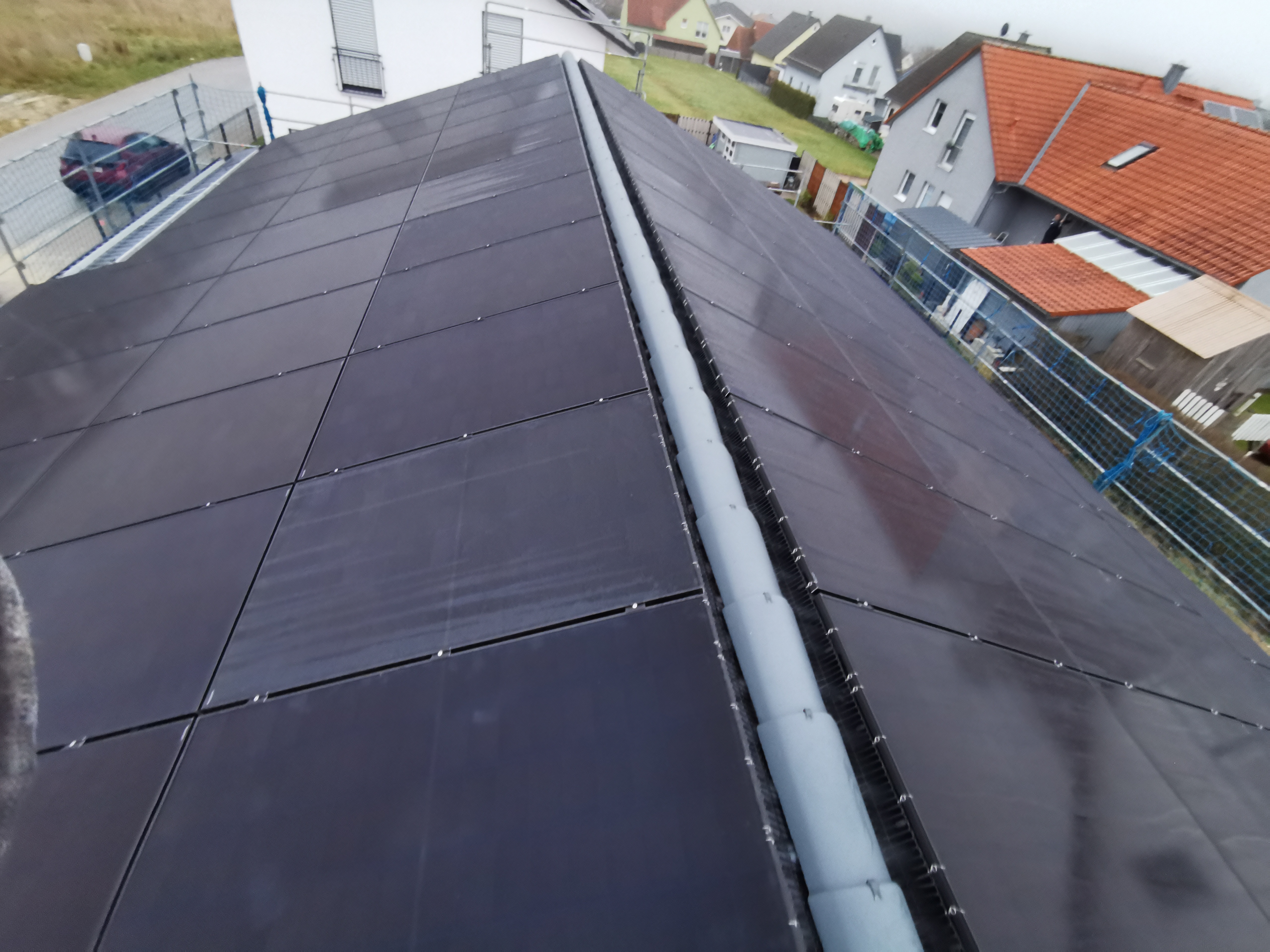
In the end, the Neostar 2s+ modules were used instead of the Neostar 3s+ because they were significantly cheaper and there is no visible difference in appearance.
I’m not quite sure about the total cost right now... I think it’s a bit over the estimated 20,000 euros. I underestimated the substructure, and the bird protection already costs 600 euros.
The system is now 36.8 kWp. It will be registered jointly in my wife’s and my name, and apart from a bit of administrative work, it’s the same as a smaller installation.
I will still place the inverters in the utility room for now because my electrician recommended it, and installing them outdoors would currently be quite complicated. I’m still thinking about the exact spot for them in the utility room. I just have to hope it doesn’t get too warm in there. Installing them on the roof and cutting the tiles was definitely tough and took a lot longer than expected.
I’m very glad I added the cross row; I really like how it looks, and the bird protection requires somewhat less attractive brackets on the short module side, which aren’t visible with cross installation at the bottom.
(The last three panels in the left corner are still missing in the third picture.)
In the end, the Neostar 2s+ modules were used instead of the Neostar 3s+ because they were significantly cheaper and there is no visible difference in appearance.
I’m not quite sure about the total cost right now... I think it’s a bit over the estimated 20,000 euros. I underestimated the substructure, and the bird protection already costs 600 euros.
The system is now 36.8 kWp. It will be registered jointly in my wife’s and my name, and apart from a bit of administrative work, it’s the same as a smaller installation.
I will still place the inverters in the utility room for now because my electrician recommended it, and installing them outdoors would currently be quite complicated. I’m still thinking about the exact spot for them in the utility room. I just have to hope it doesn’t get too warm in there. Installing them on the roof and cutting the tiles was definitely tough and took a lot longer than expected.
Similar topics