
Hello everyone, I have previously raised the topic of a partial basement/cellar for a building plot with a 19% slope.
Today, a homebuilder told us that, partly due to the high cost of building materials, it would now be more cost-effective to backfill the slope and then build the house on a slab foundation. This doesn’t quite make sense to me, since the backfill material must be supported somehow, for example, by a concrete wall. The sales representative said no, that the stabilized backfill is simply allowed to slope gradually and then planted, creating a new artificial slope.
What does the expert community in this forum think about this?
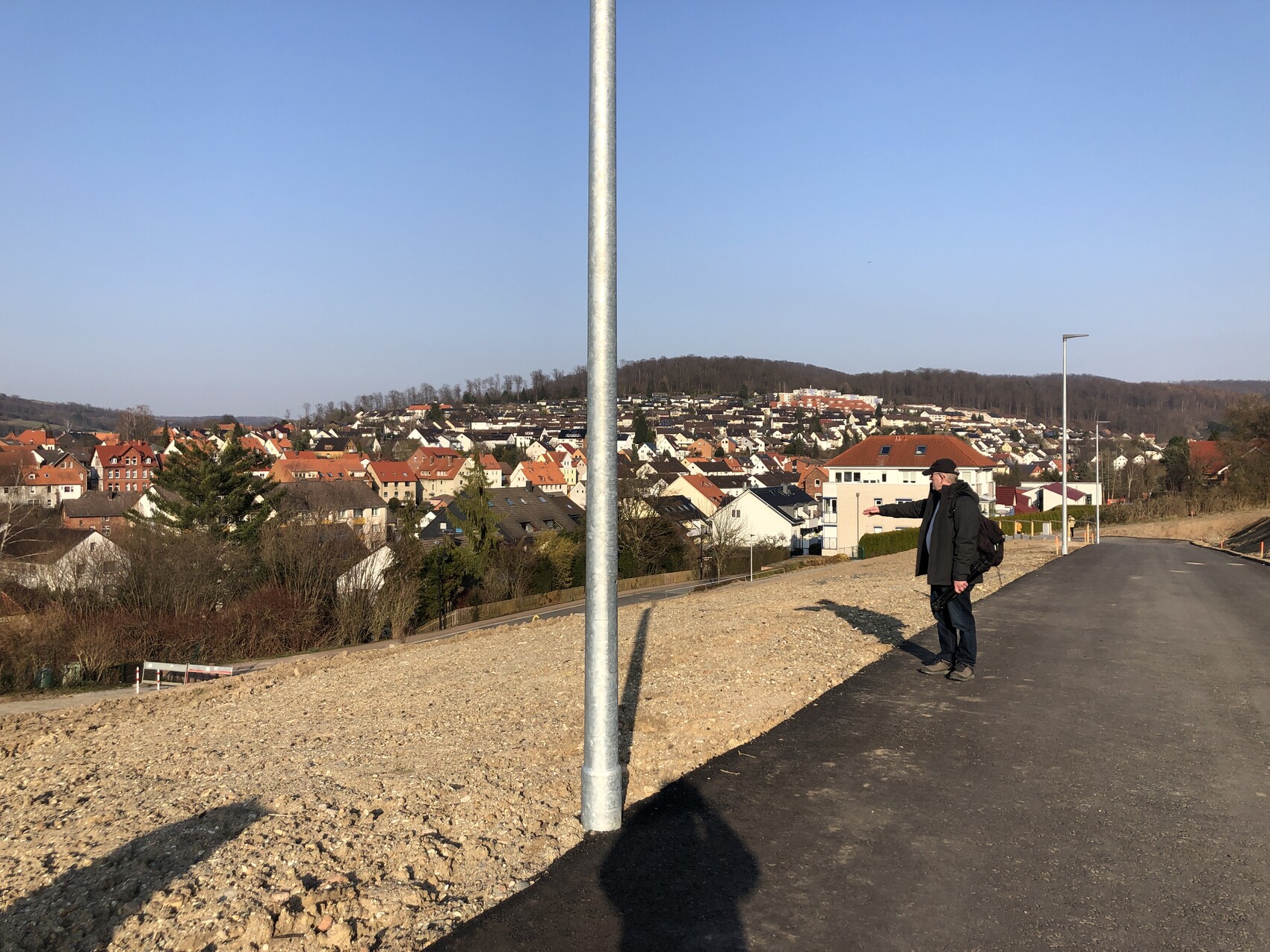
Today, a homebuilder told us that, partly due to the high cost of building materials, it would now be more cost-effective to backfill the slope and then build the house on a slab foundation. This doesn’t quite make sense to me, since the backfill material must be supported somehow, for example, by a concrete wall. The sales representative said no, that the stabilized backfill is simply allowed to slope gradually and then planted, creating a new artificial slope.
What does the expert community in this forum think about this?
S
sergutsch26 Apr 2022 23:18driver55 schrieb:
I wanted to see the plans (natural terrain/planned terrain), not photos from 500 m (550 yards) away.No offense, I am definitely confident in assessing our project myself and considering it good 8-) askforafriend27 Apr 2022 06:20
sergutsch schrieb:
The 90k for a basement is unfortunately the reality, although this figure is from 2020. Back then, a well-known prefab house manufacturer quoted that amount for an 8x9 m (26x30 feet) basement. Sorry, but you can’t really know that. Only when you have several quotes from different basement or shell construction companies on the table do you know what it actually costs. If a company that subcontracts the basement to someone else—and really has no interest in this business—charges a surcharge, what do you think they’ll ask for it?
The important thing with a hillside property is that you, together with a competent planner, MAKE thoughtful decisions *beforehand* about how the entire project should look in the end. Where are the walking paths? How do I get from one place to another? What do I plan where, and why? Only then do you get an idea of usability. That includes elevations. You can’t just have a 30% slope property, run to a prefab house provider, and start building. They don’t care. In the end, you get what sergutsch posted—a new flat surface that results in an even steeper slope. Put the prefab house on it and that’s it. Then you start wondering the first time you step out your door to that “flat area”: oh—how do I get down from here? Well, just slide around a bit on the bark mulch.
I’m really persistent here because you have to be able to compare everything fairly. That’s the only way to help the original poster. And you only get a fair comparison if you first *actually* plan a sensible house there—which, to me, it’s not if you just level the 30% slope by adding fill and then, I have to quote loosely, just “throw down bark mulch.” And preferably without a soil investigation, because “it’s going to be filled anyway.” You wouldn’t believe what some prefab salespeople tell you. The house is supposed to stand for generations, not disappear after 20 years. But hey, it’s not my house.
This is not about opinions, but about meaningful comparisons—and that includes the points I mentioned.
@HalloClarissa Please educate yourself more thoroughly on the topic before believing anything salespeople tell you. A 19% slope is not “simple”!!!
 HalloClarissa27 Apr 2022 08:37
So, everyone, I’m chiming in again. When it comes to basements, the same arguments often come up – “more living space,” which we actually don’t need. For us, a price difference of 15,000 (which is essentially 15,000 more for our retirement fund) is acceptable.
Many thanks to @sergutsch for explaining your setup.
Still, I don’t quite follow the point that adding fill creates a new, even steeper slope that’s hard to maintain. So, we’re sticking with the planned partial basement, which can also be accessed at ground level from the outside.
Today, we have an appointment with Knecht-Keller. Afterwards, I’ll calculate which is more cost-effective: a 70 m² (750 sq ft) bungalow with a 35 m² (375 sq ft) living basement, or an 85 m² (915 sq ft) bungalow with a 40 m² (430 sq ft) cold utility basement (in which case sheds and similar structures on the property won’t be needed).
Many thanks to @sergutsch for explaining your setup.
Still, I don’t quite follow the point that adding fill creates a new, even steeper slope that’s hard to maintain. So, we’re sticking with the planned partial basement, which can also be accessed at ground level from the outside.
Today, we have an appointment with Knecht-Keller. Afterwards, I’ll calculate which is more cost-effective: a 70 m² (750 sq ft) bungalow with a 35 m² (375 sq ft) living basement, or an 85 m² (915 sq ft) bungalow with a 40 m² (430 sq ft) cold utility basement (in which case sheds and similar structures on the property won’t be needed).
HalloClarissa27 Apr 2022 09:48haydee schrieb:
Are the square meters enough for you? Accessible design takes up space, and your room layout wasn’t small. I have already built a wooden house before and have some experience now.
We prefer spending the day at the kitchen table (with sofa) rather than in the living room. For us, a dedicated TV room of 12 sqm (130 sq ft) is sufficient, but it definitely needs to be spatially separate to have a place to retreat.
In the bedroom, I would like a small designated space for each of us for everyday clothes; a separate dressing room takes up too much space.
We often have overnight guests (5 adult children), and we want to provide them with a cozy and separate sleeping area that also serves as an office—in this respect, a small basement apartment is actually a good option.
We would like rooms that are open to the sloping roof.
The plot cost 95,000 (95K) euros. For the house itself, excluding additional costs, we therefore have a budget of 300,000 (300K).
We hope to balance the rising construction costs at best with the theoretically rising sale price of our current house.
The square root of the circle.
Similar topics