
Hello everyone, I have previously raised the topic of a partial basement/cellar for a building plot with a 19% slope.
Today, a homebuilder told us that, partly due to the high cost of building materials, it would now be more cost-effective to backfill the slope and then build the house on a slab foundation. This doesn’t quite make sense to me, since the backfill material must be supported somehow, for example, by a concrete wall. The sales representative said no, that the stabilized backfill is simply allowed to slope gradually and then planted, creating a new artificial slope.
What does the expert community in this forum think about this?
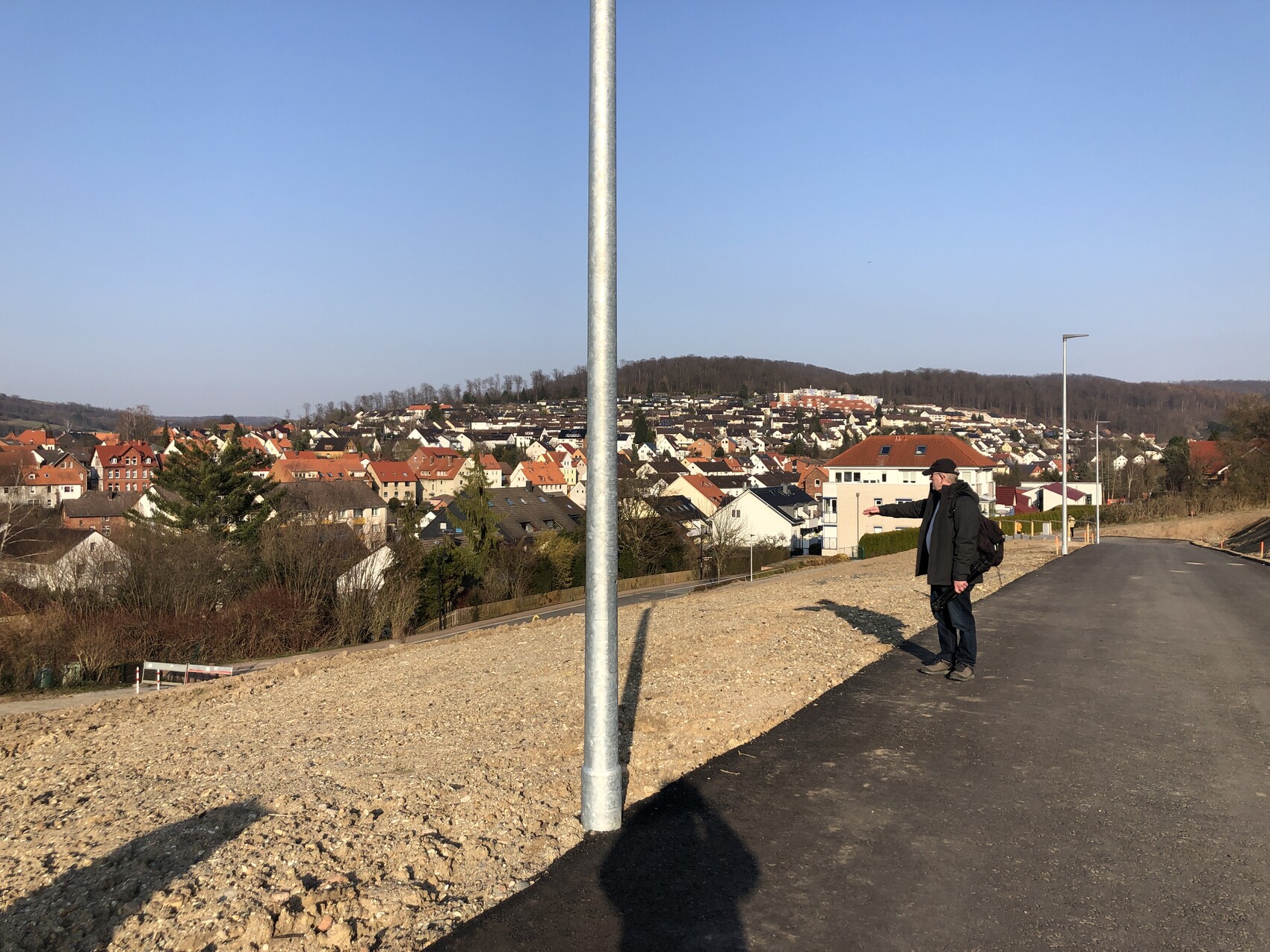
Today, a homebuilder told us that, partly due to the high cost of building materials, it would now be more cost-effective to backfill the slope and then build the house on a slab foundation. This doesn’t quite make sense to me, since the backfill material must be supported somehow, for example, by a concrete wall. The sales representative said no, that the stabilized backfill is simply allowed to slope gradually and then planted, creating a new artificial slope.
What does the expert community in this forum think about this?
S
sergutsch26 Apr 2022 09:42HalloClarissa schrieb:
Unfortunately, I can't send you a private message. So here are my questions:
Did you also create an embankment?
How did you stabilize the embankment?
Could you please provide a photo?
Thank you very muchIt’s probably because I’m still new here 😀 For us, the embankment was built by a civil engineering company. The material was applied in layers and compacted with a heavy vibrating roller. Afterwards, it was documented with plate load tests. This was done in September last year. Construction started in March.
Of course, this needs to be considered during foundation work: instead of strip footings, a slab foundation is used, but this is a common type of foundation and not complicated.
 askforafriend26 Apr 2022 10:36
sergutsch schrieb:
I don’t plan to accumulate that much stuff to spend $90,000 on the necessary storage space ;-)
A utility room on the ground floor is enough for heating – we are building a single-story house (which is possible).
You don’t have to either. It’s a matter of weighing options. Stuff? Maybe we’re talking past each other. We have a basement living area where you can step out directly to the garden with your own terrace, etc. That’s the perfect multipurpose room / party room / wellness area / granny flat or whatever you want to make of it. Stuff is maybe only stored in the attic 🙂 The thing is, living needs change over the course of decades. For example, I can easily imagine that our dear child will have their own space down there with a kitchen between 18 and 25 years old – or a family member in need of care requires support. Or—well, many other things. You can’t do any of that if you simply fill in the slope.
If I fill in my plot, I just take away many opportunities. It’s a shame to waste a beautiful sloped site—there’s a lot you can do with it. And if not, I don’t understand why someone wouldn’t just buy a flat lot 🙄
By the way, how much money do you need to shore up the slope you artificially created? You have to compare that to the $90,000. You quickly realize that you wasted great space for cheap money. But of course, everyone can decide for themselves.
askforafriend26 Apr 2022 10:45Ysop*** schrieb:
Acquaintances, although building with a basement, planned and constructed with a substantial fill. In the end, the landscaping contractor put a stop to it—it was too steep. The main issue can be spotted right from the start. This is what I’ve observed. Those who simply added fill and later dealt with the plot have mostly built with prefab house providers like XYZ. They usually want a quick completion and say "adding fill is no problem." We experienced this ourselves, which is why after extensive research we ultimately chose an independent design office/architect. With them, we discussed the site profile right away and planned all terraces and fill accordingly. It’s a completely different approach, as the house and the land aren’t considered separately.

askforafriend schrieb:
The problem can be easily identified at the very beginning. I have observed this: those who simply filled in the site and dealt with the land afterward built with the prefabricated house provider XYZ. They usually just want a quick deal and say "filling in is no problem." Exactly. From the prefab house seller’s perspective, the "problem" is actually the customer hesitating before signing. His interest-driven opinion is legally not considered misadvice that could lead to a lawsuit. And since everything that happens before the top edge of the foundation slab regularly does not fall within his scope of services, he doesn’t care about a Pyrrhic victory (to avoid a $90k basement by implementing $91k replacement measures). Commission secured, all good! ;-(
https://www.instagram.com/11antgmxde/
https://www.linkedin.com/company/bauen-jetzt/
S
sergutsch26 Apr 2022 11:51askforafriend schrieb:
The problem is easy to identify right from the start. I observed this: those who simply piled up soil and planned to deal with the land later built with prefab house provider XYZ. They mostly just want a quick deal and say, "piling up soil is no problem"... Exactly! That’s what it’s all about – see post #1
By the way, I wrote this here:
sergutsch schrieb:
...It’s a matter of balancing different factors. As always, it’s an individual decision; the topography differs everywhere unless building on flat, undeveloped land. Building codes and planning permission / building permits naturally have to be observed.
However, we planned freely. For one of our neighbors on the right, we only had to add a small amount of fill, while another originally wanted fill as well but now prefers a ramp instead of fill at our property boundary. That’s why we had to install a retaining wall there. The costs for the retaining wall are the only expenses incurred so far related to the soil fill. The rather steep slope that has resulted is, of course, no longer directly usable. I plan to build a raised wooden terrace on supports above it.
Similar topics