
Hello,
This year, I plan to build a bungalow on my plot with my construction company. A shed roof is basically a flat roof but slightly angled to allow better water drainage. In the past, flat roofs often had problems with leaks after a few years.
How is the modern construction method for a shed roof compared to a hip roof? Is a hip roof always more reliable than a shed roof in terms of leak prevention after 20 or 30 years? Or have shed roofs become watertight enough nowadays that, if built properly, there are no longer any disadvantages compared to hip roofs?
Good luck
This year, I plan to build a bungalow on my plot with my construction company. A shed roof is basically a flat roof but slightly angled to allow better water drainage. In the past, flat roofs often had problems with leaks after a few years.
How is the modern construction method for a shed roof compared to a hip roof? Is a hip roof always more reliable than a shed roof in terms of leak prevention after 20 or 30 years? Or have shed roofs become watertight enough nowadays that, if built properly, there are no longer any disadvantages compared to hip roofs?
Good luck
H
hampshire20 Apr 2021 23:09Shed roofs generally do not pose any fundamental problems. Think from the inside out. How much natural light do you want in each room? With a shed roof, you can create large glass surfaces on one side—if that suits your preferences. Today, attractive and well-designed houses can be built with any roof type. Even flat roofs can incorporate a slope for drainage behind a parapet.

chris909 schrieb:
Only my pictures from post #9 are not sample images from Google Image Search, but exactly the two house types I can choose from for a fixed price.Please tell me if I misunderstood you: these pictures are from the model catalog of your (probably mail-order) general contractor "Kevin Massivbau" (or something like that), who has an example image for each house base plan on their website, along with a sample cost estimate?https://www.instagram.com/11antgmxde/
https://www.linkedin.com/company/bauen-jetzt/
Hello,
we built a bungalow with a shed roof. The roof has a filigree slab made of concrete instead of a wooden roof truss.
This slab is partially prefabricated and consists of a concrete panel about 5 cm (2 inches) thick with built-in lattice girders. The slab elements generally include the main reinforcement. On site, they are laid across the beams. Afterward, additional reinforcement such as top reinforcement and ring beam reinforcement must be installed. Then the concreting follows, usually done with a concrete pump.
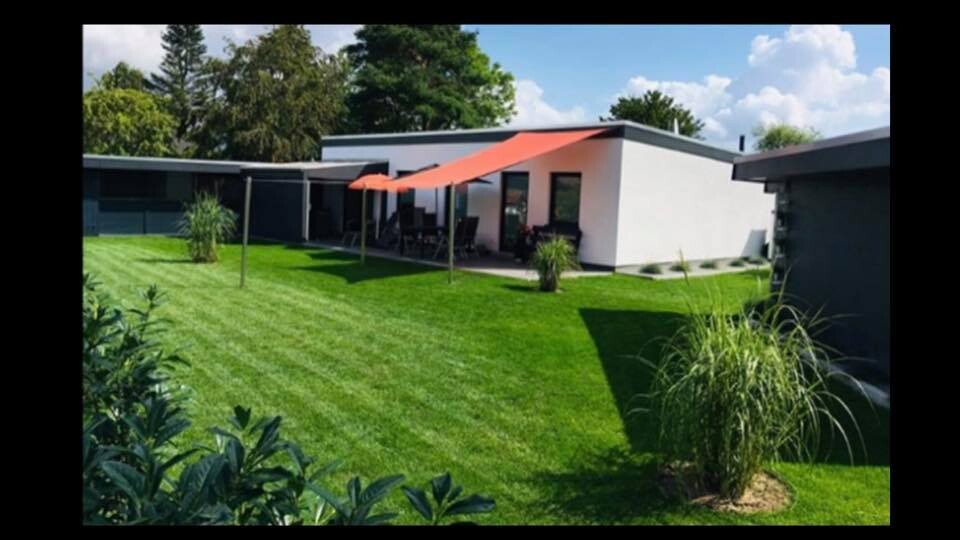
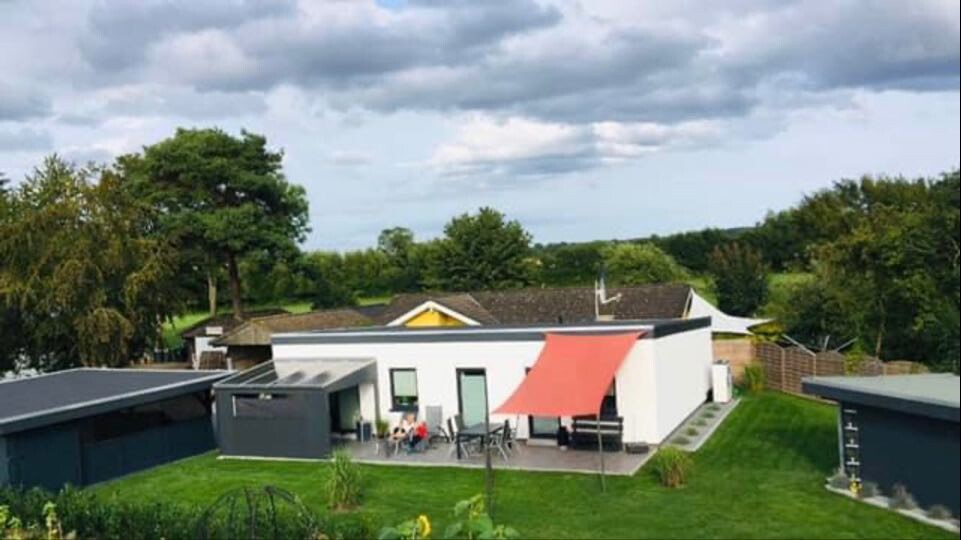
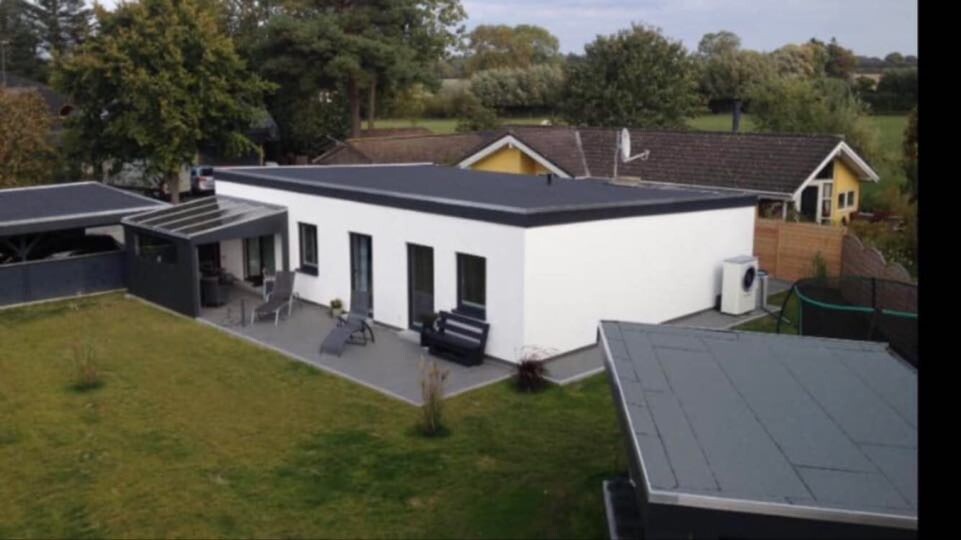
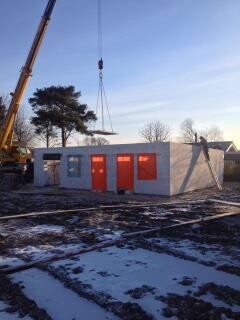
we built a bungalow with a shed roof. The roof has a filigree slab made of concrete instead of a wooden roof truss.
This slab is partially prefabricated and consists of a concrete panel about 5 cm (2 inches) thick with built-in lattice girders. The slab elements generally include the main reinforcement. On site, they are laid across the beams. Afterward, additional reinforcement such as top reinforcement and ring beam reinforcement must be installed. Then the concreting follows, usually done with a concrete pump.
caspar.1 schrieb:
We built a bungalow with a monopitch roof. The roof features a thin concrete slab. No timber roof frame.How should we imagine the thermal break: are there elements similar to an "Isokorb (R)" between the wall and the concrete roof?https://www.instagram.com/11antgmxde/
https://www.linkedin.com/company/bauen-jetzt/
11ant schrieb:
How should the thermal break be understood: are there any elements similar to "Isokorb (R)" between the wall and the concrete roof?There is perimeter insulation under the (Jackudur) on the foundation formwork. Insulation of the top floor ceiling and the external insulation, see pictures.
Welt Plus article from April 28, 2021 (I only came across it today) Title: "A flawlessly built house is now the exception".
The article refers to "[...] The basis is 1,265 inspection reports by building experts for single-family houses between 2017 and March 2019 [...]".
Regarding roofs: "[...] and with roof pitches up to about 20 degrees, one in five roofs is affected by moisture intrusion. With steeper pitches, it is only five percent. 'The flatter a roof is built, the more prone it is to defects,' according to the study. [...]"
The article refers to "[...] The basis is 1,265 inspection reports by building experts for single-family houses between 2017 and March 2019 [...]".
Regarding roofs: "[...] and with roof pitches up to about 20 degrees, one in five roofs is affected by moisture intrusion. With steeper pitches, it is only five percent. 'The flatter a roof is built, the more prone it is to defects,' according to the study. [...]"
Similar topics