
Hello!
We are currently working on the electrical planning. We are having a hard time with the children's rooms because the children are still being planned as well :-) and we have no idea where everything should go. Of course, there needs to be space for a bed, a wardrobe (150cm (59 inches)), a desk, and later also a TV.
For the upper children's room, we would prefer not to place the bed against the upper wall since the bathroom is located there. We have started planning but are not very satisfied with it. We also don’t know where the TV could go to plan the connection. Maybe you have some ideas.
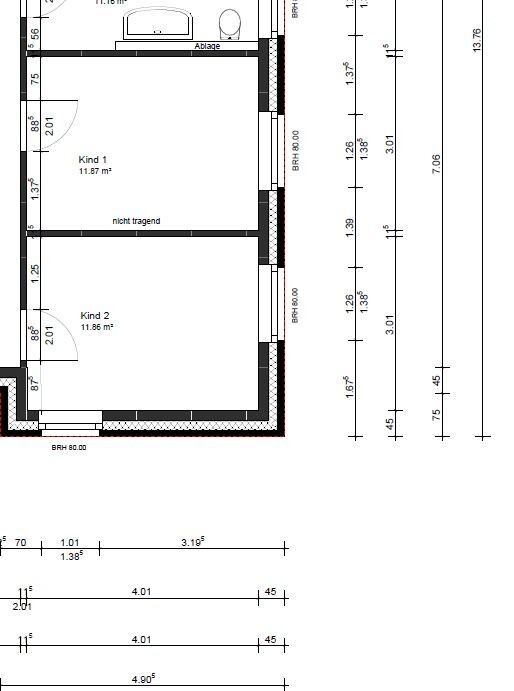
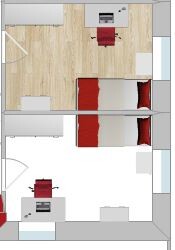
We are currently working on the electrical planning. We are having a hard time with the children's rooms because the children are still being planned as well :-) and we have no idea where everything should go. Of course, there needs to be space for a bed, a wardrobe (150cm (59 inches)), a desk, and later also a TV.
For the upper children's room, we would prefer not to place the bed against the upper wall since the bathroom is located there. We have started planning but are not very satisfied with it. We also don’t know where the TV could go to plan the connection. Maybe you have some ideas.
Then don’t forget the network connection for the smart toilet paper holder.
PCs, sure, NAS devices, sure, but the other devices either don’t need network access at all or only occasionally with low bandwidth, or they are mobile devices (tablets, etc.) that actually work worse, not better, when connected by cable.
PCs, sure, NAS devices, sure, but the other devices either don’t need network access at all or only occasionally with low bandwidth, or they are mobile devices (tablets, etc.) that actually work worse, not better, when connected by cable.

T
toxicmolotof16 Feb 2018 01:58@Alex85
That's basically what I was getting at. If you need bandwidth, Wi-Fi with lots of devices is definitely the worst option. Consoles, TVs, and PCs require adequate bandwidth, and they shouldn’t have to share it with a bunch of low-quality devices over Wi-Fi.
That's basically what I was getting at. If you need bandwidth, Wi-Fi with lots of devices is definitely the worst option. Consoles, TVs, and PCs require adequate bandwidth, and they shouldn’t have to share it with a bunch of low-quality devices over Wi-Fi.
The devices that often cause issues rarely require much bandwidth, and when they do, it’s usually not a lot. A real 500 Mbit connection within the wireless cell is not really strained by a 10 Mbit HD stream, 3-4 Mbit online gaming, and messages only a few kilobytes in size.
This panic about collapsing Wi-Fi is really unfounded. Modern mesh systems now require two gigabit Ethernet ports and actually use them. IoT, including in households, is based on wireless technology—5G is here to stay.
In our network, we average 30 mobile devices active per access point, and it works perfectly. At least laptops can of course still be connected via cable, but simply nobody wants that anymore, and it no longer reflects the mobile use of devices even inside a building.
This panic about collapsing Wi-Fi is really unfounded. Modern mesh systems now require two gigabit Ethernet ports and actually use them. IoT, including in households, is based on wireless technology—5G is here to stay.
In our network, we average 30 mobile devices active per access point, and it works perfectly. At least laptops can of course still be connected via cable, but simply nobody wants that anymore, and it no longer reflects the mobile use of devices even inside a building.
Similar topics