
ᐅ Sealing a patio door. Which trade or specialist handles this?
Created on: 8 Sep 2018 09:17
S
Snowy36
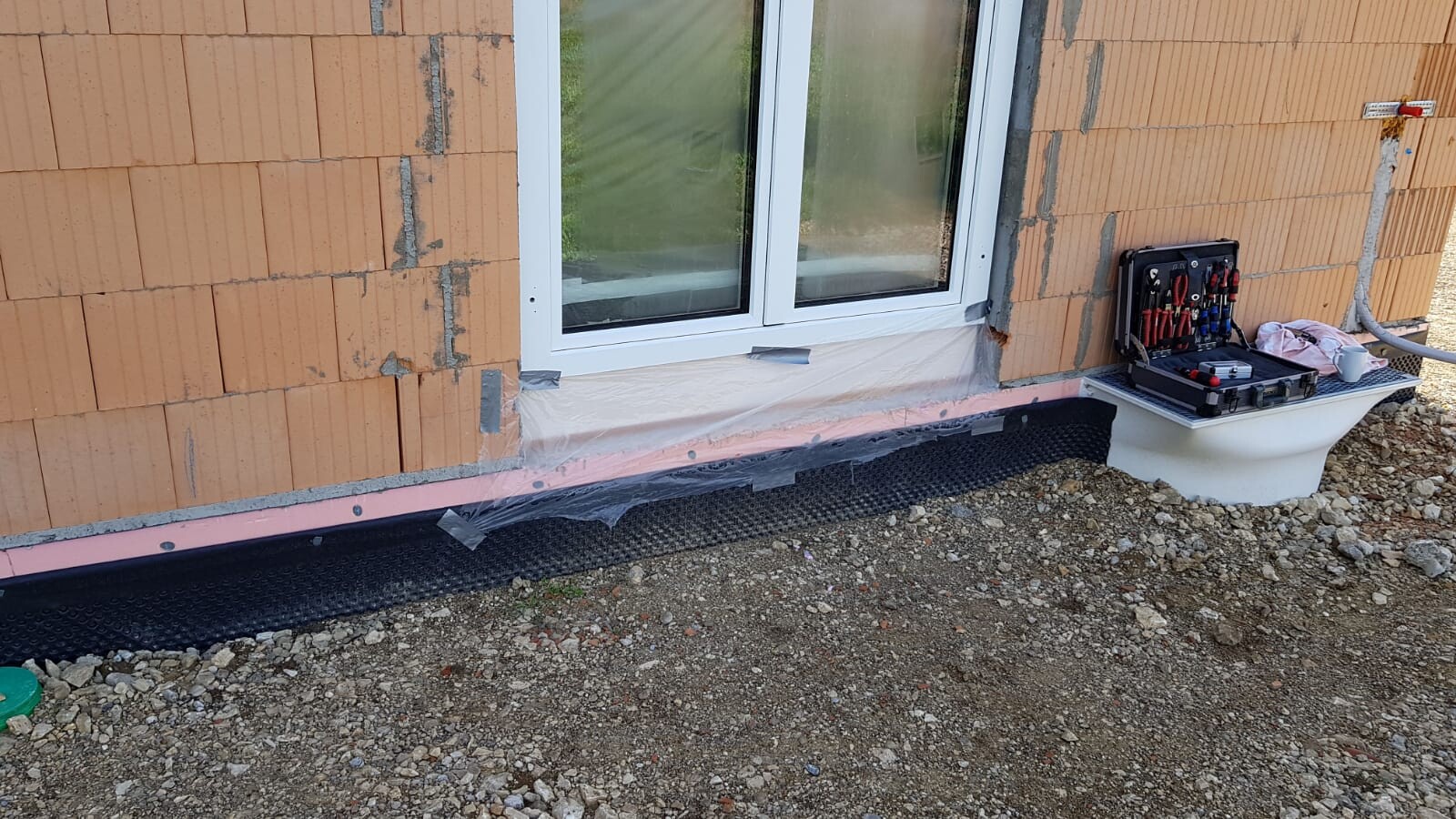
Hello everyone, here is a picture of our patio door. Our neighbors sealed the outside with a black bitumen layer or something similar. Can anyone tell me which tradesperson would do this kind of work, or is it something you can do yourself?
D
Disturber10 Sep 2018 12:21Hello,
I have a question on this topic as well. Has XPS insulation been installed under the door? If so, is that recommended to prevent thermal bridges?
When applying waterproof slurry, shouldn’t a small fillet be created at the base to prevent water from pooling?
Is this coating then applied to the entire base or only at the floor-to-ceiling windows?
I have a question on this topic as well. Has XPS insulation been installed under the door? If so, is that recommended to prevent thermal bridges?
When applying waterproof slurry, shouldn’t a small fillet be created at the base to prevent water from pooling?
Is this coating then applied to the entire base or only at the floor-to-ceiling windows?
What’s wrong with it? It’s professionally sealed with a torn garbage bag, plus duct tape and some sheet metal on top, so it will last forever.
....
First, for floor-to-ceiling openings, the sealing of the base/foundation (using mineral waterproof slurry or hybrid sealing) is extended up into the opening, right up to the window – UNDER all insulation layers, directly on the masonry/concrete, especially in the reveal. The same applies to the base sealing all around, about 20-30 cm (8-12 inches) above ground level. While base sealing above ground level under the render is not mandatory when using appropriate renders, it wouldn’t hurt and would only cost a few euros more.
After the waterproofing from below (with joint tapes and reinforcement) is brought up to the window, XPS insulation is installed over the masonry waterproofing. Always use XPS or perimeter insulation that is approved for this purpose. On top of that comes an EPDM membrane or similar material fastened to the window frame/window sill connection profile, followed by the window sill or external ledge.
....
First, for floor-to-ceiling openings, the sealing of the base/foundation (using mineral waterproof slurry or hybrid sealing) is extended up into the opening, right up to the window – UNDER all insulation layers, directly on the masonry/concrete, especially in the reveal. The same applies to the base sealing all around, about 20-30 cm (8-12 inches) above ground level. While base sealing above ground level under the render is not mandatory when using appropriate renders, it wouldn’t hurt and would only cost a few euros more.
After the waterproofing from below (with joint tapes and reinforcement) is brought up to the window, XPS insulation is installed over the masonry waterproofing. Always use XPS or perimeter insulation that is approved for this purpose. On top of that comes an EPDM membrane or similar material fastened to the window frame/window sill connection profile, followed by the window sill or external ledge.
That would be the ideal construction, which is no longer feasible here. Unfortunately, I have never seen it done this way before. In practice, it is also difficult to implement.
In this case, I would thoroughly clean the area and carefully seal it with a 2-component liquid plastic. Then fill the gap with XPS (extruded polystyrene) and place a metal sheet on top. This should then cause no problems, despite not being executed according to DIN standards.
In this case, I would thoroughly clean the area and carefully seal it with a 2-component liquid plastic. Then fill the gap with XPS (extruded polystyrene) and place a metal sheet on top. This should then cause no problems, despite not being executed according to DIN standards.
Similar topics