
Hello,
I have a basement wall in a 100-year-old house. The pictures show the wall before, with efflorescence, and then after I mostly removed the top plaster layer. The cement-based base plaster is very hard, and so far, my attempts with a grinder and concrete sander haven’t been very successful. Therefore, I have been considering leaving it as is and applying the new layers on top.
Now, regarding my question: I know that waterproofing from the inside is not ideal and not as durable as waterproofing from the outside. But it should be sufficient for a few years. As far as I understand, the moisture moves by capillary action rather than sideways, since there was more moisture near the bottom than at the top and across the entire wall; also, it is a mid-terrace house, which makes lateral moisture less likely. Generally, there are two possible approaches (as I understand): either making the wall “watertight” from the inside using waterproofing slurry and barrier plaster, or making it breathable with spray render and renovation plaster. There are sources that advocate for each option and criticize the other. Some say it must be waterproof, otherwise it won’t work (including a professional company). Others argue it must not be waterproof, or moisture won’t escape and mold will form inside the masonry. So, what is correct?
This is exactly the dilemma I am facing now:
Note: I am not looking for the perfect solution that lasts 50 years. I want something doable that will last at least 5-10 years and will not damage the structure. After that, I will have saved enough to address the issue professionally.
Thank you very much for your help!
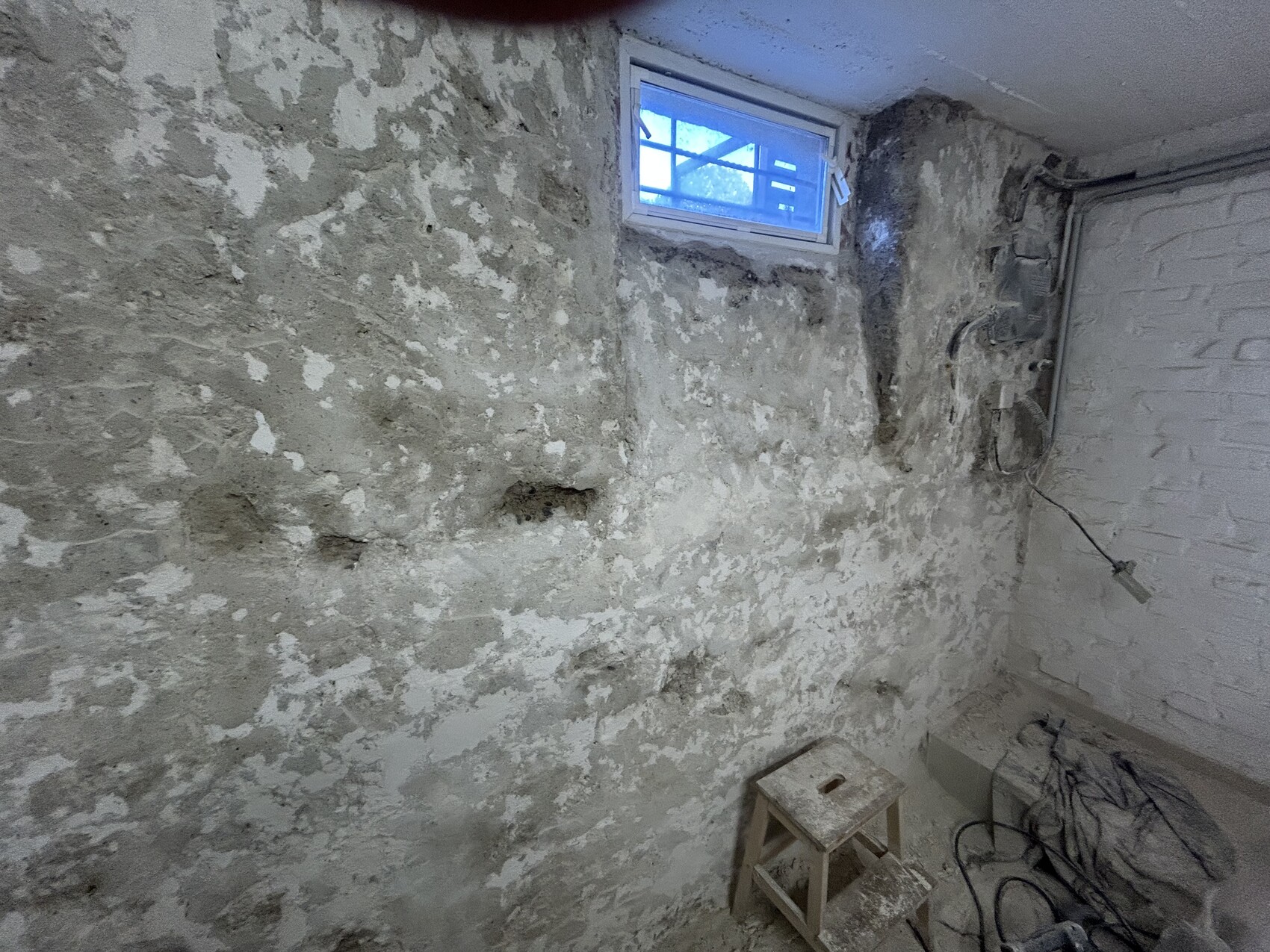
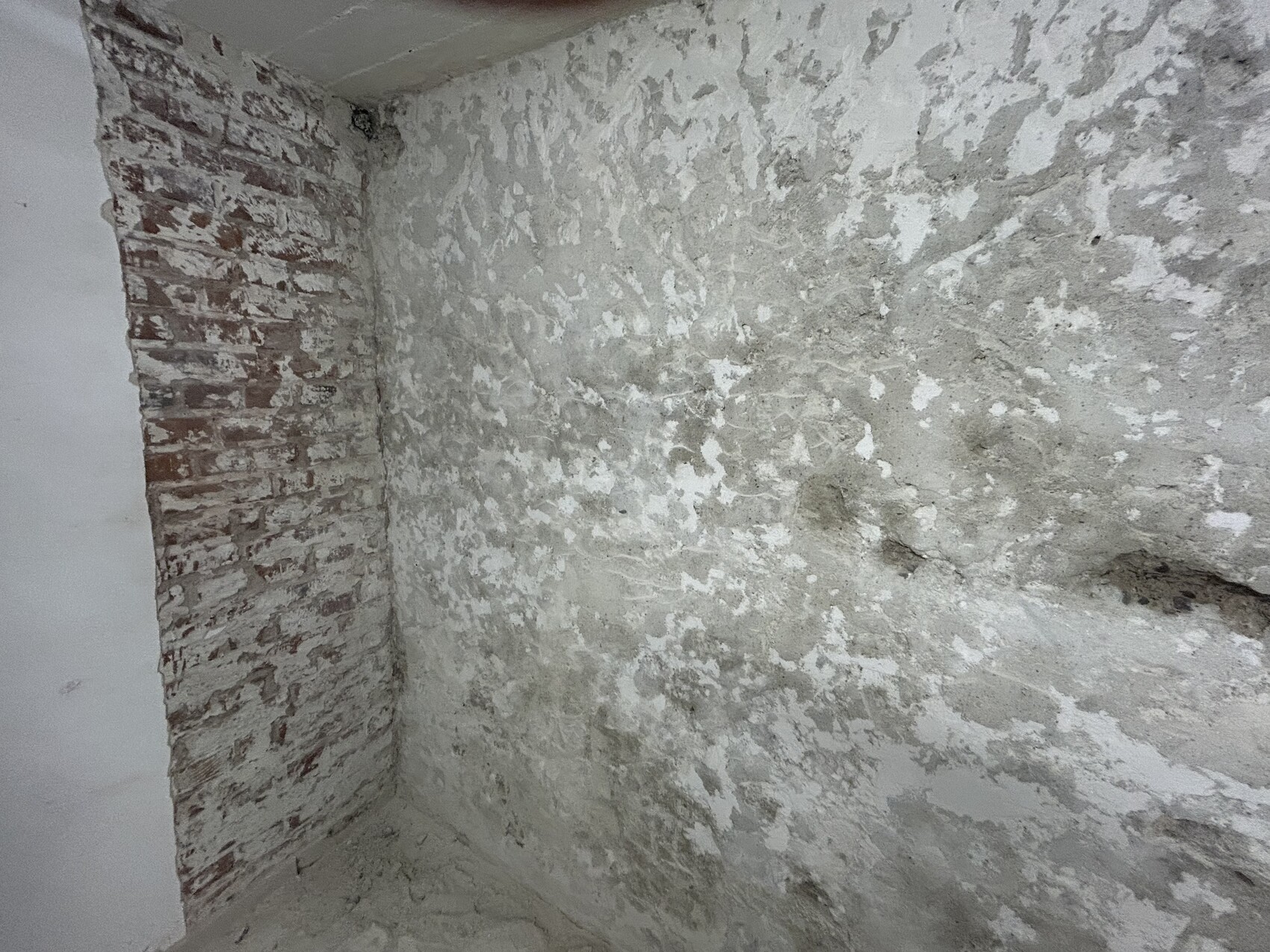
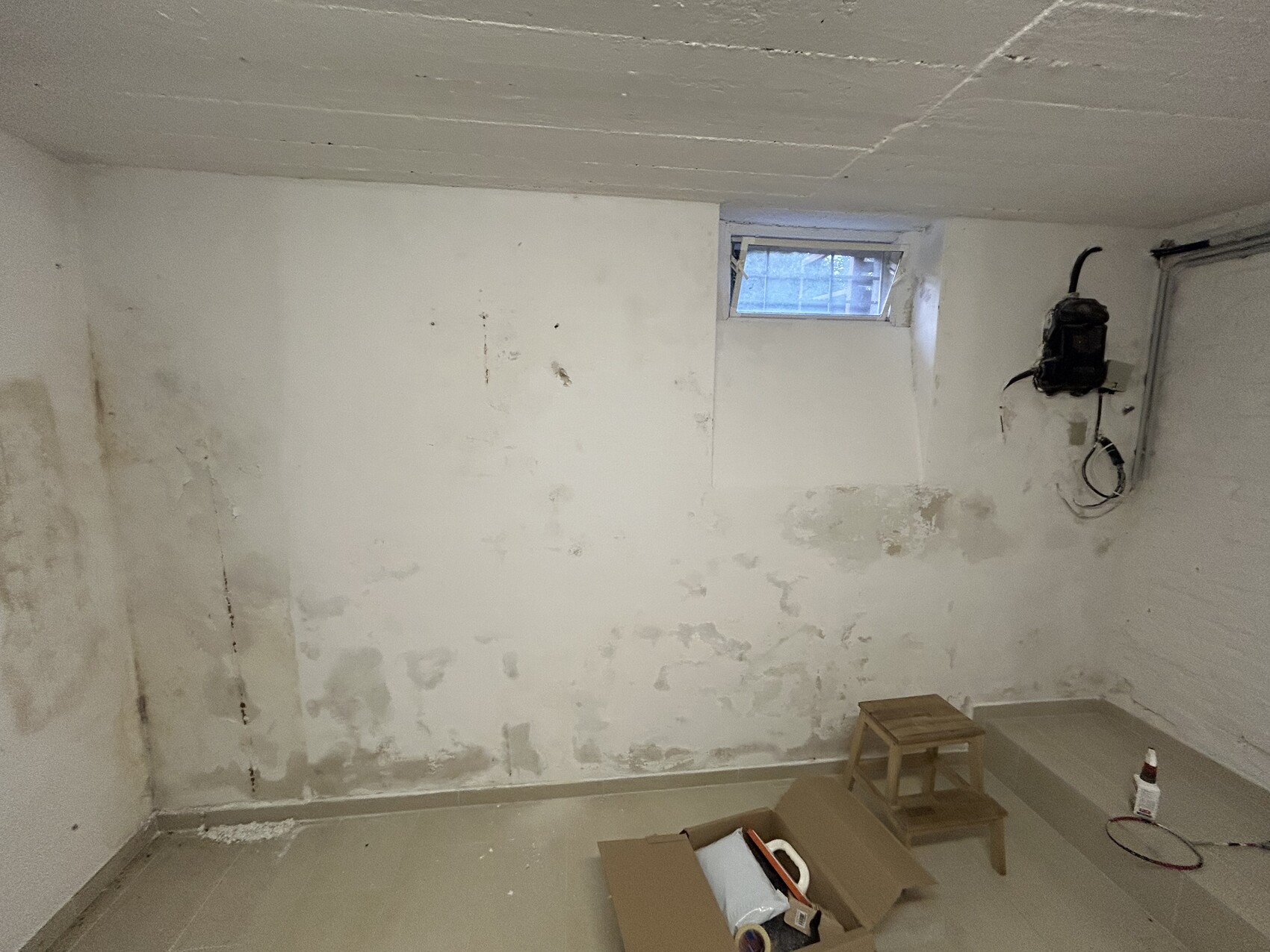
I have a basement wall in a 100-year-old house. The pictures show the wall before, with efflorescence, and then after I mostly removed the top plaster layer. The cement-based base plaster is very hard, and so far, my attempts with a grinder and concrete sander haven’t been very successful. Therefore, I have been considering leaving it as is and applying the new layers on top.
Now, regarding my question: I know that waterproofing from the inside is not ideal and not as durable as waterproofing from the outside. But it should be sufficient for a few years. As far as I understand, the moisture moves by capillary action rather than sideways, since there was more moisture near the bottom than at the top and across the entire wall; also, it is a mid-terrace house, which makes lateral moisture less likely. Generally, there are two possible approaches (as I understand): either making the wall “watertight” from the inside using waterproofing slurry and barrier plaster, or making it breathable with spray render and renovation plaster. There are sources that advocate for each option and criticize the other. Some say it must be waterproof, otherwise it won’t work (including a professional company). Others argue it must not be waterproof, or moisture won’t escape and mold will form inside the masonry. So, what is correct?
This is exactly the dilemma I am facing now:
- Does the extremely hard cement-based plaster have to be removed? Or can it stay?
- Can I simply apply spray render and renovation plaster?
- Or is it better to use waterproof slurry and then renovation plaster? Or better barrier plaster?
- Are injections necessary? So far, I have planned without them.
Note: I am not looking for the perfect solution that lasts 50 years. I want something doable that will last at least 5-10 years and will not damage the structure. After that, I will have saved enough to address the issue professionally.
Thank you very much for your help!
Hi,
the key issue with your basement problem lies in the age of the house and the type of masonry. A 100-year-old house typically has capillary concrete or bricks with lime mortar, not the cement-hard mortar common today. Your cement-based base coat is hard, but it blocks moisture from escaping, which is why you see efflorescence. Simply applying new layers on top is technically problematic because the moisture gets trapped in the new layer. This may work in the short term, but in the long run, mold or plaster detachment can occur.
Regarding the question “watertight or breathable”:
To address your specific points:
Good luck!
the key issue with your basement problem lies in the age of the house and the type of masonry. A 100-year-old house typically has capillary concrete or bricks with lime mortar, not the cement-hard mortar common today. Your cement-based base coat is hard, but it blocks moisture from escaping, which is why you see efflorescence. Simply applying new layers on top is technically problematic because the moisture gets trapped in the new layer. This may work in the short term, but in the long run, mold or plaster detachment can occur.
Regarding the question “watertight or breathable”:
- For old, damp basement walls, breathable is usually safer. Roughcast with renovation plaster directs moisture outward and prevents buildup, while waterproofing slurry or barrier plaster seals the wall mechanically, but the water remains in the masonry – the underlying cement layer can even make this worse.
- Waterproofing slurry or barrier plaster only makes sense if you really want a temporary barrier, but in that case, you need to completely exclude lateral moisture – which rarely works 100 %.
To address your specific points:
- Remove cement plaster? Yes, at least partially sand or roughen it; otherwise, the renovation plaster will not adhere well. It does not have to be removed entirely if roughened properly.
- Roughcast + renovation plaster? Yes, this is the classic method for the next 5–10 years; it keeps the structure moisture-compatible.
- Waterproofing slurry/barrier plaster? Only if you want to make it “watertight” in the short term, but there is a risk that moisture behind the layer will cause problems.
- Injections? You can skip them; they are mainly for long-term sealing against rising damp. For your timeframe of 5–10 years, they are not necessarily required.
Good luck!
Similar topics