
Hello everyone,
I need your expertise:
I would like to know the best way to seal natural stone exterior window sills. The windows were installed flush with the exterior before the window sills were added. Then they were insulated externally with 160mm (6.3 inches) stone wool and plastered. The stone wool was cut back slightly to accommodate the window sills. A thick coating was applied over the insulation, followed by a bedding layer of trass mortar on which the sill rests. I doubt there is a 100% seal to the sides beneath the sill. Compressible sealing tape was used behind the sill and on the reveal sides (2cm (0.8 inches) end faces) before sliding the sill in. There is no additional compressible tape installed on top of the sill. The sills have a slope of about 5°.
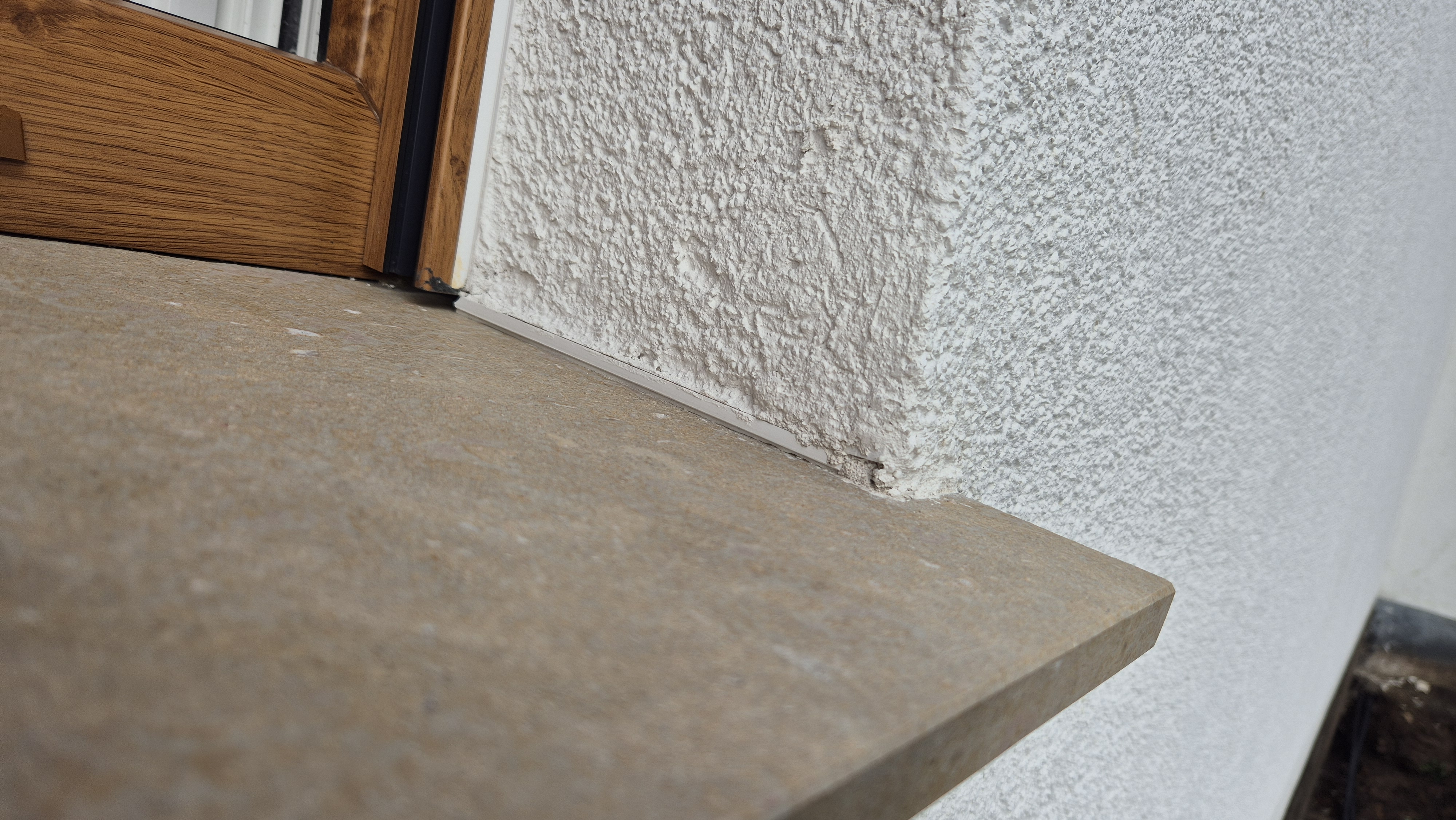
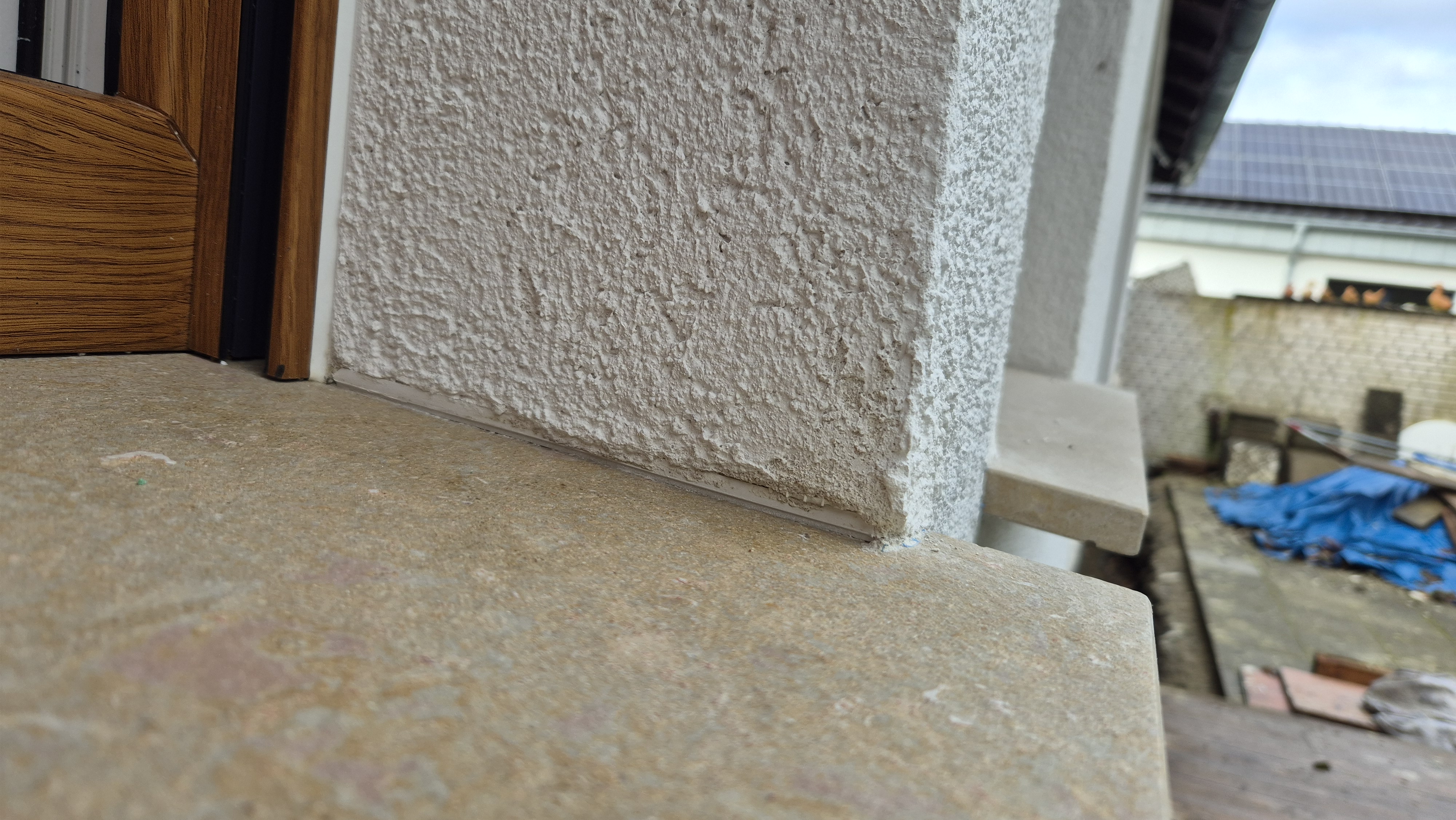
Now I want to seal the gap between the window frame and the sill, as well as the reveals at the sill (basically over the rebate strips) with silicone (Otto S70). I also plan to seal the guide rails towards the window sill. At one window there is unfortunately a noticeable 5mm (0.2 inches) gap between the guide rail and the window sill (see photo). Here I would first try to attach small pieces of 3mm (0.1 inches) compressible sealing tape at the bottom of the guide rail to allow the sealant to adhere properly to the sill, then seal it with silicone. Would this be the correct approach, or what would you recommend for this situation?
Also, should the sealing continue "around the corner" if the window sill, as in my case, is recessed a few centimeters (inches) into the plaster?
Thank you very much for your help!
I need your expertise:
I would like to know the best way to seal natural stone exterior window sills. The windows were installed flush with the exterior before the window sills were added. Then they were insulated externally with 160mm (6.3 inches) stone wool and plastered. The stone wool was cut back slightly to accommodate the window sills. A thick coating was applied over the insulation, followed by a bedding layer of trass mortar on which the sill rests. I doubt there is a 100% seal to the sides beneath the sill. Compressible sealing tape was used behind the sill and on the reveal sides (2cm (0.8 inches) end faces) before sliding the sill in. There is no additional compressible tape installed on top of the sill. The sills have a slope of about 5°.
Now I want to seal the gap between the window frame and the sill, as well as the reveals at the sill (basically over the rebate strips) with silicone (Otto S70). I also plan to seal the guide rails towards the window sill. At one window there is unfortunately a noticeable 5mm (0.2 inches) gap between the guide rail and the window sill (see photo). Here I would first try to attach small pieces of 3mm (0.1 inches) compressible sealing tape at the bottom of the guide rail to allow the sealant to adhere properly to the sill, then seal it with silicone. Would this be the correct approach, or what would you recommend for this situation?
Also, should the sealing continue "around the corner" if the window sill, as in my case, is recessed a few centimeters (inches) into the plaster?
Thank you very much for your help!
Hi,
The direction is correct. Exterior silicone is always tricky – less because of adhesion to the masonry, more due to movement in the frame (1–2 mm (0.04–0.08 inches) depending on temperature).
A 5° slope is borderline, but acceptable only with a clean drip edge; otherwise, water will collect. Compression tape behind the sill plate is fine; not using any at the top is okay as long as the joint is not the primary waterproofing.
The 5 mm (0.2 inches) space at the guide rail is tight: 3 mm (0.12 inches) tape plus silicone can hold, but this is mainly cosmetic (8–12 years durability). Seal around corners only if the masonry is firmly fixed, otherwise it may crack during frost.
Good luck!
The direction is correct. Exterior silicone is always tricky – less because of adhesion to the masonry, more due to movement in the frame (1–2 mm (0.04–0.08 inches) depending on temperature).
A 5° slope is borderline, but acceptable only with a clean drip edge; otherwise, water will collect. Compression tape behind the sill plate is fine; not using any at the top is okay as long as the joint is not the primary waterproofing.
The 5 mm (0.2 inches) space at the guide rail is tight: 3 mm (0.12 inches) tape plus silicone can hold, but this is mainly cosmetic (8–12 years durability). Seal around corners only if the masonry is firmly fixed, otherwise it may crack during frost.
Good luck!
Similar topics