
S
Sinus19861 Apr 2017 20:54Good evening everyone,
We are currently working on building the terrace.
The house is mostly finished. The concrete slab was constructed on a gravel layer, and the sides of the slab have been insulated accordingly.
We have chosen patio doors that will provide a flush, level transition to the terrace.
The terrace will also be built on a gravel/aggregate layer.
This raises the question of what a proper waterproofing solution would look like here.
We plan to install a dimpled membrane in front of the existing slab insulation to protect it. Additionally, we will ensure a slope of less than 5%. What else should be done beyond this?
The exterior render has not been applied yet, so we still have all options open there.
P.S. Attached is a picture of the current situation.
Looking forward to your responses.
Best regards,
Andre
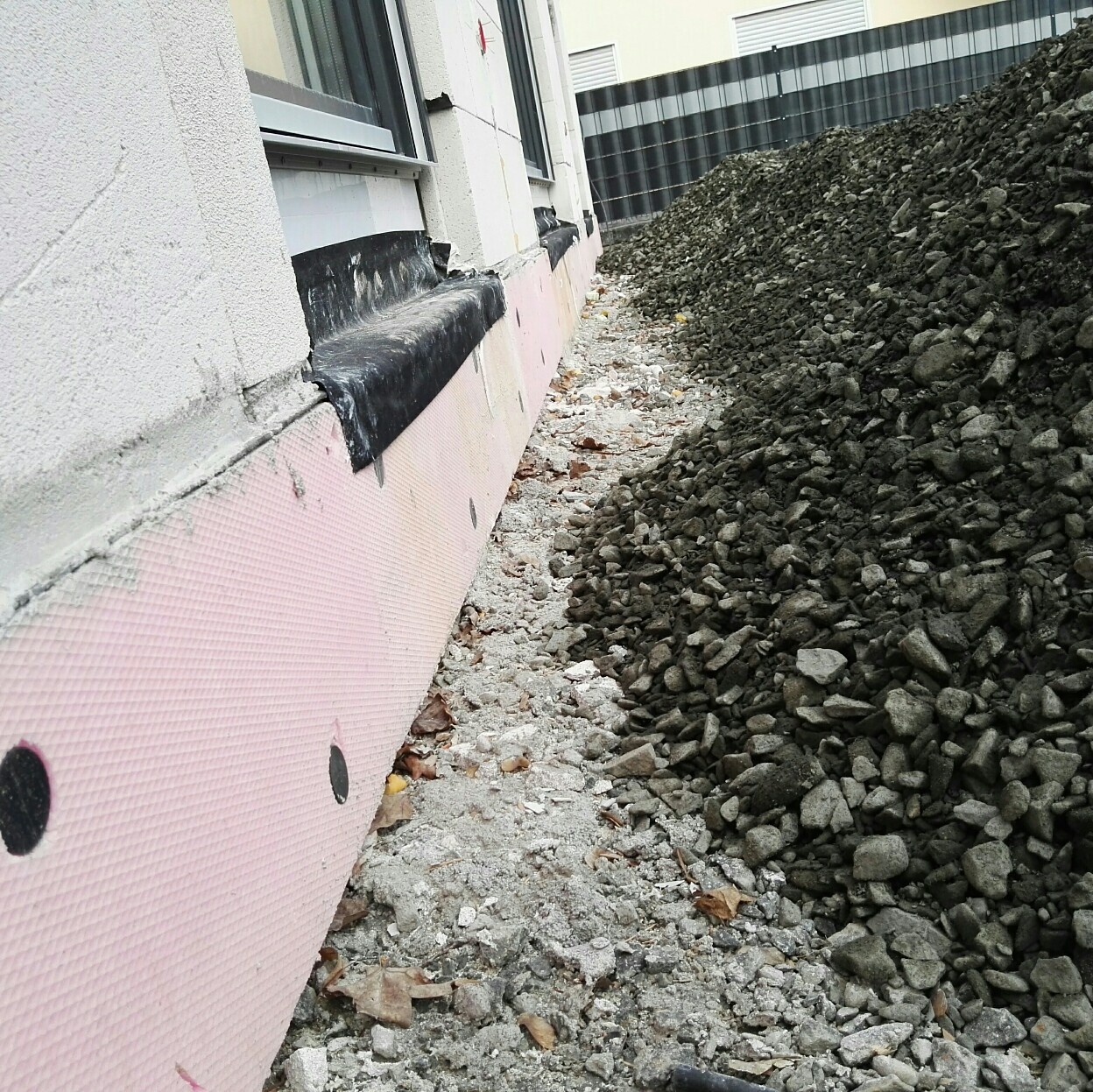
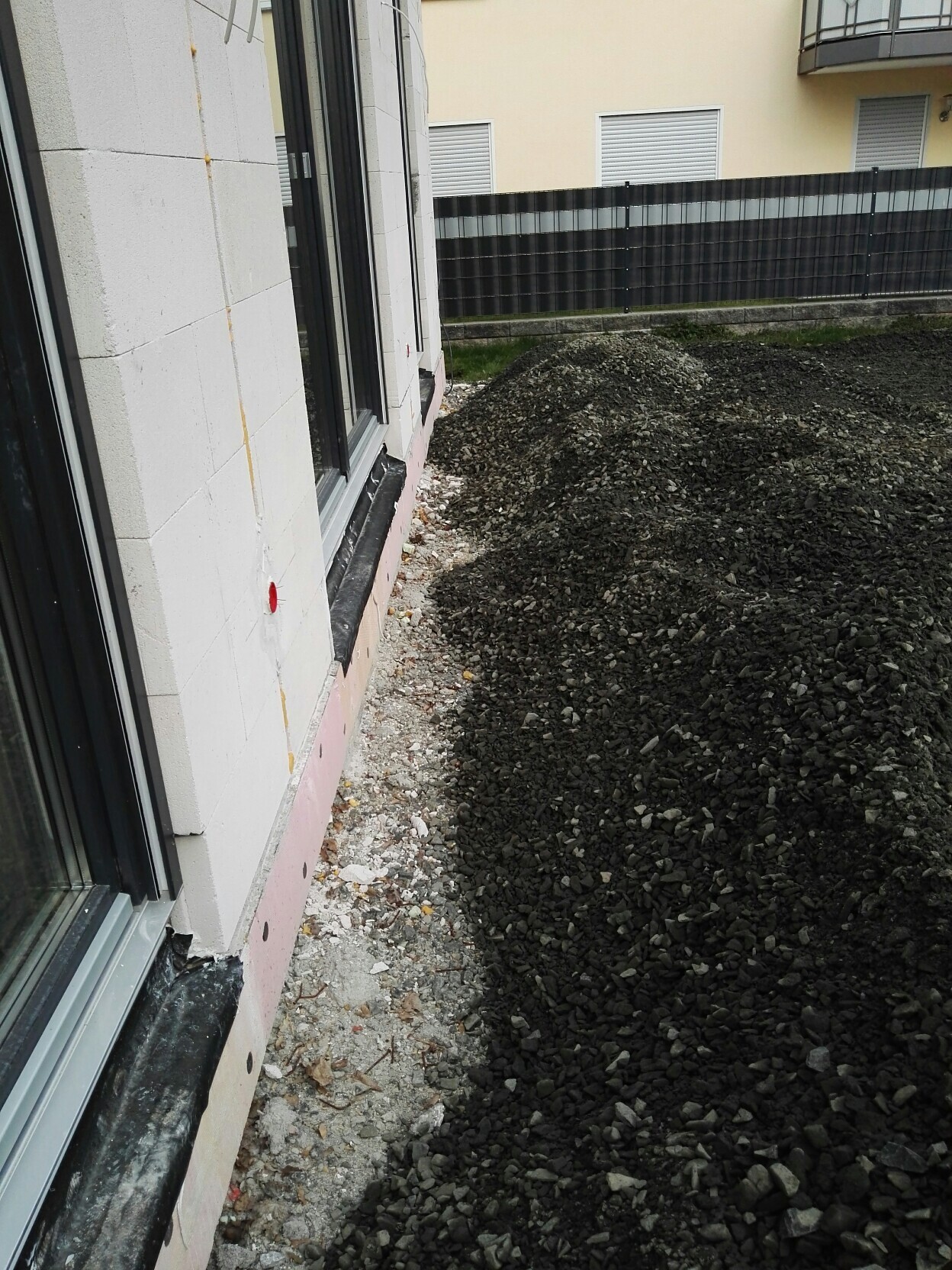
We are currently working on building the terrace.
The house is mostly finished. The concrete slab was constructed on a gravel layer, and the sides of the slab have been insulated accordingly.
We have chosen patio doors that will provide a flush, level transition to the terrace.
The terrace will also be built on a gravel/aggregate layer.
This raises the question of what a proper waterproofing solution would look like here.
We plan to install a dimpled membrane in front of the existing slab insulation to protect it. Additionally, we will ensure a slope of less than 5%. What else should be done beyond this?
The exterior render has not been applied yet, so we still have all options open there.
P.S. Attached is a picture of the current situation.
Looking forward to your responses.
Best regards,
Andre


This is a complex and damage-prone detail that requires coordination between multiple trades, especially when aiming for a truly "barrier-free" transition between indoors and outdoors, with a maximum threshold height of 2cm (0.8 inches). This detail must be developed in advance by an independent planner, who will also handle the tendering/contracting process with the relevant specialist companies and oversee construction management.
The trades involved—waterproofing/plastering, possibly metal and folding work, and landscaping—must work closely together, sometimes consecutively in multiple stages, to execute these multi-layered details. Unplanned, improvised work by craftsmen and spontaneous decisions on site are definitely not productive, as this will likely become apparent 1-2 years later. What can already be seen now points exactly in this wrong direction and should be dismantled.
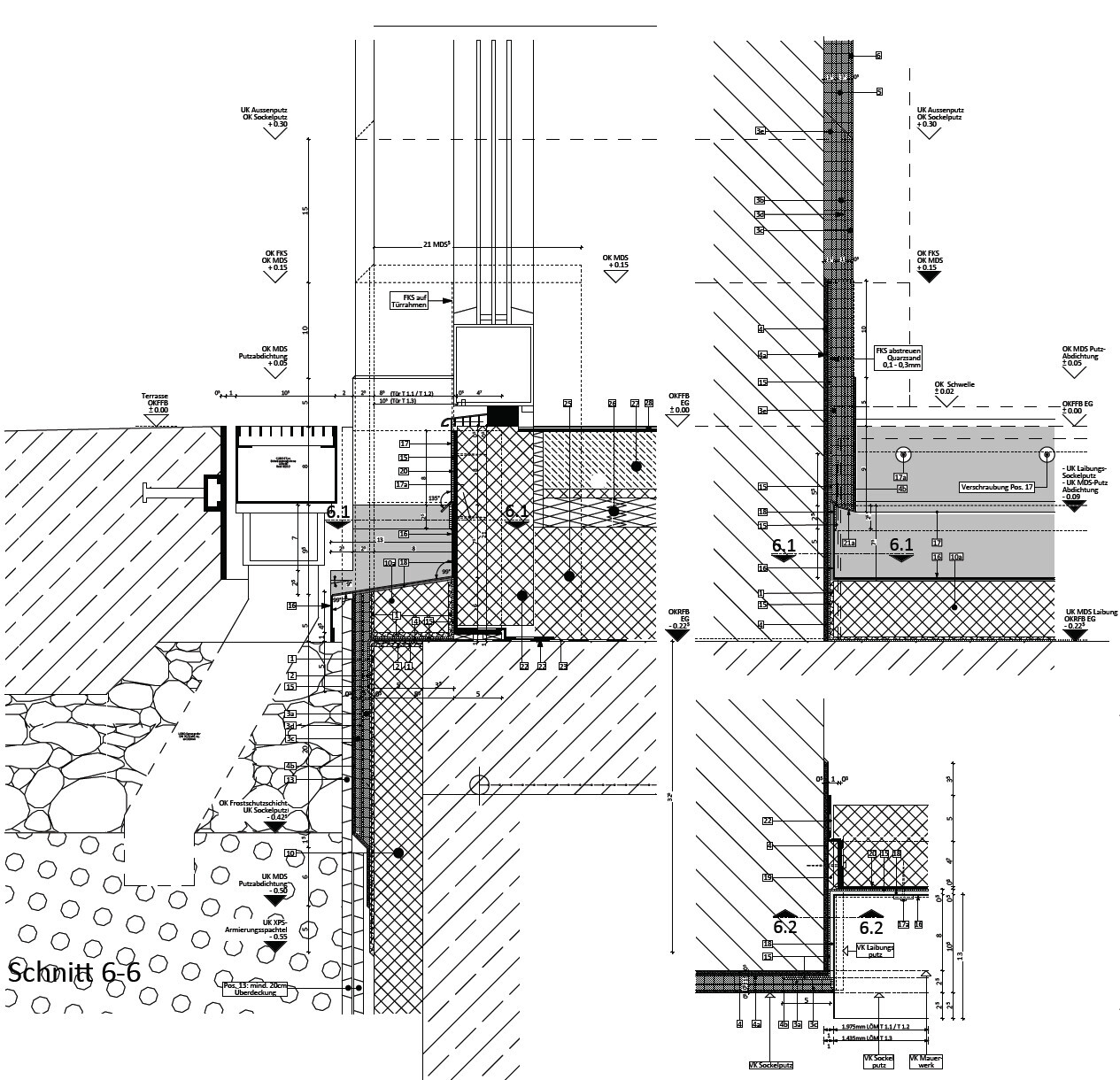
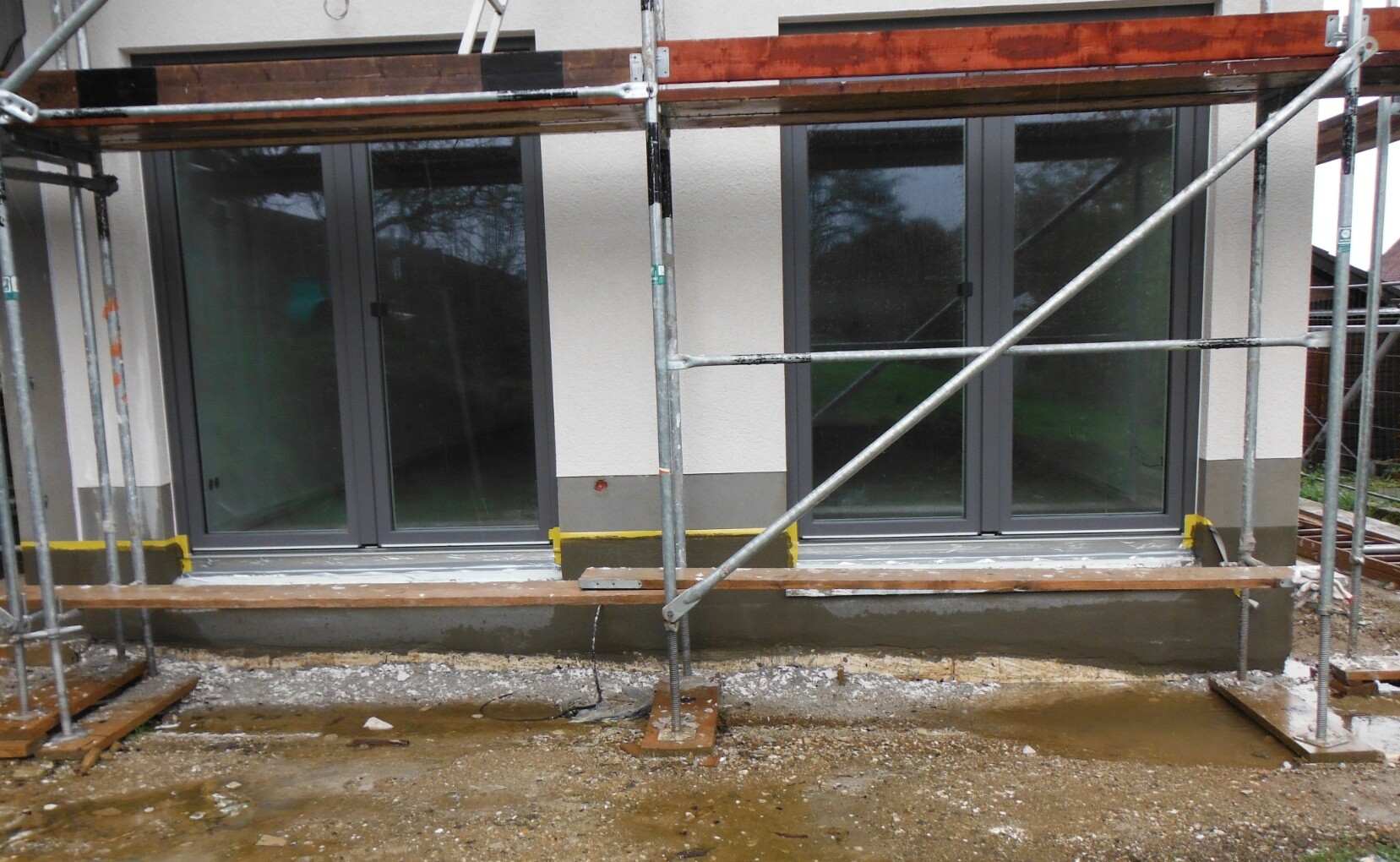
The trades involved—waterproofing/plastering, possibly metal and folding work, and landscaping—must work closely together, sometimes consecutively in multiple stages, to execute these multi-layered details. Unplanned, improvised work by craftsmen and spontaneous decisions on site are definitely not productive, as this will likely become apparent 1-2 years later. What can already be seen now points exactly in this wrong direction and should be dismantled.
S
Sinus19863 Apr 2017 13:59Our construction manager wrote the following:
1.) The red extruded polystyrene (XPS) insulation will be partially embedded in the render, about halfway.
2.) Afterwards, a waterproof slurry will be applied over the render.
3.) In the area where paving will be installed, roofing felt will be placed against the masonry and cut flush with the top of the paving.
4.) Where there is no paving, or only soil/gravel will be placed, it will just be backfilled.
1.) The red extruded polystyrene (XPS) insulation will be partially embedded in the render, about halfway.
2.) Afterwards, a waterproof slurry will be applied over the render.
3.) In the area where paving will be installed, roofing felt will be placed against the masonry and cut flush with the top of the paving.
4.) Where there is no paving, or only soil/gravel will be placed, it will just be backfilled.
Similar topics