
ᐅ Sealing the Extension to the Existing Structure + Reliable Drainage
Created on: 29 Aug 2019 14:04
N
netzplanHello everyone,
We are currently having an extension built onto our existing (newly purchased) house. Additionally, two rooms are being underpinned, see the picture. The basement is buried up to 30cm (12 inches) in the ground on the south side and up to about 1.2m (4 feet) on the north side. (The existing house is only on a strip foundation.) The extension has a concrete slab foundation. The slab or the basement exterior walls are made of waterproof concrete.
The basement already had a somewhat musty smell. The basement exterior walls will still be waterproofed and insulated. During the underpinning of room 2, we noticed some water pushing up from the ground. The builder is already concerned about how to waterproof the extension in relation to the existing building and whether the drainage marked in red is sufficient. Drainage is also planned for the underpinned rooms.
Questions:
1. Builder’s proposal for waterproofing between the extension and existing building: treat the existing building in the area of the new slab with Vandex. Pre-treat the existing building in the area of the new extension basement exterior walls with bitumen. At these points (Vandex and bitumen), a swelling waterstop (or something similar) is to be installed. Do you think this approach is acceptable?
2. My suggestion: equip the slab with two drainage systems, see orange. However, the builder considers this unnecessary. The architect, on the other hand, says the more, the better, it can’t hurt. Another idea is to install an inspection chamber (plastic or concrete) about 70cm (28 inches) below the slab on the bottom right of the extension and install a pump with a float there. According to the builder, this would make the Vandex treatment and the drainage slope to the street unnecessary. What do you think?
I personally prefer more security, meaning still use Vandex and waterproof the extension in relation to the existing building. Additionally, I am considering whether the drainage slope toward the street could still be constructed and the inspection chamber could serve as a second safety level (or vice versa, meaning first safety level is the inspection chamber with pump and then the drainage slope to the street, e.g., if the pump fails or similar).
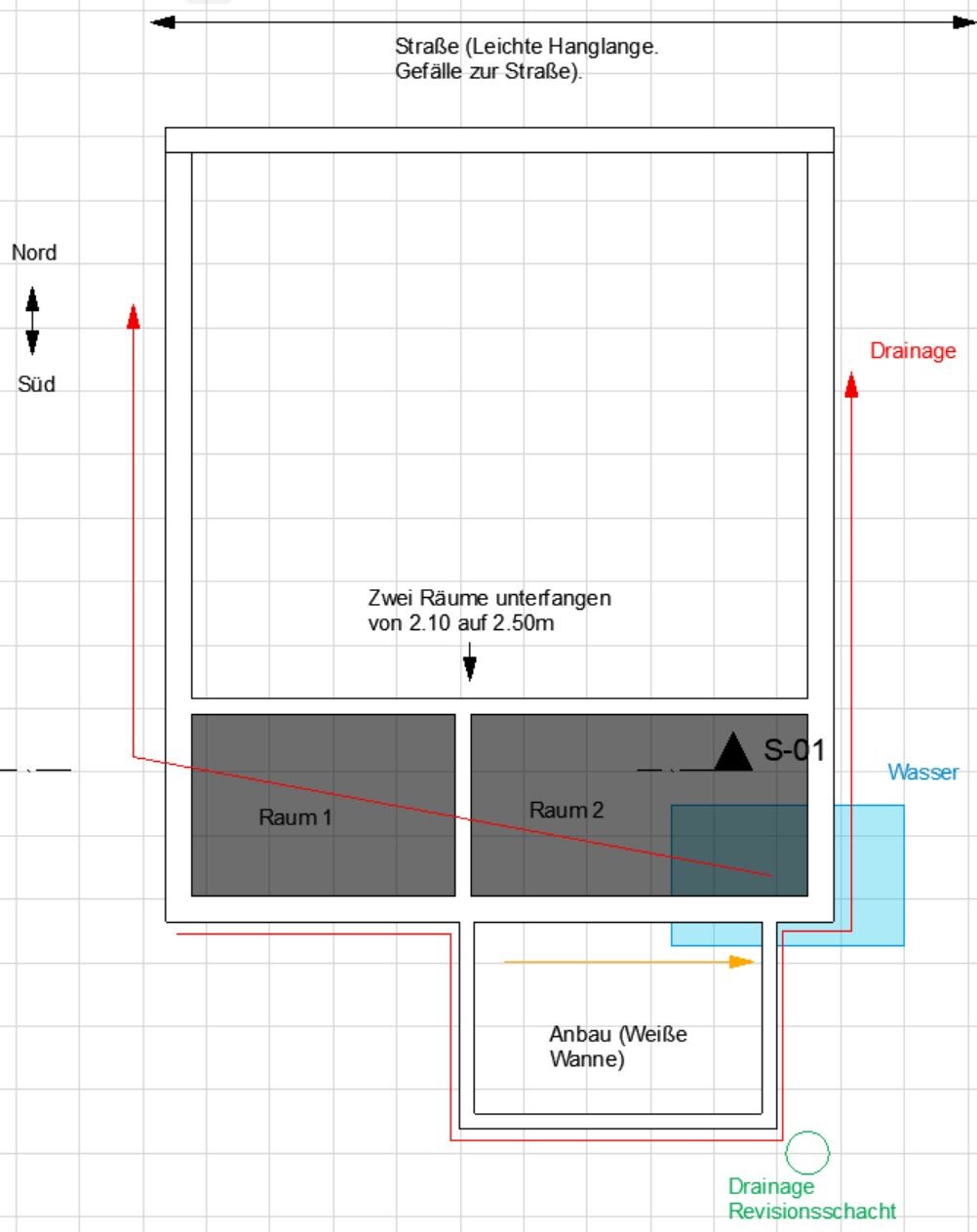
We are currently having an extension built onto our existing (newly purchased) house. Additionally, two rooms are being underpinned, see the picture. The basement is buried up to 30cm (12 inches) in the ground on the south side and up to about 1.2m (4 feet) on the north side. (The existing house is only on a strip foundation.) The extension has a concrete slab foundation. The slab or the basement exterior walls are made of waterproof concrete.
The basement already had a somewhat musty smell. The basement exterior walls will still be waterproofed and insulated. During the underpinning of room 2, we noticed some water pushing up from the ground. The builder is already concerned about how to waterproof the extension in relation to the existing building and whether the drainage marked in red is sufficient. Drainage is also planned for the underpinned rooms.
Questions:
1. Builder’s proposal for waterproofing between the extension and existing building: treat the existing building in the area of the new slab with Vandex. Pre-treat the existing building in the area of the new extension basement exterior walls with bitumen. At these points (Vandex and bitumen), a swelling waterstop (or something similar) is to be installed. Do you think this approach is acceptable?
2. My suggestion: equip the slab with two drainage systems, see orange. However, the builder considers this unnecessary. The architect, on the other hand, says the more, the better, it can’t hurt. Another idea is to install an inspection chamber (plastic or concrete) about 70cm (28 inches) below the slab on the bottom right of the extension and install a pump with a float there. According to the builder, this would make the Vandex treatment and the drainage slope to the street unnecessary. What do you think?
I personally prefer more security, meaning still use Vandex and waterproof the extension in relation to the existing building. Additionally, I am considering whether the drainage slope toward the street could still be constructed and the inspection chamber could serve as a second safety level (or vice versa, meaning first safety level is the inspection chamber with pump and then the drainage slope to the street, e.g., if the pump fails or similar).
Similar topics