
 DieScholz´ens12 Sep 2017 08:59
New here and already have a few questions....
We are tearing up the entire floor and want to install underfloor heating.... Now, we want a hardwood floor in the living room and a floor with a concrete look in all other rooms, including bathrooms, kitchen, and dining area.
My question is: I would really love a polished screed floor (except for the expansion joints) for a nice, uniform appearance. However, friends and two tradespeople have expressed concerns about cracks and similar issues.
I don’t want to seem unwilling to take advice, but I also don’t want to give up completely — after all, you see this kind of flooring in many places. Alternatively, I have (admittedly somewhat reluctantly) looked at concrete tiles. What bothers me there is that it always looks like tiles, either because of the grout lines or the repeating pattern. I want the floor to look a bit like concrete with shadows, stains, and the like (I hope this makes sense).
So, question for the pros: do you think going with the screed makes sense? Do you maybe have an alternative? Or are tiles really the most practical option?
Oh, ceiling heights are from 2.50 m (8 ft 2 in) upwards.
I’ll upload a few pictures...
So far, only the laminate flooring has been removed (which had been installed specifically for sale purposes).
Thanks a lot
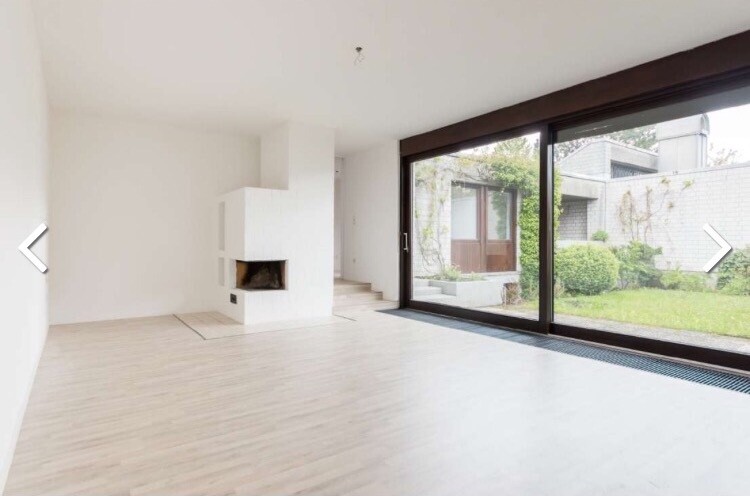
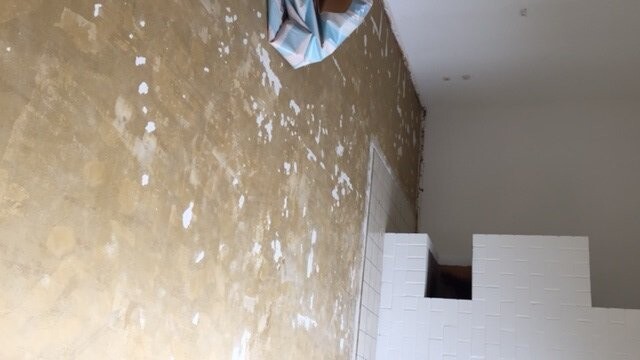
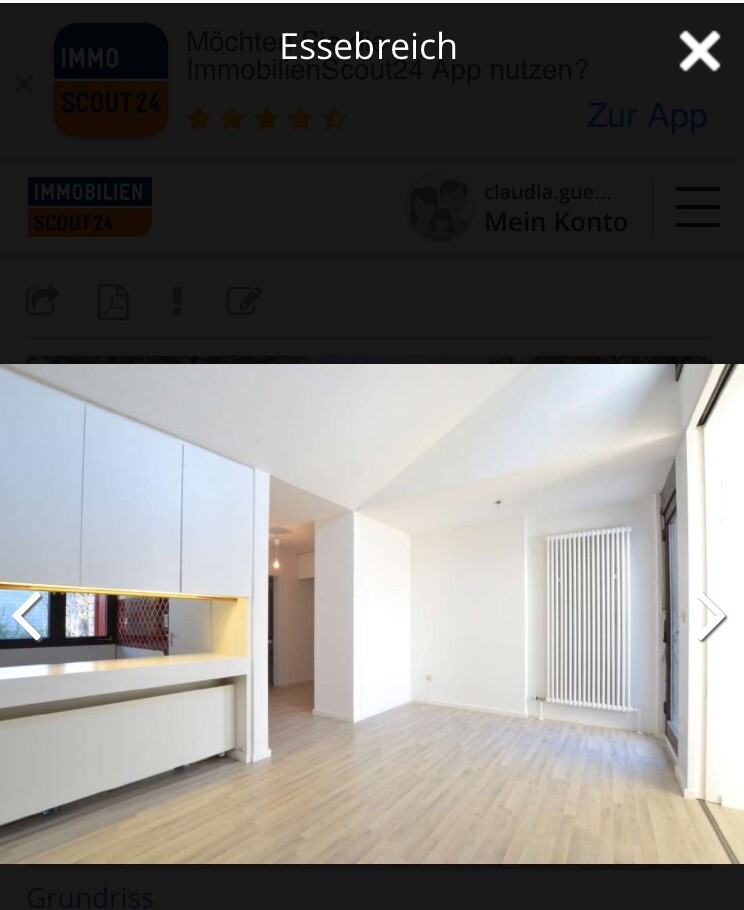
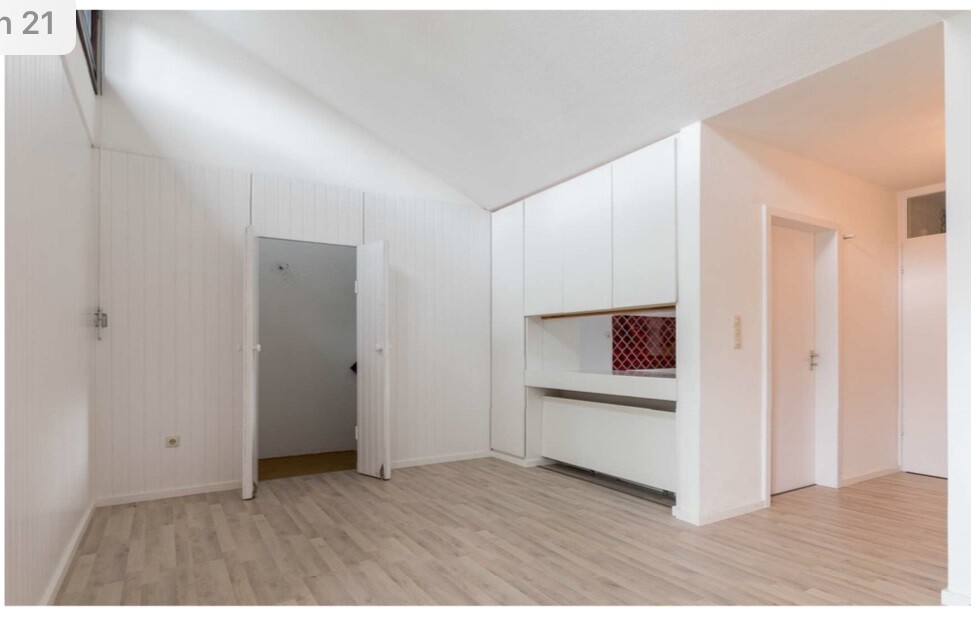
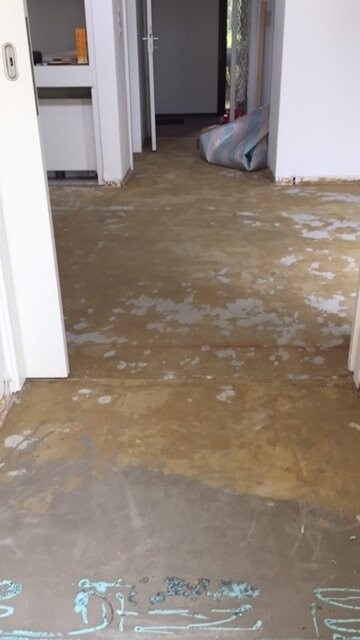
We are tearing up the entire floor and want to install underfloor heating.... Now, we want a hardwood floor in the living room and a floor with a concrete look in all other rooms, including bathrooms, kitchen, and dining area.
My question is: I would really love a polished screed floor (except for the expansion joints) for a nice, uniform appearance. However, friends and two tradespeople have expressed concerns about cracks and similar issues.
I don’t want to seem unwilling to take advice, but I also don’t want to give up completely — after all, you see this kind of flooring in many places. Alternatively, I have (admittedly somewhat reluctantly) looked at concrete tiles. What bothers me there is that it always looks like tiles, either because of the grout lines or the repeating pattern. I want the floor to look a bit like concrete with shadows, stains, and the like (I hope this makes sense).
So, question for the pros: do you think going with the screed makes sense? Do you maybe have an alternative? Or are tiles really the most practical option?
Oh, ceiling heights are from 2.50 m (8 ft 2 in) upwards.
I’ll upload a few pictures...
So far, only the laminate flooring has been removed (which had been installed specifically for sale purposes).
Thanks a lot

Hello "DieScholz`ens".
Your question is quite straightforward to answer. Simply “breaking up” the floor won’t be enough. For a hydronic (water-based) underfloor heating system, it will be necessary to replace the screed. However, you should plan for a greater build-up height than what was originally installed. Additionally, we can assume that the insulation layer thickness—or even the insulation material itself—from "anno tubac" did not meet today’s standards.
I would advise against a visible screed finish, as installing this requires specialized expertise from the screed installer and potentially significant tolerance from the client.
And I speak from experience!
My suggestion is to install a new heated screed based on calcium sulfate flowing screed (calcium sulfate floating screed), then sand, prime, and level it with an appropriate (stress-free) levelling compound. On top of this, you can install a design floor covering, which is also available with a concrete-look finish (e.g., JOKA).
The appearance these days is so convincing that even professionals often need to take a second look to realize what type of flooring is actually installed.
Because of the slim construction, the necessarily increased screed thickness will not be fully compensated for, but every millimeter should be considered carefully regarding the connection points to adjacent building elements.
----------------------------
Best regards and good luck: KlaRa
Your question is quite straightforward to answer. Simply “breaking up” the floor won’t be enough. For a hydronic (water-based) underfloor heating system, it will be necessary to replace the screed. However, you should plan for a greater build-up height than what was originally installed. Additionally, we can assume that the insulation layer thickness—or even the insulation material itself—from "anno tubac" did not meet today’s standards.
I would advise against a visible screed finish, as installing this requires specialized expertise from the screed installer and potentially significant tolerance from the client.
And I speak from experience!
My suggestion is to install a new heated screed based on calcium sulfate flowing screed (calcium sulfate floating screed), then sand, prime, and level it with an appropriate (stress-free) levelling compound. On top of this, you can install a design floor covering, which is also available with a concrete-look finish (e.g., JOKA).
The appearance these days is so convincing that even professionals often need to take a second look to realize what type of flooring is actually installed.
Because of the slim construction, the necessarily increased screed thickness will not be fully compensated for, but every millimeter should be considered carefully regarding the connection points to adjacent building elements.
----------------------------
Best regards and good luck: KlaRa
DieScholz´ens13 Sep 2017 07:46Hello,
Thanks for the replies. By "removing the floor," the old screed was meant, and yes, we want a water-based underfloor heating system.
I have also come across these design floors several times, but I couldn’t really warm up to them (I can’t say exactly why).
Would concrete plaster then not crack?
Regarding bargains... well, (it feels like) everything I like is somehow always in the higher price range (it really seems like a curse). Even a polished screed, which sounds affordable, costs 120 EUR/sqm (we have just under 100 sqm (about 65 sqm without the small rooms)).
Even epoxy resin flooring, where I miss the concrete look, is in the higher price range.
I will now take a closer look at these vinyl floors (can those also be used directly in the shower?).
Our wish would be to have only two types of flooring installed in the house: wooden parquet and something industrial as a contrast, like a concrete-look floor.
If it comes to tiles or similar, we want the grout lines to be barely visible and no repeating pattern (do you know what I mean?).
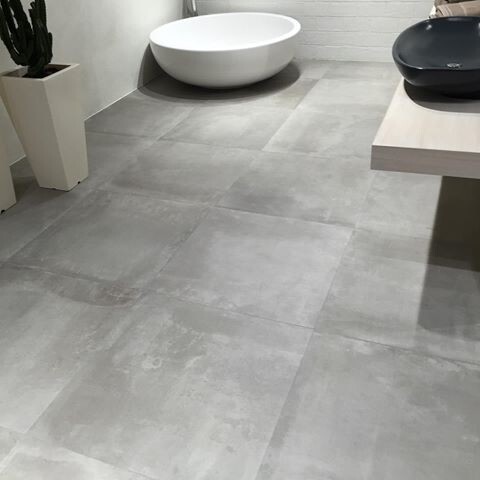
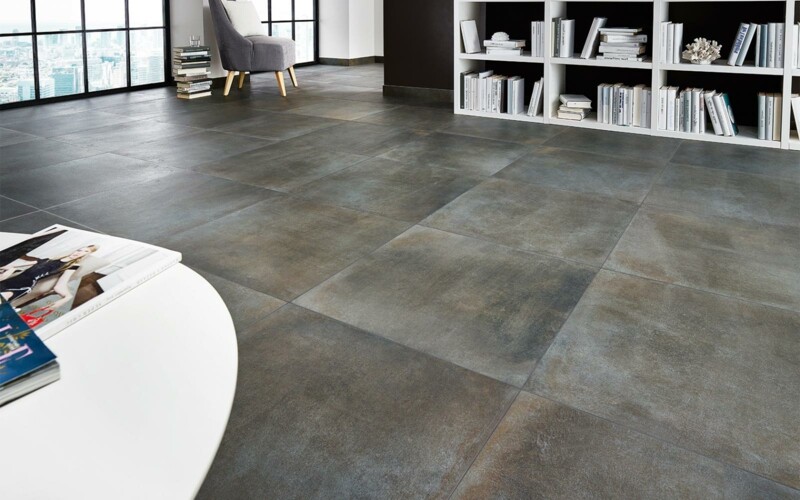
Attached are two examples that do not appeal to us:
Thanks for the replies. By "removing the floor," the old screed was meant, and yes, we want a water-based underfloor heating system.
I have also come across these design floors several times, but I couldn’t really warm up to them (I can’t say exactly why).
Would concrete plaster then not crack?
Regarding bargains... well, (it feels like) everything I like is somehow always in the higher price range (it really seems like a curse). Even a polished screed, which sounds affordable, costs 120 EUR/sqm (we have just under 100 sqm (about 65 sqm without the small rooms)).
Even epoxy resin flooring, where I miss the concrete look, is in the higher price range.
I will now take a closer look at these vinyl floors (can those also be used directly in the shower?).
Our wish would be to have only two types of flooring installed in the house: wooden parquet and something industrial as a contrast, like a concrete-look floor.
If it comes to tiles or similar, we want the grout lines to be barely visible and no repeating pattern (do you know what I mean?).
Attached are two examples that do not appeal to us:
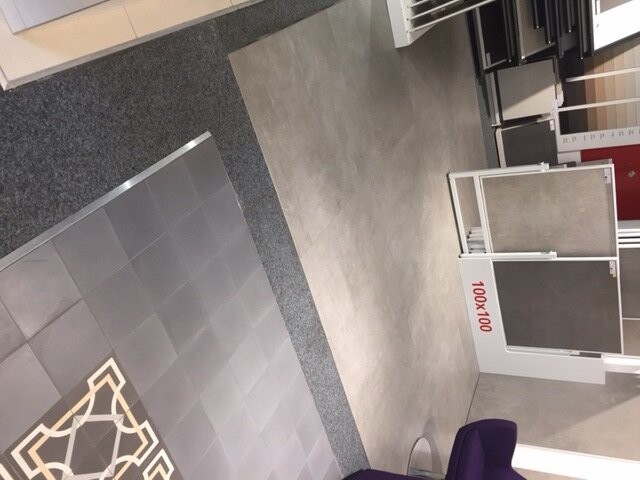
DieScholz´ens13 Sep 2017 07:52These are the tiles we are currently considering as an alternative, since they come closest to what we want.
Sorry, I know I’m being a bit difficult here
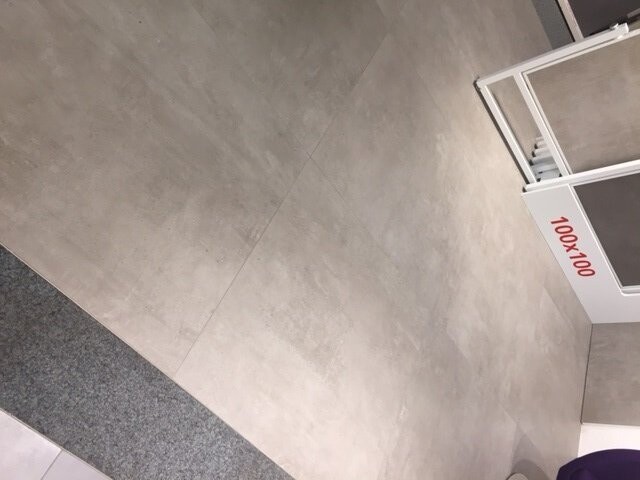
Sorry, I know I’m being a bit difficult here
Hello questioner.
Screeds are primarily designed to act as a load distribution layer. This applies to all types of installation except for bonded screeds. Also, the screed surface must always be protected. In residential construction, this is done with a floor covering; in industrial construction, with a surface protection such as sealing or coating. This is why so-called “exposed screeds” are expensive. These screeds meet several requirements that other screeds either do not have to meet or cannot meet.
If the new floor covering you have in mind should not show grout lines, then none of the covering tiles visible in the attached photos can fulfill this requirement. Anyone who does not see the joints must have their eyes closed.
These large tile formats will certainly be fixed onto a carrier material. This means a very high flatness of the substrate is mandatory (this must be paid as an additional service).
Also, PVC plank formats (so-called unique floors) cannot be installed in shower areas. This is not possible because water will penetrate the substructure through the (unprotected) edges of the covering.
What about decorative leveling compounds? Be careful!
This is a specialized trade where you should definitely ask for references from the craftsman beforehand. Unfortunately, these floors are quite expensive, which is true, but this is due to the required installation thickness of at least 3mm (1/8 inch) and their high abrasion resistance. Sure, there are cheaper options, but you must understand that this cost saving will affect something somewhere.
You are currently at a crossroads:
Either it will be inexpensive but neither attractive nor durable, or it will be costly and you will enjoy a successful, abrasion-resistant floor for years to come.
Alternatives? There are none.
Especially the wet-use shower area (with alternative waterproofing) presents a high demand on the trade, which not every standard covering can fulfill!!
---------------------------------
Regards: KlaRa
Screeds are primarily designed to act as a load distribution layer. This applies to all types of installation except for bonded screeds. Also, the screed surface must always be protected. In residential construction, this is done with a floor covering; in industrial construction, with a surface protection such as sealing or coating. This is why so-called “exposed screeds” are expensive. These screeds meet several requirements that other screeds either do not have to meet or cannot meet.
If the new floor covering you have in mind should not show grout lines, then none of the covering tiles visible in the attached photos can fulfill this requirement. Anyone who does not see the joints must have their eyes closed.
These large tile formats will certainly be fixed onto a carrier material. This means a very high flatness of the substrate is mandatory (this must be paid as an additional service).
Also, PVC plank formats (so-called unique floors) cannot be installed in shower areas. This is not possible because water will penetrate the substructure through the (unprotected) edges of the covering.
What about decorative leveling compounds? Be careful!
This is a specialized trade where you should definitely ask for references from the craftsman beforehand. Unfortunately, these floors are quite expensive, which is true, but this is due to the required installation thickness of at least 3mm (1/8 inch) and their high abrasion resistance. Sure, there are cheaper options, but you must understand that this cost saving will affect something somewhere.
You are currently at a crossroads:
Either it will be inexpensive but neither attractive nor durable, or it will be costly and you will enjoy a successful, abrasion-resistant floor for years to come.
Alternatives? There are none.
Especially the wet-use shower area (with alternative waterproofing) presents a high demand on the trade, which not every standard covering can fulfill!!
---------------------------------
Regards: KlaRa
Similar topics