
.... I love brightness and would like to have a light fixture above the shower.
It is clear and sensible that electricity and water must be kept separate.
My plan is to cover the electrical components – including the LED bulb – with an acrylic glass enclosure, so that even if someone directs the shower spray upwards, there would reliably be no contact.
Does anyone know where I can find the regulations, or how I can find out exactly what is actually prohibited?
It is clear and sensible that electricity and water must be kept separate.
My plan is to cover the electrical components – including the LED bulb – with an acrylic glass enclosure, so that even if someone directs the shower spray upwards, there would reliably be no contact.
Does anyone know where I can find the regulations, or how I can find out exactly what is actually prohibited?
 ateliersiegel14 Dec 2022 07:27
Since it seems possible and feasible, I plan to completely omit electricity in this area, but it’s not like there aren’t lights designed for use IN the water that are sealed so securely they are even permitted in Germany.
It also depends on the amount of effort invested.
It also depends on the amount of effort invested.

Living spaces are generally defined as having a minimum height of 2.40 m (7 ft 10 in). However, depending on the ceiling height, the water jet must first reach a full spray at 2.40 m (7 ft 10 in) and then also penetrate the light fixture. I hardly believe a child could manage that.
In my view, electrical outlets next to washbasins are probably much more dangerous. Here is a picture allegedly from a German hotel:
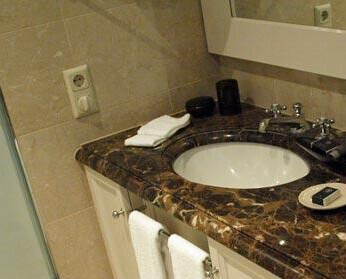
In my view, electrical outlets next to washbasins are probably much more dangerous. Here is a picture allegedly from a German hotel:
 bauenmk202015 Dec 2022 23:09
Musketier schrieb:
Living spaces are generally defined as having at least 2.40m (7 ft 10 in) ceiling height. Depending on the ceiling height, the water jet must first reach a full stream at 2.40m (7 ft 10 in) and then penetrate the light fixture. I seriously doubt that a child could manage that.
In my view, power outlets near sinks are probably much more dangerous. Here is a picture, allegedly from a German hotel:
This is madness in German bathrooms and kitchens and so on. Not to forget the terminal blocks hanging around somewhere...
The ceiling spotlight is usually installed in a recessed hole and also has a trim ring that completely covers the hole. Then a small connection cable goes into the cavity ceiling, where the terminal block or a small connection box is located.
But in general, of course, one should take responsibility for others and not simply ignore unnecessary hazards in the household (no matter how low the probability).
Are there any statistics regarding shower accidents caused by 230V live electrical wiring?
ateliersiegel16 Dec 2022 07:21Not that it matters much, but for me, the question was less about the actual risk (which I believe I could manage with a safe construction method) and more about the existing regulations—which have already been mentioned several times and which I want to comply with.
From the perspective of the person asking: everything is fine 😎
From the perspective of the person asking: everything is fine 😎
ateliersiegel30 Jan 2023 18:05Although it’s not finished yet (the electrician is taking his time :rolleyes 🙂, you can now see what the idea is.
The cabinet and the "lighting box" above it come from my workshop.
I’m leaving out the planned reflector above the shower. It’s work, not really necessary, and I’m not even sure it would make the shower noticeably brighter.
I’m satisfied.
Thanks for your input 🙂
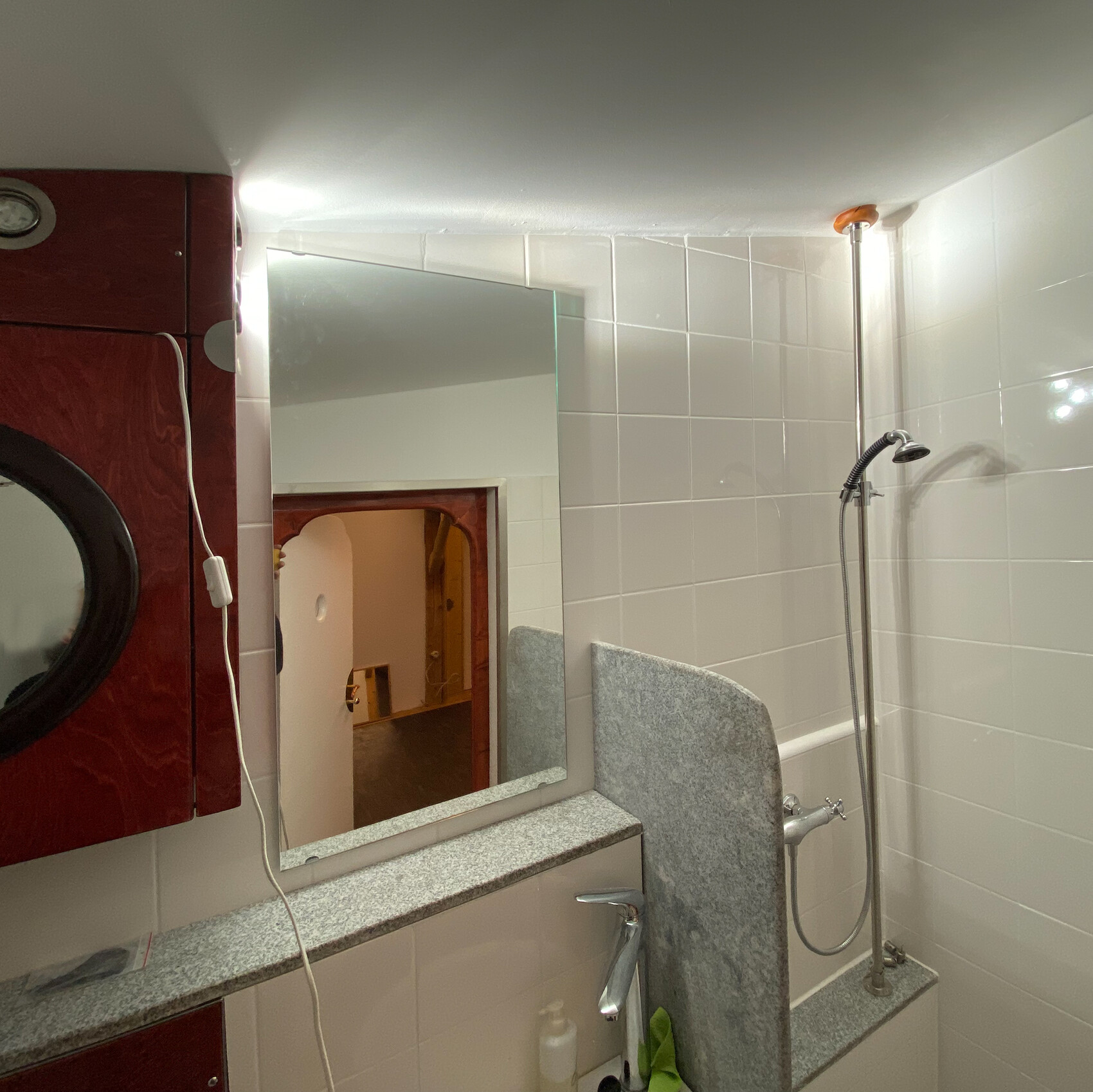
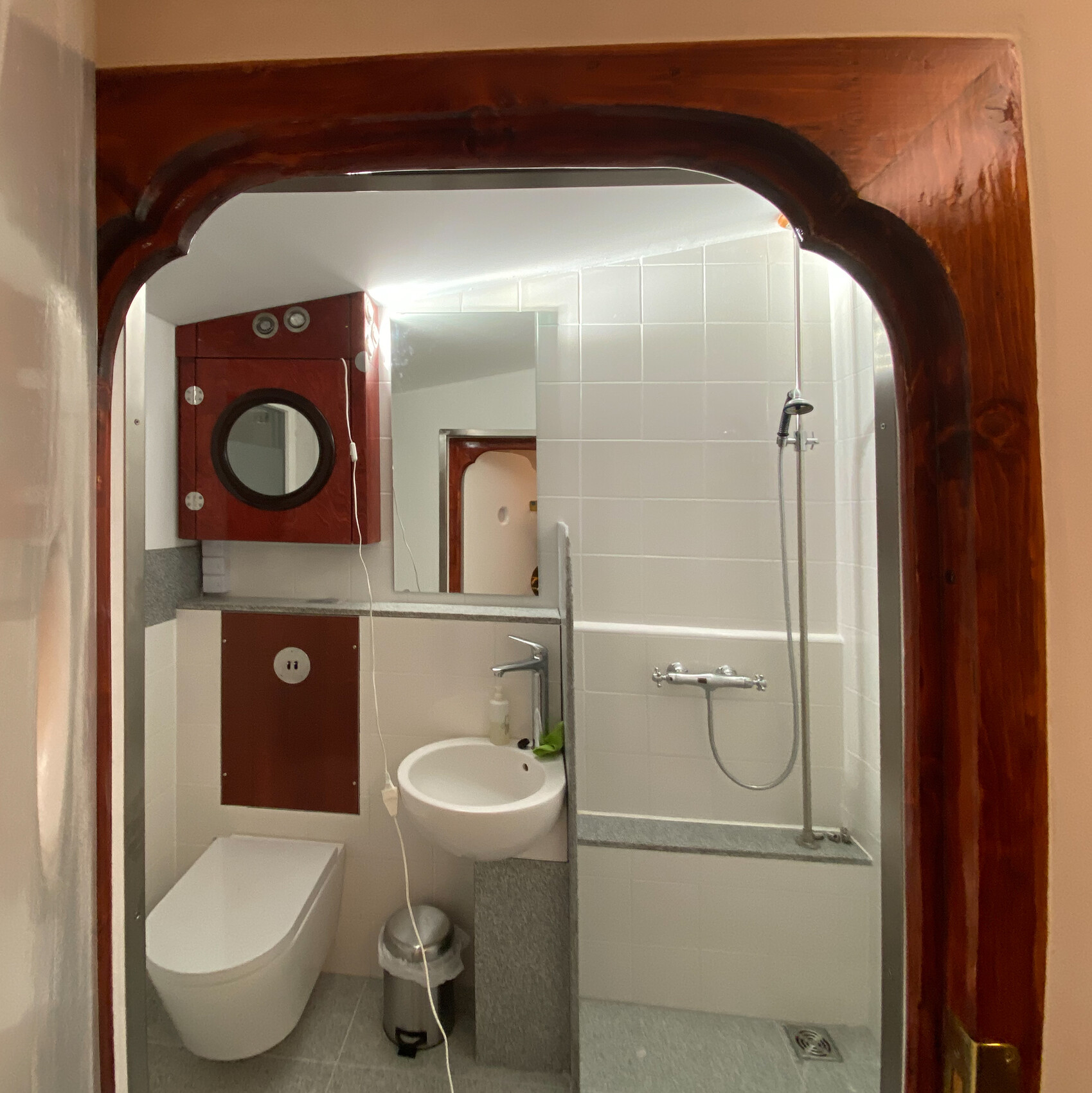
The cabinet and the "lighting box" above it come from my workshop.
I’m leaving out the planned reflector above the shower. It’s work, not really necessary, and I’m not even sure it would make the shower noticeably brighter.
I’m satisfied.
Thanks for your input 🙂
Musketier schrieb:
In my opinion, power outlets next to sinks are probably much more dangerous. Here is a picture supposedly from a German hotelBut it is allowed, what major damage could really happen? There is surely a residual current device (RCD) installed, which will trip if water causes a short circuit. Then even death from a hairdryer in the bathtub or a light fixture above the shower is very unlikely.ateliersiegel schrieb:
I am satisfiedThat is the main thing.Similar topics