
 MaxPower908 Oct 2016 18:26
Hello everyone,
Today we viewed a house that we might consider buying. It was built in 1900. Many things have been renovated in the last 20 years, such as the roof, heating system, exterior paint, and so on. Reportedly, the exterior basement wall has also been insulated. In the basement, I took the following photos:
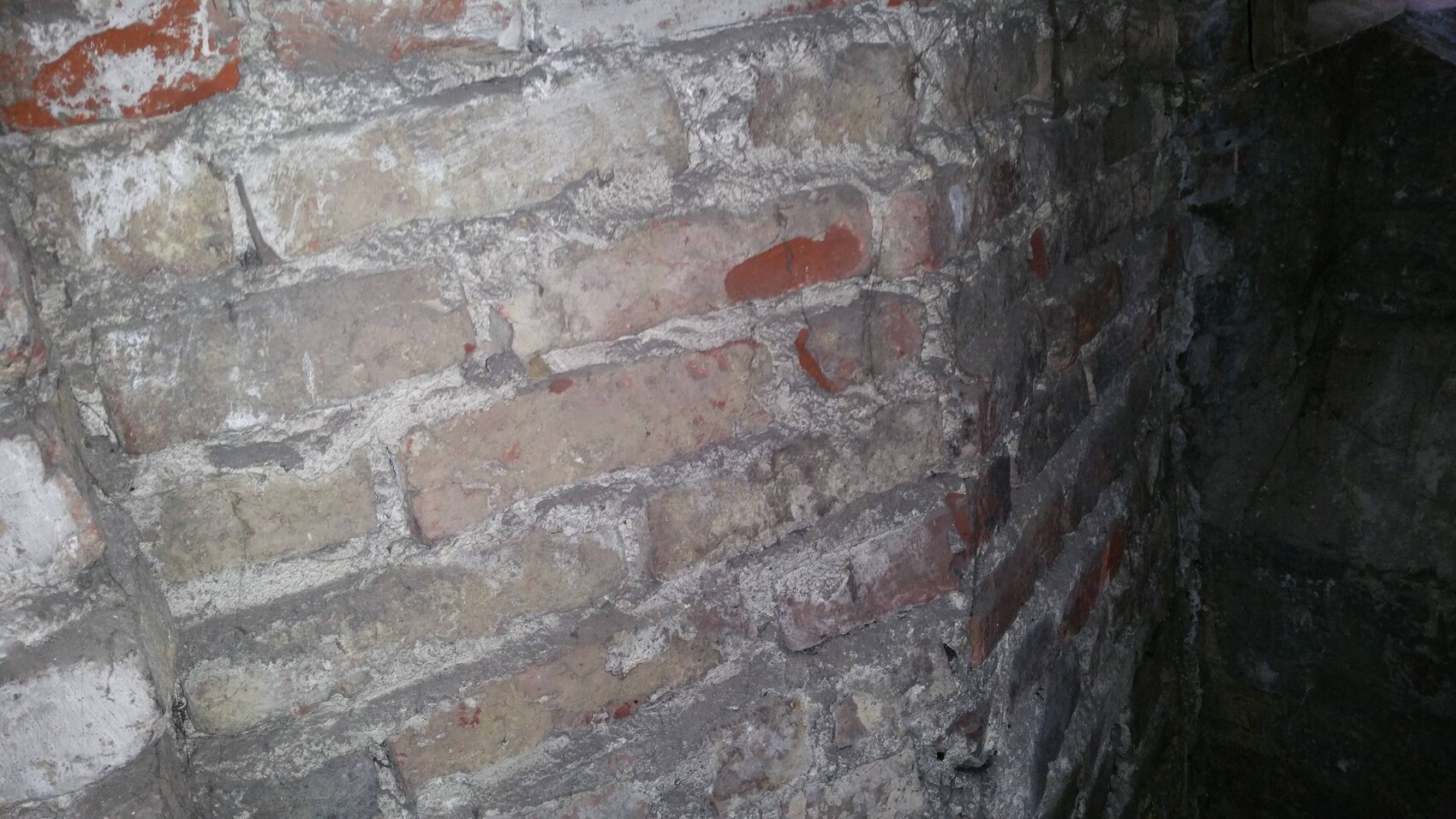


You can see what, well, is probably typical masonry from that time with bricks, and especially a rather rusty steel beam. I know it’s difficult to diagnose remotely, but what kind of costs could I potentially face? In the worst case, would a new beam have to be installed, or could the entire building possibly be beyond repair? In one of the basement rooms, there was also mold on the wall.
In general, can a house like this still last another 100 years, or is that unlikely?
As usual, I have no expertise in home construction and would appreciate your opinions. Thanks!
Today we viewed a house that we might consider buying. It was built in 1900. Many things have been renovated in the last 20 years, such as the roof, heating system, exterior paint, and so on. Reportedly, the exterior basement wall has also been insulated. In the basement, I took the following photos:
You can see what, well, is probably typical masonry from that time with bricks, and especially a rather rusty steel beam. I know it’s difficult to diagnose remotely, but what kind of costs could I potentially face? In the worst case, would a new beam have to be installed, or could the entire building possibly be beyond repair? In one of the basement rooms, there was also mold on the wall.
In general, can a house like this still last another 100 years, or is that unlikely?
As usual, I have no expertise in home construction and would appreciate your opinions. Thanks!
G
garfunkel8 Oct 2016 19:04I would recommend that as well. Better safe than sorry, and the money spent on an inspector is definitely not wasted for houses of that age.

I do not see anything in the photos that would be unusual for a house of this construction era. As long as the beams are not deeply corroded, they can be cleaned of rust and treated with rust protection to function properly for a long time. The "mold" on the masonry could also be efflorescence, which is salt deposits. Moisture in old basements is usually condensation from warm, humid air on cold basement walls, caused by improper ventilation, for example in summer.
Basically, a house must be inspected in detail on-site before purchase, from the basement to the attic. Only after a visual inspection can an initial assessment be made regarding the condition, the scope of necessary repairs, and any desired remodeling or expansion measures. A purchase consultation also includes evaluating the building and planning permissions and reviewing a range of documents to verify that the property is free of encumbrances for the buyer.
The so-called "renovations" from the last 20 years should generally be viewed with great caution, as in most cases they were not carried out professionally—neither from a structural nor from a building physics perspective.
Basically, a house must be inspected in detail on-site before purchase, from the basement to the attic. Only after a visual inspection can an initial assessment be made regarding the condition, the scope of necessary repairs, and any desired remodeling or expansion measures. A purchase consultation also includes evaluating the building and planning permissions and reviewing a range of documents to verify that the property is free of encumbrances for the buyer.
The so-called "renovations" from the last 20 years should generally be viewed with great caution, as in most cases they were not carried out professionally—neither from a structural nor from a building physics perspective.
I can only agree with @wpic. I have a similar basement ceiling in my front house, built in 1918. The steel beams were treated with corrosion protection and then painted white. If moisture and air were causing new rust on the beams, you would immediately notice it by brown discoloration.
A little humidity in the basement is completely normal with the construction method used in my house and common at that time, as it is unavoidable. However, if you know the cause, you can control the moisture; we used silicate-based products against rising damp from the rubble stone masonry back then. Nowadays, there are also, as far as I know, treatments with wax that prevent or at least significantly slow down moisture penetration.
In other words, such a basement will never be completely dry like a new build, or only with unreasonably extreme effort, but as @wpic has already pointed out, that is probably not the real problem. I would be much more interested in how the recent renovations in the living areas were carried out.
Best regards,
Dirk Grafe
A little humidity in the basement is completely normal with the construction method used in my house and common at that time, as it is unavoidable. However, if you know the cause, you can control the moisture; we used silicate-based products against rising damp from the rubble stone masonry back then. Nowadays, there are also, as far as I know, treatments with wax that prevent or at least significantly slow down moisture penetration.
In other words, such a basement will never be completely dry like a new build, or only with unreasonably extreme effort, but as @wpic has already pointed out, that is probably not the real problem. I would be much more interested in how the recent renovations in the living areas were carried out.
Best regards,
Dirk Grafe
MaxPower9010 Oct 2016 22:56Thank you for your expert answers, they are very helpful! I will keep you updated!
Similar topics