
ᐅ Tongue-and-groove boards or OSB panels for the attic (potential future conversion)
Created on: 1 Aug 2019 15:25
J
julianpeHello everyone,
Recently, the shell of our house was completed. In the meantime, I would like to make the attic floor usable for walking.
There are two different opinions about which material is best for this purpose.
OSB or tongue-and-groove boards?
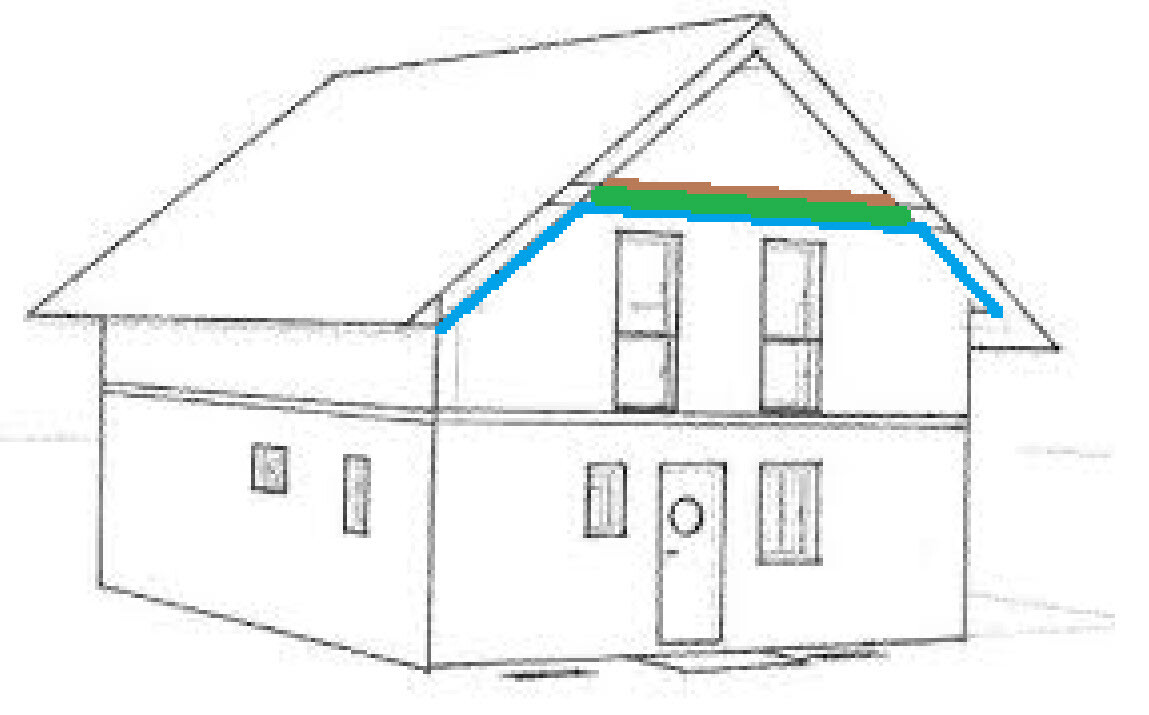
The following structure will be installed later (see attachment).
The vapor barrier (blue) will be applied from below to the wooden beam ceiling on the upper floor. The insulation (green) will be placed in the intermediate ceiling.
I would now like to install a covering (brown) on top of the rafters.
OSB is vapor-tight, whereas tongue-and-groove boards are not.
The attic will primarily be used as storage space.
For this reason, I would choose tongue-and-groove boards.
What needs to be changed or considered if, in x years, I decide to convert the attic into living space or an office?
New insulation on the inside of the roof, extending the vapor barrier up to the ridge and bonding it with the existing barrier, etc.?
Thank you very much for your assessments.
Best regards,
julianpe
Recently, the shell of our house was completed. In the meantime, I would like to make the attic floor usable for walking.
There are two different opinions about which material is best for this purpose.
OSB or tongue-and-groove boards?
The following structure will be installed later (see attachment).
The vapor barrier (blue) will be applied from below to the wooden beam ceiling on the upper floor. The insulation (green) will be placed in the intermediate ceiling.
I would now like to install a covering (brown) on top of the rafters.
OSB is vapor-tight, whereas tongue-and-groove boards are not.
The attic will primarily be used as storage space.
For this reason, I would choose tongue-and-groove boards.
What needs to be changed or considered if, in x years, I decide to convert the attic into living space or an office?
New insulation on the inside of the roof, extending the vapor barrier up to the ridge and bonding it with the existing barrier, etc.?
Thank you very much for your assessments.
Best regards,
julianpe
Install battens and tongue-and-groove boarding. OSB can be used if everything is 100% airtight, but I don’t think that’s often the case. Anything you don’t do yourself, and so on.
Later office:
The floor construction needs to be reconsidered because of impact sound insulation, etc. Then insulation between the joists, vapor retarder or vapor barrier. After that, proceed as desired.
Keep in mind the following: have heating, electrical, water, and wastewater installations prepared!
Stay consistent with the heating system. For example, don’t switch to radiators if the rest of the house uses underfloor heating. Basically, plan everything as if you will be finishing it right away.
Later office:
The floor construction needs to be reconsidered because of impact sound insulation, etc. Then insulation between the joists, vapor retarder or vapor barrier. After that, proceed as desired.
Keep in mind the following: have heating, electrical, water, and wastewater installations prepared!
Stay consistent with the heating system. For example, don’t switch to radiators if the rest of the house uses underfloor heating. Basically, plan everything as if you will be finishing it right away.
M
Mottenhausen2 Aug 2019 11:44If you insulate the attic floor completely from the start, then using OSB boards on the floor is not an issue because it will never get really cold up there. Consequently, the OSB panels won’t cool down, and no condensation can form on their underside. If you want to keep it as a cold roof, it’s better to use tongue-and-groove boards instead.
During the construction phase, we finished the attic in the shell stage, using semi-rigid insulation batts as insulation between the rafters, which is quite affordable. The rafters are also covered with OSB from below, which is acceptable as a vapor retarder if the tongue-and-groove edges are glued. The floor consists of 22mm (7/8 inch) OSB directly laid on the joists. The effort in terms of labor and cost was manageable, and now everything is sealed tightly, for example, against pests. In both summer and winter, it serves as additional thermal insulation for the ceiling of the living floor below.
During the construction phase, we finished the attic in the shell stage, using semi-rigid insulation batts as insulation between the rafters, which is quite affordable. The rafters are also covered with OSB from below, which is acceptable as a vapor retarder if the tongue-and-groove edges are glued. The floor consists of 22mm (7/8 inch) OSB directly laid on the joists. The effort in terms of labor and cost was manageable, and now everything is sealed tightly, for example, against pests. In both summer and winter, it serves as additional thermal insulation for the ceiling of the living floor below.
Mottenhausen schrieb:
Rafters are also covered from below with OSB, as this is allowed as a vapor barrier if tongue and groove panels are glued together. Can you simply wallpaper over that later?Similar topics