
ᐅ Roof insulation, vapor retarder, conduit within insulation
Created on: 19 Jul 2023 02:10
H
Hausbesitzer8H
Hausbesitzer819 Jul 2023 02:10Hello everyone,
In 2019, we bought a house built in 2006.
The attic is fully finished, and the sloping ceilings are covered with ceiling panels. The attic is open to the hallway (there is a staircase from the ground floor up to the attic, without any door installed).
We wanted to build a small knee wall and, since the ceiling panels were warped, replace them above the knee wall with drywall.
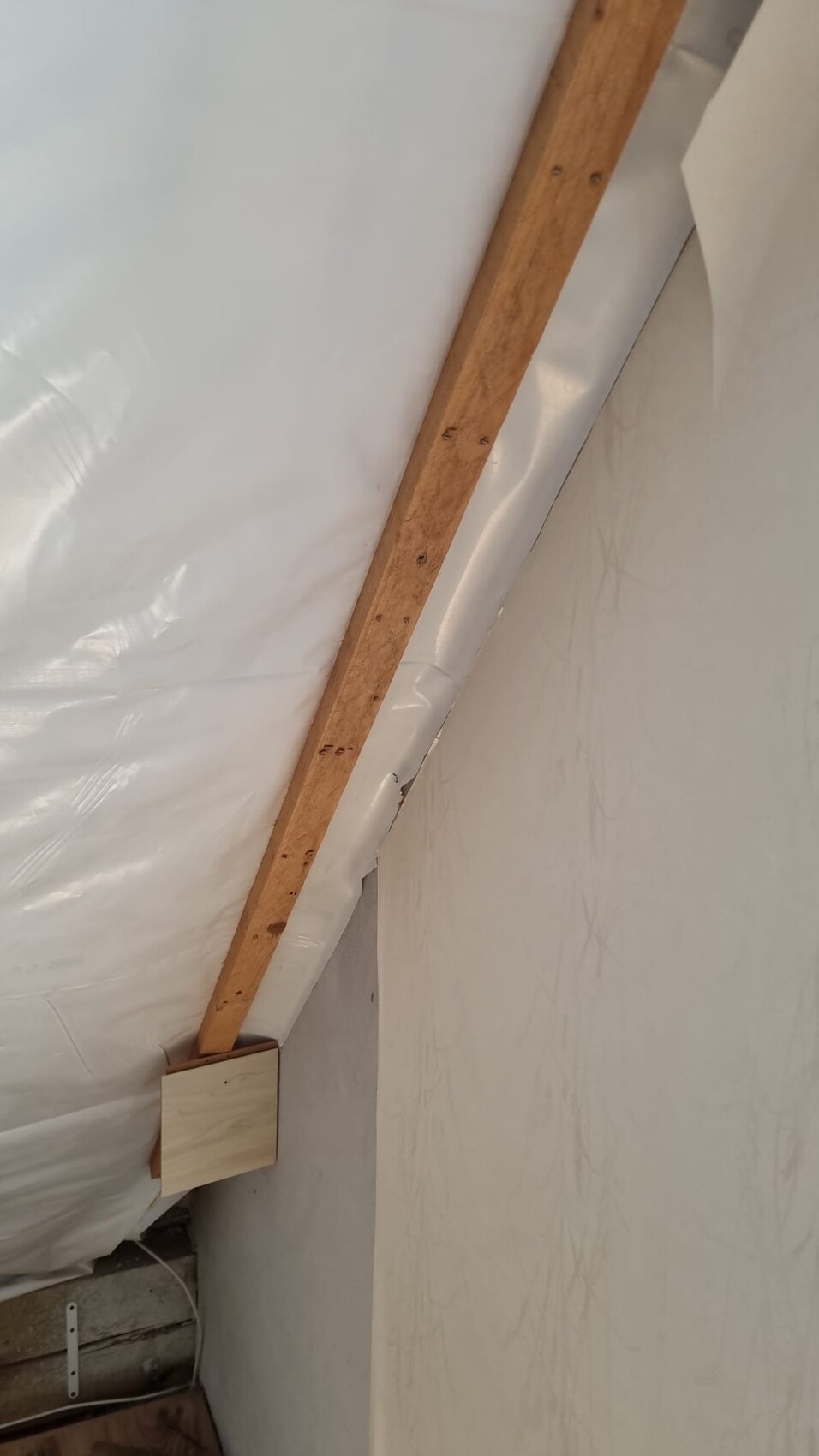
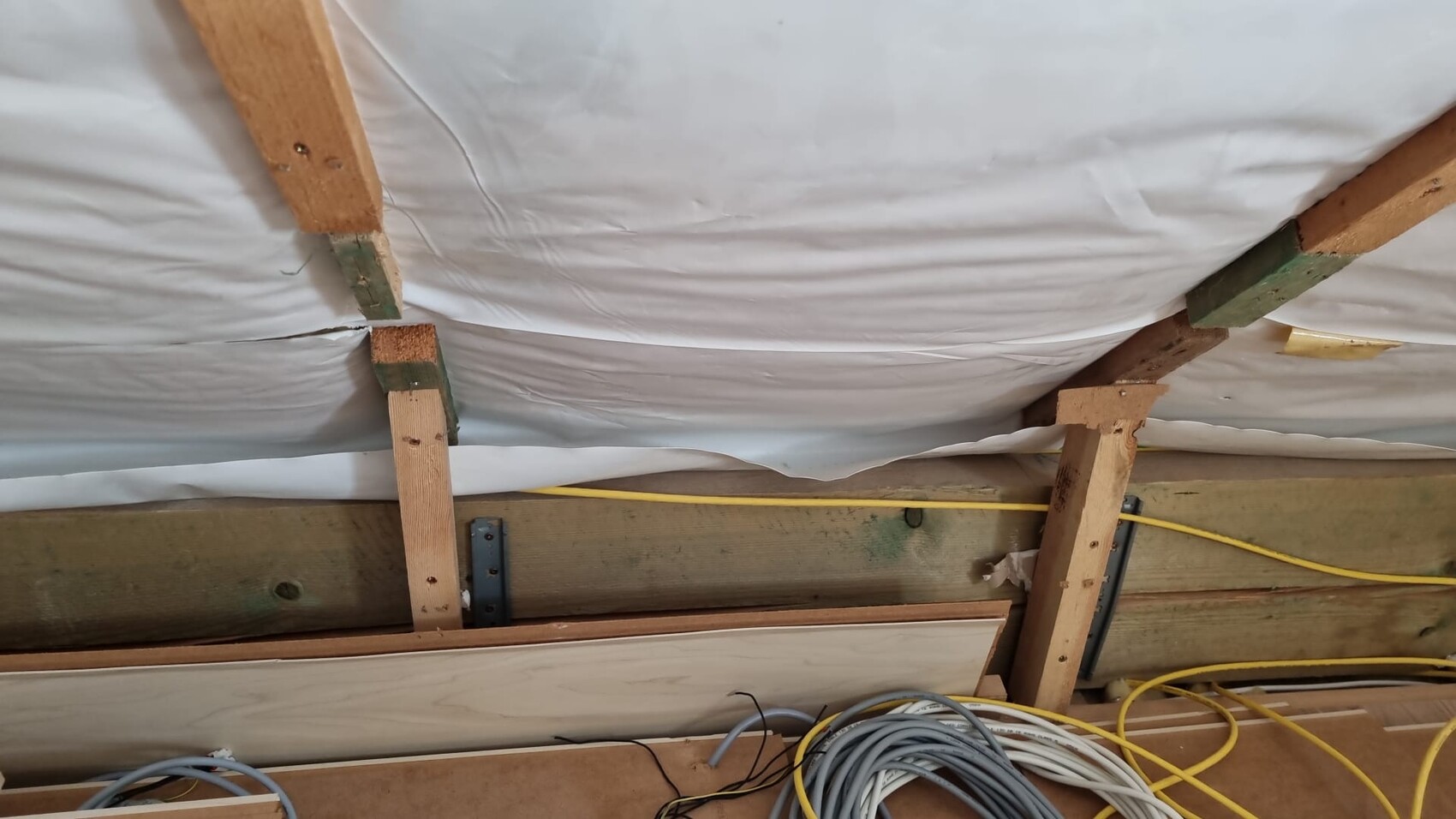
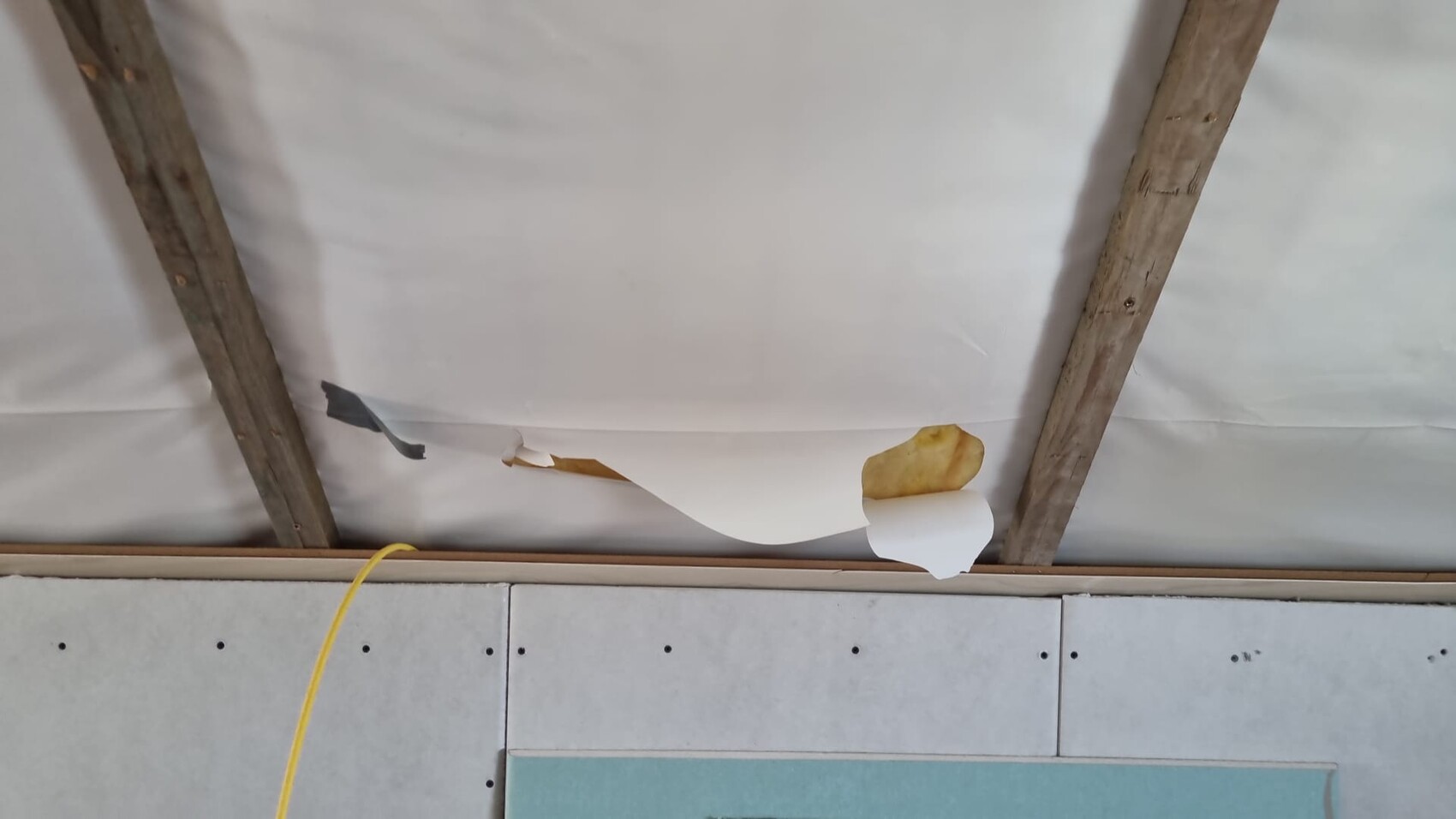
When removing the panels, I noticed that the vapor retarder was not sealed to the exterior wall or adhered in any way (pictures 1 and 2). In addition, the vapor retarder appears to have suffered UV damage (picture 3).
The glass wool/insulation wool is dry, and so far, I have not found any mold. Small spots are slightly gray/darker, but I believe this is just dust from the air.
And so, a small project turned into a major renovation...
I have already researched a lot online and should basically understand the situation, but I still have a few questions.
The attic conversion currently looks like in picture 4. Except that there is a ceiling panel installed instead of an MDF board.

1) Can I install a vapor retarder with an sd-value of 100m (328 ft) again? Or is a vapor retarder with an sd-value of 2-5m (7-16 ft) better or necessary?
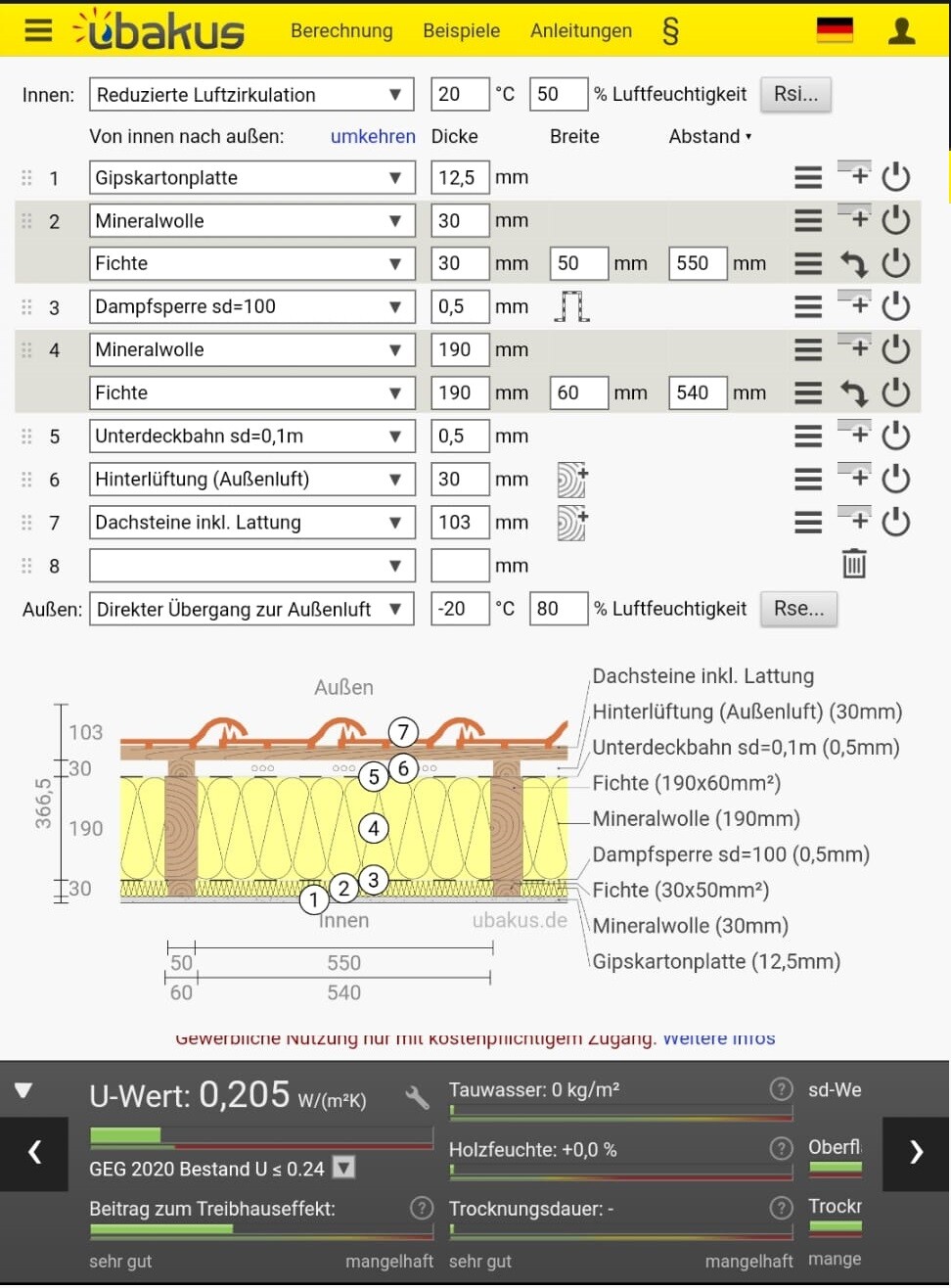
Since I need to build a new substructure for the drywall anyway, I would like to fill it with a 30mm (1.2 inches) insulating fleece placed under the rafter, so the attic conversion would look like in picture 5.
2) Are there any objections to this?
Now I am quite unsure whether this can or should be done...
Also, on the attic, we have our gas boiler. This is planned to be replaced by a heat pump in the next few years.
Since the entire roof is already opened, I would like to pre-install empty conduits (2x100mm (4 inches) plastic pipes) inside the insulation.
The heat pump would stand outside on the ground floor. The pipes would then run up the exterior wall to the eaves and from there approximately 2.5m (8 feet) along the roof slope (picture 6).

I would initially only lay the empty conduits, so later the supply and return lines for the heat pump can simply be pushed through.
3) Is this an acceptable approach? Do you have other suggestions?
I hope it’s not all as wrong as I have described and would appreciate any advice.
Best regards, André
In 2019, we bought a house built in 2006.
The attic is fully finished, and the sloping ceilings are covered with ceiling panels. The attic is open to the hallway (there is a staircase from the ground floor up to the attic, without any door installed).
We wanted to build a small knee wall and, since the ceiling panels were warped, replace them above the knee wall with drywall.
When removing the panels, I noticed that the vapor retarder was not sealed to the exterior wall or adhered in any way (pictures 1 and 2). In addition, the vapor retarder appears to have suffered UV damage (picture 3).
The glass wool/insulation wool is dry, and so far, I have not found any mold. Small spots are slightly gray/darker, but I believe this is just dust from the air.
And so, a small project turned into a major renovation...
I have already researched a lot online and should basically understand the situation, but I still have a few questions.
The attic conversion currently looks like in picture 4. Except that there is a ceiling panel installed instead of an MDF board.
1) Can I install a vapor retarder with an sd-value of 100m (328 ft) again? Or is a vapor retarder with an sd-value of 2-5m (7-16 ft) better or necessary?
Since I need to build a new substructure for the drywall anyway, I would like to fill it with a 30mm (1.2 inches) insulating fleece placed under the rafter, so the attic conversion would look like in picture 5.
2) Are there any objections to this?
Now I am quite unsure whether this can or should be done...
Also, on the attic, we have our gas boiler. This is planned to be replaced by a heat pump in the next few years.
Since the entire roof is already opened, I would like to pre-install empty conduits (2x100mm (4 inches) plastic pipes) inside the insulation.
The heat pump would stand outside on the ground floor. The pipes would then run up the exterior wall to the eaves and from there approximately 2.5m (8 feet) along the roof slope (picture 6).
I would initially only lay the empty conduits, so later the supply and return lines for the heat pump can simply be pushed through.
3) Is this an acceptable approach? Do you have other suggestions?
I hope it’s not all as wrong as I have described and would appreciate any advice.
Best regards, André
Similar topics