
ᐅ Is Roof Glazing on a Conservatory Installed Incorrectly?
Created on: 22 Feb 2020 23:17
M
michael051976M
michael05197622 Feb 2020 23:17This concerns a conservatory that may not have been properly renovated. All the glass panes were replaced. Originally, there was a 20 cm (8 inches) step at the ceiling glass. The inner insulated pane did not extend beyond the living area. Now, there is a 5 cm (2 inches) step, and the inner glass reaches almost to the front. Originally, cross battens were fixed at the edge, but they were removed to allow the lower glass to extend forward. As a result, the glass rests 15 cm (6 inches) on the wooden beam. The wood is not painted, and in a photo, some condensation can be seen (I assume this is due to the resulting thermal bridge?) (the new glass has been installed for 2 weeks). Could this cause heat build-up in summer (risk of glass breaking)?
Solution 1: The renovation company does not see any problem but would replace the glass again to restore the 20 cm (8 inches) step for a payment of 3000 Euro.
Solution 2: The wood under the glass would be coated with a breathable varnish. Comment from the renovation company: "There is no breathable varnish; moisture would remain in the wood, and the sun would eventually damage the varnish."
Solution 3: Apply a 1 mm (0.04 inches) thick rubber strip over the entire wood surface. (The company does not think much of this suggestion either)
Solution 4: Remove both existing rubber strips and instead apply a 4 cm (1.5 inches) wide rubber strip at the edge of the inner glass pane. This should prevent any gap where moisture could be trapped and allow it to return to the interior (This was the renovation company's proposal).
I assume Solution 1 is the best, but unfortunately also the most expensive. Should I order the glass replacement again?
If the glass replacement should be ordered again, should it then be the more expensive enamelled version (for the last 20 cm (8 inches))?
Any advice would be appreciated!
Best regards, Michael
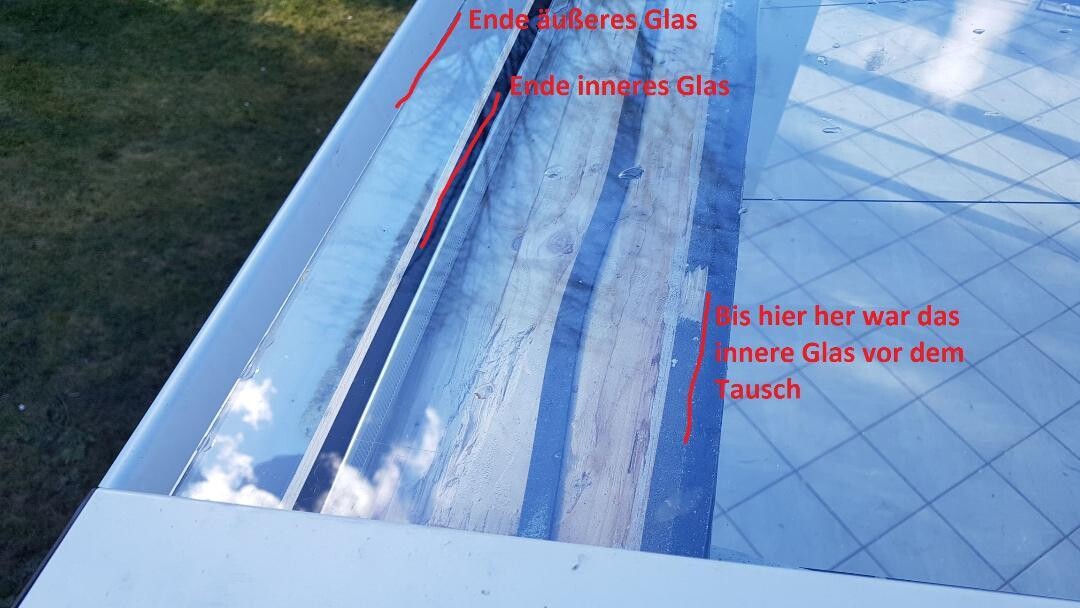
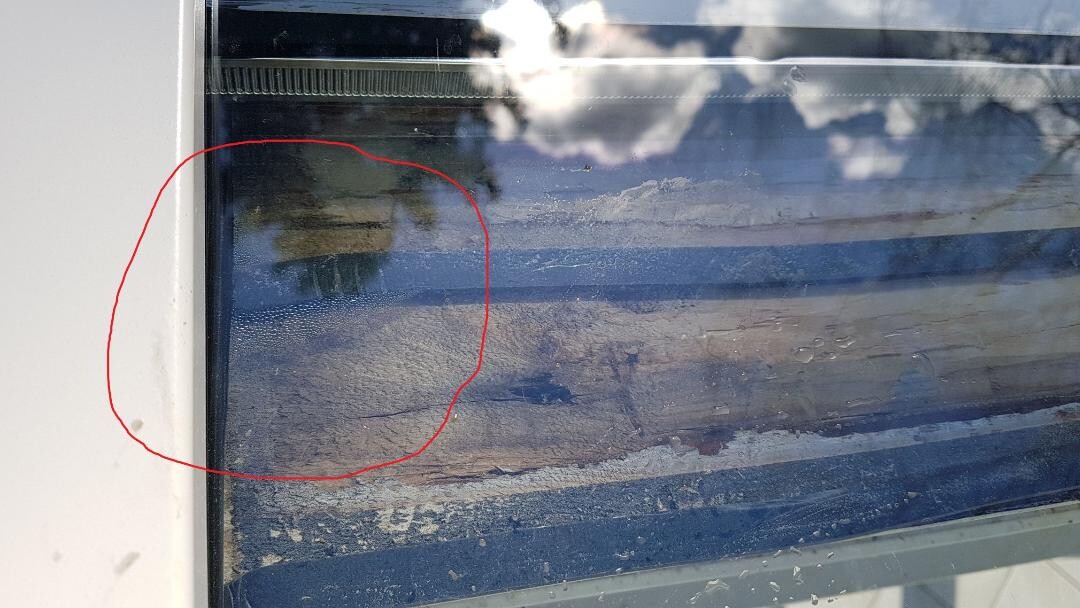

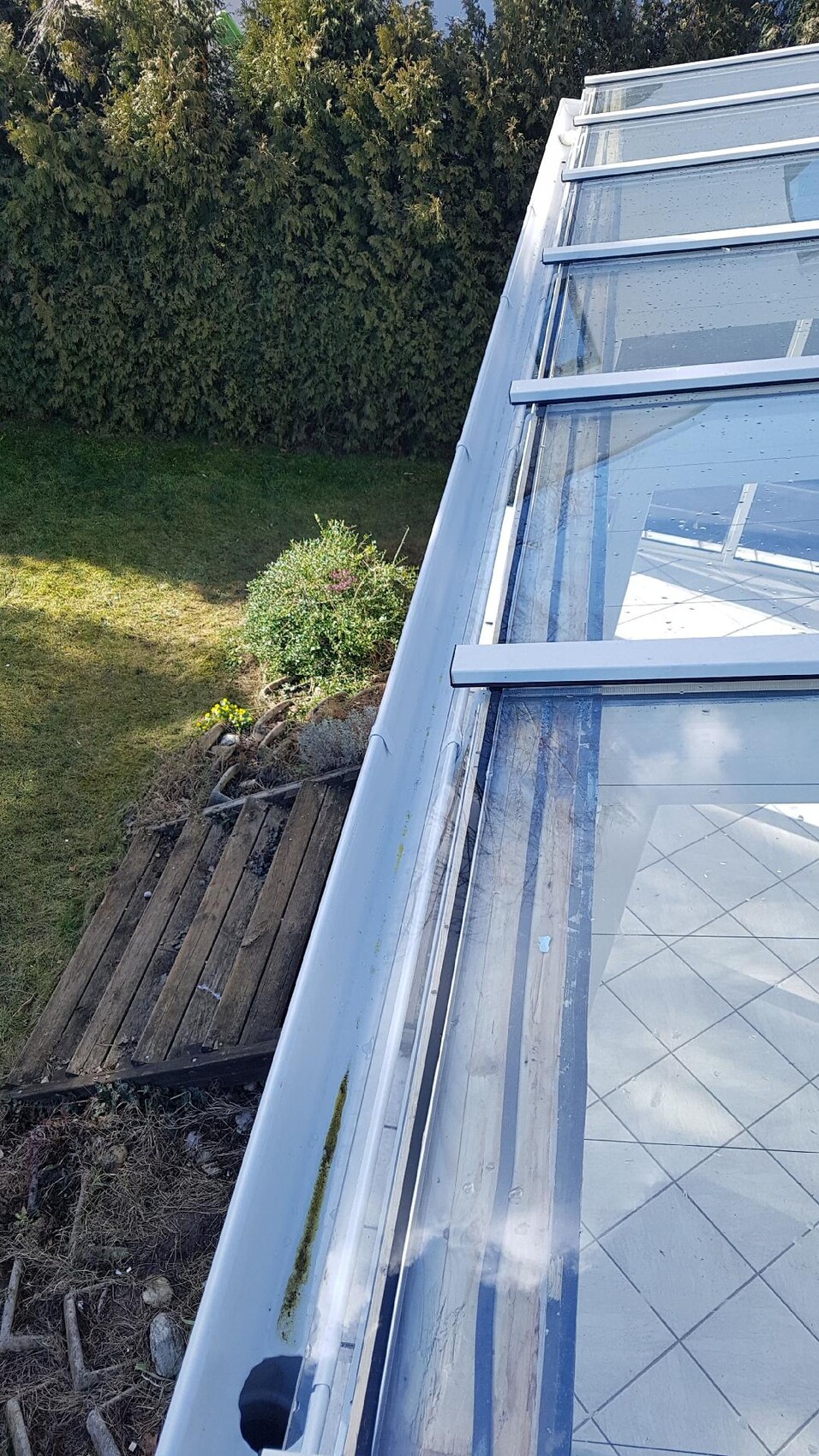
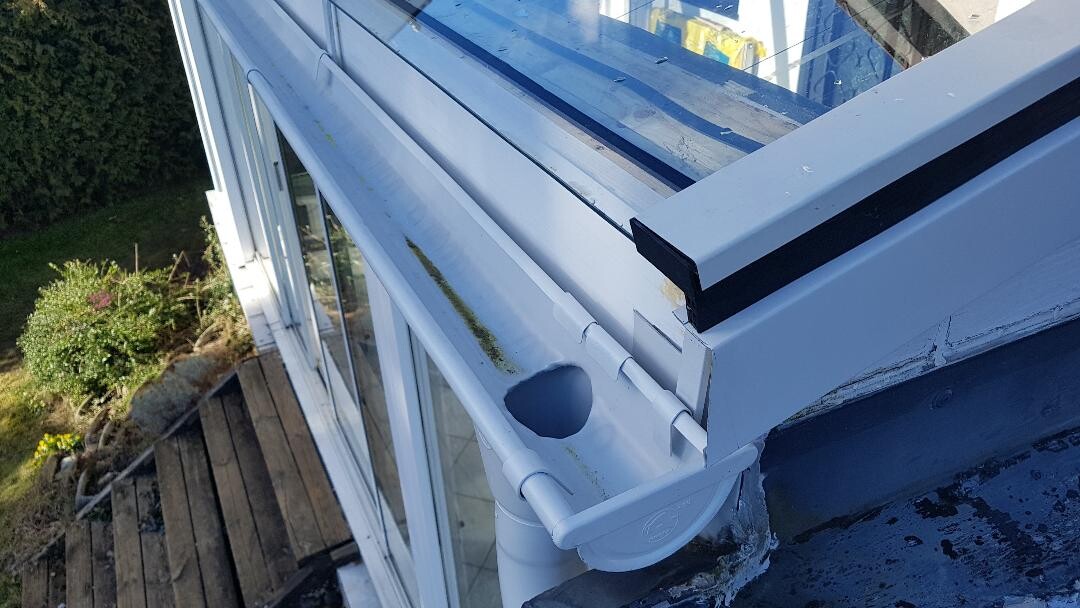
Solution 1: The renovation company does not see any problem but would replace the glass again to restore the 20 cm (8 inches) step for a payment of 3000 Euro.
Solution 2: The wood under the glass would be coated with a breathable varnish. Comment from the renovation company: "There is no breathable varnish; moisture would remain in the wood, and the sun would eventually damage the varnish."
Solution 3: Apply a 1 mm (0.04 inches) thick rubber strip over the entire wood surface. (The company does not think much of this suggestion either)
Solution 4: Remove both existing rubber strips and instead apply a 4 cm (1.5 inches) wide rubber strip at the edge of the inner glass pane. This should prevent any gap where moisture could be trapped and allow it to return to the interior (This was the renovation company's proposal).
I assume Solution 1 is the best, but unfortunately also the most expensive. Should I order the glass replacement again?
If the glass replacement should be ordered again, should it then be the more expensive enamelled version (for the last 20 cm (8 inches))?
Any advice would be appreciated!
Best regards, Michael
H
HilfeHilfe23 Feb 2020 07:08Complex issue
 Birkenfelder26 Feb 2020 15:59
michael051976 schrieb:
Solution 1: The renovation company sees no problem but would replace the glass again for a payment of 3000 euros, so that the 20 cm (8 inches) step is restored.That will do you almost no good, except thicker weatherstrips and a hole in your wallet.
michael051976 schrieb:
Solution 2: The wood underneath the glass would be coated with a microporous stain. Comment from the renovation company: "There is no microporous stain, moisture would stay in the wood, and the sun would eventually destroy the stain."I’m not familiar with wood stains. But it doesn’t make a difference that air is trapped between the two weatherstrips, causing condensation.
michael051976 schrieb:
Solution 3: Lay a 1 mm (0.04 inch) thick rubber strip over the entire wood. (The renovation company also doesn’t think much of this proposal)What is that supposed to achieve? Nicely distributed air bubbles between the glass and the weatherstrip because the wood definitely isn’t 100% flat?
michael051976 schrieb:
Solution 4: Remove both existing rubber strips and replace them with a 4 cm (1.6 inch) wide rubber strip at the edge of the inner glass pane. This should leave no gap where moisture can get trapped and allow it to return to the interior (this was the suggestion from the renovation company).To me, this is also the only proposal that makes some design sense. From the pictures, it looks like the condensation is only between the two weatherstrips. So removing one strip (in this case the inner one) solves the issue. The question for me is whether the outer weatherstrip necessarily needs to be wider then. Structurally, that is not a mandatory support.
Note: This assessment comes from a structural steel engineer—not a drafter specialized only in metalwork!
 schubert7927 Feb 2020 20:59
Where is the problem?
Similar topics