
G
Grantlhaua5 May 2020 08:07Hello everyone,
Of course, you can find many ideas for retaining walls on Pinterest, but most of them are not from an average everyday garden. Do you have retaining walls on your property, and if so, what do they look like?
I need a slope support behind the garage about 1.5m (5 feet) high and a retaining wall for the terrace that should be about 1m (3 feet) high...
Of course, you can find many ideas for retaining walls on Pinterest, but most of them are not from an average everyday garden. Do you have retaining walls on your property, and if so, what do they look like?
I need a slope support behind the garage about 1.5m (5 feet) high and a retaining wall for the terrace that should be about 1m (3 feet) high...
I would say it depends on the garden design.
For a natural or cottage-style garden, I would tend to choose natural stone.
For lawns, welded wire fencing, or bamboo—meaning a cleaner or more Asian-inspired look—I would go with concrete in any form.
We have sandstone. It was already there. The large retaining walls are existing structures.
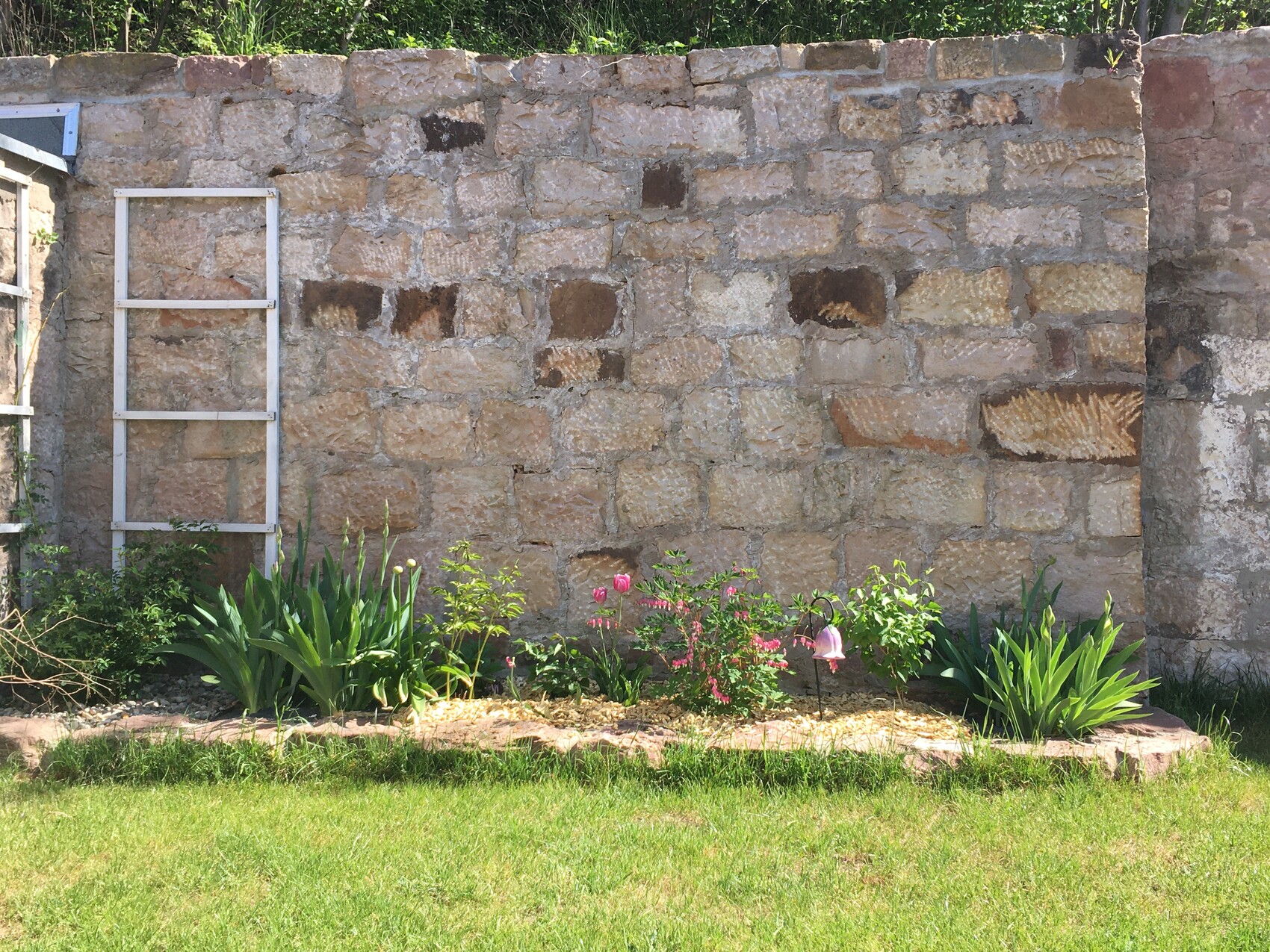
For a natural or cottage-style garden, I would tend to choose natural stone.
For lawns, welded wire fencing, or bamboo—meaning a cleaner or more Asian-inspired look—I would go with concrete in any form.
We have sandstone. It was already there. The large retaining walls are existing structures.
L-shaped concrete blocks and hollow-core blocks are plastered. Hollow-core blocks also come with different surface finishes, so plastering is not always necessary, and they have the advantage that you can make them yourself, which makes them quite affordable. Otherwise, I also like dry stone walls, but they are not really suitable for lateral earth pressure.
G
Grantlhaua5 May 2020 09:15Crossy schrieb:
L-shaped concrete blocks and hollow blocks with plasterCould you possibly share some photos online? Those are actually my two favorites as well, although the L-shaped blocks are a bit too expensive for me.
At the moment, I can only take a photo of the hollow concrete blocks on a pallet for you.
We will start with the first retaining walls here in the last week of May.
I’m a bit concerned that the plaster won’t adhere permanently to the hollow concrete blocks. It’s quite common to see plaster crumbling on older walls. However, our mason said that with the proper treatment, this won’t happen. We will see.
But of course, don’t forget drainage for the entire structure.
We will start with the first retaining walls here in the last week of May.
I’m a bit concerned that the plaster won’t adhere permanently to the hollow concrete blocks. It’s quite common to see plaster crumbling on older walls. However, our mason said that with the proper treatment, this won’t happen. We will see.
But of course, don’t forget drainage for the entire structure.

Since I’m currently exploring various concrete materials, here’s an idea related to that:
A concrete wall that is ground down after pouring.
This creates a quite attractive surface – depending on the types of stones used in the concrete mix, you get different “coloring.”
And speaking of coloring: concrete can also be dyed. Surface treatments like paint always seem problematic to me because they tend to peel off and look worn after a few years, but if the material is pigmented throughout....
However, grinding is “not without challenges.” You need good equipment and some craftsmanship to do it properly, I would say....
With a concrete wall, you can be fairly confident it will last – it’s not expensive and can be shaped in many ways... curves, arches, hollow, concave, depending on the skill of the formwork builder.
A concrete wall that is ground down after pouring.
This creates a quite attractive surface – depending on the types of stones used in the concrete mix, you get different “coloring.”
And speaking of coloring: concrete can also be dyed. Surface treatments like paint always seem problematic to me because they tend to peel off and look worn after a few years, but if the material is pigmented throughout....
However, grinding is “not without challenges.” You need good equipment and some craftsmanship to do it properly, I would say....
With a concrete wall, you can be fairly confident it will last – it’s not expensive and can be shaped in many ways... curves, arches, hollow, concave, depending on the skill of the formwork builder.
Similar topics