
ᐅ Liability for Neglected Sealing in Flush-Mounted Modules
Created on: 21 Nov 2025 13:15
K
KaltluftfanK
Kaltluftfan21 Nov 2025 13:15Hello everyone,
We have an issue in our new build: The house was contracted through the general contractor (GC) with 3 bathrooms, and the rough-in plumbing in the bathrooms is handled by the GC. We decided to take over the tiling and final installation of the sanitary fixtures ourselves.
We wanted concealed shower fittings and linear drains from Hansgrohe in all showers. Both are causing problems. The GC’s plumbing subcontractor installed the materials we provided (Hansgrohe iBox universal 2 rough-in bodies and Hansgrohe basic module for the shower drain). We had to sign a waiver accepting no liability for the supplied materials. However, they said Hansgrohe products are common and should not pose any problems for the installers.
1. Problem:
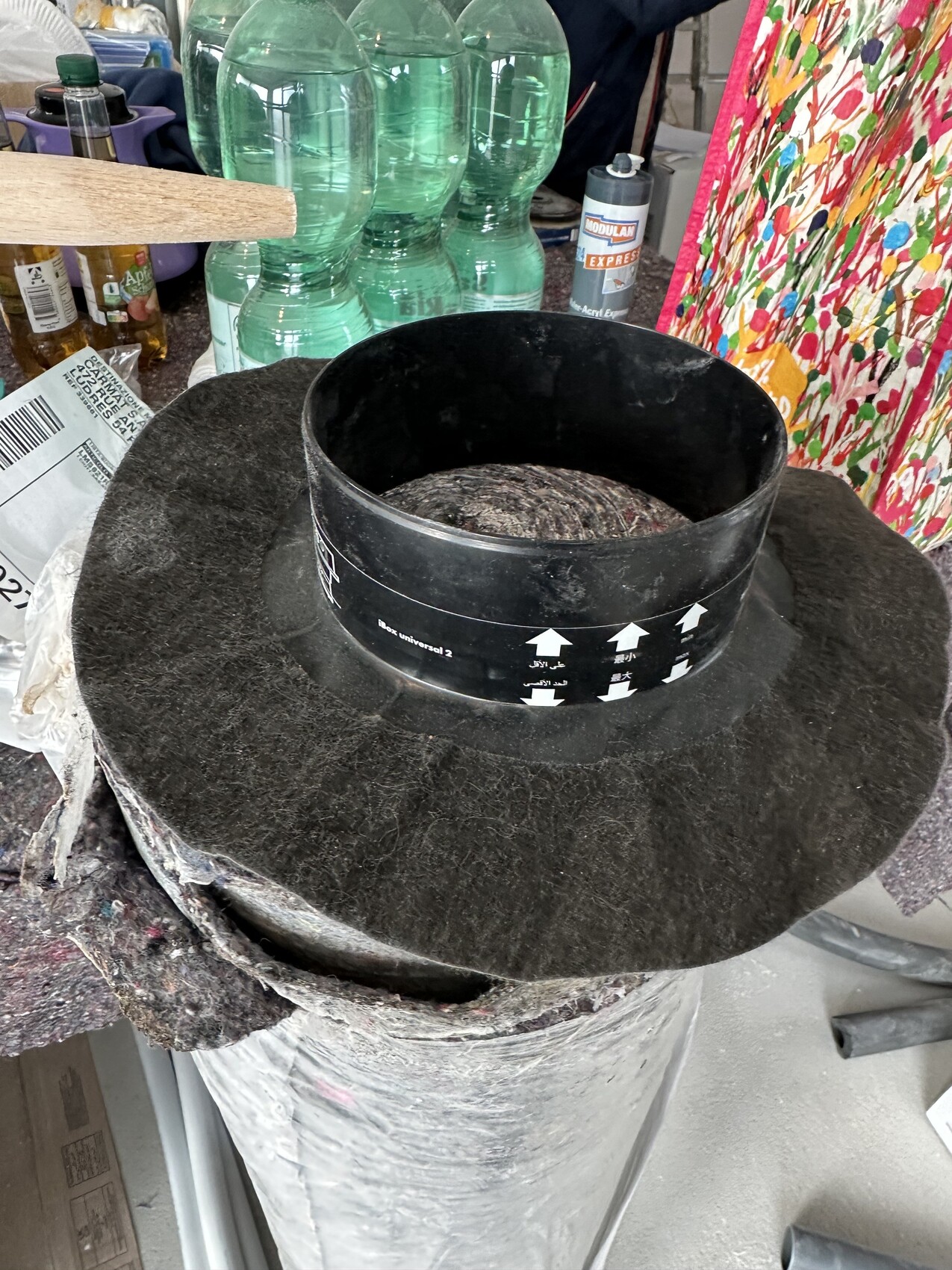
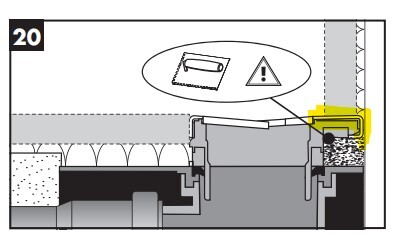
The shower drain is a wall-adjacent model, so the concealed module must be installed accordingly. When the installers fitted it, they did not pay attention and installed it spaced away from the wall. Luckily, we noticed this in time. Then, in the presence of the tilers (as far as we saw at the time), the concealed module was correctly repositioned. The tilers have now laid their tiles, and upon inspection, I found it still wasn’t done according to the instructions. According to the drawings, the wall tile above the drain must be installed ON TOP OF the shower drain. In our case, it was installed BEHIND the drain (see drawing). Visually it looks okay, though it’s not correct. The main question is whether this can cause damage in the long term. Also, the supplied sealing tapes (see pictures) were not installed. We only noticed this when we went to dispose of the box, and everything was still inside.
2. Bigger problem:
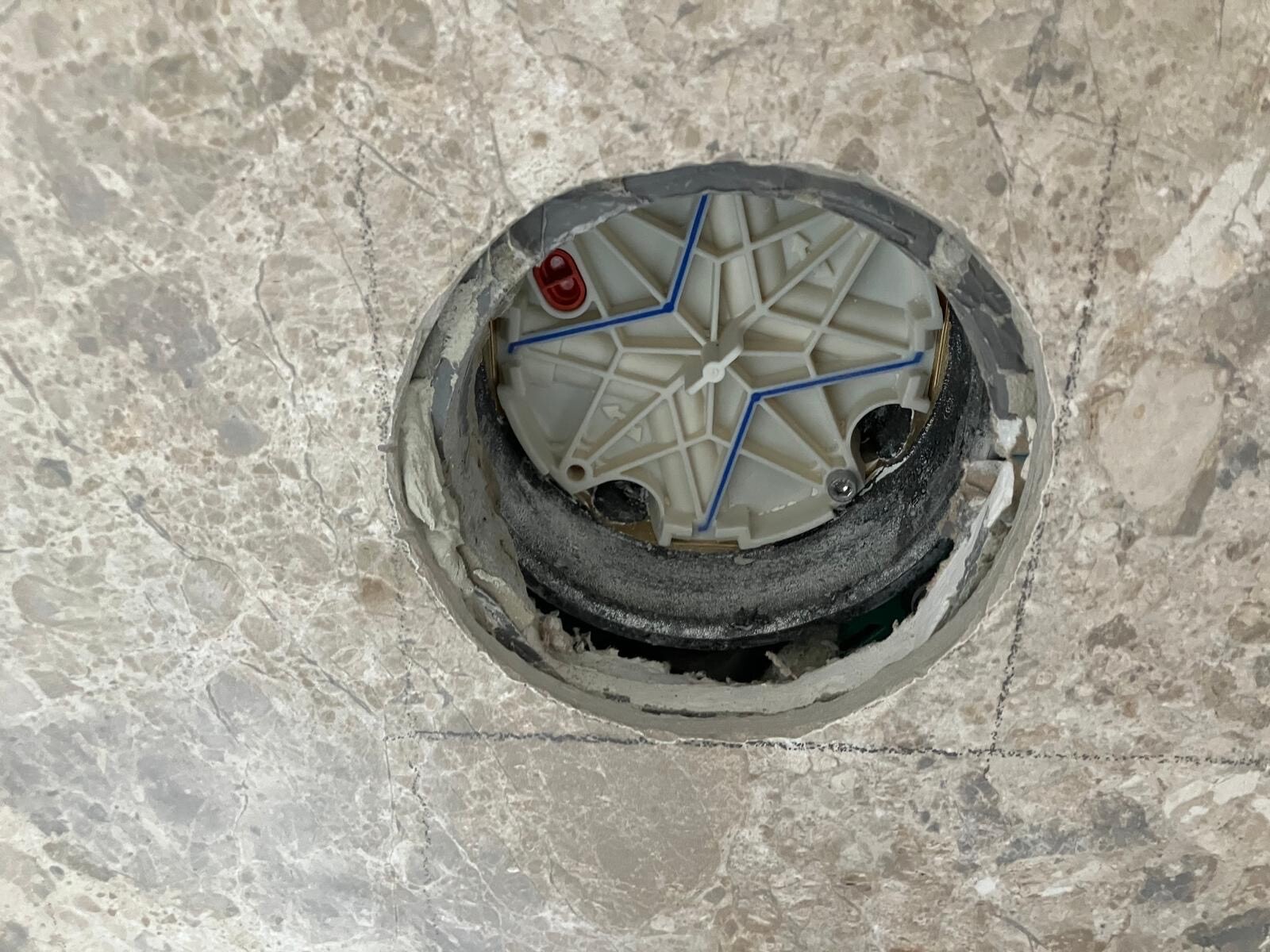
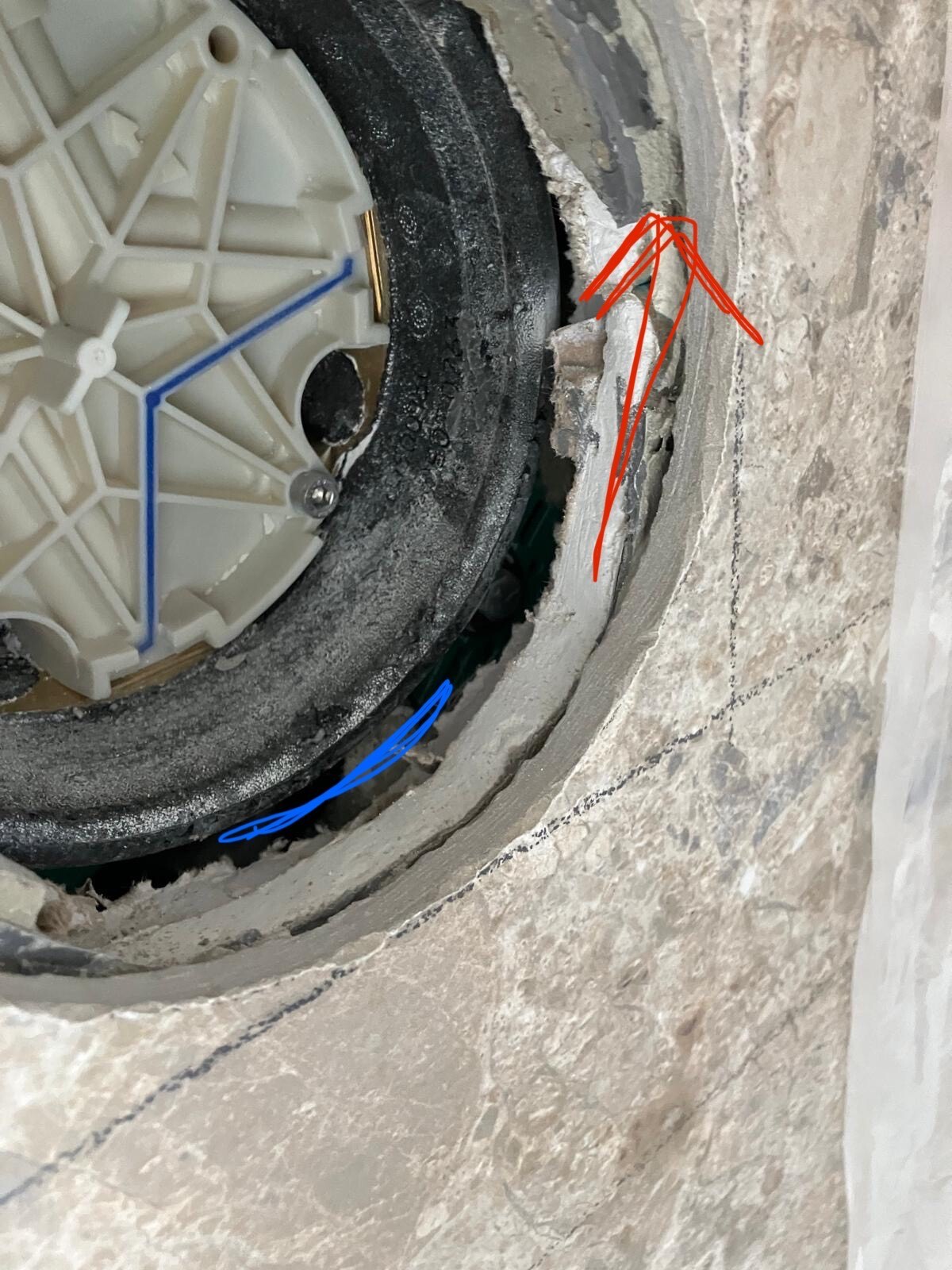
The concealed modules of the Hansgrohe iBox 2 shower thermostats have a sealing ring. In one of the 3 bathrooms, the tiler could not find this ring and “made a different seal” after I pointed out that it was missing. The tiles are now installed, and I can fit my finger behind the two drywall panels (see picture). So there is no protection if water leaks between the rough-in body and the thermostat mounted on it. Any leakage would then go unnoticed behind the drywall.
QUESTION: Who is responsible for
Problem 1: Correct installation of the rough-in bodies?
Problem 2: Ensuring the sealing ring is placed against the drywall? Does this still fall under the scope of the plumbing subcontractor who installed the rough-ins, or the tiler who worked on it?
Before I address this with the contractors, I want to be sure as I expect them to blame each other.
Note: The installation manuals were, of course, all included in the packaging, but neither the plumbing subcontractor nor the tilers looked at them even once.

We have an issue in our new build: The house was contracted through the general contractor (GC) with 3 bathrooms, and the rough-in plumbing in the bathrooms is handled by the GC. We decided to take over the tiling and final installation of the sanitary fixtures ourselves.
We wanted concealed shower fittings and linear drains from Hansgrohe in all showers. Both are causing problems. The GC’s plumbing subcontractor installed the materials we provided (Hansgrohe iBox universal 2 rough-in bodies and Hansgrohe basic module for the shower drain). We had to sign a waiver accepting no liability for the supplied materials. However, they said Hansgrohe products are common and should not pose any problems for the installers.
1. Problem:
The shower drain is a wall-adjacent model, so the concealed module must be installed accordingly. When the installers fitted it, they did not pay attention and installed it spaced away from the wall. Luckily, we noticed this in time. Then, in the presence of the tilers (as far as we saw at the time), the concealed module was correctly repositioned. The tilers have now laid their tiles, and upon inspection, I found it still wasn’t done according to the instructions. According to the drawings, the wall tile above the drain must be installed ON TOP OF the shower drain. In our case, it was installed BEHIND the drain (see drawing). Visually it looks okay, though it’s not correct. The main question is whether this can cause damage in the long term. Also, the supplied sealing tapes (see pictures) were not installed. We only noticed this when we went to dispose of the box, and everything was still inside.
2. Bigger problem:
The concealed modules of the Hansgrohe iBox 2 shower thermostats have a sealing ring. In one of the 3 bathrooms, the tiler could not find this ring and “made a different seal” after I pointed out that it was missing. The tiles are now installed, and I can fit my finger behind the two drywall panels (see picture). So there is no protection if water leaks between the rough-in body and the thermostat mounted on it. Any leakage would then go unnoticed behind the drywall.
QUESTION: Who is responsible for
Problem 1: Correct installation of the rough-in bodies?
Problem 2: Ensuring the sealing ring is placed against the drywall? Does this still fall under the scope of the plumbing subcontractor who installed the rough-ins, or the tiler who worked on it?
Before I address this with the contractors, I want to be sure as I expect them to blame each other.
Note: The installation manuals were, of course, all included in the packaging, but neither the plumbing subcontractor nor the tilers looked at them even once.

Did you specify one of them when awarding the contract? That is, the tiler or the plumber? If not, strictly speaking, they are excluded. This is not legally defined. Therefore, you are ultimately responsible.
This is the problem when you remove partial trades from the general contractor/main contractor. The connections (tasks where multiple trades overlap) are not regulated in terms of responsibility. That is why the client must take care of this themselves.
This is the problem when you remove partial trades from the general contractor/main contractor. The connections (tasks where multiple trades overlap) are not regulated in terms of responsibility. That is why the client must take care of this themselves.
D
derdietmar21 Nov 2025 18:29Hello,
the tiler is responsible for waterproofing. If they refuse to take responsibility, there is not much you can do. Have the tiles removed, the area waterproofed, and new tiles installed. You will probably only recover a portion of the costs.
The silicone joint at the drainage channel is already pulling away from the wall. I hope the area behind it was properly waterproofed, but if the sealing tapes are missing, I expect the damage to be almost unavoidable...
Best regards
the tiler is responsible for waterproofing. If they refuse to take responsibility, there is not much you can do. Have the tiles removed, the area waterproofed, and new tiles installed. You will probably only recover a portion of the costs.
The silicone joint at the drainage channel is already pulling away from the wall. I hope the area behind it was properly waterproofed, but if the sealing tapes are missing, I expect the damage to be almost unavoidable...
Best regards
In practice, this is usually done by him. However, without a corresponding agreement and explicit contract, he cannot be held responsible.
For example, the bathtub sealing tape is also regularly applied by the plumber. This can make sense, for instance, if the bathtub is installed before the actual tiling work begins. In that case, the tiler must first waterproof the walls and floor, then the plumber installs the bathtub using the sealing tape, and afterwards the tiler returns to tile the bathtub base and the wall behind the tub. This needs to be coordinated. If there is no coordination, you might get lucky, but often there is finger-pointing.
For example, the bathtub sealing tape is also regularly applied by the plumber. This can make sense, for instance, if the bathtub is installed before the actual tiling work begins. In that case, the tiler must first waterproof the walls and floor, then the plumber installs the bathtub using the sealing tape, and afterwards the tiler returns to tile the bathtub base and the wall behind the tub. This needs to be coordinated. If there is no coordination, you might get lucky, but often there is finger-pointing.
D
derdietmar21 Nov 2025 19:06Hello,
That’s true. If you take trades out of the general contractor’s contract, you have to manage the site supervision for that interface yourself.
Best regards
Tolentino schrieb:
If it hasn’t been coordinated, you might get lucky, but often there is finger-pointing.
That’s true. If you take trades out of the general contractor’s contract, you have to manage the site supervision for that interface yourself.
Best regards
K
Kaltluftfan24 Nov 2025 14:37Tolentino schrieb:
Did you specify one of them in the contract? Like the tiler or the plumber? If not, strictly speaking they are not responsible. It’s not legally defined. In the end, you are responsible. Sort of— the plumbing company was contracted for the "installation of concealed installation bodies." They were installed, but both the shower drain base units and the base unit for the shower thermostat are incorrect. The shower thermostat cannot be mounted on the base unit now because it sits too deep (all three).
The tiler defined the following in the offer:
"Waterproofing and uncoupling work (interior)
Preparation of substrates
• Cleaning of the wall and floor surfaces to be treated, removing dust, dirt, and any residues that reduce adhesion.
• Checking the substrate strength and, if necessary, repairing defects with suitable filler material.
Waterproofing with sealing slurry
• Applying a flexible, mineral-based sealing slurry in two coats on wall and floor surfaces.
• Ensuring a uniform, full-surface waterproofing.
Installation of sealing tapes and wall collars
• Inserting sealing tapes in all internal and external corners to securely bridge movement joints.
• Installing wall collars on pipe penetrations to prevent moisture ingress.
Laying of waterproofing membrane for uncoupling (if needed)
• Applying a crack-bridging waterproofing and uncoupling membrane using the thin-bed method.
• Full-surface, bubble-free, and tension-free adhesion with suitable adhesive. Detailed execution
• Careful sealing of all transitions, corners, and connections."
So, in my understanding, it’s pretty clear that the tiler did not perform adequately here.
Similar topics