
ᐅ Renovation of an Existing Property – Our Journey to a Home
Created on: 13 Jun 2019 14:38
L
LordNibbler
Since returning to Wolfsburg in 2017, we had been searching for a property. Initially, we rented to take our time finding the right house and to test the real estate agents.
Of course, properties meeting these criteria were expensive and scarcely available. The first viewings were disappointing:
Then, at the beginning of 2018, an offer came up that didn’t fully meet our criteria but was in the same neighborhood.
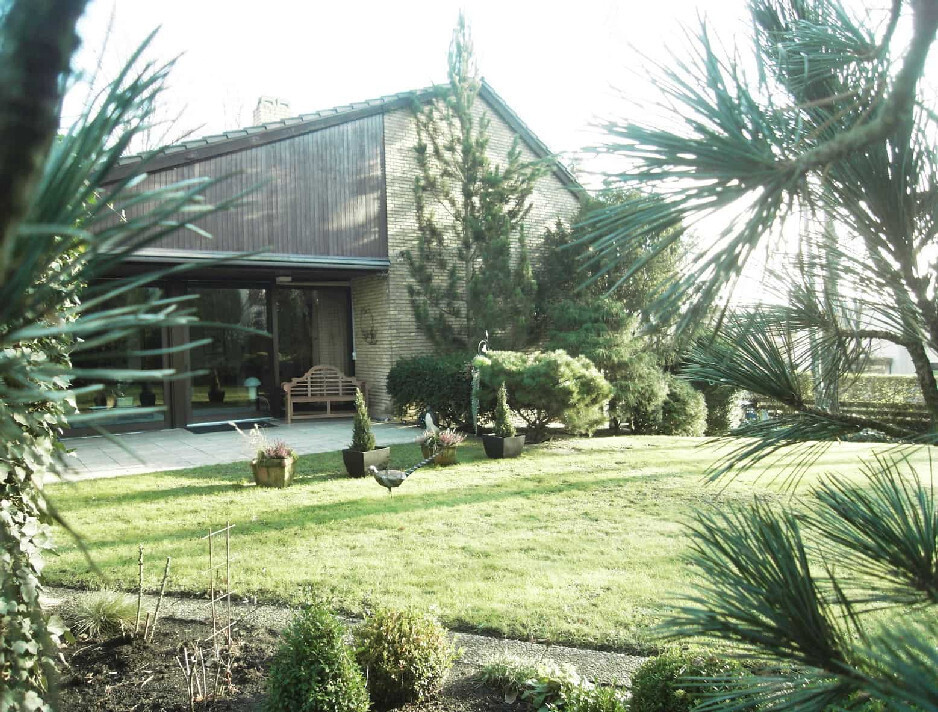
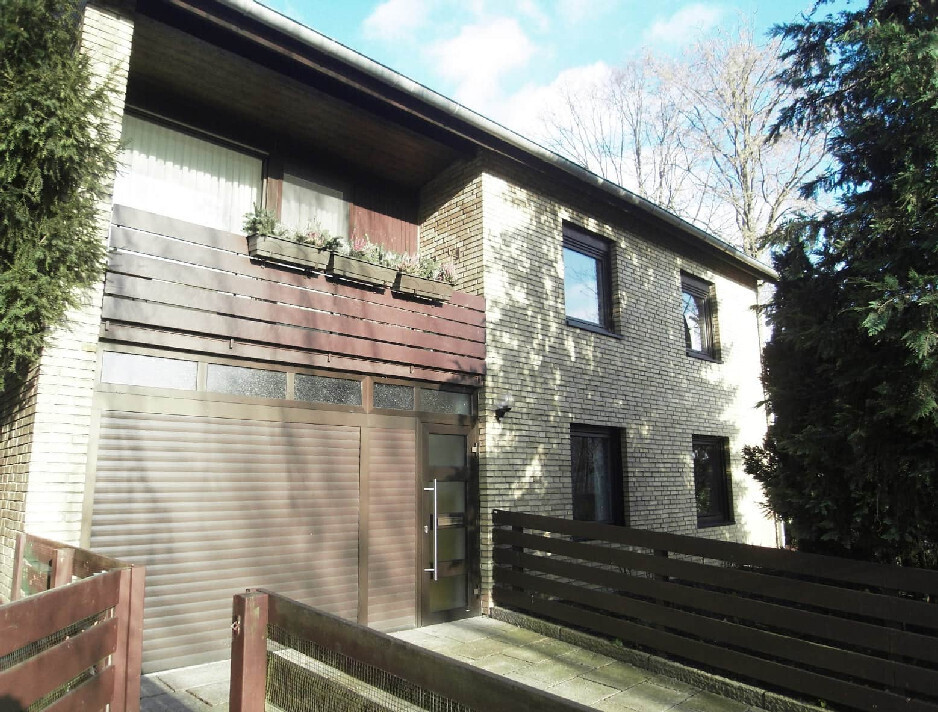
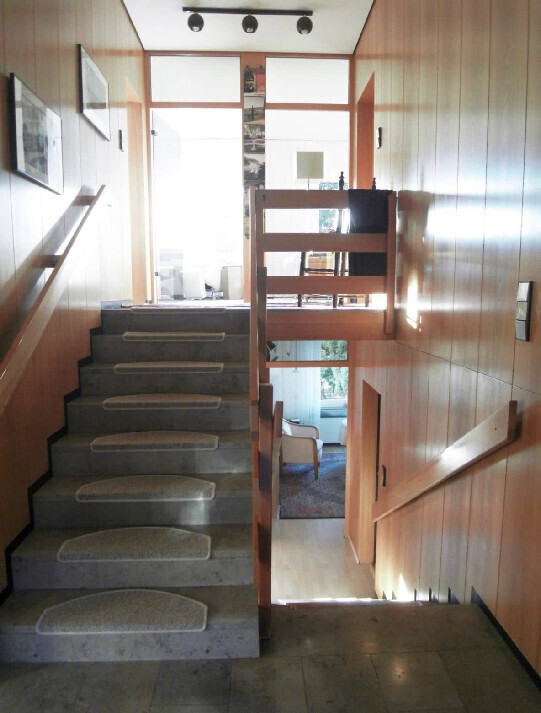
The house was actually larger than we needed, but the structure and architecture were excellent. Renovations were manageable (utility lines easily accessible, partly in shafts), and the leasehold was acceptable because the owners had prepaid their installments (there was a discount), so the annual fee was only 500€ (~$540). The leaseholder is the city of Wolfsburg, which by statute only raises interest rates upon resale (not during the lease term or inheritance). When purchasing the plot, the land value is calculated by the benchmark land value minus the redemption amount and with a 15% discount. In mid-2017, the offer for the land was therefore 118,000€ (~$128,000) (with today’s benchmark land value it would be about 150,000€ (~$162,000)). This was a bargain for the area and was included in the asking price according to the agent.
Still, after a second viewing with experts (not appraisers), we found enough arguments (wall crack, renovation needs) to negotiate the price down to 420,000€. The public offer was then reduced to 435,000€ (~$470,000).
A financing broker secured approval from the local savings bank (Sparkasse) for the mortgage (leasehold is a bit special here, mostly local banks are familiar). It was feasible as a 20-year full repayment loan (leasehold agreement had to be valid for at least another 10 years), with a potential buffer to save up the land price.
But there was one issue: the over-90-year-old occupant. She was looking for an apartment in a senior residence (ground floor, lake view). Every week we heard it was only a matter of days until one would become available. In the end, by mid-April, we had a reservation with ownership transfer no later than December, possibly sooner. So we committed to financing and arranged the notary appointment...
...and then a week later, there was a request for a meeting (bypassing the notary). The niece and sister explained that the reservation was declared invalid. The time pressure was too great. It wasn’t certain the apartment would be available yet. They felt the elderly woman couldn’t be expected to move into a care home. They wanted a purchase contract with more time — about a year (implicitly without a strict limit).
We only had 6 months interest-free financing extension, but could imagine a few more months. However, only with financial compensation (1,500€/month rental cost difference). The counterproposal was to buy as planned but with ownership transfer only after the occupant moves out (essentially the right to live there). This was not acceptable (due to hardship rules; in the end you own the house but cannot evict the old resident). The only outcome was an informal understanding: we remained interested, please inform us when the senior residence is arranged; if we find something else in the meantime we will get back to you. The agent (VR-Bank) was not very pleased since it had been difficult to get the three women to agree before. It wasn’t her fault; the dossier was the best prepared with all necessary documents and missing items obtained promptly.
Two weeks later there was another interested party. Moral of the story: we successfully lowered the price for others but they moved in in October 2017.
Here are some floor plans of the property as inspiration for other house planners:
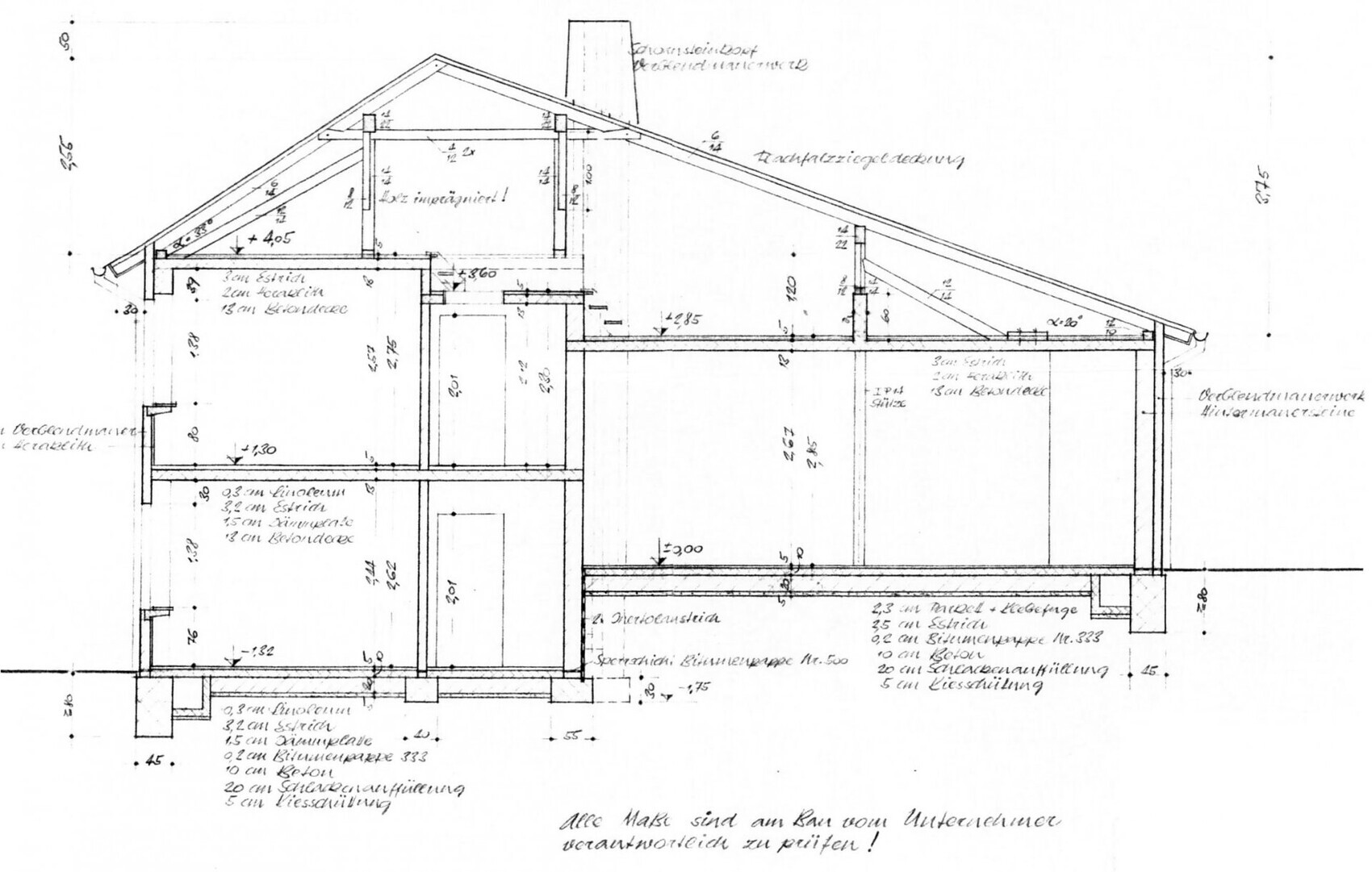
The agent mentioned that in the residential area, maybe one property sells every 1–2 years. The rest are sold privately. Since we moved in, three houses have been demolished and replaced by new builds twice the size. Another is still a shell and is receiving a huge extension. None of these properties were publicly marketed...
...the search continues in the next post and how we finally found our home.
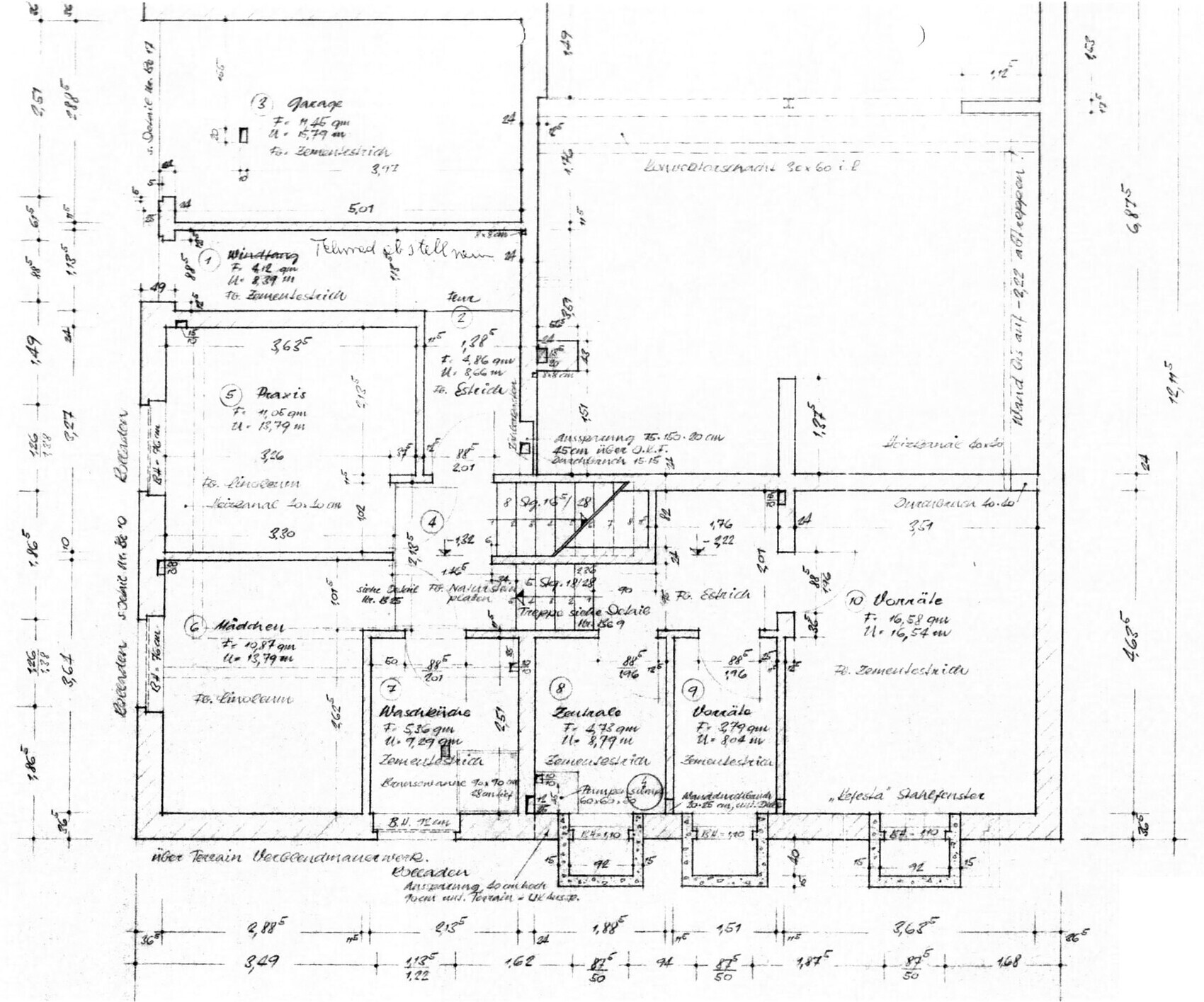
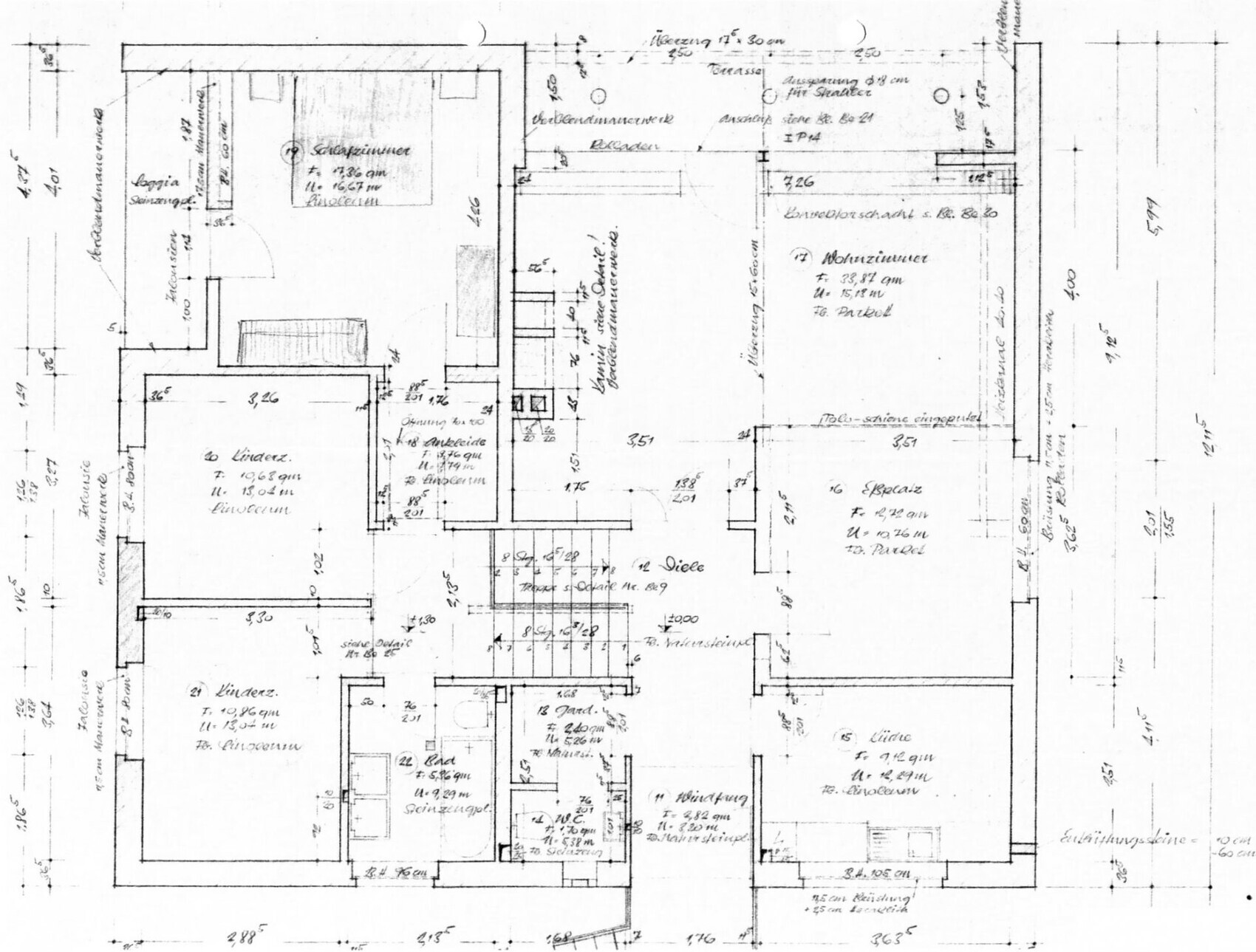
- detached single-family house (so no semi-detached houses)
- within walking distance to the city centers of Wolfsburg, Fallersleben, or Vorsfelde
- for existing buildings, construction year from 1960 onwards, even if not renovated, as long as the structure justifies investment (otherwise you pay for poor renovations that need to be redone)
- for new builds, located in a residential area with a coherent design concept (many new developments unfortunately look like model home neighborhoods where every option from the catalog has been used, but without creating a harmonious living environment)
- a larger garden with usable space
- no leasehold (common in this area)
Of course, properties meeting these criteria were expensive and scarcely available. The first viewings were disappointing:
- 5-year-old house in a new development: walls with cracks, water stains (from the foundation slab), unoccupied, agent said normal settlement cracks (but wrong direction and too large), suspected upward ground movement due to Posidonia shale underground according to the land use plan and construction errors
- 8-year-old house in the same development: not legally divided plot (3 houses on 2 plots), agent claimed legal division (sent documents with condominium declaration), neighborhood dispute (not ideal in a condominium under self-management)
- 1950s development house: severe moisture problems in the basement including mold, agent already had an offer for exterior waterproofing (franchise concept with suction lance) which was not expensive, basement height under 1.8m (5 feet 11 inches), so not usable
- 1950s development house: sold after only 2 years (hidden defects?), superficial renovation (cosmetic upgrades but original substructure)
- several other houses that left little impression (location, layout, quality, price not suitable)
Then, at the beginning of 2018, an offer came up that didn’t fully meet our criteria but was in the same neighborhood.
- built mid-1958
- very high-quality construction and workmanship for the time
- architect-designed house (engineer) for a medical professional (MD)
- hillside location, split-level, integrated garage
- district heating with concealed convectors
- well maintained, so renovation was minimal (bathroom tiled + ceramics, new roof 2002, new windows 1995)
- well-kept garden, granite paving
- 165m² (1,776 sq ft) living space + 40m² (430 sq ft) utility space
- 905m² (9,740 sq ft) leasehold plot at a dead-end street
- 493,000 €
The house was actually larger than we needed, but the structure and architecture were excellent. Renovations were manageable (utility lines easily accessible, partly in shafts), and the leasehold was acceptable because the owners had prepaid their installments (there was a discount), so the annual fee was only 500€ (~$540). The leaseholder is the city of Wolfsburg, which by statute only raises interest rates upon resale (not during the lease term or inheritance). When purchasing the plot, the land value is calculated by the benchmark land value minus the redemption amount and with a 15% discount. In mid-2017, the offer for the land was therefore 118,000€ (~$128,000) (with today’s benchmark land value it would be about 150,000€ (~$162,000)). This was a bargain for the area and was included in the asking price according to the agent.
Still, after a second viewing with experts (not appraisers), we found enough arguments (wall crack, renovation needs) to negotiate the price down to 420,000€. The public offer was then reduced to 435,000€ (~$470,000).
A financing broker secured approval from the local savings bank (Sparkasse) for the mortgage (leasehold is a bit special here, mostly local banks are familiar). It was feasible as a 20-year full repayment loan (leasehold agreement had to be valid for at least another 10 years), with a potential buffer to save up the land price.
But there was one issue: the over-90-year-old occupant. She was looking for an apartment in a senior residence (ground floor, lake view). Every week we heard it was only a matter of days until one would become available. In the end, by mid-April, we had a reservation with ownership transfer no later than December, possibly sooner. So we committed to financing and arranged the notary appointment...
...and then a week later, there was a request for a meeting (bypassing the notary). The niece and sister explained that the reservation was declared invalid. The time pressure was too great. It wasn’t certain the apartment would be available yet. They felt the elderly woman couldn’t be expected to move into a care home. They wanted a purchase contract with more time — about a year (implicitly without a strict limit).
We only had 6 months interest-free financing extension, but could imagine a few more months. However, only with financial compensation (1,500€/month rental cost difference). The counterproposal was to buy as planned but with ownership transfer only after the occupant moves out (essentially the right to live there). This was not acceptable (due to hardship rules; in the end you own the house but cannot evict the old resident). The only outcome was an informal understanding: we remained interested, please inform us when the senior residence is arranged; if we find something else in the meantime we will get back to you. The agent (VR-Bank) was not very pleased since it had been difficult to get the three women to agree before. It wasn’t her fault; the dossier was the best prepared with all necessary documents and missing items obtained promptly.
Two weeks later there was another interested party. Moral of the story: we successfully lowered the price for others but they moved in in October 2017.
Here are some floor plans of the property as inspiration for other house planners:
The agent mentioned that in the residential area, maybe one property sells every 1–2 years. The rest are sold privately. Since we moved in, three houses have been demolished and replaced by new builds twice the size. Another is still a shell and is receiving a huge extension. None of these properties were publicly marketed...
...the search continues in the next post and how we finally found our home.
G
Grinsekatze27 Nov 2019 11:53I’m also really happy about the posts. Two years ago, we completely renovated a small settlement house in (almost) the same area in Lower Saxony. Your thread feels like a journey into the past!
 LordNibbler27 Nov 2019 12:07
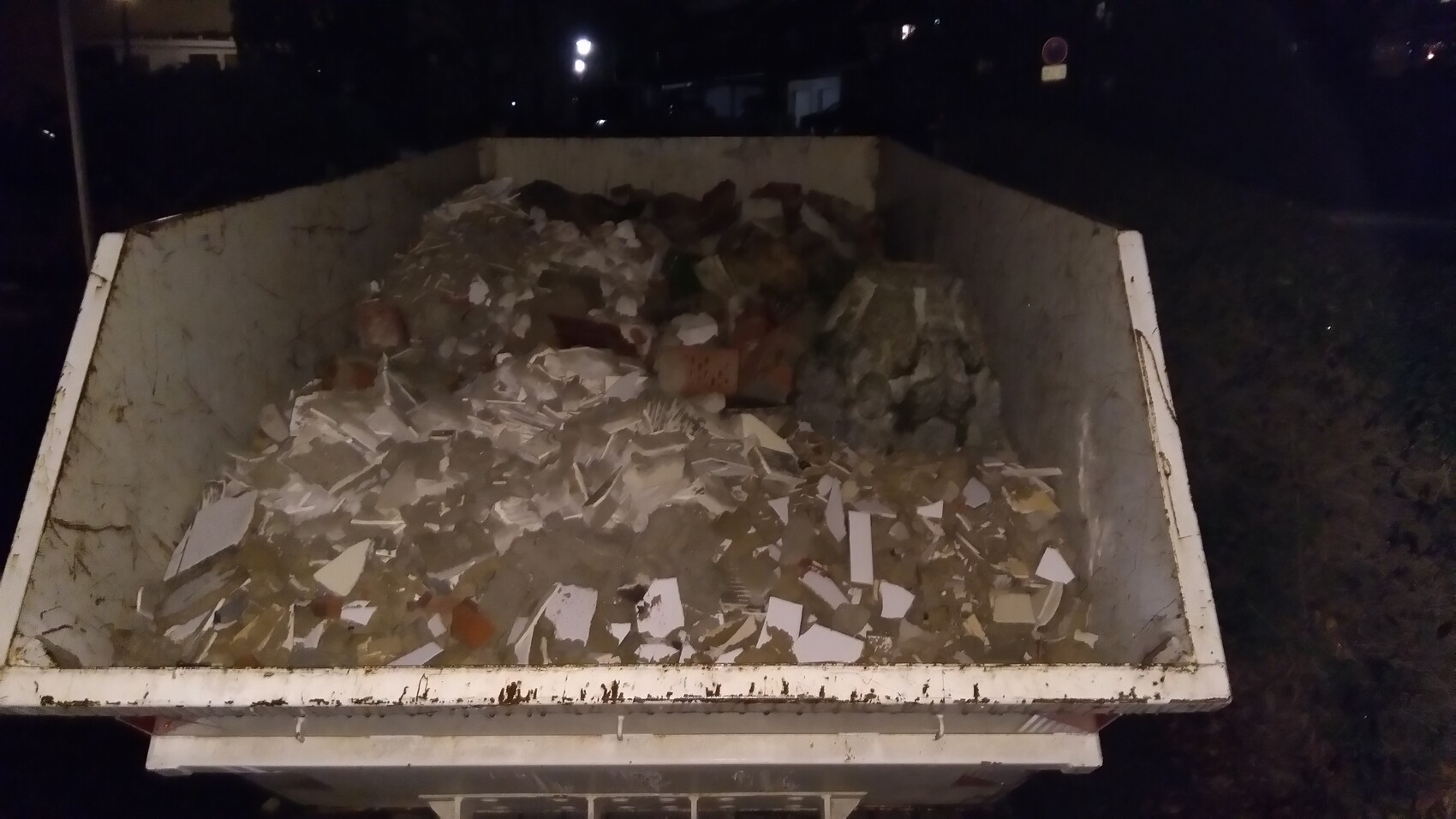
Now that the tiles and wall are removed, the construction debris container is even fuller:
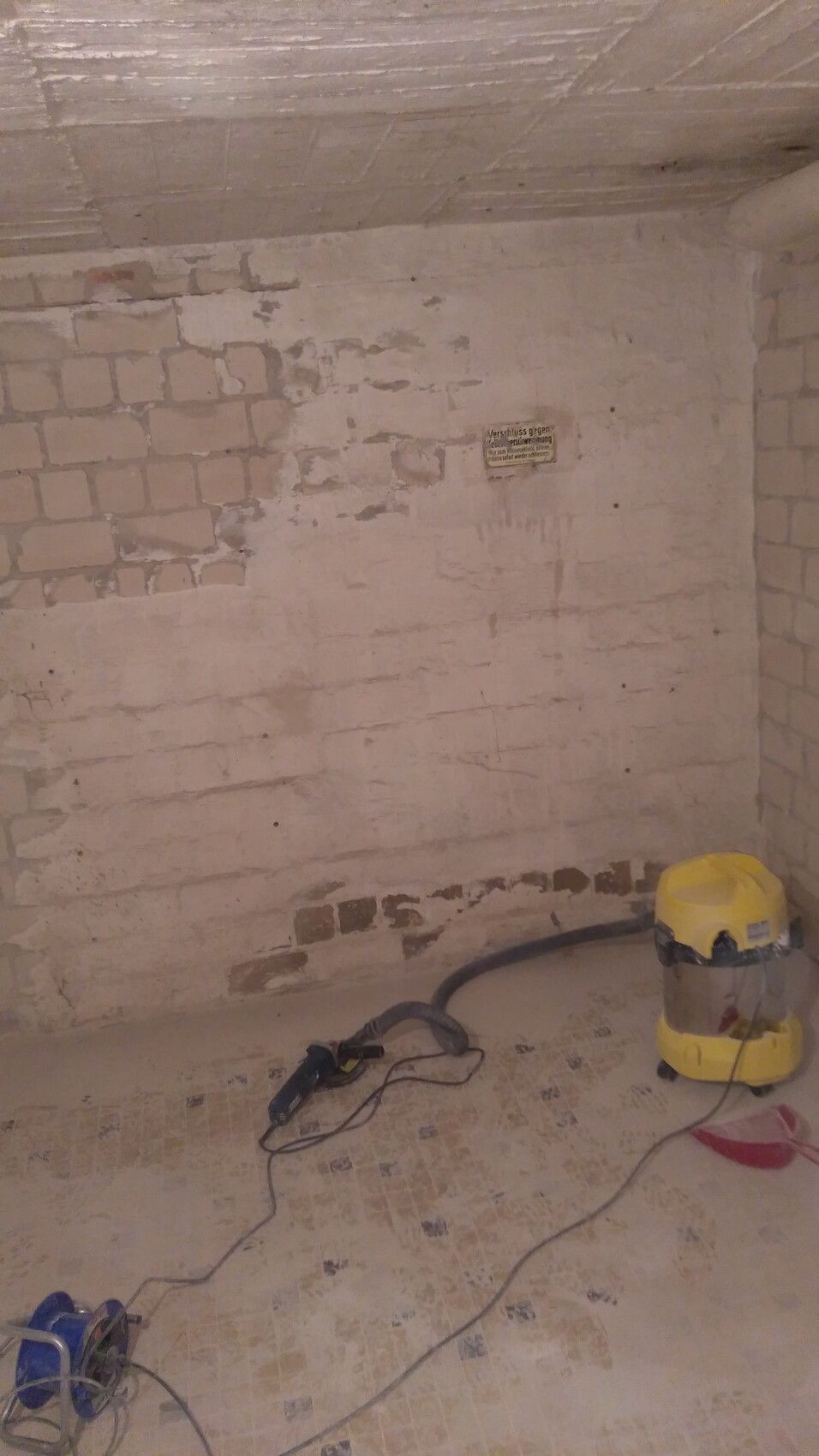
The only way to remove the mortar from the sand-lime brick walls was a very dusty and abrasive method for the diamond grinding disc:
But the result is worth seeing:
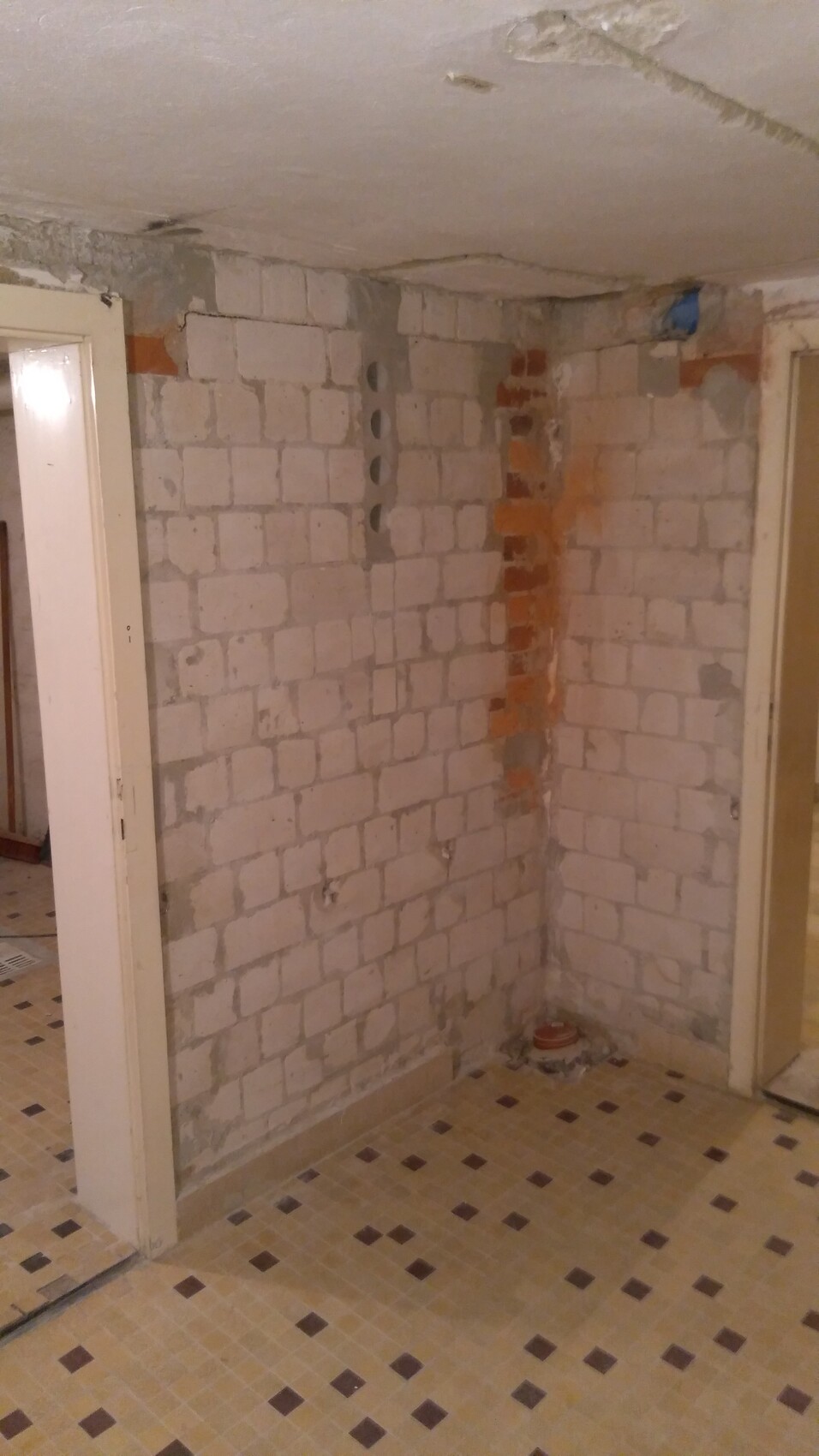 (17.01.2019)
Next comes a primer coat:
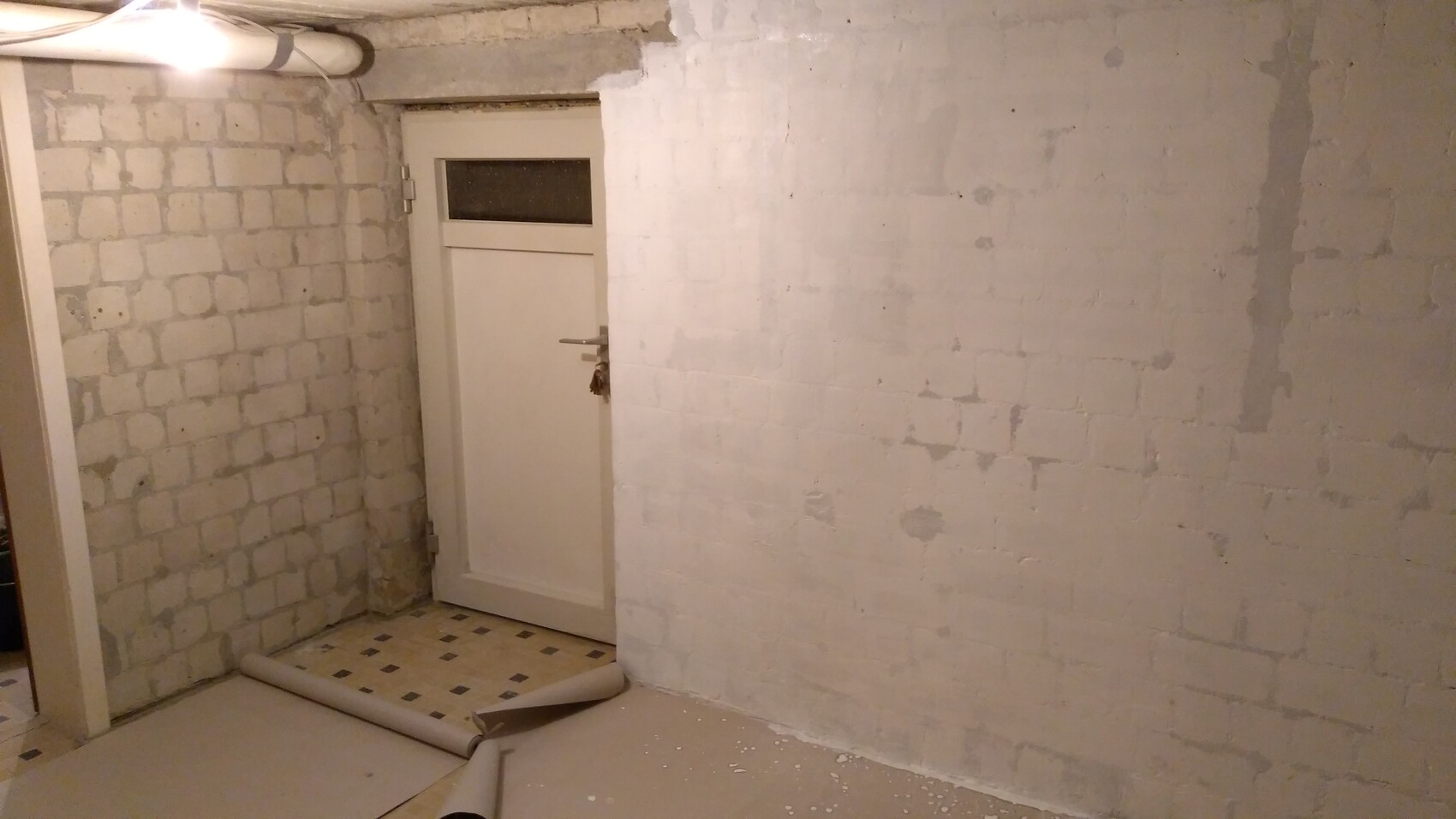 (28.01.2019)
And a coat with a textured roller plaster (Knauf EasyPutz Color):
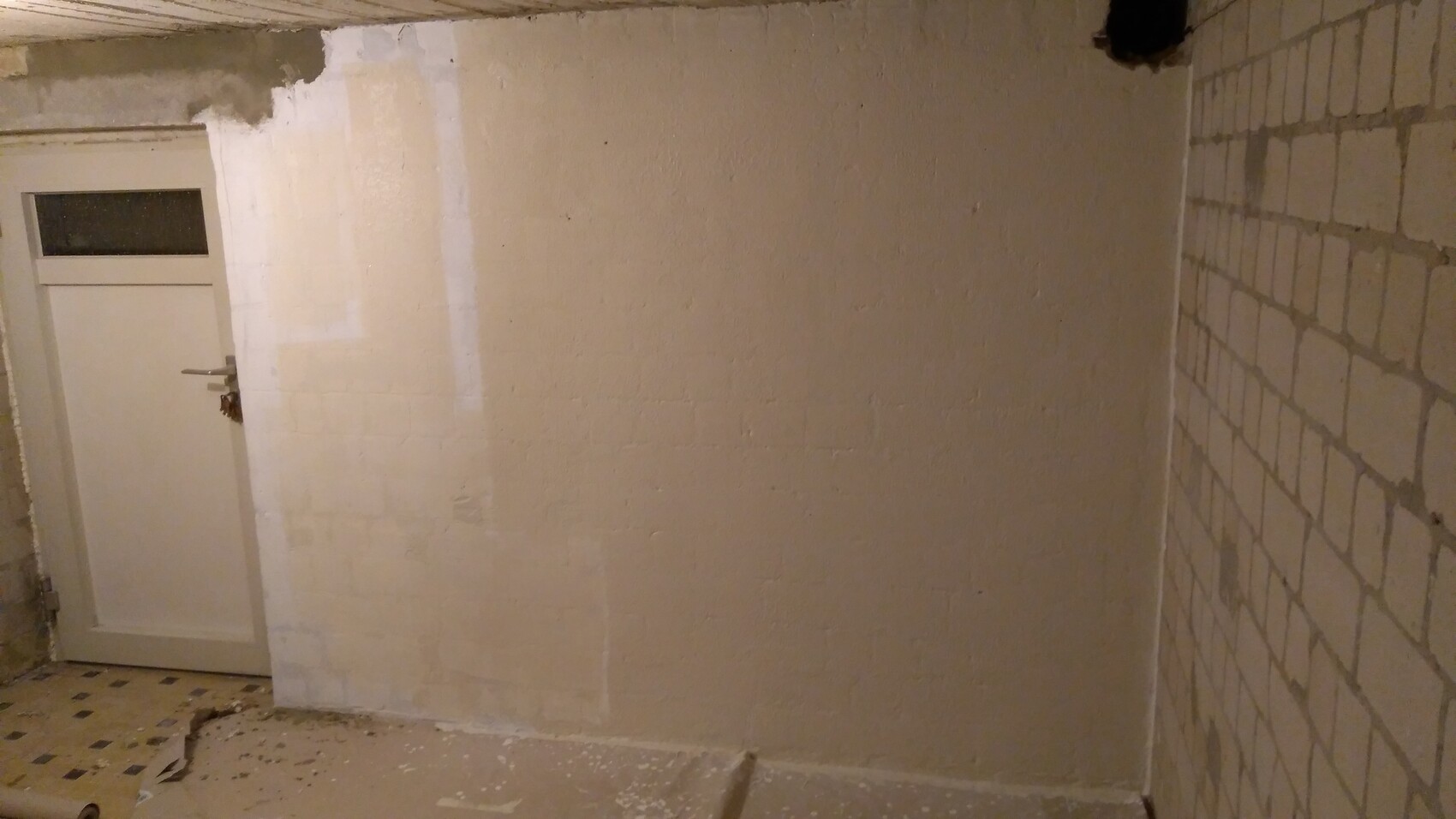 (30.01.2019)
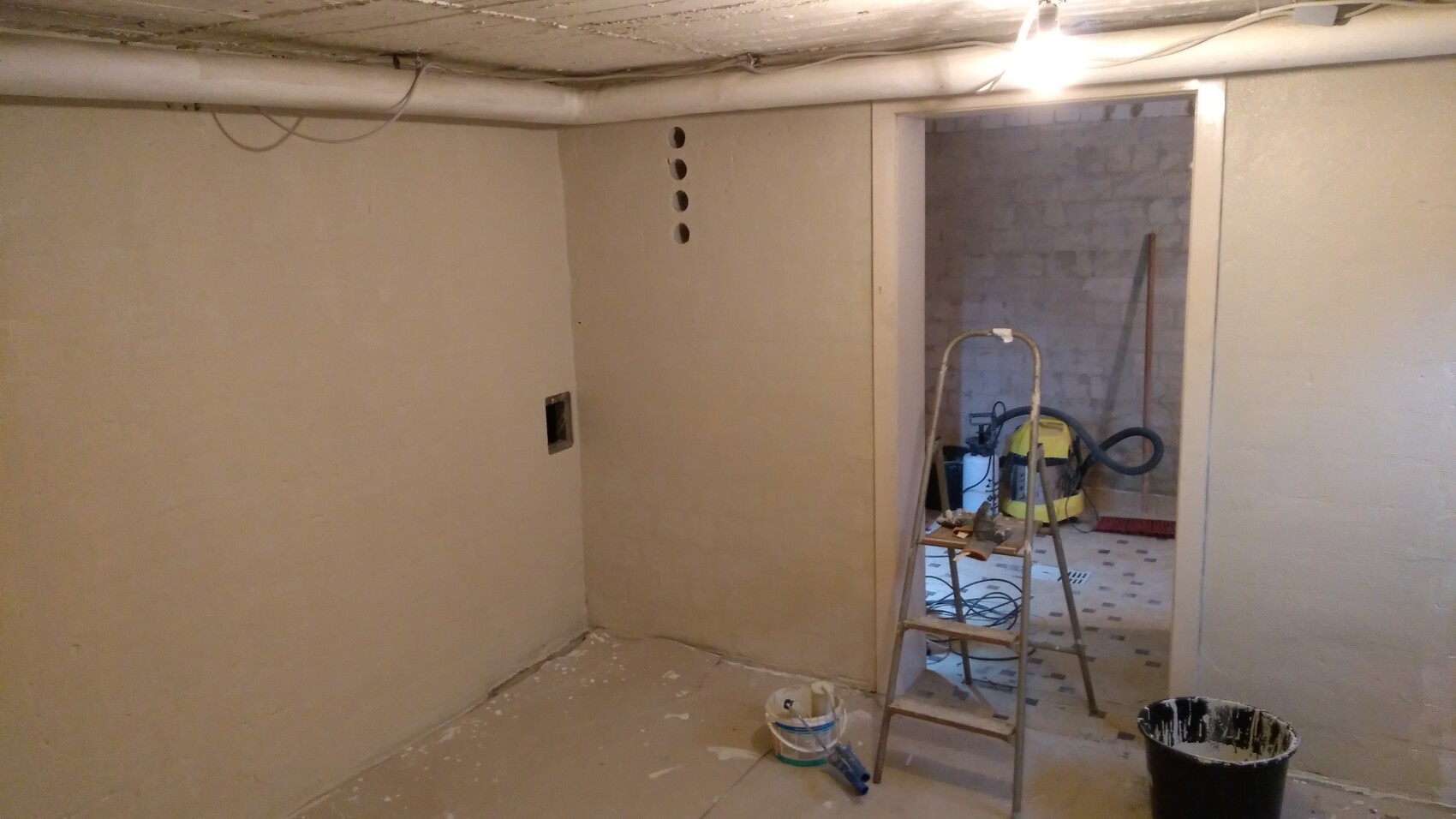 (03.02.2019)
Close-up detail:

Next door in the laundry room, a bit more work was needed:
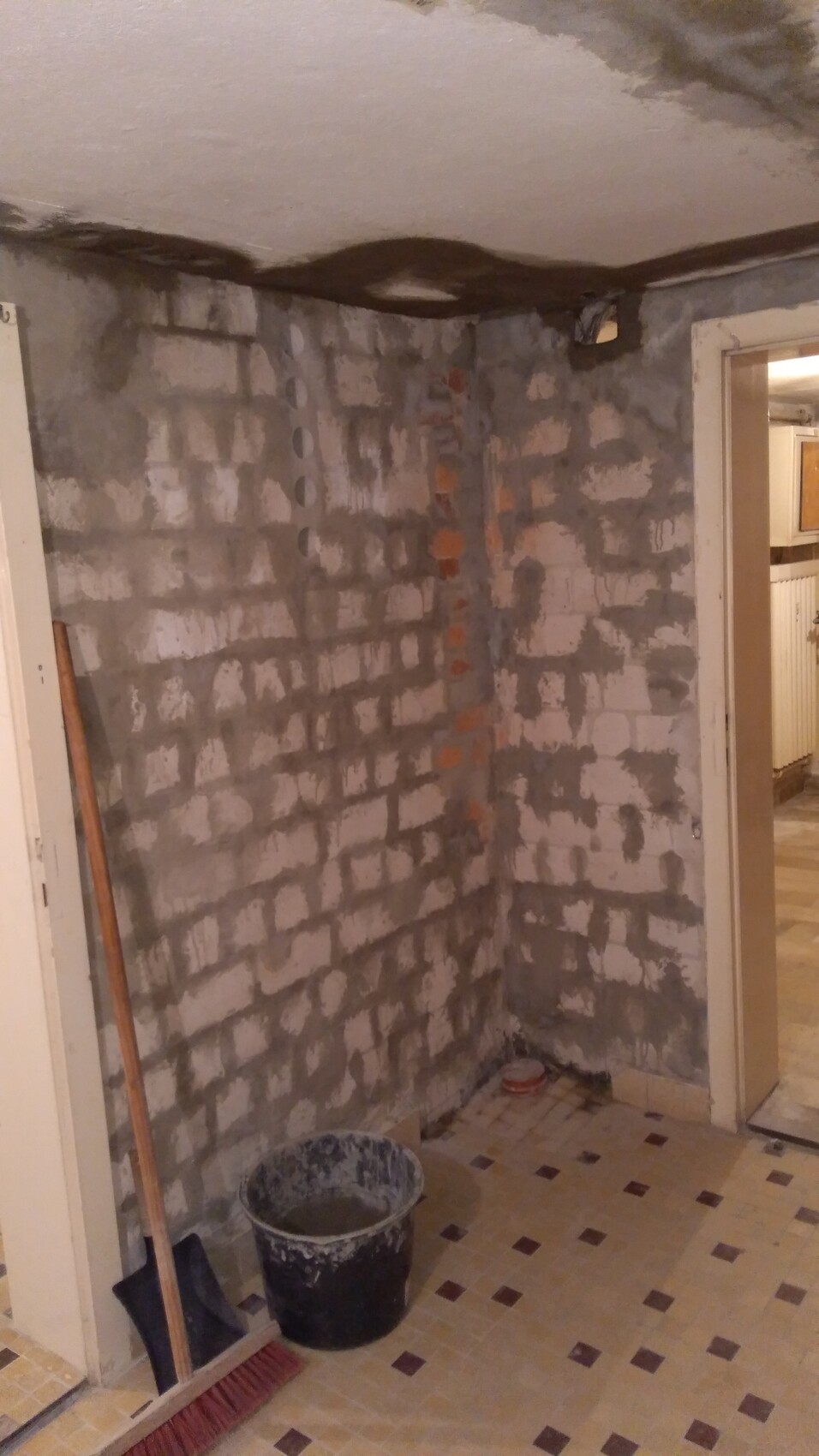 (10.02.2019)
Here is the EasyPutz in white:
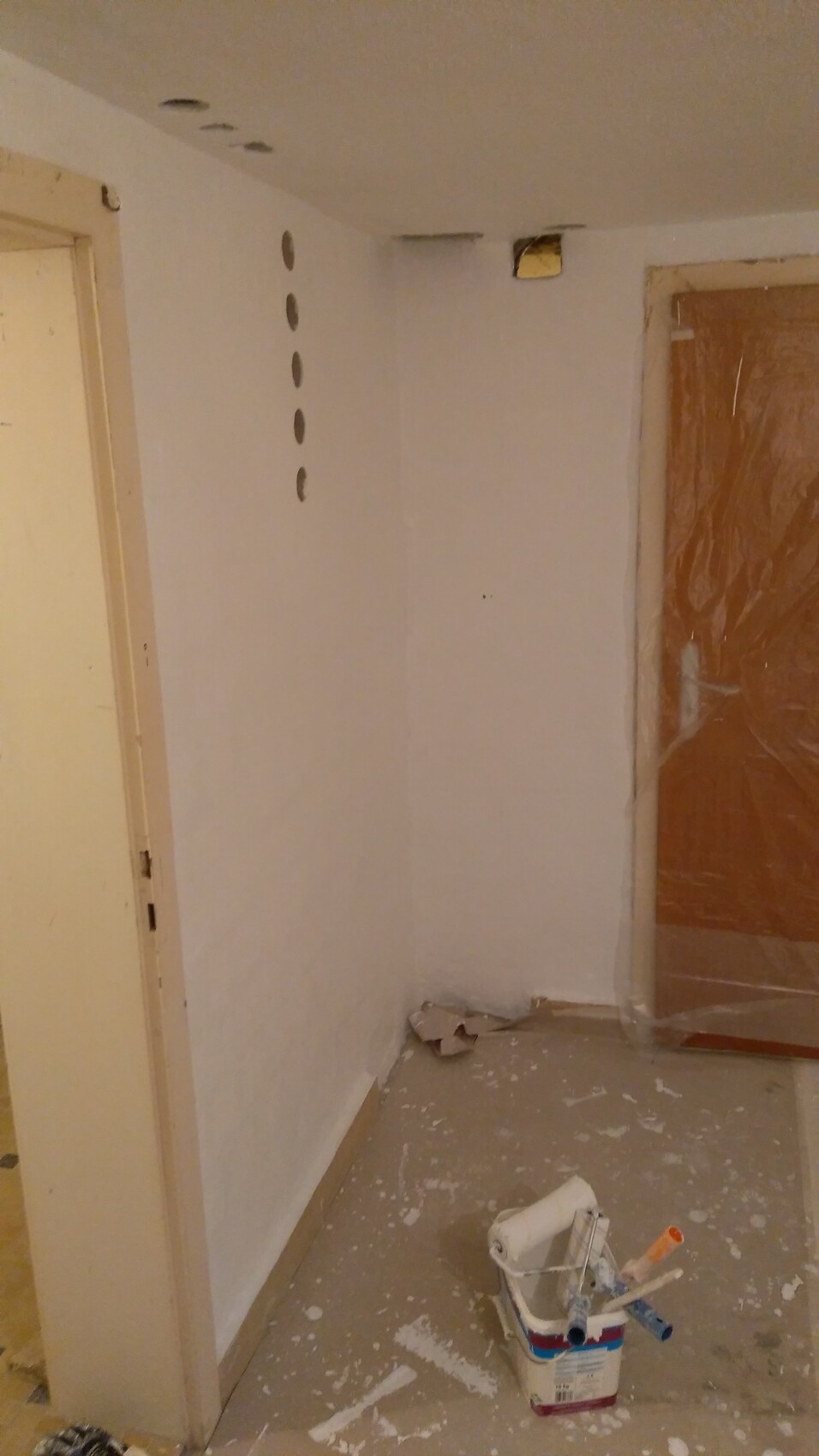 (15.02.2019)
The walls are finished, the pipes can be installed now.
PS: I hope I’m not overwhelming anyone with the number of pictures; there’s more to come showing what we accomplished in the first four months before moving in. The apartment had been vacated, so it had to be completed.
The only way to remove the mortar from the sand-lime brick walls was a very dusty and abrasive method for the diamond grinding disc:
But the result is worth seeing:
Next comes a primer coat:
And a coat with a textured roller plaster (Knauf EasyPutz Color):
Close-up detail:
Next door in the laundry room, a bit more work was needed:
Here is the EasyPutz in white:
The walls are finished, the pipes can be installed now.
PS: I hope I’m not overwhelming anyone with the number of pictures; there’s more to come showing what we accomplished in the first four months before moving in. The apartment had been vacated, so it had to be completed.
LordNibbler27 Nov 2019 13:28Status as of mid-February 2019:
In the sauna room and laundry, tiles and old pipes were removed, walls were sanded and replastered, and old electrical wiring was taken out.
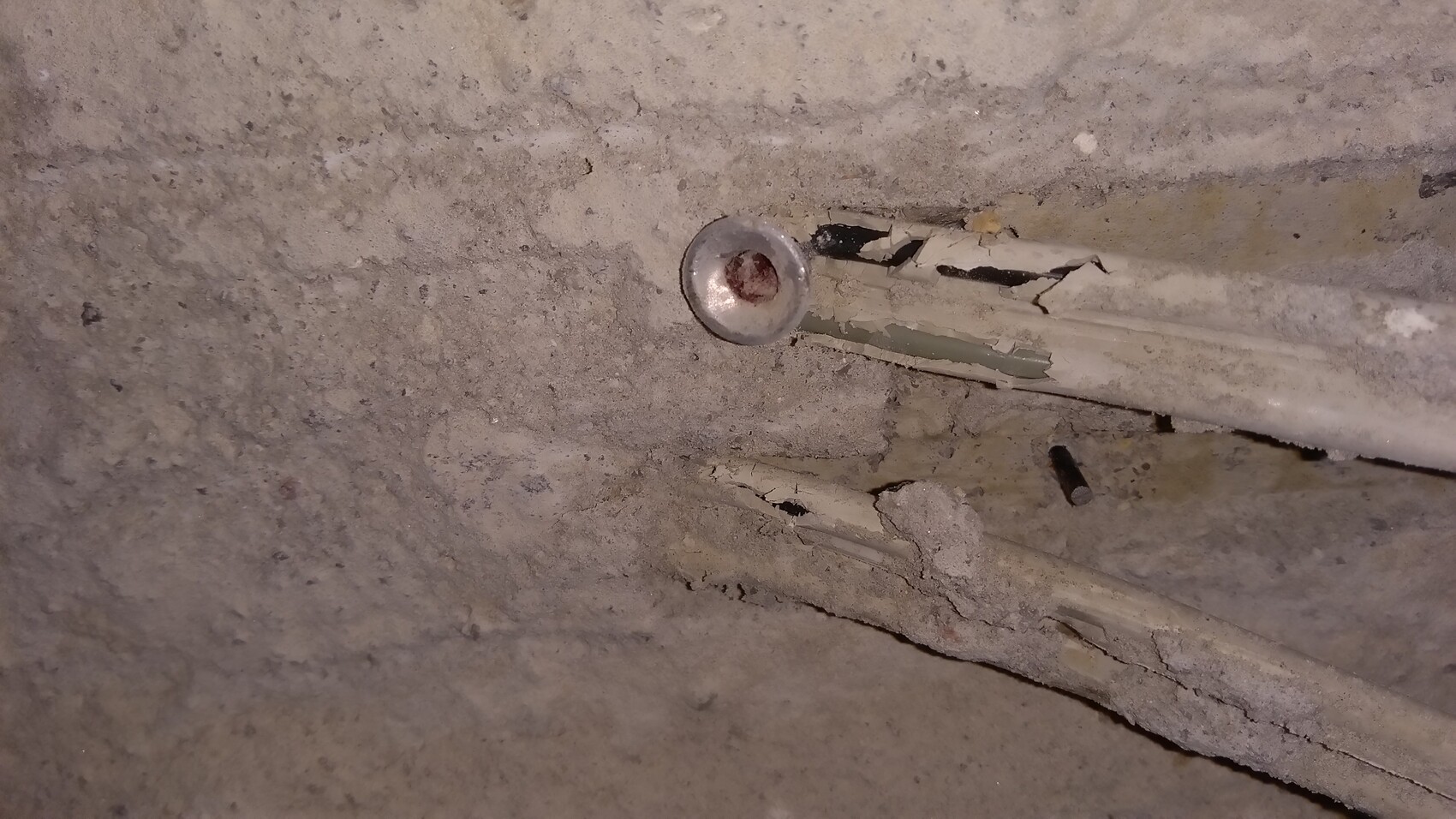
Some interesting things from the previous owners were discovered. This is the stranded cable on the ceiling leading to the three-phase socket for the washing machine. Apparently, the aluminum anchor was live for years.
The damp corner and the exterior wall near the stairs in the laundry room have not been plastered yet, until the moisture issue is resolved.
Core drilling through the concrete ceiling was done with an anchored (which was quite tricky) drill stand. The rented 100mm (4 inch) diamond core bit was noticeably unbalanced. My own 65mm (2.5 inch) core bit ran much smoother. The wall drill holes (made in sand-lime bricks) were done manually with the 65mm (2.5 inch) core bit using a standard Bosch rotary hammer. The walls were further worked on with milling discs on an angle grinder equipped with a dust extraction attachment.
Adapters for clay pipes to DN90 (nominal diameter 90mm) were installed in the two corners around the soil pipes in the laundry. The old passage of the water pipe from the hallway to the laundry is still used for the power supply.
Next step is installing new wastewater pipes:
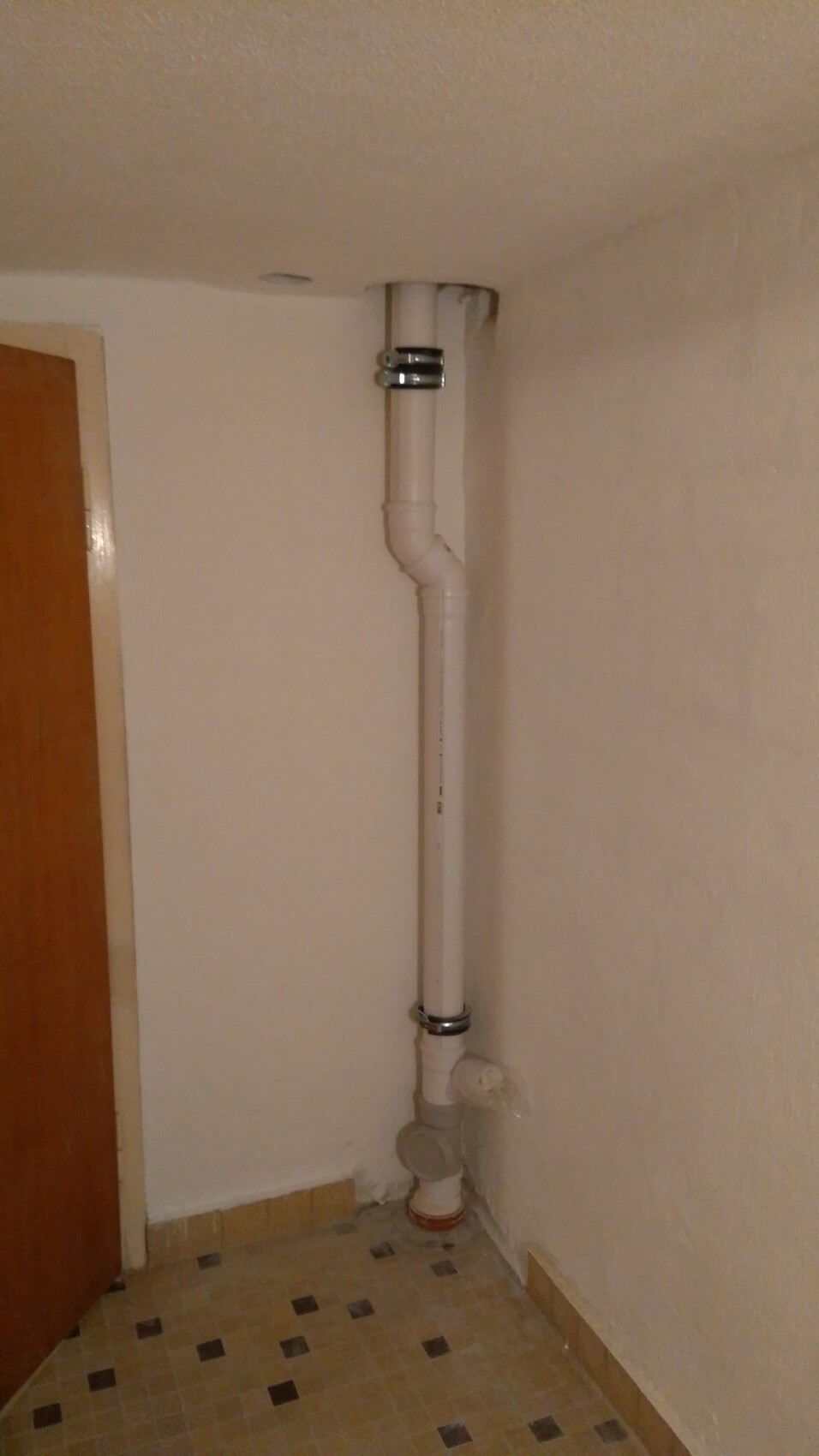 (February 17, 2019)
And the first water pipes have been mounted on the wall:
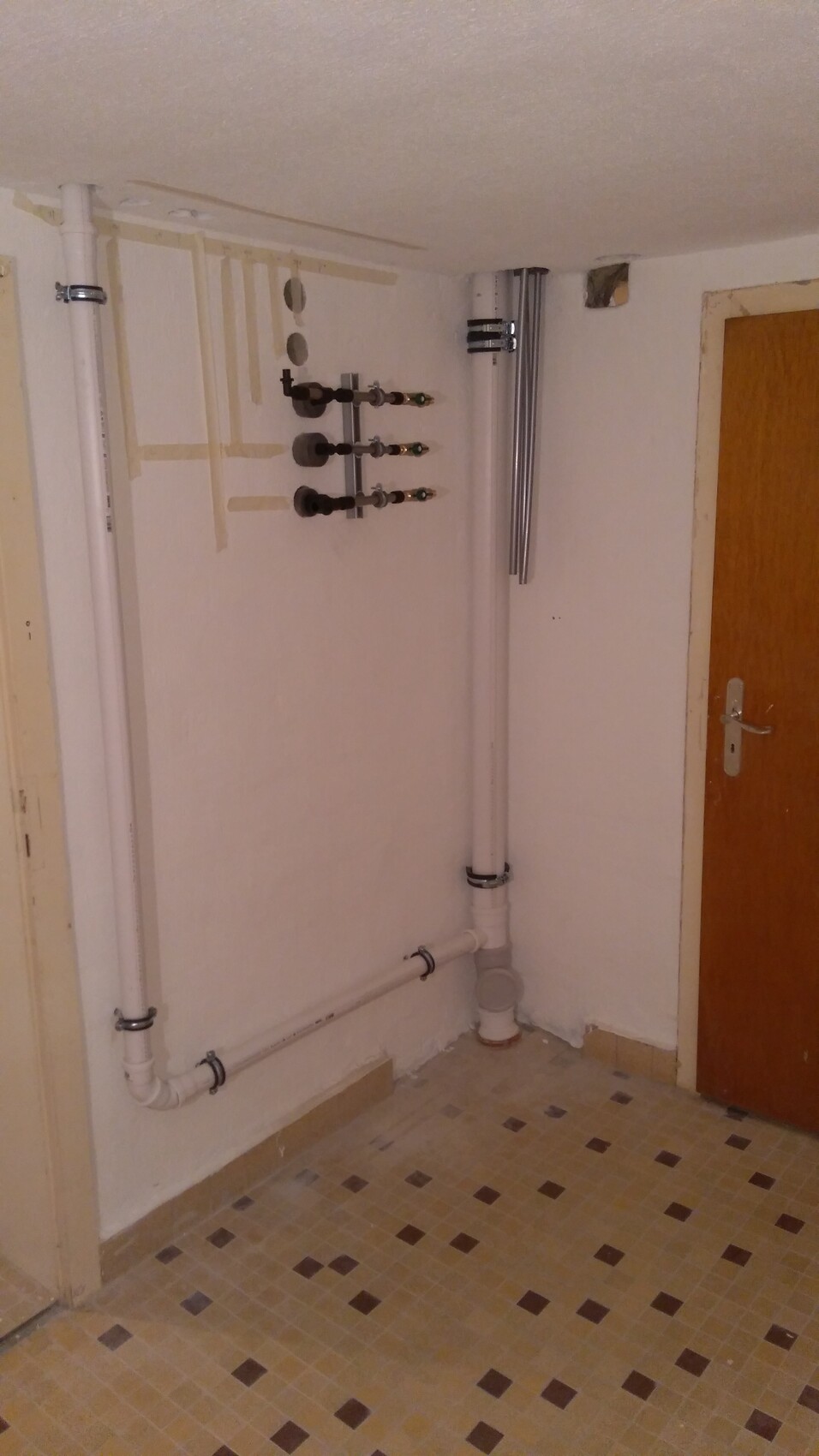 (February 19, 2019)
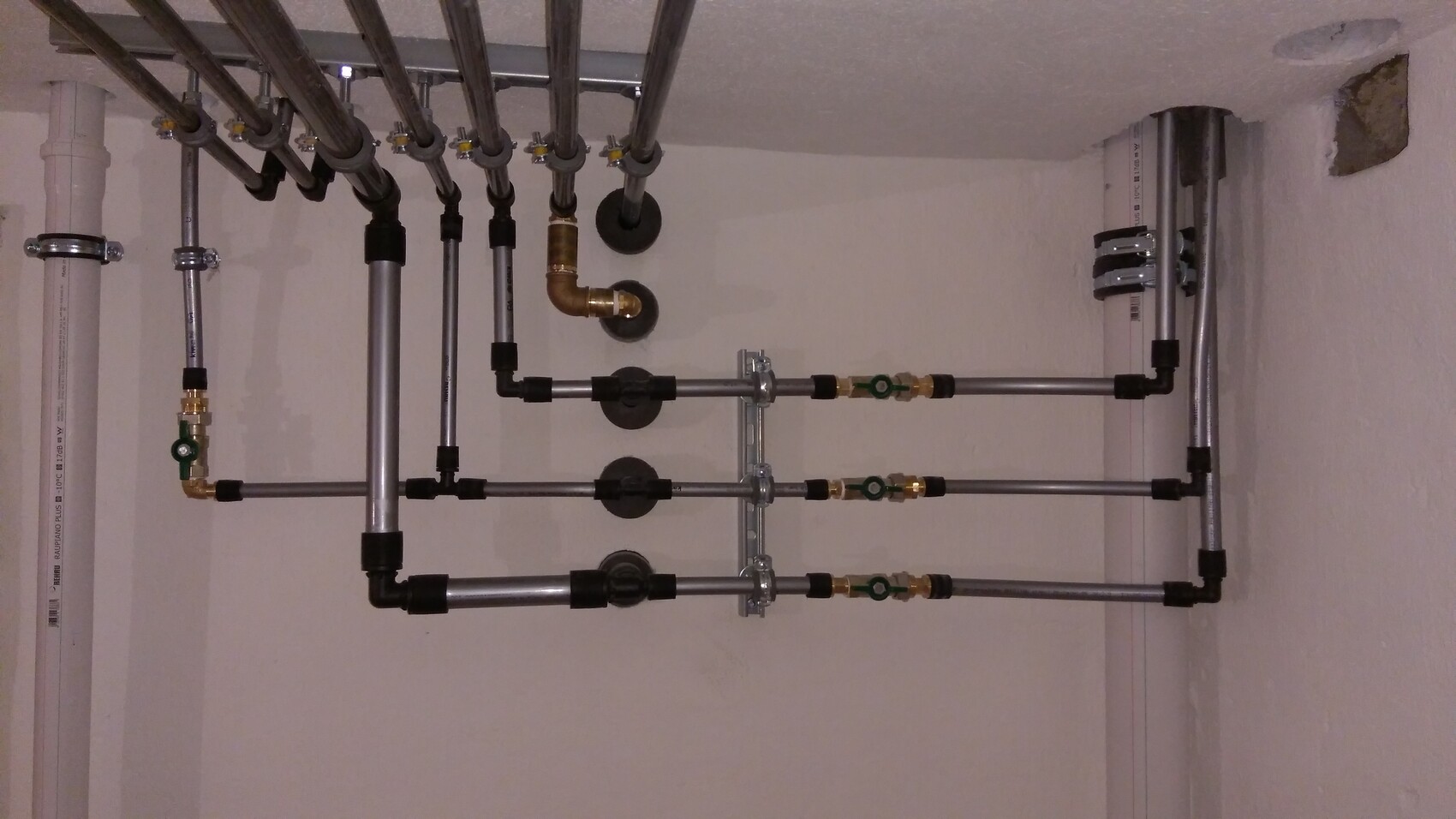 (February 22, 2019)
To the right is a wall area not yet plastered, above which the future heating pipes will run (the old ones are still in the way, so work is temporarily paused). Below is a provisional garden water connection, since further pipe runs on the wall are currently not possible. In the middle are hot/cold water lines for the washbasin and cold water for the washing machine.
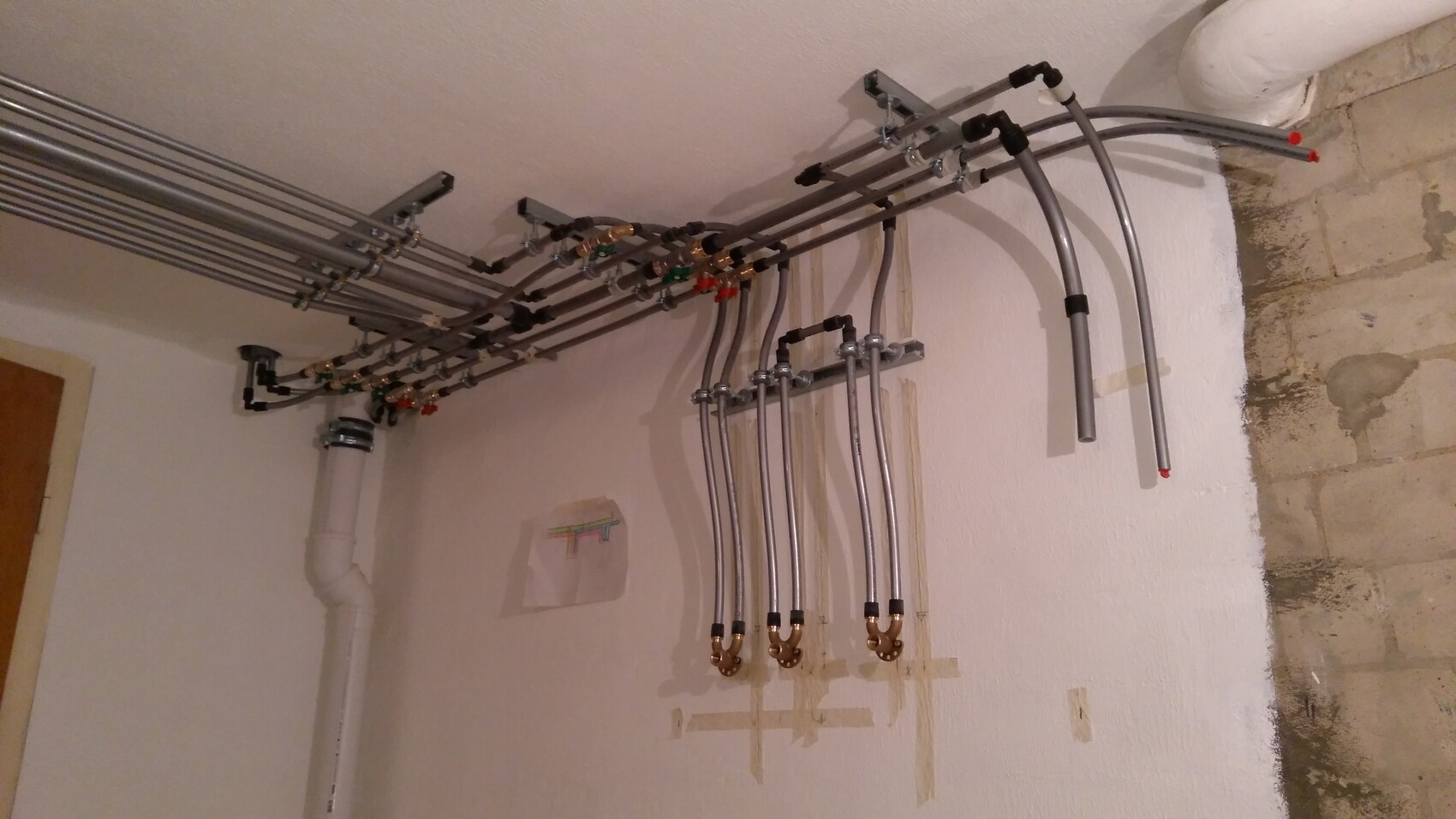 (February 24, 2019)
View into the sauna room; here as well there is currently no space for heating pipes because the old pipes are still obstructing.
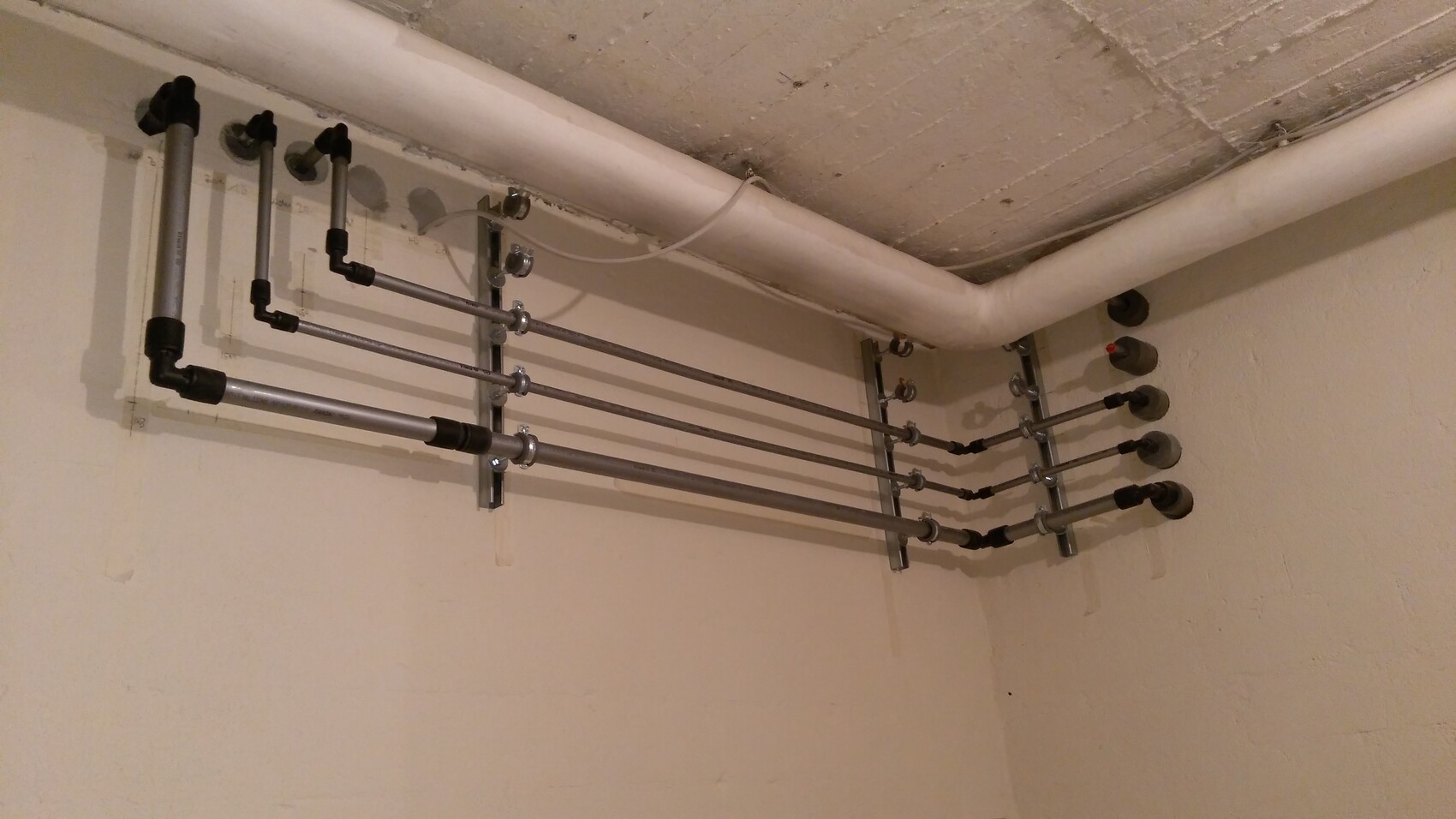
Work continues through the chimney room, where progress currently stops.

I am slowly preparing the basis for the “new” electrical system. We had a simple task for the electricians: new distribution panel with circuit breakers, surge protection, grounding/equipotential bonding, relocating the meter to the new panel, connecting it to the old system while keeping the existing installation intact. Out of eight companies contacted with two pictures, only two responded. One declined due to capacity, the other offered an on-site inspection for quotation. This company welcomed the small job, as they often face delays caused by other trades on site. As long as we are flexible, they can complete it within a day on short notice.
Suddenly, the scheduled day was coming up, so I quickly prepared the wall where the new distribution panel will be installed—in the chimney room, on the backside of the wall from the old position.
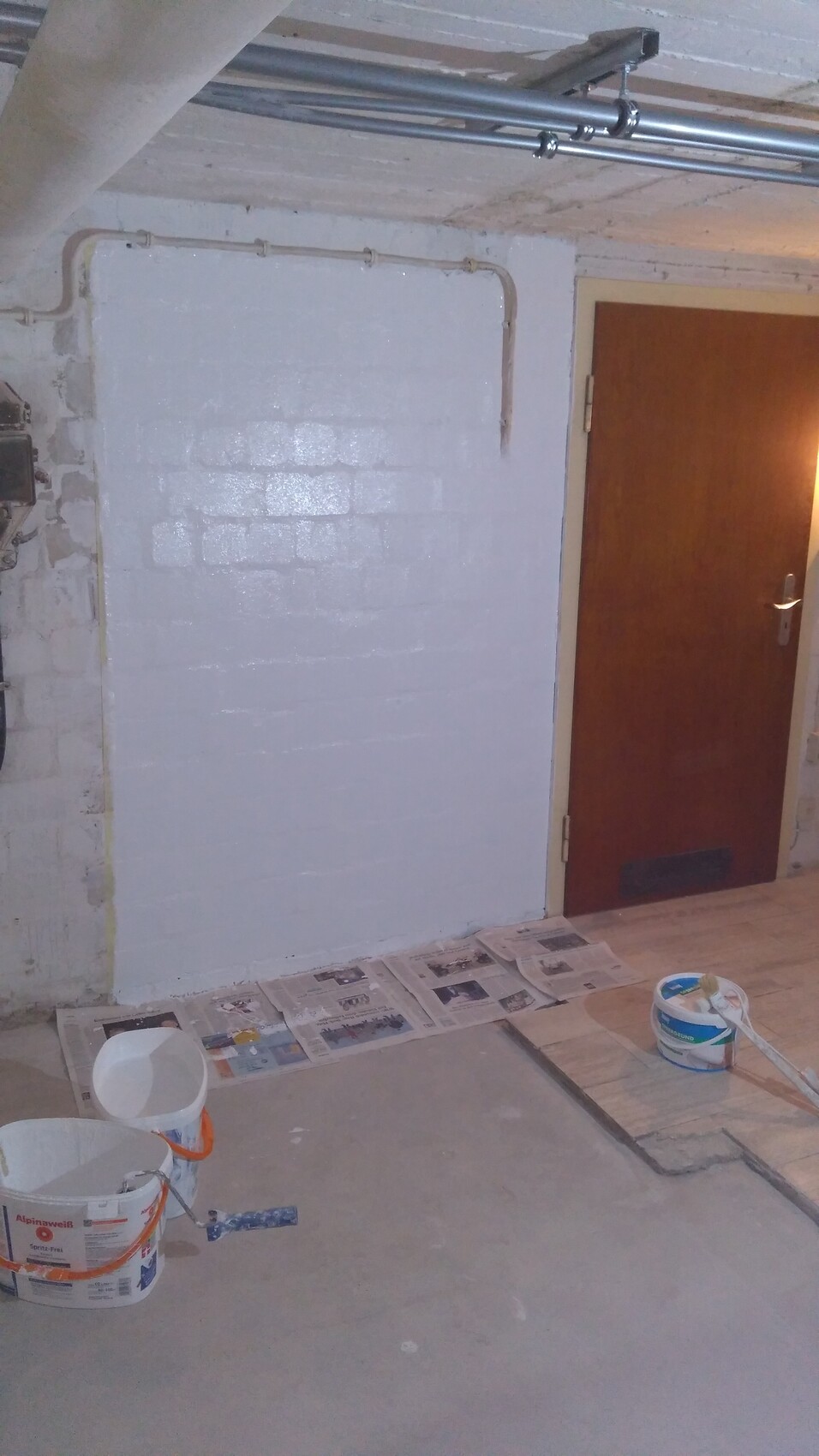 (March 11, 2019)
This clearly shows how much a bit of white paint can improve the appearance.
At 8 a.m., the two electricians arrived, and shortly after, the new panel was hung:
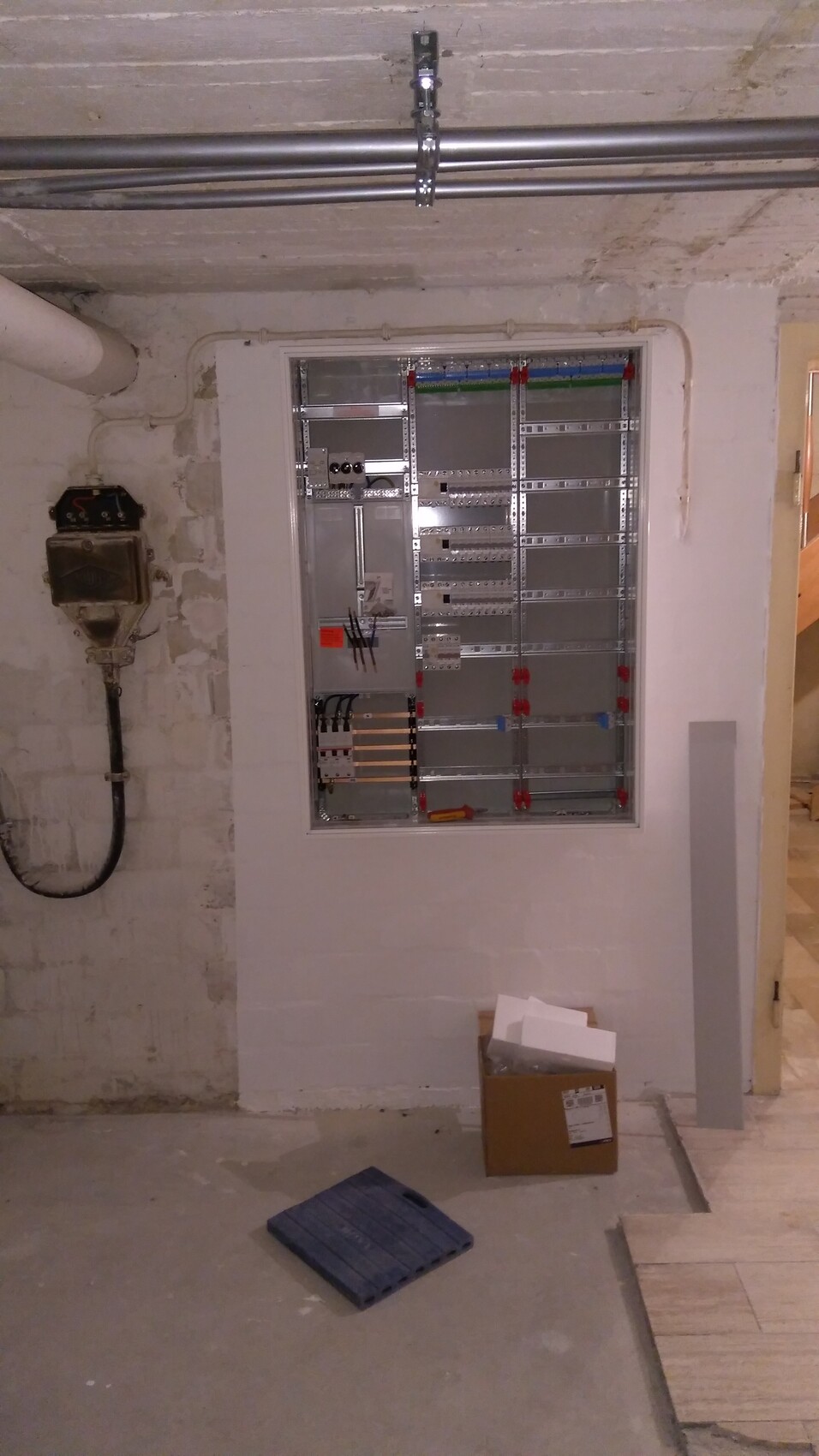 (March 12, 2019)
They finished wiring after four hours. (Materials and labor cost: 2,800€)
In the sauna room and laundry, tiles and old pipes were removed, walls were sanded and replastered, and old electrical wiring was taken out.
Some interesting things from the previous owners were discovered. This is the stranded cable on the ceiling leading to the three-phase socket for the washing machine. Apparently, the aluminum anchor was live for years.
The damp corner and the exterior wall near the stairs in the laundry room have not been plastered yet, until the moisture issue is resolved.
Core drilling through the concrete ceiling was done with an anchored (which was quite tricky) drill stand. The rented 100mm (4 inch) diamond core bit was noticeably unbalanced. My own 65mm (2.5 inch) core bit ran much smoother. The wall drill holes (made in sand-lime bricks) were done manually with the 65mm (2.5 inch) core bit using a standard Bosch rotary hammer. The walls were further worked on with milling discs on an angle grinder equipped with a dust extraction attachment.
Adapters for clay pipes to DN90 (nominal diameter 90mm) were installed in the two corners around the soil pipes in the laundry. The old passage of the water pipe from the hallway to the laundry is still used for the power supply.
Next step is installing new wastewater pipes:
And the first water pipes have been mounted on the wall:
To the right is a wall area not yet plastered, above which the future heating pipes will run (the old ones are still in the way, so work is temporarily paused). Below is a provisional garden water connection, since further pipe runs on the wall are currently not possible. In the middle are hot/cold water lines for the washbasin and cold water for the washing machine.
View into the sauna room; here as well there is currently no space for heating pipes because the old pipes are still obstructing.
Work continues through the chimney room, where progress currently stops.
I am slowly preparing the basis for the “new” electrical system. We had a simple task for the electricians: new distribution panel with circuit breakers, surge protection, grounding/equipotential bonding, relocating the meter to the new panel, connecting it to the old system while keeping the existing installation intact. Out of eight companies contacted with two pictures, only two responded. One declined due to capacity, the other offered an on-site inspection for quotation. This company welcomed the small job, as they often face delays caused by other trades on site. As long as we are flexible, they can complete it within a day on short notice.
Suddenly, the scheduled day was coming up, so I quickly prepared the wall where the new distribution panel will be installed—in the chimney room, on the backside of the wall from the old position.
This clearly shows how much a bit of white paint can improve the appearance.
At 8 a.m., the two electricians arrived, and shortly after, the new panel was hung:
They finished wiring after four hours. (Materials and labor cost: 2,800€)
LordNibbler27 Nov 2019 14:17The electricians are at home, and the cabinet is operational. In the old house, I cleaned up and removed everything that was no longer there due to the work in the house (instant water heater, washing machine, sauna, stove connection).
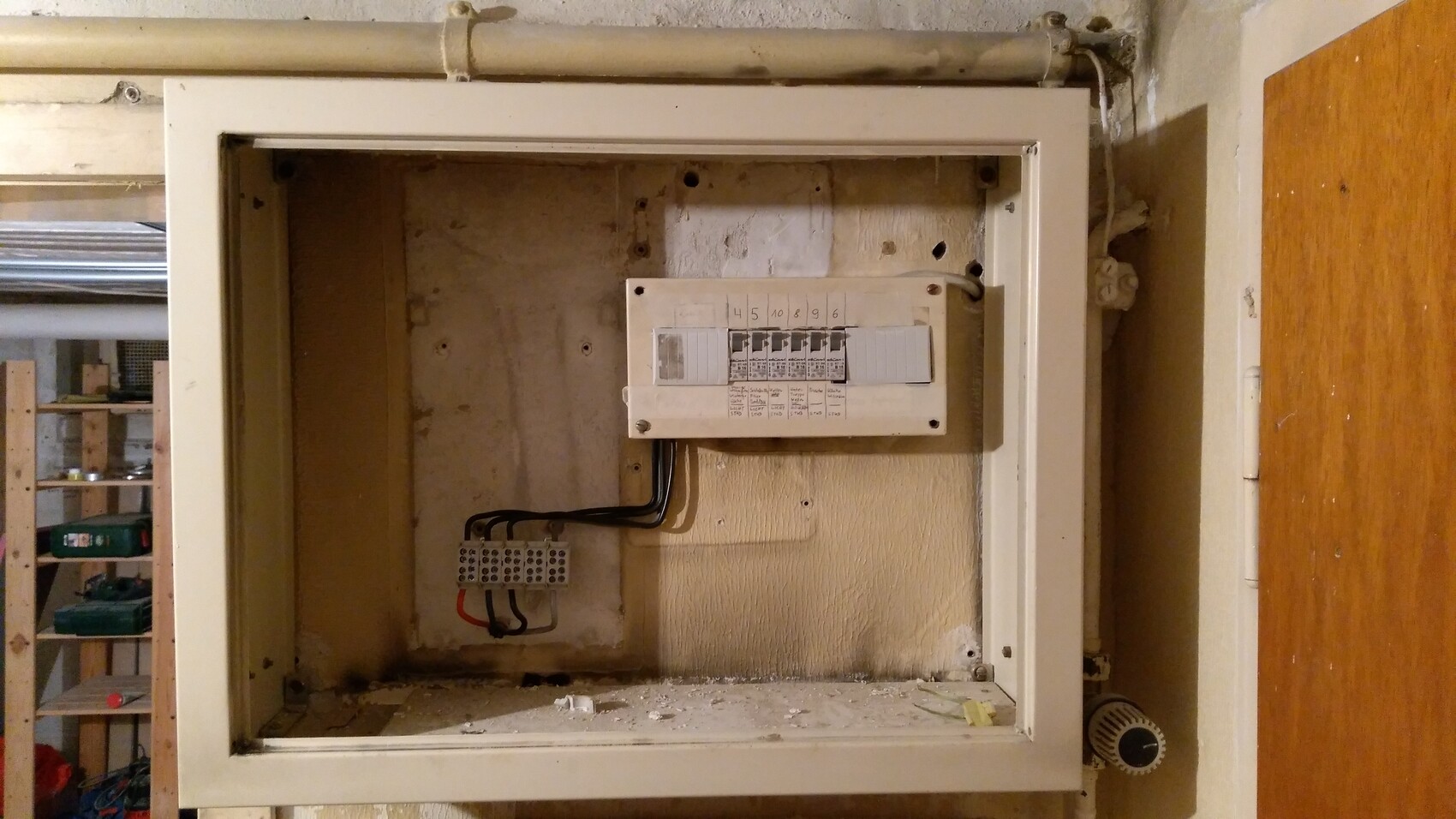 (12.03.2019)
Later, I was able to further reduce the old fuses, allowing for a shift to the other side:
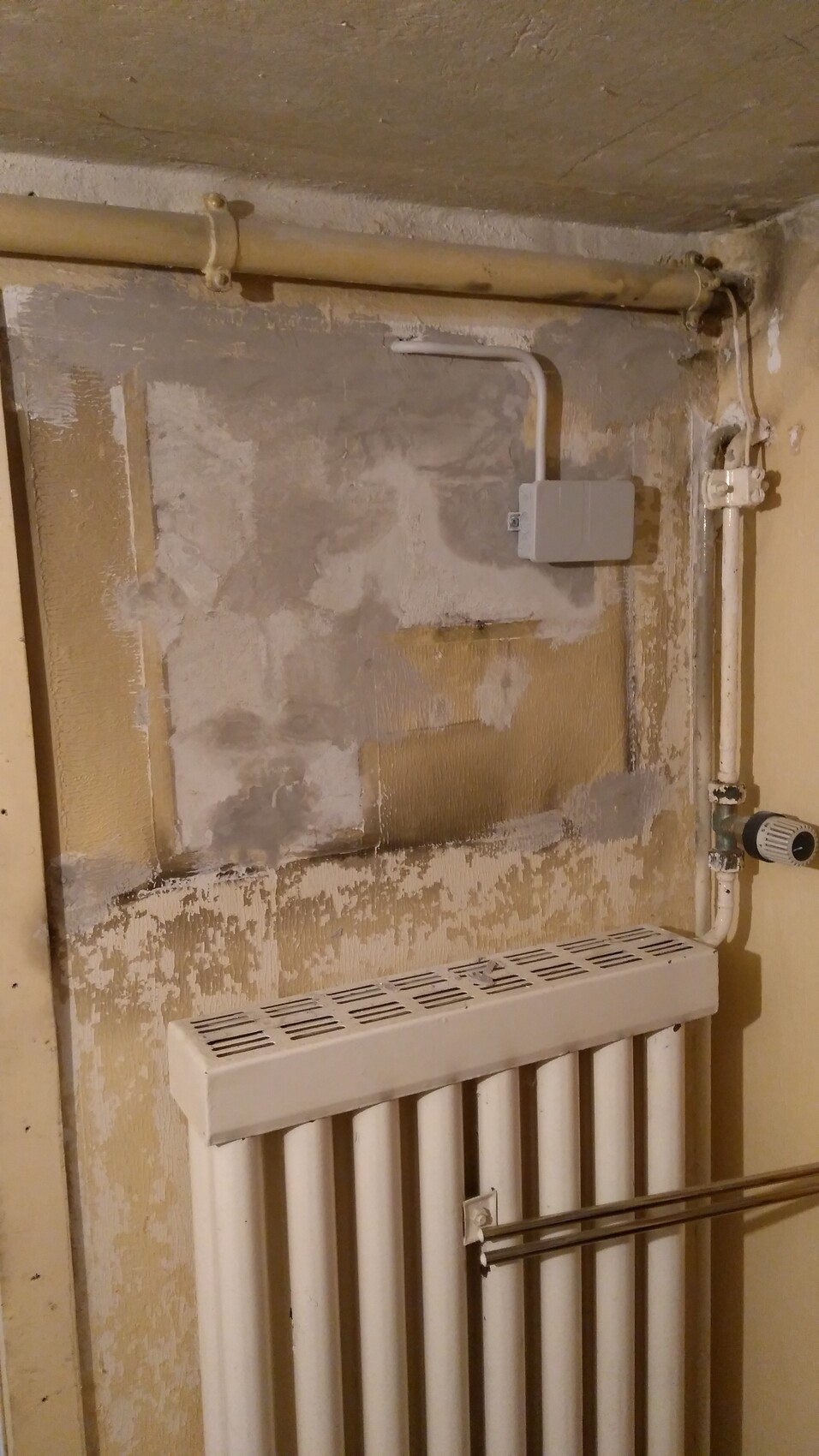 (11.05.2019)
Documentation!
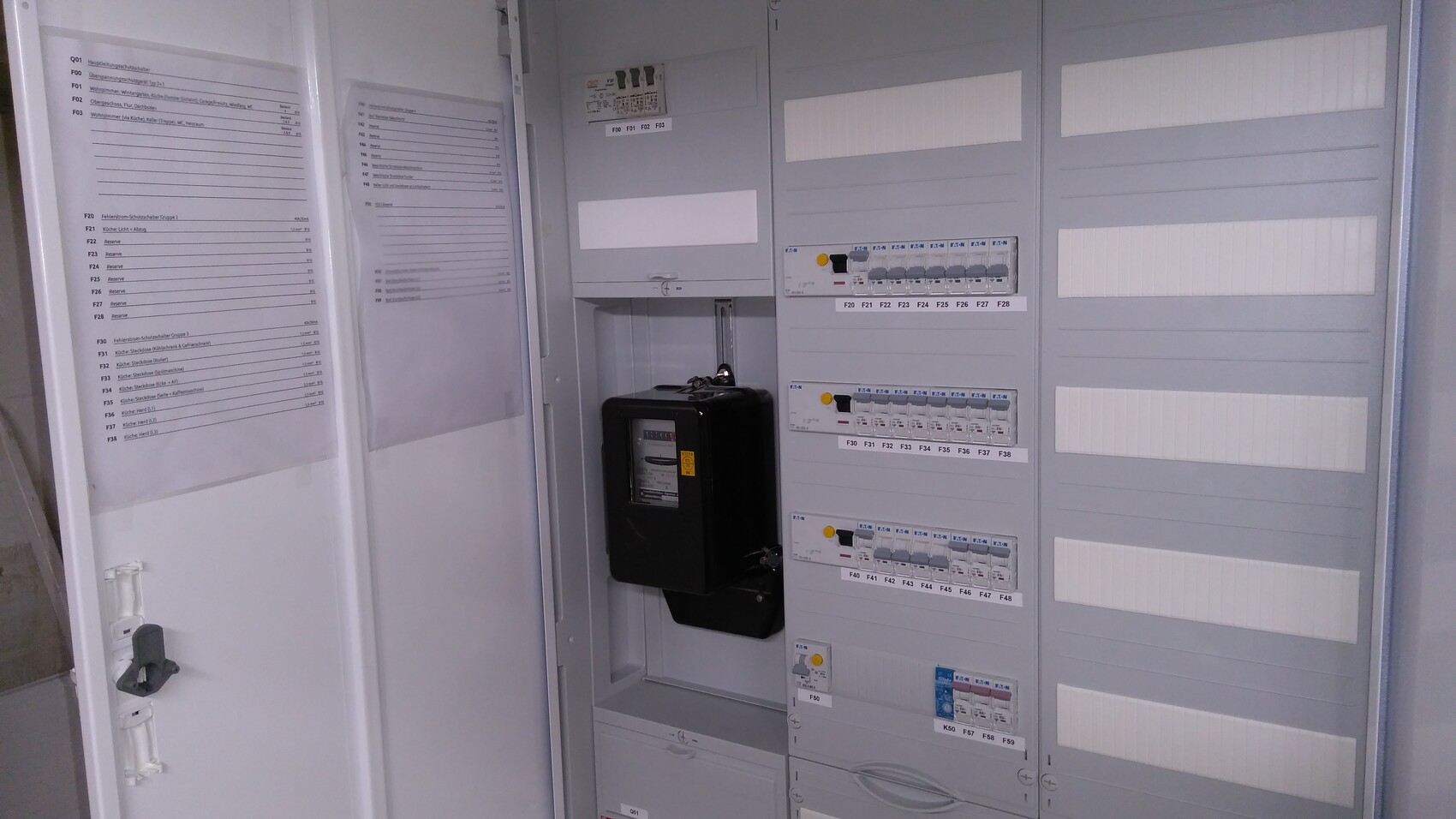 (13.07.2019)
The only practical route from the fuse box to the laundry room and further to the kitchen/bathroom ran along the wall in the fireplace room and briefly through the hallway. But the fireplace was in the way—no problem for the rotary hammer:
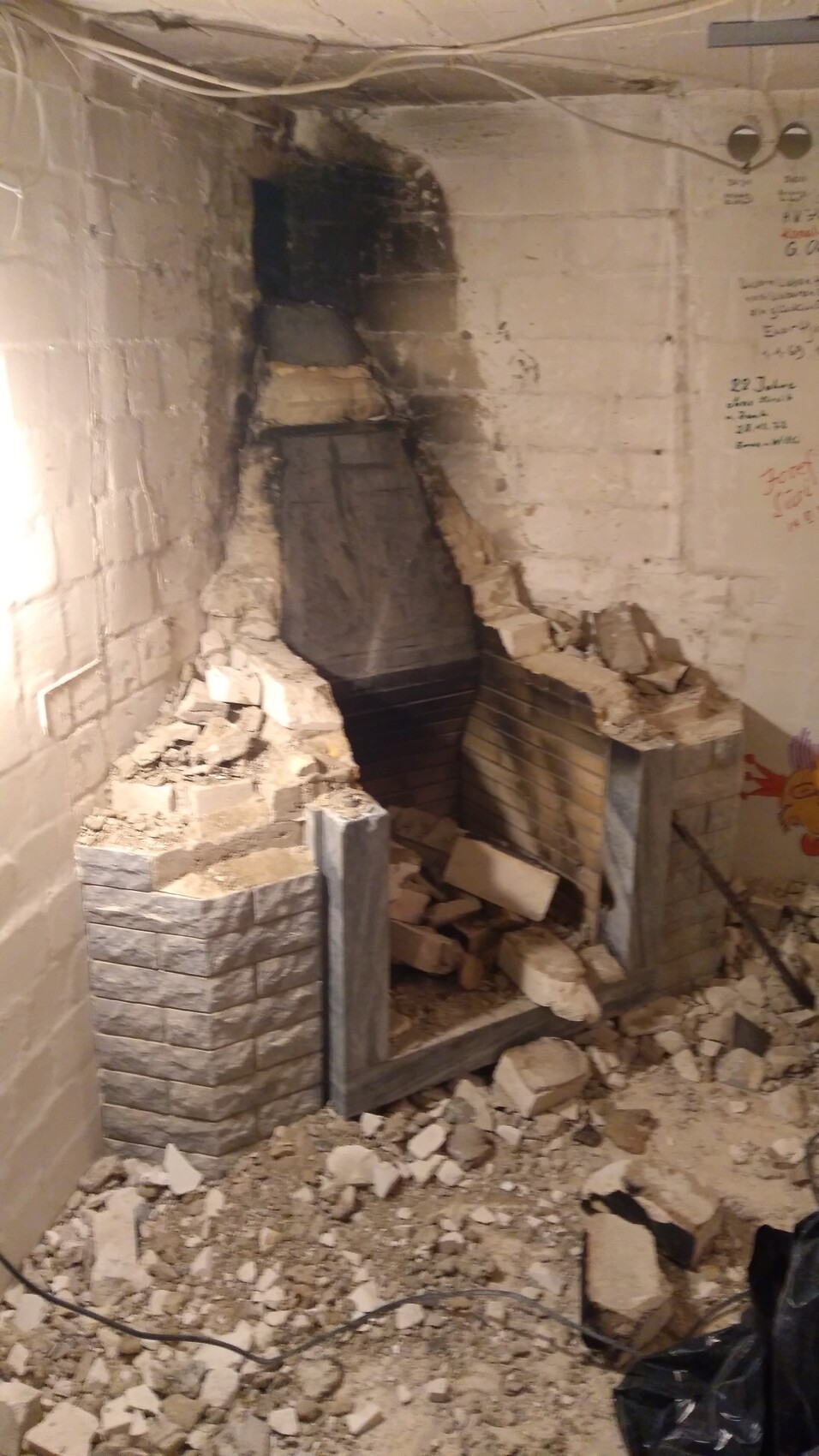 (24.03.2019)
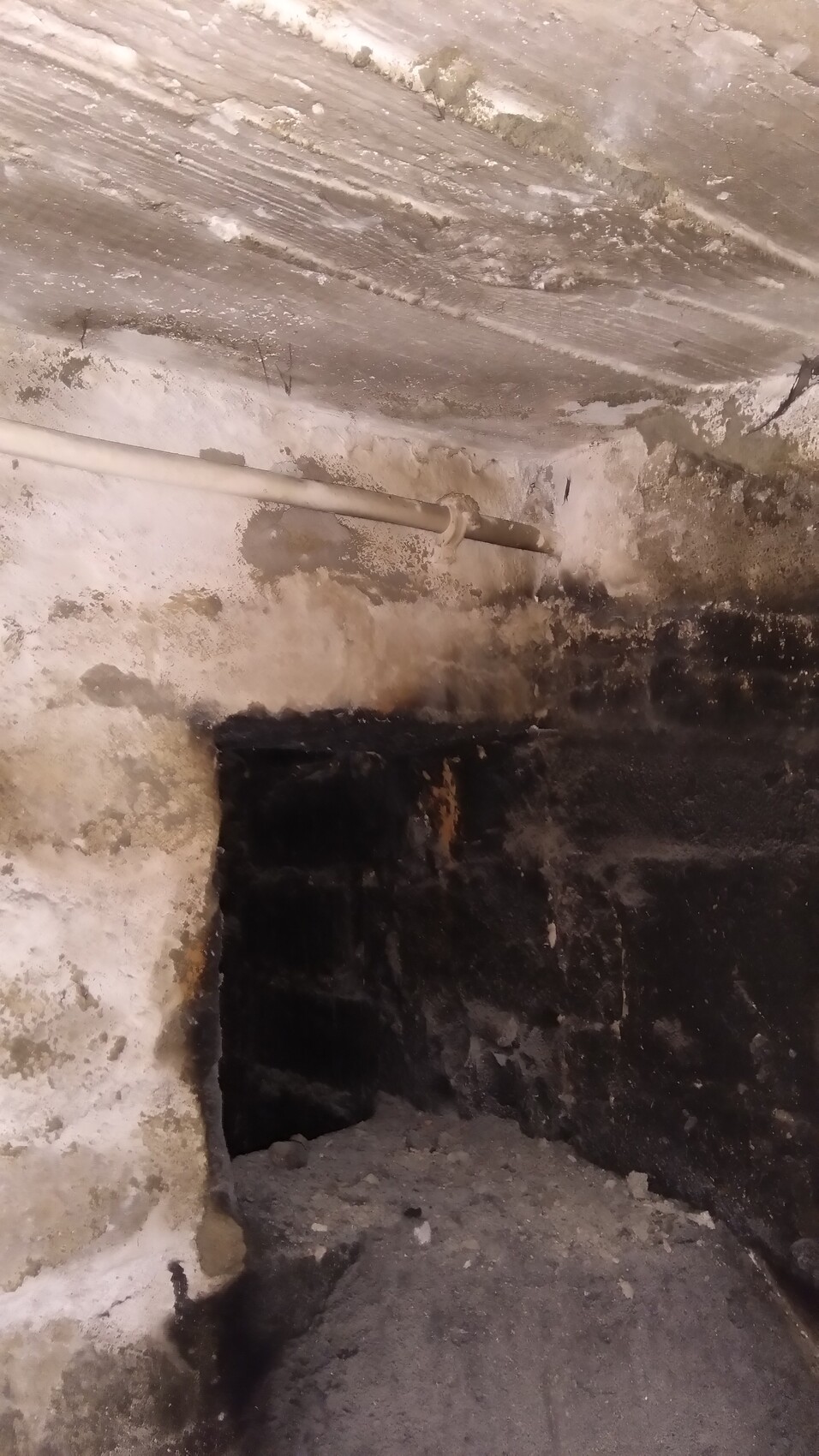
Yes, the power line for the old instant water heater ran through the stove itself.
Cable tray in the hallway; the old water pipe is still in the way of installing a cable duct.
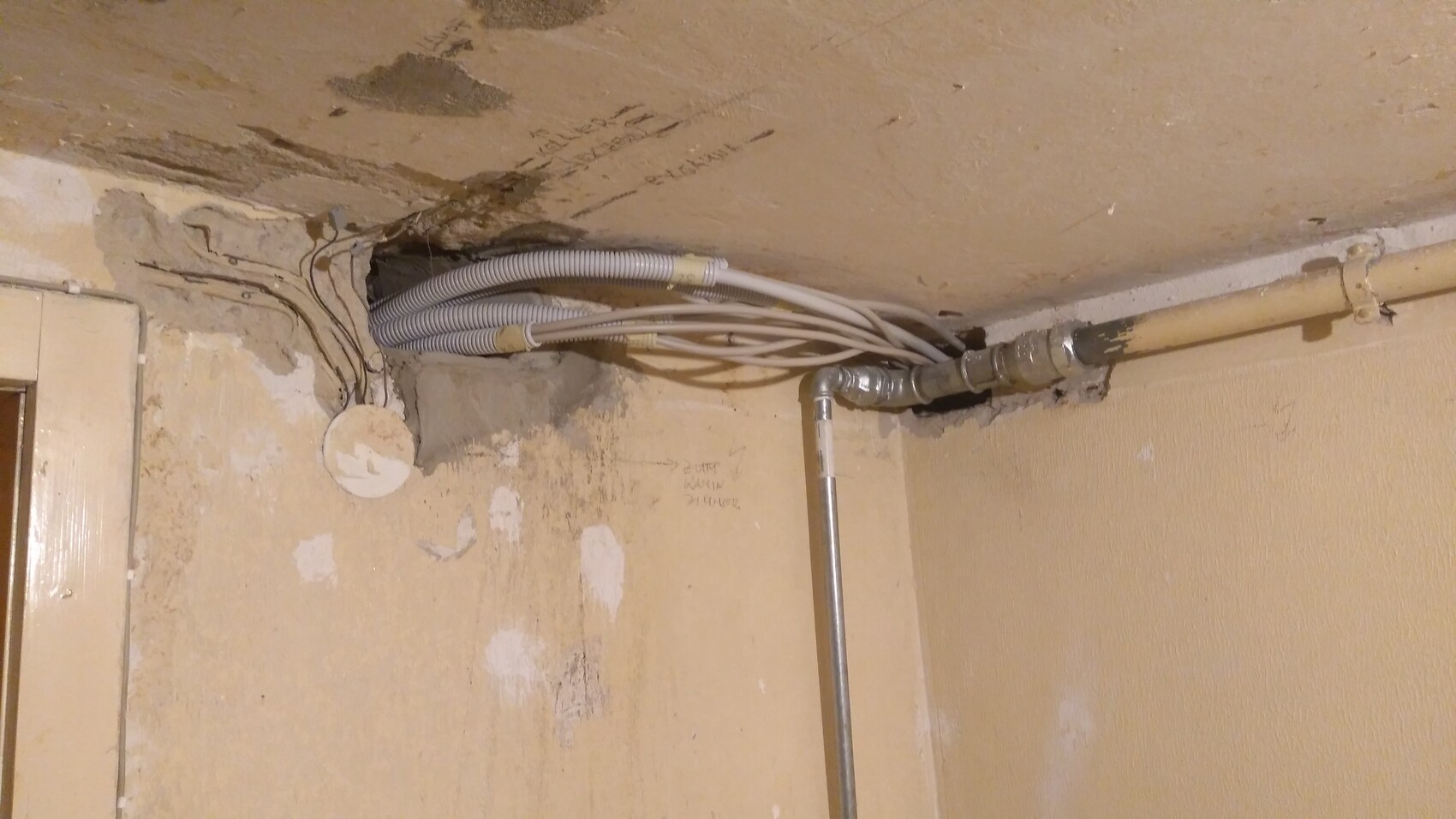 (29.03.2019)
Time to switch the cold water line, disconnect old connections. Install backflow preventer, filter/pressure reducer, temporarily reconnect the old line (still supplies the guest toilet at the entrance). Connect the new line in the fireplace room.
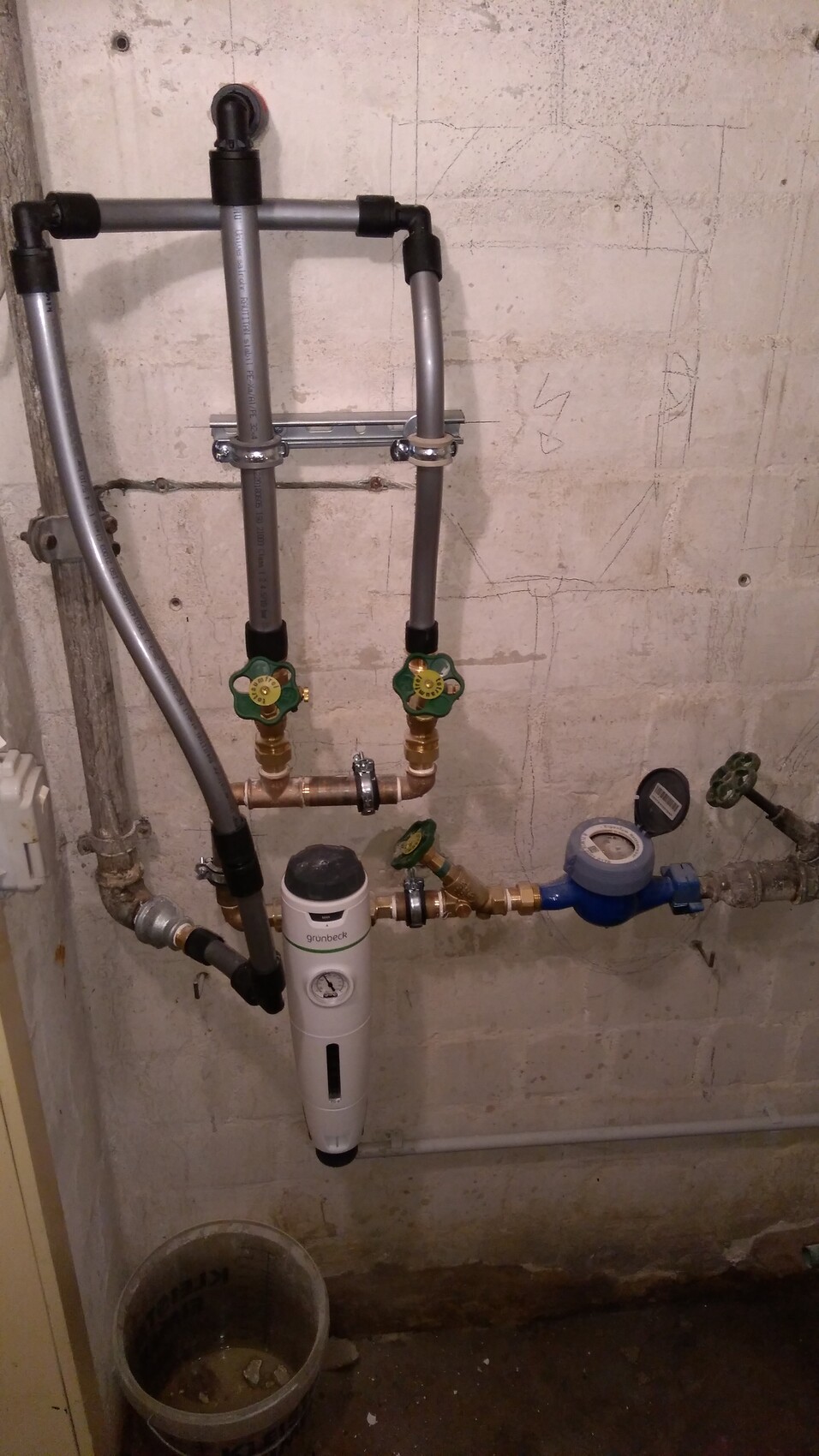 (31.03.2019)
Later, I was able to further reduce the old fuses, allowing for a shift to the other side:
Documentation!
The only practical route from the fuse box to the laundry room and further to the kitchen/bathroom ran along the wall in the fireplace room and briefly through the hallway. But the fireplace was in the way—no problem for the rotary hammer:
Yes, the power line for the old instant water heater ran through the stove itself.
Cable tray in the hallway; the old water pipe is still in the way of installing a cable duct.
Time to switch the cold water line, disconnect old connections. Install backflow preventer, filter/pressure reducer, temporarily reconnect the old line (still supplies the guest toilet at the entrance). Connect the new line in the fireplace room.
LordNibbler27 Nov 2019 14:37Laundry room with new electrical wiring and faucets.
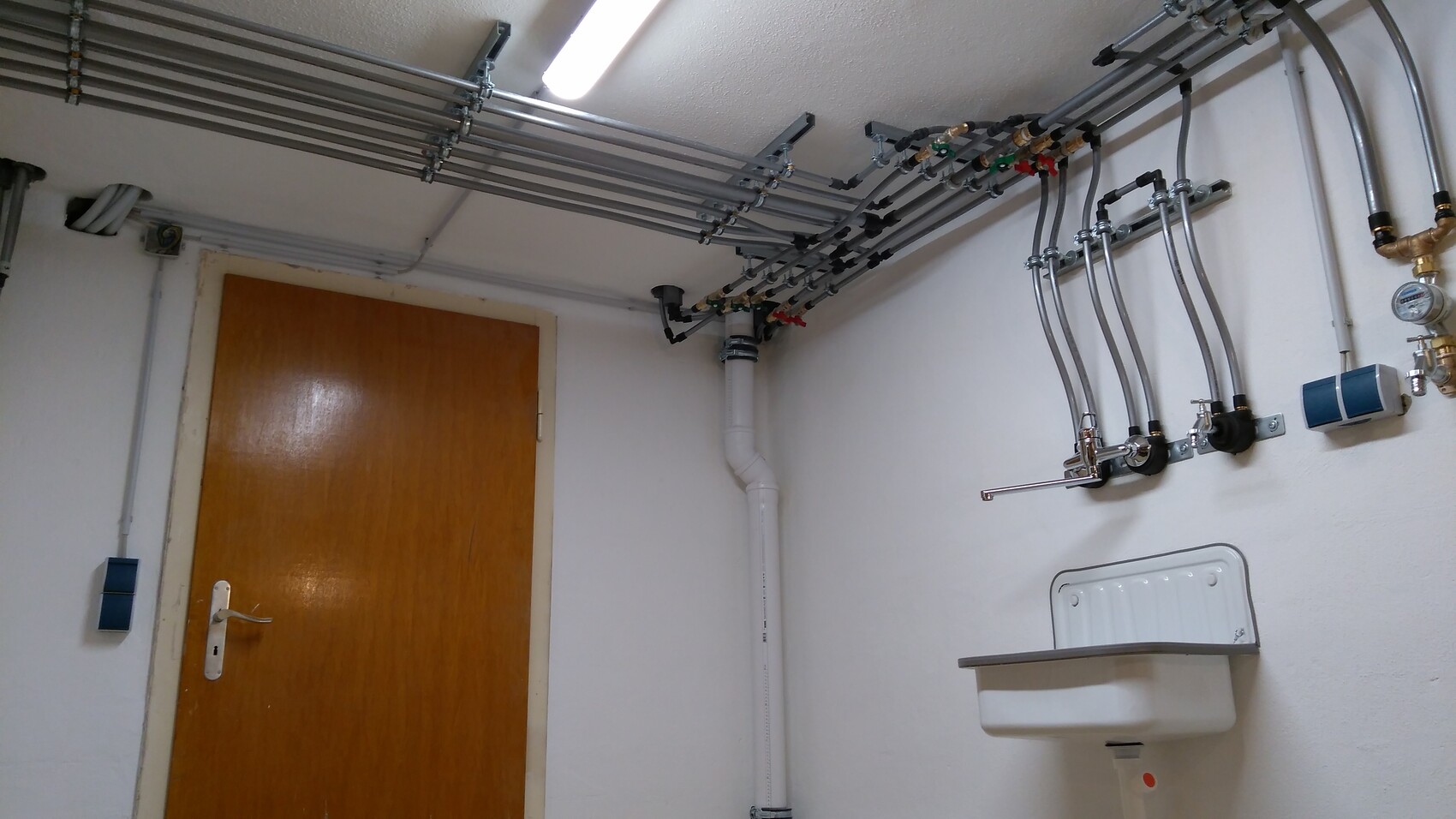
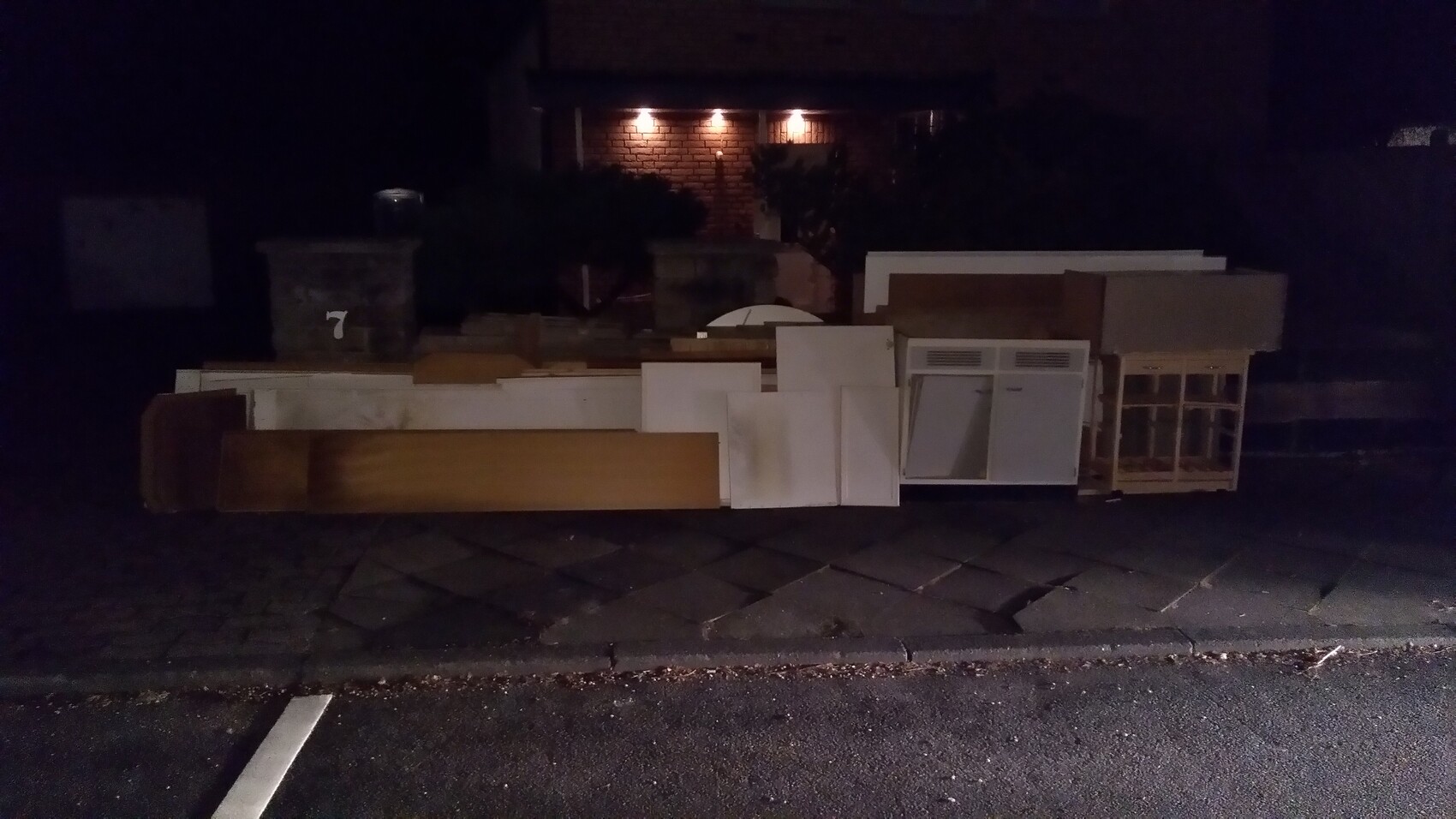
The remaining work in the basement was limited to replacing the electrical wiring in the sauna room and fireplace room, and running cables toward the kitchen and bathroom. Within the first four months, we disposed of three loads of scrap (a similar amount as shown in the photo above), one bulky waste pickup, two vanloads of waste (non-bulky wood and similar materials), one 7m³ (9.2 yd³) green waste container, one vanload of green waste, and one 7m³ (9.2 yd³) construction debris container.
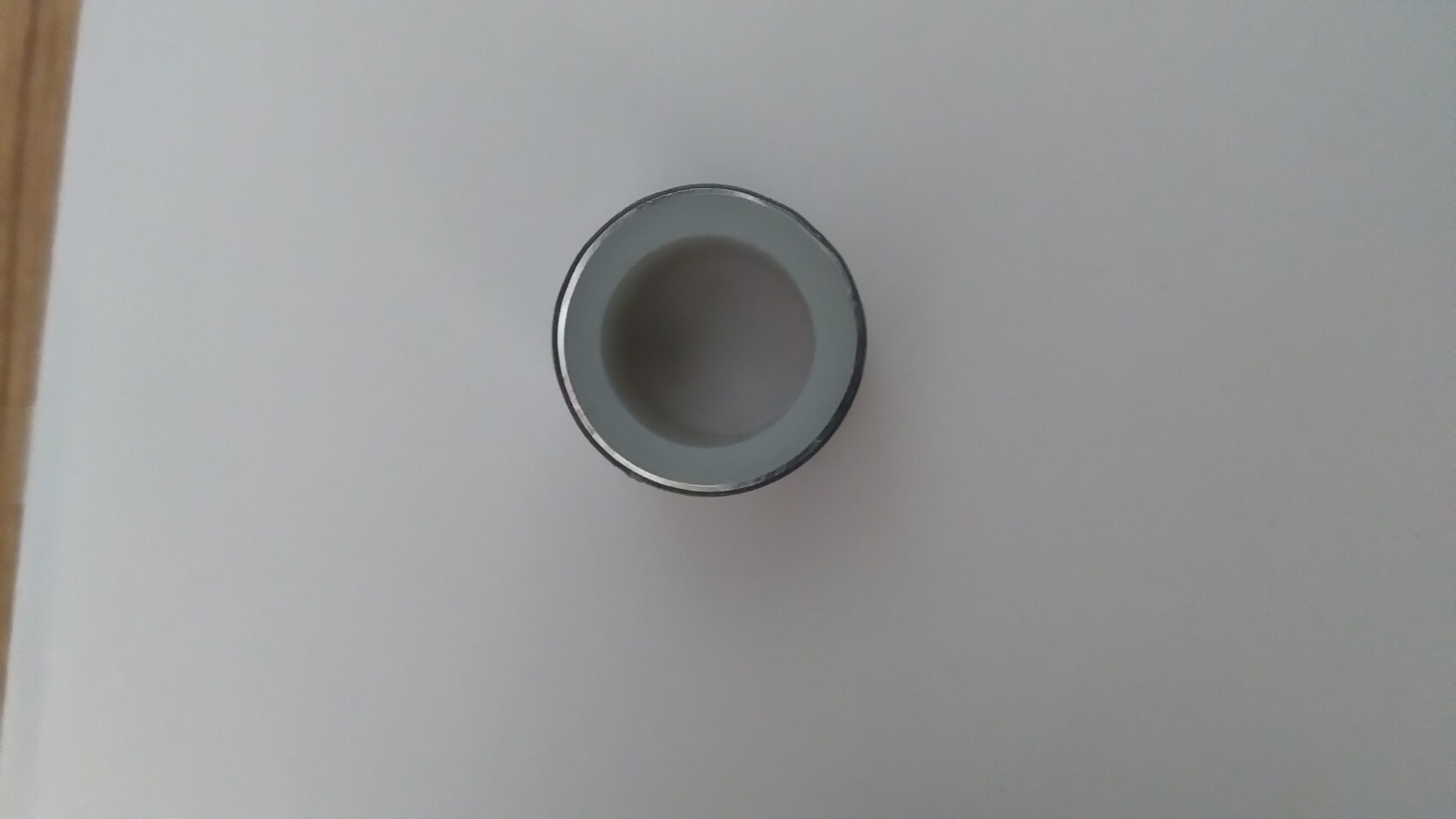
The water pipes used are PEXa pipes with aluminum lamination and a polyethylene outer layer. Here is a cross-section so everyone can get an idea:
Many have asked why we replaced the pipes first instead of making everything look nice. It can’t be that bad, and iron pipes last more than 60 years, right?
Well, here’s why: I don’t want to drink this.
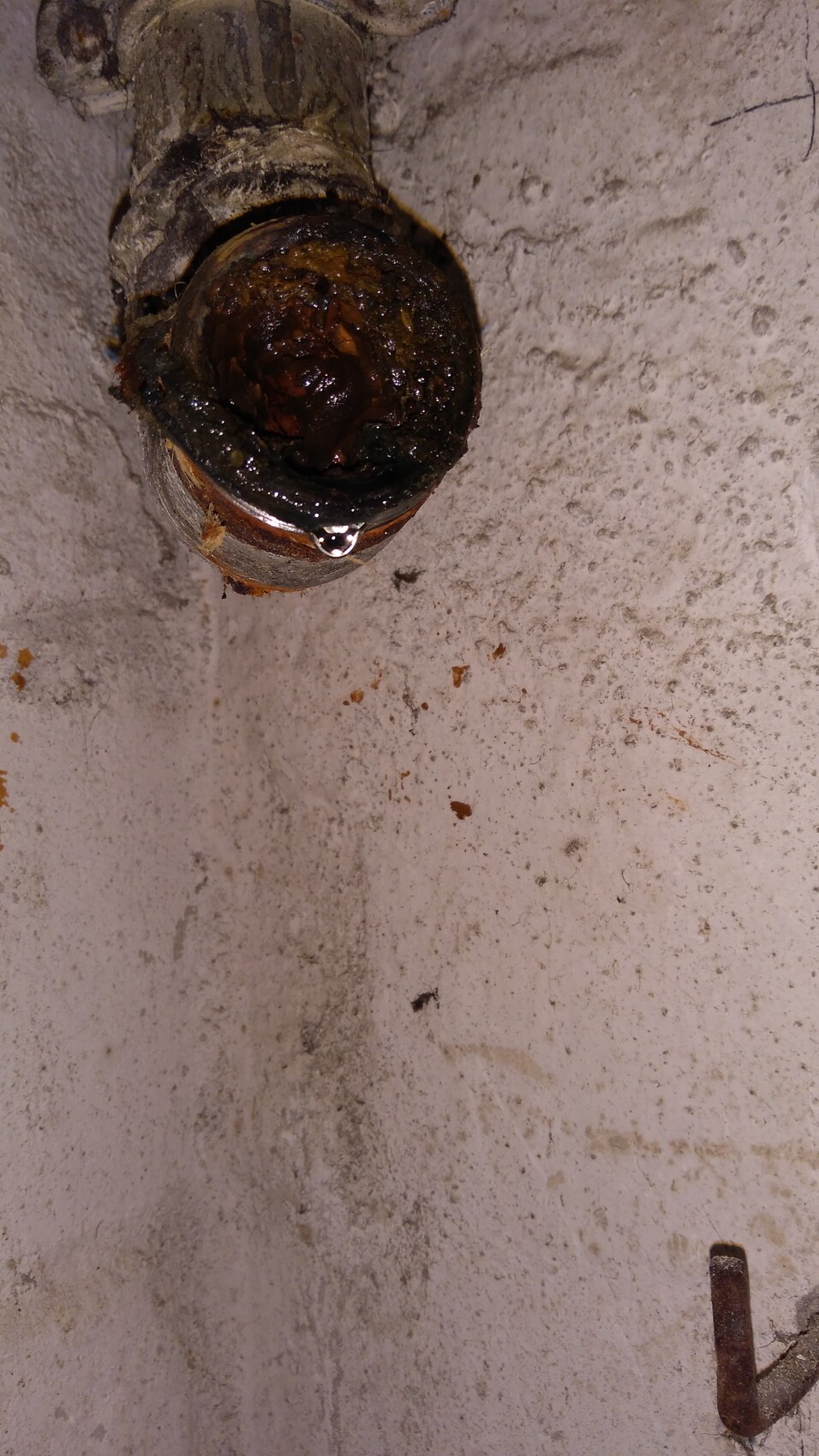
(first bend after the water meter)
The remaining work in the basement was limited to replacing the electrical wiring in the sauna room and fireplace room, and running cables toward the kitchen and bathroom. Within the first four months, we disposed of three loads of scrap (a similar amount as shown in the photo above), one bulky waste pickup, two vanloads of waste (non-bulky wood and similar materials), one 7m³ (9.2 yd³) green waste container, one vanload of green waste, and one 7m³ (9.2 yd³) construction debris container.
The water pipes used are PEXa pipes with aluminum lamination and a polyethylene outer layer. Here is a cross-section so everyone can get an idea:
Many have asked why we replaced the pipes first instead of making everything look nice. It can’t be that bad, and iron pipes last more than 60 years, right?
Well, here’s why: I don’t want to drink this.
(first bend after the water meter)
LordNibbler27 Nov 2019 16:10If pipes run from the basement upwards and from the bathroom downwards, they have to be routed through the ground floor. However, the kitchen is in the way there. So far, the pipes have been embedded in the wall. But the opening in the wall would be too small for all the new pipes in one place. Therefore, they need to be installed in front of the wall facing the hallway. This also allows a door to be installed in the opening to the hallway, which the previous owners had removed.
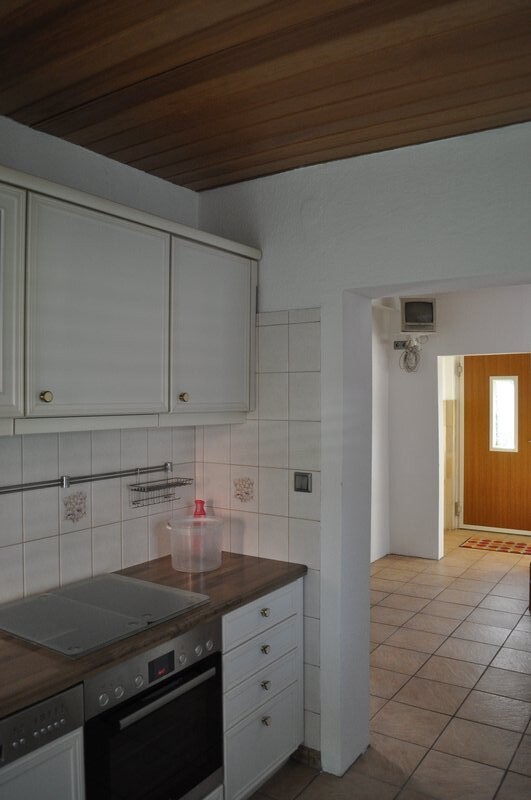
The kitchen units will stay in place for now, the new electrical wiring will be surface-mounted, and only later integrated into the wall during the full kitchen renovation. The tiles on the walls and floor have been glued over the old ones, similar to the bathroom. Condition before:
Kitchen dismantled:
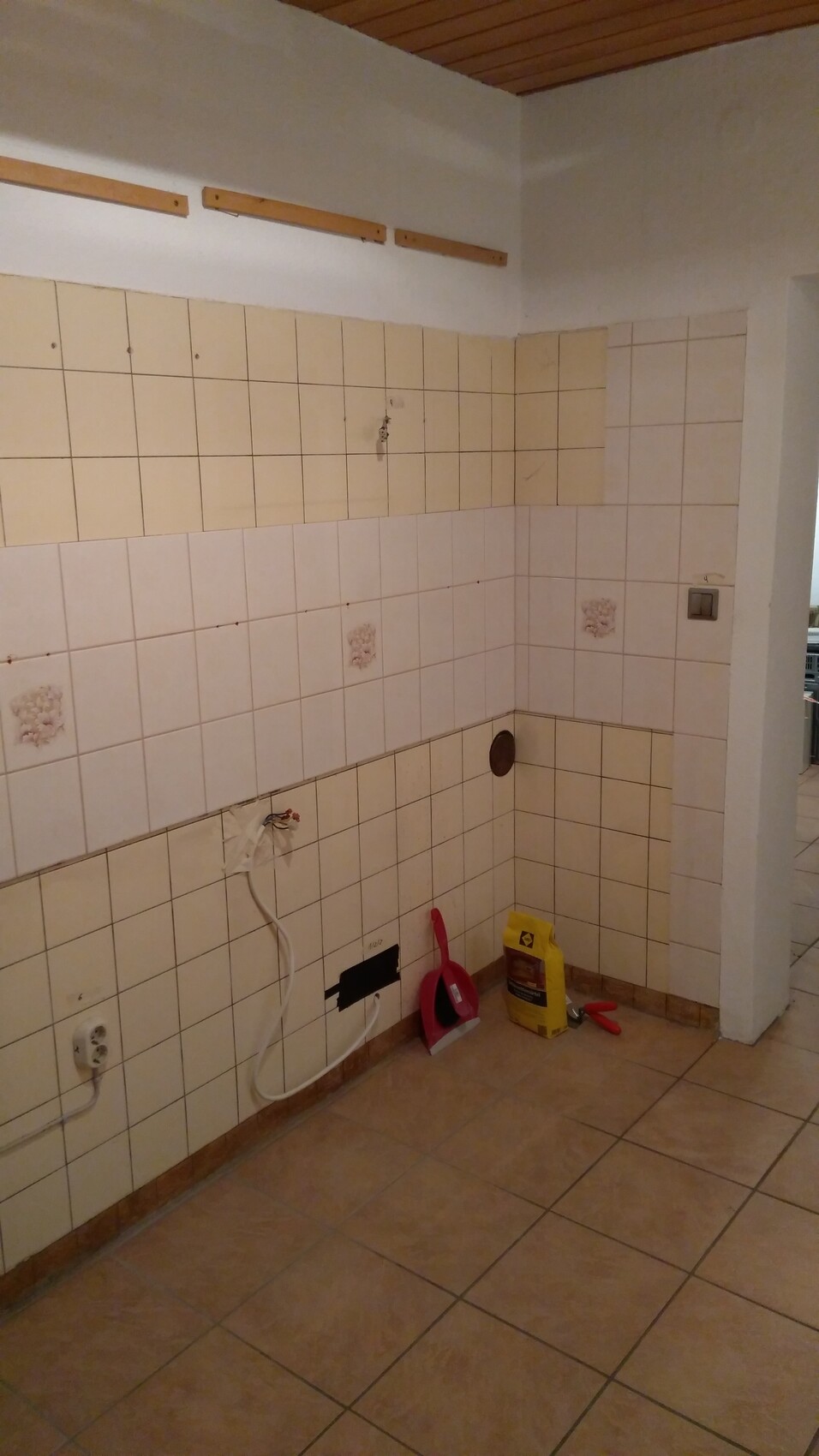 (December 19, 2018)
Core drillings made
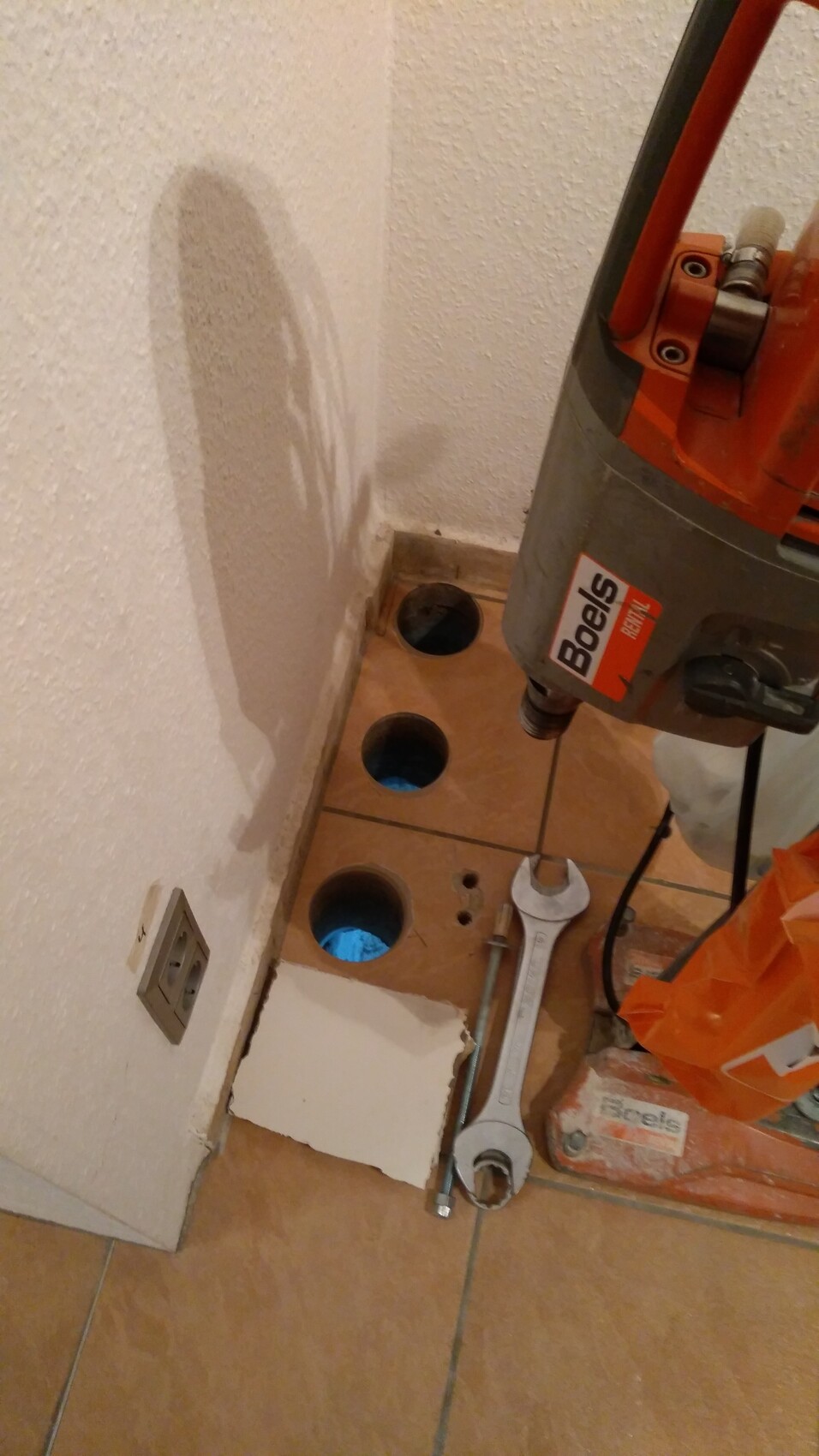 (December 29, 2018)
Tiles and wallpaper partially removed
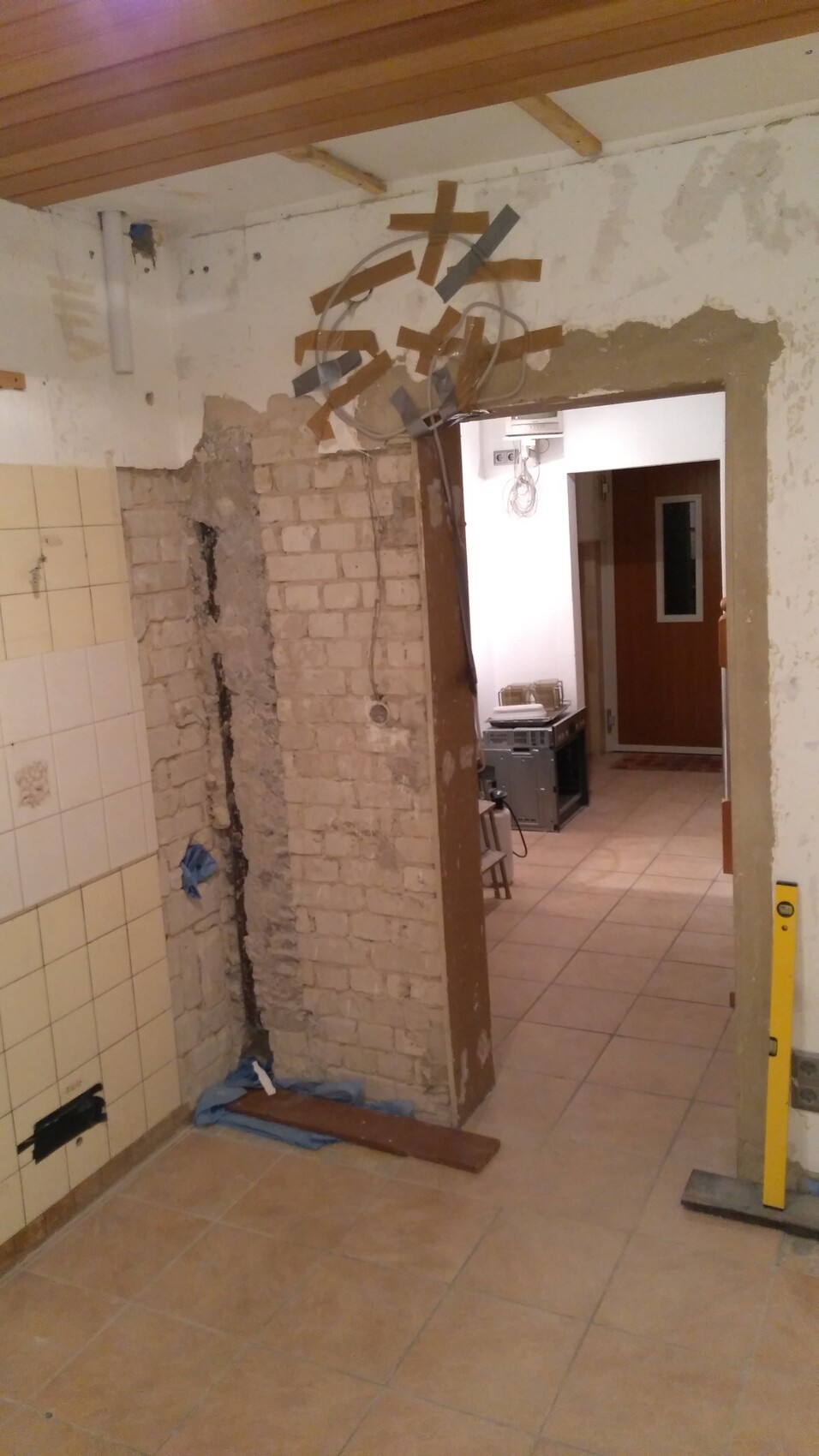 (January 16, 2019)
Installing pipes
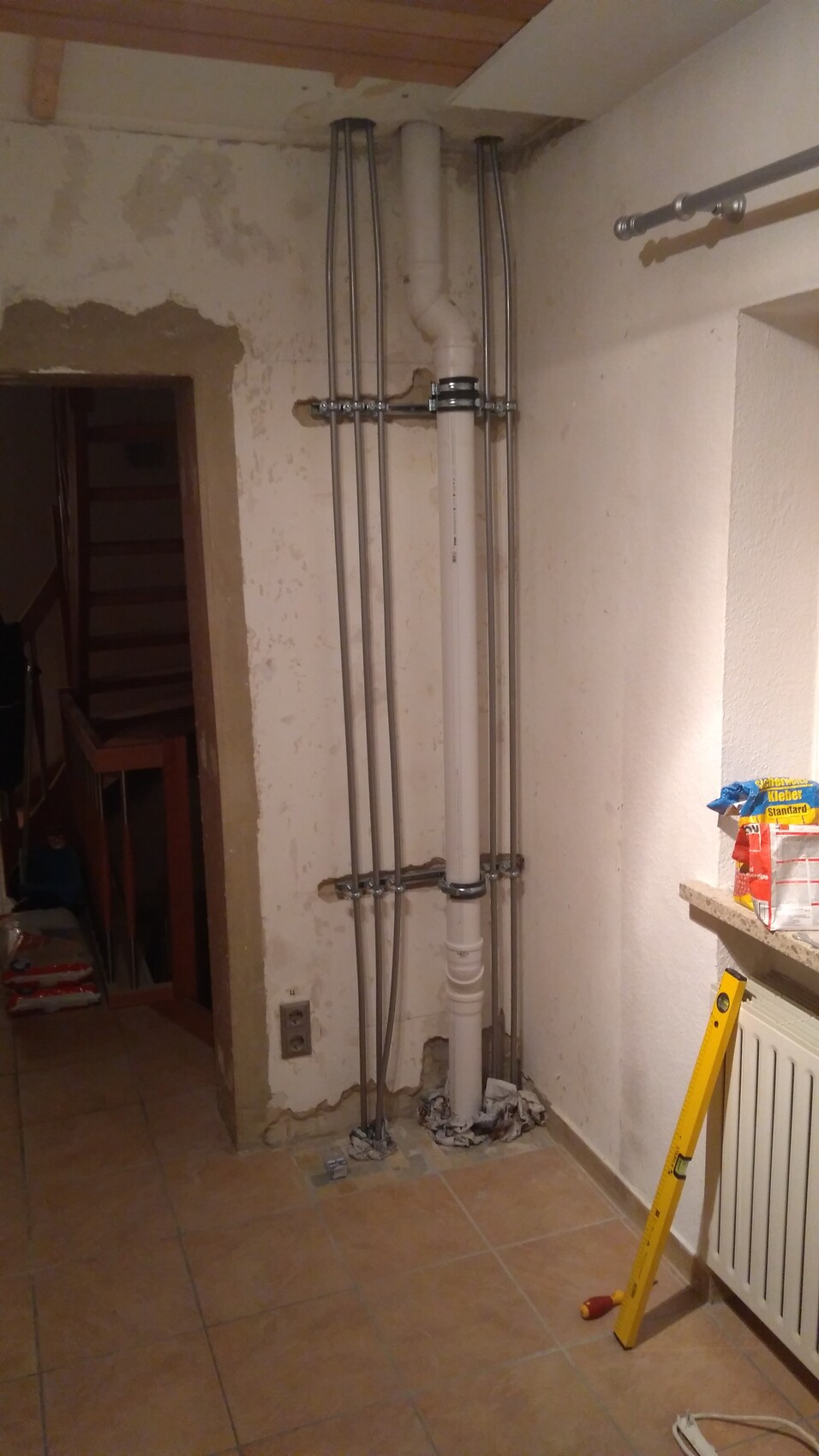 (February 18, 2019)
Lightweight wall profiles with sliding door system installed in front of the wall
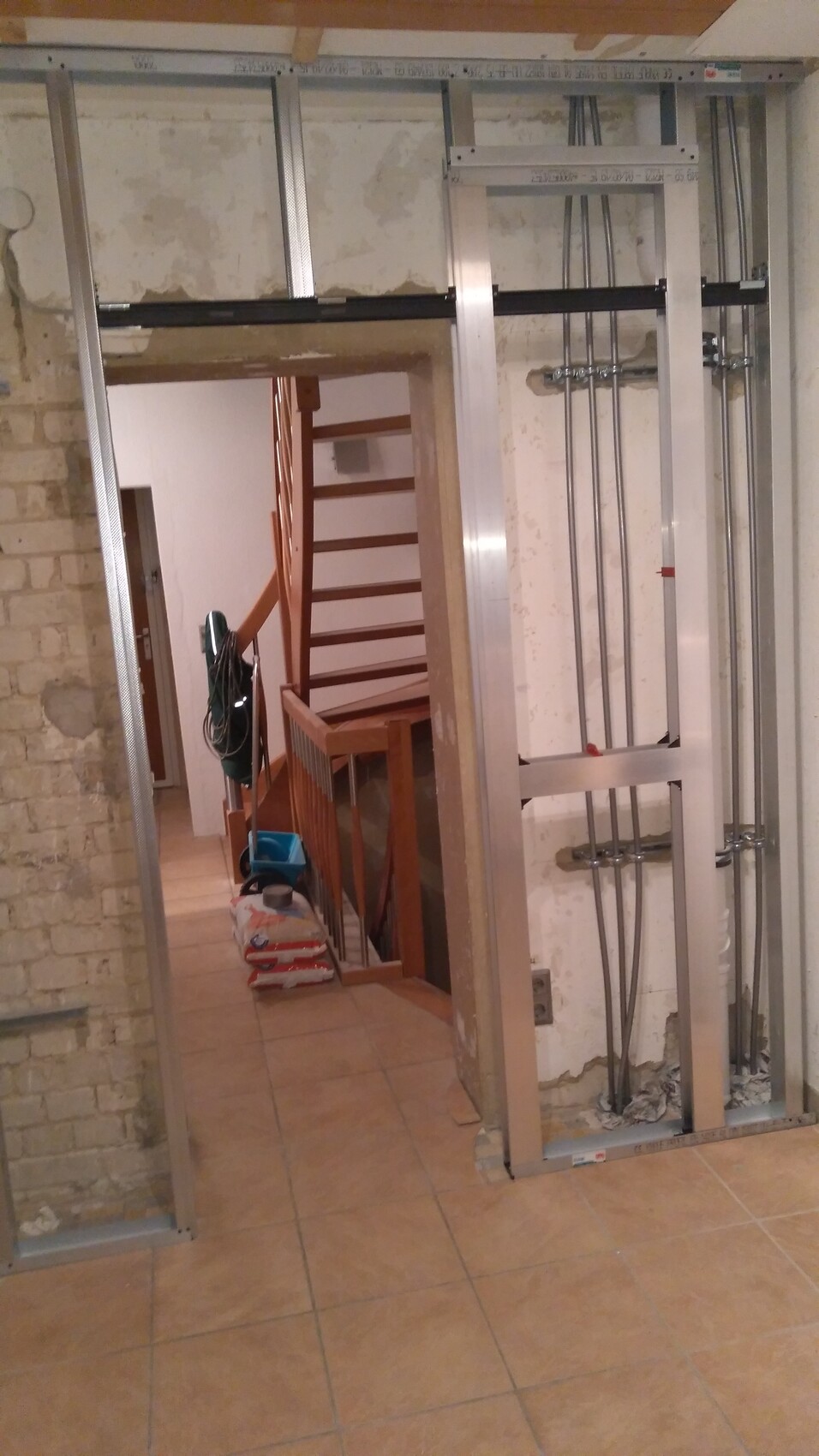 (March 1, 2019)
Pipe insulation, drywall installation, and electrical installation box, to avoid having to lay new cables all the way down to the basement during the later renovation.
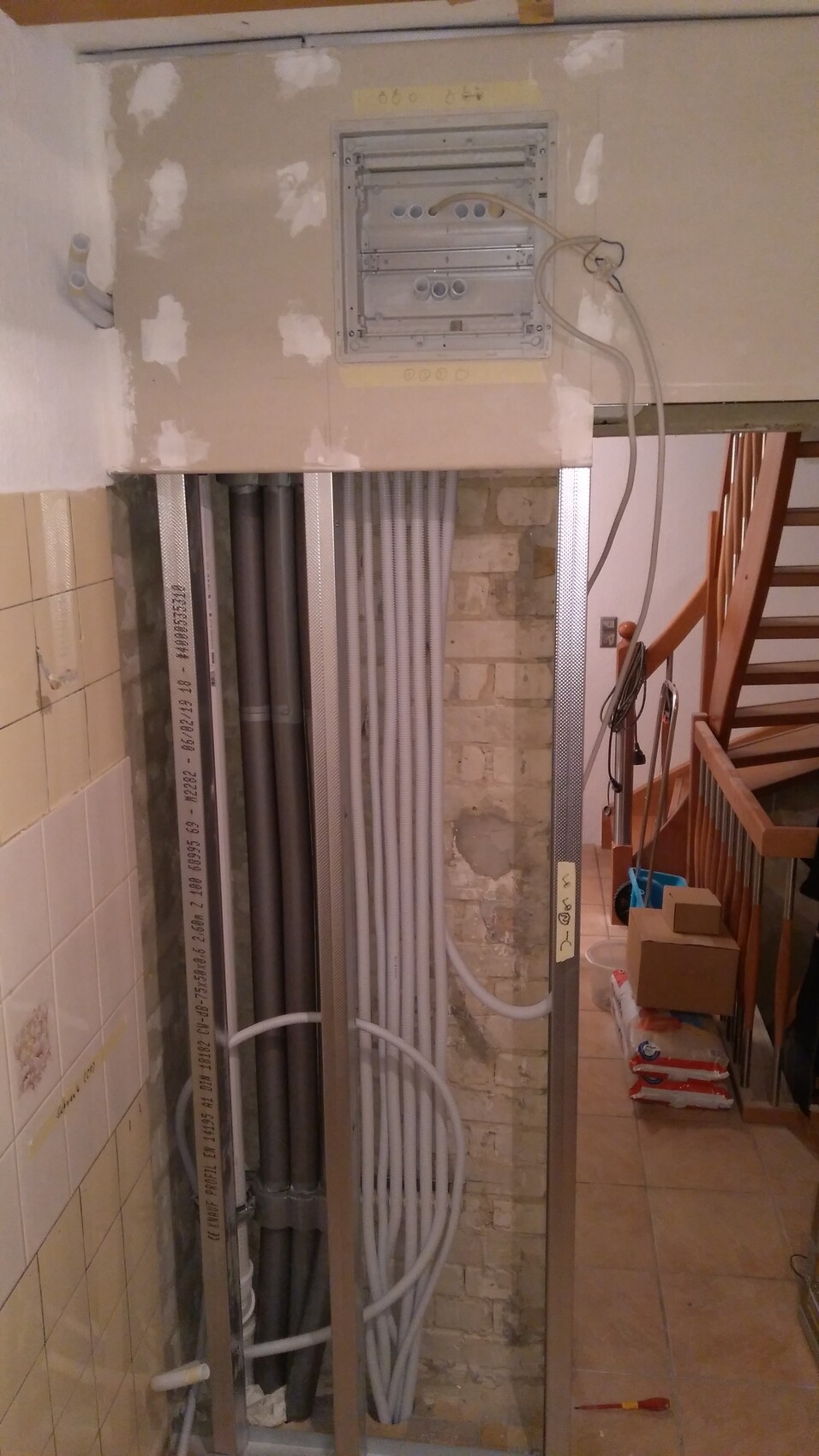 (March 9, 2019)
The kitchen units will stay in place for now, the new electrical wiring will be surface-mounted, and only later integrated into the wall during the full kitchen renovation. The tiles on the walls and floor have been glued over the old ones, similar to the bathroom. Condition before:
Kitchen dismantled:
Core drillings made
Tiles and wallpaper partially removed
Installing pipes
Lightweight wall profiles with sliding door system installed in front of the wall
Pipe insulation, drywall installation, and electrical installation box, to avoid having to lay new cables all the way down to the basement during the later renovation.
Similar topics