
ᐅ Renovation of an Existing Property – Our Journey to a Home
Created on: 13 Jun 2019 14:38
L
LordNibbler
Since returning to Wolfsburg in 2017, we had been searching for a property. Initially, we rented to take our time finding the right house and to test the real estate agents.
Of course, properties meeting these criteria were expensive and scarcely available. The first viewings were disappointing:
Then, at the beginning of 2018, an offer came up that didn’t fully meet our criteria but was in the same neighborhood.
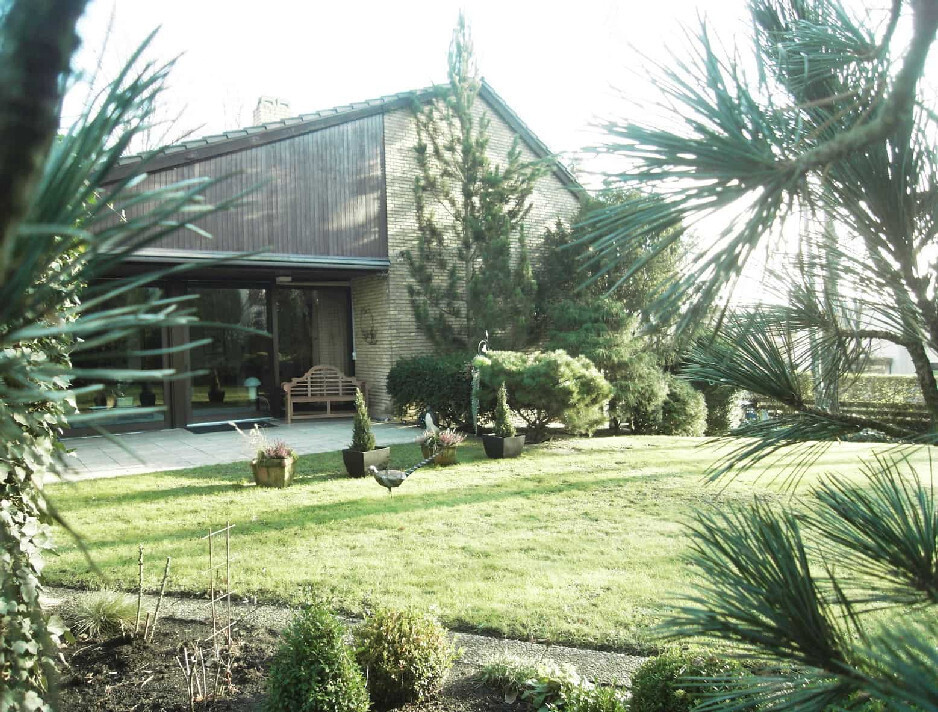
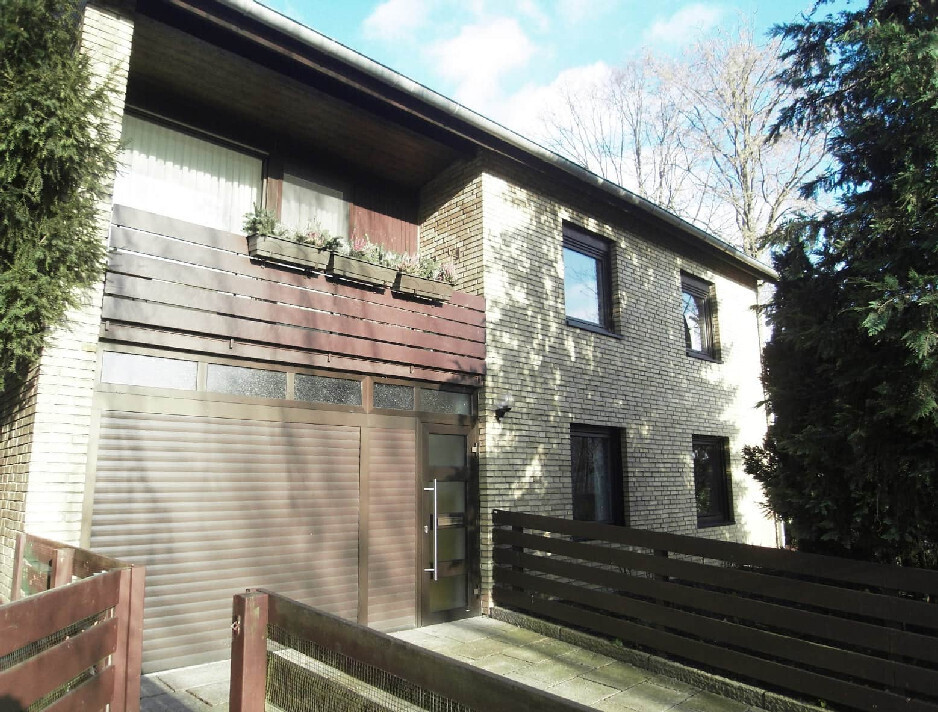
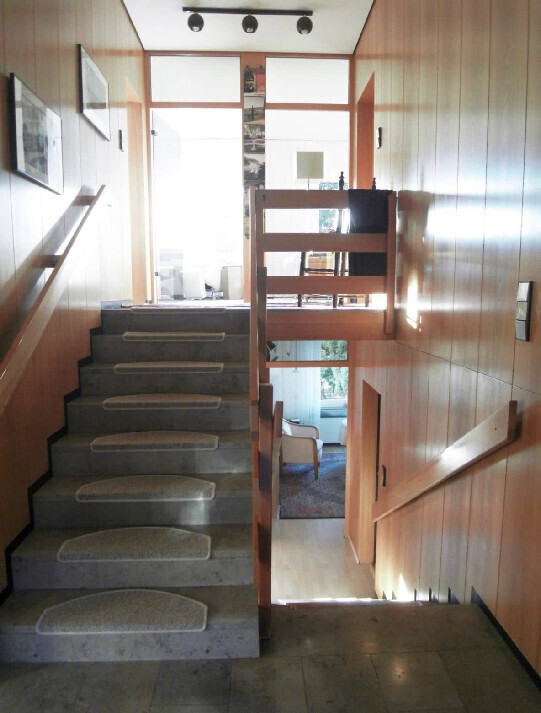
The house was actually larger than we needed, but the structure and architecture were excellent. Renovations were manageable (utility lines easily accessible, partly in shafts), and the leasehold was acceptable because the owners had prepaid their installments (there was a discount), so the annual fee was only 500€ (~$540). The leaseholder is the city of Wolfsburg, which by statute only raises interest rates upon resale (not during the lease term or inheritance). When purchasing the plot, the land value is calculated by the benchmark land value minus the redemption amount and with a 15% discount. In mid-2017, the offer for the land was therefore 118,000€ (~$128,000) (with today’s benchmark land value it would be about 150,000€ (~$162,000)). This was a bargain for the area and was included in the asking price according to the agent.
Still, after a second viewing with experts (not appraisers), we found enough arguments (wall crack, renovation needs) to negotiate the price down to 420,000€. The public offer was then reduced to 435,000€ (~$470,000).
A financing broker secured approval from the local savings bank (Sparkasse) for the mortgage (leasehold is a bit special here, mostly local banks are familiar). It was feasible as a 20-year full repayment loan (leasehold agreement had to be valid for at least another 10 years), with a potential buffer to save up the land price.
But there was one issue: the over-90-year-old occupant. She was looking for an apartment in a senior residence (ground floor, lake view). Every week we heard it was only a matter of days until one would become available. In the end, by mid-April, we had a reservation with ownership transfer no later than December, possibly sooner. So we committed to financing and arranged the notary appointment...
...and then a week later, there was a request for a meeting (bypassing the notary). The niece and sister explained that the reservation was declared invalid. The time pressure was too great. It wasn’t certain the apartment would be available yet. They felt the elderly woman couldn’t be expected to move into a care home. They wanted a purchase contract with more time — about a year (implicitly without a strict limit).
We only had 6 months interest-free financing extension, but could imagine a few more months. However, only with financial compensation (1,500€/month rental cost difference). The counterproposal was to buy as planned but with ownership transfer only after the occupant moves out (essentially the right to live there). This was not acceptable (due to hardship rules; in the end you own the house but cannot evict the old resident). The only outcome was an informal understanding: we remained interested, please inform us when the senior residence is arranged; if we find something else in the meantime we will get back to you. The agent (VR-Bank) was not very pleased since it had been difficult to get the three women to agree before. It wasn’t her fault; the dossier was the best prepared with all necessary documents and missing items obtained promptly.
Two weeks later there was another interested party. Moral of the story: we successfully lowered the price for others but they moved in in October 2017.
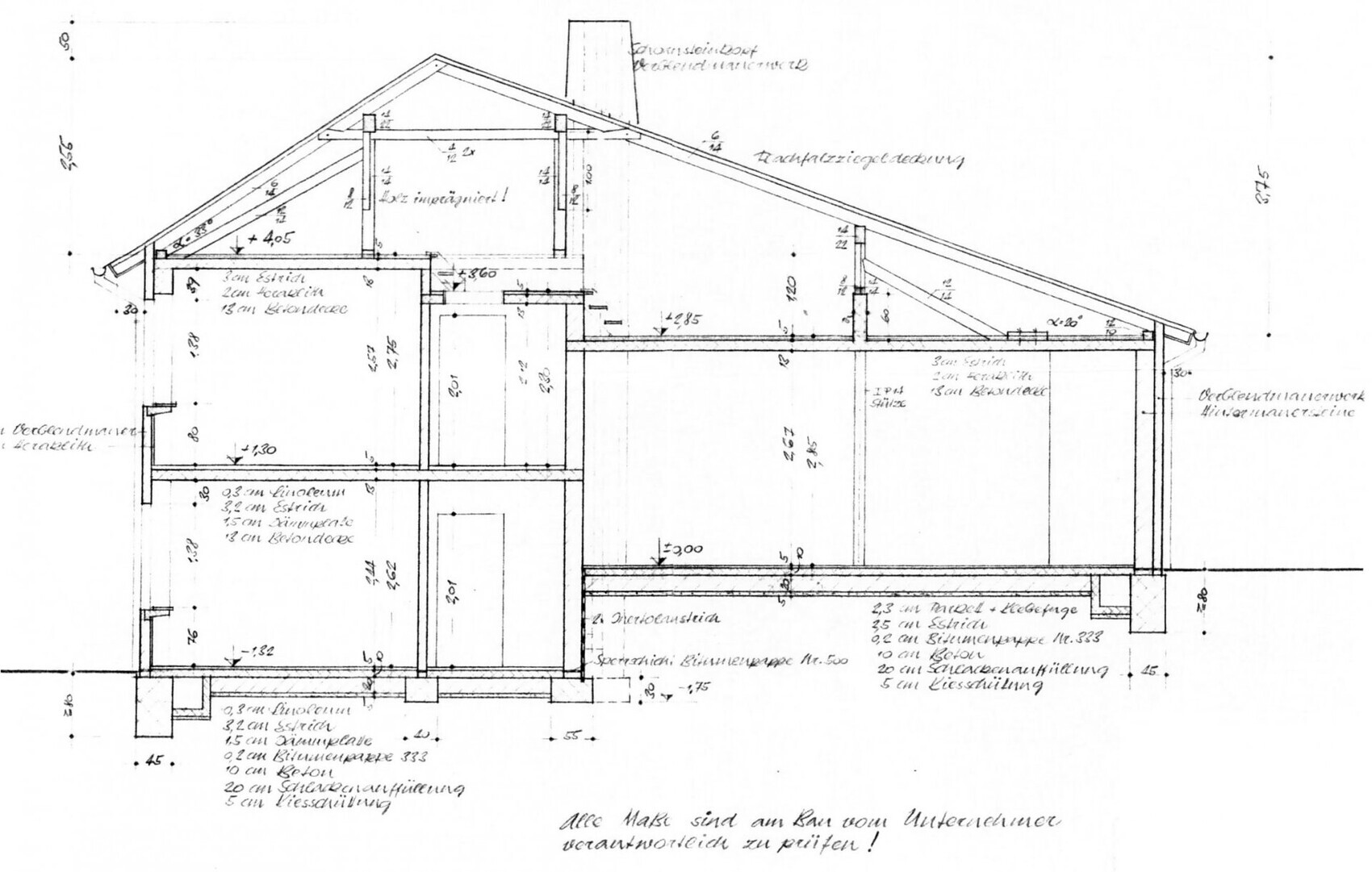
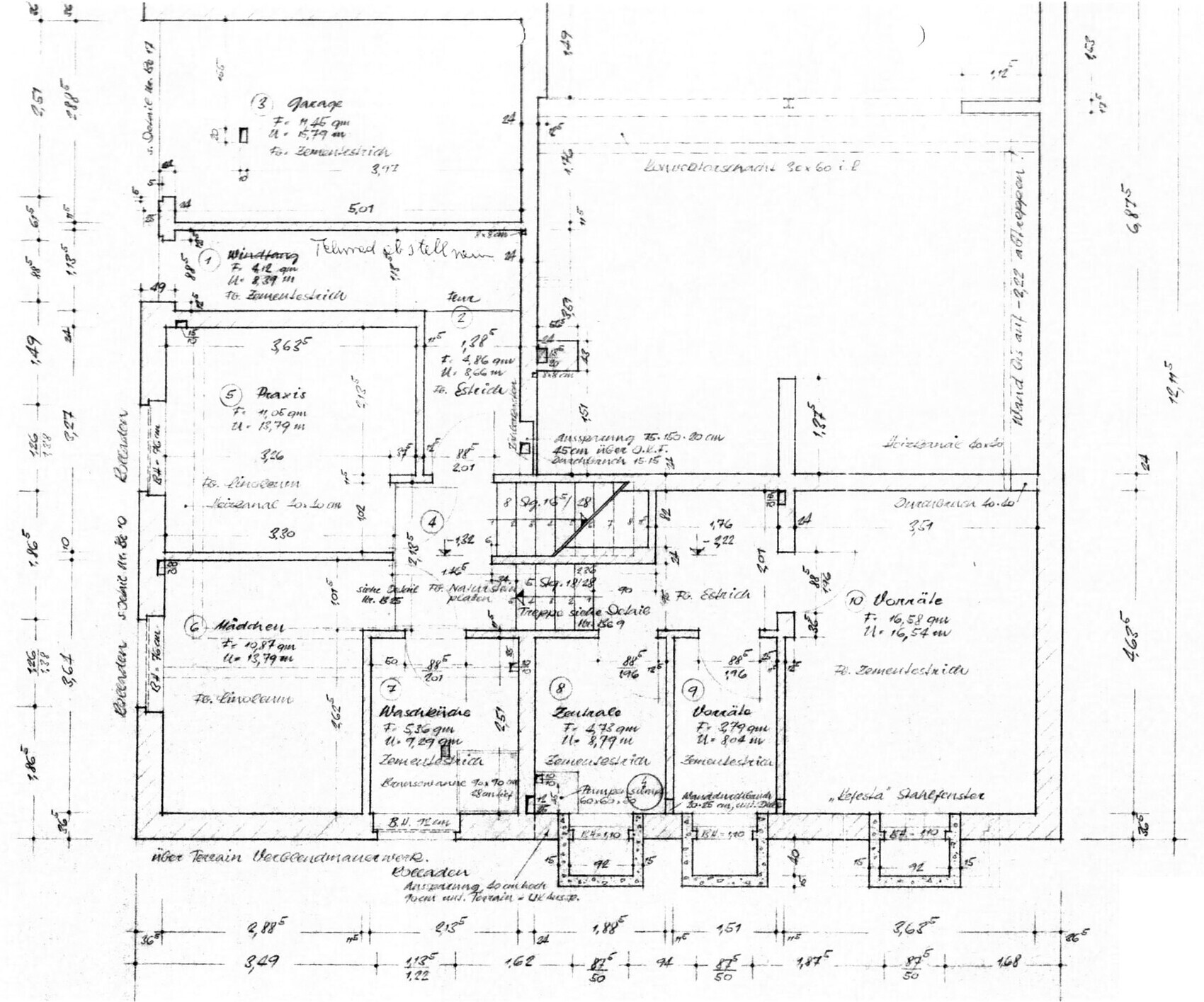
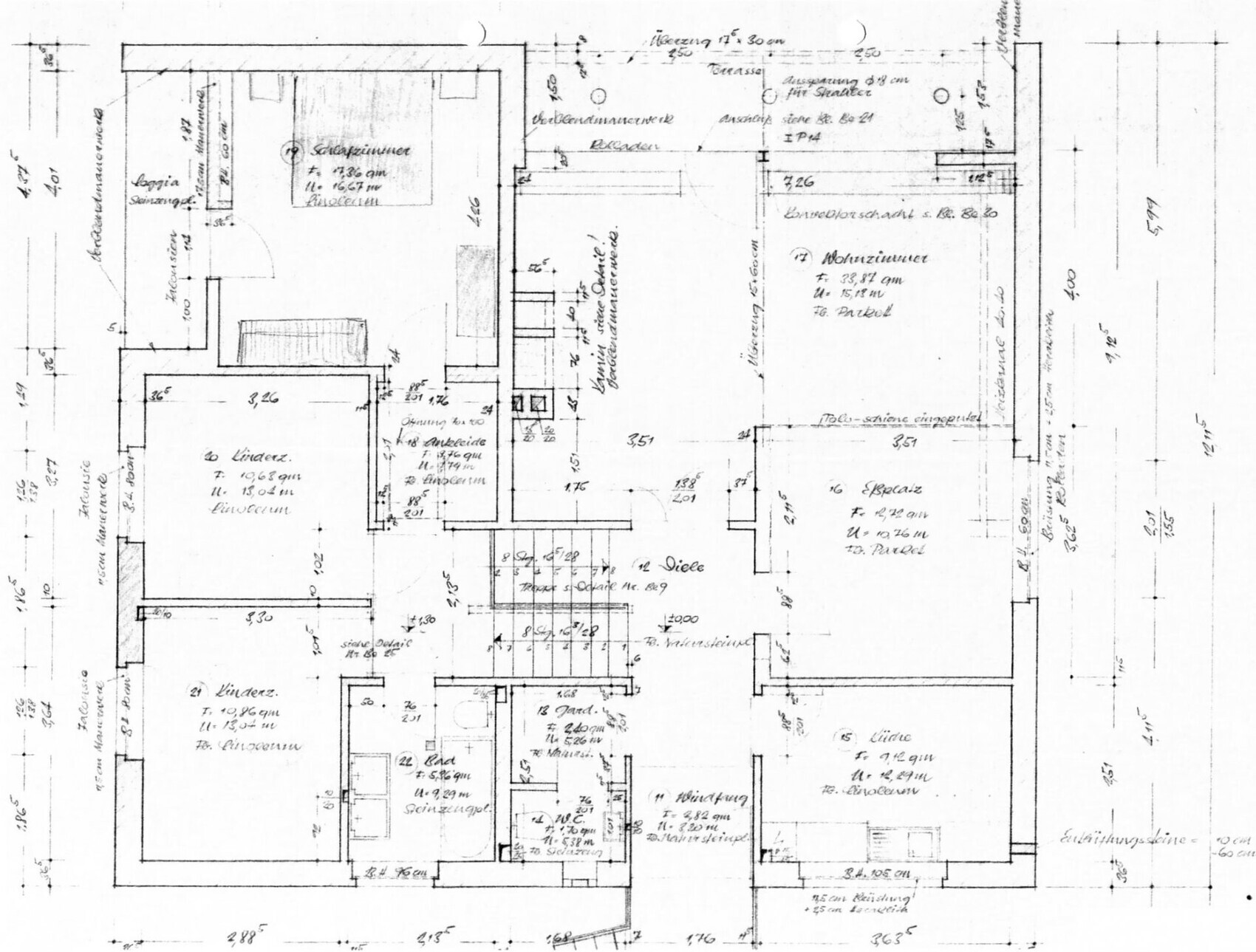
Here are some floor plans of the property as inspiration for other house planners:
The agent mentioned that in the residential area, maybe one property sells every 1–2 years. The rest are sold privately. Since we moved in, three houses have been demolished and replaced by new builds twice the size. Another is still a shell and is receiving a huge extension. None of these properties were publicly marketed...
...the search continues in the next post and how we finally found our home.
- detached single-family house (so no semi-detached houses)
- within walking distance to the city centers of Wolfsburg, Fallersleben, or Vorsfelde
- for existing buildings, construction year from 1960 onwards, even if not renovated, as long as the structure justifies investment (otherwise you pay for poor renovations that need to be redone)
- for new builds, located in a residential area with a coherent design concept (many new developments unfortunately look like model home neighborhoods where every option from the catalog has been used, but without creating a harmonious living environment)
- a larger garden with usable space
- no leasehold (common in this area)
Of course, properties meeting these criteria were expensive and scarcely available. The first viewings were disappointing:
- 5-year-old house in a new development: walls with cracks, water stains (from the foundation slab), unoccupied, agent said normal settlement cracks (but wrong direction and too large), suspected upward ground movement due to Posidonia shale underground according to the land use plan and construction errors
- 8-year-old house in the same development: not legally divided plot (3 houses on 2 plots), agent claimed legal division (sent documents with condominium declaration), neighborhood dispute (not ideal in a condominium under self-management)
- 1950s development house: severe moisture problems in the basement including mold, agent already had an offer for exterior waterproofing (franchise concept with suction lance) which was not expensive, basement height under 1.8m (5 feet 11 inches), so not usable
- 1950s development house: sold after only 2 years (hidden defects?), superficial renovation (cosmetic upgrades but original substructure)
- several other houses that left little impression (location, layout, quality, price not suitable)
Then, at the beginning of 2018, an offer came up that didn’t fully meet our criteria but was in the same neighborhood.
- built mid-1958
- very high-quality construction and workmanship for the time
- architect-designed house (engineer) for a medical professional (MD)
- hillside location, split-level, integrated garage
- district heating with concealed convectors
- well maintained, so renovation was minimal (bathroom tiled + ceramics, new roof 2002, new windows 1995)
- well-kept garden, granite paving
- 165m² (1,776 sq ft) living space + 40m² (430 sq ft) utility space
- 905m² (9,740 sq ft) leasehold plot at a dead-end street
- 493,000 €
The house was actually larger than we needed, but the structure and architecture were excellent. Renovations were manageable (utility lines easily accessible, partly in shafts), and the leasehold was acceptable because the owners had prepaid their installments (there was a discount), so the annual fee was only 500€ (~$540). The leaseholder is the city of Wolfsburg, which by statute only raises interest rates upon resale (not during the lease term or inheritance). When purchasing the plot, the land value is calculated by the benchmark land value minus the redemption amount and with a 15% discount. In mid-2017, the offer for the land was therefore 118,000€ (~$128,000) (with today’s benchmark land value it would be about 150,000€ (~$162,000)). This was a bargain for the area and was included in the asking price according to the agent.
Still, after a second viewing with experts (not appraisers), we found enough arguments (wall crack, renovation needs) to negotiate the price down to 420,000€. The public offer was then reduced to 435,000€ (~$470,000).
A financing broker secured approval from the local savings bank (Sparkasse) for the mortgage (leasehold is a bit special here, mostly local banks are familiar). It was feasible as a 20-year full repayment loan (leasehold agreement had to be valid for at least another 10 years), with a potential buffer to save up the land price.
But there was one issue: the over-90-year-old occupant. She was looking for an apartment in a senior residence (ground floor, lake view). Every week we heard it was only a matter of days until one would become available. In the end, by mid-April, we had a reservation with ownership transfer no later than December, possibly sooner. So we committed to financing and arranged the notary appointment...
...and then a week later, there was a request for a meeting (bypassing the notary). The niece and sister explained that the reservation was declared invalid. The time pressure was too great. It wasn’t certain the apartment would be available yet. They felt the elderly woman couldn’t be expected to move into a care home. They wanted a purchase contract with more time — about a year (implicitly without a strict limit).
We only had 6 months interest-free financing extension, but could imagine a few more months. However, only with financial compensation (1,500€/month rental cost difference). The counterproposal was to buy as planned but with ownership transfer only after the occupant moves out (essentially the right to live there). This was not acceptable (due to hardship rules; in the end you own the house but cannot evict the old resident). The only outcome was an informal understanding: we remained interested, please inform us when the senior residence is arranged; if we find something else in the meantime we will get back to you. The agent (VR-Bank) was not very pleased since it had been difficult to get the three women to agree before. It wasn’t her fault; the dossier was the best prepared with all necessary documents and missing items obtained promptly.
Two weeks later there was another interested party. Moral of the story: we successfully lowered the price for others but they moved in in October 2017.
Here are some floor plans of the property as inspiration for other house planners:
The agent mentioned that in the residential area, maybe one property sells every 1–2 years. The rest are sold privately. Since we moved in, three houses have been demolished and replaced by new builds twice the size. Another is still a shell and is receiving a huge extension. None of these properties were publicly marketed...
...the search continues in the next post and how we finally found our home.
 LordNibbler23 Nov 2020 19:34
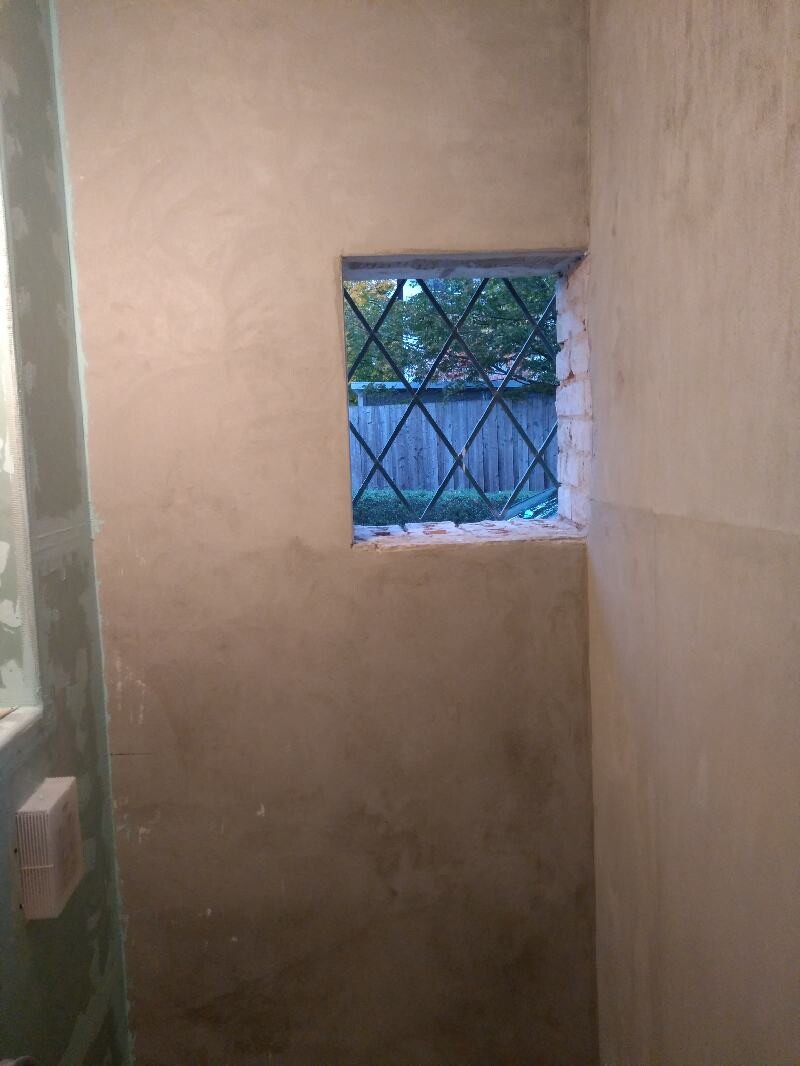
The window was a DIY project by the original owner. Unfortunately, it was just a steel frame with broken glass set in concrete. Thermally and in terms of airtightness, it was a disaster.
We considered for a long time whether it could be preserved in some way. In the end, it was replaced with a new window. A proud 8-week delivery time from an online retailer in Thuringia, manufactured by a third party in Poland (which is not disclosed on the website). It is a Rehau Synego Classic, triple-glazed.
Based on our experience in the basement, we did everything ourselves.
Removal
Installation
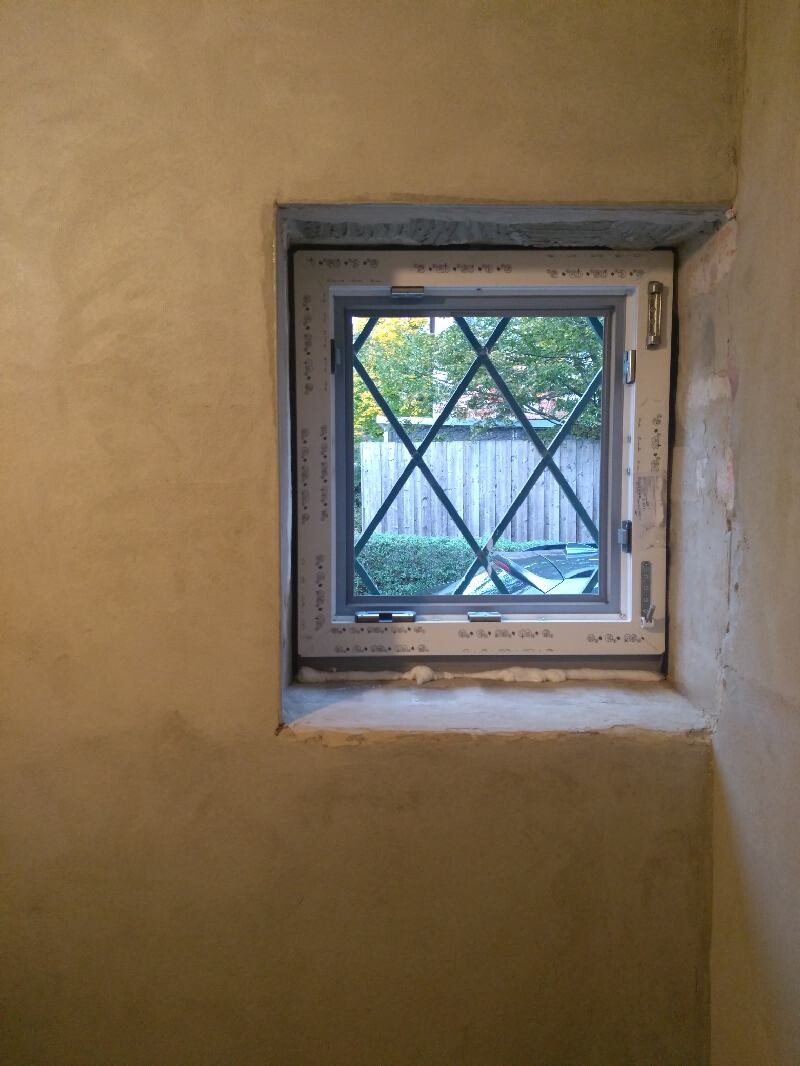
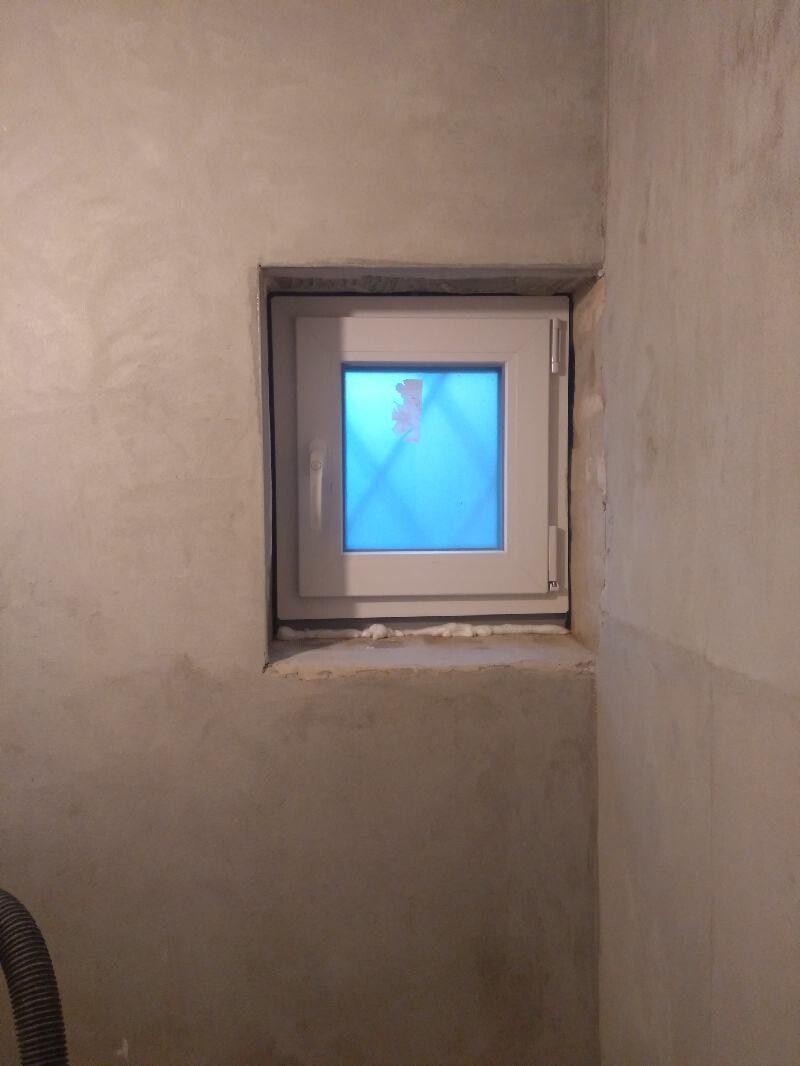
We still need to apply a temporary exterior render until the other two windows are replaced next year and the grille can be removed as well.
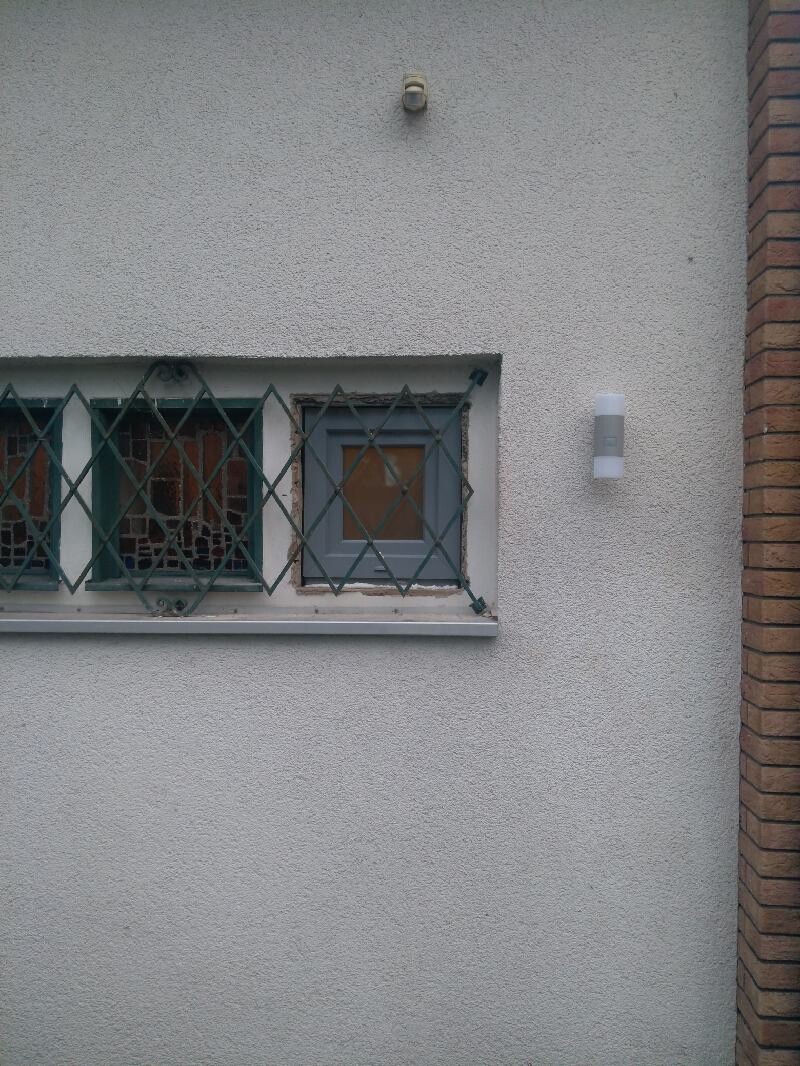
The windowsill was installed recently, so now the missing interior plaster can be finished.
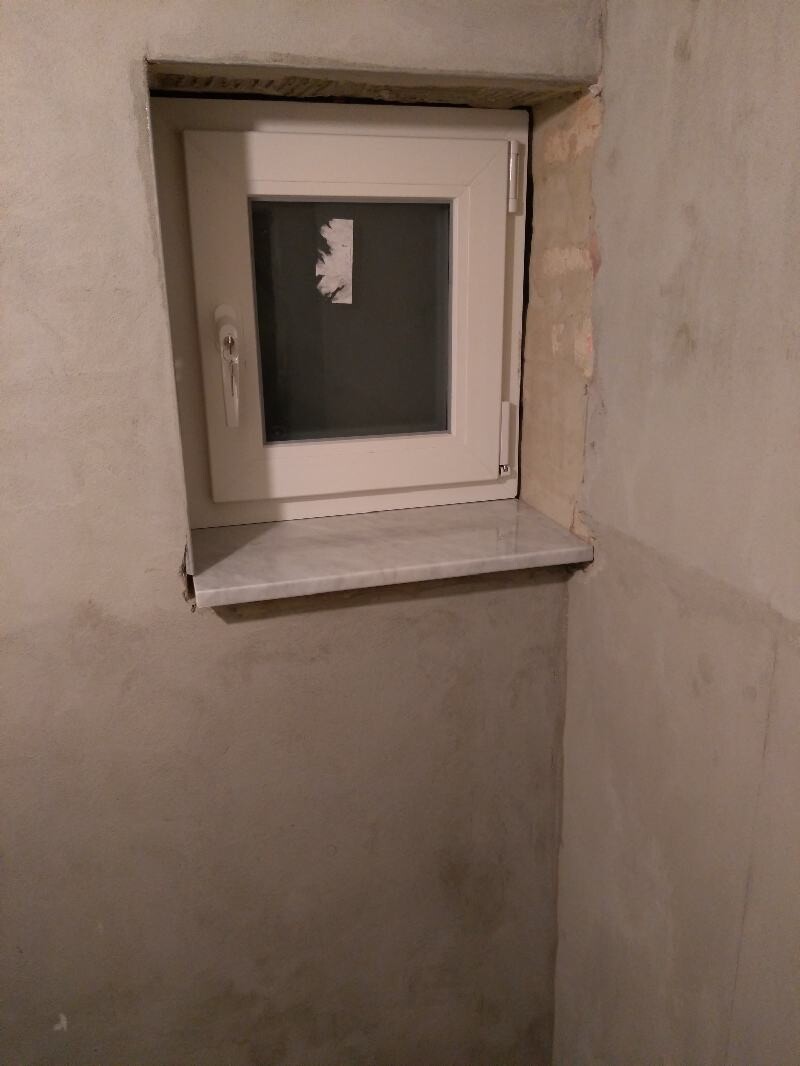
We considered for a long time whether it could be preserved in some way. In the end, it was replaced with a new window. A proud 8-week delivery time from an online retailer in Thuringia, manufactured by a third party in Poland (which is not disclosed on the website). It is a Rehau Synego Classic, triple-glazed.
Based on our experience in the basement, we did everything ourselves.
Removal
Installation
We still need to apply a temporary exterior render until the other two windows are replaced next year and the grille can be removed as well.
The windowsill was installed recently, so now the missing interior plaster can be finished.
LordNibbler23 Nov 2020 19:43Once the plastering is done neatly, you can make holes in the wall again. In this case, for the heating system and an electrical outlet.
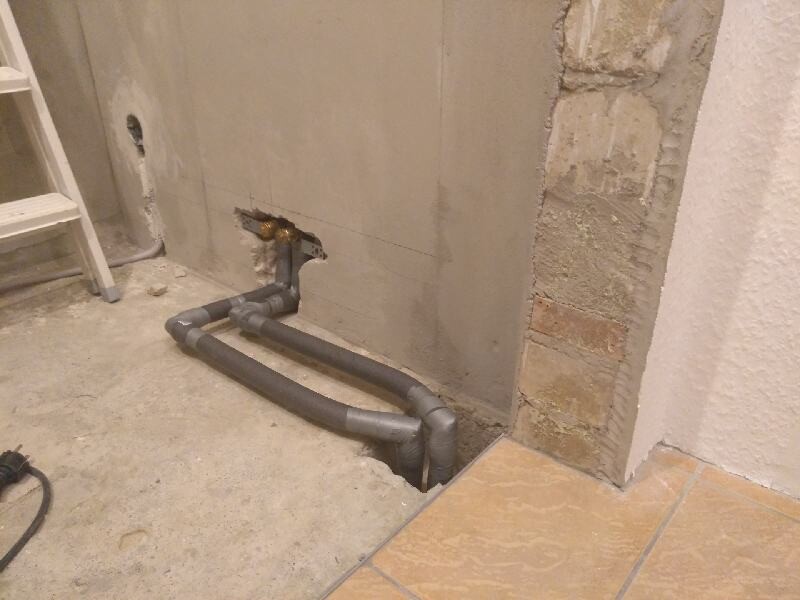
Also plaster the remaining wall.
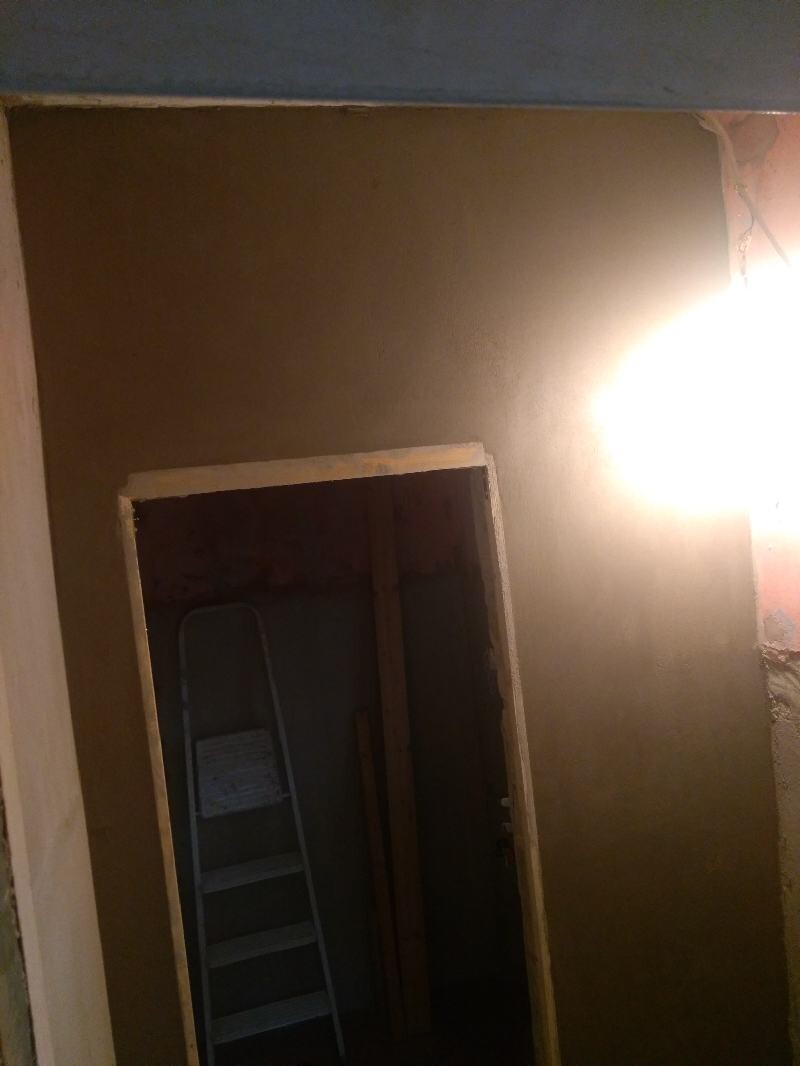
Then pour the screed.
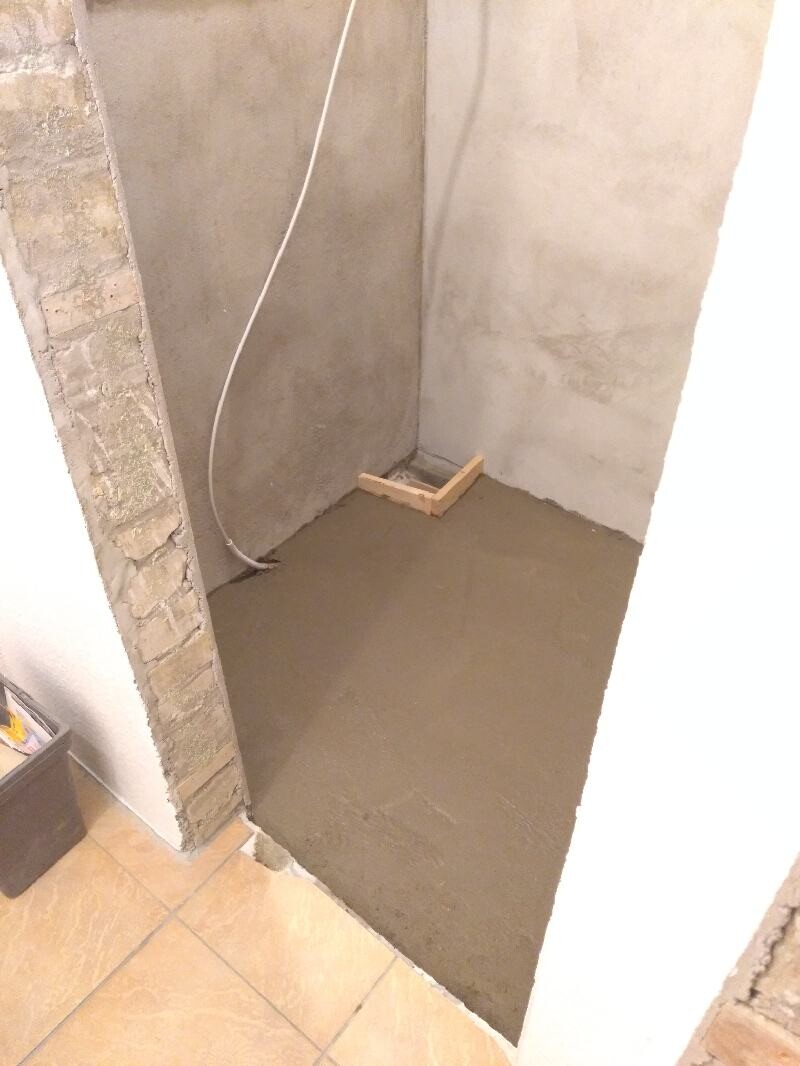
After a long drying period, the pipes for the upper floor can be installed.
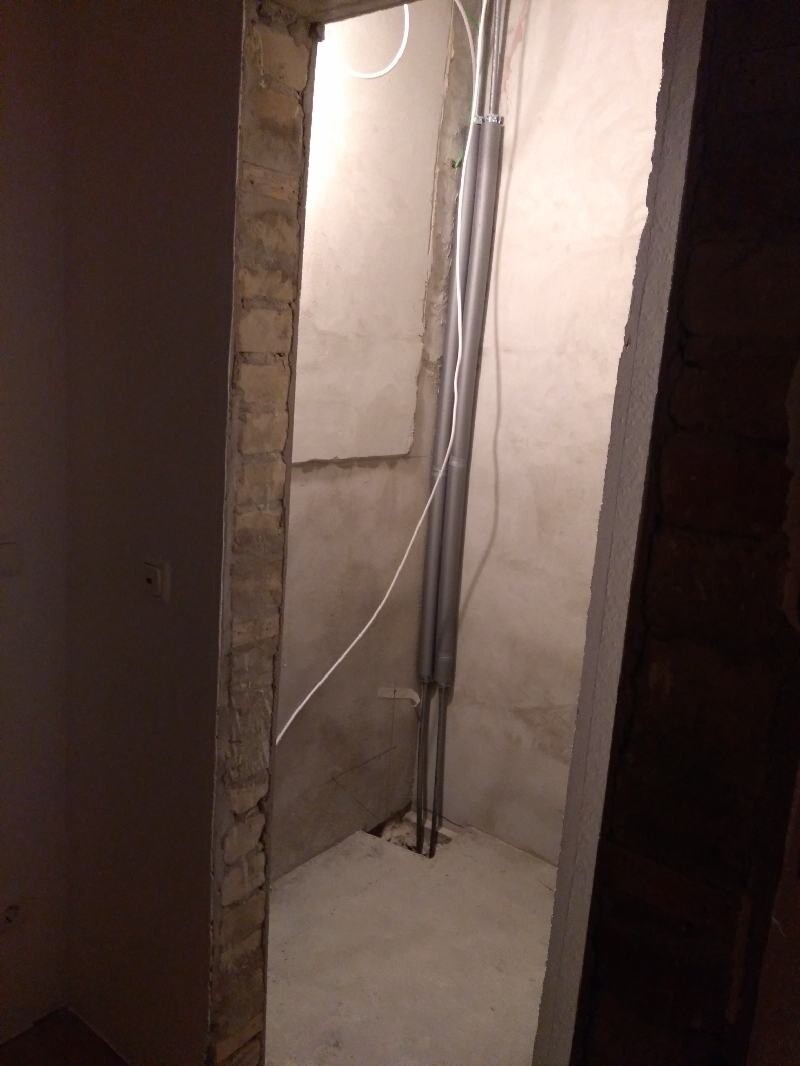
In the windbreak area, plastering was also done, chases were cut, and then replastered.
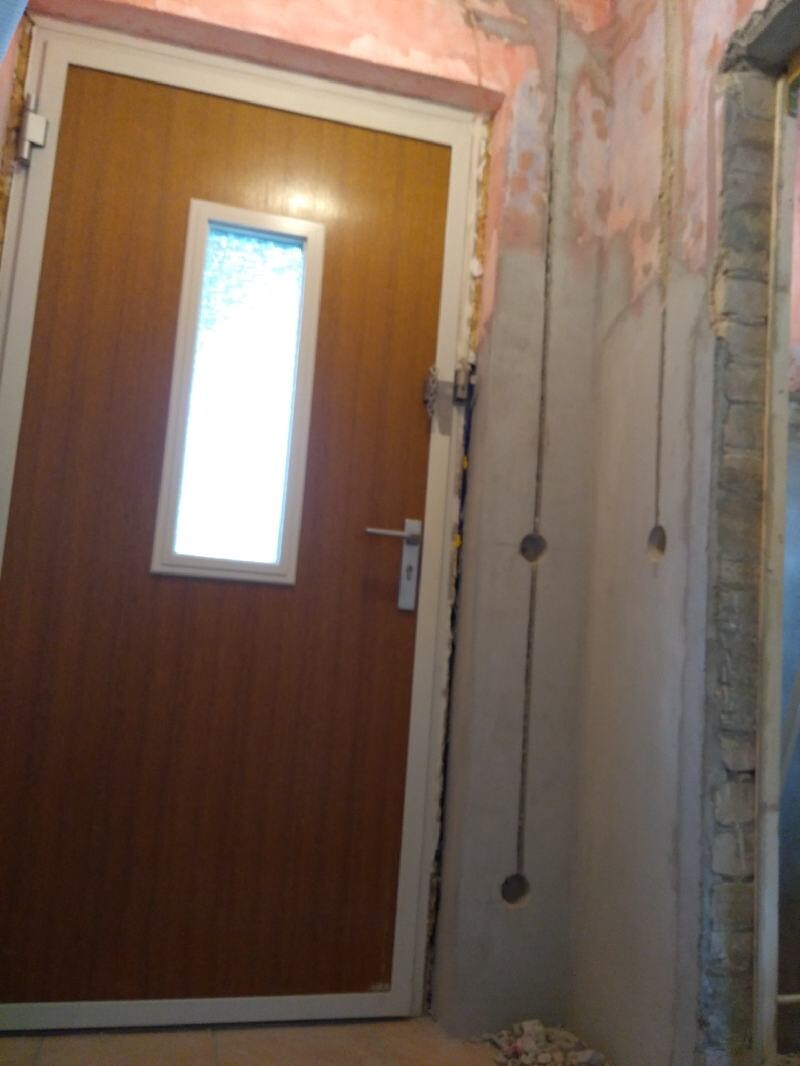
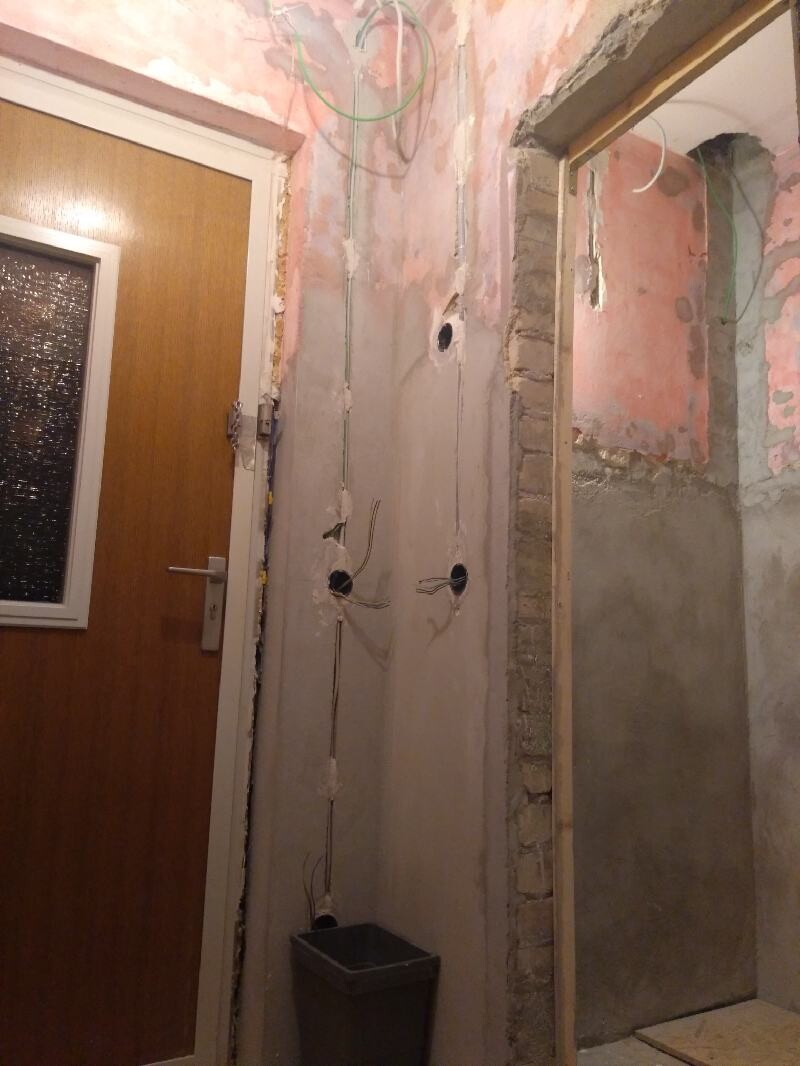
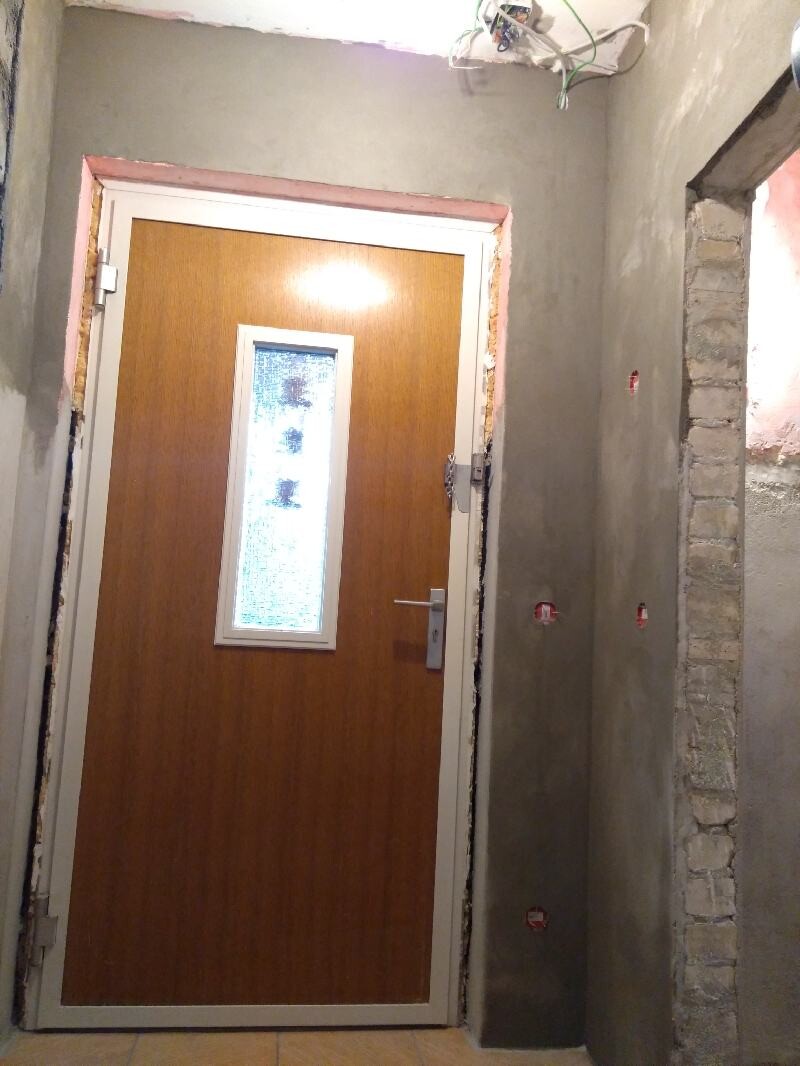
(the red paste is an adhesion promoter)
Also plaster the remaining wall.
Then pour the screed.
After a long drying period, the pipes for the upper floor can be installed.
In the windbreak area, plastering was also done, chases were cut, and then replastered.
(the red paste is an adhesion promoter)
LordNibbler23 Nov 2020 19:50Next, the focus is on the stud wall. Basically, all the space dimensions are just within the limits of the standards. Especially when working with through-glass panels and ventilation, and also having to run electrical wiring for the upper floor.
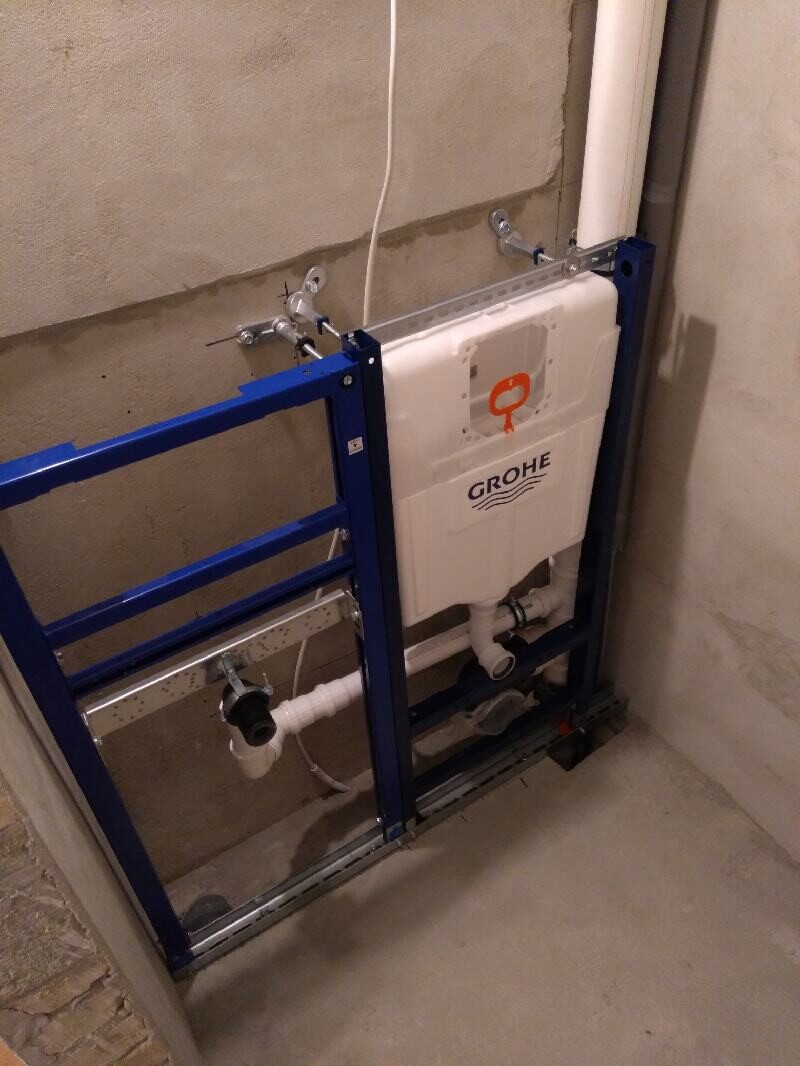
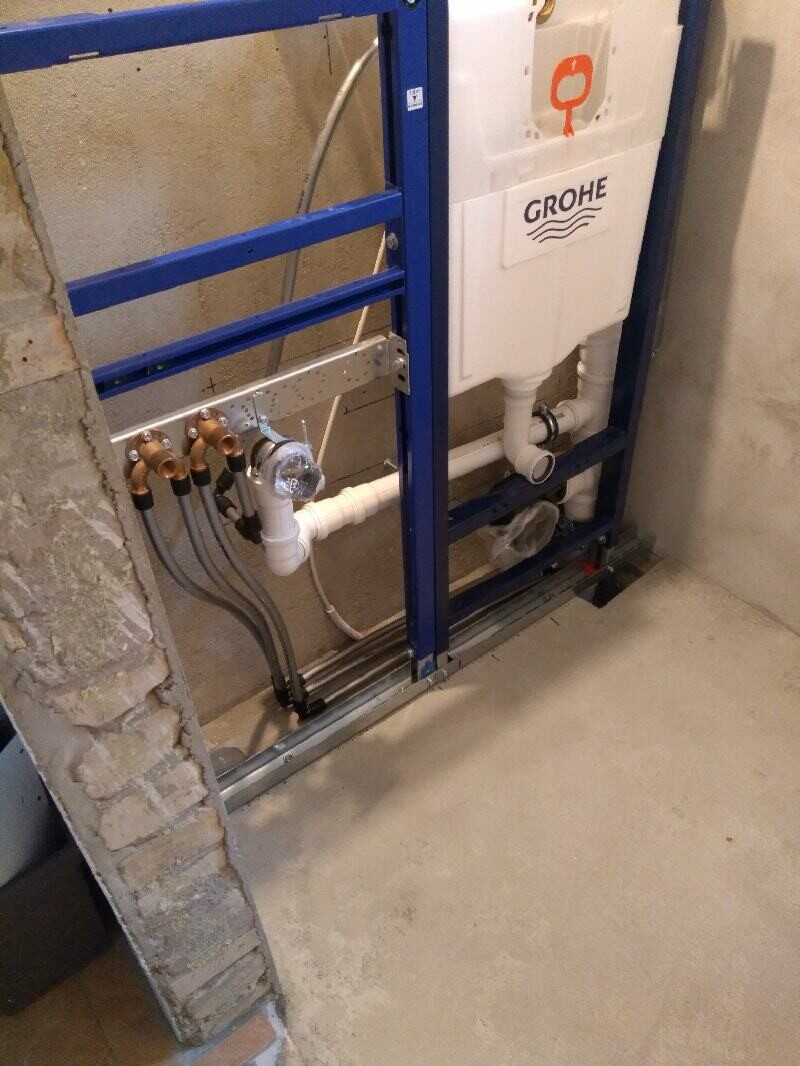
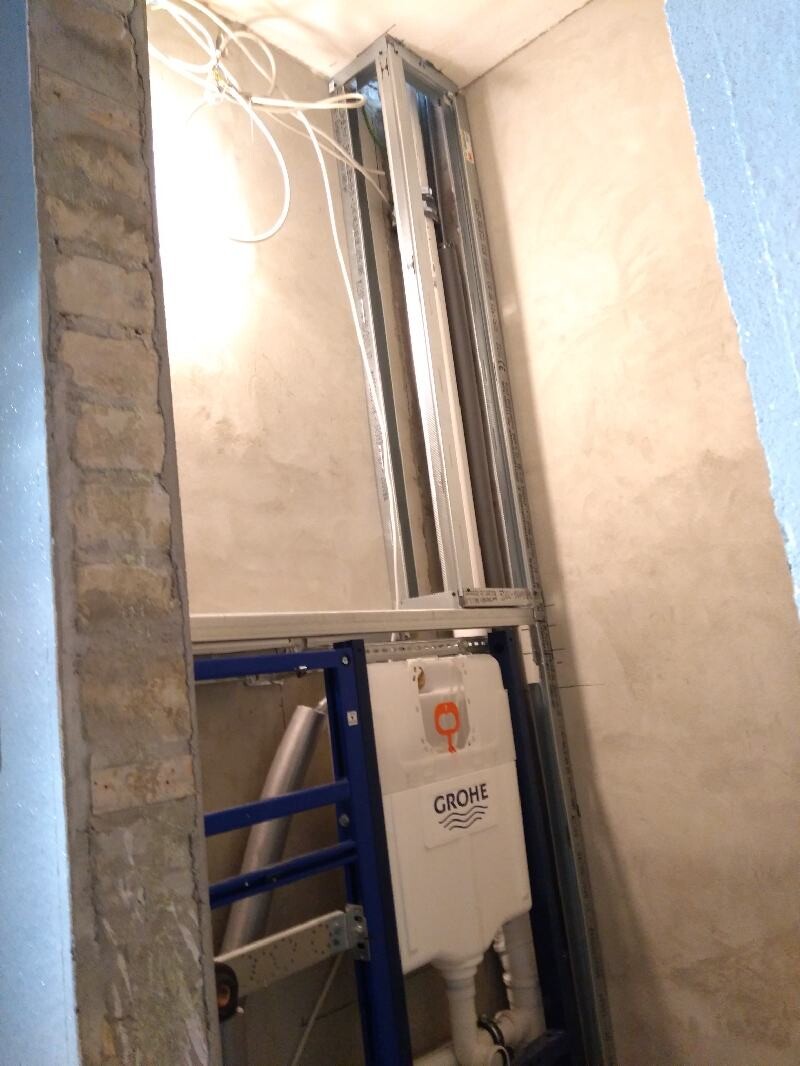
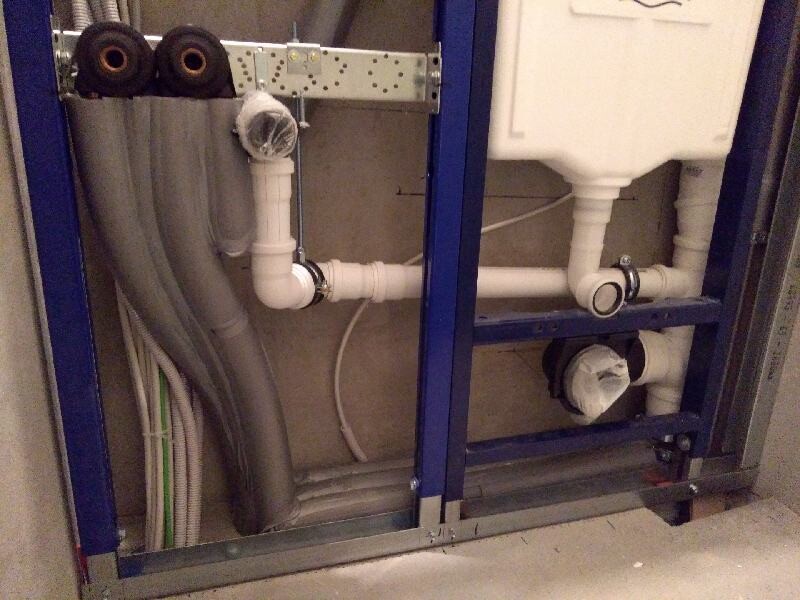
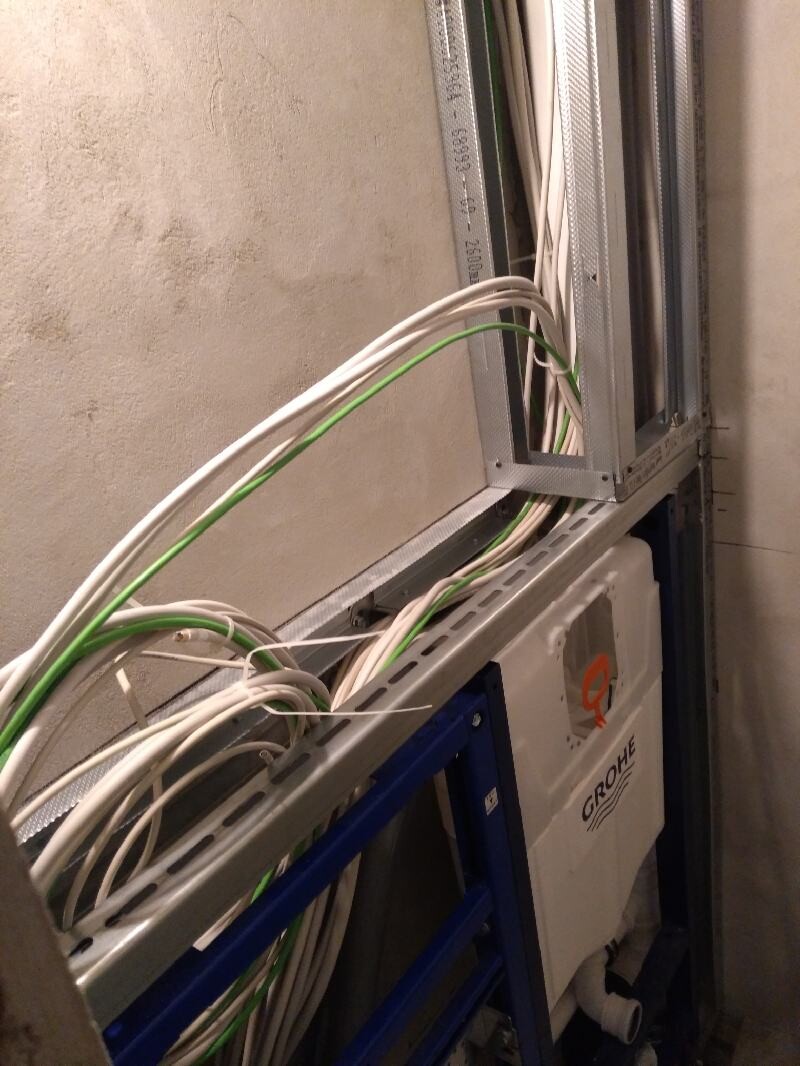
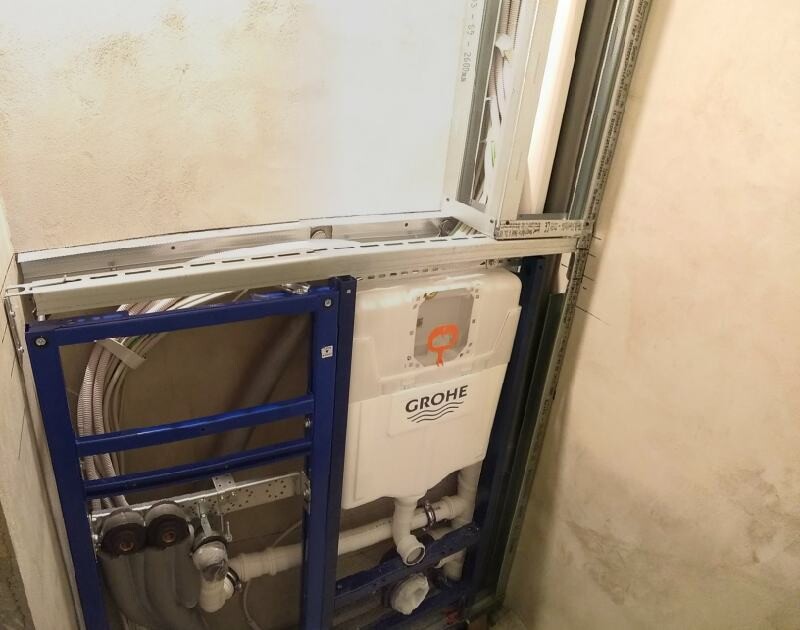
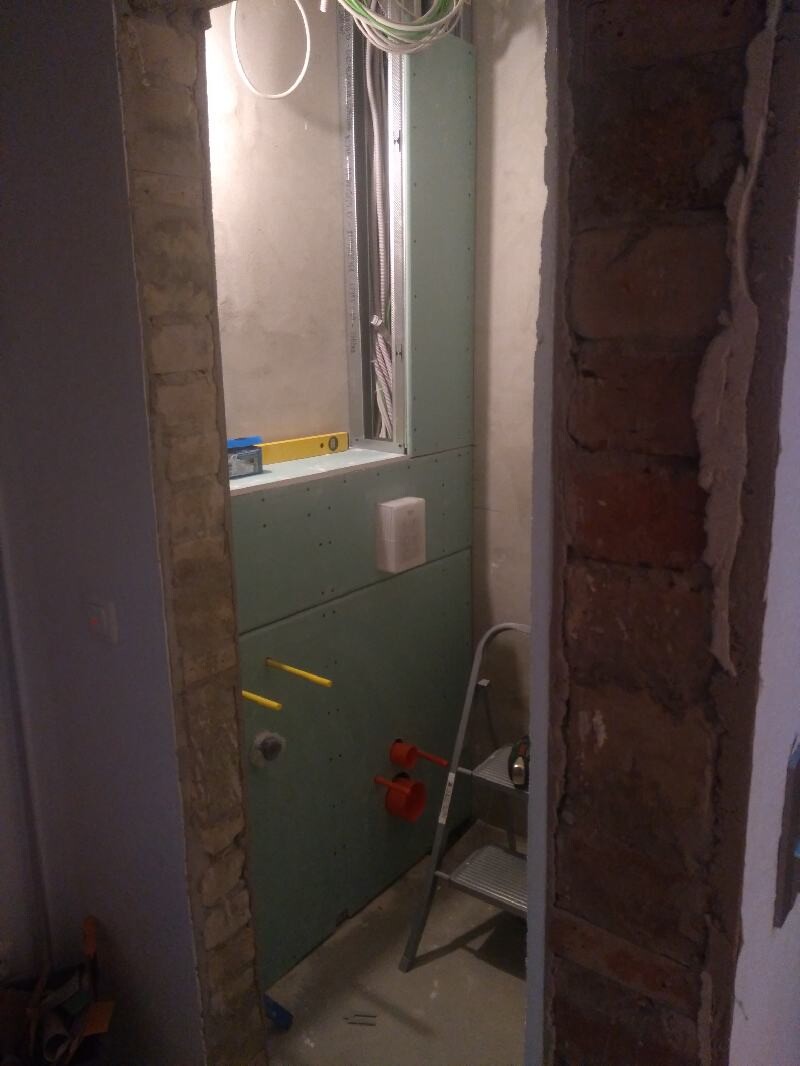
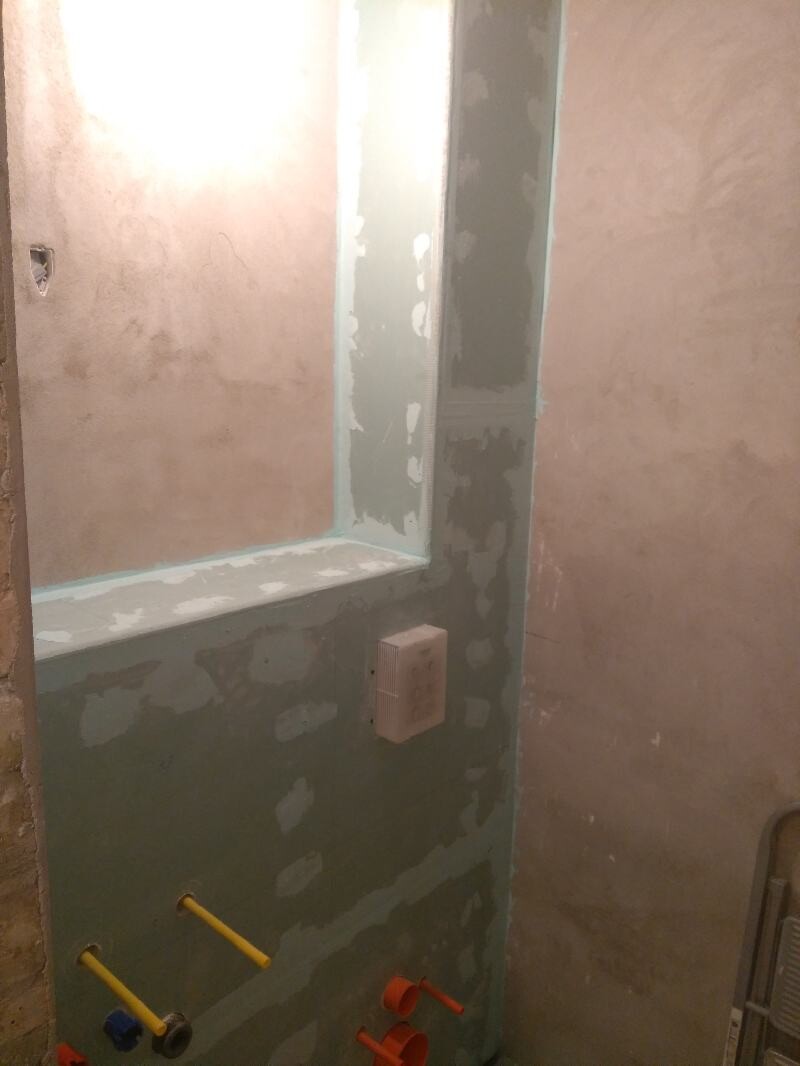
LordNibbler23 Nov 2020 19:57A substantial bundle of cables arrives on the upper floor, which still needs to be routed to the attic.
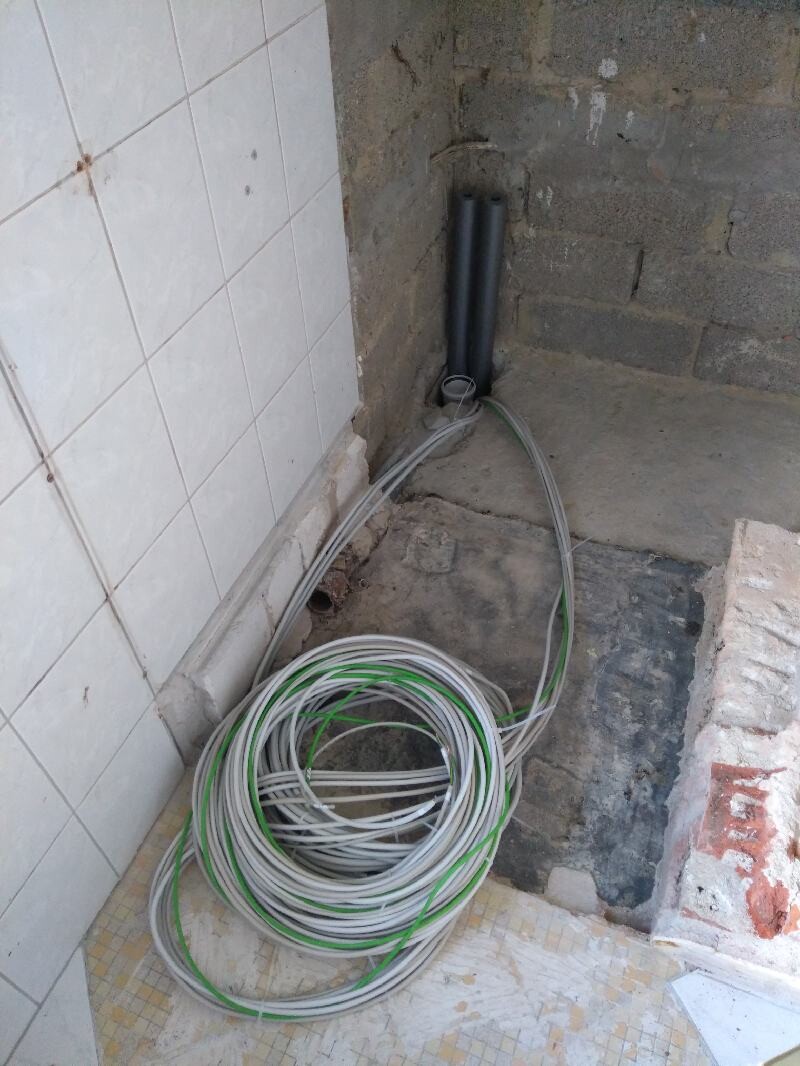
In the meantime, there was a direct view from there all the way down to the basement.
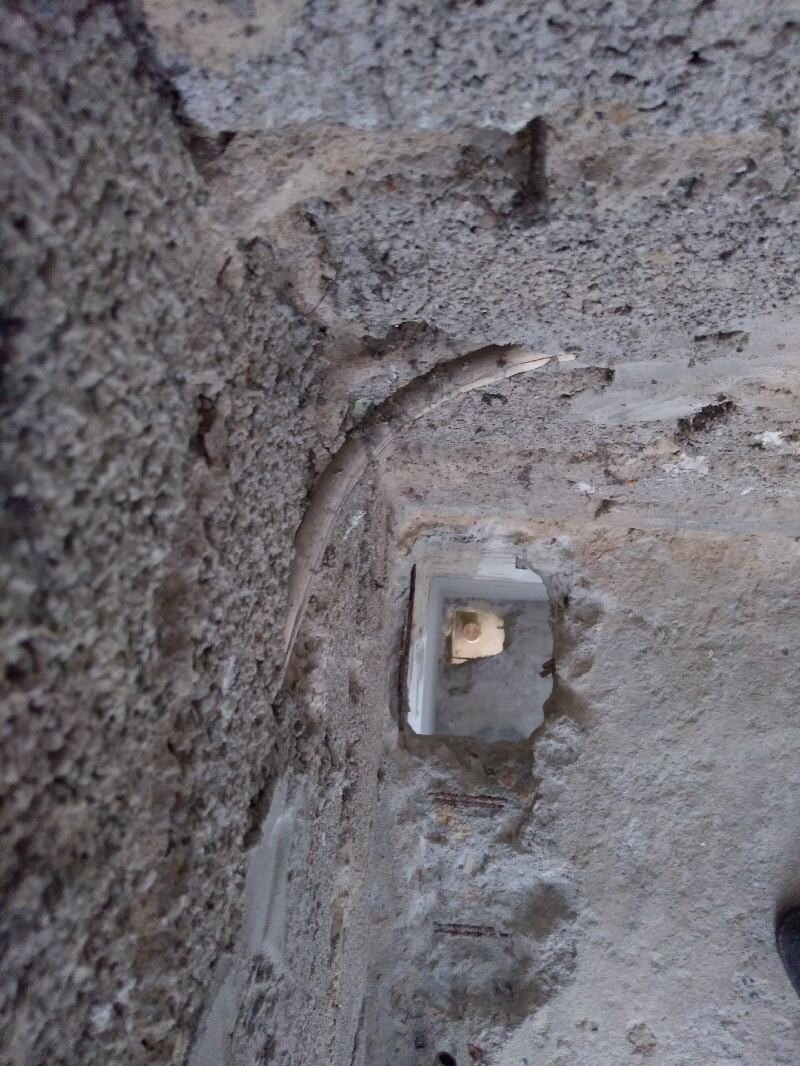
Now the ventilation is reconnected.
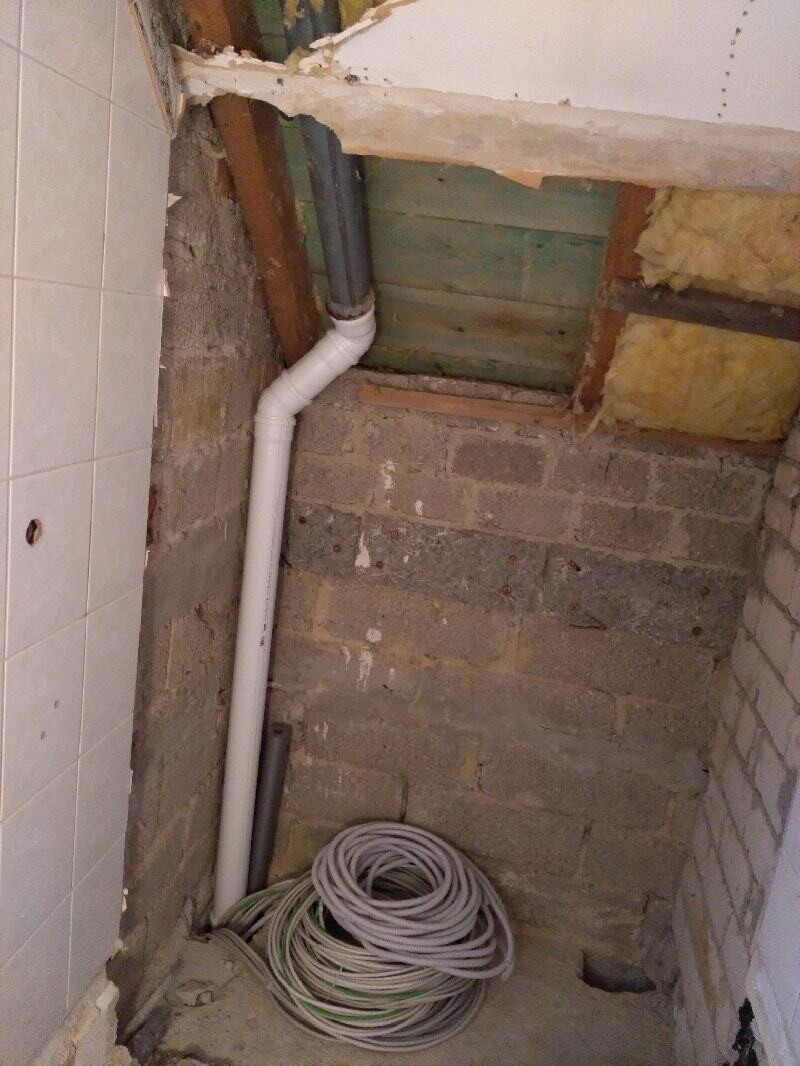
Only the leveling compound is still missing:
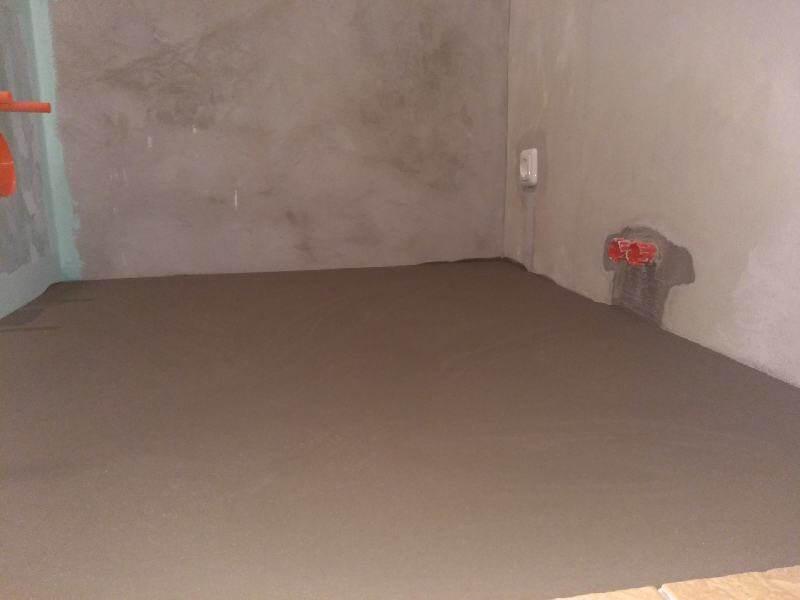
Now it’s a matter of waiting until January, as the tiler won’t be available before then.
In the meantime, there was a direct view from there all the way down to the basement.
Now the ventilation is reconnected.
Only the leveling compound is still missing:
Now it’s a matter of waiting until January, as the tiler won’t be available before then.
I like it. Good use of space in the guest bathroom. It must have been quite tricky to lay everything out 🙂
But what about sound insulation? Wouldn't you have needed an edge insulation strip or something similar for the leveling compound? Also, I would have decoupled the pre-wall, toilet frame, etc., for better soundproofing. I think my plumber handled this pretty well with the GIS system in my place.
But what about sound insulation? Wouldn't you have needed an edge insulation strip or something similar for the leveling compound? Also, I would have decoupled the pre-wall, toilet frame, etc., for better soundproofing. I think my plumber handled this pretty well with the GIS system in my place.
Similar topics