
ᐅ Renovation of an Existing Property in the Lower Rhine Region
Created on: 5 Jun 2020 19:18
N
nordanney
After spending the last three to four years mostly answering questions rather than asking them here in the forum, I want to introduce my new project today.
I will be giving up my current condominium and have chosen a house as an existing property that I simply couldn’t say no to. This will be only my fourth property in 8 years…
The house (and garden) finally offers enough space for my kids.
Location: Lower Rhine region, within a 20-35 minute drive of Düsseldorf / Ruhr area
Plot size: approx. 1,100 sq m (11,840 sq ft)
Year built: 1966 (roof is relatively new, extension from the 1980s)
Two-family house, ground floor for me, upper floor rented long-term (living space: ground floor 120 sq m (1,290 sq ft), upper floor 80 sq m (860 sq ft), basement 120 sq m (1,290 sq ft), 2 garages + 2 parking spaces)
What do I plan to do? Starting in August, the ground floor apartment will undergo extensive renovations for about 12 months (underfloor heating + heat pump, open kitchen to living area, new bathroom + WC, complete rewiring, photovoltaic system, possibly new plumbing installation, insulation of cold roof’s top ceiling, basement ceiling insulation, installation of perimeter insulation + external thermal insulation composite system, new flooring after screed removal and underfloor heating installation, replace old open fireplace with a more modern one, lay wooden terrace, replace windows + some minor tasks). The upper floor apartment will initially remain untouched as it is in good condition. The oil heating will continue to serve this apartment.
Since I will be doing a lot of the work myself, I will definitely have new questions about possible solutions in the future. I’m already looking forward to it.
Finally, here are some pictures:
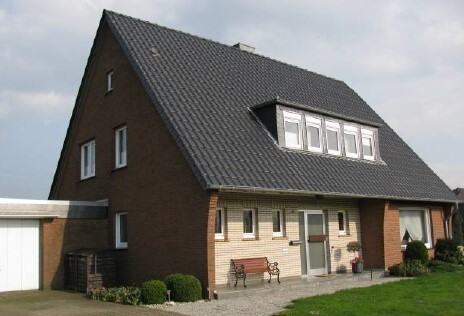
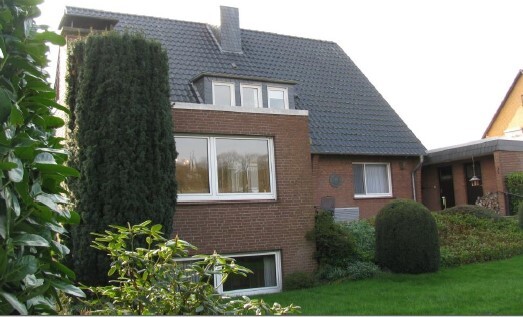
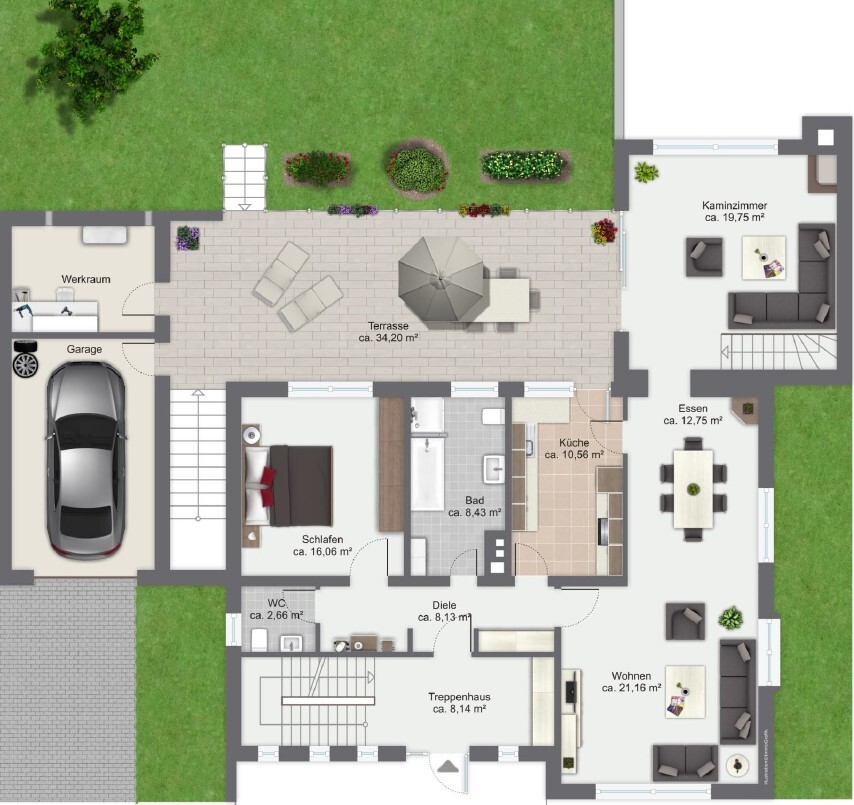
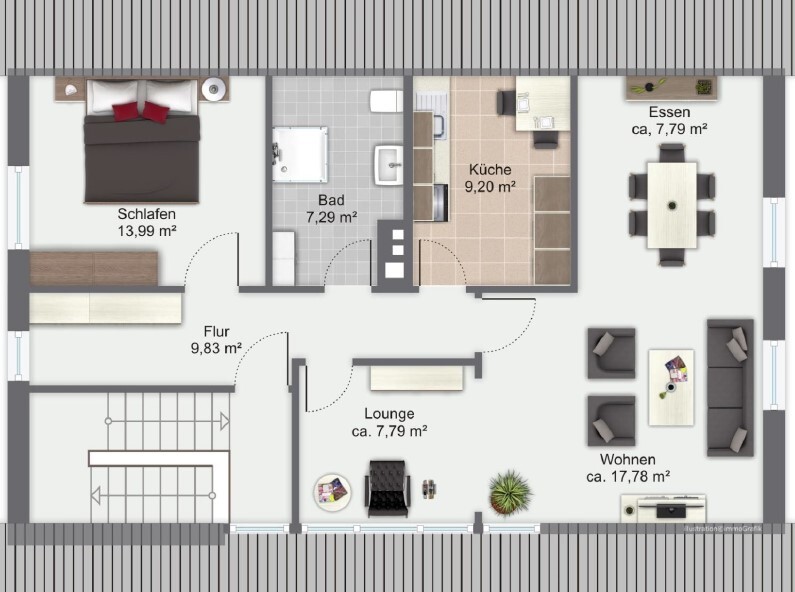
I will be giving up my current condominium and have chosen a house as an existing property that I simply couldn’t say no to. This will be only my fourth property in 8 years…
The house (and garden) finally offers enough space for my kids.
Location: Lower Rhine region, within a 20-35 minute drive of Düsseldorf / Ruhr area
Plot size: approx. 1,100 sq m (11,840 sq ft)
Year built: 1966 (roof is relatively new, extension from the 1980s)
Two-family house, ground floor for me, upper floor rented long-term (living space: ground floor 120 sq m (1,290 sq ft), upper floor 80 sq m (860 sq ft), basement 120 sq m (1,290 sq ft), 2 garages + 2 parking spaces)
What do I plan to do? Starting in August, the ground floor apartment will undergo extensive renovations for about 12 months (underfloor heating + heat pump, open kitchen to living area, new bathroom + WC, complete rewiring, photovoltaic system, possibly new plumbing installation, insulation of cold roof’s top ceiling, basement ceiling insulation, installation of perimeter insulation + external thermal insulation composite system, new flooring after screed removal and underfloor heating installation, replace old open fireplace with a more modern one, lay wooden terrace, replace windows + some minor tasks). The upper floor apartment will initially remain untouched as it is in good condition. The oil heating will continue to serve this apartment.
Since I will be doing a lot of the work myself, I will definitely have new questions about possible solutions in the future. I’m already looking forward to it.
Finally, here are some pictures:
 Kurpfaelzer11 Jun 2021 12:14
Thank you for your information. The heating load calculation from the energy consultant is not reliable, as I have already noticed (individual renovation roadmap is available). I wanted to try calculating the room-by-room heating load myself, but maybe it’s better to have it done professionally.
Are the different flow temperatures then managed with two heating circuits and mixers, and are the two heat pumps connected in series? Or does each apartment have its own heat pump?
I had already suspected Panasonic "Jeisha," as it is often recommended in the HTD forum based on the photo. Can you say something about the noise level? Did you have the optional sound insulation from rjtec installed?
We are also switching from oil to heat pumps, so I am very interested 🙂
Are the different flow temperatures then managed with two heating circuits and mixers, and are the two heat pumps connected in series? Or does each apartment have its own heat pump?
I had already suspected Panasonic "Jeisha," as it is often recommended in the HTD forum based on the photo. Can you say something about the noise level? Did you have the optional sound insulation from rjtec installed?
We are also switching from oil to heat pumps, so I am very interested 🙂
N
nordanney11 Jun 2021 12:34Kurpfaelzer schrieb:
Are the different supply temperatures managed with two heating circuits and a mixing valve, with the two heat pumps connected in series? Or does each apartment have its own heat pump? Actually, each apartment has its own heat pump. I could have chosen the 9kW (19,000 BTU/h) version and then mixed and divided the flow, but that would have been pointless. For the upper floor apartment, I used the already existing heating pipes; for my unit on the ground floor, I installed everything new.
Kurpfaelzer schrieb:
The heating load calculation from the energy consultant is worthless, I've noticed that too. Yep.
Kurpfaelzer schrieb:
Panasonic "Jeisha", as often recommended in the hid forum, I suspected from the photo. Can you say anything about the noise level? I ran it at full power for screed drying (with about 900 liters per hour (240 gallons per hour)) and also tested the maximum flow rate I could get (almost 2,000 liters per hour (530 gallons per hour)). The noise level was quite moderate.
During the day: only audible if you are about 1-2 meters (3-6 feet) away
At night, when it’s quiet outside:
With closed windows: not audible
With windows tilted open (the tenant’s bedroom is directly above, about 150cm (5 feet) offset sideways): not audible
To even hear it, you have to be within a few meters (4-5 meters (13-16 feet))
Kurpfaelzer schrieb:
Did you install the optional sound insulation from rjtec? No, I wanted to try it like this first. I plan to add more insulation later and then see if it gets any quieter. My freestanding refrigerator in the kitchen is louder.
It’s installed on a concrete base with damping pads on the right and left sides underneath.
Kurpfaelzer11 Jun 2021 12:49Very interesting approach with a heat pump for each apartment. When you replaced the radiators on the upper floor, did you use any special models, or just larger ones so they could heat the room effectively even at relatively low temperatures?
Earlier, I read something about insulation. Will an external thermal insulation composite system (ETICS) / external wall insulation be applied to the facade?
Thanks for your impressions regarding the noise level. It’s really tricky—some people find it very quiet, others quite loud. I would probably opt for the optional sound insulation right away to be on the safe side. But it already sounds good that it’s that quiet.
Earlier, I read something about insulation. Will an external thermal insulation composite system (ETICS) / external wall insulation be applied to the facade?
Thanks for your impressions regarding the noise level. It’s really tricky—some people find it very quiet, others quite loud. I would probably opt for the optional sound insulation right away to be on the safe side. But it already sounds good that it’s that quiet.
N
nordanney11 Jun 2021 13:24Kurpfaelzer schrieb:
Very interesting approach with a heat pump for each apartment.Everyone advised against using just one heat pump. Since there is KfW funding available, the difference is now only a few euros (under 1,000€). You also need two separate domestic hot water systems. Or are you planning to use instantaneous water heaters? That way, you also avoid the complicated heating billing (no heat meters required either). Not to mention the hassle of using a photovoltaic system that supplies electricity to just one heat pump, which then heats two apartments. The billing confusion (self-consumption, tenant electricity, and whatever else gets mixed) is a whole other issue.Kurpfaelzer schrieb:
Did you use special radiator models for the replacement in the upper floor?The models that provide the required heat output for funding. I chose Buderus type 33 radiators. The largest option available (for a reasonable price). It depends on the supply temperature. At low temperatures, radiator performance drops significantly. However, they fit in my existing radiator spaces.Kurpfaelzer schrieb:
Earlier, I read something about insulation. Are you installing an external thermal insulation composite system (ETICS) on the facade?Yes. Otherwise, you won’t achieve KfW 55. Initially, I only wanted to renovate my apartment plus the facade and install a new heating system for the tenant. With just a little additional effort (only new windows and attic ceiling insulation), I easily met the KfW 55 standard, which led to significantly increased funding. In the end, after funding, it actually became cheaper.Kurpfaelzer11 Jun 2021 14:57From a billing perspective, that simplifies things quite a bit. In our case, there is no central domestic hot water heating, but in your case, it is really practical.
OK, I hadn’t considered KfW55. That makes sense. I will definitely continue reading with interest.
OK, I hadn’t considered KfW55. That makes sense. I will definitely continue reading with interest.
N
nordanney13 Jun 2021 21:40After the screed was installed in the meantime, the interior work continues. The screed was treated with an accelerator, so it was ready for covering after seven days. It turned out perfectly flat and shows no cracks. Additional cost was 400 €, but this saved me from paying extra rent on my current apartment.
Unfortunately, there are still issues with the windows, so they can only be fully installed in the coming weeks. But it’s not a big deal.
Now, here are a few photos.
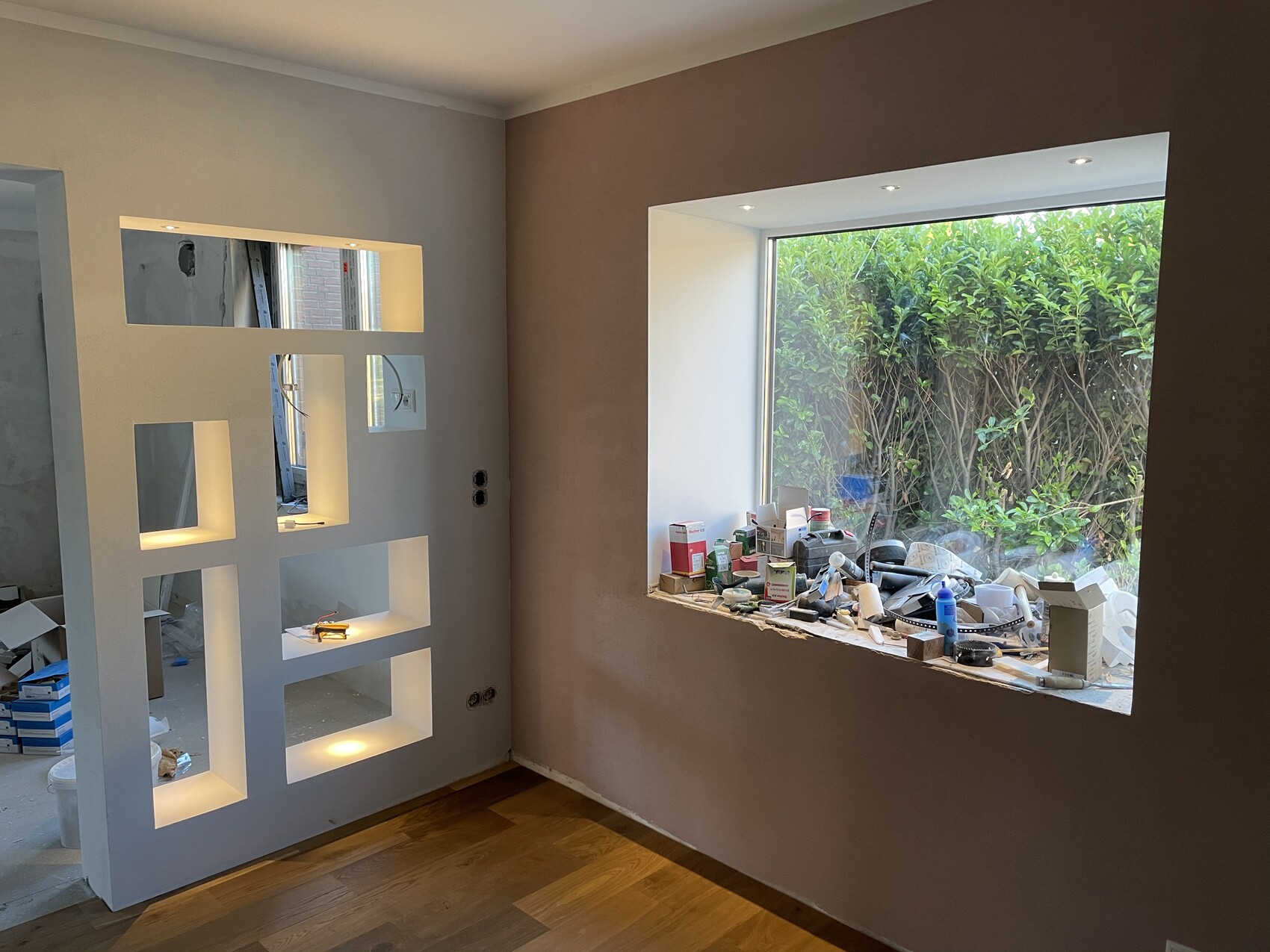
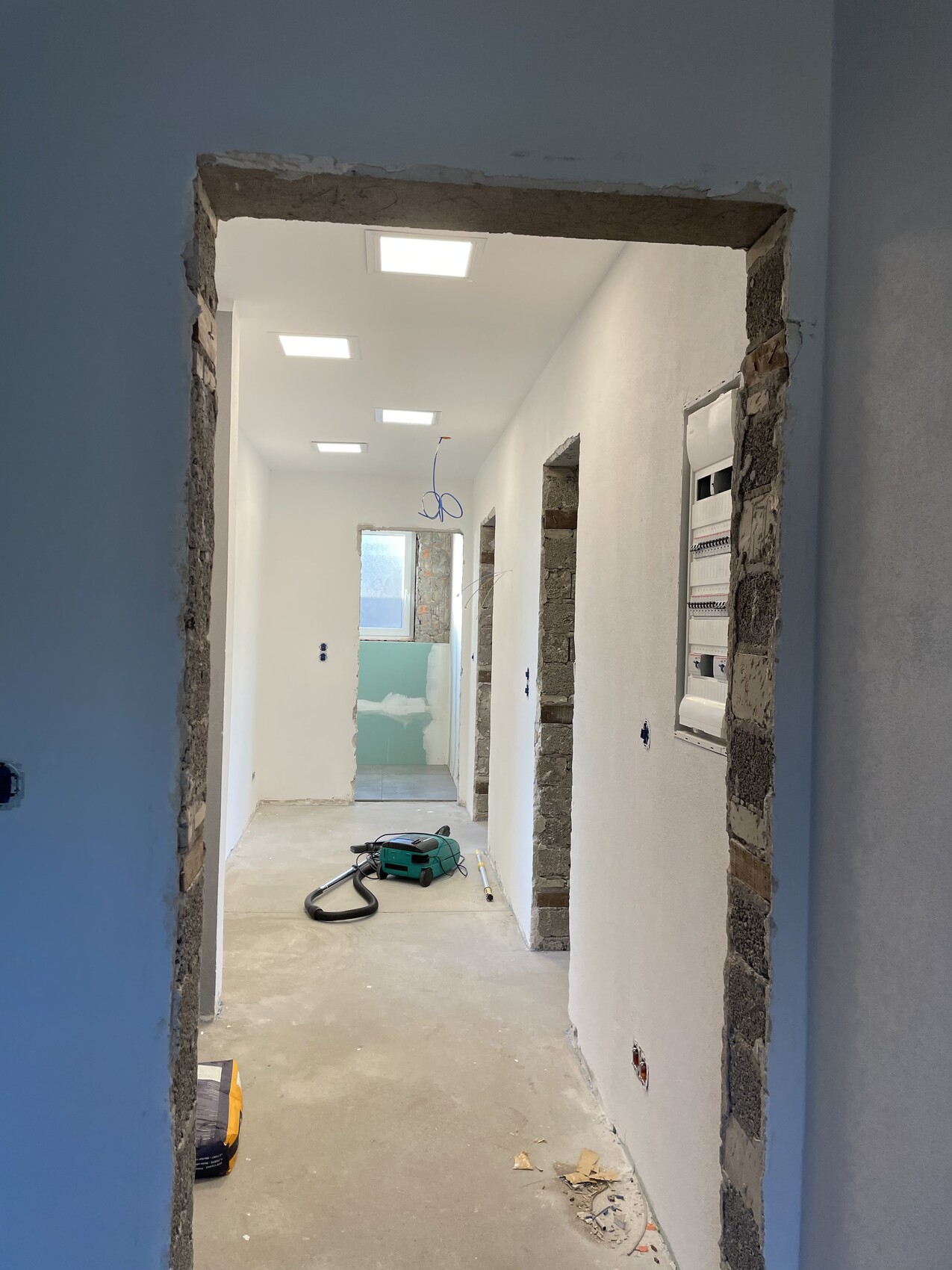
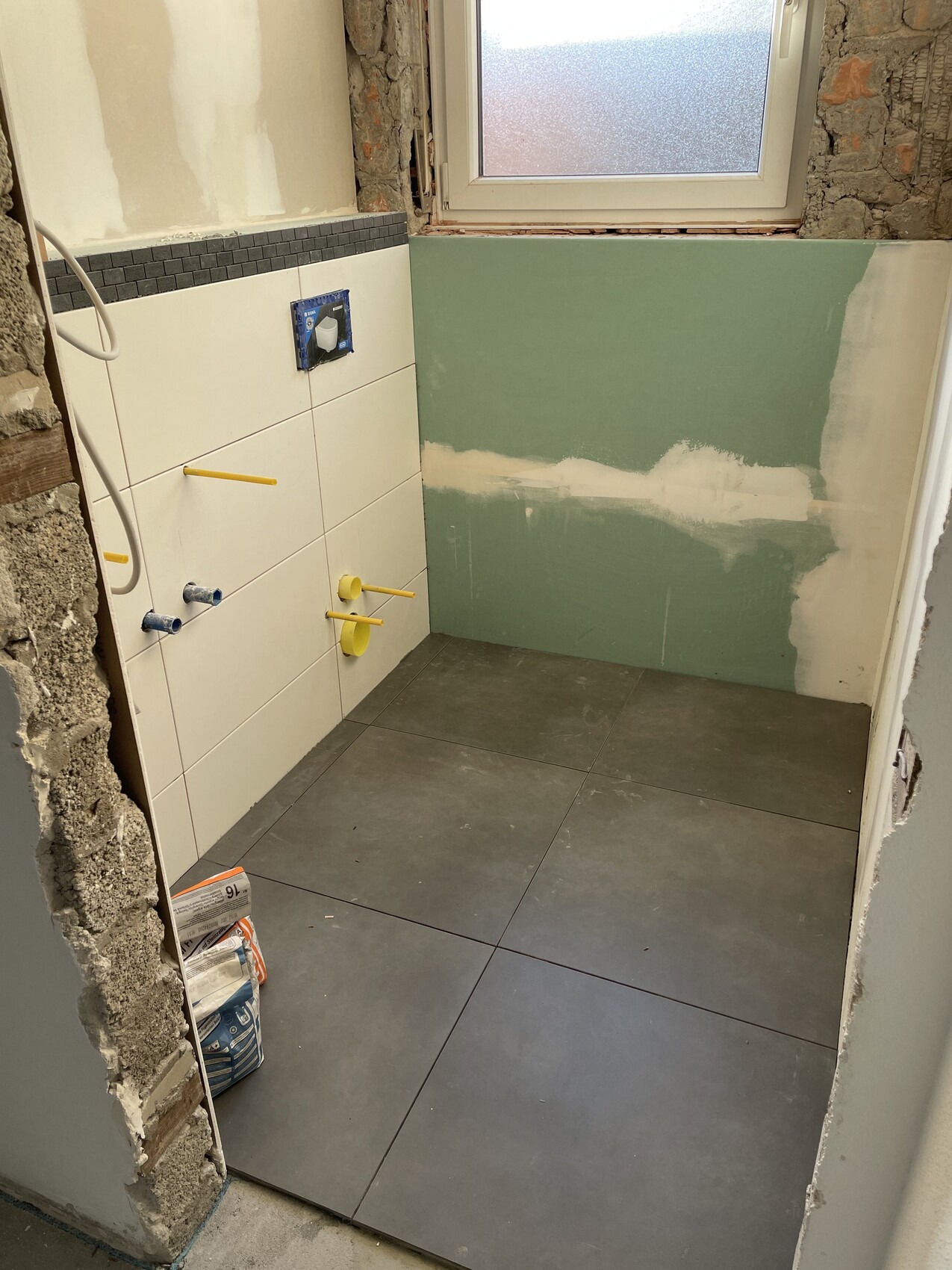
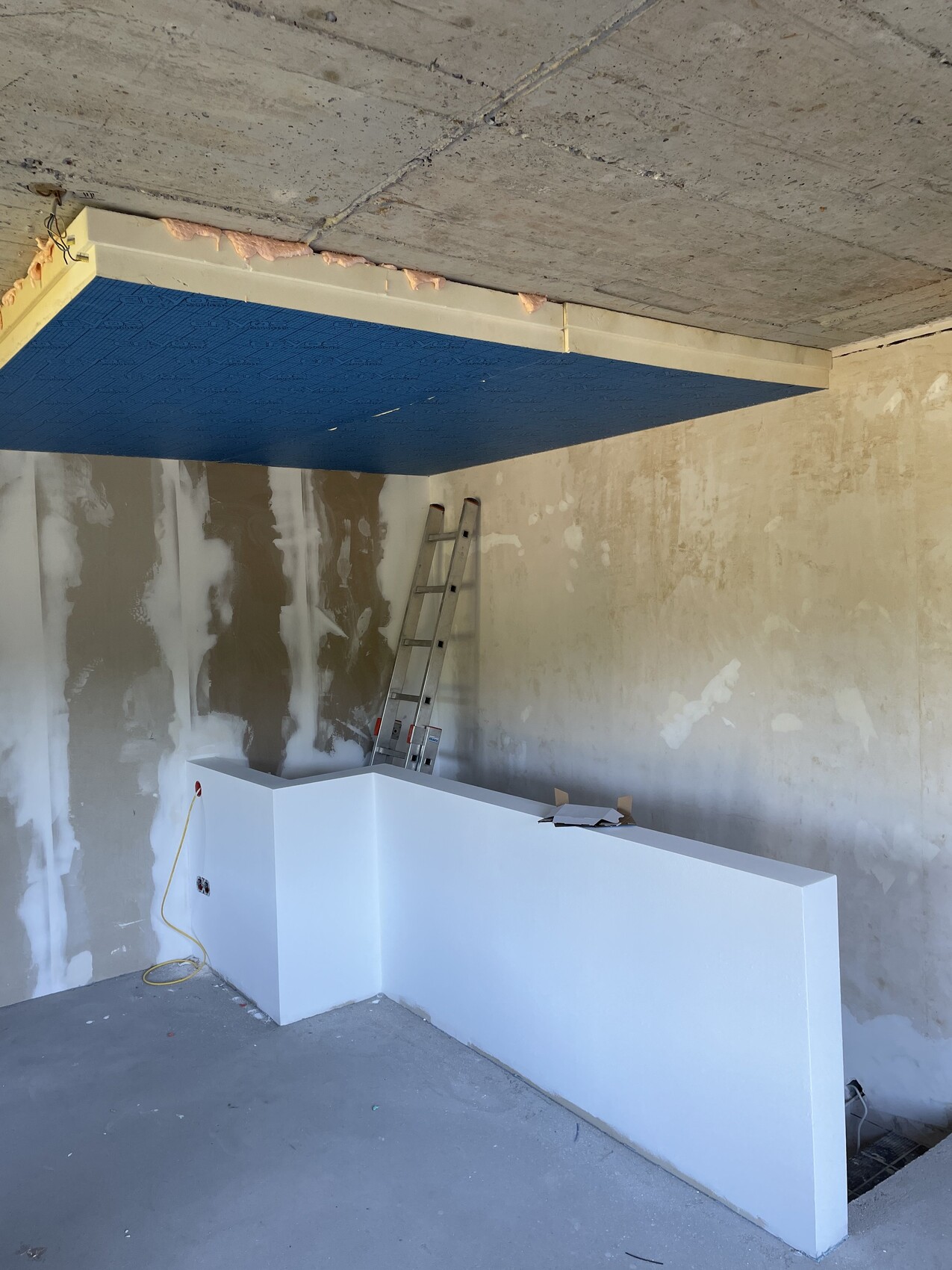
You could watch the screed drying. The guest toilet has received its first tiles. The room divider with lighting as well as the window seat are finished. The first hardwood floor has been laid. The TV wall is almost done (still waiting on the LEDs). Interior insulation in the fireplace room is going up to the ceiling. The hallway has lighting, is plastered and painted.

Unfortunately, there are still issues with the windows, so they can only be fully installed in the coming weeks. But it’s not a big deal.
Now, here are a few photos.
You could watch the screed drying. The guest toilet has received its first tiles. The room divider with lighting as well as the window seat are finished. The first hardwood floor has been laid. The TV wall is almost done (still waiting on the LEDs). Interior insulation in the fireplace room is going up to the ceiling. The hallway has lighting, is plastered and painted.
Similar topics