
Hello,
Although I am from Austria, I don’t think there is a comparable forum there, and I hope to get some tips from you here.
Here is the problem:
We have a garden shed from the 1950s that we need to quickly renovate before our house renovation, so we can store some things there during the renovation. Otherwise, the garden shed is only used for garden furniture and similar items. So the future use will be very limited.
The shed is built of masonry and naturally damp. It is about 5 x 3 meters (16 x 10 feet) with a partition wall.
We are having the roof redone with concrete tiles. I have already removed some of the damp plaster from the walls. The walls stand on a foundation.
(This has been redone about three times over the last 70 years, and I believe it will last for a few more years now.)
The real problem is the concrete floor, which was always covered with PVC and then carpet. The concrete, about 4 cm (1.5 inches) thick, lies directly on a sand-soil-stone mixture, without any insulation or vapor barrier.
For a short time, I considered having the concrete slab broken out, but that would turn into a major construction project.
Now I am wondering if the damp concrete without a plastic sheet on top will dry out again, and how to renovate without going over budget. By the way, we are not allowed to demolish the shed because we would not be able to rebuild it.
Could I apply a waterproofing slurry (liquid waterproof membrane) onto this concrete slab?
The concrete seems very stable—only a small edge section has broken off, which would naturally need to be repaired first.
Are there other options worth considering for a building like this, or is a waterproofing slurry the appropriate solution?
Best regards from Lower Austria
Although I am from Austria, I don’t think there is a comparable forum there, and I hope to get some tips from you here.
Here is the problem:
We have a garden shed from the 1950s that we need to quickly renovate before our house renovation, so we can store some things there during the renovation. Otherwise, the garden shed is only used for garden furniture and similar items. So the future use will be very limited.
The shed is built of masonry and naturally damp. It is about 5 x 3 meters (16 x 10 feet) with a partition wall.
We are having the roof redone with concrete tiles. I have already removed some of the damp plaster from the walls. The walls stand on a foundation.
(This has been redone about three times over the last 70 years, and I believe it will last for a few more years now.)
The real problem is the concrete floor, which was always covered with PVC and then carpet. The concrete, about 4 cm (1.5 inches) thick, lies directly on a sand-soil-stone mixture, without any insulation or vapor barrier.
For a short time, I considered having the concrete slab broken out, but that would turn into a major construction project.
Now I am wondering if the damp concrete without a plastic sheet on top will dry out again, and how to renovate without going over budget. By the way, we are not allowed to demolish the shed because we would not be able to rebuild it.
Could I apply a waterproofing slurry (liquid waterproof membrane) onto this concrete slab?
The concrete seems very stable—only a small edge section has broken off, which would naturally need to be repaired first.
Are there other options worth considering for a building like this, or is a waterproofing slurry the appropriate solution?
Best regards from Lower Austria

Hello questioner,
I believe that with an installation thickness of only 40mm (1.6 inches), this is unlikely to be concrete, but rather a screed laid directly on soil.
Here in Hungary, most village houses without basements are built in this way.
You can tell for yourself by looking at the largest grain size in the base slab.
It is probably only around 5mm (0.2 inches), which is far too small for concrete.
---------
But that is not the topic here.
It is clear, and unavoidable, that ground moisture rises through the base slab.
Covering it with a vapor-tight surface layer (such as PVC) would only be for aesthetic reasons; according to professional standards, it cannot work, precisely because of the rising moisture.
Removing it (i.e., rebuilding) does not solve the problem; it simply shifts the problem to a later time with the same intensity after reinstalling an identical base layer.
Sure, if you had unlimited funds, there would be solutions.
But according to your description, the garden house will continue to be used only for secondary purposes.
Therefore, from an economic standpoint, there is only one sensible approach:
Leave the surface of the base slab exposed, do not cover it, so that the rising moisture can evaporate into the room air (do not forget ventilation).
In my opinion, anything else does not make sense!
It would look nicer if the surface of the base slab were machine-ground (60 grit), the dust thoroughly vacuumed, the entire area primed with a dispersion primer, and finally coated with a colored, vapor-permeable concrete paint. (Concrete paints typically allow vapor diffusion due to their thin dry film.)
-------------------
Perhaps my answer is not 100% what you were hoping for, but it is worth considering.
Wishing you a good decision, KlaRa
I believe that with an installation thickness of only 40mm (1.6 inches), this is unlikely to be concrete, but rather a screed laid directly on soil.
Here in Hungary, most village houses without basements are built in this way.
You can tell for yourself by looking at the largest grain size in the base slab.
It is probably only around 5mm (0.2 inches), which is far too small for concrete.
---------
But that is not the topic here.
It is clear, and unavoidable, that ground moisture rises through the base slab.
Covering it with a vapor-tight surface layer (such as PVC) would only be for aesthetic reasons; according to professional standards, it cannot work, precisely because of the rising moisture.
Removing it (i.e., rebuilding) does not solve the problem; it simply shifts the problem to a later time with the same intensity after reinstalling an identical base layer.
Sure, if you had unlimited funds, there would be solutions.
But according to your description, the garden house will continue to be used only for secondary purposes.
Therefore, from an economic standpoint, there is only one sensible approach:
Leave the surface of the base slab exposed, do not cover it, so that the rising moisture can evaporate into the room air (do not forget ventilation).
In my opinion, anything else does not make sense!
It would look nicer if the surface of the base slab were machine-ground (60 grit), the dust thoroughly vacuumed, the entire area primed with a dispersion primer, and finally coated with a colored, vapor-permeable concrete paint. (Concrete paints typically allow vapor diffusion due to their thin dry film.)
-------------------
Perhaps my answer is not 100% what you were hoping for, but it is worth considering.
Wishing you a good decision, KlaRa
Hello KlaRa,
sorry for the late reply. I thought no one was responding and then noticed that I hadn’t clicked on the notifications. That is fixed now.
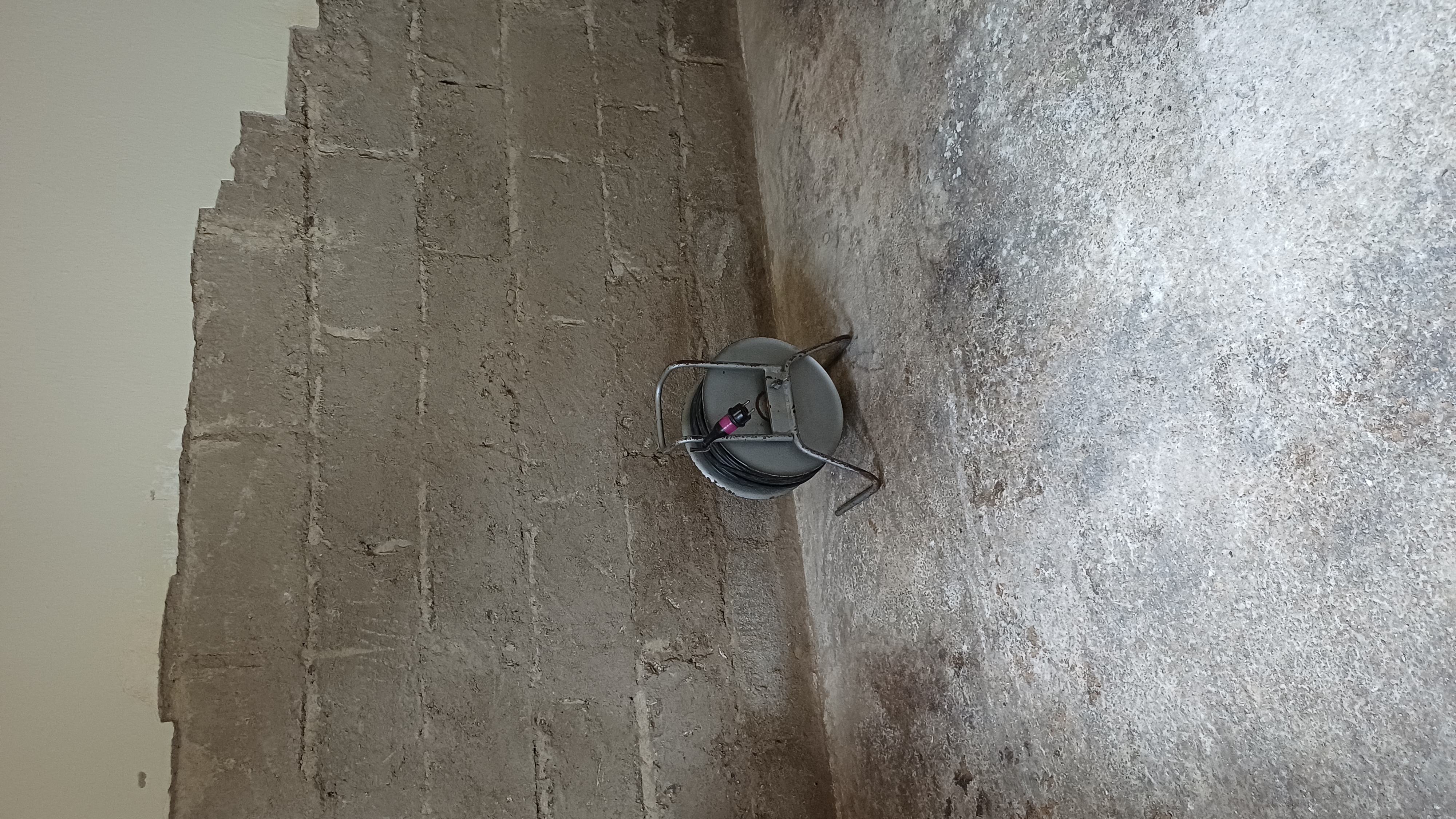
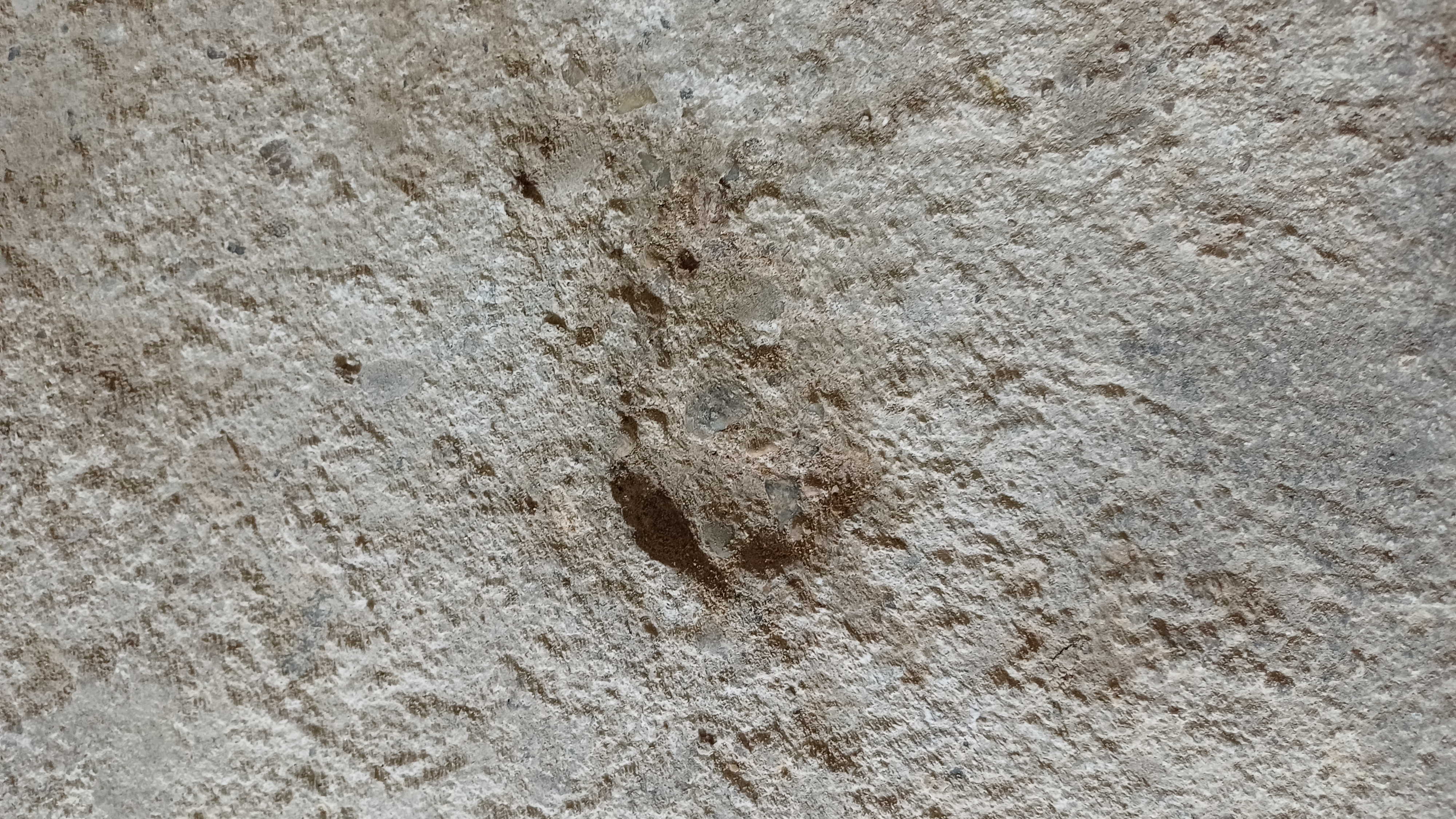
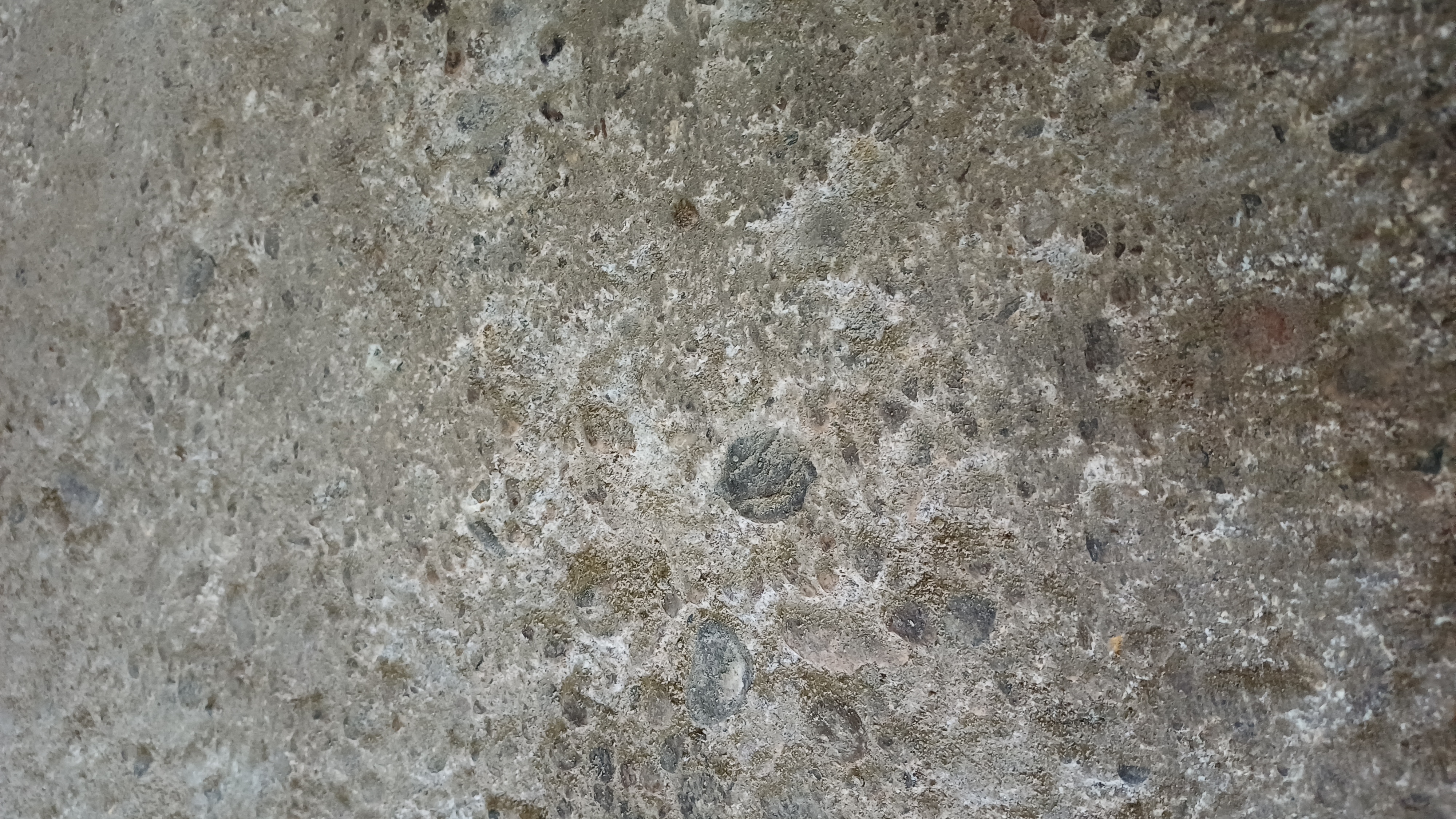
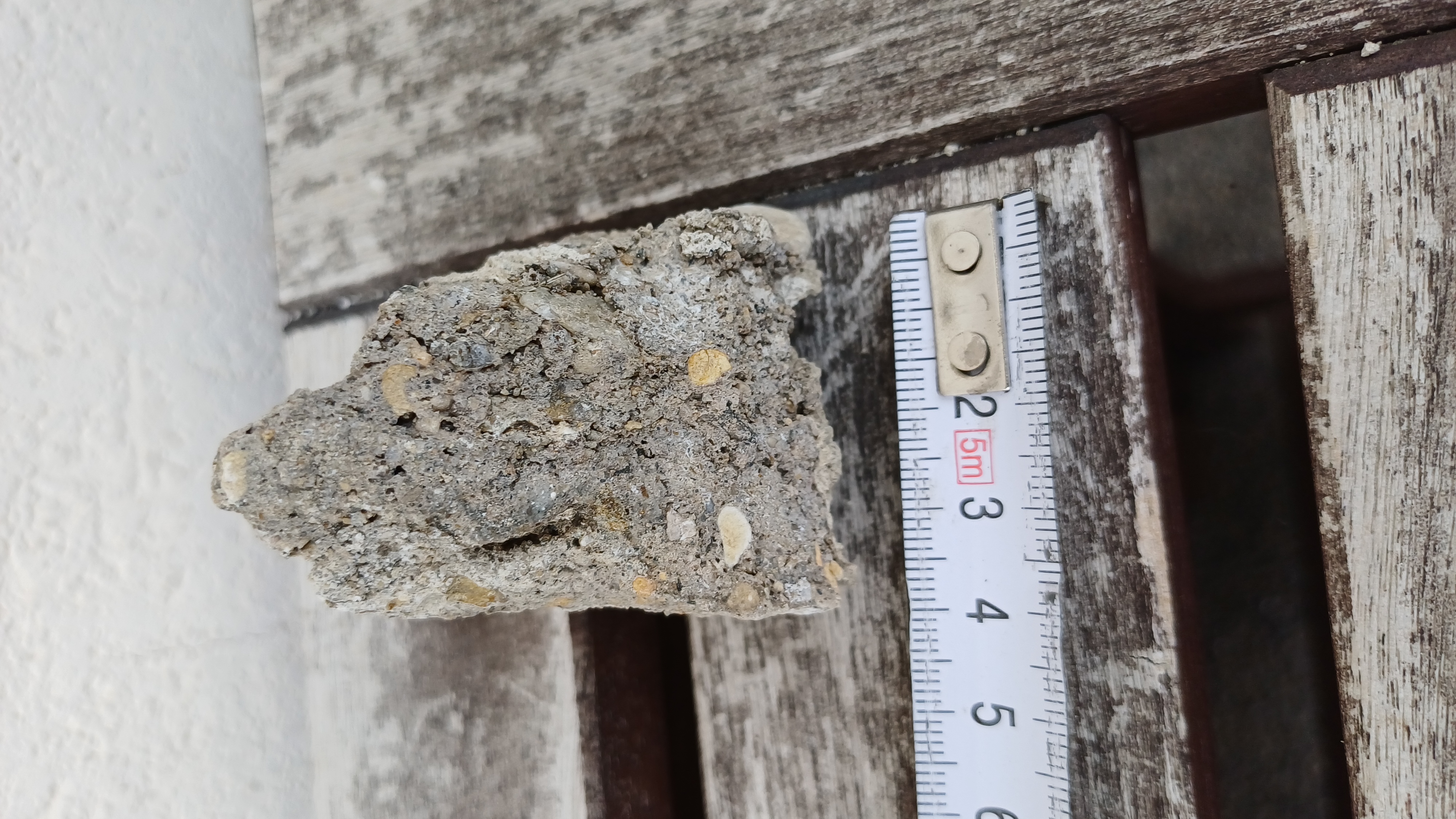
The concrete slab will probably be a “Hungarian” hybrid type. My father-in-law was from Hungary, so that assumption makes sense. The stones in the concrete are sometimes larger than 5 mm (0.2 inches). The problem is that the top layer (sand?) can be rubbed off. In some places, about 5 mm (0.2 inches). See the photos. I also chipped out a piece at the edge because of the thickness (4 cm (1.5 inches)) (photo). Maybe one can tell there whether it is concrete or screed.
My project is progressing slowly. But I need a solution now, as I will soon need to temporarily store a garden shed on it.
The floor has been without PVC for a few weeks now, and I feel it is drying out somewhat. However, I doubt it will ever be completely dry. It was covered with PVC and carpet for over 50 years.
Here is how I would proceed now:
1) Have it sanded down. I would have this done professionally. I definitely can’t do this myself.
2) Then, either as KlaRa said, prime it. With what? (That can be done by my wife herself.)
3a) Then a vapor-permeable concrete paint. (Maybe I can manage this myself.)
Or, and I would like your advice on this:
3b) Waterproofing slurry / Is that also walkable?
One more question:
As you can see in the photos, I have removed the damp wall plaster. Should the walls be plastered first or the floor done first? And should something be applied in between?
Regarding plastering the walls:
Is there a product you would recommend?
I appreciate any good advice on my “small” project.
Best regards, Ana
sorry for the late reply. I thought no one was responding and then noticed that I hadn’t clicked on the notifications. That is fixed now.
The concrete slab will probably be a “Hungarian” hybrid type. My father-in-law was from Hungary, so that assumption makes sense. The stones in the concrete are sometimes larger than 5 mm (0.2 inches). The problem is that the top layer (sand?) can be rubbed off. In some places, about 5 mm (0.2 inches). See the photos. I also chipped out a piece at the edge because of the thickness (4 cm (1.5 inches)) (photo). Maybe one can tell there whether it is concrete or screed.
My project is progressing slowly. But I need a solution now, as I will soon need to temporarily store a garden shed on it.
The floor has been without PVC for a few weeks now, and I feel it is drying out somewhat. However, I doubt it will ever be completely dry. It was covered with PVC and carpet for over 50 years.
Here is how I would proceed now:
1) Have it sanded down. I would have this done professionally. I definitely can’t do this myself.
2) Then, either as KlaRa said, prime it. With what? (That can be done by my wife herself.)
3a) Then a vapor-permeable concrete paint. (Maybe I can manage this myself.)
Or, and I would like your advice on this:
3b) Waterproofing slurry / Is that also walkable?
One more question:
As you can see in the photos, I have removed the damp wall plaster. Should the walls be plastered first or the floor done first? And should something be applied in between?
Regarding plastering the walls:
Is there a product you would recommend?
I appreciate any good advice on my “small” project.
Best regards, Ana

Hello Ana,
I haven’t checked the forum for several weeks, which delayed my reply.
So, what you removed from the floor is some kind of mineral-bound material, a cross between concrete and screed.
The fact that you can rub off the top layer of the floor shows low strength (and a high water content during production).
But that’s not the main issue here.
Sealing the floor is not recommended.
Why?
Because applying a surface seal (such as synthetic resin or sealing slurry) forces the rising moisture to find a “detour” to escape.
And that then happens sideways through the wall surfaces!
The solution you are aiming for is not simple and cannot be answered with a standard response.
A vapor-tight top layer (e.g., PVC) or even wood/wood-based panels would not be advisable; it would only cause damage in the near future.
I would suggest carefully sanding the friable surface of the whatever-it-is floor, priming the entire area with a dispersion primer, and leveling the surface with a cement-based smoothing compound (under no circumstances use gypsum-containing products!).
The top covering should be vapor-permeable and suitable for underfloor heating, such as a textile covering. This allows the rising moisture from the floor slab (which I am generously calling it here) to dissipate easily into the room air. However, the adhesive used must not be sealing (so no PU adhesive), otherwise moisture will accumulate in the floor construction, the applied dispersion primer will re-emulsify, and the shrinkage stresses of the smoothing compound cannot be controlled.
(The smoothing compound would then detach over large areas.)
So far, all of this applies only to the interior.
Around the building, a perimeter drainage system should definitely be installed to prevent water from stagnating beneath the “floor slab.”
How do I know this?
I am assuming based on many years of professional experience.
But as described above, this could be a simple yet practical approach.
-------------------
I wish you much success with your building project: KlaRa
I haven’t checked the forum for several weeks, which delayed my reply.
So, what you removed from the floor is some kind of mineral-bound material, a cross between concrete and screed.
The fact that you can rub off the top layer of the floor shows low strength (and a high water content during production).
But that’s not the main issue here.
Sealing the floor is not recommended.
Why?
Because applying a surface seal (such as synthetic resin or sealing slurry) forces the rising moisture to find a “detour” to escape.
And that then happens sideways through the wall surfaces!
The solution you are aiming for is not simple and cannot be answered with a standard response.
A vapor-tight top layer (e.g., PVC) or even wood/wood-based panels would not be advisable; it would only cause damage in the near future.
I would suggest carefully sanding the friable surface of the whatever-it-is floor, priming the entire area with a dispersion primer, and leveling the surface with a cement-based smoothing compound (under no circumstances use gypsum-containing products!).
The top covering should be vapor-permeable and suitable for underfloor heating, such as a textile covering. This allows the rising moisture from the floor slab (which I am generously calling it here) to dissipate easily into the room air. However, the adhesive used must not be sealing (so no PU adhesive), otherwise moisture will accumulate in the floor construction, the applied dispersion primer will re-emulsify, and the shrinkage stresses of the smoothing compound cannot be controlled.
(The smoothing compound would then detach over large areas.)
So far, all of this applies only to the interior.
Around the building, a perimeter drainage system should definitely be installed to prevent water from stagnating beneath the “floor slab.”
How do I know this?
I am assuming based on many years of professional experience.
But as described above, this could be a simple yet practical approach.
-------------------
I wish you much success with your building project: KlaRa
Similar topics