
ᐅ Renovation of an old building from energy rating H to a KfW 55 EE energy-efficient house
Created on: 7 Sep 2025 12:27
T
TeldorF
Hello everyone,
I’m new to the forum and have a question regarding the following topic:
My wife and I want to buy a semi-detached house, renovate it, and then rent it out. Here are the key details about the property:
Current State:
- Semi-detached house, built in 1956. Classified as a Worst Performing Building
- Energy demand according to the energy certificate = 344 kWh/m²*a
- Living area on ground floor and upper floor = 110 m² (1184 ft²). Ground and upper floors are two separate residential units.
- Usable area according to the energy certificate: 208 m² (2240 ft²). Plot area 397 m² (4273 ft²)
- Basement, ground floor, upper floor, and attic— all basic standard
- Basement likely uninsulated but dry
- Ground and upper floors are finished. The exterior walls appear to have no insulation inside or outside. Originally built with pumice stone or hollow concrete blocks. The exterior wall thickness is about 30 cm (12 inches). Plastered on the outside.
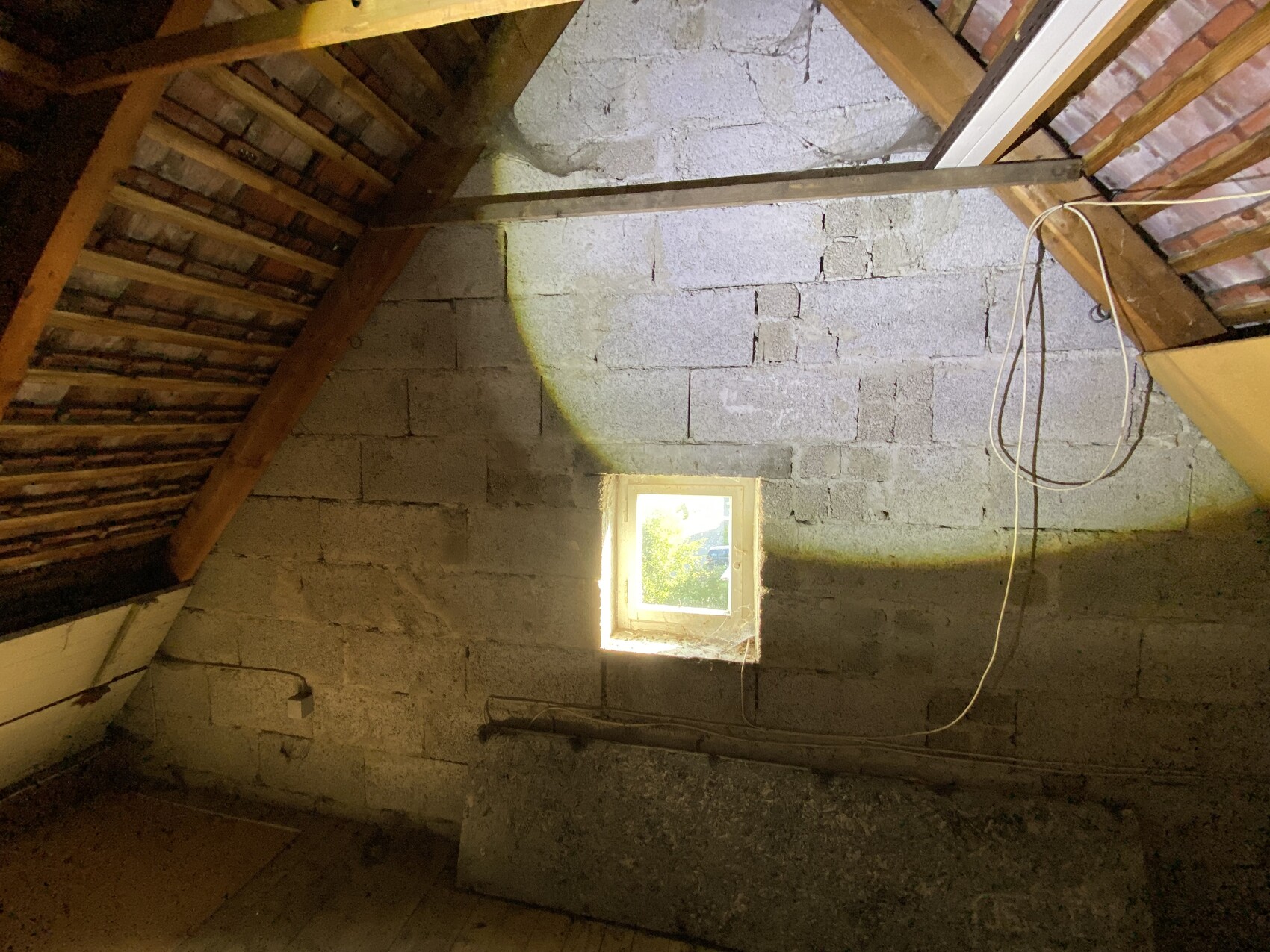
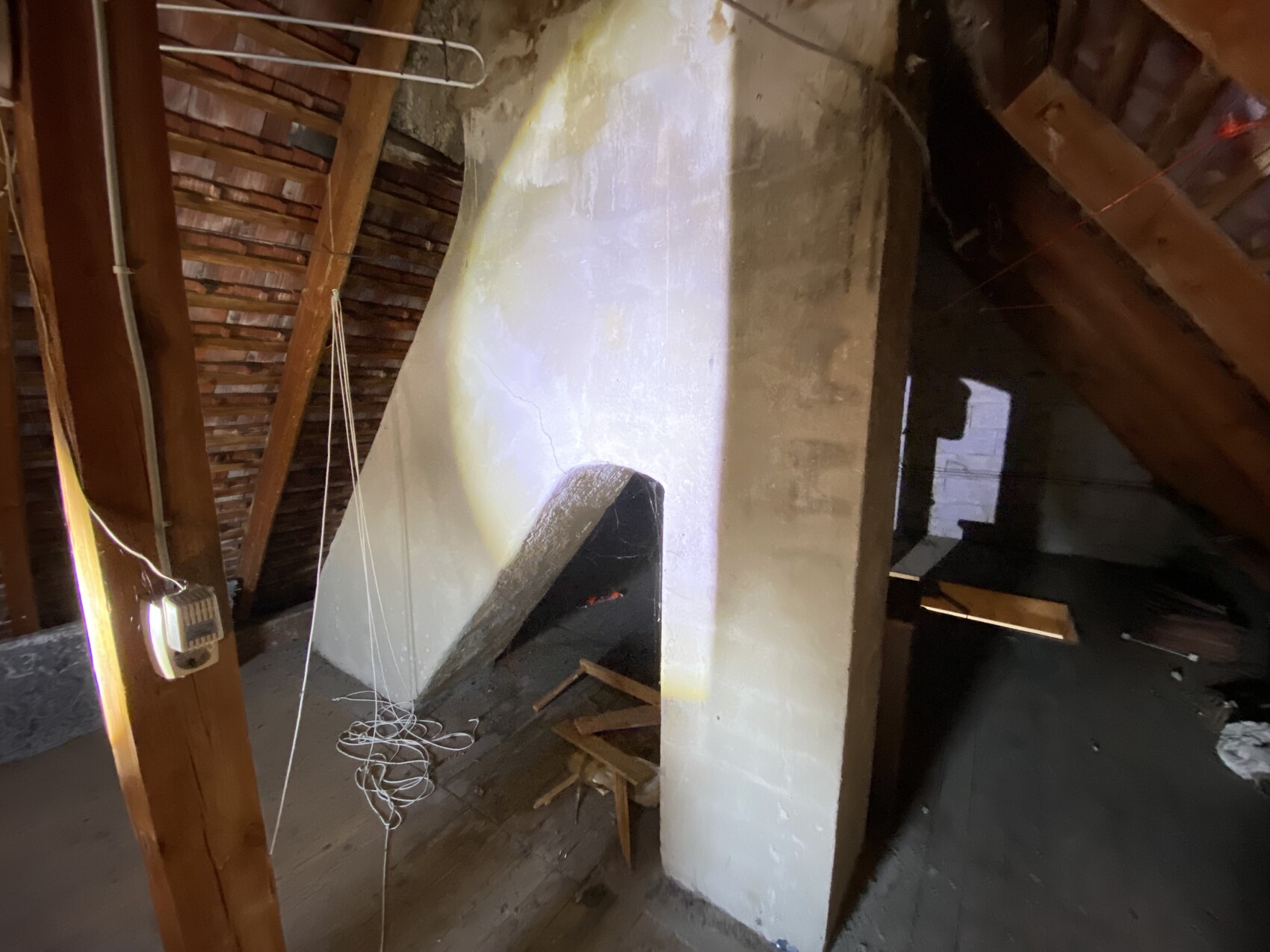
- Attic is unfinished. The gable interior shows the bare pumice stones. See attached picture.
- Roof is not insulated. Rafters and tiles are visible. Rafter thickness approx. 13 cm (5 inches).
- Heating is a floor-level gas heating system, built in 1980.
- Windows are wooden, double-glazed. Need to be replaced.
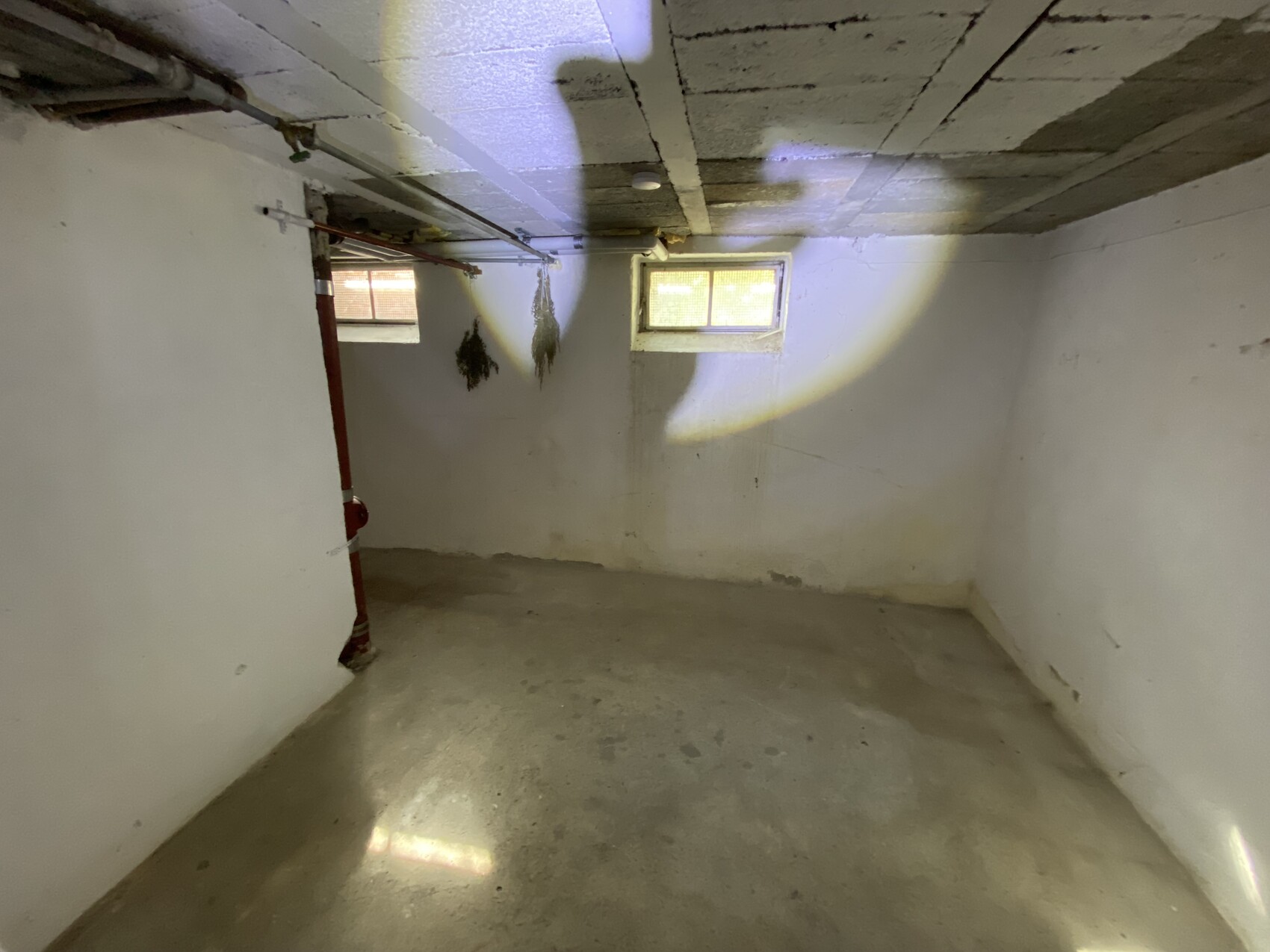
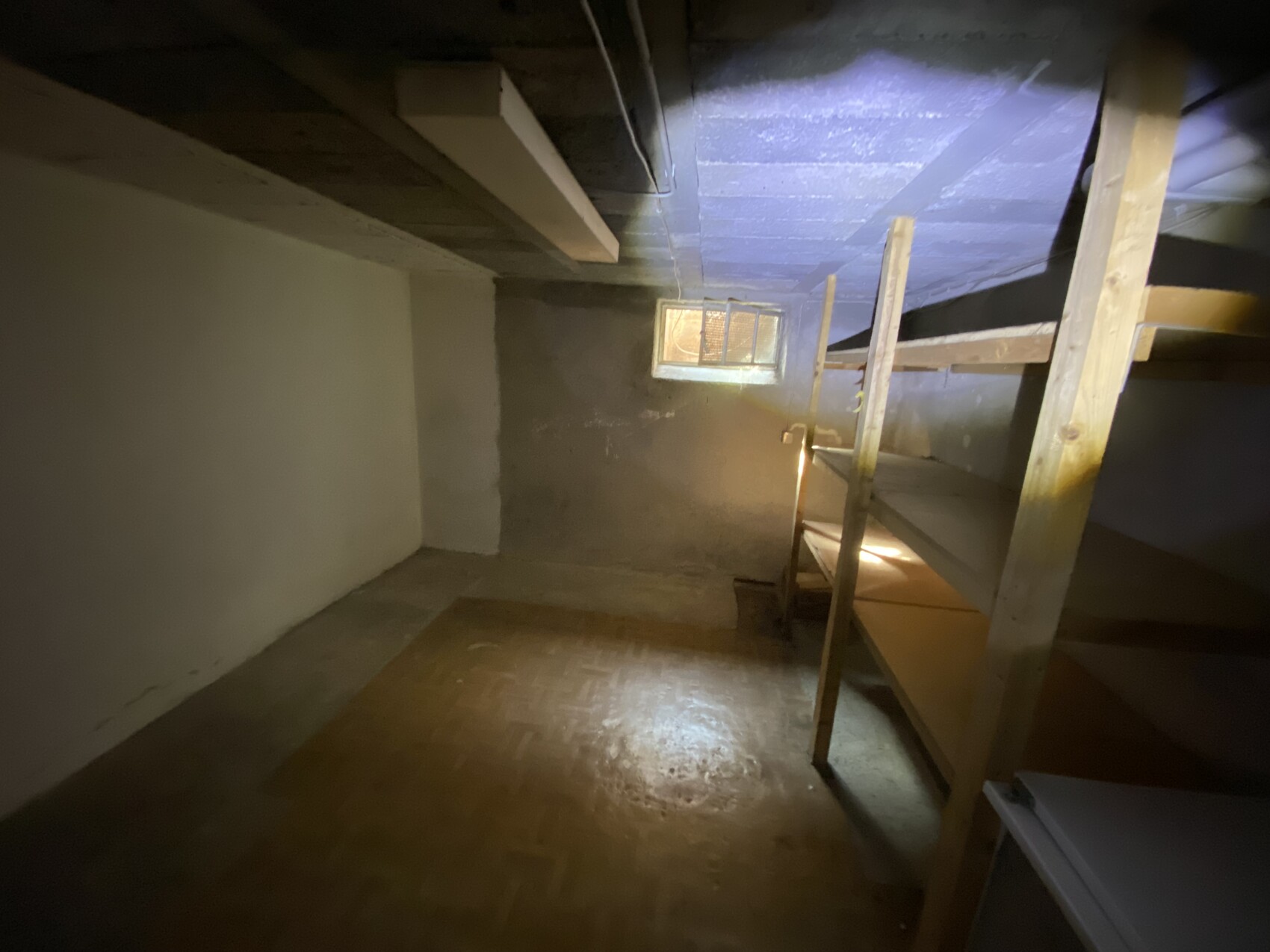
- Basement ceiling is a reinforced ceiling or concrete slab (see attached picture). The ceiling above the ground floor is probably a wooden beam ceiling but it’s not visible and the real estate agent did not know.
That’s the current situation.
Planned State:
The plan is to renovate the house using a KfW loan 261, aiming to achieve KfW 55 EE standard.
The following measures are planned:
- Full thermal insulation system (ETICS/External Thermal Insulation Composite System) using expanded polystyrene (EPS) on the facade. Thickness will be based on the calculation results.
- Replace windows with triple glazing (currently double glazed).
- Roof insulation from inside: cellulose insulation between the rafters and wood fiber insulation on the outside. Thicknesses depend on calculation results.
- Insulate the basement ceiling from below. Thickness according to calculations, but limited due to the basement’s clear head height of only about 1.90 m (6 ft 3 in).
- New heating system: air-to-water heat pump with radiators. Underfloor heating would likely reduce ceiling height too much because of the build-up required.
- The ground and upper floors are separate apartments and will remain so. The attic will only be added to the upper-floor apartment.
- If necessary, a small photovoltaic system may be installed to reach the renewable energy requirements.
That’s all for the planned state. I hope I haven’t left out any important information, but if so, please feel free to ask.
My question is whether, with the conditions above, it is possible to achieve KfW 55 EE standard for this house. I see a potential problem with the shared wall to the neighboring semi-detached house, as I cannot insulate this wall externally with an ETICS. Has anyone here had experience renovating a semi-detached house and can provide their assessment?
That would be great. Thank you very much in advance. If any information is missing, please just ask.
Best regards
Florian
I’m new to the forum and have a question regarding the following topic:
My wife and I want to buy a semi-detached house, renovate it, and then rent it out. Here are the key details about the property:
Current State:
- Semi-detached house, built in 1956. Classified as a Worst Performing Building
- Energy demand according to the energy certificate = 344 kWh/m²*a
- Living area on ground floor and upper floor = 110 m² (1184 ft²). Ground and upper floors are two separate residential units.
- Usable area according to the energy certificate: 208 m² (2240 ft²). Plot area 397 m² (4273 ft²)
- Basement, ground floor, upper floor, and attic— all basic standard
- Basement likely uninsulated but dry
- Ground and upper floors are finished. The exterior walls appear to have no insulation inside or outside. Originally built with pumice stone or hollow concrete blocks. The exterior wall thickness is about 30 cm (12 inches). Plastered on the outside.
- Attic is unfinished. The gable interior shows the bare pumice stones. See attached picture.
- Roof is not insulated. Rafters and tiles are visible. Rafter thickness approx. 13 cm (5 inches).
- Heating is a floor-level gas heating system, built in 1980.
- Windows are wooden, double-glazed. Need to be replaced.
- Basement ceiling is a reinforced ceiling or concrete slab (see attached picture). The ceiling above the ground floor is probably a wooden beam ceiling but it’s not visible and the real estate agent did not know.
That’s the current situation.
Planned State:
The plan is to renovate the house using a KfW loan 261, aiming to achieve KfW 55 EE standard.
The following measures are planned:
- Full thermal insulation system (ETICS/External Thermal Insulation Composite System) using expanded polystyrene (EPS) on the facade. Thickness will be based on the calculation results.
- Replace windows with triple glazing (currently double glazed).
- Roof insulation from inside: cellulose insulation between the rafters and wood fiber insulation on the outside. Thicknesses depend on calculation results.
- Insulate the basement ceiling from below. Thickness according to calculations, but limited due to the basement’s clear head height of only about 1.90 m (6 ft 3 in).
- New heating system: air-to-water heat pump with radiators. Underfloor heating would likely reduce ceiling height too much because of the build-up required.
- The ground and upper floors are separate apartments and will remain so. The attic will only be added to the upper-floor apartment.
- If necessary, a small photovoltaic system may be installed to reach the renewable energy requirements.
That’s all for the planned state. I hope I haven’t left out any important information, but if so, please feel free to ask.
My question is whether, with the conditions above, it is possible to achieve KfW 55 EE standard for this house. I see a potential problem with the shared wall to the neighboring semi-detached house, as I cannot insulate this wall externally with an ETICS. Has anyone here had experience renovating a semi-detached house and can provide their assessment?
That would be great. Thank you very much in advance. If any information is missing, please just ask.
Best regards
Florian
nordanney schrieb:
Just something to think about. You mentioned that the house has been on the market for quite some time and so far, no one has taken it on.
Do you seriously believe that no one has already considered renovation, extension, or renting it out? What do you think the outcomes were? That was rhetorical...
What are you doing differently so that it suddenly works out for you (even with an expensive renovation)? There must be a key factor, a business model that sets you apart from others.
I would rather suspect connections at the building authority (for a conversion that no one has thought of so far) or a lot of personal effort (own company or something similar). No, I don't think no one has thought about it until now. I know I'm not the first. But the realtor has already reduced the price three times, and at some point someone will probably bite when the price/performance ratio fits.