
ᐅ Renovating a 1960s House: Questionable Expert Recommendations?
Created on: 1 May 2021 12:16
S
schwalbe
Hello everyone,
I have been following this forum for a while and have now registered due to a current situation. I would appreciate your assessment.
My partner and I are both in our mid-30s, have a young son (15 months old), and are planning to buy a detached single-family house in Middle Franconia (800m² (8600 sq ft) plot without slope, house built in 1959, approximately 123m² (1324 sq ft) of living space) for 360,000 EUR including purchase-related costs. Yesterday, I visited the property with an expert and subsequently committed to the real estate agent. The house has been reserved for us, and we will be able to purchase it.
My partner (a civil servant teacher) is absolutely convinced about managing construction projects. I am an engineer specializing in energy-saving measures, but professionally I mostly work with large ventilation systems, combined heat and power plants, and boiler systems in the triple-digit kilowatt range, with almost no experience in insulation. However, I do have some technical knowledge and experience estimating costs.
Here are the key facts in brief, from bottom to top:
Current condition:
Before the expert assessment, we thought this would be a major renovation and planned to start from scratch.
In other words: remove all wiring (water, electricity, heating) and install new ones, insulate the facade, insulate the roof, install new triple-glazed windows. Also, all bathrooms/toilets and the kitchen would be fully renewed. We estimated the total cost for these measures to be a maximum of 240,000 EUR. Friends of ours who completely renovated a similar property three years ago rounded our estimate up to 300,000 EUR and carried out a full renovation with government subsidies and grants.
Now the findings and the expert’s opinion from yesterday:
In advance: I arranged this expert through an online platform and the process had to be quite quick. I spoke with him on the phone beforehand to outline the planned renovation scope and was curious who would show up. He is around 70 years old and, according to his business card, a certified building damage expert. He also does mold assessments and quality control during construction. He seems to be a "never change a running system" type. I trust his assessment of the building’s condition, but on some topics he seemed less knowledgeable (for example, he said that the efficiency of a condensing boiler and return temperature/temperature level have nothing to do with each other. Also, he claimed there is no legal insulation requirement).
In summary, he recommends significantly less renovation than we had planned. He said this could save about 100,000 EUR. Our goal and desire is to prepare a home that does not require ongoing renovation every five years because improvements need to be made bit by bit. However, we do not want a fully insulated, deep-renovated house at any cost either. I understand that he prefers to retain a functioning, mold-free building and only insulate further if absolutely necessary. On the other hand, energy costs over the next 50 years cannot be ignored.
I am interested in your opinions on the points described. I can provide more detailed information if needed. I understand that it is difficult to assess everything from a distance, especially since insulation is a controversial topic. Since I have little experience in this area, I find it hard to properly evaluate his statements.
At the moment, I plan to consult a second expert (Are there secret tips on where to find reliable ones?) and get a second opinion on site.
Maybe someone has read this whole post, has experience with such projects, and/or completely different ideas or objections that I haven’t considered yet.
I look forward to hearing from you and thank you in advance for any feedback.
schwalbe
I have been following this forum for a while and have now registered due to a current situation. I would appreciate your assessment.
My partner and I are both in our mid-30s, have a young son (15 months old), and are planning to buy a detached single-family house in Middle Franconia (800m² (8600 sq ft) plot without slope, house built in 1959, approximately 123m² (1324 sq ft) of living space) for 360,000 EUR including purchase-related costs. Yesterday, I visited the property with an expert and subsequently committed to the real estate agent. The house has been reserved for us, and we will be able to purchase it.
My partner (a civil servant teacher) is absolutely convinced about managing construction projects. I am an engineer specializing in energy-saving measures, but professionally I mostly work with large ventilation systems, combined heat and power plants, and boiler systems in the triple-digit kilowatt range, with almost no experience in insulation. However, I do have some technical knowledge and experience estimating costs.
Here are the key facts in brief, from bottom to top:
- Basement: boiler room + oil storage, workshop, storage/pantry, laundry room with external stairs leading to the garden.
- Ground floor: entrance hall, toilet, small bathroom with bathtub, living room with a wood stove and patio door (garden access), dining room, kitchen.
- Upper floor: bathroom (also with wooden floor and carpet on top), 3 bedrooms.
- Attic, accessible via folding stairs: two small, identical rooms. I estimate about 6m² (65 sq ft) each; this area was not included in the stated living space (123m²). Above these rooms is about 0.8m (2.6 ft) of space up to the ridge.
Current condition:
- A leak in the workshop: the electrical line entry point is leaking. During heavy rain, about 2 buckets of water enter.
- Some basement ceilings are covered with old-looking insulation, which appears to be a thin, homemade foam polystyrene layer.
- Heating: oil heating system, installed in 1999. Gas connection is also available in the house.
- Electrical wiring is two-wire.
- Floors are wooden planks everywhere. Most rooms have carpets laid on top.
- Exterior walls according to the floor plan are 30cm (12 inches) brick with plaster on top.
- The gable roof was re-covered around 1980 (clay tiles) and has mineral wood fiber insulation between rafters. On the room side there is a "straw mat plaster" and wood paneling. No irregularities are visible from outside; the tiles are just a bit mossy. From inside, you can look directly under the ridge and see the beams with no signs of moisture or similar issues.
Before the expert assessment, we thought this would be a major renovation and planned to start from scratch.
In other words: remove all wiring (water, electricity, heating) and install new ones, insulate the facade, insulate the roof, install new triple-glazed windows. Also, all bathrooms/toilets and the kitchen would be fully renewed. We estimated the total cost for these measures to be a maximum of 240,000 EUR. Friends of ours who completely renovated a similar property three years ago rounded our estimate up to 300,000 EUR and carried out a full renovation with government subsidies and grants.
Now the findings and the expert’s opinion from yesterday:
In advance: I arranged this expert through an online platform and the process had to be quite quick. I spoke with him on the phone beforehand to outline the planned renovation scope and was curious who would show up. He is around 70 years old and, according to his business card, a certified building damage expert. He also does mold assessments and quality control during construction. He seems to be a "never change a running system" type. I trust his assessment of the building’s condition, but on some topics he seemed less knowledgeable (for example, he said that the efficiency of a condensing boiler and return temperature/temperature level have nothing to do with each other. Also, he claimed there is no legal insulation requirement).
- He measured wall moisture in almost every room. Considering the house has been unoccupied and unventilated for two years, the values are good. Of course, there was more moisture in the workshop. He would fix the leak as follows: dig around the corner of the house where the damage is, about 2m (6.5 ft) in radius down to the basement floor level. Disconnect and pull back the electrical cable, drill a new hole, and seal it properly. He estimates the cost at around 5,000 EUR.
- Surprisingly, he would also install small radiators in the basement rooms to maintain basic heating and thus prevent mold. He said the heat isn’t lost but rises, though to me adding radiators in the basement seemed odd.
- Regarding the heating system, he recommends replacing the oil boiler with a gas condensing boiler, which would bring significant savings. I find that questionable, especially if the system runs at 70/50°C and nobody wonders why it doesn’t condense.
- For the exterior walls (minor plaster cracks mainly on the south side), he would simply apply a second layer of plaster to improve appearance, but would not add insulation. If I understand the local energy regulations correctly, this is permissible without mandatory insulation. Still, I have reservations about just plastering over old plaster and hoping it will hold. Is this common practice?
- As for the roof, he would also leave it as is. However, in my opinion, the energy regulations clearly require insulation of either the top floor ceiling or the roof if the minimum standards of DIN 4108-2 (2013) are not met. The old insulation in the roof likely will not comply.
- When replacing windows, he would not recommend the most airtight options but double glazing with a U-value between 1.3 and 1.5.
- He suggested completely renewing the electrical system and estimated costs of at least 20,000 EUR for this. Heating and water pipes would remain. We strongly doubt this, as we don’t feel comfortable keeping 60-year-old pipes, even if they could last another 20 years. Opening walls and floors in a fully occupied home later would be a nightmare.
In summary, he recommends significantly less renovation than we had planned. He said this could save about 100,000 EUR. Our goal and desire is to prepare a home that does not require ongoing renovation every five years because improvements need to be made bit by bit. However, we do not want a fully insulated, deep-renovated house at any cost either. I understand that he prefers to retain a functioning, mold-free building and only insulate further if absolutely necessary. On the other hand, energy costs over the next 50 years cannot be ignored.
I am interested in your opinions on the points described. I can provide more detailed information if needed. I understand that it is difficult to assess everything from a distance, especially since insulation is a controversial topic. Since I have little experience in this area, I find it hard to properly evaluate his statements.
At the moment, I plan to consult a second expert (Are there secret tips on where to find reliable ones?) and get a second opinion on site.
Maybe someone has read this whole post, has experience with such projects, and/or completely different ideas or objections that I haven’t considered yet.
I look forward to hearing from you and thank you in advance for any feedback.
schwalbe
D
Deliverer3 May 2021 14:44How is it: Are subsidies for heating system replacement currently available for new owners as well?
In any case, I would insulate the roof, basement ceiling, and possibly the windows. Then, of course, install underfloor heating and switch to a heat pump. A small house with the measures mentioned above can easily be heated with a 5–7 kW heat pump, even without exterior insulation. Photovoltaic panels should be installed on a newly roofed house, completely independent of all other measures, covering the entire roof surface. They pay off on their own. The thermal mass is the screed; you can omit other storage methods.
In any case, I would insulate the roof, basement ceiling, and possibly the windows. Then, of course, install underfloor heating and switch to a heat pump. A small house with the measures mentioned above can easily be heated with a 5–7 kW heat pump, even without exterior insulation. Photovoltaic panels should be installed on a newly roofed house, completely independent of all other measures, covering the entire roof surface. They pay off on their own. The thermal mass is the screed; you can omit other storage methods.

Okay, thank you for the feedback.
Alright, the kitchen is not part of the renovation. That explains why you were so surprised. Still, it needs to be included, and we will need funding for it.
- Electrical: plenty of outlets, probably also network connections, possibly provision for an electric vehicle charging station
- Overlay insulation, since in my opinion it is required by regulations (no upper floor ceiling present) and, from a layperson’s perspective, it likely poses the least risk of mold or similar issues.
- Remove wooden floors? This probably depends on the routing of the existing wiring. There are no plans available. Is it naive to gently remove and then reinstall the existing floorboards (photos attached)? Underfloor heating is currently not planned, because both the surveyor and you initially discussed gas boilers. What sort of cost range would that add?
Currently, no subsidies or funding have been considered.
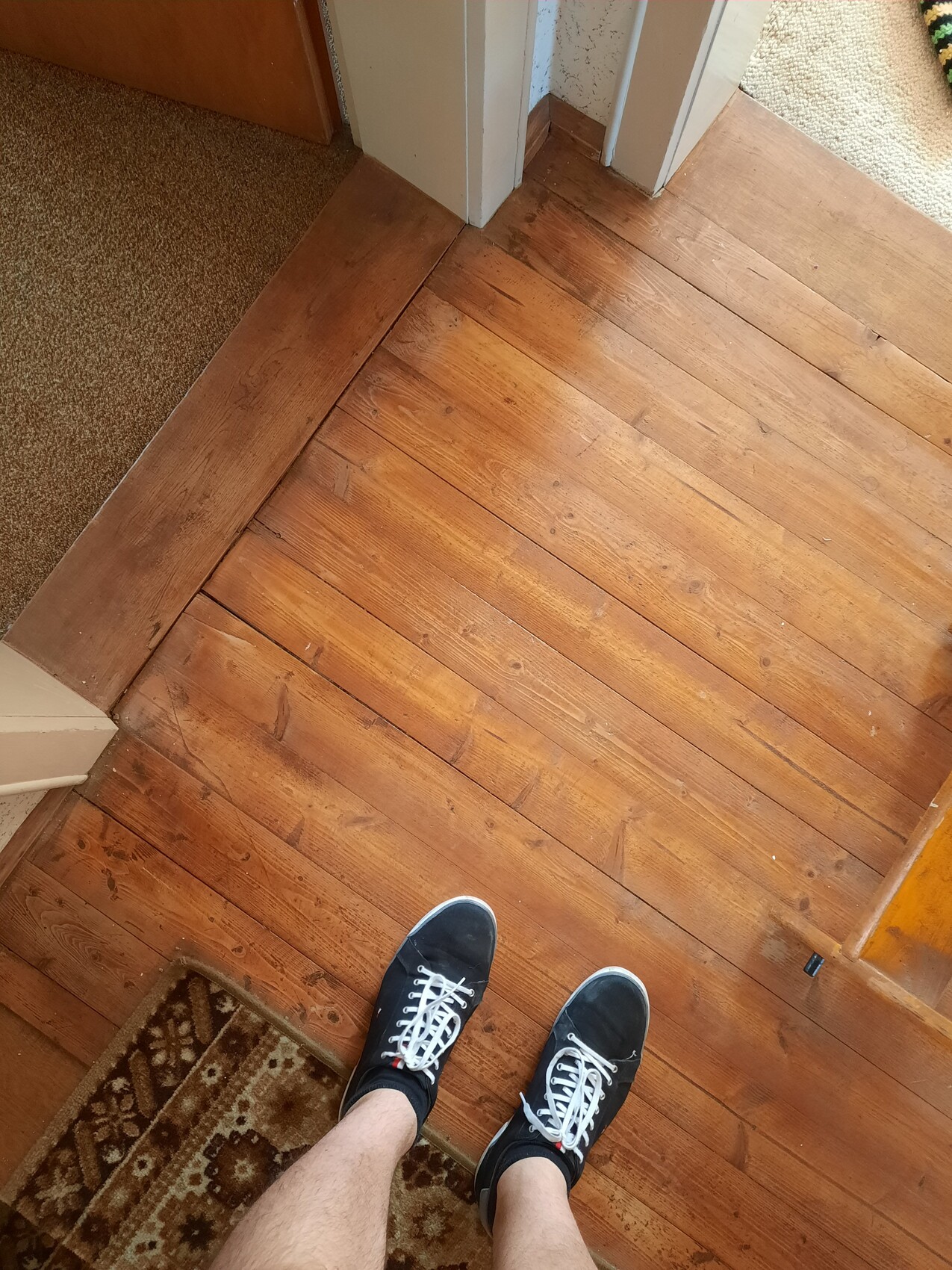
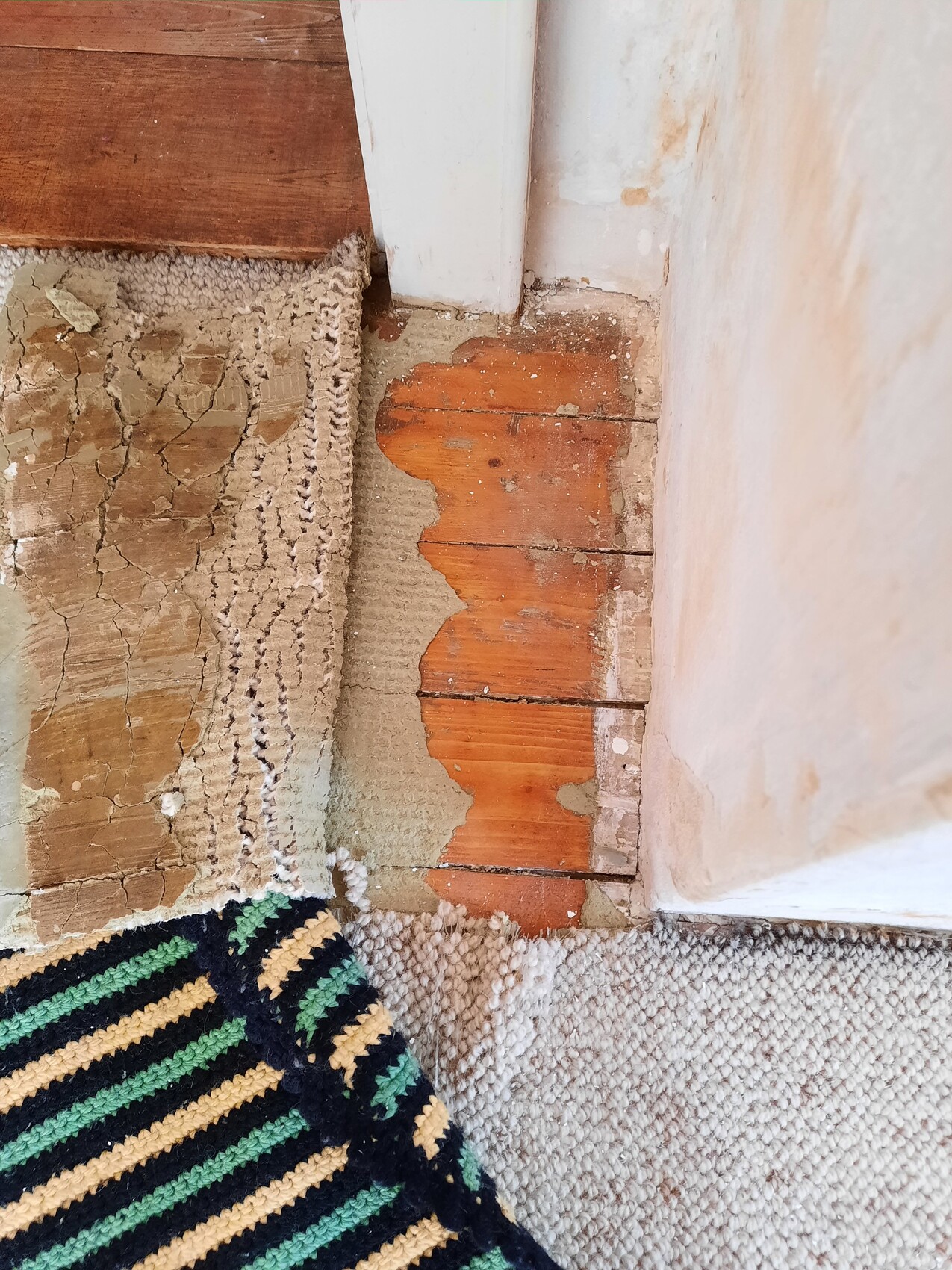
Alright, the kitchen is not part of the renovation. That explains why you were so surprised. Still, it needs to be included, and we will need funding for it.
- Electrical: plenty of outlets, probably also network connections, possibly provision for an electric vehicle charging station
- Overlay insulation, since in my opinion it is required by regulations (no upper floor ceiling present) and, from a layperson’s perspective, it likely poses the least risk of mold or similar issues.
- Remove wooden floors? This probably depends on the routing of the existing wiring. There are no plans available. Is it naive to gently remove and then reinstall the existing floorboards (photos attached)? Underfloor heating is currently not planned, because both the surveyor and you initially discussed gas boilers. What sort of cost range would that add?
Currently, no subsidies or funding have been considered.
D
Deliverer3 May 2021 15:02Underfloor heating costs between 100 and 150 €/sqm (square meter).
You can also consider wall and ceiling heating surfaces, but it will likely cost about the same if properly plastered afterwards.
Since you will eventually need to switch to a heat pump (to become carbon-neutral), I would recommend installing underfloor heating now. Especially if you are eligible for subsidies. Currently, you can get 35-50% of the cost reimbursed.
Another advantage is the space gained by eliminating radiators. The alternative, if you don’t install it, is losing even more space by installing larger radiators instead.
Buildings from that era often still have a bulky internal chimney for oil heating. When switching to a heat pump, you can deactivate it and either reclaim that space or use it as a service shaft for electricity, LAN, water, or ventilation.
You can also consider wall and ceiling heating surfaces, but it will likely cost about the same if properly plastered afterwards.
Since you will eventually need to switch to a heat pump (to become carbon-neutral), I would recommend installing underfloor heating now. Especially if you are eligible for subsidies. Currently, you can get 35-50% of the cost reimbursed.
Another advantage is the space gained by eliminating radiators. The alternative, if you don’t install it, is losing even more space by installing larger radiators instead.
Buildings from that era often still have a bulky internal chimney for oil heating. When switching to a heat pump, you can deactivate it and either reclaim that space or use it as a service shaft for electricity, LAN, water, or ventilation.
D
Deliverer3 May 2021 15:04schwalbe schrieb:
Is it naive to carefully remove and then reinstall the existing floorboards (pictures attached)?I think it is. They are often nailed at an angle (at least the ones I have removed so far). There’s really no way around it (except using them for firewood).
N
nordanney3 May 2021 15:21Deliverer schrieb:
Currently, you can get 35-50% of the costs reimbursed.... and not just for the heating system. Also for the gutting, installation of underfloor heating, screed, and the new flooring. Definitely worth considering.schwalbe schrieb:
- Electrical: plenty of power outlets, probably also network cabling, possibly provision for an EV charging stationThen your electrical budget is significantly overestimated since you only want a standard setup.schwalbe schrieb:
- Above-rafter insulation, because in my opinion it’s mandatory (no ceiling insulation of the top floor present) and because—from a layman’s perspective—it is the least likely solution to cause issues like mold.Insulation is indeed mandatory, but you have chosen the most expensive insulation method available. You will also need a completely new roof covering. This only makes sense if the roof needs to be redone anyway. Otherwise, it’s a waste of money. An alternative would be insulation between the rafters combined with insulation of the top floor ceiling (then the rooms not counted as living area would be considered storage space) – this would cost about a quarter of your budget.@Deliverer: Thanks for the comment about repurposing the chimney.
I know it’s the most expensive option. The tiles are 40 years old, I posted pictures earlier. The two rooms in the attic (not included in the living area) are small but fully usable as an office/children’s room and are intended to remain so.
nordanney schrieb:
Insulation is mandatory, but you chose the most expensive type available. You also need a complete re-roofing. It only makes sense if the roof has to be replaced anyway. Otherwise, it’s just throwing money away. An alternative would be insulation between the rafters and insulating the attic floor (then the rooms not counted as living space would only be storage), which would cost about a quarter of your budget.
I know it’s the most expensive option. The tiles are 40 years old, I posted pictures earlier. The two rooms in the attic (not included in the living area) are small but fully usable as an office/children’s room and are intended to remain so.
Similar topics