
Hello fellow homeowners,
This concerns an old building from 1909, a timber-framed structure with a natural stone vaulted cellar, which we have purchased to renovate. The experts say the cellar is fine, but I have a different gut feeling. Therefore, I would like to ask for your opinions:
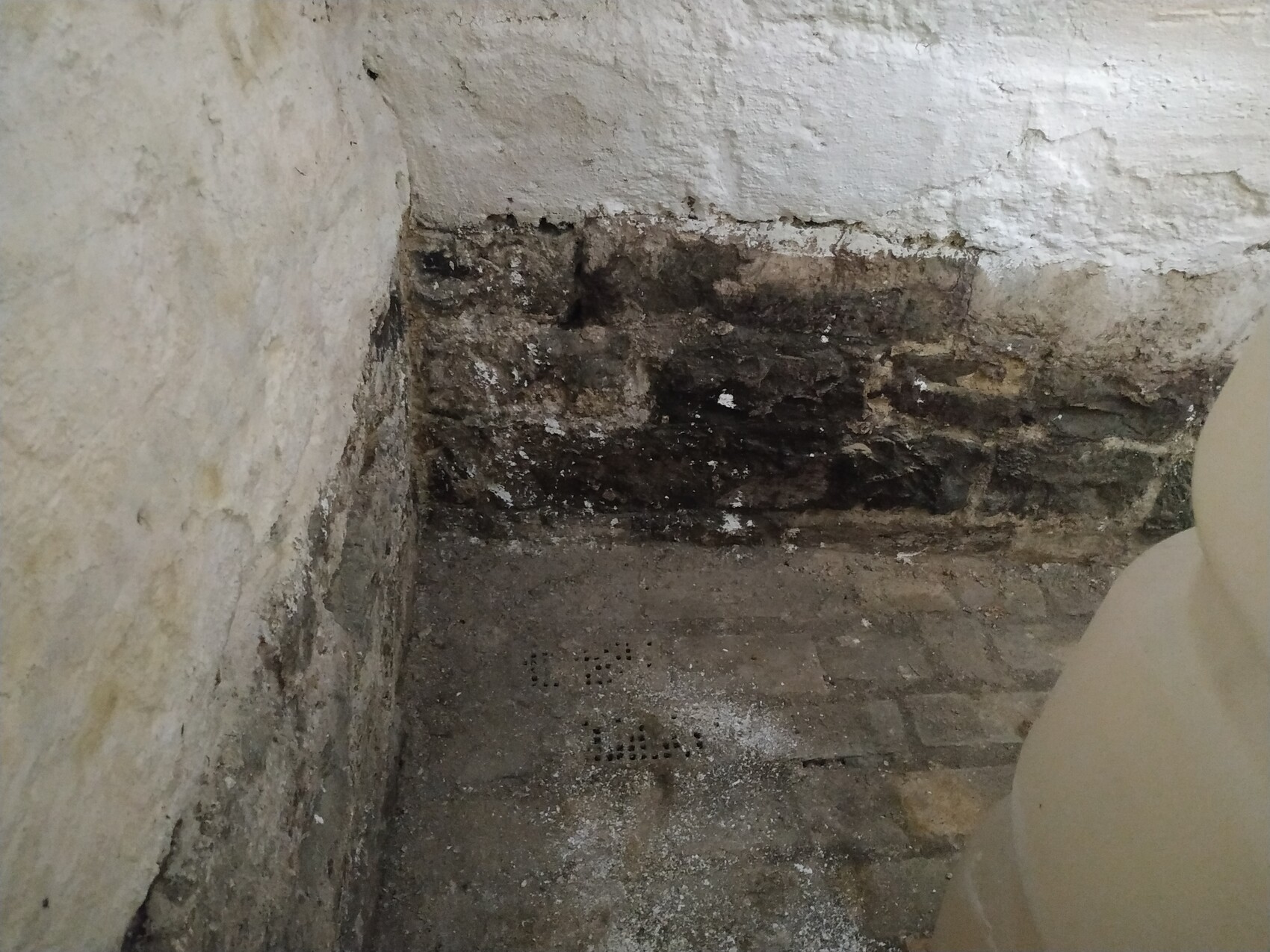
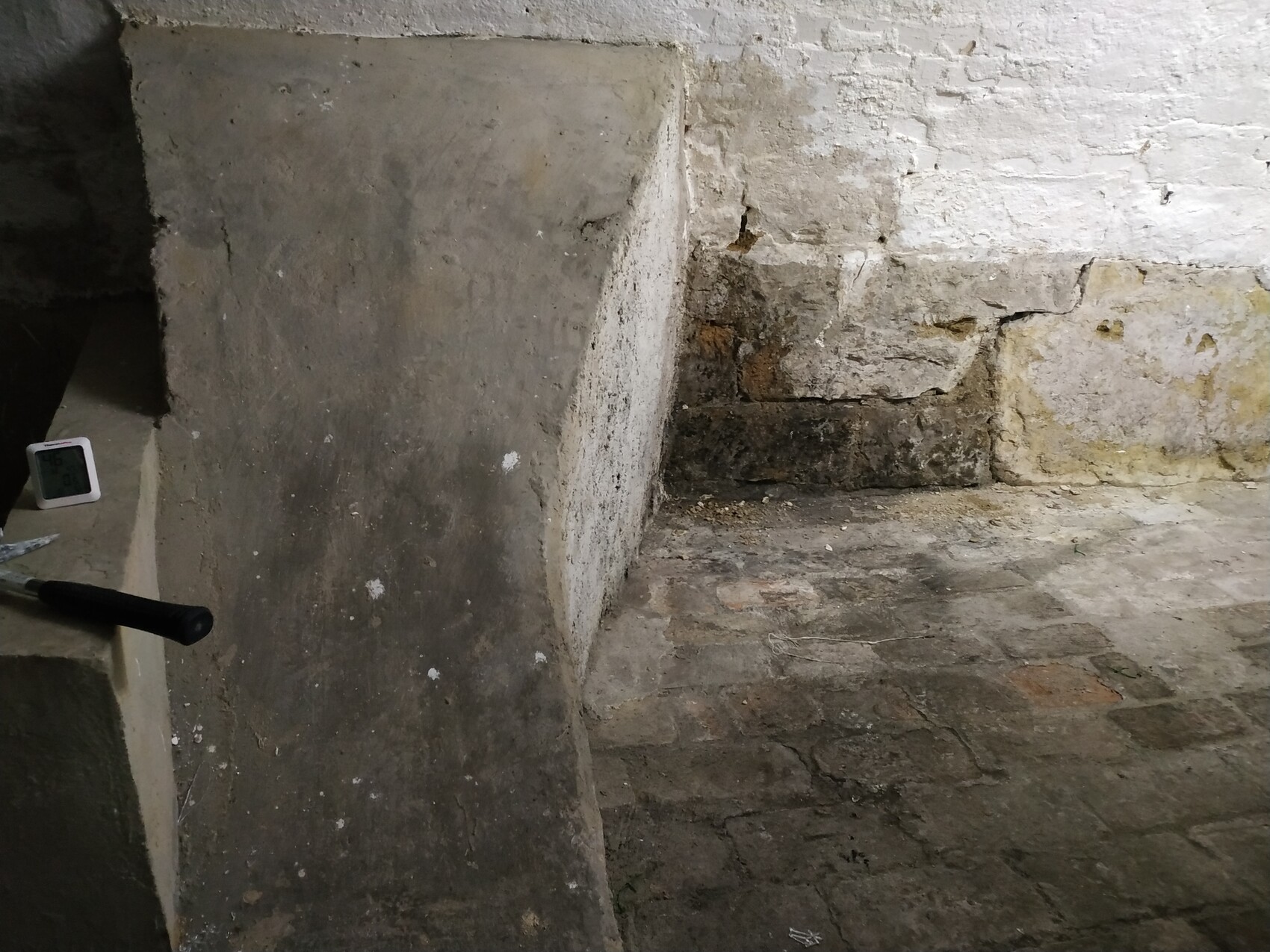
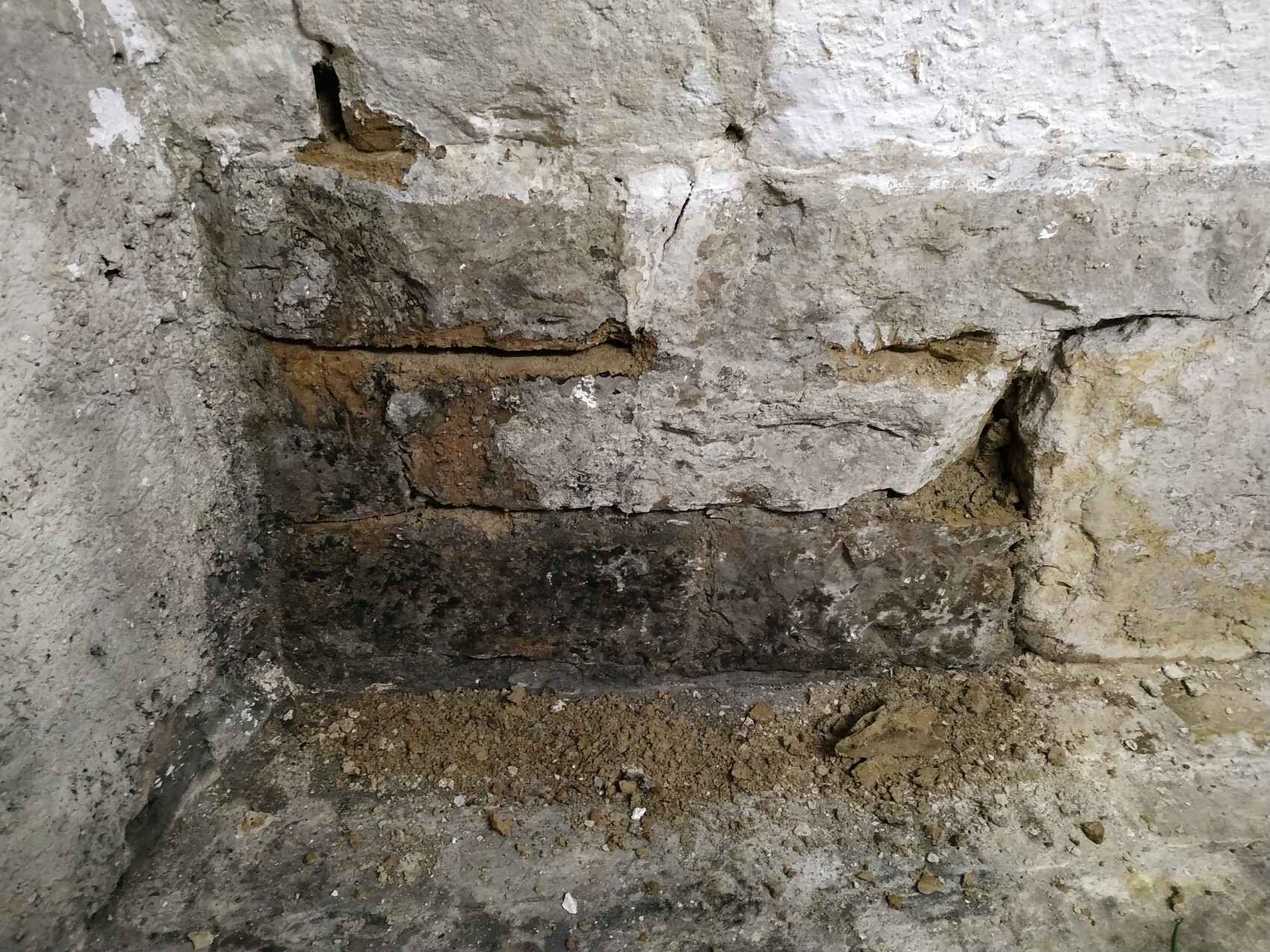
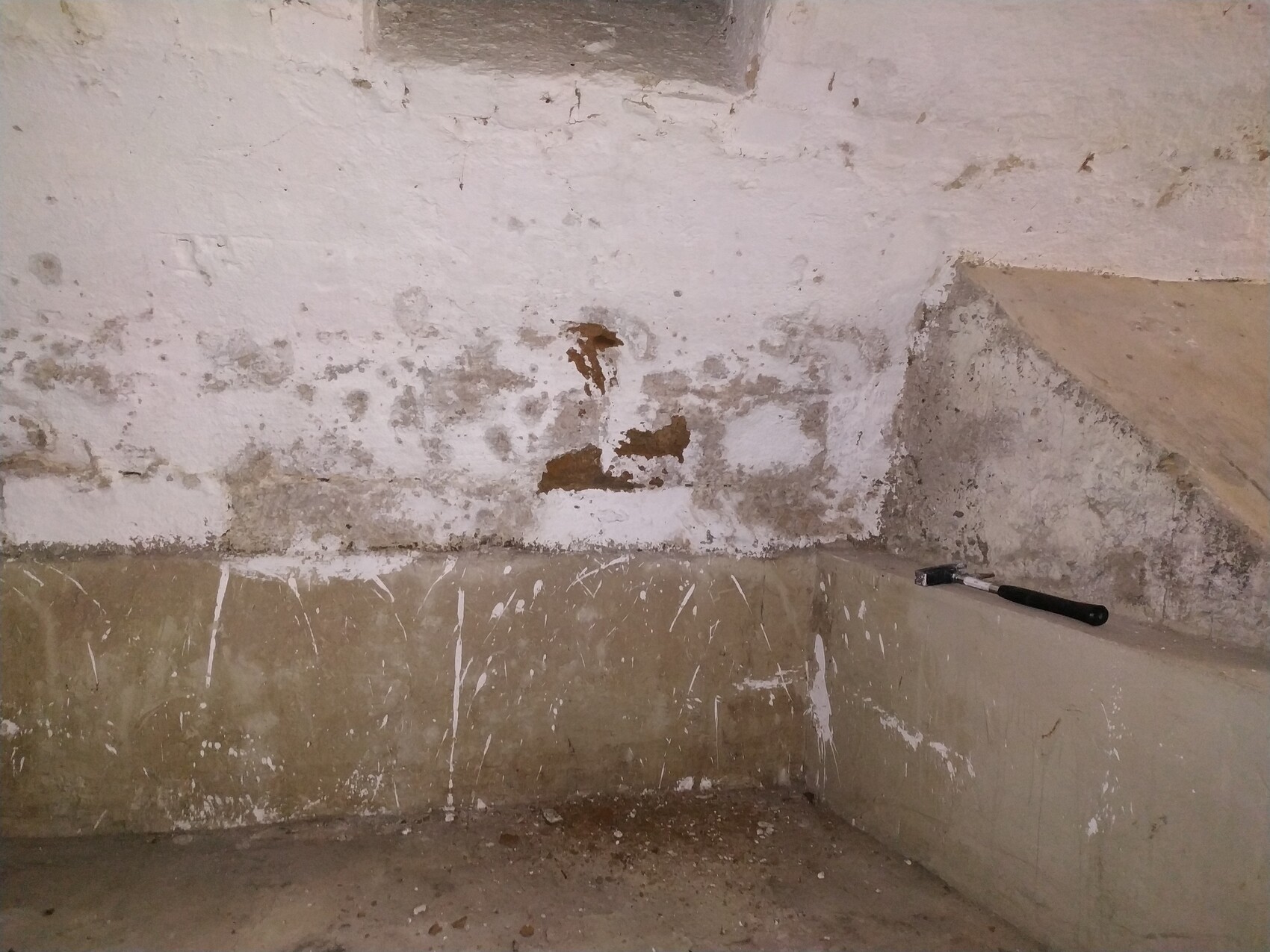
The cellar (approximately 30m² (320 sq ft)) and the cellar air now seem relatively dry. I currently measure about 6°C (43°F) at around 47% humidity. A moisture meter didn’t react at the walls either. According to a neighbor, it was already wet there, and some repairs were done. Specifically, a 0.5m (20 inch) high “sealing basin” was made from a cement wall on the inside of one wall. However, there are still two spots on the wall facing the slope where black mold growth is visible. (The mold samples are already in the lab.) The joints there are particularly damp/crumbling and can be lightly chiseled out with a hammer. Apparently, moisture still seeps in there, at least enough to make the wall wet/damp. The cellar has a slightly earthy/damp smell, which isn’t sharp but, in my opinion, should be eliminated.
The intended use of the cellar is only storage. However, I definitely want to prevent other cellar rooms or the upper floors from picking up the musty smell from the vaulted cellar. Also, I am concerned that the long-term load-bearing capacity of the wall might be affected.
Unfortunately, there are many approaches as to if and how to tackle this. Some solutions (such as from Isotech) seem to rely on insulating the cellar from the inside to prevent moisture from entering. But my gut feeling is that this cellar (at least this side) must be sealed from the outside. That means excavation, sealing, and installing a drainage system. Then the mold can be removed and the walls plastered inside, with the hope that it will stay dry afterwards.
Thank you very much for your input!
This concerns an old building from 1909, a timber-framed structure with a natural stone vaulted cellar, which we have purchased to renovate. The experts say the cellar is fine, but I have a different gut feeling. Therefore, I would like to ask for your opinions:
The cellar (approximately 30m² (320 sq ft)) and the cellar air now seem relatively dry. I currently measure about 6°C (43°F) at around 47% humidity. A moisture meter didn’t react at the walls either. According to a neighbor, it was already wet there, and some repairs were done. Specifically, a 0.5m (20 inch) high “sealing basin” was made from a cement wall on the inside of one wall. However, there are still two spots on the wall facing the slope where black mold growth is visible. (The mold samples are already in the lab.) The joints there are particularly damp/crumbling and can be lightly chiseled out with a hammer. Apparently, moisture still seeps in there, at least enough to make the wall wet/damp. The cellar has a slightly earthy/damp smell, which isn’t sharp but, in my opinion, should be eliminated.
The intended use of the cellar is only storage. However, I definitely want to prevent other cellar rooms or the upper floors from picking up the musty smell from the vaulted cellar. Also, I am concerned that the long-term load-bearing capacity of the wall might be affected.
Unfortunately, there are many approaches as to if and how to tackle this. Some solutions (such as from Isotech) seem to rely on insulating the cellar from the inside to prevent moisture from entering. But my gut feeling is that this cellar (at least this side) must be sealed from the outside. That means excavation, sealing, and installing a drainage system. Then the mold can be removed and the walls plastered inside, with the hope that it will stay dry afterwards.
- What is the right approach for such vaulted cellars? Is internal sealing effective, or is external sealing essential?
- Does drainage only make sense on the slope side, or does it have to be installed on all sides (other walls seem to have been spared for 100 years)?
- Is a floor seal/covering also necessary?
- What costs should be realistically expected here?
Thank you very much for your input!
N
Nice-Nofret17 Feb 2021 19:57To renovate our damp basement, we excavated around the entire perimeter step by step down to below the foundation walls and applied insulation on the outside. Now it is completely dry. Yes, it was quite an effort – but we should have peace of mind for the coming decades.
solocan schrieb:
I spoke with a few companies today. Some said that vaulted basements are difficult to impossible to make fully waterproof. And that’s exactly the case.
From the pictures, it looks like a typical vaulted basement.
It’s damp because it’s simply not sealed properly and in direct contact with the ground. The floor was often just rammed earth; in your case, there are some stones on top, but that doesn’t change the moisture issue.
It’s well suited for storing potatoes, vegetables, wine, and so on—like a refrigerator, it’s no problem.
But as a living space or even a storage room for anything that can mold, it’s simply unsuitable.
No moisture rises into the rooms above; that’s completely normal.
Didn’t you do some research before buying?
 Winniefred17 Feb 2021 21:55
We have had a refrigerator, stove, washing machine, dryer, decorations, food supplies, tools, and even some building materials stored in a basement like this for 3.5 years. So far, nothing has developed mold. Cardboard does get a bit damp after a long time, but only slightly. I actually expected more problems.
@Nice-Nofret What kind of basement do you have, and what exactly have you done?
@Nice-Nofret What kind of basement do you have, and what exactly have you done?
Winniefred schrieb:
We have had a refrigerator, stove, washing machine, dryer, decorations, supplies, tools, and even some building materials in a basement like that for 3.5 years. So far, nothing has developed mold. Cardboard just gets a bit damp over a long period, but only slightly. I actually expected more problems.But your basement has much less contact with the ground. If cardboard gets damp, it can eventually mold.
I wouldn’t store anything valuable or important to me there either.
We’ve pretty much tried everything with our basement. You can’t access all sides because, for example, there is a neighboring storage building at the back—so you can’t dig underneath from that side. We sealed part of it from the outside and applied renovation plaster (remedial render) to another part. Then we installed a ventilation system. The walls that were sealed have remained dry. However, the renovation plaster started to deteriorate after only three years, with mold developing as well. Removing that in a basement without windows is a complete nightmare.
Winniefred18 Feb 2021 07:40apokolok schrieb:
But your basement has much less earth contact.
If cardboard gets damp, it can eventually develop mold.
I also wouldn’t store anything valuable or important to me there. Yes, maybe after 10 years. Damp might not even be the right word. Even after 3 winters, everything is fine. Due to limited space, we store most things in exactly the room that is deepest underground and has the smallest window.
If the renovation plaster is saturated after 3 years, it means the wall was very wet, and in that case, the plaster did exactly what it was supposed to do.
Similar topics