
Hello fellow homeowners,
This concerns an old building from 1909, a timber-framed structure with a natural stone vaulted cellar, which we have purchased to renovate. The experts say the cellar is fine, but I have a different gut feeling. Therefore, I would like to ask for your opinions:
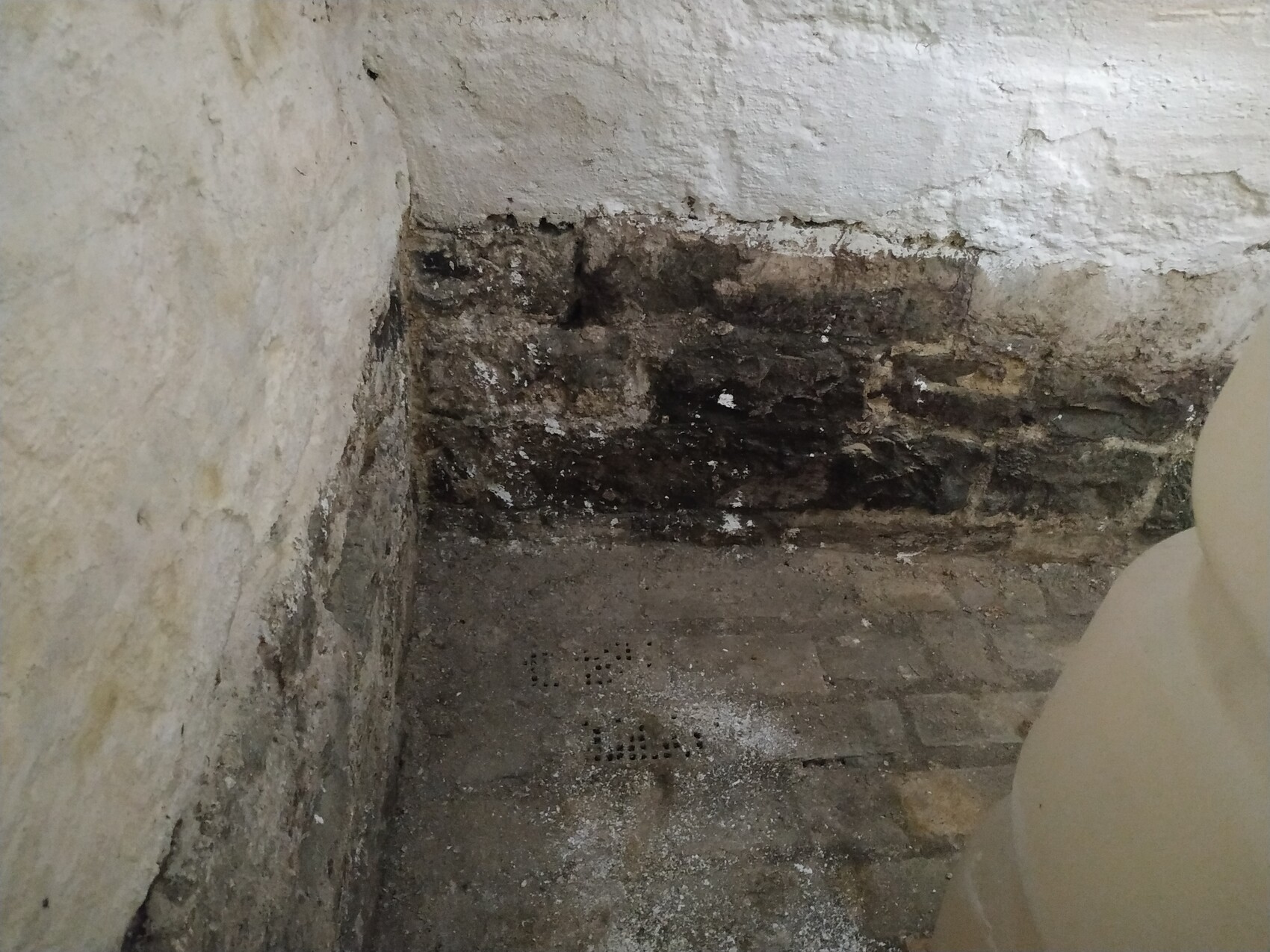
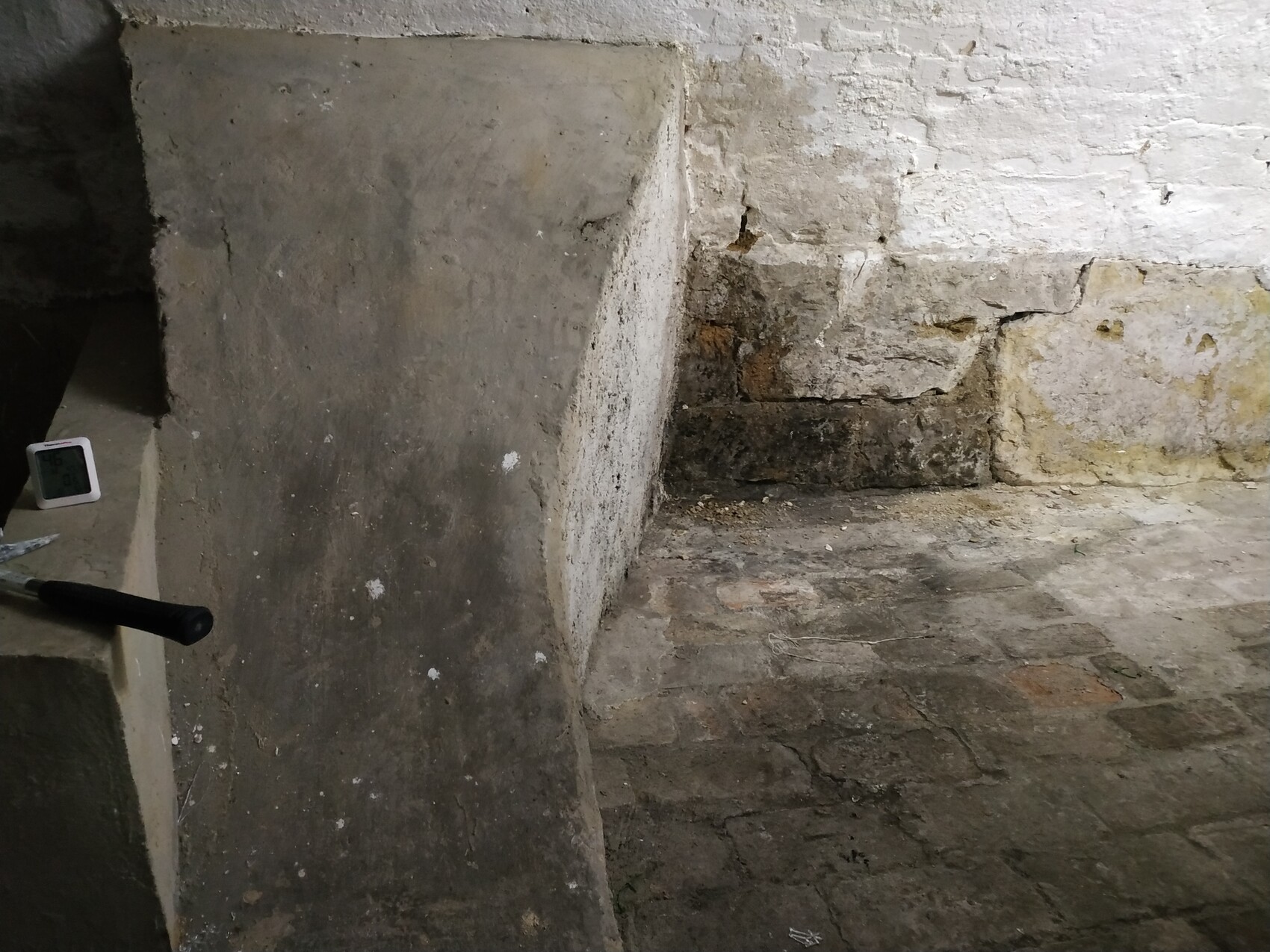
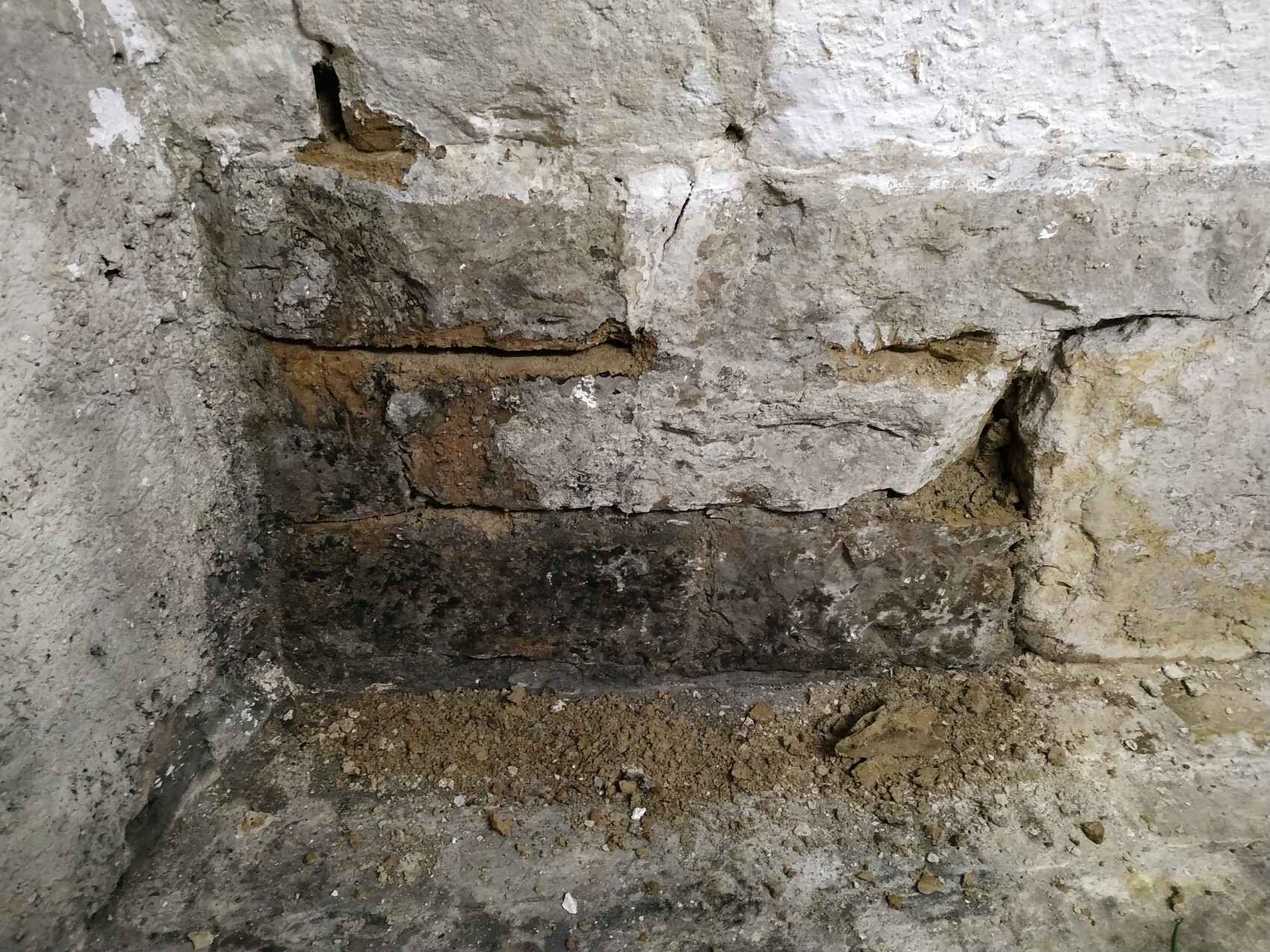
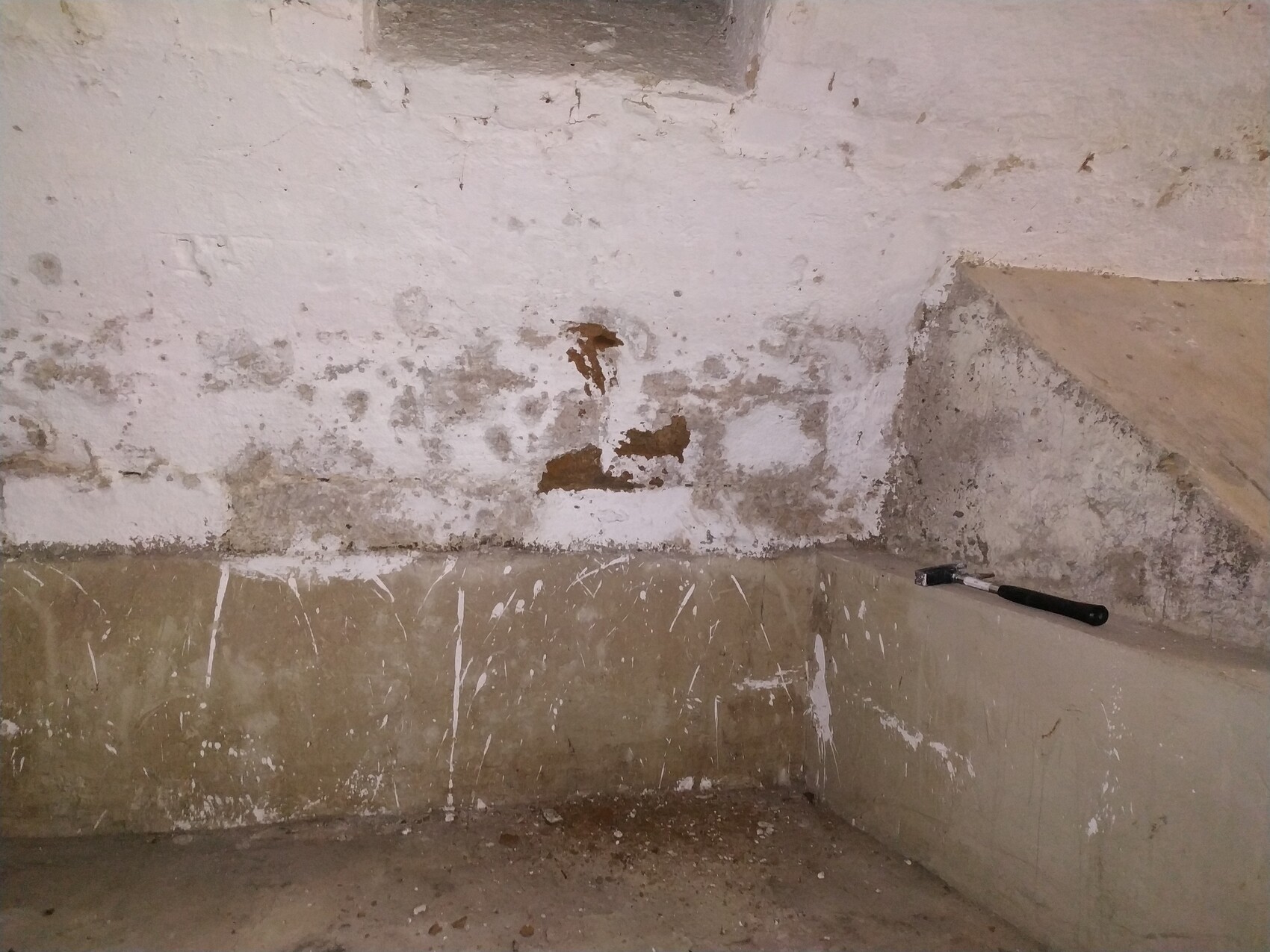
The cellar (approximately 30m² (320 sq ft)) and the cellar air now seem relatively dry. I currently measure about 6°C (43°F) at around 47% humidity. A moisture meter didn’t react at the walls either. According to a neighbor, it was already wet there, and some repairs were done. Specifically, a 0.5m (20 inch) high “sealing basin” was made from a cement wall on the inside of one wall. However, there are still two spots on the wall facing the slope where black mold growth is visible. (The mold samples are already in the lab.) The joints there are particularly damp/crumbling and can be lightly chiseled out with a hammer. Apparently, moisture still seeps in there, at least enough to make the wall wet/damp. The cellar has a slightly earthy/damp smell, which isn’t sharp but, in my opinion, should be eliminated.
The intended use of the cellar is only storage. However, I definitely want to prevent other cellar rooms or the upper floors from picking up the musty smell from the vaulted cellar. Also, I am concerned that the long-term load-bearing capacity of the wall might be affected.
Unfortunately, there are many approaches as to if and how to tackle this. Some solutions (such as from Isotech) seem to rely on insulating the cellar from the inside to prevent moisture from entering. But my gut feeling is that this cellar (at least this side) must be sealed from the outside. That means excavation, sealing, and installing a drainage system. Then the mold can be removed and the walls plastered inside, with the hope that it will stay dry afterwards.
Thank you very much for your input!
This concerns an old building from 1909, a timber-framed structure with a natural stone vaulted cellar, which we have purchased to renovate. The experts say the cellar is fine, but I have a different gut feeling. Therefore, I would like to ask for your opinions:
The cellar (approximately 30m² (320 sq ft)) and the cellar air now seem relatively dry. I currently measure about 6°C (43°F) at around 47% humidity. A moisture meter didn’t react at the walls either. According to a neighbor, it was already wet there, and some repairs were done. Specifically, a 0.5m (20 inch) high “sealing basin” was made from a cement wall on the inside of one wall. However, there are still two spots on the wall facing the slope where black mold growth is visible. (The mold samples are already in the lab.) The joints there are particularly damp/crumbling and can be lightly chiseled out with a hammer. Apparently, moisture still seeps in there, at least enough to make the wall wet/damp. The cellar has a slightly earthy/damp smell, which isn’t sharp but, in my opinion, should be eliminated.
The intended use of the cellar is only storage. However, I definitely want to prevent other cellar rooms or the upper floors from picking up the musty smell from the vaulted cellar. Also, I am concerned that the long-term load-bearing capacity of the wall might be affected.
Unfortunately, there are many approaches as to if and how to tackle this. Some solutions (such as from Isotech) seem to rely on insulating the cellar from the inside to prevent moisture from entering. But my gut feeling is that this cellar (at least this side) must be sealed from the outside. That means excavation, sealing, and installing a drainage system. Then the mold can be removed and the walls plastered inside, with the hope that it will stay dry afterwards.
- What is the right approach for such vaulted cellars? Is internal sealing effective, or is external sealing essential?
- Does drainage only make sense on the slope side, or does it have to be installed on all sides (other walls seem to have been spared for 100 years)?
- Is a floor seal/covering also necessary?
- What costs should be realistically expected here?
Thank you very much for your input!
 Winniefred15 Feb 2021 15:37
Hm, well, I can tell you that the damaged areas shown don’t look “good” to me either. What does the lab report say?
We have a house from 1921 with a vaulted cellar, a barrel vault. Our cellar is also damp, but within normal limits for a building of that age. For example, we’ve stored boxes with decorations in the cellar for three winters now without any problems. We also have no mold or similar issues, and our house is located on a slope. At the front, the cellar base is only about 50cm (20 inches) high, and at the back it’s high enough to have a door inside. Where the cellar walls are mostly underground, those walls are also the most damp. In recent months, we have removed old plaster, will renew the joints soon, and then apply renovation plaster; that will be enough for us. We also have renovation plaster on the outside, which will be replaced in the coming years. In your case, it’s important first to clarify where the damaged areas come from. Are there water pipes inside or outside the walls? Wastewater? Rainwater?
We chose not to install a waterproofing system because our cellar has stood for 100 years and is still fine. So we are leaving the cellar uninsulated inside and outside. Is your house currently heated? Ours is occupied and therefore heated; in the cellar, we also have a radiator for harsh winters like this one. We maintain a fairly constant temperature of about 14°C (57°F) down there all year round. Your 6°C (43°F) is a bit surprising to me.
We will not insulate the cellar because that would require excavating around the entire building, and even then I suspect it wouldn’t prevent moisture from below. We plan to rebuild the ground floor slab with insulation so that the living area is insulated downward (and in all other directions) as a single unit, while the cellar remains as is.
I can’t comment on the costs, but I assume you realize it will not be cheap if you want a complete waterproofing and insulation solution. Personally, I believe you have to go all the way or not at all. Either you do the full treatment: sealing, drying, and insulating everything; or you keep the cellar as a traditionally damp cellar typical of its age, just identify the source of the damage and then insulate only the cellar ceiling or the ground floor slab.
We have a house from 1921 with a vaulted cellar, a barrel vault. Our cellar is also damp, but within normal limits for a building of that age. For example, we’ve stored boxes with decorations in the cellar for three winters now without any problems. We also have no mold or similar issues, and our house is located on a slope. At the front, the cellar base is only about 50cm (20 inches) high, and at the back it’s high enough to have a door inside. Where the cellar walls are mostly underground, those walls are also the most damp. In recent months, we have removed old plaster, will renew the joints soon, and then apply renovation plaster; that will be enough for us. We also have renovation plaster on the outside, which will be replaced in the coming years. In your case, it’s important first to clarify where the damaged areas come from. Are there water pipes inside or outside the walls? Wastewater? Rainwater?
We chose not to install a waterproofing system because our cellar has stood for 100 years and is still fine. So we are leaving the cellar uninsulated inside and outside. Is your house currently heated? Ours is occupied and therefore heated; in the cellar, we also have a radiator for harsh winters like this one. We maintain a fairly constant temperature of about 14°C (57°F) down there all year round. Your 6°C (43°F) is a bit surprising to me.
We will not insulate the cellar because that would require excavating around the entire building, and even then I suspect it wouldn’t prevent moisture from below. We plan to rebuild the ground floor slab with insulation so that the living area is insulated downward (and in all other directions) as a single unit, while the cellar remains as is.
I can’t comment on the costs, but I assume you realize it will not be cheap if you want a complete waterproofing and insulation solution. Personally, I believe you have to go all the way or not at all. Either you do the full treatment: sealing, drying, and insulating everything; or you keep the cellar as a traditionally damp cellar typical of its age, just identify the source of the damage and then insulate only the cellar ceiling or the ground floor slab.
Winniefred schrieb:
Hmm, well, I can tell you that the spots shown don’t look "good" to me either. Didn't you tell me in the other thread not to worry about the basement? 🙂
The lab results are still pending. As for the air quality, I find the basement already dry. I could treat it from the inside—removing mold mechanically and chemically, redoing the joints, applying new remedial plaster. The mold seems superficial; it can be scraped off. However, I wouldn’t feel comfortable just removing the symptoms without identifying and addressing the causes of the mold spots. And tackling the root cause sounds costly. I spoke with a few companies today. Some said that vault cellars are difficult to impossible to seal completely. One company apparently has a special waterproofing method. Let's see what they say after an on-site inspection. I’m not focused on making the room usable but don’t want to deal with constant mold issues in the basement either.
Winniefred schrieb:
We have a very constant temperature of about 14°C (57°F) down there all year round. I’m a bit surprised your temperature is around 6°C (43°F). Yes, basement ventilation windows are always open. And I measured it on a day when it was -10°C (14°F) outside.
Winniefred16 Feb 2021 06:55I didn’t say you need to worry about it. If the rest of the basement clearly looks fine, it should be possible to fix it. There’s no need to immediately assume the worst.
I would wait for the lab results first, treat the affected area accordingly, and otherwise leave the basement as it is and focus on insulating the living space instead. I wouldn’t spend money on this and risk disrupting a system that is working. “Never change a running system,” so to speak. If the problem is only in one corner, there is a cause for that, and not everything is expensive or necessary.
My advice is to approach this more calmly. 95% of homeowners wouldn’t even send a sample for testing; they would first remove mold, re-grout, treat it, and see if it comes back. I also wouldn’t keep ventilating the basement constantly.
I would wait for the lab results first, treat the affected area accordingly, and otherwise leave the basement as it is and focus on insulating the living space instead. I wouldn’t spend money on this and risk disrupting a system that is working. “Never change a running system,” so to speak. If the problem is only in one corner, there is a cause for that, and not everything is expensive or necessary.
My advice is to approach this more calmly. 95% of homeowners wouldn’t even send a sample for testing; they would first remove mold, re-grout, treat it, and see if it comes back. I also wouldn’t keep ventilating the basement constantly.
Winniefred16 Feb 2021 07:37Plaster yes, renovation plaster no. It is completely vapor-permeable and draws moisture out of the masonry, so it helps with desalination and similar issues. It is really good, but expensive and needs to be renewed from time to time. That’s why it is also called sacrificial plaster. It’s actually not plaster in the traditional sense. For small superficial problems like this one (at least that’s how it looks to me), it’s a good option.
Similar topics