
ᐅ Renovating Existing Buildings: Always an Exciting Challenge
Created on: 9 Dec 2019 22:55
R
Reudnitzer
Since I don’t want to overuse the house photo thread, but have come across several projects in the forum where members are clearly dealing with old buildings, renovating gradually, and repeatedly discovering valuable features worth preserving, I’d like to start this thread.
Many of us face similar challenges, such as damp basements, unusual floor plans, thick-bed mortar, legacy issues—problems that typically don’t occur in a “standard” new build. I think it would be great to exchange ideas here. How have you solved such problems? Were there any unpleasant surprises? What would you do differently today? Feel free to include before-and-after pictures.
Many of us face similar challenges, such as damp basements, unusual floor plans, thick-bed mortar, legacy issues—problems that typically don’t occur in a “standard” new build. I think it would be great to exchange ideas here. How have you solved such problems? Were there any unpleasant surprises? What would you do differently today? Feel free to include before-and-after pictures.
R
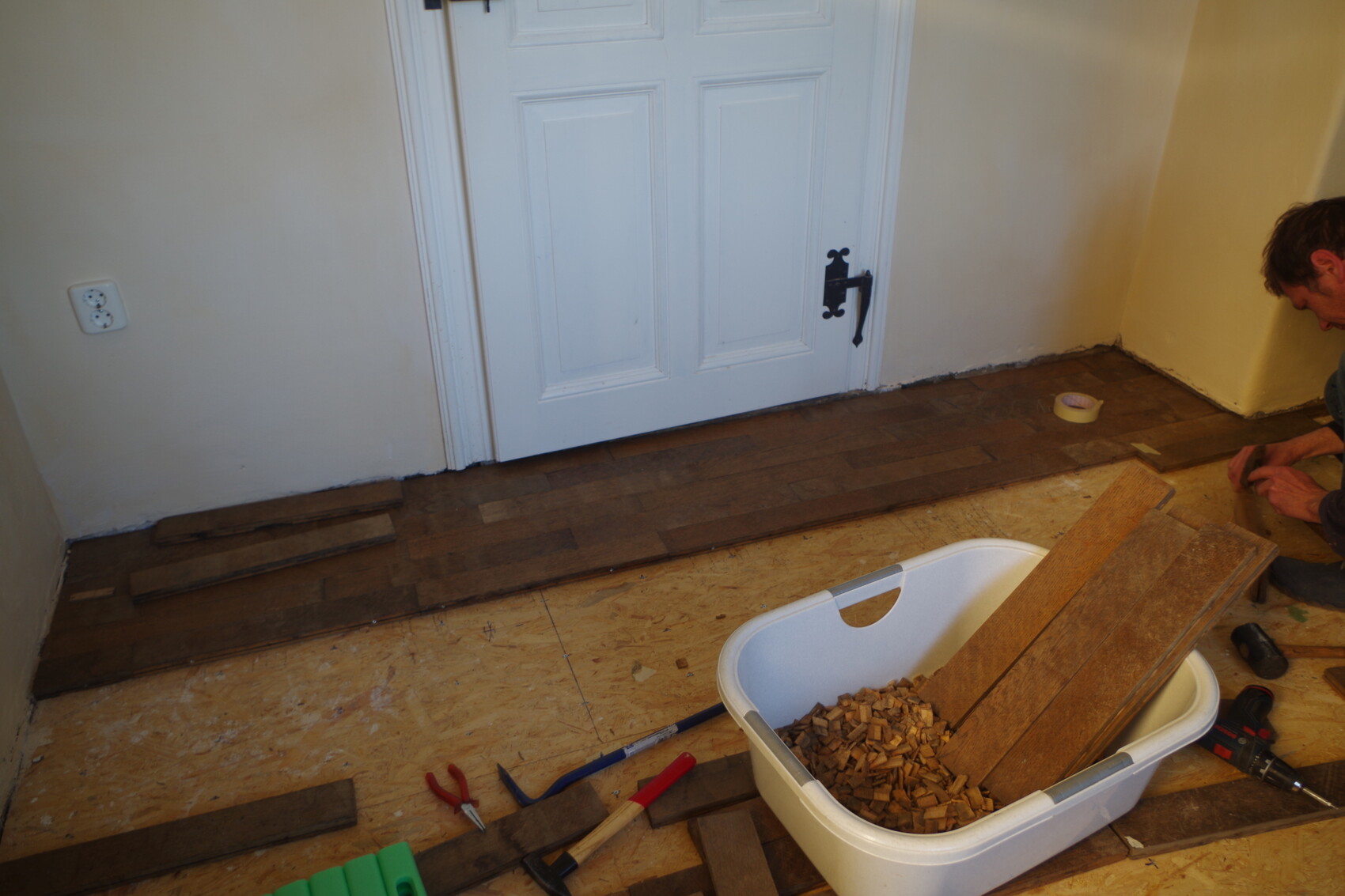
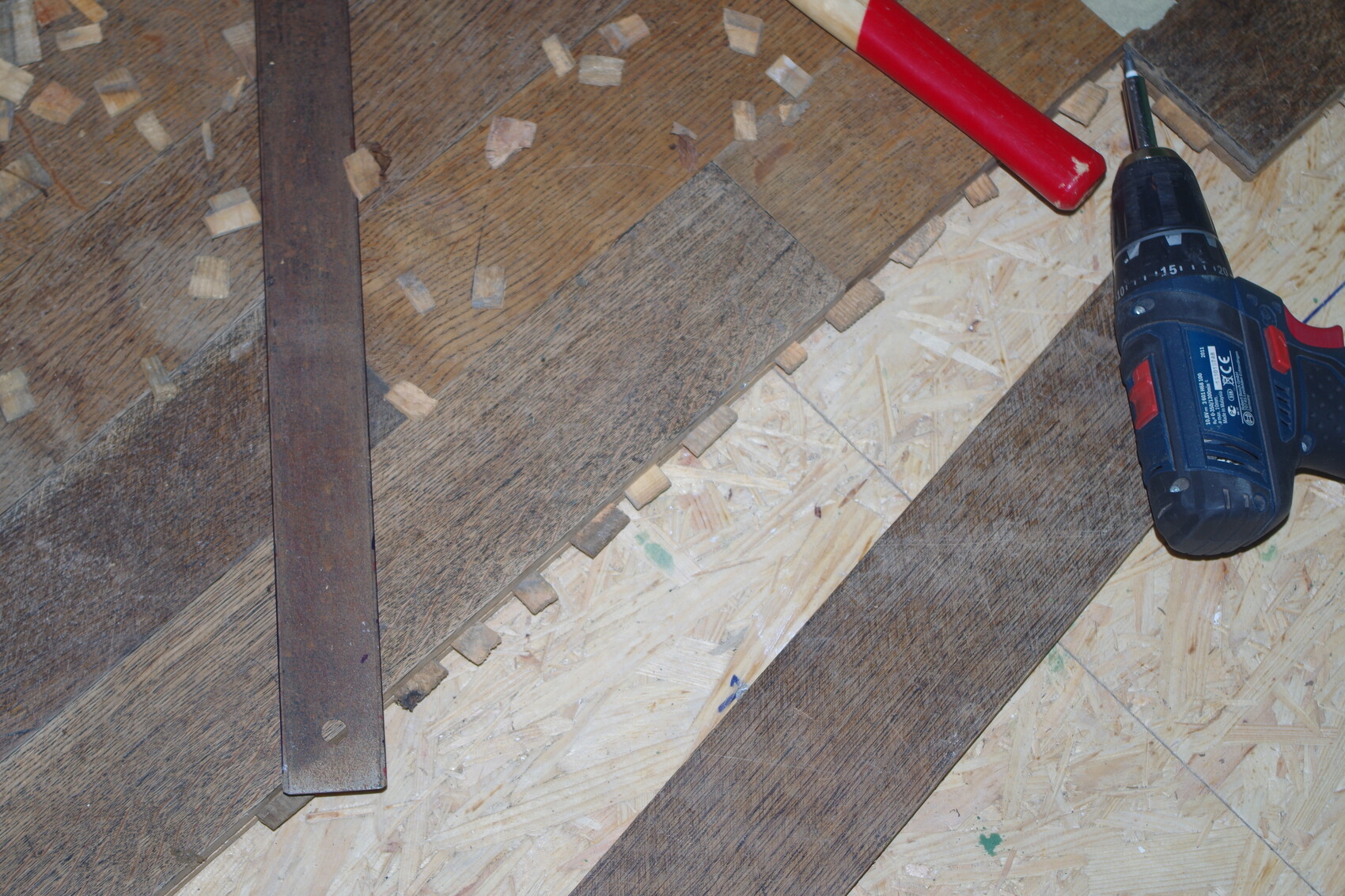
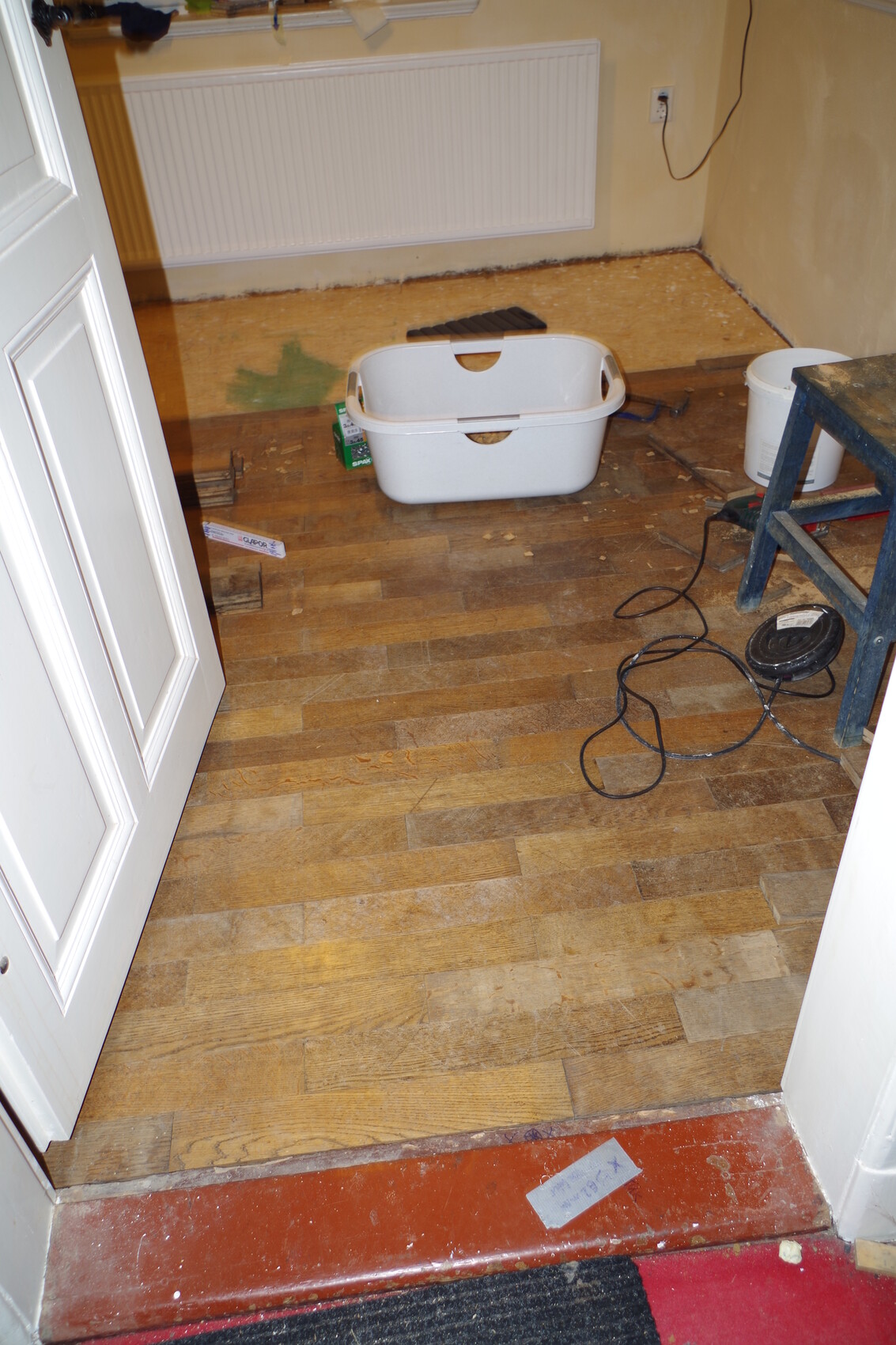
Reudnitzer10 Dec 2019 17:39After painting, the parquet flooring was installed. That was straightforward and even enjoyable. Originally, it was nailed down (I spent evenings removing the nails from the grooves), but we screwed it down instead. Fortunately, I had saved the tongue pieces, so it was mostly just hard work after that.
R
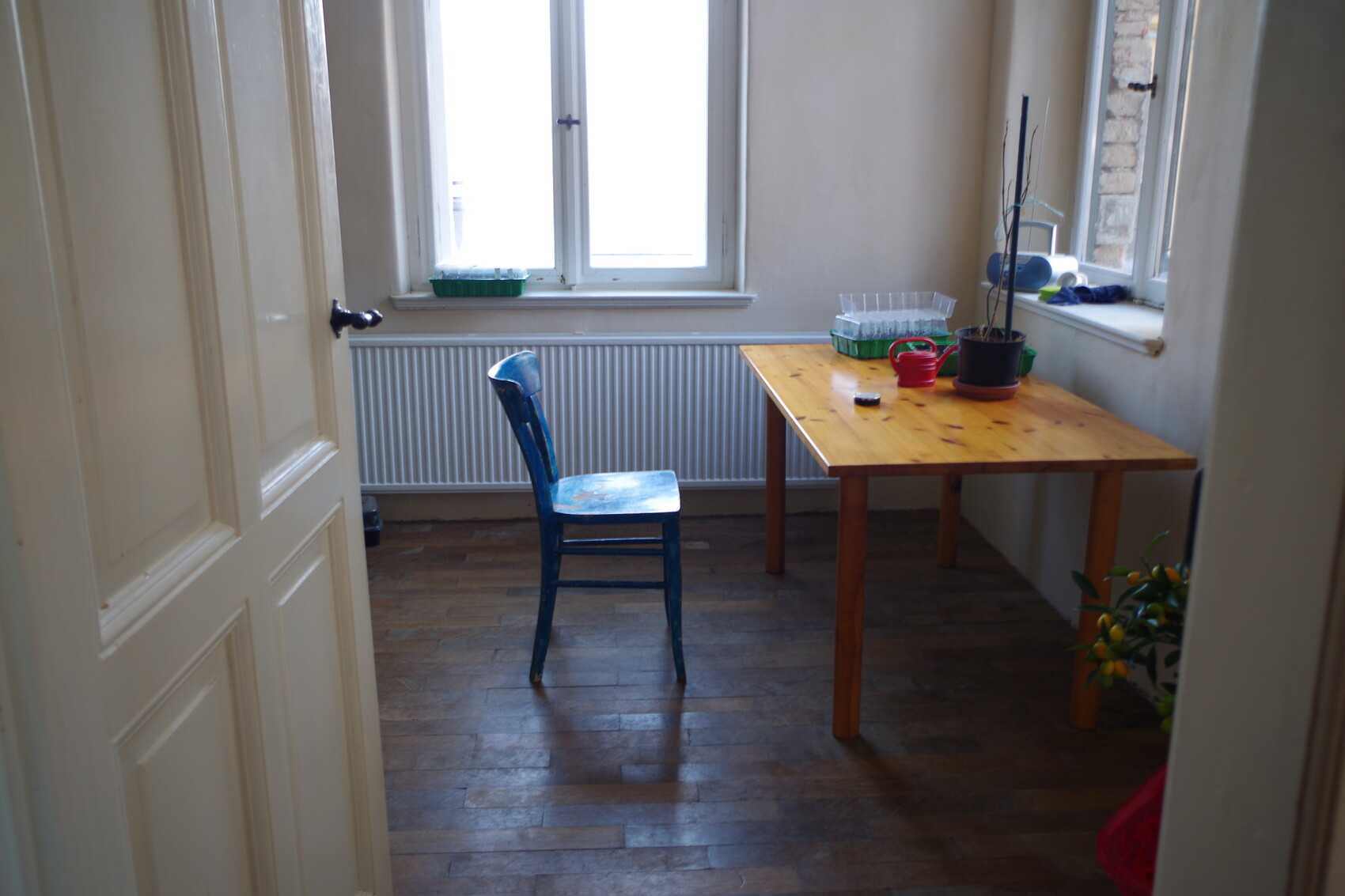
Reudnitzer10 Dec 2019 17:46Done!
Thanks for listening
Thanks for listening

Just a quick question: a huge fuss over the small "square," and in the end, there's just a table with a chair?
Or was that a different room?
I have seen the floor plan, but I'm not 100% clear on the current state. Have you added walls in the "hall"? Could you please post it here again and explain?
Or was that a different room?
I have seen the floor plan, but I'm not 100% clear on the current state. Have you added walls in the "hall"? Could you please post it here again and explain?
R
Reudnitzer11 Dec 2019 16:07Gladly.
The "cube" is actually the small room at the top left (the tiny "corridor" directly below it is now the bathroom). It has since been properly furnished as a guest and workroom.
And in the "hall," there is a wall that was drawn in later with pencil. However, I don’t know if it was originally there.
But this clearly shows what I mean by an "uninhabitable layout." On the left, the tiny kitchen and bathroom are cramped together, while the left half of the hall is a through room of over 20sqm (over 215 sq ft).
By the way, this is the next project. We want to lay down the two remaining stacks of parquet flooring there, which will then become the library.
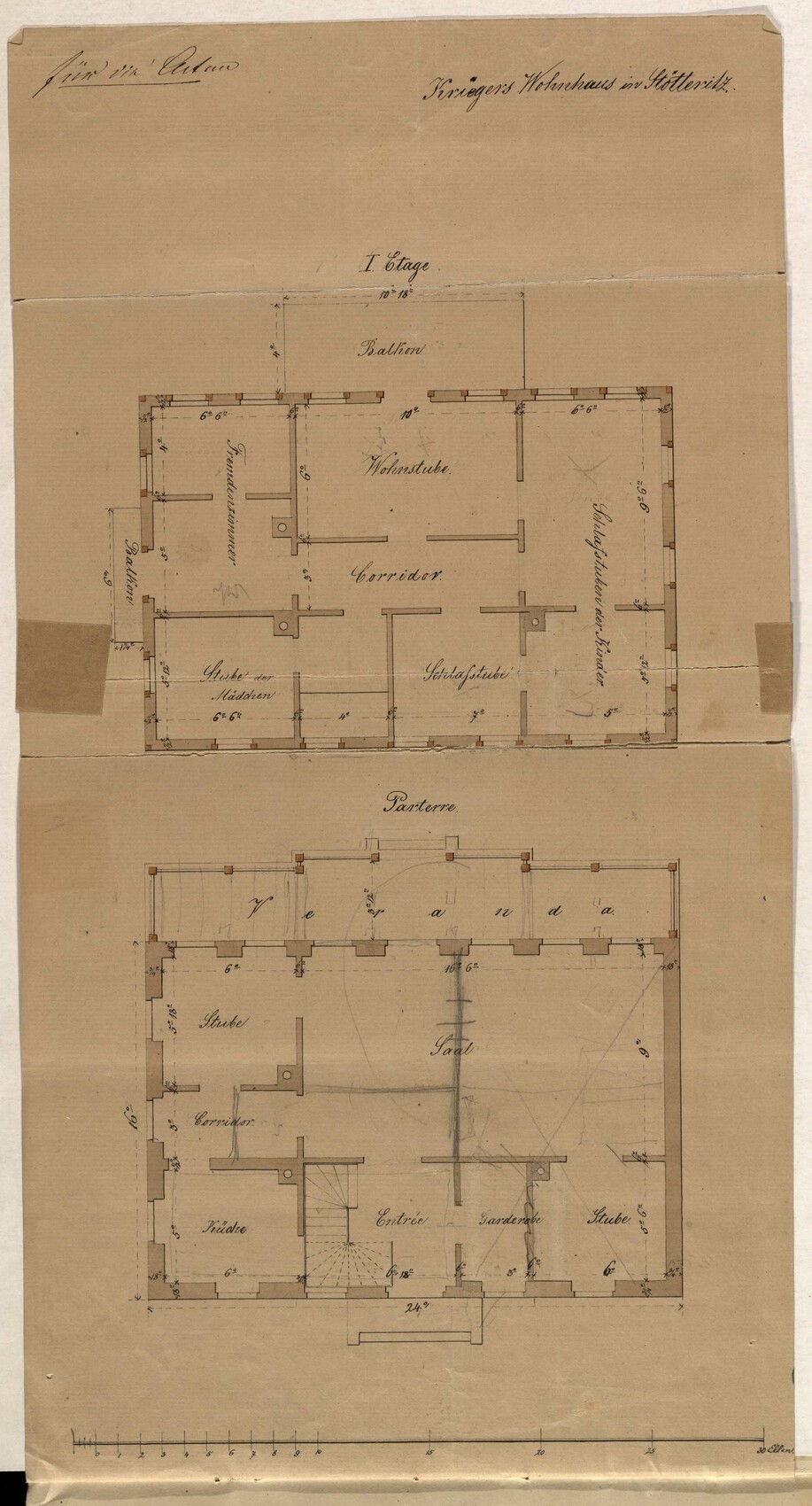
The "cube" is actually the small room at the top left (the tiny "corridor" directly below it is now the bathroom). It has since been properly furnished as a guest and workroom.
And in the "hall," there is a wall that was drawn in later with pencil. However, I don’t know if it was originally there.
But this clearly shows what I mean by an "uninhabitable layout." On the left, the tiny kitchen and bathroom are cramped together, while the left half of the hall is a through room of over 20sqm (over 215 sq ft).
By the way, this is the next project. We want to lay down the two remaining stacks of parquet flooring there, which will then become the library.

Reudnitzer schrieb:
As is often the case with rolling project planning,*einrahm*https://www.instagram.com/11antgmxde/
https://www.linkedin.com/company/bauen-jetzt/
If the walls marked there with pencil are indeed non-load-bearing, they could possibly be removed. Then you could create a wonderful open-plan space including kitchen, dining, and a cozy living area. What is now the kitchen could become a bathroom, with the bedroom opposite it. Well... if you need more ideas, just let me know.
Similar topics