
Hello, I have purchased a house with brick or facing brick cladding and now want to renovate the facade.
It has the following damages:
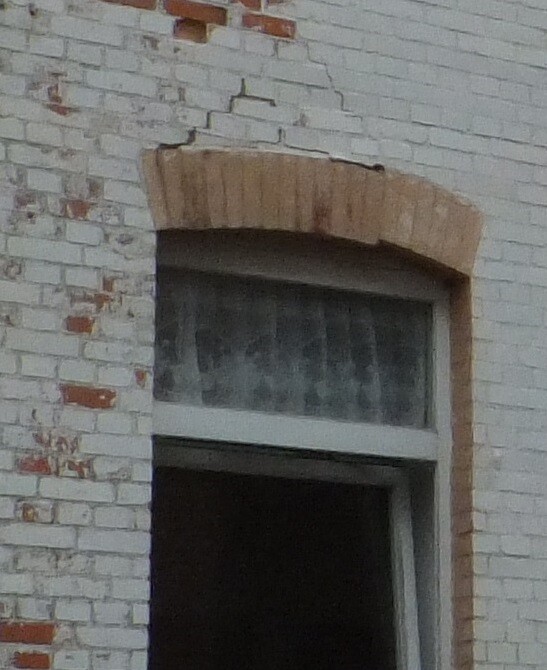
Window reveals partly settled by about 1 cm (0.4 inches) in the upper area (arched section).
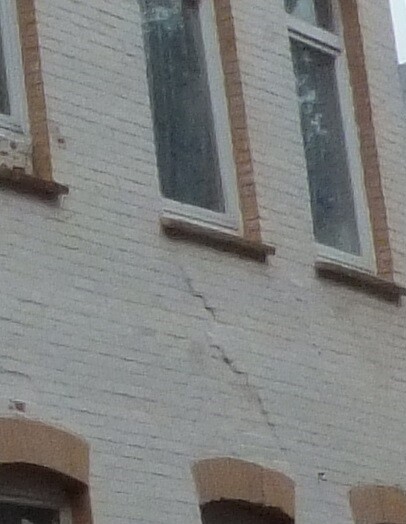
Cracks in the masonry from the top window to the window below.
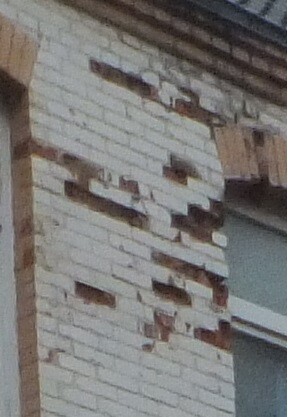
Facing bricks chipped off.
What is the best way to repair these, especially the cracks?
I would appreciate any advice. Best regards
It has the following damages:
Window reveals partly settled by about 1 cm (0.4 inches) in the upper area (arched section).
Cracks in the masonry from the top window to the window below.
Facing bricks chipped off.
What is the best way to repair these, especially the cracks?
I would appreciate any advice. Best regards

This is definitely not a question for the forum.
Without closely examining the construction components, no renovation can be planned effectively.
Above all, why did the cracks occur? Structural issues? Water intrusion? Age?
There are simply too many unknowns to make an assessment based only on pictures.
Without closely examining the construction components, no renovation can be planned effectively.
Above all, why did the cracks occur? Structural issues? Water intrusion? Age?
There are simply too many unknowns to make an assessment based only on pictures.

This issue should be examined on-site with an architect, structural engineer, or building damage assessor to determine the cause of the cracking. If dealing with a multi-layer masonry wall — such as a double-wythe wall with a cavity and facing brick or a brick cladding with an air gap for rain protection — which is likely in your region, the outer layer may have partially detached in certain areas. Alternatively, the problem could be due to overload or a subsequent structural intervention affecting the floors, floor joists, or roof structure. These are initial assumptions that need to be verified through a building condition assessment.
Additionally, there is probably a relatively vapor-tight facade coating that has caused moisture buildup in the bricks, leading to frost damage. The bricks were likely fired unevenly and are too soft and highly porous at the damaged spots, making them unsuitable as a facing material.
I recommend first consulting a masonry damage assessor through the relevant trade chamber for a site visit and, if necessary, discussing with them the need for involvement of further specialists, such as a structural engineer.
Under no circumstances should you hire a construction company to carry out repairs without a coordinated approach and thorough analysis. You should also avoid attempting to repair the cracks yourself. This work should be carried out by a specialist company, following a remediation plan developed by the assessor or planner.
Additionally, there is probably a relatively vapor-tight facade coating that has caused moisture buildup in the bricks, leading to frost damage. The bricks were likely fired unevenly and are too soft and highly porous at the damaged spots, making them unsuitable as a facing material.
I recommend first consulting a masonry damage assessor through the relevant trade chamber for a site visit and, if necessary, discussing with them the need for involvement of further specialists, such as a structural engineer.
Under no circumstances should you hire a construction company to carry out repairs without a coordinated approach and thorough analysis. You should also avoid attempting to repair the cracks yourself. This work should be carried out by a specialist company, following a remediation plan developed by the assessor or planner.
Similar topics