
Hello,
I recently purchased an end-terrace house built in 1986 and am planning the upcoming renovation work. Now I am wondering whether I need to replace the roof insulation to improve thermal protection against heat and cold. This would be a good time since we do not yet live in the house.
It has a pitched roof that covers two floors (out of three). The attic is converted into a room and has radiators and two roof windows (Braas) on each side. The ceilings and walls are covered with wooden battens, while on the second floor the walls and ceilings are covered with drywall panels.
The construction description states:
"Plasterboard on counter battens, 10cm (4 inches) mineral wool, between joists, air space, concrete roof tiles."
A vapor barrier/retardant foil is visible.
In some areas of the attic, wooden beams have warped slightly forward and cannot be pushed back by hand. Also, some wooden paneling is missing, leaving the insulation exposed.
I have read that until the 1990s, carcinogenic mineral wool was used. Unfortunately, I do not know which type is installed in my house. Should the insulation be replaced for this reason alone?
According to the previous owner, drafts are only noticeable through the bedroom inspection hatch on the second floor. Otherwise, there is nothing unusual in winter or summer.
What do you recommend: replace or leave as is?
I recently purchased an end-terrace house built in 1986 and am planning the upcoming renovation work. Now I am wondering whether I need to replace the roof insulation to improve thermal protection against heat and cold. This would be a good time since we do not yet live in the house.
It has a pitched roof that covers two floors (out of three). The attic is converted into a room and has radiators and two roof windows (Braas) on each side. The ceilings and walls are covered with wooden battens, while on the second floor the walls and ceilings are covered with drywall panels.
The construction description states:
"Plasterboard on counter battens, 10cm (4 inches) mineral wool, between joists, air space, concrete roof tiles."
A vapor barrier/retardant foil is visible.
In some areas of the attic, wooden beams have warped slightly forward and cannot be pushed back by hand. Also, some wooden paneling is missing, leaving the insulation exposed.
I have read that until the 1990s, carcinogenic mineral wool was used. Unfortunately, I do not know which type is installed in my house. Should the insulation be replaced for this reason alone?
According to the previous owner, drafts are only noticeable through the bedroom inspection hatch on the second floor. Otherwise, there is nothing unusual in winter or summer.
What do you recommend: replace or leave as is?
Well, if you want to aim for passive house standards, it’s more like 40cm (16 inches). With an older building, you have to compensate for the walls somehow, so a bit more insulation doesn’t hurt.
I also have 30cm 035 (12 inches) and, as Joedreck mentions, thick OSB boards underneath for additional summer heat protection. It’s definitely comfortable in this kind of weather, and you hardly need to heat the upper floor in winter.
I also have 30cm 035 (12 inches) and, as Joedreck mentions, thick OSB boards underneath for additional summer heat protection. It’s definitely comfortable in this kind of weather, and you hardly need to heat the upper floor in winter.
A
atomic20001 Jul 2019 15:5030cm (12 inches) also seems a bit thick to me. A building materials supplier specializing in insulation said that the best price/performance ratio is at 20cm (8 inches). Is that correct?
Glass wool is cheaper than rock wool, but is it worse or not suitable for sloped roofs?
But isn’t rock wool with counter battens, OSB3 boards, and drywall panels a bit too heavy for the roof structure?
Could you recommend a construction setup (layer by layer) for me?
Glass wool is cheaper than rock wool, but is it worse or not suitable for sloped roofs?
But isn’t rock wool with counter battens, OSB3 boards, and drywall panels a bit too heavy for the roof structure?
Could you recommend a construction setup (layer by layer) for me?
The best price/performance ratio for what? Such a statement can’t really be made, it’s almost like saying the best price/performance is a red roof.
The extra 10 cm (4 inches) in material for a townhouse roof might cost around €400, for 50% better insulation... There’s no cheaper way to improve insulation as effectively as the roof—provided you have enough space.
The weight mainly comes from the OSB boards, so you might want to ask someone if your structure can support that additional load. If in doubt, simply double the thickness of the rafters to 30 cm (12 inches); that will add significant stiffness.
The extra 10 cm (4 inches) in material for a townhouse roof might cost around €400, for 50% better insulation... There’s no cheaper way to improve insulation as effectively as the roof—provided you have enough space.
The weight mainly comes from the OSB boards, so you might want to ask someone if your structure can support that additional load. If in doubt, simply double the thickness of the rafters to 30 cm (12 inches); that will add significant stiffness.
Rock wool is somewhat heavier than glass wool.
This results in better thermal and sound insulation.
When it comes to the roof, it’s not just about price/performance in terms of cost.
It also involves hot summers and drafts.
Do it right once and never have to deal with it again.
This results in better thermal and sound insulation.
When it comes to the roof, it’s not just about price/performance in terms of cost.
It also involves hot summers and drafts.
Do it right once and never have to deal with it again.
A
atomic200025 Jul 2019 14:27So, an update and many questions from my side.
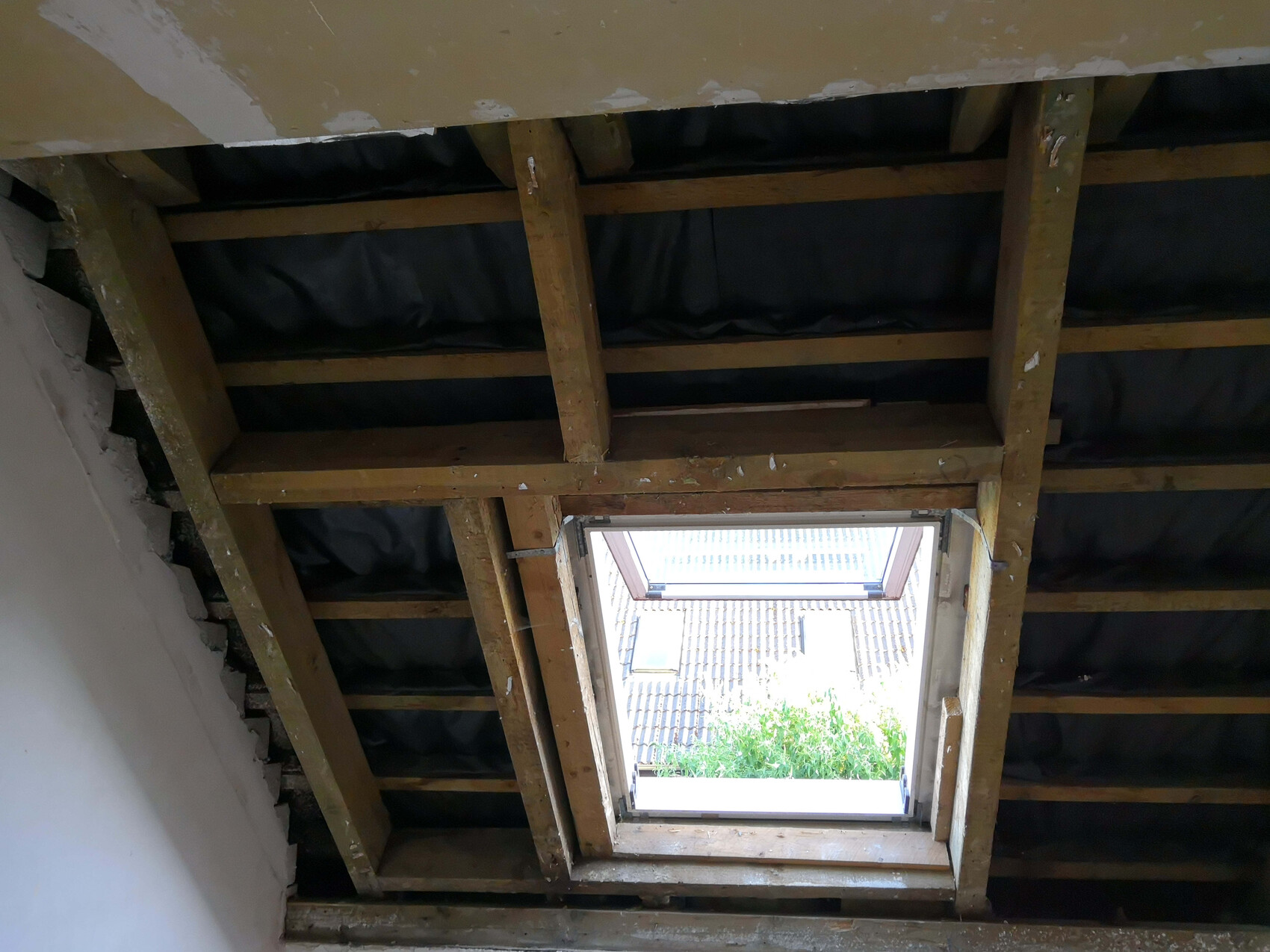
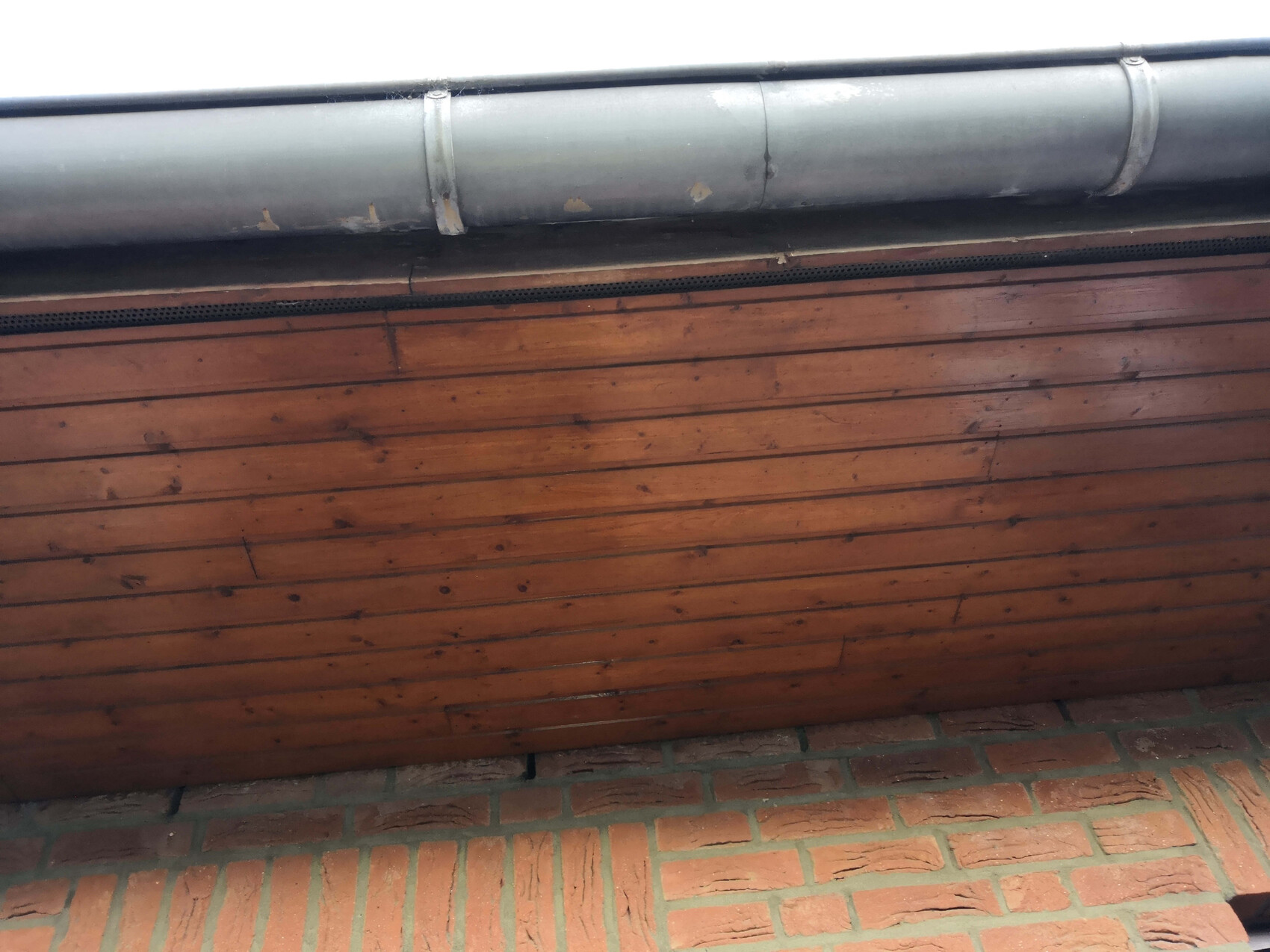
I have removed the roof cladding in both the attic and upper floor. Photos are attached.
Sorry for the many questions, but I am completely new to this topic and need to buy materials and start installation tomorrow or the day after, otherwise the schedule will be very tight.
I have removed the roof cladding in both the attic and upper floor. Photos are attached.
- Under the roof tiles, there is a black tarred? membrane. It has a hole in one spot (highlighted in orange in the photo). Should I seal this hole to prevent water or wind from getting in?
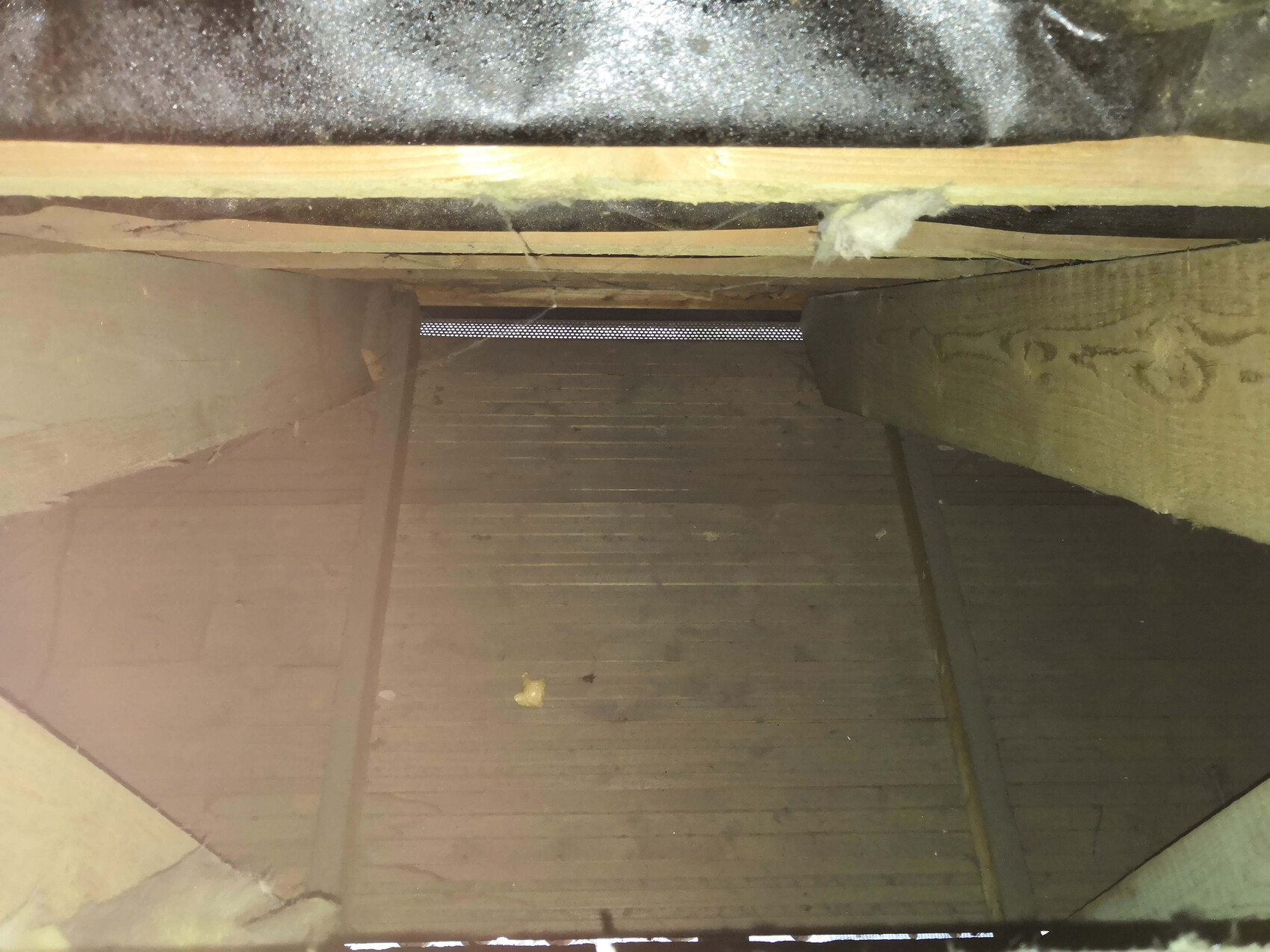
- The smallest rafter depth is about 16cm (6 inches), in the upper floor it’s approximately 17 / 17.5cm (7 / 7 inches) deep. What insulation thickness (rock wool - Klemmrock 035) should I use? 140mm (5.5 inches), 160mm (6.3 inches)? I was told that I should not pack the insulation tightly against the roof in order to maintain an air ventilation layer. My roof structure seems to be ventilated since there is a ventilation grille at the eaves. I don’t want to build up the rafters because I don’t want to reduce room height. I was planning to install 8/9mm (0.3 inches) drywall on the rafters, fixed with metal rails that are about 2-3cm (1 inch) deep. Does that mean I can still use 160mm (6.3 inches) or even 180mm (7 inches) insulation? Will this setup support the insulation, or should I rather use wooden battens?
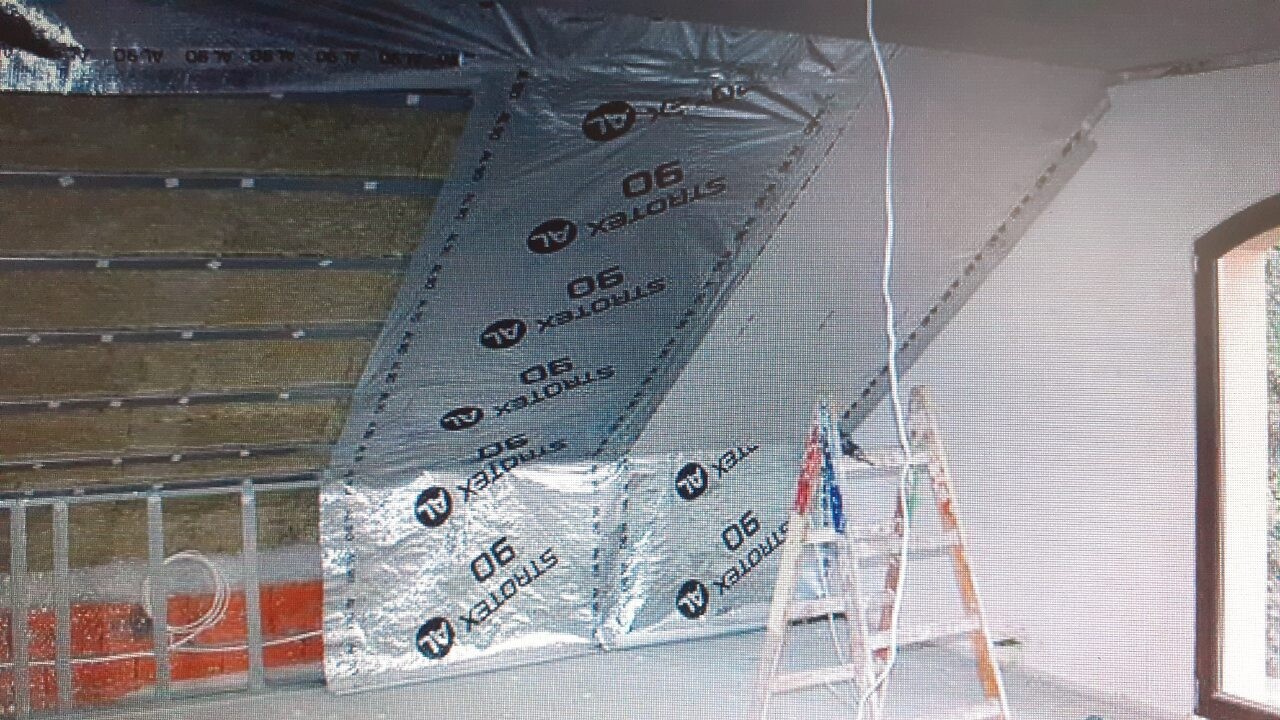
- Previously, the insulation was attached to a cardboard layer with aluminum foil, see photo. A friend abroad recommended a vapor-permeable foil with aluminum. I have attached photos of this as well. I have not seen this type of foil in Germany before. What do you think of it?
- In the ceiling between the upper floor and attic, there is also old rock wool installed. Should I replace it with new insulation right away, and how should I insulate here? The attic floor (not yet opened) is not fully boarded but has a kind of cement beam, with OSB panels on top.
- What is the best way to install the foil between the floors (see photo), since I cannot get a completely airtight seal there?
- What should I do with the eaves area where there is space for multiple layers of insulation? Should I seal it with foil along only the interior wall?
- How should I insulate the ventilation pipes to prevent condensation from forming?
- Is 140mm (5.5 inches) insulation depth sufficient for energy saving regulations?
Sorry for the many questions, but I am completely new to this topic and need to buy materials and start installation tomorrow or the day after, otherwise the schedule will be very tight.
A
atomic200025 Jul 2019 14:29Here are more pictures

Similar topics