
Hello,
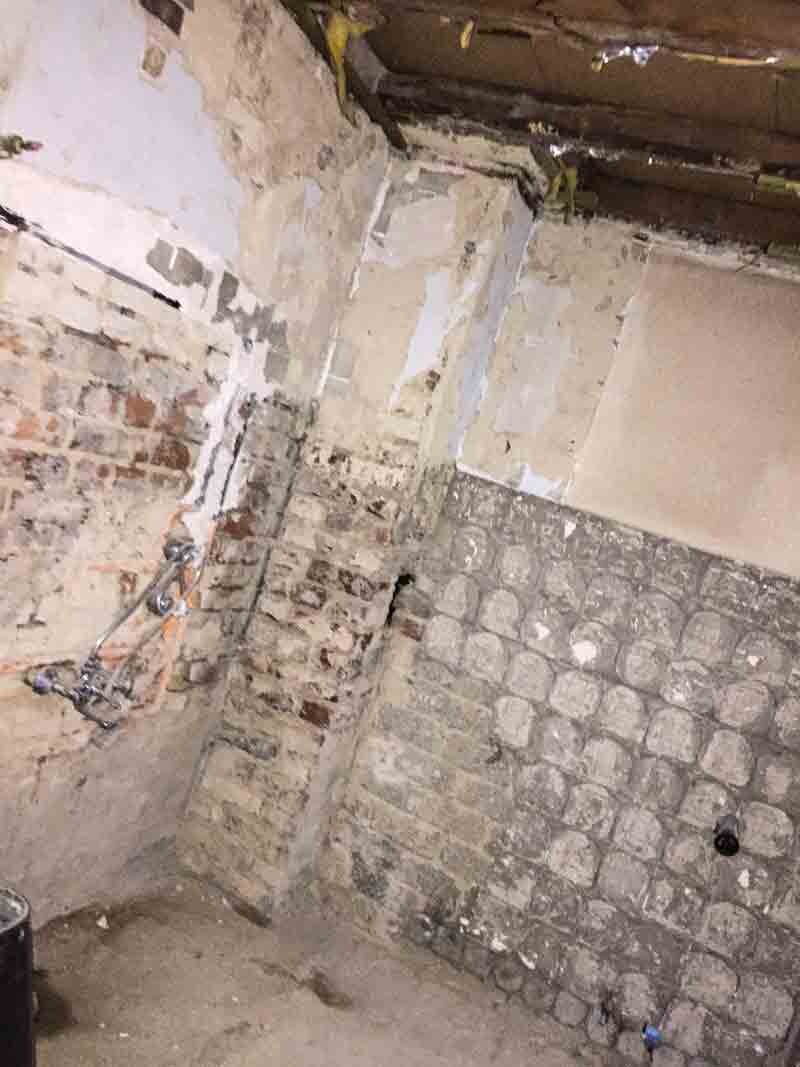
In our bathroom and kitchen, the tiles are embedded directly onto the concrete stones.
If I only remove the tile, the concrete surface remains with holes and exposed areas.
If I remove the concrete as well, you can see the masonry underneath.
I would prefer not to re-tile over the existing surface because I want to redo everything from scratch.
Do I have to remove all the tiles along with the concrete? (That would be faster) Or should I only remove the tiles carefully without damaging the concrete?
In our bathroom and kitchen, the tiles are embedded directly onto the concrete stones.
If I only remove the tile, the concrete surface remains with holes and exposed areas.
If I remove the concrete as well, you can see the masonry underneath.
I would prefer not to re-tile over the existing surface because I want to redo everything from scratch.
Do I have to remove all the tiles along with the concrete? (That would be faster) Or should I only remove the tiles carefully without damaging the concrete?
So the wall will be retiled, except up to the height where the plaster is currently.
Where the tiles are now, there is no longer any plaster.
Using drywall sounds practical. It could work like that in the kitchen, but is it also possible in the bathroom? There, the tiles were applied directly to the wall in the same way.
Where the tiles are now, there is no longer any plaster.
Using drywall sounds practical. It could work like that in the kitchen, but is it also possible in the bathroom? There, the tiles were applied directly to the wall in the same way.
We glued the drywall to the wall in the bathroom. Tiling will be done there soon as well. It is really important to use tile spacers and apply mortar properly onto the boards.
By plaster, I also meant the old adhesive/mortar.
Edit: maybe someone else has an idea.
Edit2: before gluing, it is essential to apply a primer to the masonry.
By plaster, I also meant the old adhesive/mortar.
Edit: maybe someone else has an idea.
Edit2: before gluing, it is essential to apply a primer to the masonry.
So at least I now know that it makes sense to completely remove the tiles along with the mortar/adhesive and then prepare the wall.
Thank you very much for that.
I will then look into what kind of substrate is best for the tiles.
Drywall really sounds like the easiest option to implement.
Thank you very much for that.
I will then look into what kind of substrate is best for the tiles.
Drywall really sounds like the easiest option to implement.
G
Gartenfreund10 Oct 2016 08:39The tiles were set in a mortar bed. I would remove this as well. The new tiles can then be applied to the wall again using mortar, as long as the surface is free of loose material; no further treatment should be necessary.
Alternatively, you can plaster the wall after removing the mortar and then stick the tiles onto it.
Alternatively, you can plaster the wall after removing the mortar and then stick the tiles onto it.

It looks like the tiles were installed using the thick-bed method, with the ones above laid using the thin-bed method. I would also recommend using drywall panels designed for wet rooms.
Well, the substrate must be properly prepared for drywall, otherwise the panels might fall off the wall. The old tiles should ideally be thoroughly cleaned with an alkaline cleaner and then primed with a bonding primer.
You should clarify in advance whether the panels need to be attached with setting gypsum or adhesive. Additionally, it is important to ensure that the panels are sealed in the shower and bath areas with sealing tape, sealing collars (for pipe penetrations…), and liquid waterproofing.
Get professional advice on this.
jan2110 schrieb:
Drywall really does sound like the easiest option to implement
Well, the substrate must be properly prepared for drywall, otherwise the panels might fall off the wall. The old tiles should ideally be thoroughly cleaned with an alkaline cleaner and then primed with a bonding primer.
You should clarify in advance whether the panels need to be attached with setting gypsum or adhesive. Additionally, it is important to ensure that the panels are sealed in the shower and bath areas with sealing tape, sealing collars (for pipe penetrations…), and liquid waterproofing.
Get professional advice on this.
B
Bauexperte10 Oct 2016 10:07Good day,
@Neige is right – the tiles were originally installed using the thick-bed method; this is quite common for older houses, as the setup shows.
In the bathroom, if the available space after completion is sufficient to accommodate all fixtures, I would use moisture-resistant drywall. However, I would remove all remnants of the previous plaster; this usually comes off quite easily, and with double-layer drywall, you will retain almost the original room dimensions.
In the kitchen, I would recommend completely removing the existing layers, creating a uniform surface with appropriate plaster, and then installing new tiles. This is especially important there, as a few centimeters (inches) can make a difference in your future kitchen layout.
Regards, Bauexperte
@Neige is right – the tiles were originally installed using the thick-bed method; this is quite common for older houses, as the setup shows.
In the bathroom, if the available space after completion is sufficient to accommodate all fixtures, I would use moisture-resistant drywall. However, I would remove all remnants of the previous plaster; this usually comes off quite easily, and with double-layer drywall, you will retain almost the original room dimensions.
In the kitchen, I would recommend completely removing the existing layers, creating a uniform surface with appropriate plaster, and then installing new tiles. This is especially important there, as a few centimeters (inches) can make a difference in your future kitchen layout.
Regards, Bauexperte
Similar topics