
ᐅ Relocating a 1960s bathroom into a new room, 12 sqm floor plan
Created on: 10 Jun 2025 00:36
N
NilsStg
Hello everyone,
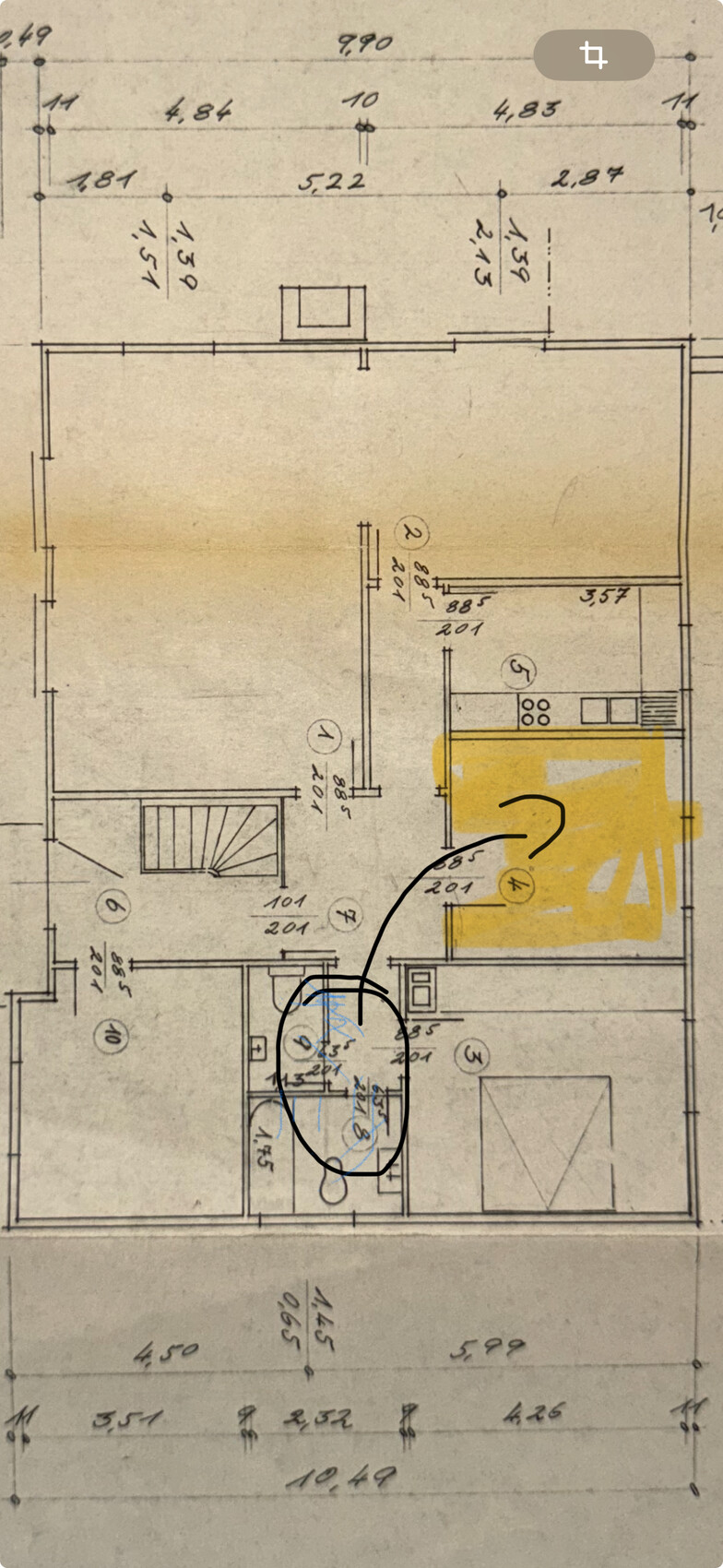
we are currently renovating a prefabricated house from the 1960s, which has a full basement. Since the water and heating pipes are also from the 60s, we are considering replacing the existing rather small 1960s bathroom with a modern one. For this, we have selected a living space, primarily used as a walk-in closet with a desk, measuring 12m2 (129 sq ft) to be converted into a family bathroom. As a family with a 5-year-old child, we often sit together in the bathtub, so a large bathtub was important to us. The house has a basement. Below the bathroom is a laundry room with a toilet and a sink next to the heating room. Therefore, we should be able to route the pipes quite well through the basement ceiling.
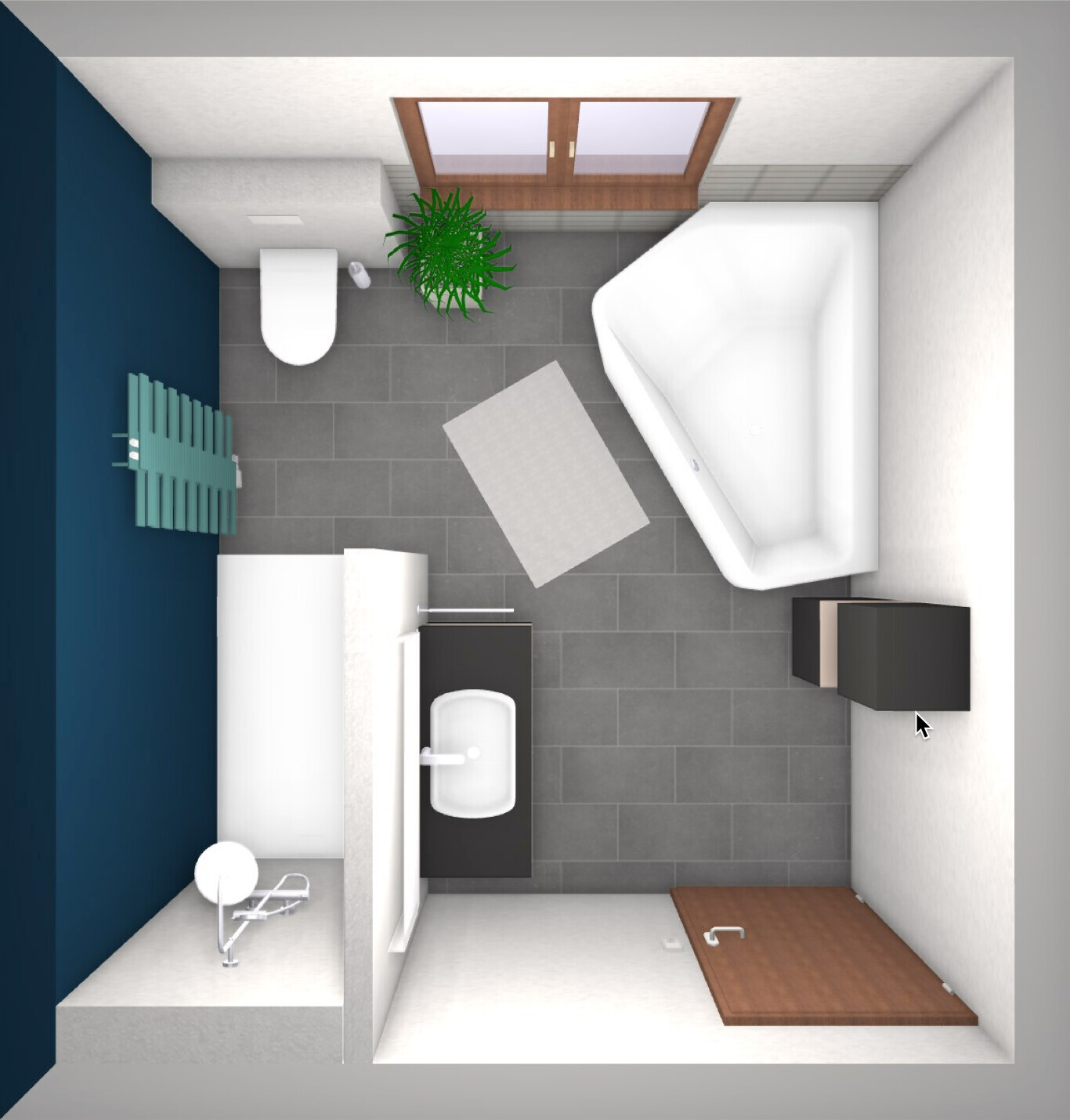
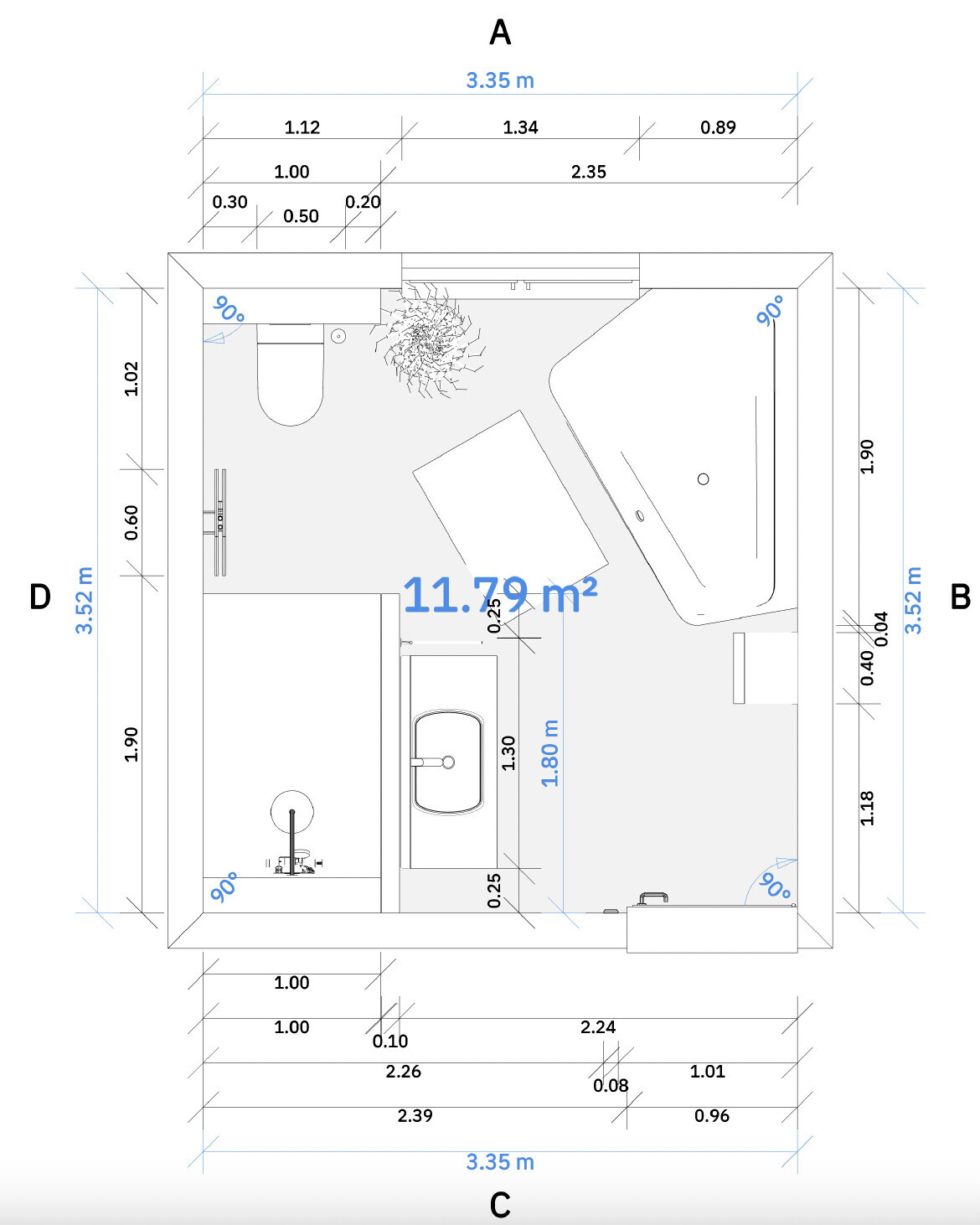
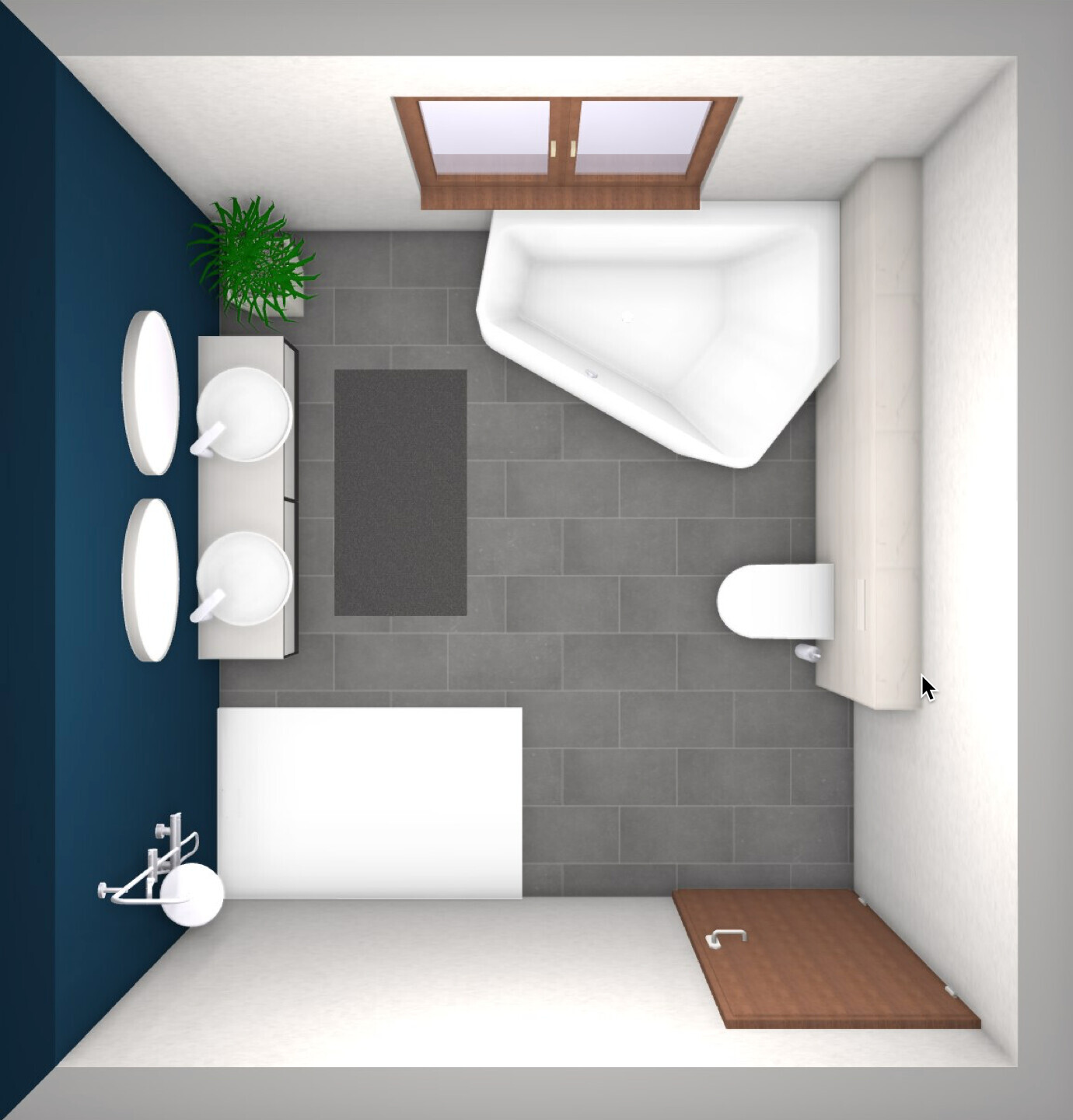
Since this is our first renovation project and I lack experience, I hoped to share a design I created with the Duravit bathroom planner here to get some feedback. (We have chosen the Duravit Paiova 5 bathtub for us)
Thanks in advance
we are currently renovating a prefabricated house from the 1960s, which has a full basement. Since the water and heating pipes are also from the 60s, we are considering replacing the existing rather small 1960s bathroom with a modern one. For this, we have selected a living space, primarily used as a walk-in closet with a desk, measuring 12m2 (129 sq ft) to be converted into a family bathroom. As a family with a 5-year-old child, we often sit together in the bathtub, so a large bathtub was important to us. The house has a basement. Below the bathroom is a laundry room with a toilet and a sink next to the heating room. Therefore, we should be able to route the pipes quite well through the basement ceiling.
Since this is our first renovation project and I lack experience, I hoped to share a design I created with the Duravit bathroom planner here to get some feedback. (We have chosen the Duravit Paiova 5 bathtub for us)
- Based on your experience, what do you think of the layout? Are the passageways between bathtub, shower, and toilet convenient? We planned the walk-in shower to be 100x160cm (39x63 inches).
- For the shower, we wanted to tile the floor flush with the level of the rest of the bathroom but paint the walls instead of tiling them (no grout lines). We have seen this often in hotels, and I like it. I believe it is called Beton Ciré. Does anyone have experience with this?
- We also considered installing a laundry chute to the basement (since the laundry room is directly underneath). Does anyone have advice on what to watch out for?
Thanks in advance
W
wiltshire10 Jun 2025 10:436. Once again about this partition wall: It looks nice when the partition wall does not extend all the way up to the ceiling. A height of 2.20m (7 ft 3 in) is completely sufficient to prevent splashing above it. This also adds a sense of lightness to the rather small room.
7. We find a "night light" made from two recessed floor-level spotlights very effective. These are set to a soft yellow-orange light and controlled by their own switch (motion sensors also work). If you need to use the toilet at night, you can avoid turning on the bright main bathroom light and still find your way safely.
8. A recessed wall niche for the water controls in the shower’s pre-wall area is visually appealing. However, many commenters here who pointed out the more complicated cleaning were right. I would still do it that way again.
9. To protect your head when bathing with the window open, I would build a small device to securely lock the window sash — the one opening toward the bathtub — in place.
Sometimes it’s these little details that make a bathroom special and more practical.
7. We find a "night light" made from two recessed floor-level spotlights very effective. These are set to a soft yellow-orange light and controlled by their own switch (motion sensors also work). If you need to use the toilet at night, you can avoid turning on the bright main bathroom light and still find your way safely.
8. A recessed wall niche for the water controls in the shower’s pre-wall area is visually appealing. However, many commenters here who pointed out the more complicated cleaning were right. I would still do it that way again.
9. To protect your head when bathing with the window open, I would build a small device to securely lock the window sash — the one opening toward the bathtub — in place.
Sometimes it’s these little details that make a bathroom special and more practical.
motorradsilke schrieb:
I understood that this refers to the new bathroom.Yes, that is correct. We plan to convert the existing bathroom into a walk-in closet. The two drafts were ideas for the new bathroom in a new room. The plumbing technician said it might be possible to connect the wastewater pipe to the pipe in the laundry room floor by making an opening in the basement ceiling. How feasible this actually is will be clarified once a plan is available.
hanghaus2023 schrieb:
Do you want to relocate the door? Or is it already gone as originally planned? The door is still shown incorrectly in the floor plan (from the 1960s). It was moved during a renovation about 10 years ago. The measurements in the sketch are correct.
wiltshire schrieb:
6. Regarding the partition wall: It looks nice when the partition doesn’t extend all the way up to the ceiling. A height of 2.20 m (7 ft 3 in) is completely sufficient to prevent splashing above it. This adds some extra visual brightness to the relatively small room.
7. We have found a "night light" solution using two floor-level recessed spotlights set to a soft warm yellow-orange glow, operated by a separate light switch (motion detector can also be used). This way, if you need to use the bathroom at night, you can avoid turning on the main bright bathroom light and still find your way safely.
8. A recessed water outlet in the pre-wall area of the shower is an eye-catcher. However, many contributors here who criticized the more complicated cleaning were right. Still, I would do it this way again.
9. To protect your head when bathing with an open window, I would install a small support device that securely holds the window sash open at a safe position, especially if it opens towards the bathtub.
Sometimes it’s these small details that make a bathroom special and more practical. Thank you very much, I’ll gladly keep that in mind.
Apart from the classic vanity cabinets, I hadn’t considered simply installing a surface with a vessel sink on top. That makes sense and is probably cheaper as well. 🙂 It also gives you more flexibility when choosing cabinets later on. Setting the pre-walls a bit lower also seems reasonable. Thanks 🙂
I also quite like the idea of an integrated mirror on the pre-wall. Do you have any experience with how that works when the shower is illuminated, for example? I assume the mirror effect in two-way mirrors might diminish a bit then? It’s also clever that we can install the glass panel flush either on the shower side or the washbasin side, leaving some space for toothbrushes and such.
We want to retrofit KNX and DALI bus systems in the house. In that case, we could easily control a night light via a ceiling motion sensor. The floor-level night light could maybe also be realized as an LED strip under the bathroom cabinet, saving some effort in integration.
Would you recommend planning the shower a bit shorter than 160 cm (63 inches)? Or rather have the washbasin extend the entire width from the wall to the end of the shower?
M
motorradsilke10 Jun 2025 11:59NilsStg schrieb:
Do you recommend planning the shower slightly shorter than 160cm (63 inches)? Or running the washbasin across the entire width from the wall to the end of the shower?
I would plan the shower to be at least 150cm (59 inches) long; otherwise, water might splash out.
I wouldn’t extend the washbasin all the way to the end of the shower, as that would make the passage too narrow. We have 120cm (47 inches), which is more than enough for a single sink.
NilsStg schrieb:
As a family with a 5-year-old child, we often sit together in the bathtub, so having a large bathtub was important to us. Well... that will probably change quite soon, and for that purpose, I think the focus might be a bit too strong. The shape of the bathtub is of course a matter of taste, but it will likely bring you more disadvantages than advantages. We actually chose a bathtub that wasn’t bigger than the previous one, although the previous one was already comfortable. My wife now says she sometimes feels almost lost in it and would immediately go back to the previous model. I also believe the furniture should receive a clearer focus. For example, where do you hang your large towel when you shower or afterwards? Your bathroom won’t look better or worse because of the shape or size of the bathtub.
NilsStg schrieb:
It hadn’t even occurred to me to just install a countertop with a vessel sink instead of classic vanity cabinets. Makes sense and is probably cheaper. 🙂 For us, 4cm (1.6 inches) plywood panels have worked well, painted and placed on stylish metal sled bases, with extra support fixed to the wall. Also, add a wall outlet (which we don’t have), and this part looks elegant. Under the panels, we hung a wide vanity cabinet for the sink; I think IKEA offers great options here, and the price-to-quality ratio is excellent.
13 square meters (140 square feet) is not a small bathroom area, and that includes important storage, shelving, hanging, and decoration opportunities. You can always find a suitable bathtub then. I would also pay attention to the riser pipe for the shower inside the wall and having a nice view when lying in the tub. We probably went a bit overboard in terms of luxury—I installed a stylish TV ("The Frame") on the wall for my wife; she likes to spend what feels like three hours in the tub.
If you want a shared bathing experience, I would perhaps move that outside to a hot tub or whirlpool. Our 5-year-old still uses it both at age 12 and 22, so it can be enjoyed together for years to come—at least that’s my idea.
Similar topics