
ᐅ Reinforced concrete floor slab (40 m² span) exhibits slight vibrations
Created on: 23 Sep 2012 13:01
P
padersee13P
padersee1323 Sep 2012 13:01Hello!
This is not a new build but an older building. I hope this post is still appropriate.
Our living room is 40 m² (430 sq ft) in size, with a 40 m² (430 sq ft) basement room directly below. The ceiling between them is made of reinforced concrete. What stands out is that the floor flexes when children jump in the middle of the room or if someone stomps on the floor quite hard. The screed is still 40 years old and above it is parquet flooring. Between the screed and the concrete slab, Styrofoam was installed 40 years ago when the house was built (this was also the case when we removed the screed in the adjacent hallway).
Should I be worried that the floor might eventually give way or sag (after all, it has lasted 40 years) or is this kind of flexing normal? 40 m² (430 sq ft) is quite a large area, and back then concrete was poured with formwork boards. There are no lintels or supports installed in the basement. The flexing becomes noticeable because the decoration on our glass table wobbles slightly and you can feel the floor "vibrate" a bit.
Thank you very much!
This is not a new build but an older building. I hope this post is still appropriate.
Our living room is 40 m² (430 sq ft) in size, with a 40 m² (430 sq ft) basement room directly below. The ceiling between them is made of reinforced concrete. What stands out is that the floor flexes when children jump in the middle of the room or if someone stomps on the floor quite hard. The screed is still 40 years old and above it is parquet flooring. Between the screed and the concrete slab, Styrofoam was installed 40 years ago when the house was built (this was also the case when we removed the screed in the adjacent hallway).
Should I be worried that the floor might eventually give way or sag (after all, it has lasted 40 years) or is this kind of flexing normal? 40 m² (430 sq ft) is quite a large area, and back then concrete was poured with formwork boards. There are no lintels or supports installed in the basement. The flexing becomes noticeable because the decoration on our glass table wobbles slightly and you can feel the floor "vibrate" a bit.
Thank you very much!
There is definitely a steel reinforcement in the ceiling that can withstand the vibration. When you jump around on the surface, the ceiling naturally vibrates because it is only supported by the exterior walls of the building. If that bothers you and you have enough space in the room below, you could install a steel beam right in the center of the room!
P
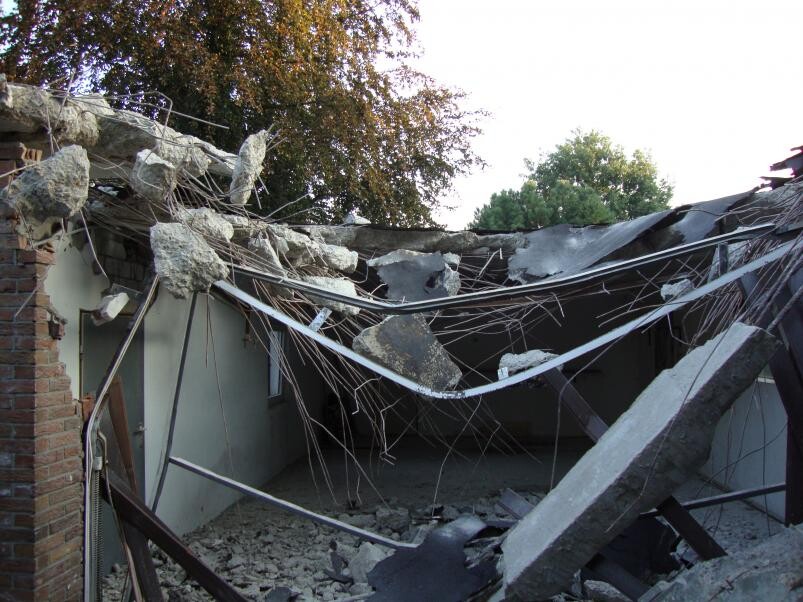
padersee1324 Sep 2012 17:29Attached is a photo showing our former garage. The ceiling thickness was 14 cm (5.5 inches). We had to demolish it to create access for heavy machinery to the garden. There was also a long crack in the ceiling, but in hindsight, it turns out the garage would never have collapsed. The hydraulic hammer of the tracked excavator even broke through it.
The foundation was 40 cm (16 inches) thick reinforced concrete. Apparently, no expense was spared on concrete and steel here or at the house. The house and garage were built at the same time.
The garage is mentioned only as an example of the construction method. The concrete ceilings in the house look similar/the same.
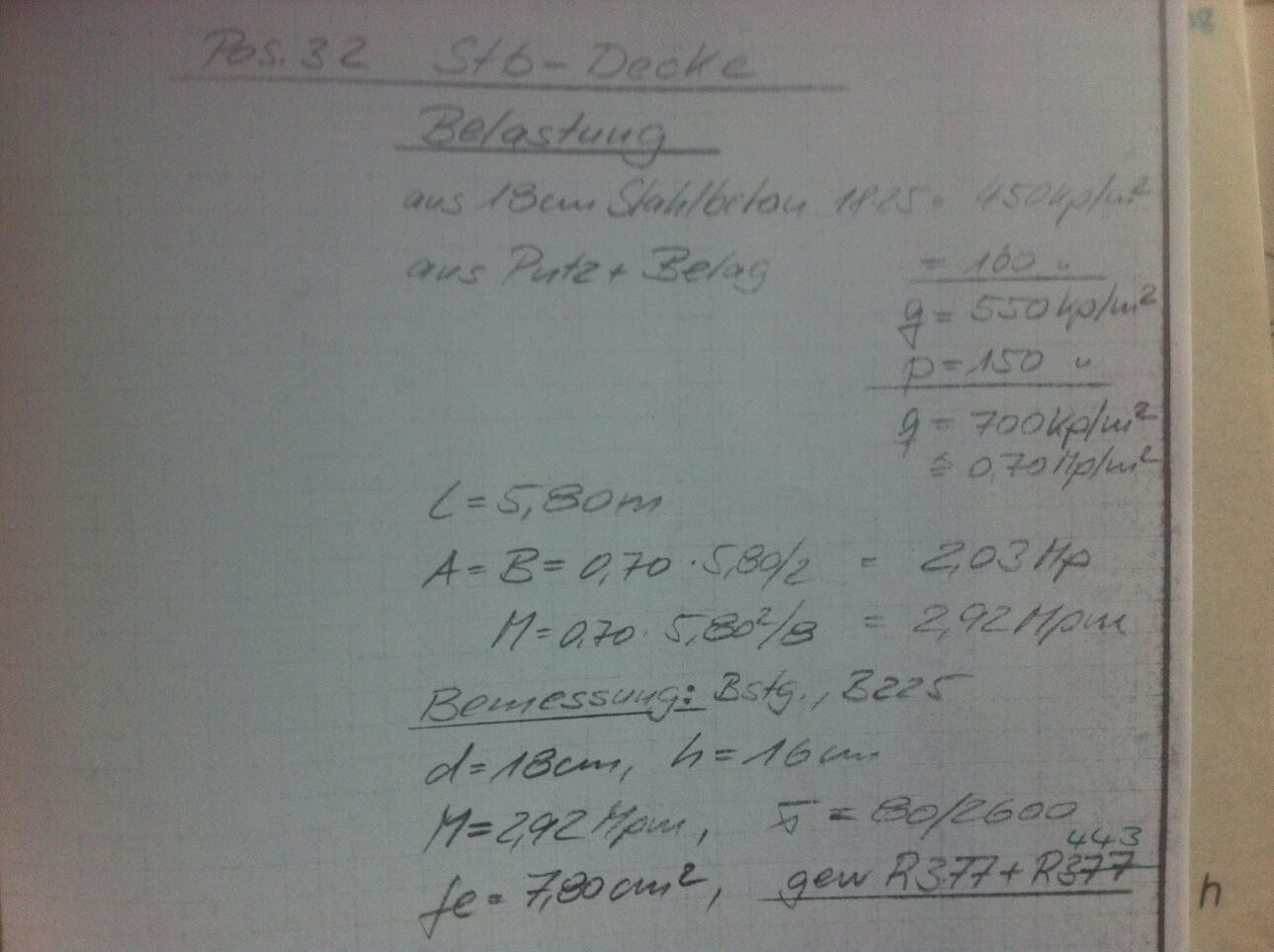
Additionally, the other two pictures show an excerpt from the structural engineering plan of the house. The thickness of the ground floor slab is 18 cm (7 inches). Maybe this information will be helpful for you!



The foundation was 40 cm (16 inches) thick reinforced concrete. Apparently, no expense was spared on concrete and steel here or at the house. The house and garage were built at the same time.
The garage is mentioned only as an example of the construction method. The concrete ceilings in the house look similar/the same.
Additionally, the other two pictures show an excerpt from the structural engineering plan of the house. The thickness of the ground floor slab is 18 cm (7 inches). Maybe this information will be helpful for you!
P
padersee1324 Sep 2012 19:56I actually can’t imagine that either.
18 cm (7 inches) thick reinforced concrete should be enough, and the basement space below is more rectangular than square. Besides, the movement really only occurs in the center of the room. Everything else is solid.
It was also checked and approved by a structural engineer back in 1970. During the renovation, we had an oak cabinet weighing nearly 400 kilograms (880 pounds) from my great-grandmother standing exactly in the middle of the room. It stayed there for half a year without any issues.
I was just a bit concerned, especially since we have children and there is a party room underneath the living room that we also want to use.
The movement could possibly be due to the screed.
Best regards
18 cm (7 inches) thick reinforced concrete should be enough, and the basement space below is more rectangular than square. Besides, the movement really only occurs in the center of the room. Everything else is solid.
It was also checked and approved by a structural engineer back in 1970. During the renovation, we had an oak cabinet weighing nearly 400 kilograms (880 pounds) from my great-grandmother standing exactly in the middle of the room. It stayed there for half a year without any issues.
I was just a bit concerned, especially since we have children and there is a party room underneath the living room that we also want to use.
The movement could possibly be due to the screed.
Best regards
padersee13 schrieb:
I actually can’t imagine that either.
18 cm (7 inches) thick reinforced concrete should be sufficient, and the basement room below is more rectangular than square. Also, the vibration is really only in the middle of the room. Everything outside that area is solid.
It was also checked and approved by a structural engineer back in 1970. During the renovation, we had a nearly 400 kg (880 lbs) oak cabinet from my great-grandmother placed exactly in the middle of the room—for half a year—and nothing happened.
I only had some concerns because we have children, and there is a party cellar under the living room that we also want to use.
The vibration could possibly be related to the screed.
Best regardsKlarImagine just the energy distribution of the rebar grid/reinforcement in the concrete during vibration! Most of the energy dissipates in the masonry, and in the middle, the steel is under tension and usually bears tons.
If anything were to be damaged by the vibration, concrete would chip first, while the reinforcement would remain stable! Maybe there would be some chipping if your family were to purposefully cause the structure to vibrate massively in rhythm for several hours daily over many years?
Similar topics