
C
crossie806 Mar 2026 07:43Hello everyone,
We are currently renovating our house, built in 1903. On the second floor, there is a sloped ceiling that I started working on yesterday because it was crooked and uneven. The slope was built with masonry, probably original from 1903. Behind it, there is a waterproof membrane and behind that (several holes, not caused by me) apparently glass wool insulation. The roof itself was completely redone around 2000. I have now removed all the bricks and am wondering how to rebuild it. In any case, it will be drywall with underfloor heating. However, I am not sure what should go between the existing waterproof membrane and the underfloor heating, so I would appreciate any advice.
Thank you very much!
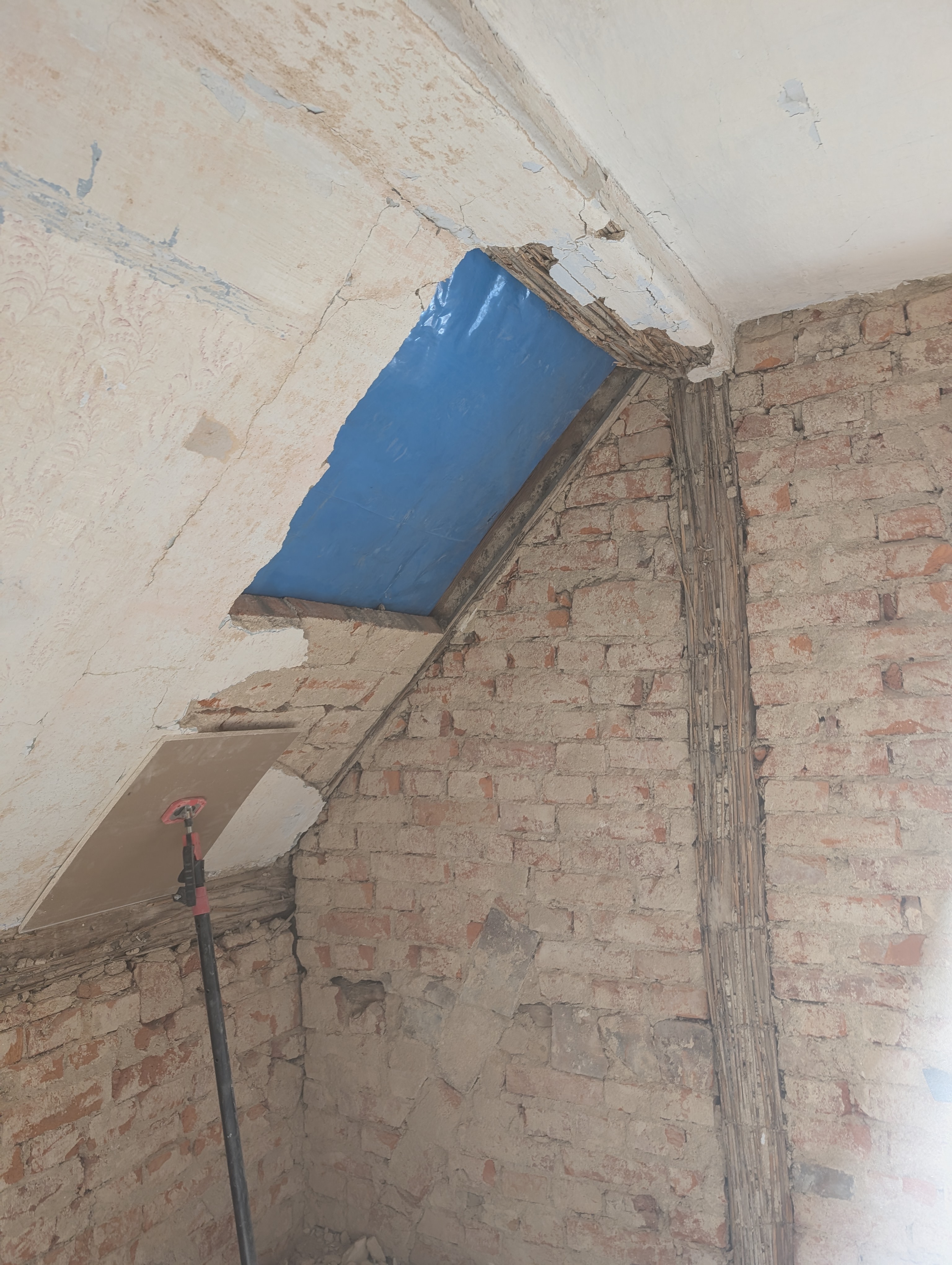
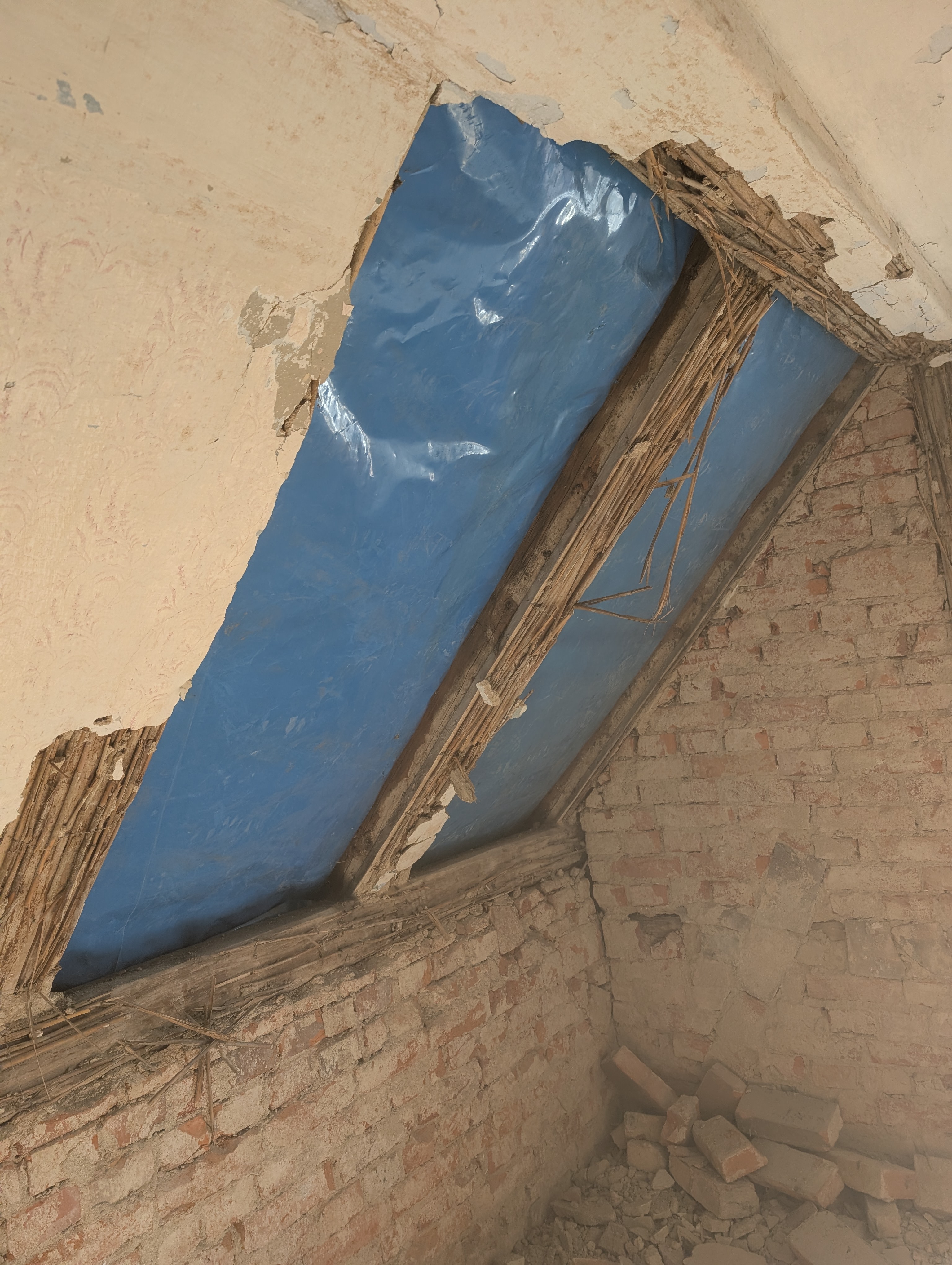
We are currently renovating our house, built in 1903. On the second floor, there is a sloped ceiling that I started working on yesterday because it was crooked and uneven. The slope was built with masonry, probably original from 1903. Behind it, there is a waterproof membrane and behind that (several holes, not caused by me) apparently glass wool insulation. The roof itself was completely redone around 2000. I have now removed all the bricks and am wondering how to rebuild it. In any case, it will be drywall with underfloor heating. However, I am not sure what should go between the existing waterproof membrane and the underfloor heating, so I would appreciate any advice.
Thank you very much!
C
crossie806 Mar 2026 08:44behind the blue foil (which appears to be the vapor barrier) there seems to be glass wool
I want to do this myself
I want to do this myself

“Please speak in complete thoughts,” we cannot read your mind. We are happy to provide advice here, but you need to contribute a bit yourself. So, the roof was re-covered in 2000—I assume by the previous owner—and you don’t want to remove any of it, which is why you are working from the inside. Apparently, the rafters were filled in with masonry bricks. You now want to use that space to install a new drywall lining, including underfloor heating. You see a foil and suspect there is insulation behind it, but you don’t know the details and are not motivated to investigate further. That does not sound wise. In the quite likely worst-case scenario, you are about to heat the insulation. Those bricks were probably installed back then as a “stone-age version of a vapor barrier” against wind blowing through. You should examine the roof structure more closely. Not all building department archives were destroyed during the two world wars in between, so the construction files might still exist. Also, the roofer who worked on it in 2000 probably still lives and may have photos of the work, which could provide further insight. What exactly do we see here under the roof slope? I suspect a knee wall (dwarf wall), as knee walls of that height would have been very unusual back then. You should approach the planning more professionally, unless you have considerable time and money to spare.
https://www.instagram.com/11antgmxde/
https://www.linkedin.com/company/bauen-jetzt/
https://www.instagram.com/11antgmxde/
https://www.linkedin.com/company/bauen-jetzt/
Similar topics