
ᐅ Recommended Protective Measures When Removing Hot-Poured Bitumen Screed
Created on: 17 Feb 2021 18:16
C
chippy79Hello everyone,
I would like to ask for your advice and tips regarding the proper removal of hot-poured asphalt screed (approximately 50 sqm (540 sq ft) area) in an apartment and the recommended safety measures.
I plan to break up this floor layer, about 2.5 cm (1 inch) thick, myself using an 18 kg (40 lbs) demolition hammer and then dispose of the debris in a rented container. Now, I am wondering how and if I need to protect myself properly. Do I require special protective clothing, such as a respirator, coveralls, gloves, goggles, etc.? Should I set up a clean/dirty area (decontamination zone) or similar?
The building was constructed in 1972, and the original building permit/planning permission states that cast asphalt was to be used. The floor covering in the rooms above is only floating parquet or laminate.
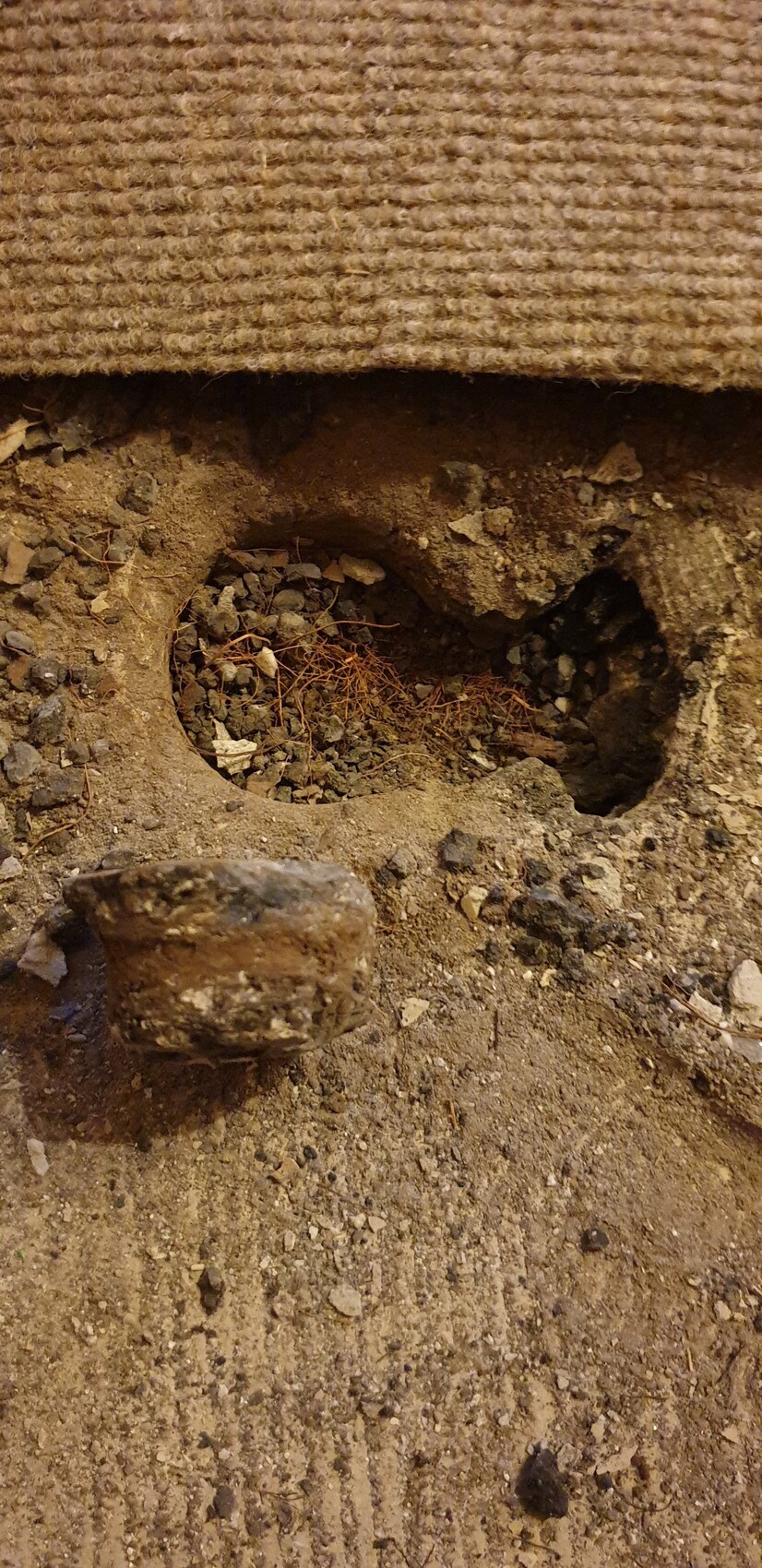
Image 1 – shows the test drilling.
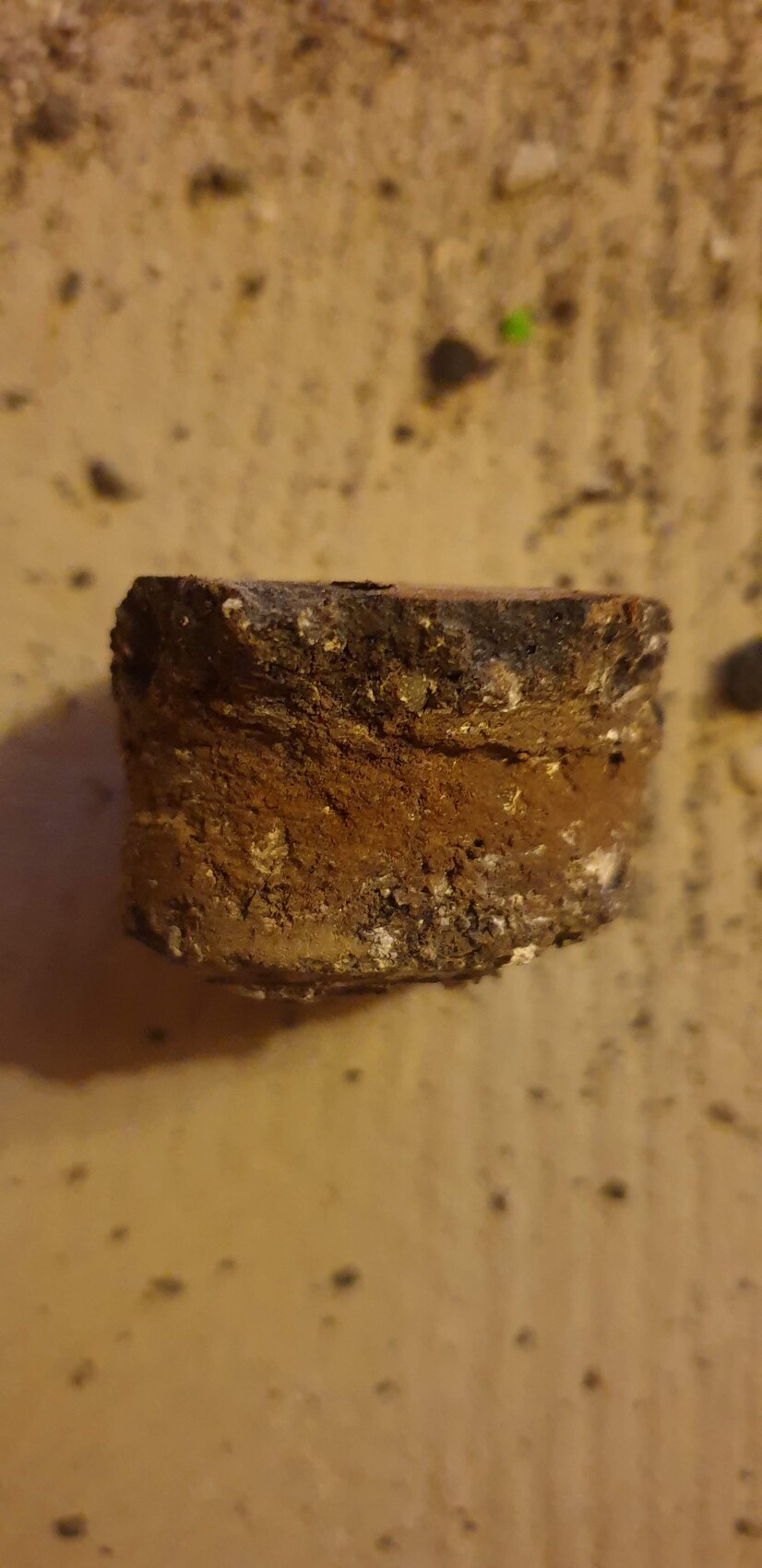
Image 2 – is the core sample of the screed – I believe it is cast asphalt.
Image 3 – below the screed there appears to be a type of loose fill insulation made from coconut fibers.

What do you think?
Thanks for your tips.
Best regards,
chippy79
I would like to ask for your advice and tips regarding the proper removal of hot-poured asphalt screed (approximately 50 sqm (540 sq ft) area) in an apartment and the recommended safety measures.
I plan to break up this floor layer, about 2.5 cm (1 inch) thick, myself using an 18 kg (40 lbs) demolition hammer and then dispose of the debris in a rented container. Now, I am wondering how and if I need to protect myself properly. Do I require special protective clothing, such as a respirator, coveralls, gloves, goggles, etc.? Should I set up a clean/dirty area (decontamination zone) or similar?
The building was constructed in 1972, and the original building permit/planning permission states that cast asphalt was to be used. The floor covering in the rooms above is only floating parquet or laminate.
Image 1 – shows the test drilling.
Image 2 – is the core sample of the screed – I believe it is cast asphalt.
Image 3 – below the screed there appears to be a type of loose fill insulation made from coconut fibers.
What do you think?
Thanks for your tips.
Best regards,
chippy79

Hello "chippy".
Looking closely at the three photos, I have come to the conclusion that neither the lower nor the upper screed layer can be made of mastic asphalt!
Mastic asphalt was (regarding the lower screed layer) never applied directly on loose aggregate but, as a rule, always (!) over a separation layer.
By "as a rule," I mean: only when the mastic asphalt was intended as a waterproofing layer was it applied in a bonded system over a primer and bituminous sealing layer.
The upper screed layer also cannot be mastic asphalt.
Firstly, it is much too thin for that purpose, secondly, it was also applied as a bonded layer (onto the lower layer), and thirdly, you can see pores in the cross-section.
This is impossible for mastic asphalt!
For a concrete assessment of what exactly the materials used are, I would need to have the core sample in my hand.
In this context, an additional note: it is not possible to extract a core sample from mastic asphalt using a dry drilling method.
The bitumen would smear due to frictional heat generated between the hollow drill and the material’s casing during drilling, and it would overload any drill’s torque.
To answer your questions nevertheless:
A dust mask is definitely necessary, as well as safety glasses and gloves when chiseling! However, wearing casual pants is not advisable during demolition work.
If you always chip away pieces larger than plate-size chunks, the demolition will proceed quite quickly.
All other protective measures you mentioned can be used if you have time to spare or want to impress your neighbors.
They are certainly not absolutely necessary.
The next problem you will encounter (although you have not asked about it here) is the construction of the new floor.
You should discuss this with a specialist company (floor screed installer) and avoid doing this step yourself.
There are always limits a layperson must recognize.
-----------------------
Good luck: KlaRa
Looking closely at the three photos, I have come to the conclusion that neither the lower nor the upper screed layer can be made of mastic asphalt!
Mastic asphalt was (regarding the lower screed layer) never applied directly on loose aggregate but, as a rule, always (!) over a separation layer.
By "as a rule," I mean: only when the mastic asphalt was intended as a waterproofing layer was it applied in a bonded system over a primer and bituminous sealing layer.
The upper screed layer also cannot be mastic asphalt.
Firstly, it is much too thin for that purpose, secondly, it was also applied as a bonded layer (onto the lower layer), and thirdly, you can see pores in the cross-section.
This is impossible for mastic asphalt!
For a concrete assessment of what exactly the materials used are, I would need to have the core sample in my hand.
In this context, an additional note: it is not possible to extract a core sample from mastic asphalt using a dry drilling method.
The bitumen would smear due to frictional heat generated between the hollow drill and the material’s casing during drilling, and it would overload any drill’s torque.
To answer your questions nevertheless:
A dust mask is definitely necessary, as well as safety glasses and gloves when chiseling! However, wearing casual pants is not advisable during demolition work.
If you always chip away pieces larger than plate-size chunks, the demolition will proceed quite quickly.
All other protective measures you mentioned can be used if you have time to spare or want to impress your neighbors.
They are certainly not absolutely necessary.
The next problem you will encounter (although you have not asked about it here) is the construction of the new floor.
You should discuss this with a specialist company (floor screed installer) and avoid doing this step yourself.
There are always limits a layperson must recognize.
-----------------------
Good luck: KlaRa
Hello KlaRa,
Thank you very much for your feedback.
What do you think the screed material might be? Possibly just cement screed? I’m just puzzled because it still appears blackish. Should I take a close-up photo of the core sample again? I was concerned it might be mastic asphalt or some tar-containing material. I will contact the disposal company again about the necessary container. So far, I have assumed disposal for mastic asphalt and cement screed.
Should I look for a specific standard regarding the protective mask? I once searched at an online retailer. At least FFP3, or can you maybe recommend a model that I could use for other tasks as well?
Everything regarding the screed construction is already settled. I just want to handle the demolition and disposal myself. Afterwards, a radiant floor heating system including insulation will be installed over the raw subfloor. Then a new heated screed will be laid by the screed installer. :-)
Best regards,
chippy79
Thank you very much for your feedback.
What do you think the screed material might be? Possibly just cement screed? I’m just puzzled because it still appears blackish. Should I take a close-up photo of the core sample again? I was concerned it might be mastic asphalt or some tar-containing material. I will contact the disposal company again about the necessary container. So far, I have assumed disposal for mastic asphalt and cement screed.
Should I look for a specific standard regarding the protective mask? I once searched at an online retailer. At least FFP3, or can you maybe recommend a model that I could use for other tasks as well?
Everything regarding the screed construction is already settled. I just want to handle the demolition and disposal myself. Afterwards, a radiant floor heating system including insulation will be installed over the raw subfloor. Then a new heated screed will be laid by the screed installer. :-)
Best regards,
chippy79
For clarification:
Gussasphalt (the term is used in building construction, not road construction) has never been produced using the binder "tar," but always with bitumen.
Tar is a byproduct of lignite or hard coal, whereas all bitumen types commonly used in building construction come from petroleum refining.
Regarding the brownish residues on the core sample, it could be bitumen emulsion screed.
In the 1970s, it was not uncommon in residential construction to use materials that were readily available and also inexpensive. Unfortunately!
Often, the installation method of what we might call the "load distribution layer" did not meet the technical standards of that time.
During demolition, a standard dust mask is sufficient. The dust particles are not small enough to require upgrading to an FFP2 mask (mesh size about 0.8 µm).
This mesh size is fully adequate for dust.
[Personal note: virus sizes are generally between 0.06 µm and 0.16 µm; therefore, corresponding usage instructions on packaging should be observed.]
What exactly was installed in your house at that time could certainly and easily be clarified with appropriate analytical effort, but the fundamental question is whether the insight gained would justify the cost-benefit ratio.
-------------------------
Regards
Gussasphalt (the term is used in building construction, not road construction) has never been produced using the binder "tar," but always with bitumen.
Tar is a byproduct of lignite or hard coal, whereas all bitumen types commonly used in building construction come from petroleum refining.
Regarding the brownish residues on the core sample, it could be bitumen emulsion screed.
In the 1970s, it was not uncommon in residential construction to use materials that were readily available and also inexpensive. Unfortunately!
Often, the installation method of what we might call the "load distribution layer" did not meet the technical standards of that time.
During demolition, a standard dust mask is sufficient. The dust particles are not small enough to require upgrading to an FFP2 mask (mesh size about 0.8 µm).
This mesh size is fully adequate for dust.
[Personal note: virus sizes are generally between 0.06 µm and 0.16 µm; therefore, corresponding usage instructions on packaging should be observed.]
What exactly was installed in your house at that time could certainly and easily be clarified with appropriate analytical effort, but the fundamental question is whether the insight gained would justify the cost-benefit ratio.
-------------------------
Regards
I have now also sent the photos to a waste disposal company, and they said it is probably mastic asphalt after all. Now I’m uncertain.
I have chiseled out a larger area. Here are some photos of a bigger piece. On top, there is some kind of gray leveling layer, and underneath, a kind of brown paper?
Disposal would of course be expensive then :-(
What do you think? What type of floor material is this? Can I still safely break up the floor using the usual protective measures?
Thanks for your feedback.
Best regards
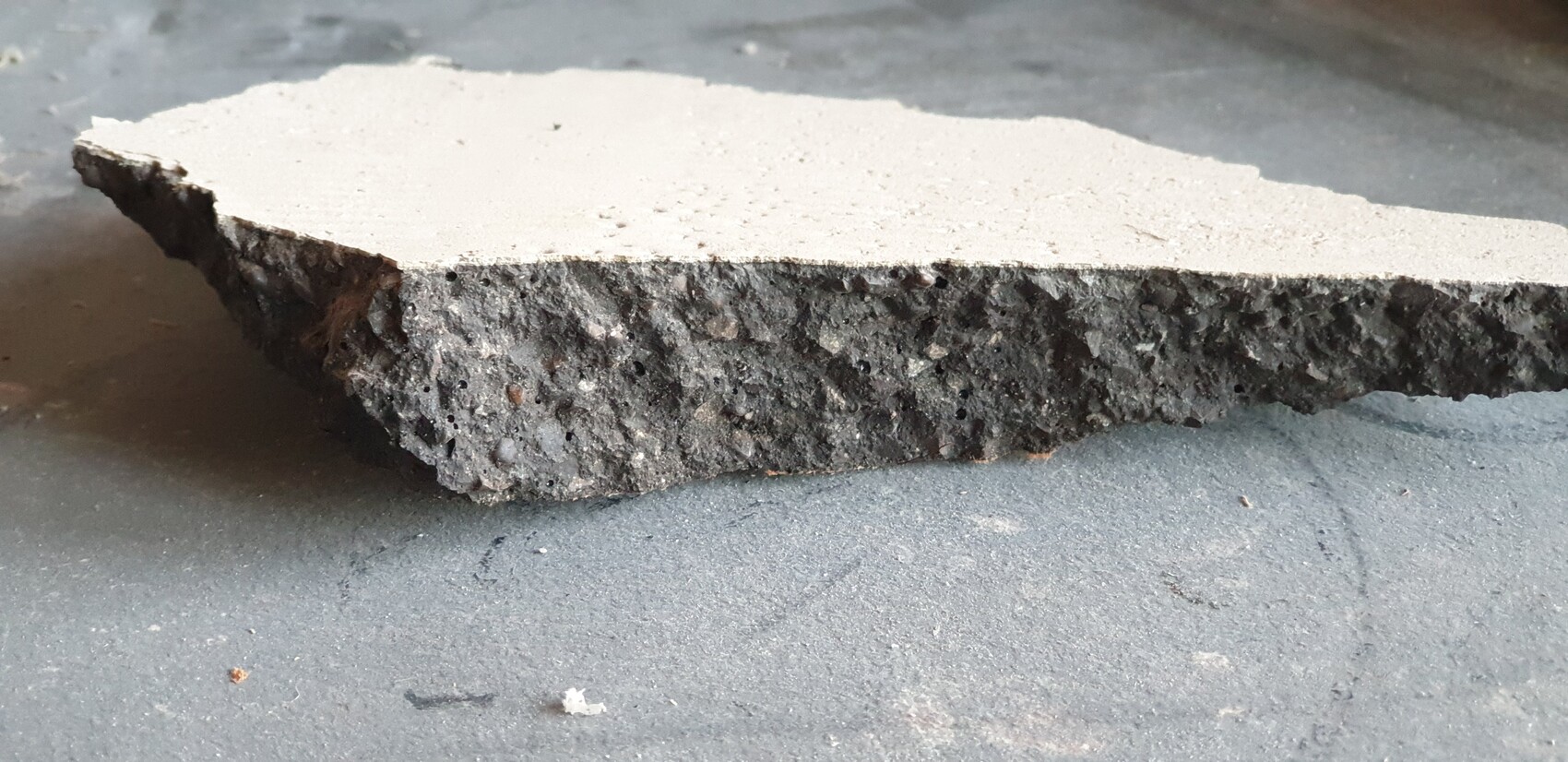
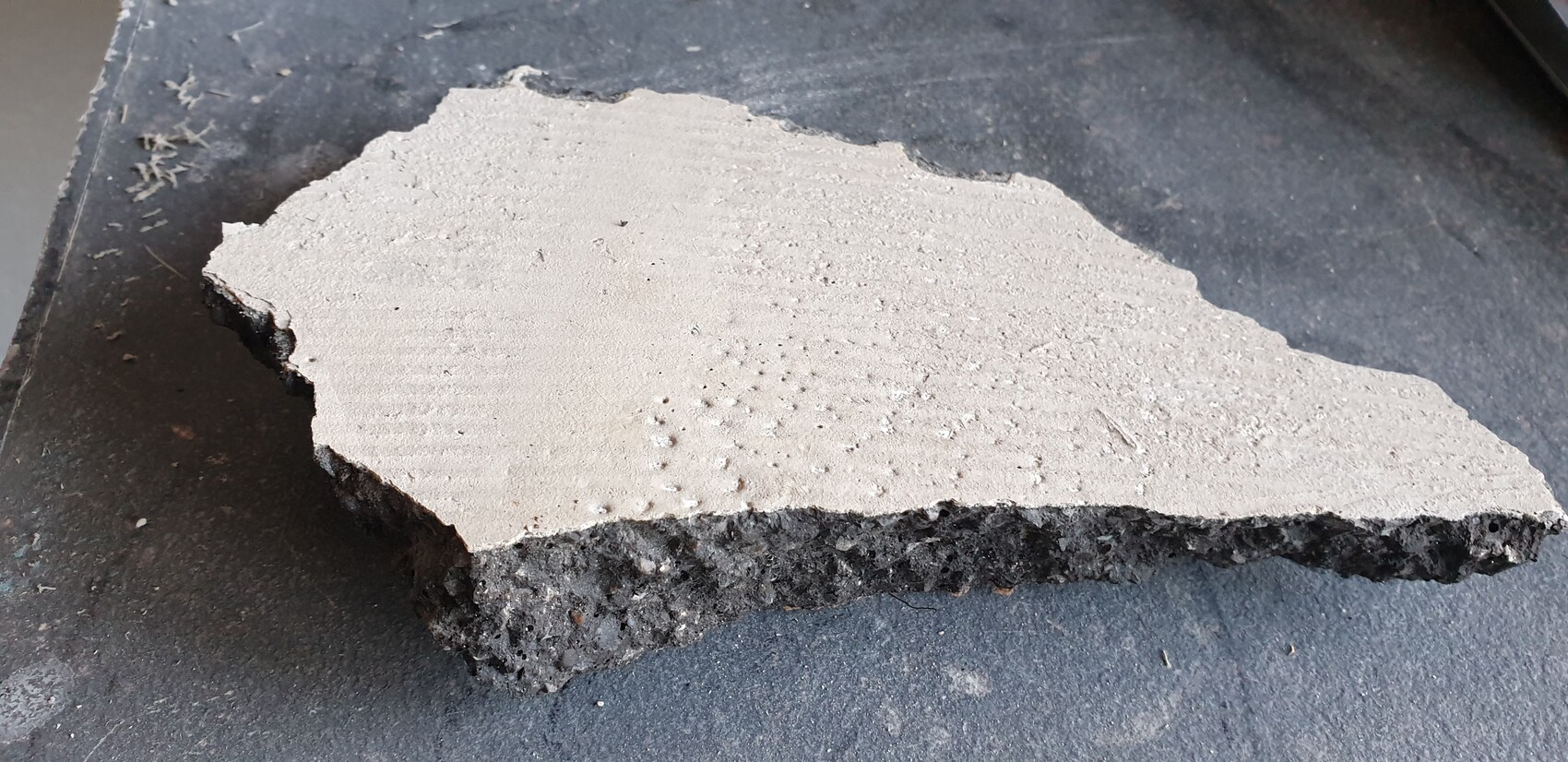
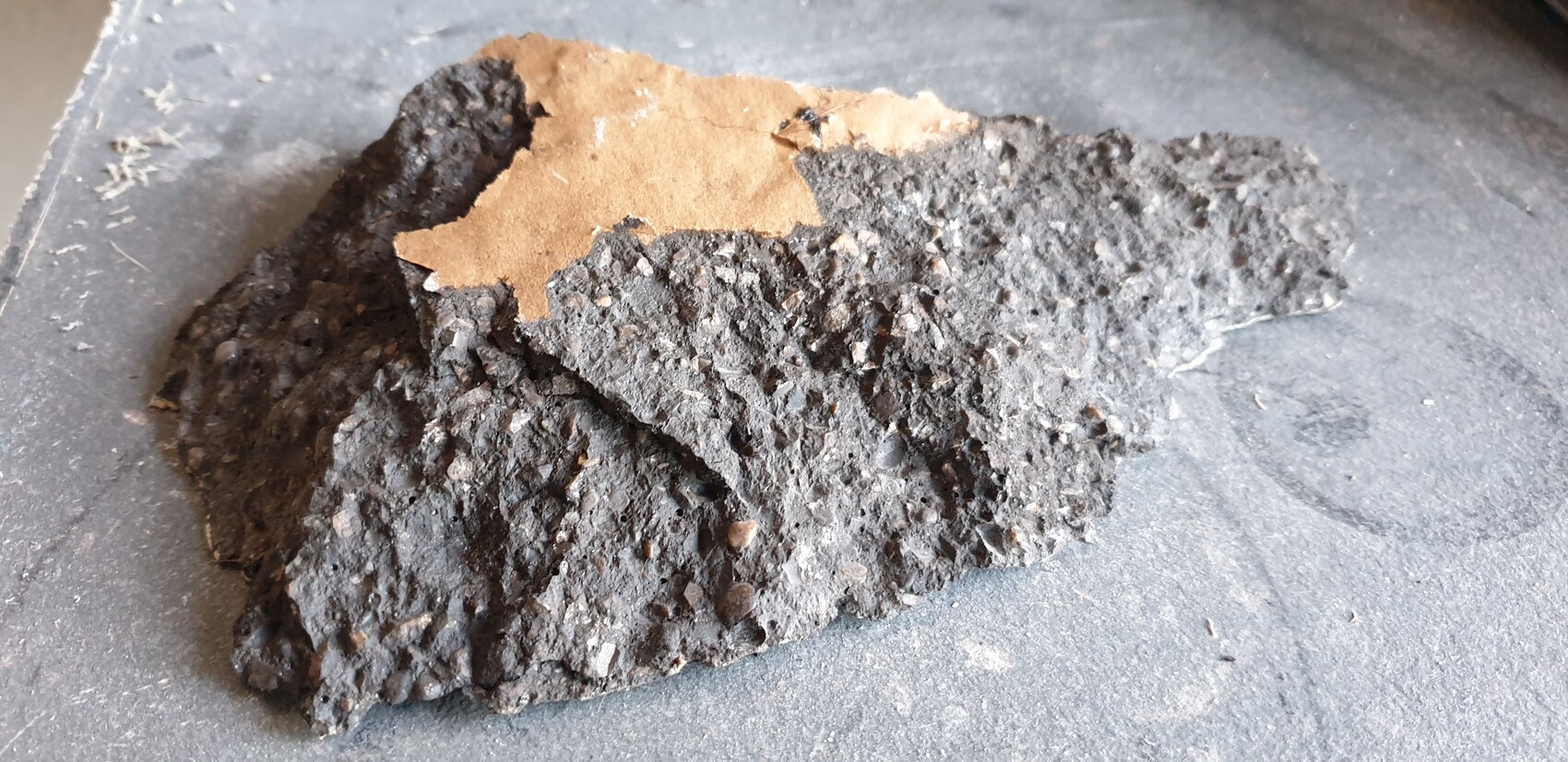
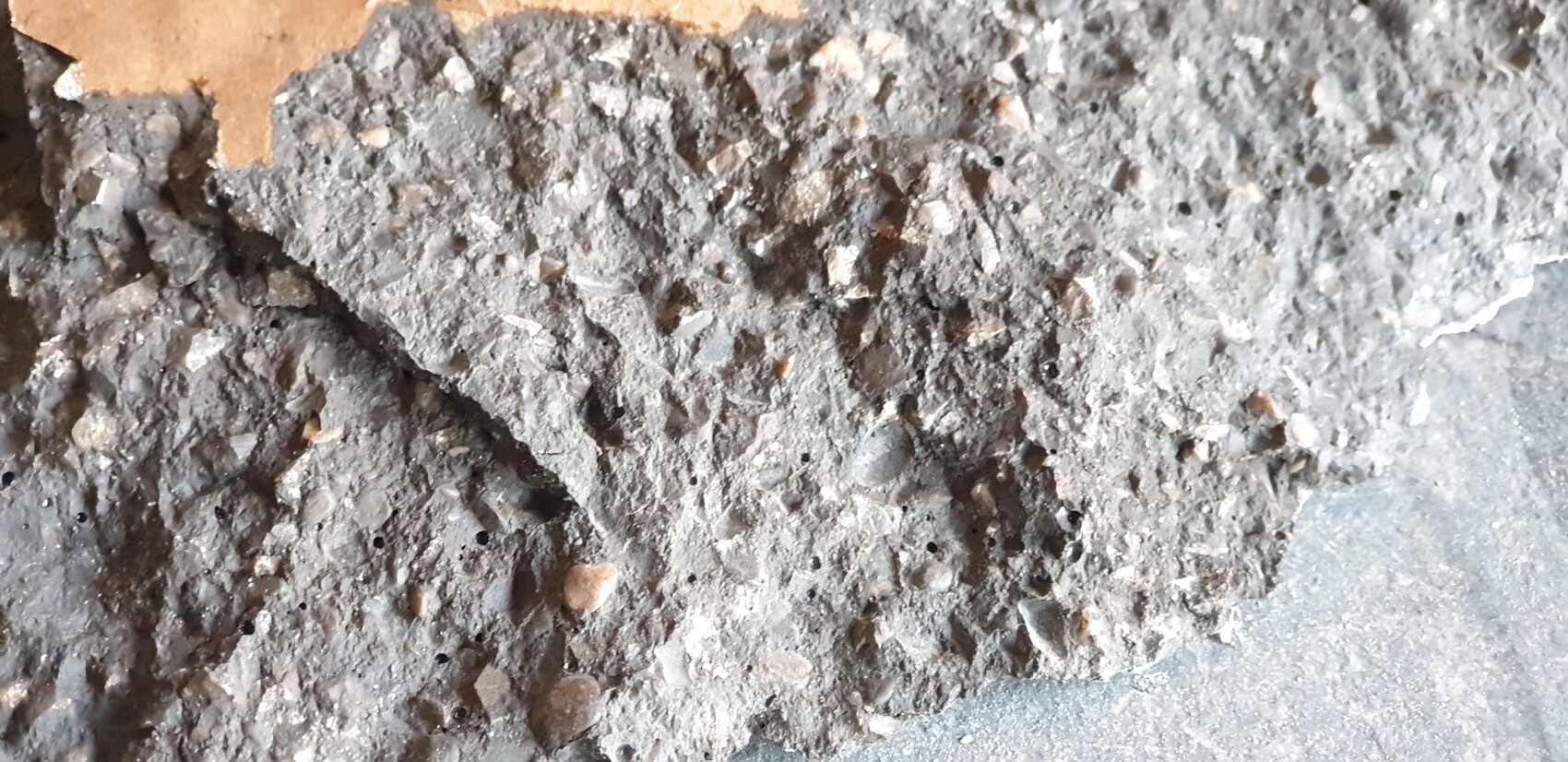
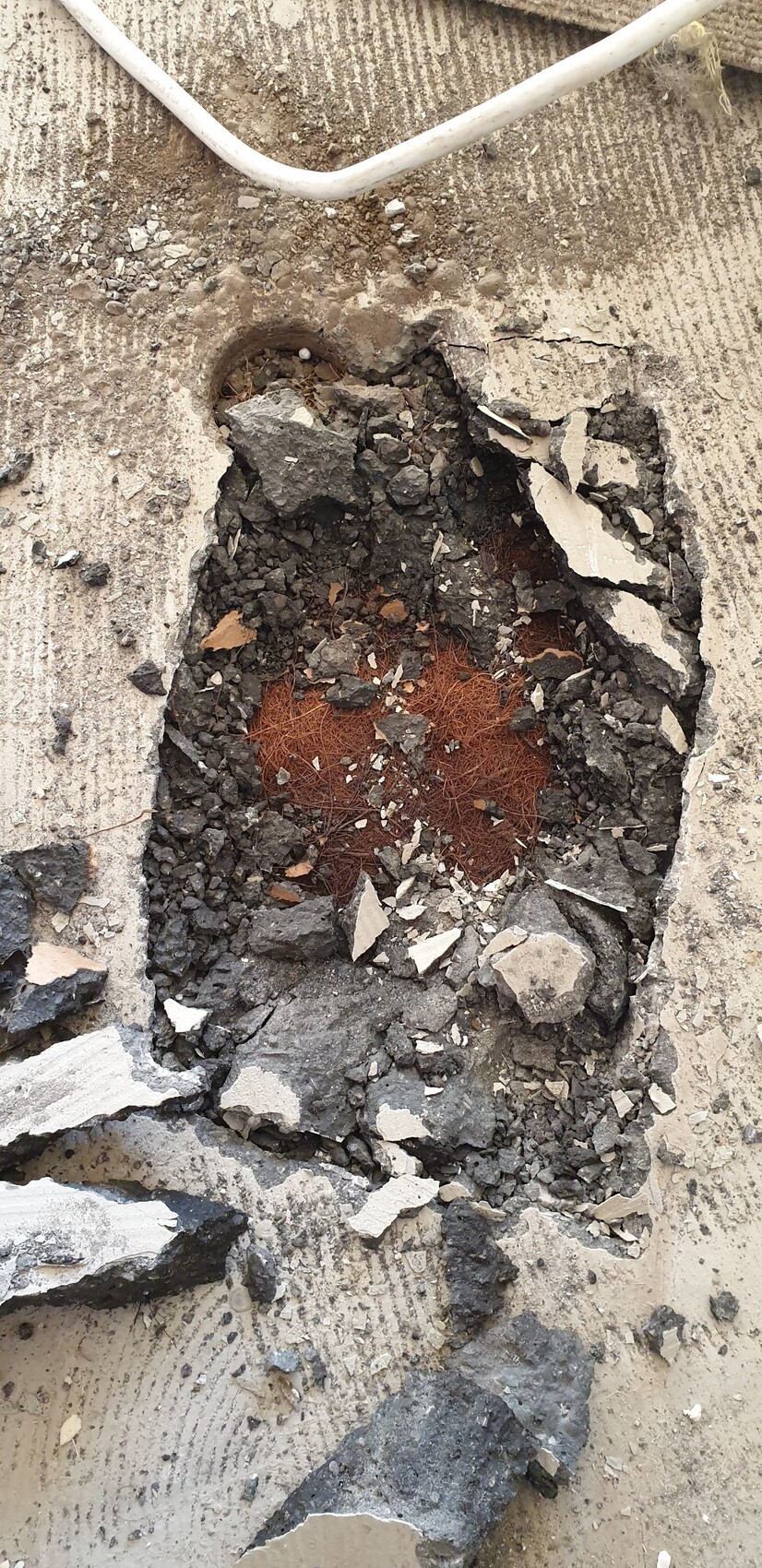
I have chiseled out a larger area. Here are some photos of a bigger piece. On top, there is some kind of gray leveling layer, and underneath, a kind of brown paper?
Disposal would of course be expensive then :-(
What do you think? What type of floor material is this? Can I still safely break up the floor using the usual protective measures?
Thanks for your feedback.
Best regards
Hello "chippy".
On 02/18/2021, I shared my comments on this topic with you.
If you ask often and long enough, it’s possible that eventually someone from the “community” will respond that it is a poured asphalt.
From my perspective, this would still be a misjudgment, although one that aligns with your preconceptions.
However, especially with the photos you recently posted, the binder “bitumen” is still not confirmed.
Moreover, you yourself refer to it as a “gray leveling compound.” Poured asphalt has never been, and is not, a leveling compound.
If you do not want to accept my expert opinion, that is your decision, which we must respect.
At least perform the burn test, which will probably convince you and guide you in the right direction:
Hold the flame of a lighter to the material you suspect to be “poured asphalt” for about 2 minutes.
If you do not see any smoke clouds or smell anything resembling bitumen, then please decide whether you trust my explanation or if you want to keep asking the same question here or on other forums until someone with a corresponding answer supports your assumption. I am not trying to preach here, only to inform!
All answers to your original questions have already been provided in this forum!
---------------------
Regards, KlaRa
On 02/18/2021, I shared my comments on this topic with you.
If you ask often and long enough, it’s possible that eventually someone from the “community” will respond that it is a poured asphalt.
From my perspective, this would still be a misjudgment, although one that aligns with your preconceptions.
However, especially with the photos you recently posted, the binder “bitumen” is still not confirmed.
Moreover, you yourself refer to it as a “gray leveling compound.” Poured asphalt has never been, and is not, a leveling compound.
If you do not want to accept my expert opinion, that is your decision, which we must respect.
At least perform the burn test, which will probably convince you and guide you in the right direction:
Hold the flame of a lighter to the material you suspect to be “poured asphalt” for about 2 minutes.
If you do not see any smoke clouds or smell anything resembling bitumen, then please decide whether you trust my explanation or if you want to keep asking the same question here or on other forums until someone with a corresponding answer supports your assumption. I am not trying to preach here, only to inform!
All answers to your original questions have already been provided in this forum!
---------------------
Regards, KlaRa
Similar topics