
ᐅ Assessment of Q2 Plastering: Poor Workmanship or Standard Practice?
Created on: 23 Nov 2023 21:26
M
Matze8474
Hello everyone, the interior plaster is now dry, and the painter wants to start soon. The agreement was for a Q2 finish using gypsum plaster.
Yesterday, I took the following pictures using a flashlight and grazing light. I understand that grazing light reveals more than usual, but is this considered normal for grazing light and a Q2 finish, or is it poor workmanship? I tend to think it is poor workmanship. The site manager has been informed but has not yet been able to inspect.
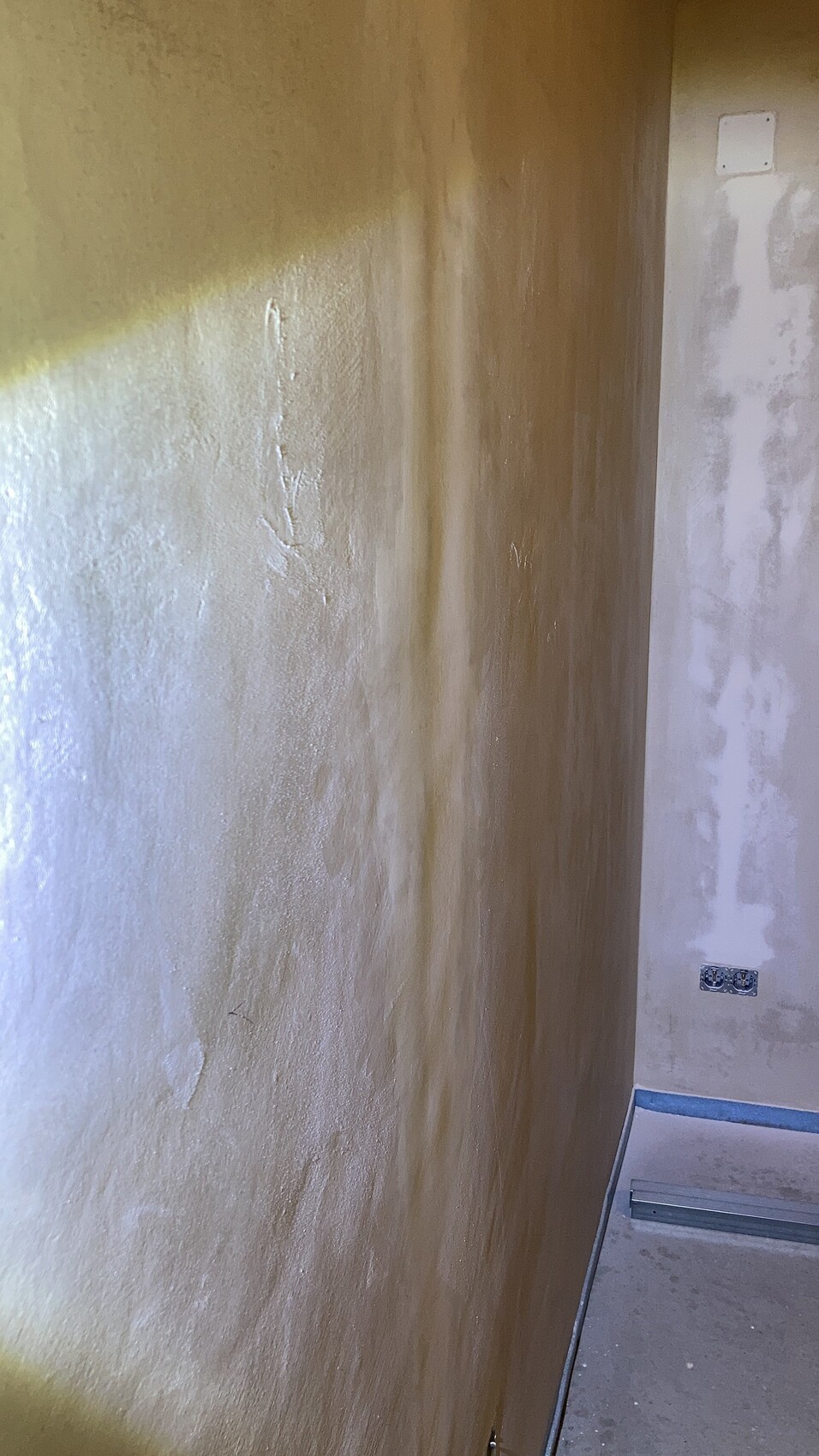
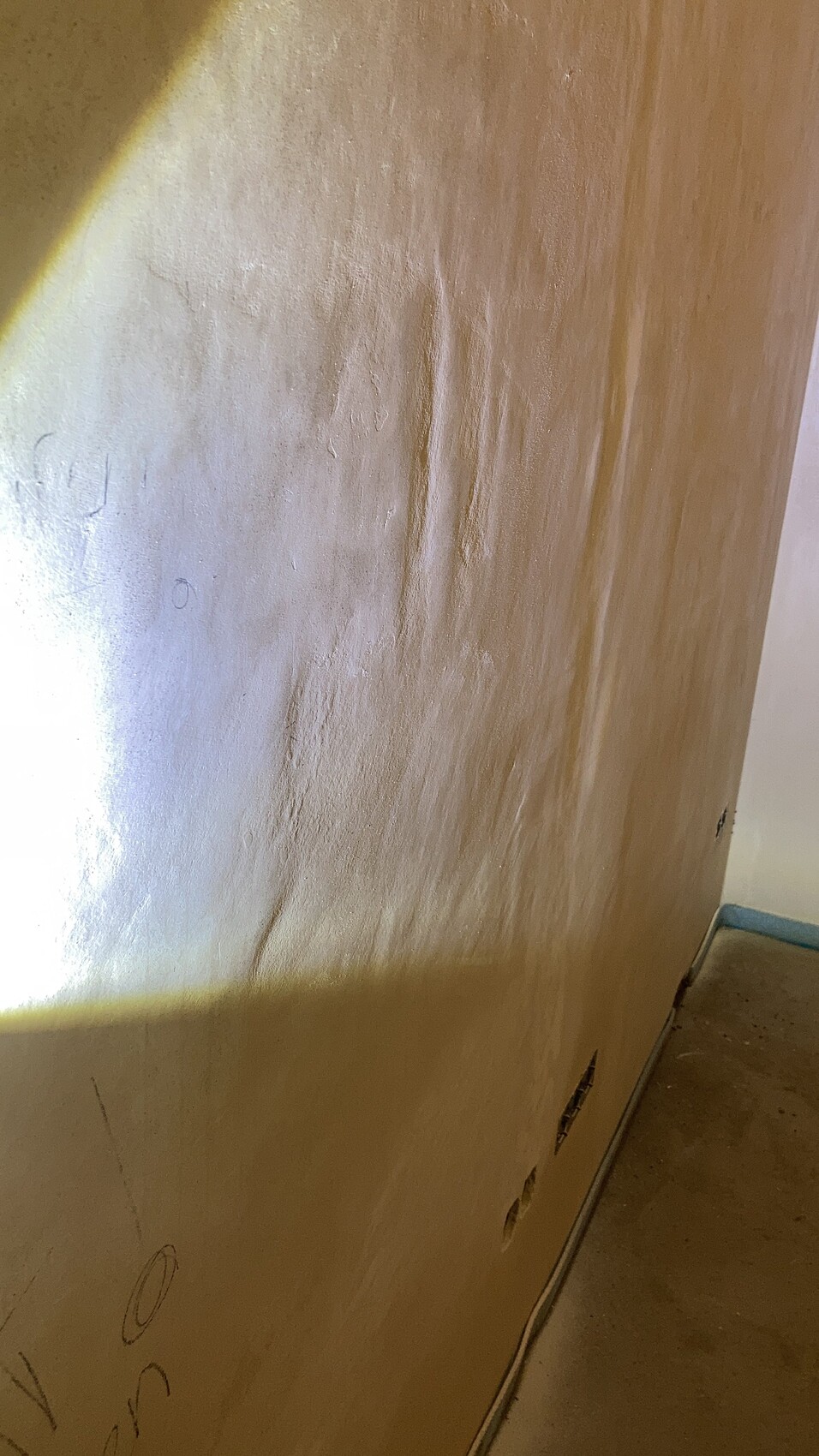
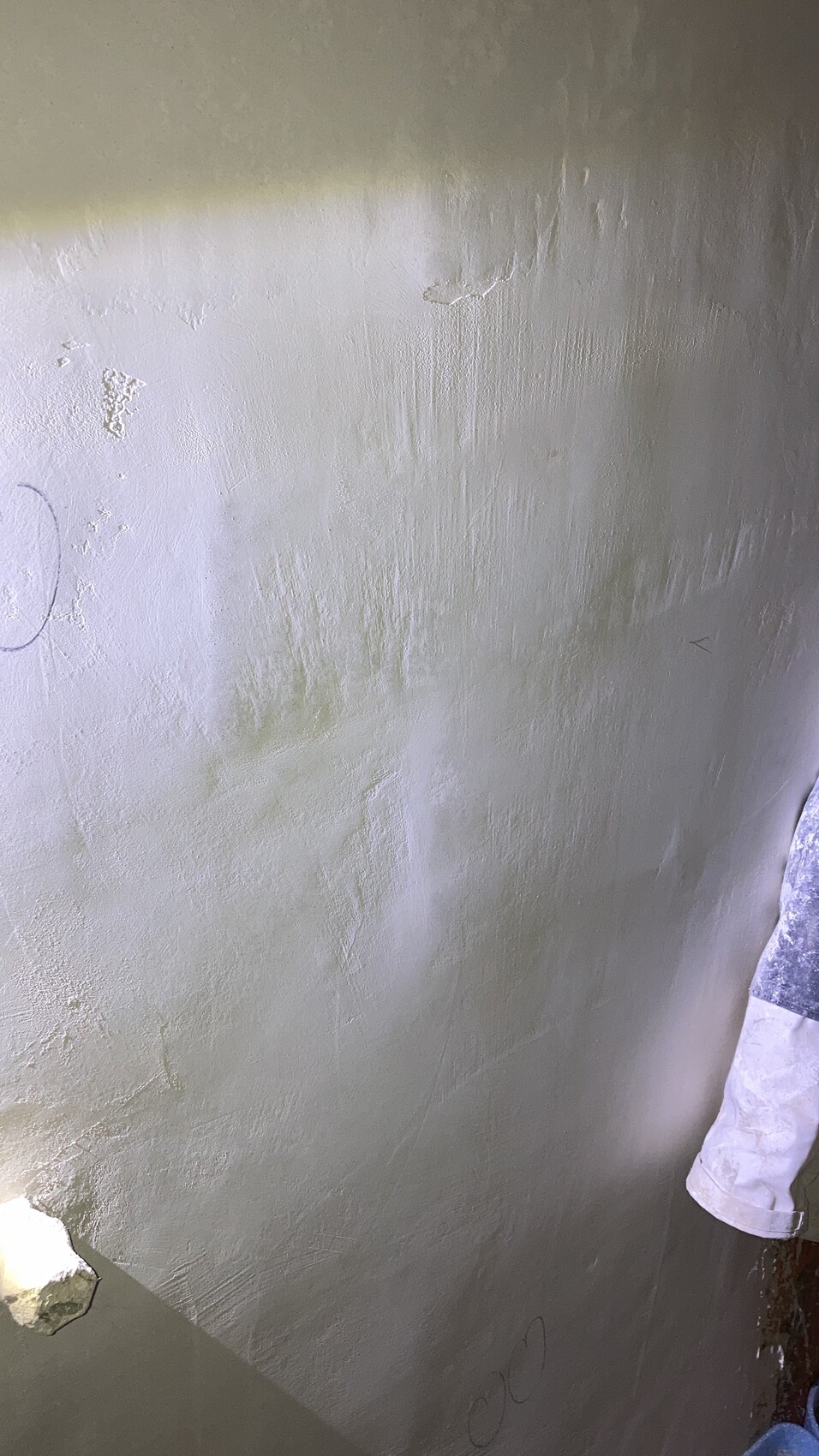
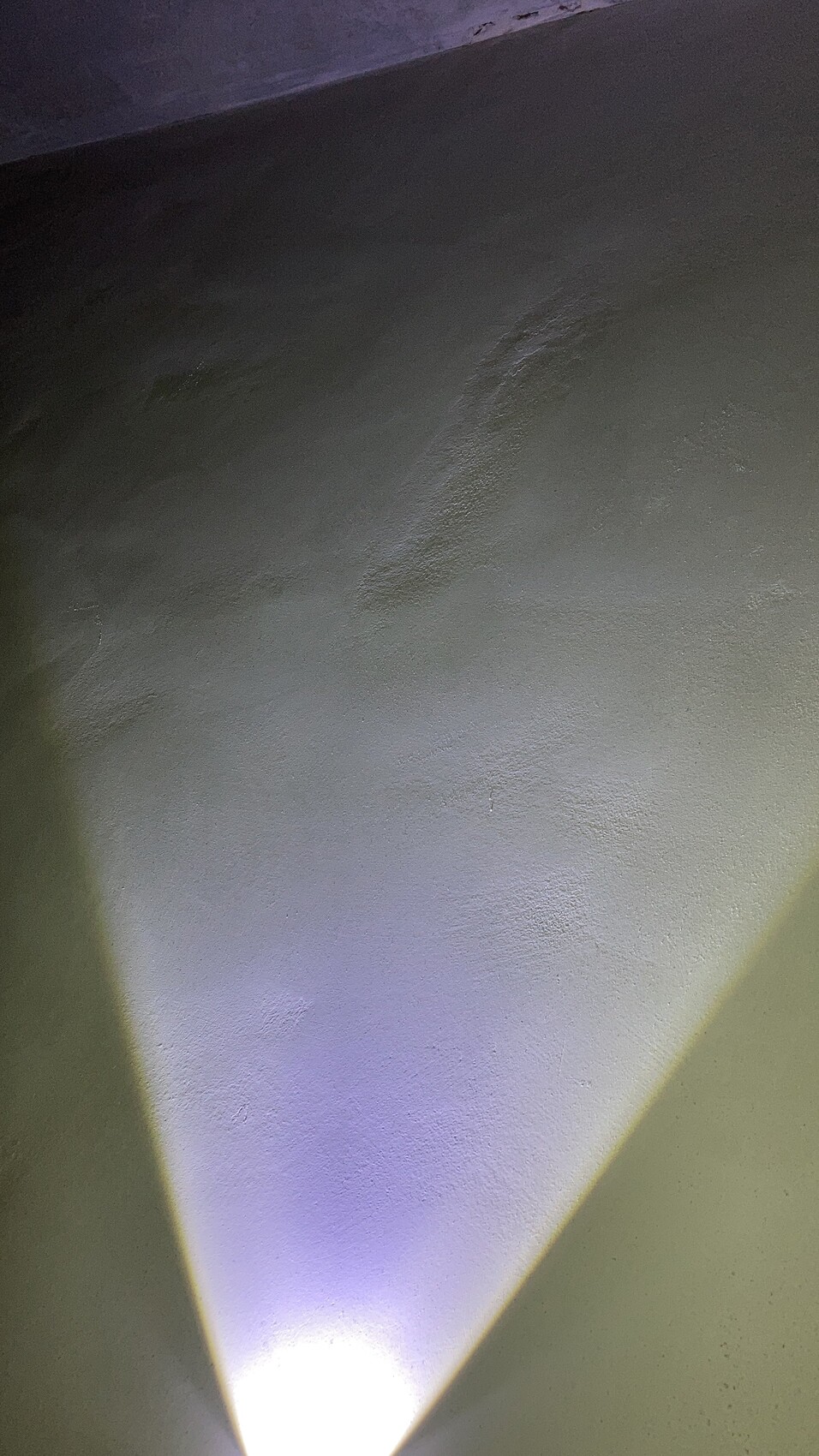
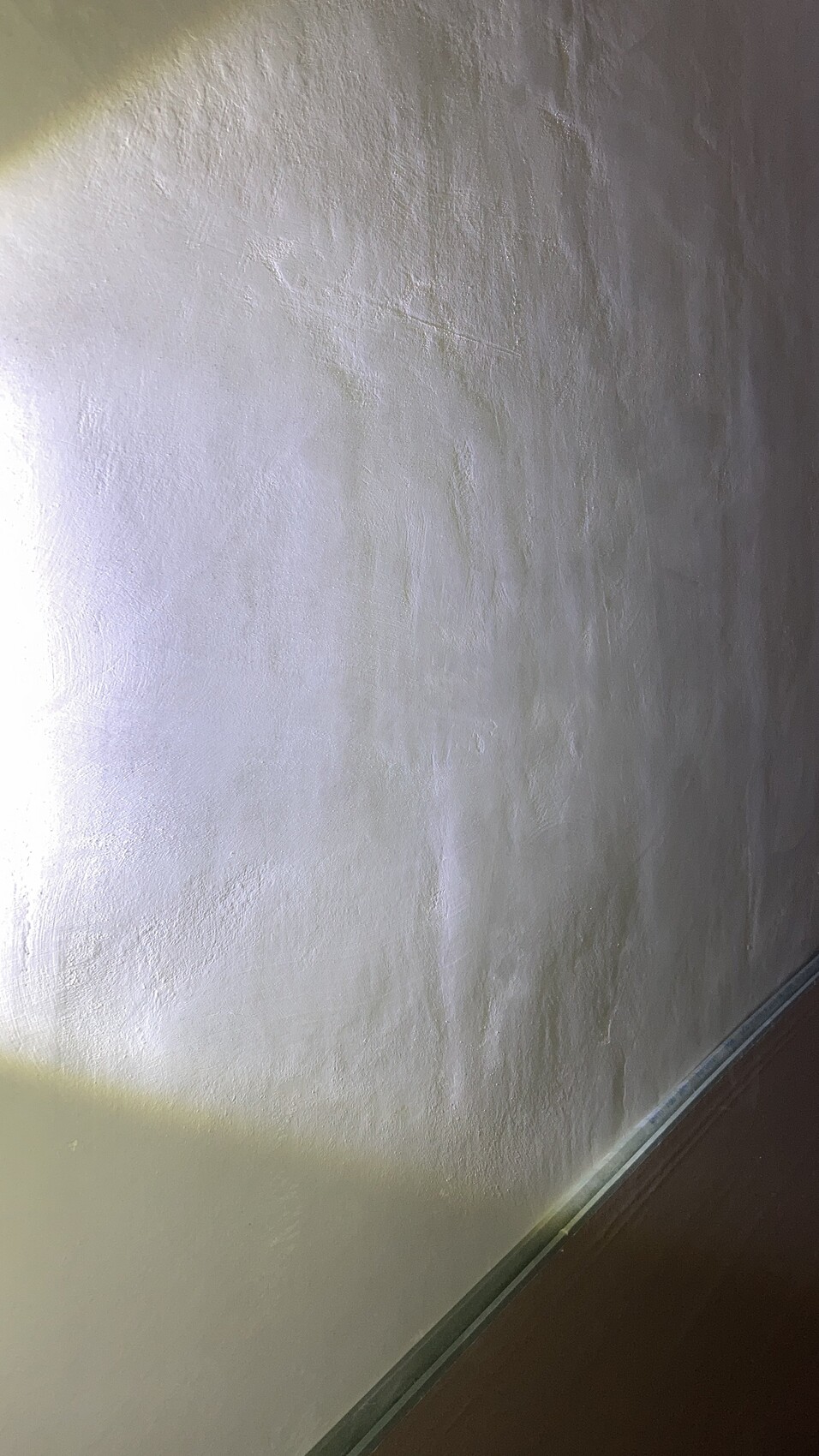
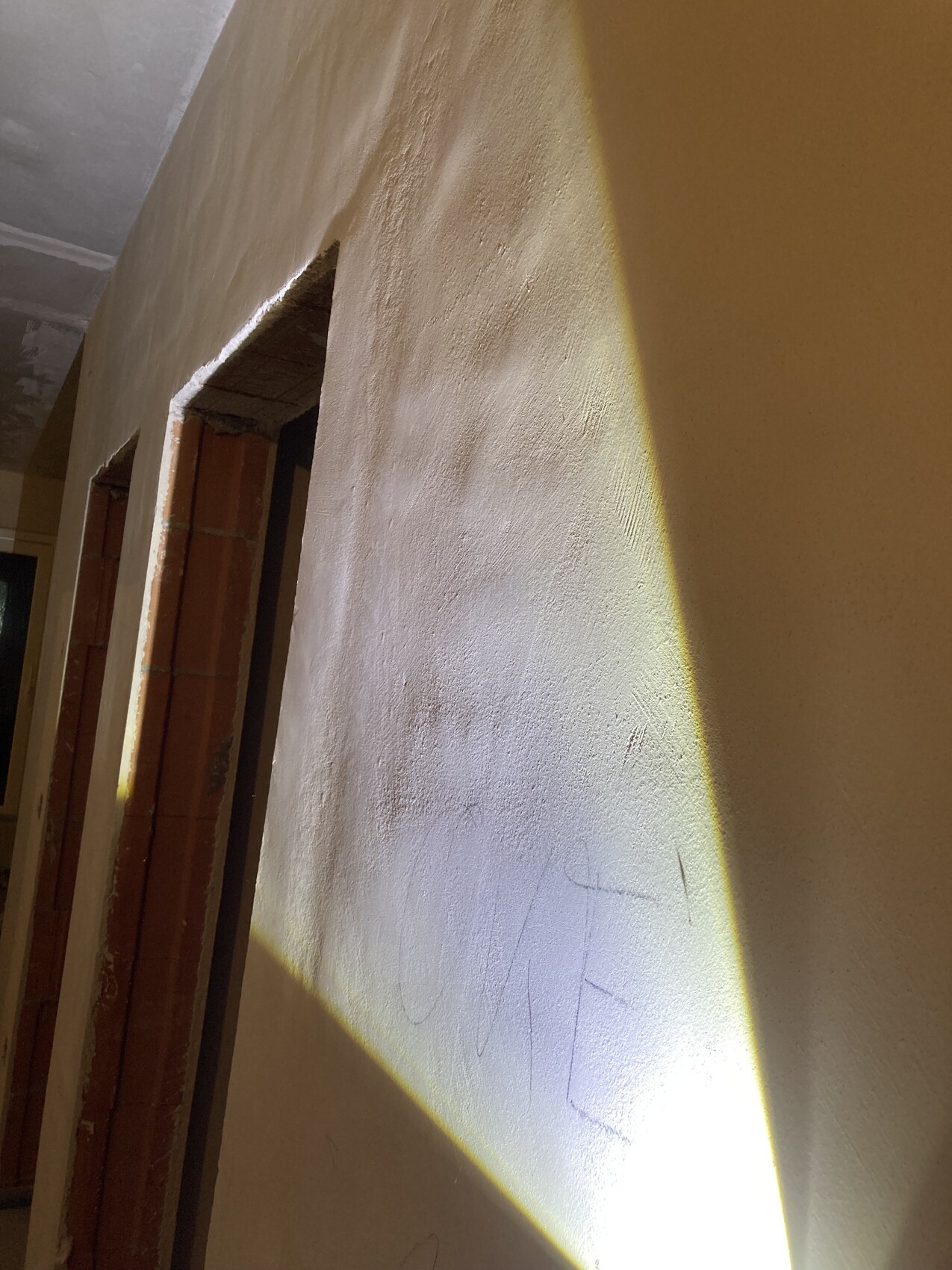
Yesterday, I took the following pictures using a flashlight and grazing light. I understand that grazing light reveals more than usual, but is this considered normal for grazing light and a Q2 finish, or is it poor workmanship? I tend to think it is poor workmanship. The site manager has been informed but has not yet been able to inspect.
B
Buchsbaum24 Nov 2023 09:45Matze8474 schrieb:
The following was agreed:Matze8474 schrieb:
First coat of lime-cement lightweight plaster applied and smoothedI don’t quite understand. The wall obviously has gypsum plaster. Lime-cement plaster was agreed upon. I would describe the workmanship as poor. Generally, plaster guides or screeds are attached to the masonry indoors to create a smooth surface. None are visible here.
It doesn’t matter what quality was agreed on. This work does not meet the requirements for an internal plaster at all. However, Eastern European subcontractors are currently facing acute staffing shortages and extreme price pressure. So these kinds of results are not really surprising. That said, there are also very well-functioning and skilled companies from this region.
Personally, I am not a fan of gypsum plaster in general. It absorbs odors much more and always takes in moisture. The risk of mold is significantly higher compared to lime-cement plaster. Why gypsum plaster? Because it is faster and easier for the plasterer to apply. It can also be worked on more easily, such as sanding.
Lime-cement plaster requires considerably longer drying and working times.
K
KarstenausNRW24 Nov 2023 10:12Buchsbaum schrieb:
I don’t quite understand. The wall clearly has gypsum plaster. The agreed plan was for lime-cement plaster.I don’t understand that either. Because in the original post, gypsum plaster is mentioned.Or was gypsum plaster/skim coat used – which is common – to achieve a smooth surface?
Buchsbaum schrieb:
I generally don’t trust gypsum plaster. It absorbs odors much more and always takes in moisture. The risk of mold is significantly higher compared to lime-cement plaster. Why gypsum plaster? Because it’s quicker and easier for the plasterer. Also, gypsum plaster is easier to work with, sanding, etc.Lime-cement plaster has – except in bathrooms – only disadvantages in new construction. - significantly more expensive
- harder to apply
- gypsum results in a smoother and more attractive surface (unless you prefer the slightly rougher lime-cement variant)
- mold is no longer really an issue in new builds
- repairs are easier with gypsum plaster
- gypsum plaster is also vapor permeable
I did find one advantage: it is harder and therefore more impact-resistant.
In conclusion – and this is how it is mostly done in practice – lime-cement plaster is not worth it.
B
Buchsbaum24 Nov 2023 11:35KarstenausNRW schrieb:
Lime-cement plaster has only disadvantages in new construction—except in bathroom areas.
- significantly more expensive
- harder to apply
- gypsum plaster provides a smoother and more attractive surface (unless you prefer the slightly rougher texture of lime-cement plaster)
- mold is no longer an issue in new builds
- repairs are easier with gypsum plaster
- gypsum plaster is also vapor permeable
I did find one advantage: it is harder and therefore more resistant to impact damage. Mold is an issue in many new buildings, and gypsum plaster contributes to this. Gypsum plaster is not harder than lime-cement plaster. Quite the opposite.
Yes, lime-cement plaster is more expensive and more difficult to apply. Not everyone can handle it.
The problem is that gypsum absorbs moisture; it is hygroscopic.
Exposure to moisture damages the strength of gypsum plaster so much that even drying does not improve it.
Once wet, it is ruined. It also absorbs odors. The house starts to smell. I have experienced this myself.
Lime-cement plaster does not have these problems.
K
KarstenausNRW24 Nov 2023 12:08Buchsbaum schrieb:
Mold is an issue in many new buildings. And gypsum plaster contributes to that. No. That's not correct. Sorry.
Buchsbaum schrieb:
Gypsum plaster is not harder than a lime-cement plaster.
On the contrary. Yes. That’s exactly what I wrote as well.
Buchsbaum schrieb:
The problem is, gypsum attracts moisture; it is hygroscopic.
Exposure to moisture damages the strength of gypsum plaster to such an extent that even drying won’t improve it. Yes, gypsum is hygroscopic. No, this is not an issue in new buildings. That’s why gypsum plaster is mostly used, because—except for wet rooms—it is absolutely unproblematic.
Buchsbaum schrieb:
It also absorbs odors. The house starts to smell bad. I have experienced this myself. What kind of houses are you referring to where this happens? In a typical home, there is no difference between the types of plaster used.
Once again: gypsum plaster is a long-established standard and is predominantly used. There is nothing wrong with it. Except for wet rooms, there are no valid reasons to avoid using gypsum plaster (your personal experience with a smelly house cannot be generalized—other plasters might have caused the same issue depending on usage).
B
Buchsbaum24 Nov 2023 12:27The climatic conditions in today’s modern new-build homes are quite a disaster. I do not feel comfortable living in them. I have also heard from several people that they have experienced health problems.
Of course, nobody will admit this here, but it is true. It is no coincidence that ventilation systems are still being installed in houses today. There is no natural ventilation in the mostly airtight homes of today. If gypsum boards or gypsum plaster are added, then natural moisture regulation is completely lost.
A house must be able to breathe. This has been the case for hundreds of years. Today’s homes are completely sealed in the name of climate protection, using vapor barriers, sealing tapes, sealants, silicone, and foam insulation. Sorry, but that is the reality.
I do not want a blower door test on my house. And then people complain when construction costs skyrocket.
In my region, clay houses have been built in a special way since the 1800s. They still stand today, mostly between 150 and 200 years old. Walls one meter thick (3 feet) with natural weathering on the outside. Warm in winter, cool in summer with natural regulation. The thick clay walls absorb moisture and then release it. No problems with mold or anything similar. The exterior walls serve as a habitat for insects. Absolutely healthy living without harmful substances. Pure nature! Built very cheaply.
If I were to tear down such a house today, nothing would remain. Clay bricks, wooden beams, and the clay I would spread out in the garden. The clay originally came from the local clay pit, mixed with a bit of cow dung and straw—that was the building material.
There was no carbon footprint or all that nonsense back then. Ecologically completely harmless and climate-neutral. As I said, we are talking about 200 years ago.
Let’s see what will happen to all those Styrofoam boxes of the modern age. At most, a few mice might nest in them.
Of course, nobody will admit this here, but it is true. It is no coincidence that ventilation systems are still being installed in houses today. There is no natural ventilation in the mostly airtight homes of today. If gypsum boards or gypsum plaster are added, then natural moisture regulation is completely lost.
A house must be able to breathe. This has been the case for hundreds of years. Today’s homes are completely sealed in the name of climate protection, using vapor barriers, sealing tapes, sealants, silicone, and foam insulation. Sorry, but that is the reality.
I do not want a blower door test on my house. And then people complain when construction costs skyrocket.
In my region, clay houses have been built in a special way since the 1800s. They still stand today, mostly between 150 and 200 years old. Walls one meter thick (3 feet) with natural weathering on the outside. Warm in winter, cool in summer with natural regulation. The thick clay walls absorb moisture and then release it. No problems with mold or anything similar. The exterior walls serve as a habitat for insects. Absolutely healthy living without harmful substances. Pure nature! Built very cheaply.
If I were to tear down such a house today, nothing would remain. Clay bricks, wooden beams, and the clay I would spread out in the garden. The clay originally came from the local clay pit, mixed with a bit of cow dung and straw—that was the building material.
There was no carbon footprint or all that nonsense back then. Ecologically completely harmless and climate-neutral. As I said, we are talking about 200 years ago.
Let’s see what will happen to all those Styrofoam boxes of the modern age. At most, a few mice might nest in them.
Similar topics