
Hello everyone,
I have a 100m² (1,076 sq ft) roof terrace with an EPDM flat roof membrane, and Douglas fir boards laid on top in a floating manner.
Now, I want to install a railing, but I don’t want to simply screw it directly onto the Douglas fir boards. At least, that doesn’t sound very stable to me.
What options are there for attaching a railing to the outside of the house when the exterior wall consists of a 10cm (4 inch) thick cross-laminated timber (CLT) panel with 20cm (8 inch) of wood fiber insulation on the outside?
Did I understand correctly that some kind of sleeves are needed to create a form-fit connection between the CLT wall and the railing posts?
Regards,
Tito
I have a 100m² (1,076 sq ft) roof terrace with an EPDM flat roof membrane, and Douglas fir boards laid on top in a floating manner.
Now, I want to install a railing, but I don’t want to simply screw it directly onto the Douglas fir boards. At least, that doesn’t sound very stable to me.
What options are there for attaching a railing to the outside of the house when the exterior wall consists of a 10cm (4 inch) thick cross-laminated timber (CLT) panel with 20cm (8 inch) of wood fiber insulation on the outside?
Did I understand correctly that some kind of sleeves are needed to create a form-fit connection between the CLT wall and the railing posts?
Regards,
Tito
K
knalltüte21 Mar 2021 18:29Hi, it has since been built over and is also rented out. Unfortunately, I don’t have any photos of the original construction condition. I used rough-sawn larch wood about 5cm (2 inches) thick (estimated) from a local sawmill and picked it up myself (there were wood shavings all over my car...). I know it’s still holding up well, and that was more than 10 years ago. Everything on the deck made of spruce/fir had rotted (and has now been replaced with larch).
Adhesive dowels, as suggested by @Norlys, are probably not effective in glulam (glued laminated timber), right? Other dowels approved for glulam are of course possible. I just wouldn’t want to bother with them...
Better to replace the railing fasteners every 15 years 😎
Adhesive dowels, as suggested by @Norlys, are probably not effective in glulam (glued laminated timber), right? Other dowels approved for glulam are of course possible. I just wouldn’t want to bother with them...
Better to replace the railing fasteners every 15 years 😎
Nordlys schrieb:
Use the Fischer Thermax system for the railing. Be thorough. The adhesive mortar needs to be applied cleanly and in sufficient quantity. Okay, that would be the least stable solution for me.
Here, the railing is connected to the BSP (cross-laminated timber) wall using a threaded rod, but under loads on the railing, such as wind pressure, the whole assembly could move slightly over the 20cm (8 inches) distance of the insulation layer since there is no form fit.
The solution I had in mind is this one: [MEDIA=youtube]IRnbO-zSdL0[/MEDIA]
A thick sleeve is used here to transfer the loads from the railing nearly directly to the solid wood wall.
If this is not possible, the plaster at those points will never remain sealed due to minimal movement. And with wood fiber insulation, I especially want to avoid any contact with moisture on the weather-exposed side.
Nordlys schrieb:
You have two options. Attach the railing to the wall or to the terrace. You need to decide. With external thermal insulation composite systems (ETICS), any attachment will always have to penetrate the insulation.Ok, then I will probably choose to mount it on the terrace surface.K
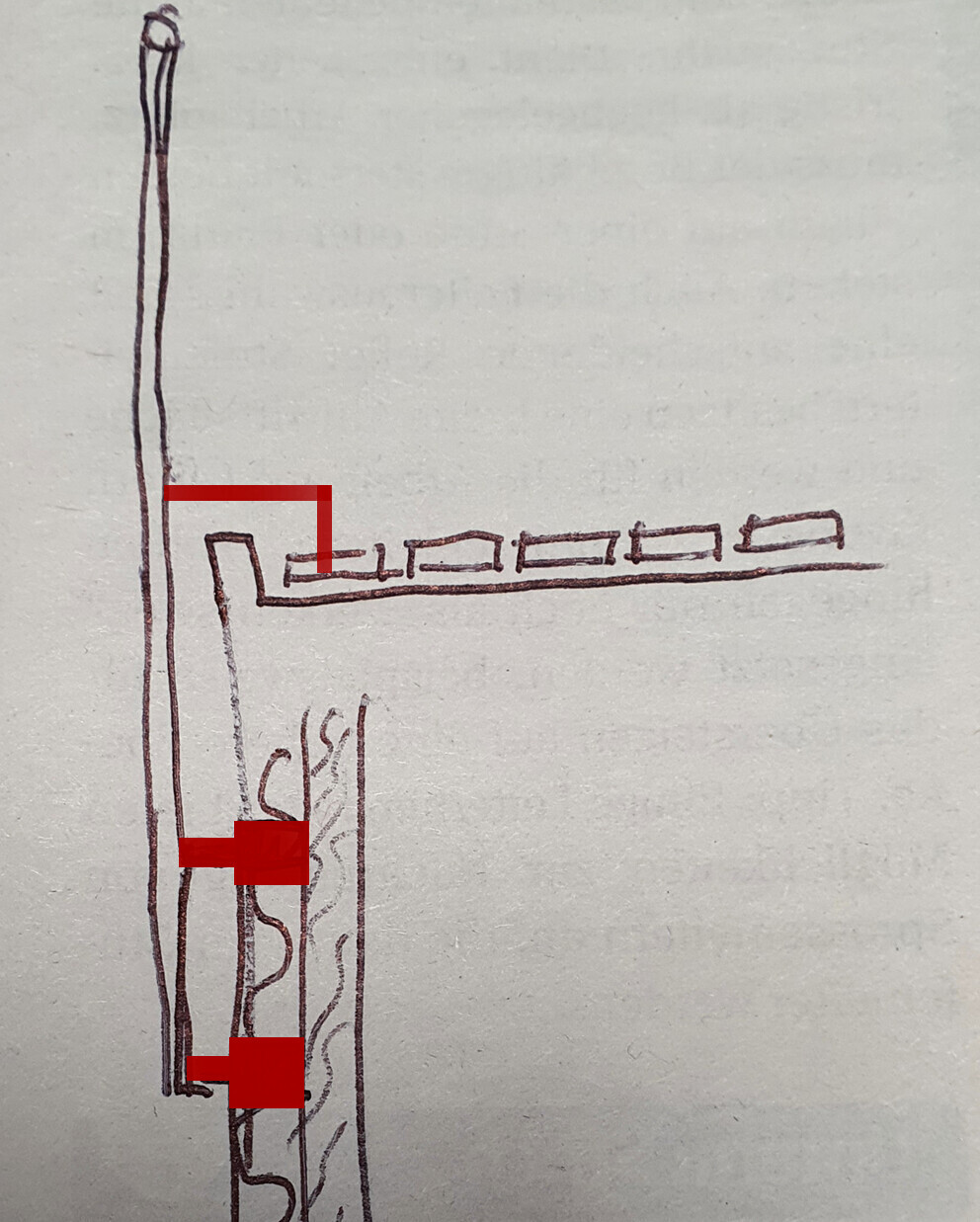
knalltüte22 Mar 2021 07:48If you are working with an external thermal insulation composite system (ETICS), use two sleeves stacked on top of each other to eliminate the "lever effect."
You might even want to anchor it additionally to the cladding. 😉
This way, the lever is still at the top, but the pivot point changes so that the lower sleeve is just "pressed in" rather than "bent."
You might even want to anchor it additionally to the cladding. 😉
This way, the lever is still at the top, but the pivot point changes so that the lower sleeve is just "pressed in" rather than "bent."
Similar topics