
Hello building community,
I had hoped not to have to post anything in this forum, but it seems these issues really can’t be avoided on any construction site…
After several discussions with the construction management, planning team, and my painter, there are currently major disagreements regarding the quality of the interior plaster. The trade was contracted separately. A lime-cement plaster was specified.
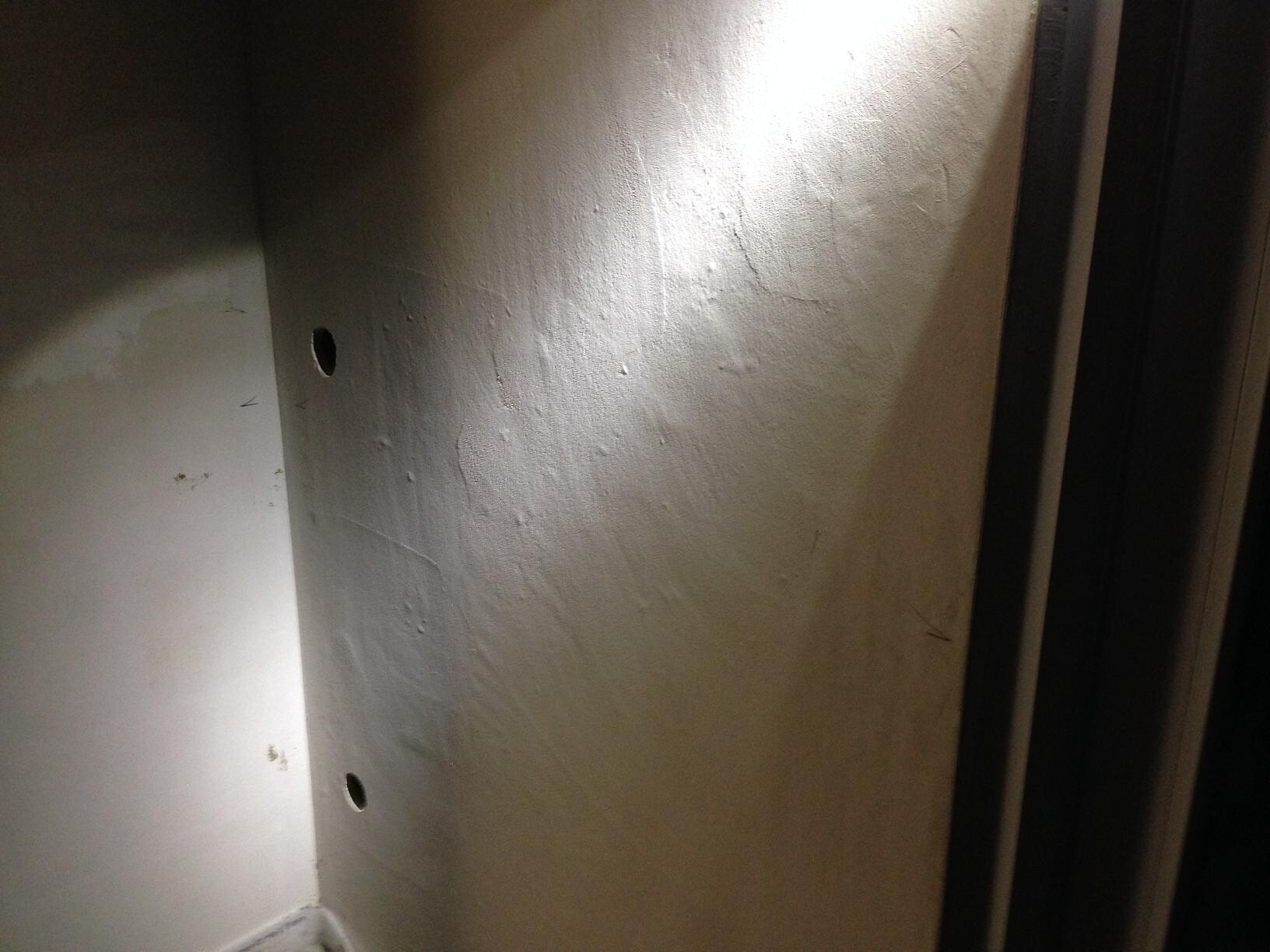
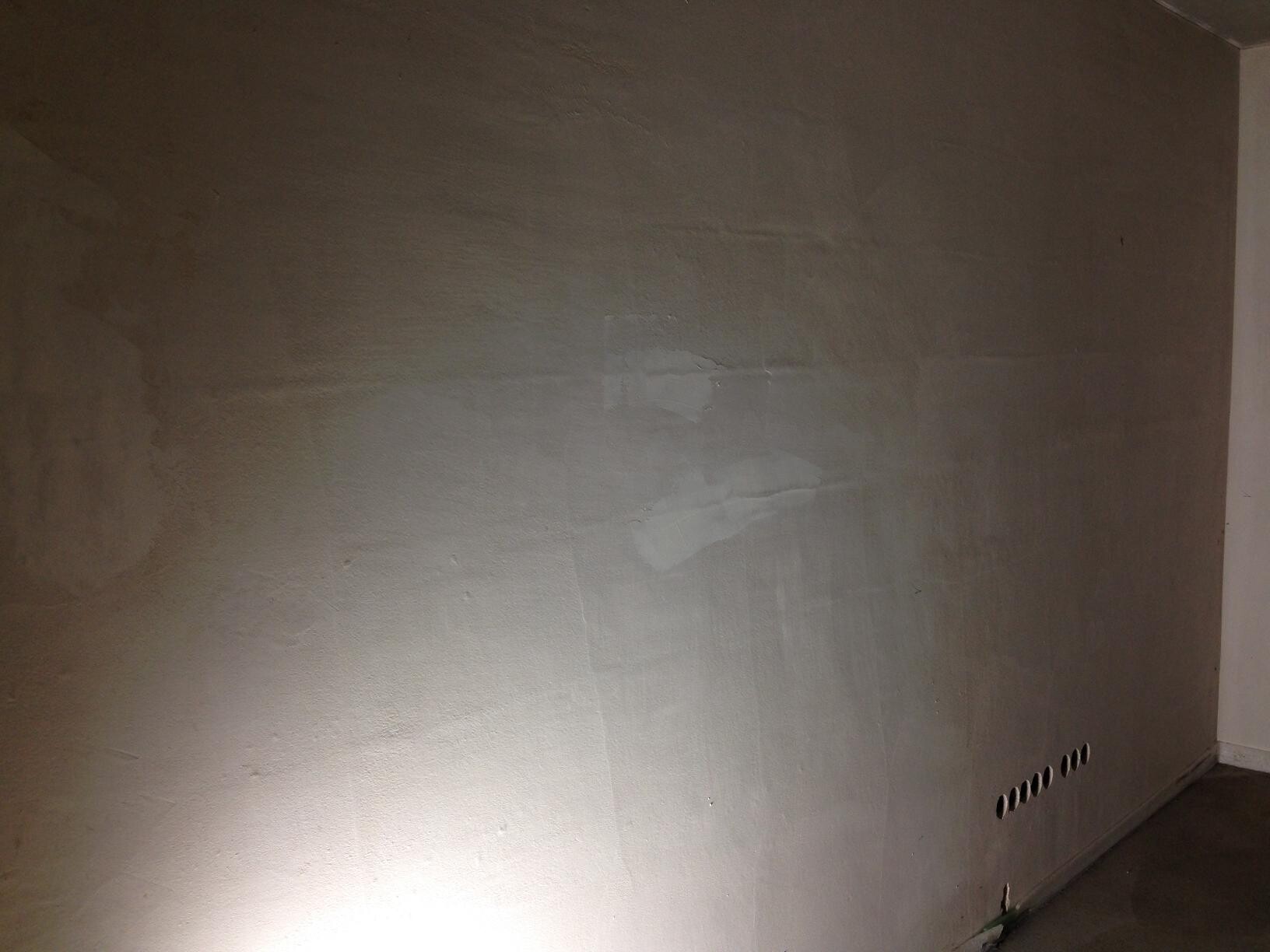
According to construction management, the interior plaster is fine and meets the agreed quality as specified (ready for wallpapering). Unfortunately, as you never stop learning, I found out that the scope of work lacks a specification for a quality level. It is supposed to be Q1, but even my painter strongly doubts this, and I can understand why when looking at the photos from last night when we were discussing tiles and walls. Initially, the issue was that the plaster is not smooth but shows dents and waves. Also, some of the mortar joints between the bricks are extremely visible and wavy.
Now, about one month after the screed was installed in the house, bubbles are forming all over the plaster, which can be easily scraped off with a fingernail, revealing large holes underneath. The painter tried using a sander to see if it could be sanded down or if it was extremely hard. He applied very light pressure and a cloud of dust appeared; the plaster can be sanded down multiple millimeters under this dust cloud, and underneath it becomes very coarse, rough, or whatever you want to call it. The painter now even doubts that filler would adhere properly to the surface. A trowel cut along the ceiling edge was only made after pointing it out, even though it was included in the specification.
Can someone give me some advice or maybe interpret what might have gone wrong here based on the pictures?
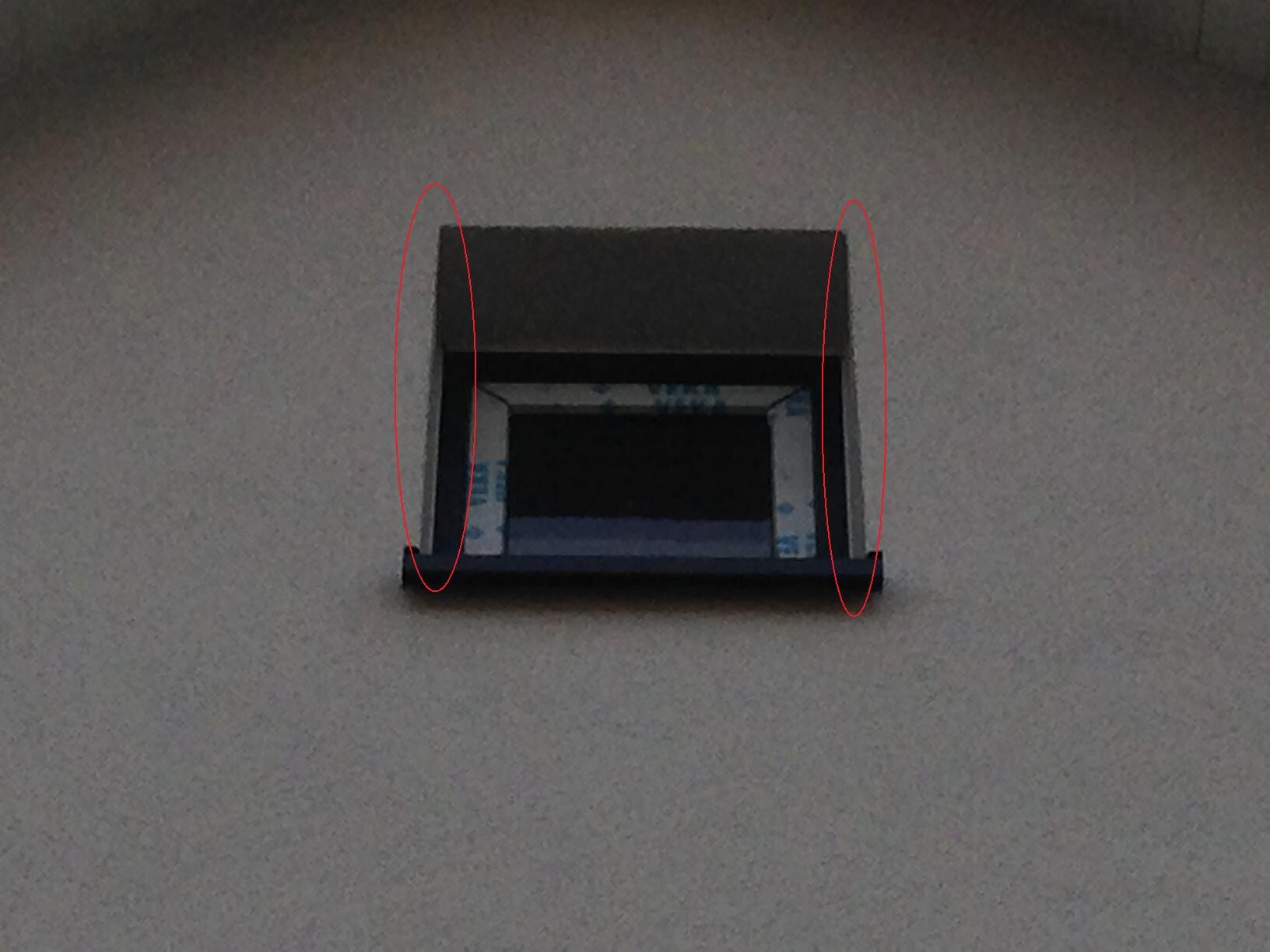
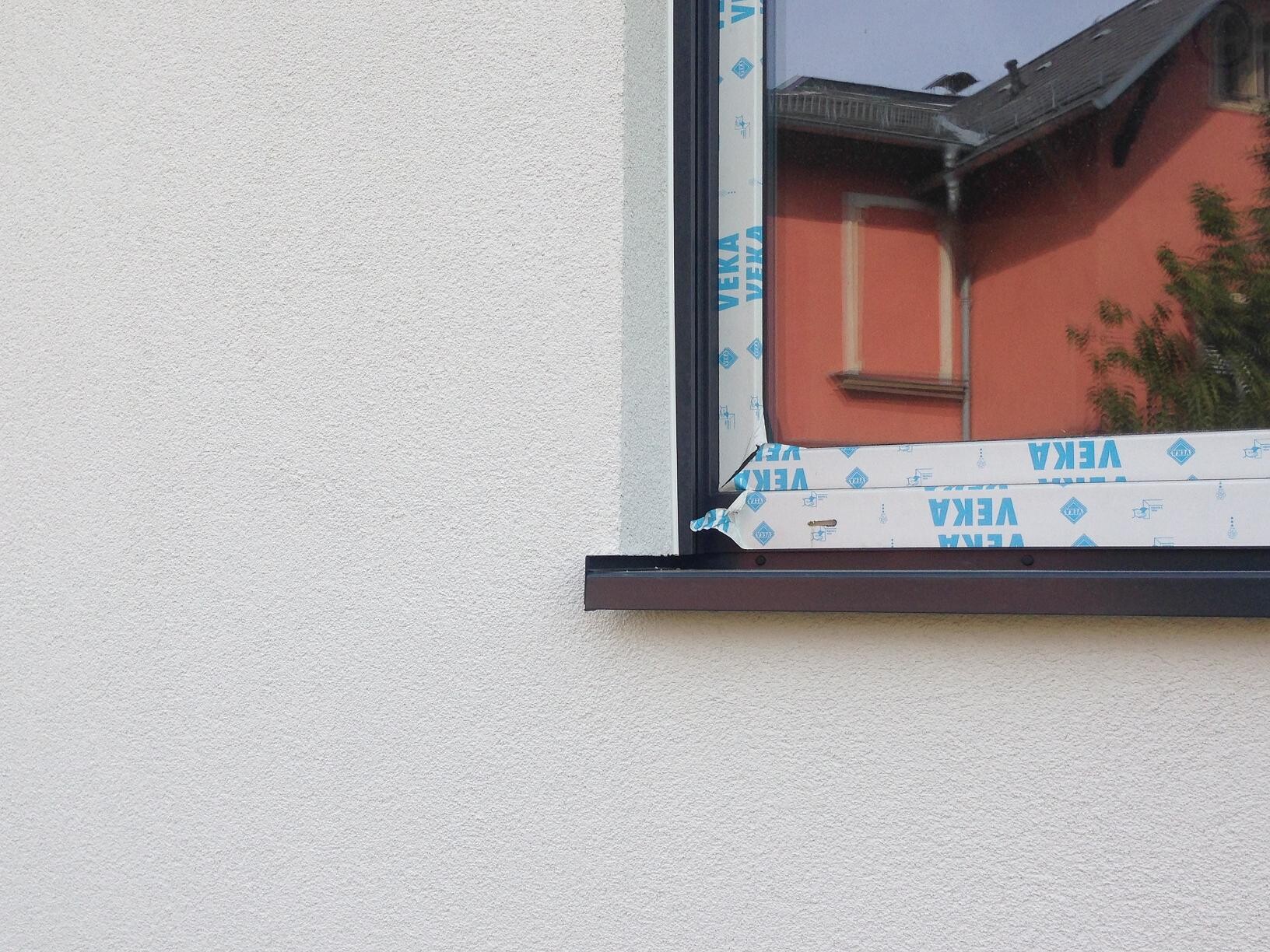
The situation with the exterior plaster is perhaps even worse (same company). All window reveals are crooked, the trim strips are often interrupted several times and patched with silicone. Now they want to chip off the window reveals on the ground floor and re-plaster them, but a friend told me that this will definitely damage the outer appearance of the textured plaster and it will never match perfectly, so the area where it was chipped off will always be visible. Is that true? Up on the upper floor, they said, it tends to even out after some time. The attached photo shows the small gable window under the roof, but you can see this issue most clearly in the pictures. Unfortunately, nearly every window looks like this.


I had hoped not to have to post anything in this forum, but it seems these issues really can’t be avoided on any construction site…
After several discussions with the construction management, planning team, and my painter, there are currently major disagreements regarding the quality of the interior plaster. The trade was contracted separately. A lime-cement plaster was specified.
According to construction management, the interior plaster is fine and meets the agreed quality as specified (ready for wallpapering). Unfortunately, as you never stop learning, I found out that the scope of work lacks a specification for a quality level. It is supposed to be Q1, but even my painter strongly doubts this, and I can understand why when looking at the photos from last night when we were discussing tiles and walls. Initially, the issue was that the plaster is not smooth but shows dents and waves. Also, some of the mortar joints between the bricks are extremely visible and wavy.
Now, about one month after the screed was installed in the house, bubbles are forming all over the plaster, which can be easily scraped off with a fingernail, revealing large holes underneath. The painter tried using a sander to see if it could be sanded down or if it was extremely hard. He applied very light pressure and a cloud of dust appeared; the plaster can be sanded down multiple millimeters under this dust cloud, and underneath it becomes very coarse, rough, or whatever you want to call it. The painter now even doubts that filler would adhere properly to the surface. A trowel cut along the ceiling edge was only made after pointing it out, even though it was included in the specification.
Can someone give me some advice or maybe interpret what might have gone wrong here based on the pictures?
The situation with the exterior plaster is perhaps even worse (same company). All window reveals are crooked, the trim strips are often interrupted several times and patched with silicone. Now they want to chip off the window reveals on the ground floor and re-plaster them, but a friend told me that this will definitely damage the outer appearance of the textured plaster and it will never match perfectly, so the area where it was chipped off will always be visible. Is that true? Up on the upper floor, they said, it tends to even out after some time. The attached photo shows the small gable window under the roof, but you can see this issue most clearly in the pictures. Unfortunately, nearly every window looks like this.
Oh, sorry, I just noticed now that images can be uploaded directly...
Here are a few more pictures of my "main issues."
Yes, the question about whether this clause for the drywall panels can also be applied to brick walls is justified. That was my first thought as well.
We set up the raking light to better show the problem. In daylight, the texture isn’t quite as pronounced, but you can still see it, especially the horizontal joints between the individual brick rows, which really shouldn’t be visible... I was at another new build where plastering is currently underway, and I don’t see any texture there at all. It’s really smooth, thick, and above all, even—without waves or bubbles like in my case.
Here are a few more pictures of my "main issues."
Yes, the question about whether this clause for the drywall panels can also be applied to brick walls is justified. That was my first thought as well.
We set up the raking light to better show the problem. In daylight, the texture isn’t quite as pronounced, but you can still see it, especially the horizontal joints between the individual brick rows, which really shouldn’t be visible... I was at another new build where plastering is currently underway, and I don’t see any texture there at all. It’s really smooth, thick, and above all, even—without waves or bubbles like in my case.
B
Bauexperte24 Oct 2016 23:02GehliJr schrieb:
Where does the clause "If nothing is agreed in the contract ... Q2 is considered agreed" come from?
Is this stated officially anywhere? For example:
"Q2 – This surface finish meets the standard quality, for instance according to section 3 of ATV DIN 18350, section 6.4.10 of ÖNORM B 3346, recommendation SIA V 242/1, EN 13914-2, and fulfills the usual requirements for wall and ceiling surfaces."
Source: German Gypsum Industry Association
Kind regards, Bauexperte