
Hello everyone,
Since I wasn’t able to find a clear answer through searching, I would like to ask for your advice.
Twenty-five years ago, we bought a one-and-a-half-story detached house in North Rhine-Westphalia (NRW), with garages attached on both the right and left sides. The property size is 600 m² (approximately 6460 ft²), located in a rural area. At that time, the neighboring plots on both sides were undeveloped.
Our garages and the 1.05 m (3.4 ft) high boundary walls next to them are built right up to the property line, but entirely on our land. The actual garden is behind our house and is enclosed on all sides by the same type of wall, also built along the property boundary but on our land.
A few years later, the right neighboring lot was developed with a detached house and garage, also built on the property line. The left neighboring plot remained undeveloped until now.
The left neighboring lot is currently under construction. The owners are laypersons, and the house is being built by a construction company. I happened to see and briefly speak with the owners before construction started. The plan is to build a detached house without a basement, with a garage adjoining the side of our garage. So far, so good.
However, I’ve already had conflicts with the excavator operator because he damaged a large section of our boundary wall near the base while digging, and the same happened at the neighbor’s wall. When confronted, he denied everything. At least the owner has verbally promised to have the damaged spots replastered.
I also upset them when I repeatedly asked the operator not to park his 33-ton (36.3 US ton) excavator directly in front of the new construction site (on the future sidewalk), but to park it on the property itself instead.
The reason is that under the so-called sidewalk (in front of our house, consisting of sand and gravel) runs piping for a stream that is usually dry but can carry a significant amount of water during heavy rain. The piping (stream inlet) starts right at our property, runs under the sidewalk, and somewhere far away empties into a rainwater retention basin.
About 30 years ago, there was a flood in this area, which is why the piping was installed. It runs about 70 cm (28 inches) below the topsoil and is gray. I’m uncomfortable with 33 tons of weight parked on it. (I personally experienced severe flooding years ago with a small creek that turned into a destructive torrent during heavy rain.)
The excavator operator dismissed my concern, saying the pipe would withstand the pressure. The two steel plates placed for load distribution, which were too short in size, did not help much either.
If the piping were to collapse in front of the new property, the water would back up exactly in front of our property (according to the water flow direction). After bothering the operator about this for three days in a row, the excavator has now been parked on the new property itself. Hopefully, this will continue.
A few days ago, the ground level of the new garden was raised by about 40 to 50 cm (16 to 20 inches) using excavated soil, with the excess soil removed. As a result, the neighboring garden level to the left of the new lot and our garden level are now naturally lower.
This neighbor has a welded wire fence with privacy screening cemented in along her long garden boundary. As she mentioned yesterday, the 40 to 50 cm (16 to 20 inches) high soil embankment of the new garden along her fence is supposedly being supported by stones, but she wasn’t completely sure about the details or whether she understood this correctly (status: yesterday evening).
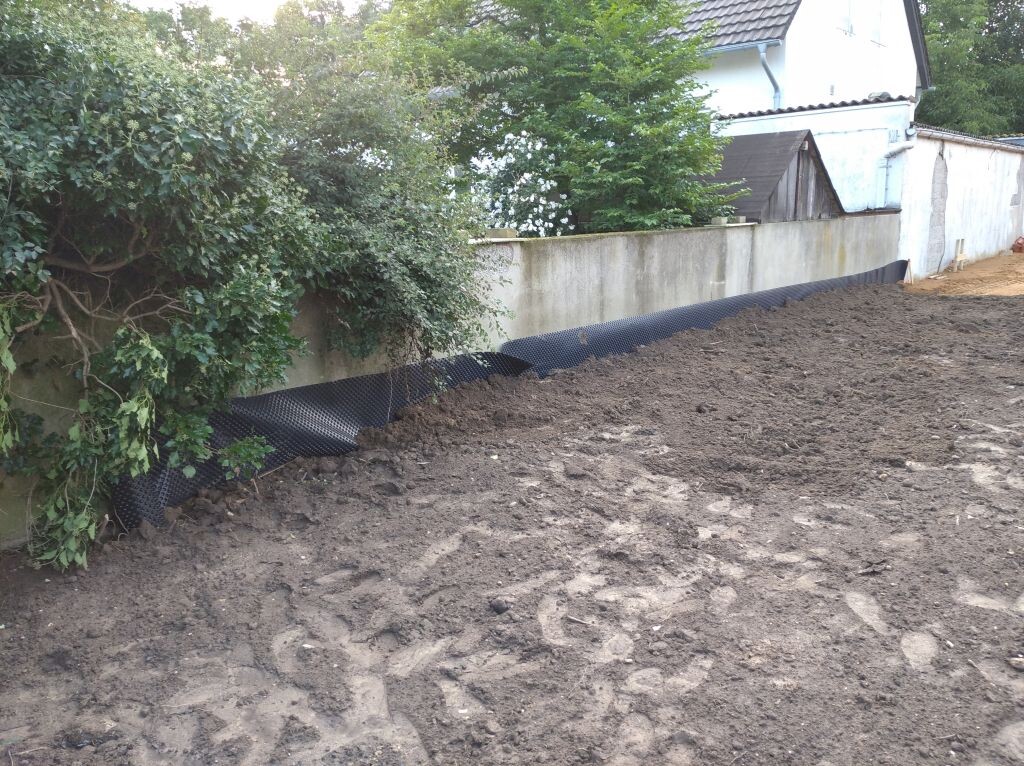
Now the problem: On our side, with the garden wall, the excavator simply pushed the raised soil directly against our wall on the planned garden side.
I happened to notice this. A direct discussion with the excavator operator about potential moisture damage to our garden wall was unsuccessful. I expressed concerns about soil moisture penetrating the wall, rain, frost, and the risk of plaster detachment.
The next day, the owner’s wife came to the site with two rolls of dimpled drainage membrane, which I also only happened to notice by chance. I repeated my concerns to her as well.
The excavator operator then proposed—after removing the soil piled against the wall again—to place simple dimpled membrane against the wall with the protruding dimples pointing toward the wall, then pile the soil back against it. He believed that rainwater could run off through the dimples and that the dimples would provide ventilation for the wall.
I objected, saying that rainwater would not drain well between the dimples and the wall. The wall could no longer dry at this point. Also, in winter, snow would lie on top of the membrane’s upper edge. Since the wall has no cap at the top, it would remain wet behind the membrane, as no air can reach it.
The puzzled owner’s wife promised that her husband would call in the evening, but no call came. Instead, her husband briefly visited the site the next morning, according to a neighbor, and apparently examined the situation with the wall. There was no conversation; I did not see him, and he did not ring.
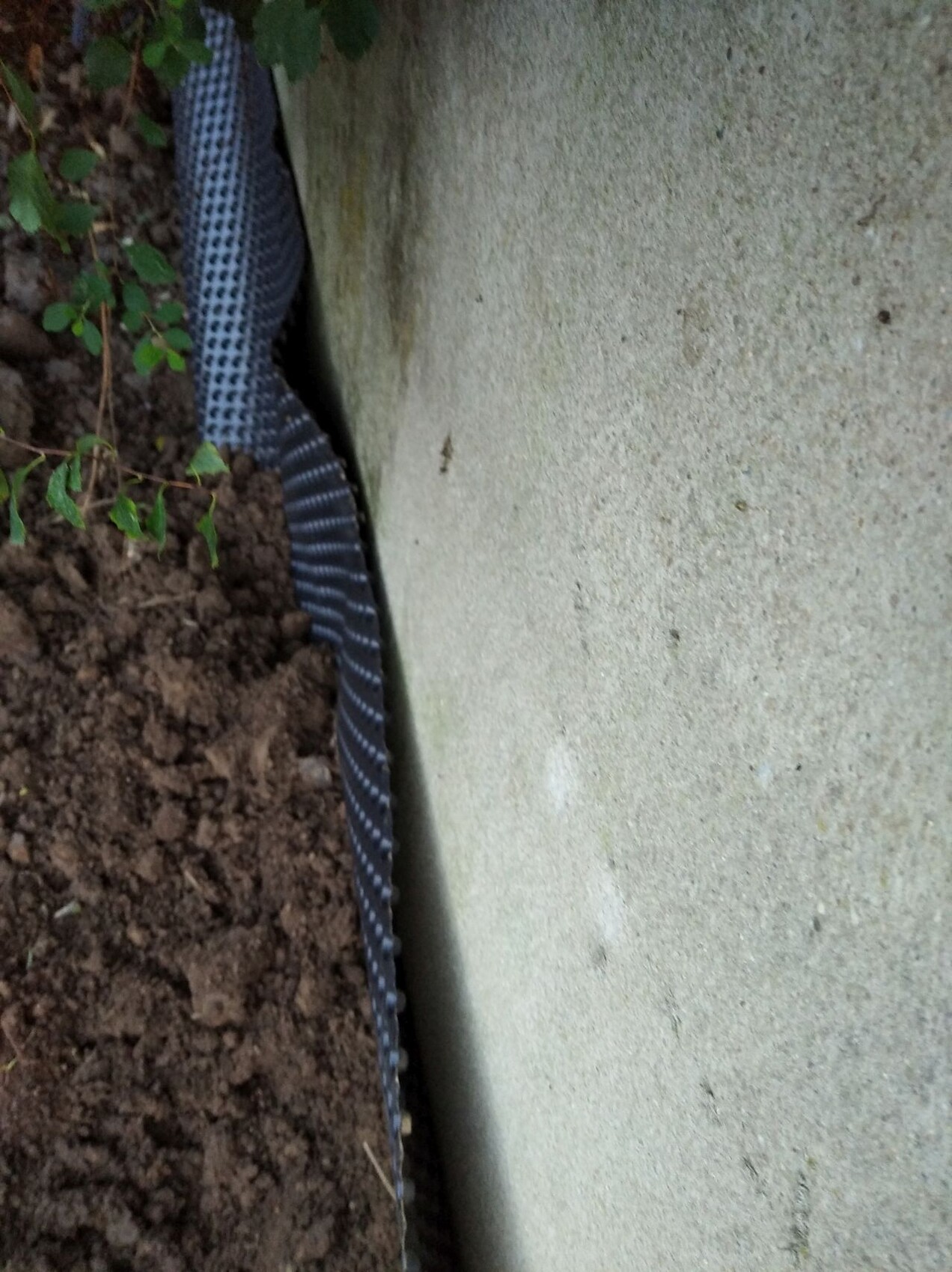
Yesterday, the excavator operator leaned two rolls of dimpled membrane against the wall with the dimpled side facing it and pushed the soil against it with his excavator. Unfortunately, I only noticed this mess yesterday evening.
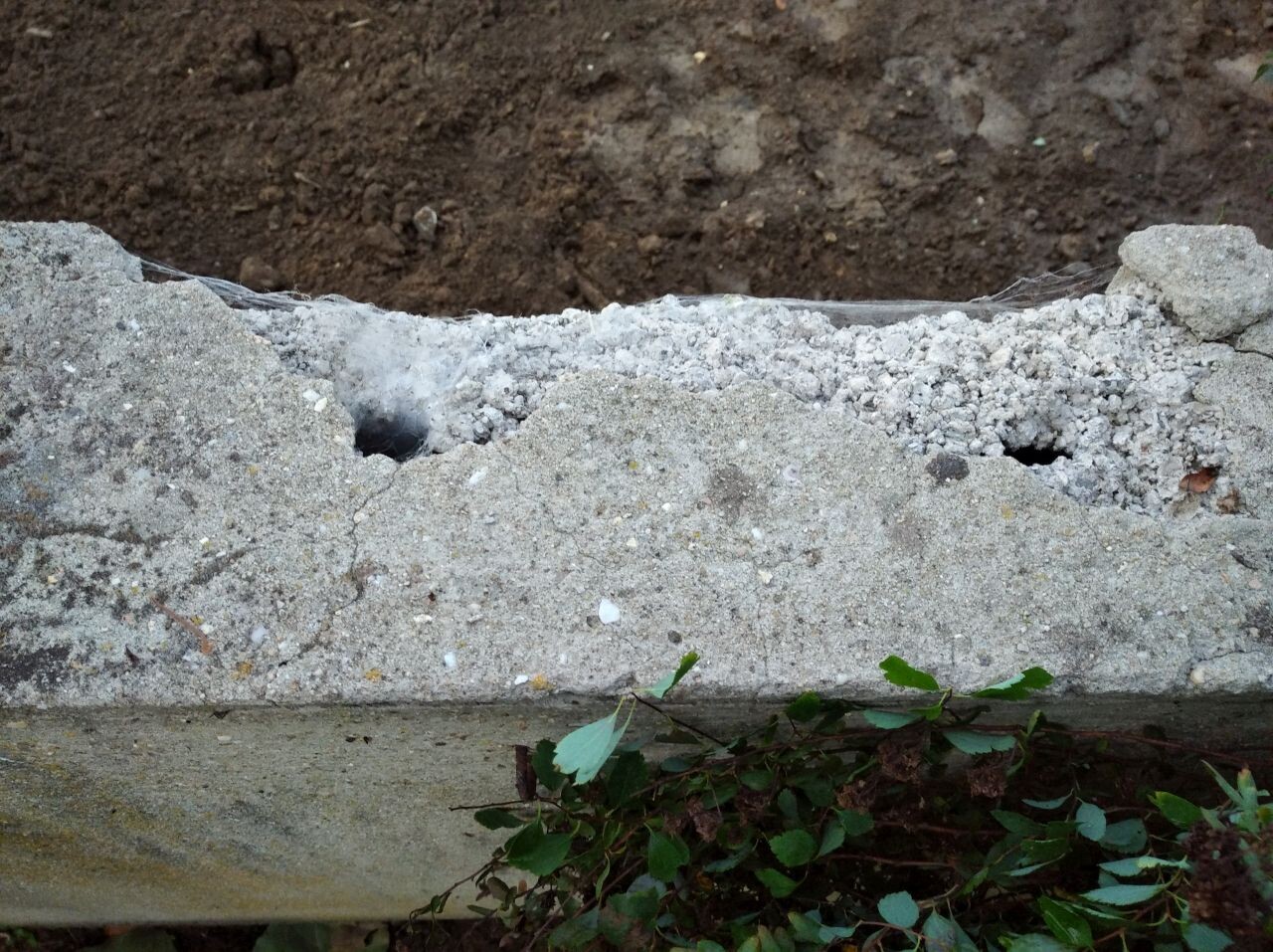
The garden wall has a narrower foundation base (probably concrete). On this base, hollow concrete blocks (similar to pumice stone and wider than the base) were probably laid at the time.
At one spot where the formwork cement chipped off last winter, I was able to see everything clearly. Yes, this spot will be repaired before this winter. Inside the wall, the hollow sections of the blocks are visible from the top, and externally there is a roughly 15 mm (0.6 inch) thick cement plaster. However, slight imprints of formwork boards are visible on the outside.
In my opinion, the garden wall will be damaged.
Unfortunately, the owners have not made any further contact on their own. My politely expressed concerns have been acknowledged but seemingly not taken very seriously.
I am grateful for any advice!
Best regards,
Ricarda
Since I wasn’t able to find a clear answer through searching, I would like to ask for your advice.
Twenty-five years ago, we bought a one-and-a-half-story detached house in North Rhine-Westphalia (NRW), with garages attached on both the right and left sides. The property size is 600 m² (approximately 6460 ft²), located in a rural area. At that time, the neighboring plots on both sides were undeveloped.
Our garages and the 1.05 m (3.4 ft) high boundary walls next to them are built right up to the property line, but entirely on our land. The actual garden is behind our house and is enclosed on all sides by the same type of wall, also built along the property boundary but on our land.
A few years later, the right neighboring lot was developed with a detached house and garage, also built on the property line. The left neighboring plot remained undeveloped until now.
The left neighboring lot is currently under construction. The owners are laypersons, and the house is being built by a construction company. I happened to see and briefly speak with the owners before construction started. The plan is to build a detached house without a basement, with a garage adjoining the side of our garage. So far, so good.
However, I’ve already had conflicts with the excavator operator because he damaged a large section of our boundary wall near the base while digging, and the same happened at the neighbor’s wall. When confronted, he denied everything. At least the owner has verbally promised to have the damaged spots replastered.
I also upset them when I repeatedly asked the operator not to park his 33-ton (36.3 US ton) excavator directly in front of the new construction site (on the future sidewalk), but to park it on the property itself instead.
The reason is that under the so-called sidewalk (in front of our house, consisting of sand and gravel) runs piping for a stream that is usually dry but can carry a significant amount of water during heavy rain. The piping (stream inlet) starts right at our property, runs under the sidewalk, and somewhere far away empties into a rainwater retention basin.
About 30 years ago, there was a flood in this area, which is why the piping was installed. It runs about 70 cm (28 inches) below the topsoil and is gray. I’m uncomfortable with 33 tons of weight parked on it. (I personally experienced severe flooding years ago with a small creek that turned into a destructive torrent during heavy rain.)
The excavator operator dismissed my concern, saying the pipe would withstand the pressure. The two steel plates placed for load distribution, which were too short in size, did not help much either.
If the piping were to collapse in front of the new property, the water would back up exactly in front of our property (according to the water flow direction). After bothering the operator about this for three days in a row, the excavator has now been parked on the new property itself. Hopefully, this will continue.
A few days ago, the ground level of the new garden was raised by about 40 to 50 cm (16 to 20 inches) using excavated soil, with the excess soil removed. As a result, the neighboring garden level to the left of the new lot and our garden level are now naturally lower.
This neighbor has a welded wire fence with privacy screening cemented in along her long garden boundary. As she mentioned yesterday, the 40 to 50 cm (16 to 20 inches) high soil embankment of the new garden along her fence is supposedly being supported by stones, but she wasn’t completely sure about the details or whether she understood this correctly (status: yesterday evening).
Now the problem: On our side, with the garden wall, the excavator simply pushed the raised soil directly against our wall on the planned garden side.
I happened to notice this. A direct discussion with the excavator operator about potential moisture damage to our garden wall was unsuccessful. I expressed concerns about soil moisture penetrating the wall, rain, frost, and the risk of plaster detachment.
The next day, the owner’s wife came to the site with two rolls of dimpled drainage membrane, which I also only happened to notice by chance. I repeated my concerns to her as well.
The excavator operator then proposed—after removing the soil piled against the wall again—to place simple dimpled membrane against the wall with the protruding dimples pointing toward the wall, then pile the soil back against it. He believed that rainwater could run off through the dimples and that the dimples would provide ventilation for the wall.
I objected, saying that rainwater would not drain well between the dimples and the wall. The wall could no longer dry at this point. Also, in winter, snow would lie on top of the membrane’s upper edge. Since the wall has no cap at the top, it would remain wet behind the membrane, as no air can reach it.
The puzzled owner’s wife promised that her husband would call in the evening, but no call came. Instead, her husband briefly visited the site the next morning, according to a neighbor, and apparently examined the situation with the wall. There was no conversation; I did not see him, and he did not ring.
Yesterday, the excavator operator leaned two rolls of dimpled membrane against the wall with the dimpled side facing it and pushed the soil against it with his excavator. Unfortunately, I only noticed this mess yesterday evening.
The garden wall has a narrower foundation base (probably concrete). On this base, hollow concrete blocks (similar to pumice stone and wider than the base) were probably laid at the time.
At one spot where the formwork cement chipped off last winter, I was able to see everything clearly. Yes, this spot will be repaired before this winter. Inside the wall, the hollow sections of the blocks are visible from the top, and externally there is a roughly 15 mm (0.6 inch) thick cement plaster. However, slight imprints of formwork boards are visible on the outside.
In my opinion, the garden wall will be damaged.
Unfortunately, the owners have not made any further contact on their own. My politely expressed concerns have been acknowledged but seemingly not taken very seriously.
I am grateful for any advice!
Best regards,
Ricarda
H
hampshire31 Aug 2021 15:39Ricarda schrieb:
I appreciate any advice!Here is mine:
1. Talk to the right people.
If the homeowners feel overwhelmed and can’t handle things, help them communicate with their contractor.
If the excavator operator doesn’t take you seriously, go to their supervisor, who is responsible for the construction work.
Bottom line: Your best contact person, in coordination with the homeowners, is the builder.
2. Clearly state what you want.
You want to make sure your wall remains undamaged over the long term and is protected against moisture.
You want to ensure that the piping for flood protection will still function properly after the construction is completed.
3. Don’t get involved in creating tension.
For a solution, it is helpful if you don’t allow yourself to get drawn into emotionally escalating the “problems” with the construction site as a constant topic with the other neighbors. Take note of what is happening and, if appropriate, let them benefit from your solution approach and contacts.
H
HilfeHilfe1 Sep 2021 06:52Looking at the photos, I don’t understand your concerns! I see a 25-year-old wall with old plaster, covered in water stains and some greenery on top.
It’s important not to overreact. The structure has been damp for a long time.
It’s important not to overreact. The structure has been damp for a long time.

Ricarda schrieb:
The homeowner couple are laypersons Ricarda schrieb:
In my opinion, the garden wall will suffer damage. Funny, the homeowners are laypersons and you ... are not? It’s best to talk to a professional who can tell you whether it will hold up or not. I wouldn’t care about the wall’s plaster (see @HilfeHilfe), but the structural stability should definitely be ensured if no L-shaped blocks are installed there.
Similar topics