
ᐅ How to Properly Adjust an Air-to-Water Heat Pump with Underfloor Heating
Created on: 15 Dec 2019 16:52
M
M4rvin
Hello,
I have been searching around and reading the manual for my Elco air-to-water heat pump, but I haven’t fully figured it out yet...
I have a manifold on the ground floor and first floor; the recommendation is to fully open everything, set all thermostats to maximum, and then adjust the heating curve on the heat pump low enough to roughly achieve the desired temperature.
Is that more or less correct?
At the moment, every thermostat (except bathroom/bedroom) is set to 20°C (68°F), and the temperature in each room is about 20.9°C (70°F) (bathroom slightly warmer, bedroom slightly cooler).
However, I’m surprised by the high electricity consumption — it has been 800 kWh in just 2 months.
135 m² (1455 sq ft) living area
Elco Split 7 kW
Circulation pump not yet connected
Thanks in advance
M4rvin
I have been searching around and reading the manual for my Elco air-to-water heat pump, but I haven’t fully figured it out yet...
I have a manifold on the ground floor and first floor; the recommendation is to fully open everything, set all thermostats to maximum, and then adjust the heating curve on the heat pump low enough to roughly achieve the desired temperature.
Is that more or less correct?
At the moment, every thermostat (except bathroom/bedroom) is set to 20°C (68°F), and the temperature in each room is about 20.9°C (70°F) (bathroom slightly warmer, bedroom slightly cooler).
However, I’m surprised by the high electricity consumption — it has been 800 kWh in just 2 months.
135 m² (1455 sq ft) living area
Elco Split 7 kW
Circulation pump not yet connected
Thanks in advance
M4rvin

Hi, here’s a brief update...
The rooms have cooled down a bit by now; the heat pump hasn’t been running at night since I set the curve to 0.2.
In the morning, with an outdoor temperature of 5°C (41°F), the upper floor was between 21.4 and 21.9°C (70.5 and 71.4°F) with 60-62% relative humidity, and the ground floor was between 21.0 and 21.6°C (69.8 and 70.9°F) at 55% humidity.
By midday (9°C / 48°F outside), the temperature dropped further to about 21-21.2°C (69.8-70.2°F) at 55% humidity.
I have now increased the target temperature to 22°C (72°F) to warm the bathroom a bit more. I plan to keep the children’s rooms a bit warmer and reduce the flow in the bedroom.
What still seems odd to me is that not all flow controllers can be fully opened, and the controllers each show a value between 1.5 and 2.0.
Does anyone have an idea why the towel radiator has no flow? It hasn’t warmed up since yesterday either. I’m hoping it could heat the bathroom a little more without raising the overall target temperature in the house.
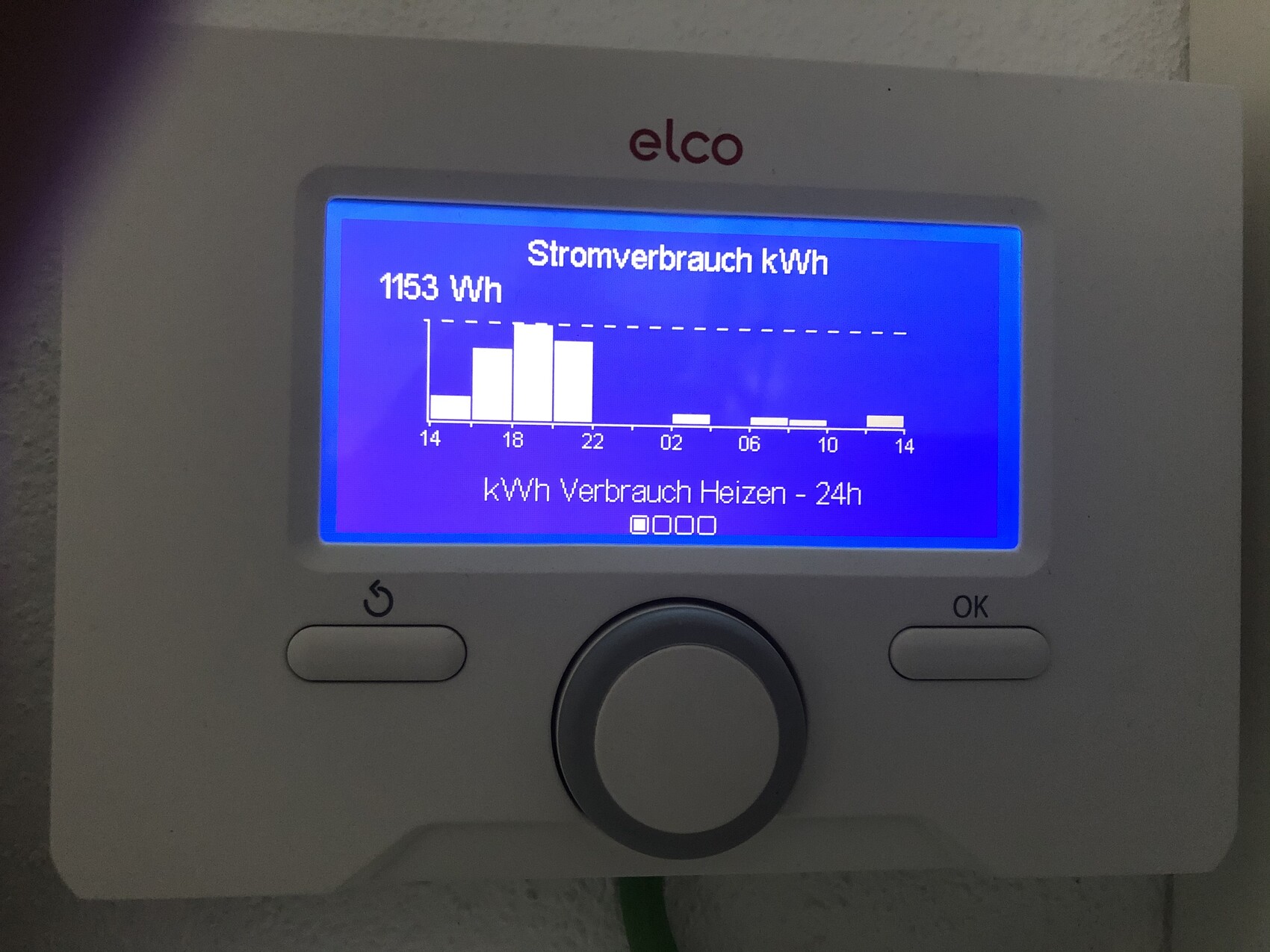
The power consumption, or operating time, of the heat pump has decreased significantly; see the attached image.
The rooms have cooled down a bit by now; the heat pump hasn’t been running at night since I set the curve to 0.2.
In the morning, with an outdoor temperature of 5°C (41°F), the upper floor was between 21.4 and 21.9°C (70.5 and 71.4°F) with 60-62% relative humidity, and the ground floor was between 21.0 and 21.6°C (69.8 and 70.9°F) at 55% humidity.
By midday (9°C / 48°F outside), the temperature dropped further to about 21-21.2°C (69.8-70.2°F) at 55% humidity.
I have now increased the target temperature to 22°C (72°F) to warm the bathroom a bit more. I plan to keep the children’s rooms a bit warmer and reduce the flow in the bedroom.
What still seems odd to me is that not all flow controllers can be fully opened, and the controllers each show a value between 1.5 and 2.0.
Does anyone have an idea why the towel radiator has no flow? It hasn’t warmed up since yesterday either. I’m hoping it could heat the bathroom a little more without raising the overall target temperature in the house.
The power consumption, or operating time, of the heat pump has decreased significantly; see the attached image.
My temperatures remain fairly stable, ranging between 21.1 and 21.5 degrees Celsius (70°F and 71°F).
Since I have actually set it to 22 degrees Celsius (72°F), I should adjust the heating curve upwards in parallel, right?
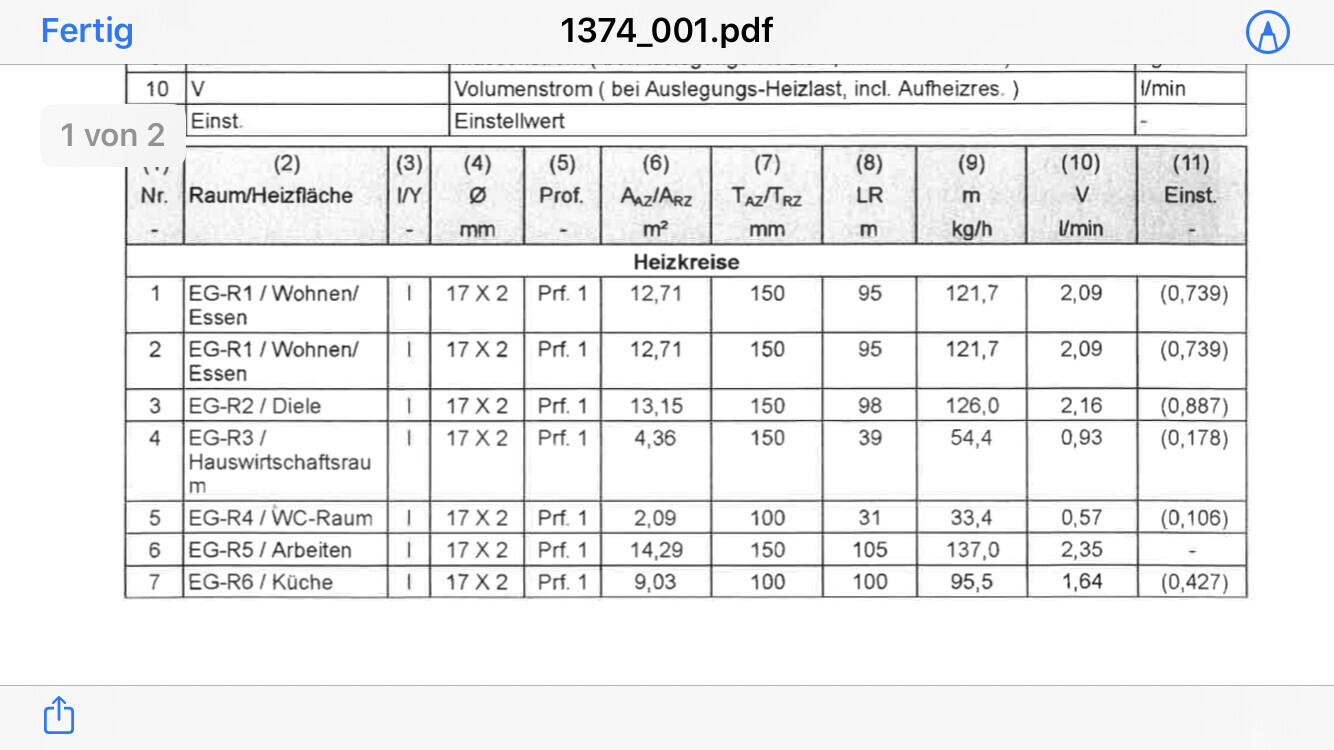
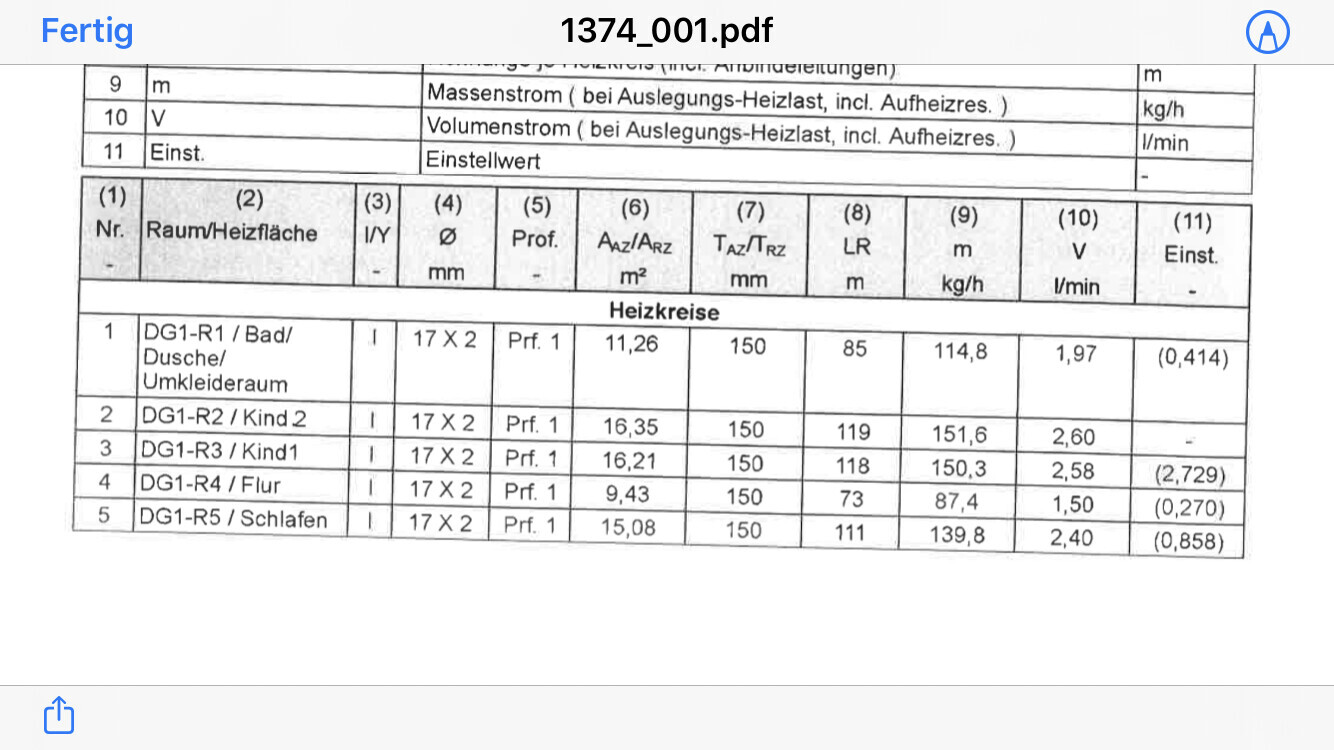
I have received the calculation from my heating installer and have an appointment for the hydraulic balancing in mid-January.
Should I try to optimize the flow rates in advance? For example, reduce it slightly in the bedroom or similar areas.
Since I have actually set it to 22 degrees Celsius (72°F), I should adjust the heating curve upwards in parallel, right?
I have received the calculation from my heating installer and have an appointment for the hydraulic balancing in mid-January.
Should I try to optimize the flow rates in advance? For example, reduce it slightly in the bedroom or similar areas.
So, a quick interim report...
Unfortunately, the bathroom never reaches 22°C (72°F). The radiator is working now; it had been shut off at the manifold.
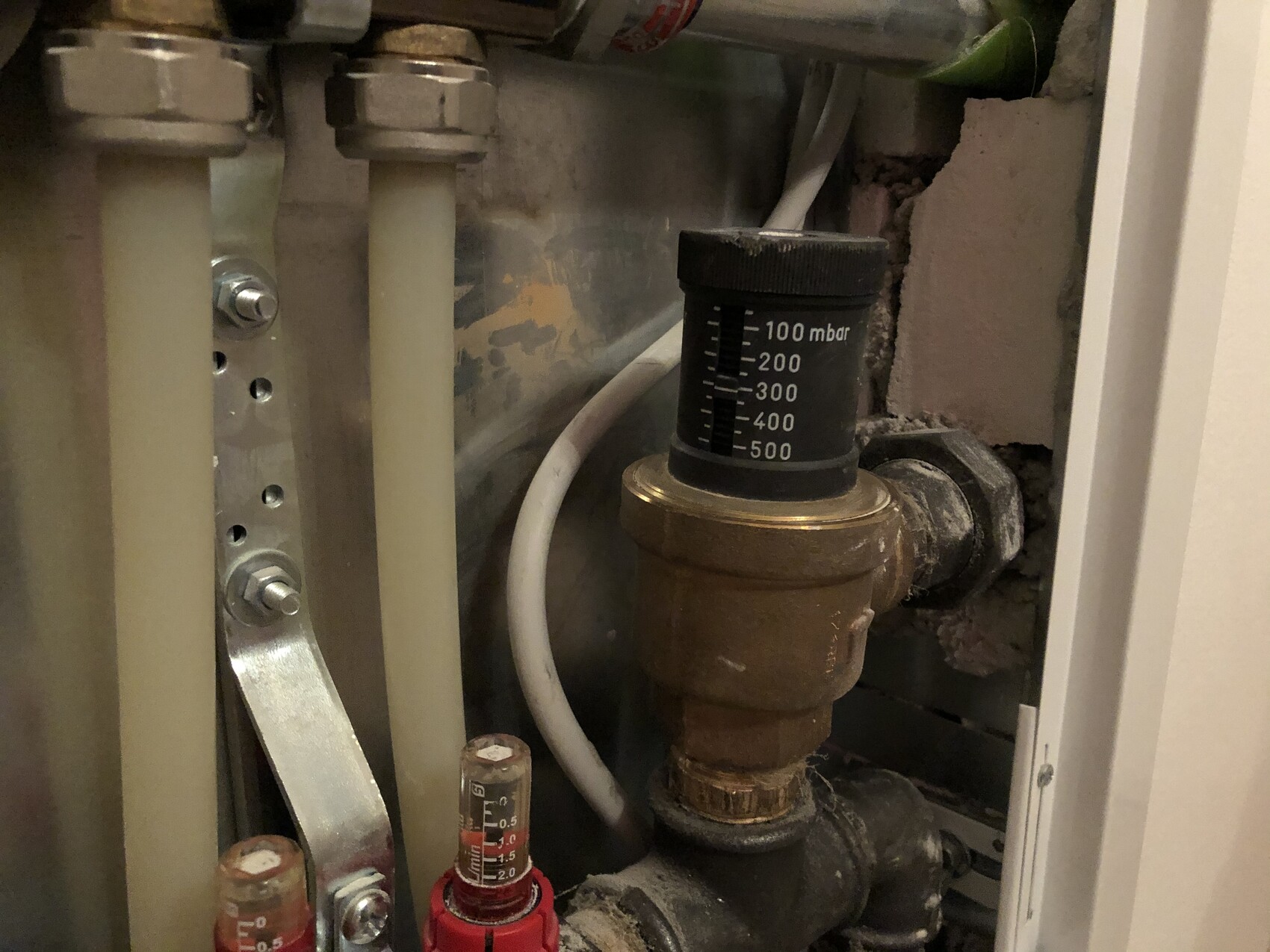
Is there a way to adjust this large valve (see picture)? I just can't get enough flow, no matter how far I open it, it stays at 1.5.
On the ground floor, everything is fine so far, but I’ve now reduced the flow at the toilet from 2 to 1. Just because all the other (larger) heating circuits don’t go above 1.5–1.7!
I’ve also unscrewed all those ERR boxes, they were very warm. Or do I need to disconnect them electrically?
Unfortunately, the bathroom never reaches 22°C (72°F). The radiator is working now; it had been shut off at the manifold.
Is there a way to adjust this large valve (see picture)? I just can't get enough flow, no matter how far I open it, it stays at 1.5.
On the ground floor, everything is fine so far, but I’ve now reduced the flow at the toilet from 2 to 1. Just because all the other (larger) heating circuits don’t go above 1.5–1.7!
I’ve also unscrewed all those ERR boxes, they were very warm. Or do I need to disconnect them electrically?
D
Daniel-Sp20 Dec 2019 18:58Is this an overflow valve?
Are the ERR connected to their own circuit breaker? If so, just switch off the breaker to save power. If not, when dismantling the ERR, you can set the room controllers to the lowest setting, then they will close and also consume no power; they should then cool down.
Are the ERR connected to their own circuit breaker? If so, just switch off the breaker to save power. If not, when dismantling the ERR, you can set the room controllers to the lowest setting, then they will close and also consume no power; they should then cool down.
Similar topics