
Hello garden enthusiasts,
Last year, I spent time preparing a poor grassland area. About 40m² (430 ft²) was fully dug up, edging stones were installed, and mixed with sand. Now, I want to place an insect hotel in the middle. Unfortunately, I have no experience with this yet. I know there are ready-made hotels available, but some are built completely incorrectly and therefore not used by the insects.
Has anyone here dealt with this before and can share some advice? Or are there websites where especially good information can be found?
Since I’m just starting, I am wondering, for example:
- What is the best orientation to the sun?
- Should I design separate compartments for each type of insect (such as bee section, beetle section, lacewing section, etc.)?
- Can wild bees be housed together with other species? Or do some always need their own separate “home”?
- Where can I order "building materials" affordably?
I appreciate any advice!
Last year, I spent time preparing a poor grassland area. About 40m² (430 ft²) was fully dug up, edging stones were installed, and mixed with sand. Now, I want to place an insect hotel in the middle. Unfortunately, I have no experience with this yet. I know there are ready-made hotels available, but some are built completely incorrectly and therefore not used by the insects.
Has anyone here dealt with this before and can share some advice? Or are there websites where especially good information can be found?
Since I’m just starting, I am wondering, for example:
- What is the best orientation to the sun?
- Should I design separate compartments for each type of insect (such as bee section, beetle section, lacewing section, etc.)?
- Can wild bees be housed together with other species? Or do some always need their own separate “home”?
- Where can I order "building materials" affordably?
I appreciate any advice!

H
hampshire17 Jan 2020 01:10Anyone can easily contribute to insect protection on their own property
- Native plant diversity
- Meadow areas instead of just lawn
- Avoiding herbicides (what a word for useful but unwanted plants)
- Avoiding leaf blowers – at least on unpaved surfaces
Here’s another one – this looks simple to build:
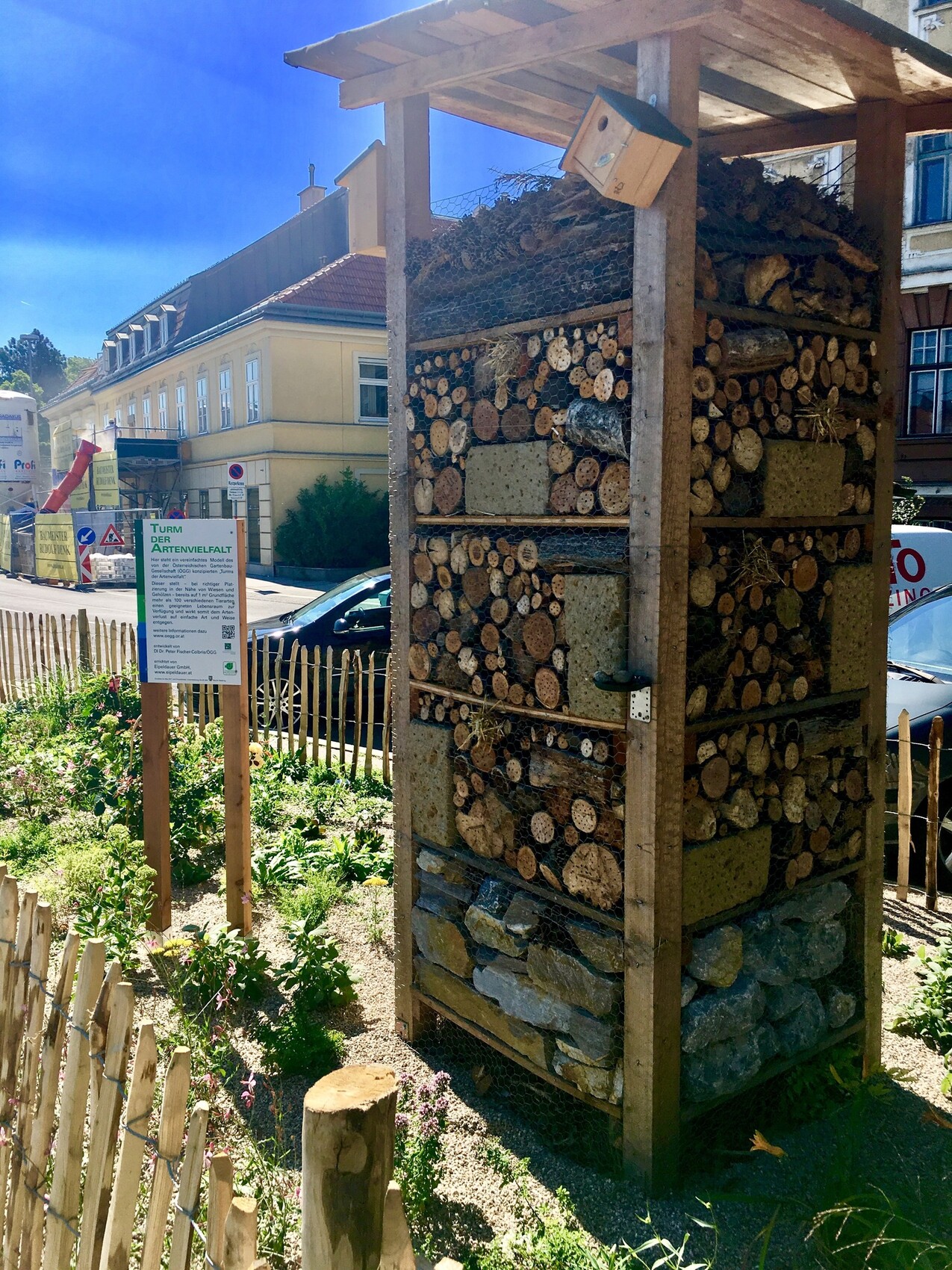
It doesn’t have to be built that tall. I like this rectangular shape. The stones at the bottom make sure it won’t be blown over by the wind. That’s already a good start. I guess a small block needs to go in the middle to prevent drafts, right? Does the brushwood at the top serve any purpose, or is it just scrap? The wooden logs are, of course, made according to regulations.
I also have plenty of bamboo tubes. However, they have holes of about 2cm (0.8 inches). Are those holes too big?
The target insects would mainly be:
Bees (if possible)
Lacewings
Ladybugs
Earwigs
Beetles in general
Am I missing any important species?
It doesn’t have to be built that tall. I like this rectangular shape. The stones at the bottom make sure it won’t be blown over by the wind. That’s already a good start. I guess a small block needs to go in the middle to prevent drafts, right? Does the brushwood at the top serve any purpose, or is it just scrap? The wooden logs are, of course, made according to regulations.
I also have plenty of bamboo tubes. However, they have holes of about 2cm (0.8 inches). Are those holes too big?
The target insects would mainly be:
Bees (if possible)
Lacewings
Ladybugs
Earwigs
Beetles in general
Am I missing any important species?
You can forget about the brushwood.
And it’s almost certain that not all sides will be inhabited, only those facing south.
I would place earwigs separately—always providing a shelter where they are needed, such as on fruit trees or among the roses. Hang overturned flowerpots filled with straw.
Ladybugs overwinter in wall crevices or leaf piles—somewhat warm and damp.
Beetles don’t need a hotel; they need the right garden.
I think the idea of putting stones inside to weigh it down is good—I wouldn’t cover it with chicken wire, though; I’m not sure if lizards like that.
Hole diameters vary between 2 and 9 mm (0.08 and 0.35 inches). Holes of 20 mm (0.79 inches) are too large, yes.
And it’s almost certain that not all sides will be inhabited, only those facing south.
I would place earwigs separately—always providing a shelter where they are needed, such as on fruit trees or among the roses. Hang overturned flowerpots filled with straw.
Ladybugs overwinter in wall crevices or leaf piles—somewhat warm and damp.
Beetles don’t need a hotel; they need the right garden.
I think the idea of putting stones inside to weigh it down is good—I wouldn’t cover it with chicken wire, though; I’m not sure if lizards like that.
Hole diameters vary between 2 and 9 mm (0.08 and 0.35 inches). Holes of 20 mm (0.79 inches) are too large, yes.
Similar topics