
Hello dear forum members,
I am new to the forum and have registered to ask for your opinions, assessments, and guesses regarding an issue with the exterior plaster on our house.
We built in 2017/2018.
As you can see, I go into detail about the plaster. The attached pictures will explain why. The base coat was applied about 15 months ago.
After it rains, the effects shown in the pictures appear on the facade. The areas that look so noticeably damp are where a Styrofoam insulation layer is still installed on the Ytong blocks (ceiling anchors, roller shutter boxes, concrete ceilings, etc.).
My assumption is that the plaster does not have the weather-resistant properties it should. In areas without Styrofoam, the Ytong block absorbs the water directly, while in areas with Styrofoam, the water is not absorbed but rather held by the Styrofoam and remains visible on the facade. In other words, this would mean: the facade allows water to pass through.
But… I am not an expert, and this is just my guess.
In addition to the damp spots, small white stains / efflorescence have recently appeared on the facade.
My question to the experts here: What do you think about this? What could be causing it?
Thank you very much for your help!
Best regards
Hawe01
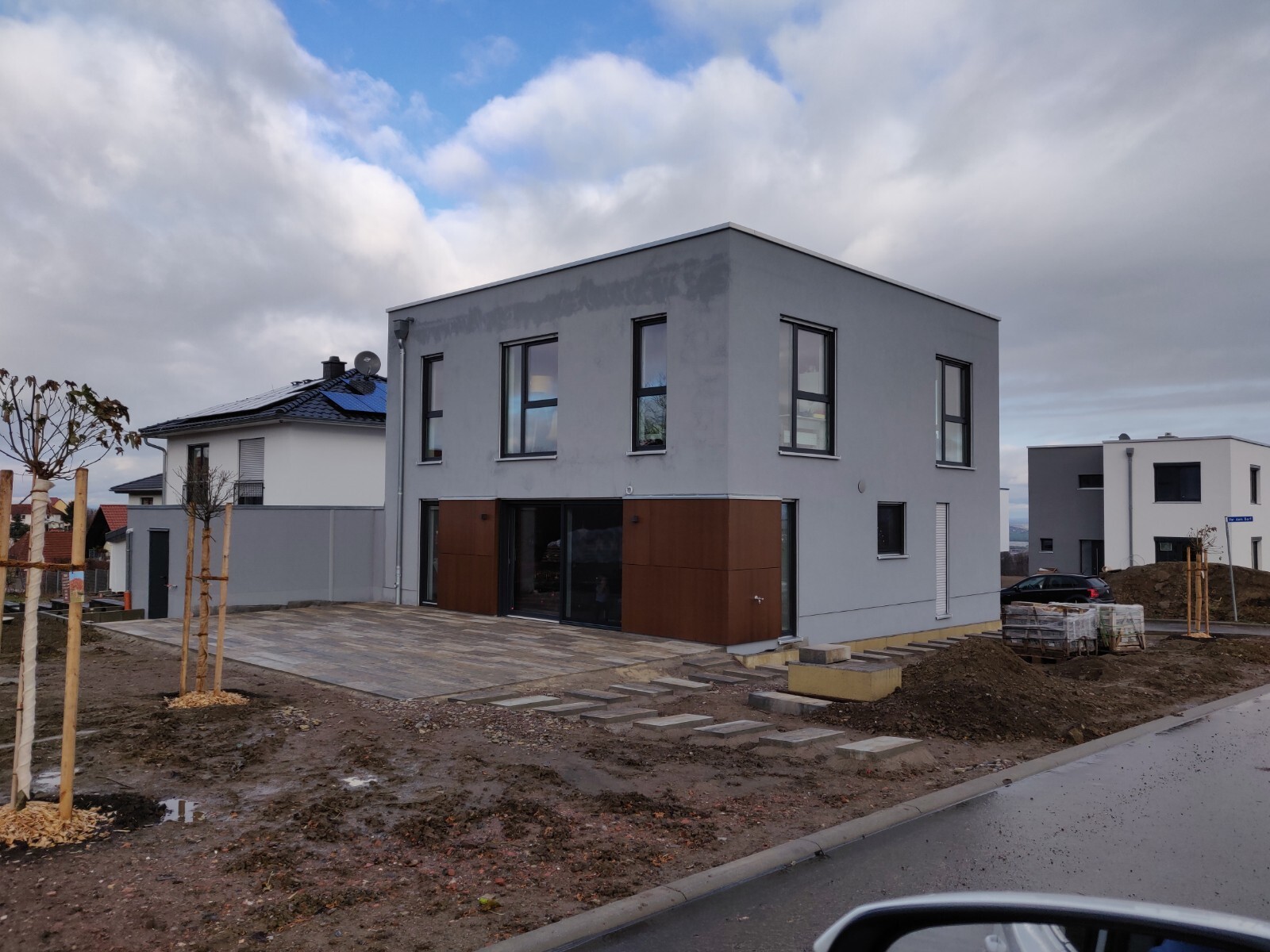
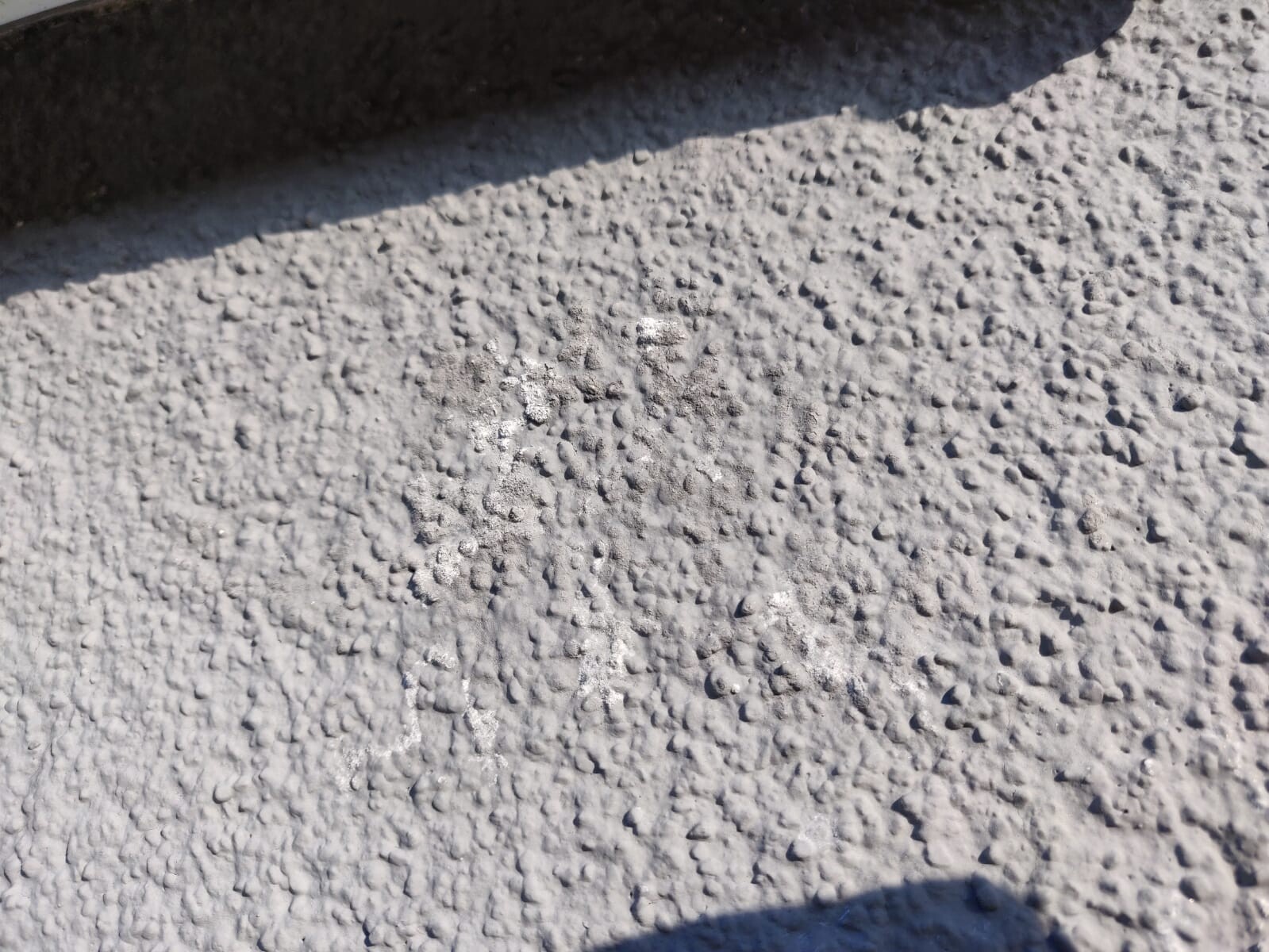
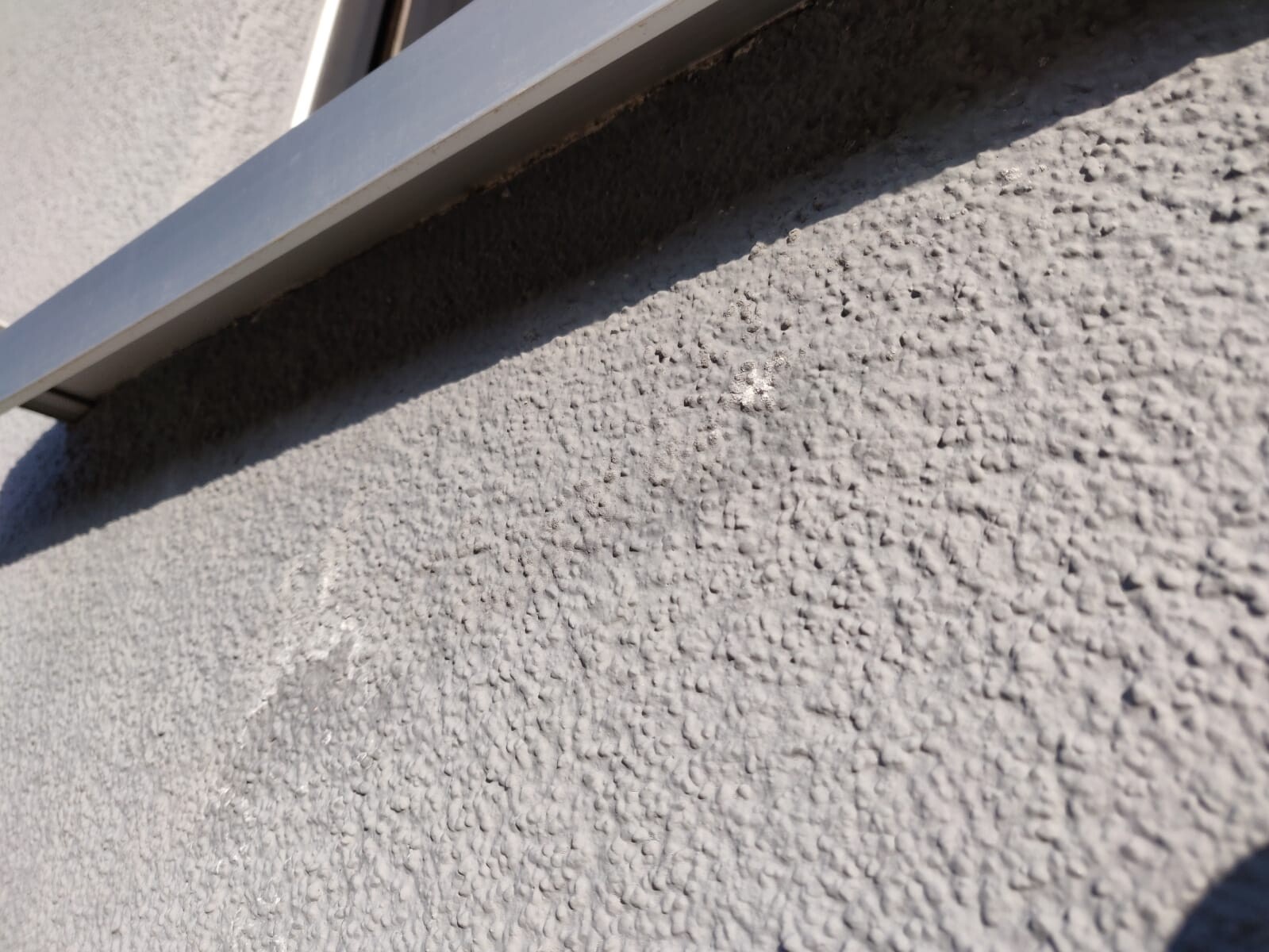
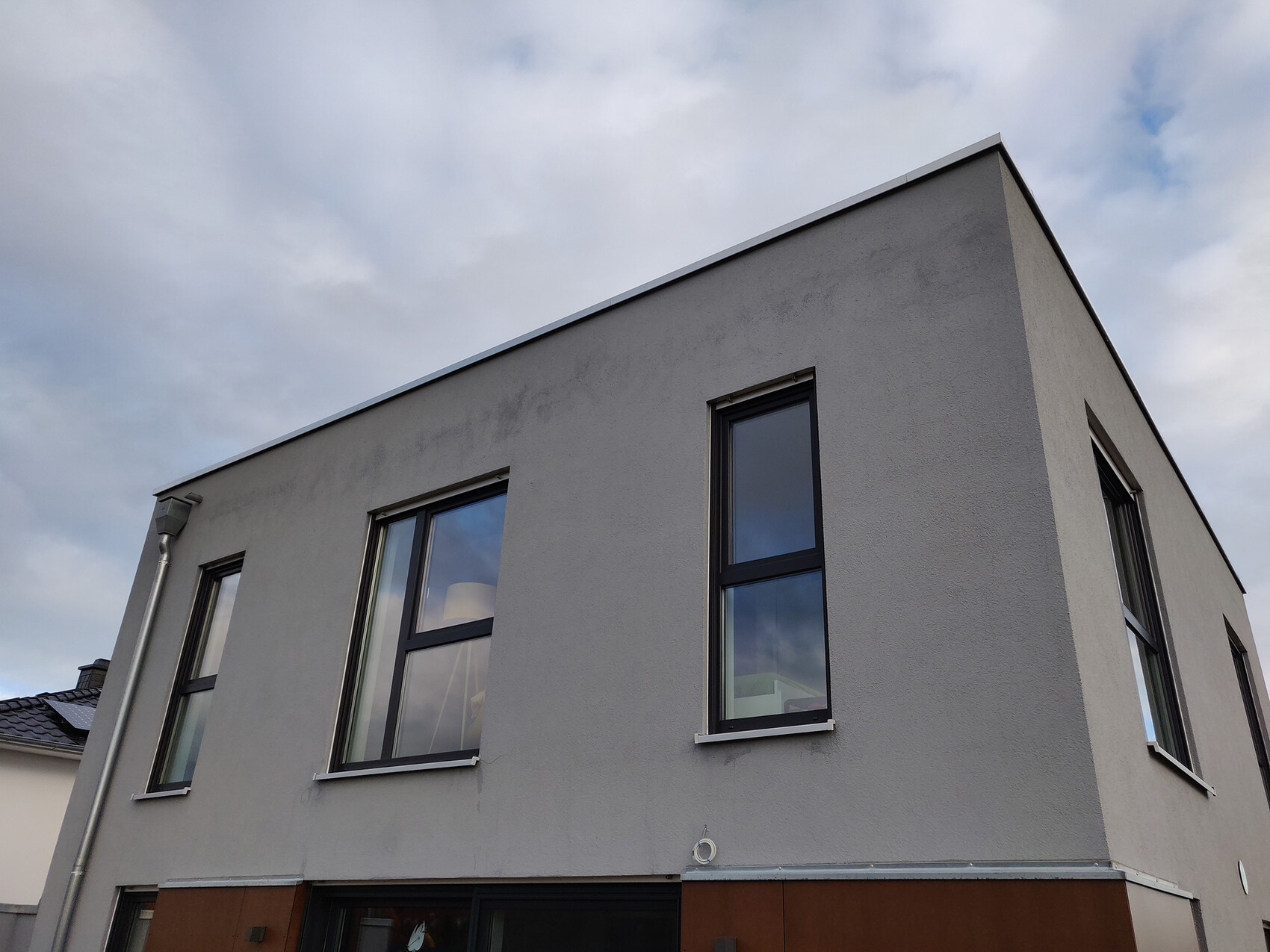
I am new to the forum and have registered to ask for your opinions, assessments, and guesses regarding an issue with the exterior plaster on our house.
We built in 2017/2018.
- 2 full stories
- Flat roof
- Geothermal heating
- Solid construction, 36cm (14 inches) Ytong blocks without additional insulation
- The exterior base coat is a fast-setting lightweight plaster based on lime-cement with a mineral lightweight aggregate. It is suitable as a base coat for mineral topcoats, especially for thermal insulation wall materials such as porous bricks, aerated concrete, etc. The base coat was applied on September 28, 2017. The finish coat was applied on October 24, 2017.
As you can see, I go into detail about the plaster. The attached pictures will explain why. The base coat was applied about 15 months ago.
After it rains, the effects shown in the pictures appear on the facade. The areas that look so noticeably damp are where a Styrofoam insulation layer is still installed on the Ytong blocks (ceiling anchors, roller shutter boxes, concrete ceilings, etc.).
My assumption is that the plaster does not have the weather-resistant properties it should. In areas without Styrofoam, the Ytong block absorbs the water directly, while in areas with Styrofoam, the water is not absorbed but rather held by the Styrofoam and remains visible on the facade. In other words, this would mean: the facade allows water to pass through.
But… I am not an expert, and this is just my guess.
In addition to the damp spots, small white stains / efflorescence have recently appeared on the facade.
My question to the experts here: What do you think about this? What could be causing it?
Thank you very much for your help!
Best regards
Hawe01
H
HilfeHilfe7 Jan 2019 18:04Oh, that looks bad.
 Winniefred7 Jan 2019 19:11
What does the plasterer say about this? It doesn’t look normal to me either. Unfortunately, I can’t provide more input due to a lack of expertise.
Hello @chr_zwe, our house has now been newly plastered and all defects have been fully corrected.
In our case, it was a combination of various issues and errors:
Best regards Henrik
In our case, it was a combination of various issues and errors:
- No reinforcement mesh was applied at all – not even on the weather-exposed side of the house.
- Different manufacturers’ materials were used for the base coat and the top coat (Sakret and Schwenk). This is uncommon and goes against the manufacturers’ recommendations.
- No primer was applied on the base coat, contrary to the manufacturers’ guidelines. Primer helps to equalize the moisture absorption capacity of different substrates. Without primer, sanding off and cracking can occur.
- The exterior paint was a silicate paint instead of a silicone resin paint. Silicate paints have a significantly higher water absorption rate. In our case, this meant that rainwater penetrated the façade, and where insulation (polystyrene foam) was present, the water could not enter the Ytong blocks and remained visible on the façade for a long time. The silicone resin paint now used prevents much of the water from penetrating in the first place.
Best regards Henrik
Winniefred27 Oct 2021 18:02Truly the most basic plastering skills were completely overlooked.
Similar topics