
Hello friends
I have a small problem. We are extending an existing semi-detached house (each semi-detached unit is 7 meters (23 feet) wide). During the entire planning phase, a dormer measuring 3 meters (10 feet) wide was planned. Dormers of this size can also be found on neighboring houses in the area (same planning regulations). But not on the immediate neighbor’s house.
Yesterday, I had a phone call with the architect, who pointed out the planning regulations:
“The total width of dormers on each side of the building must not exceed half of the building’s width, and the width of each individual dormer must not be more than one third of the building’s width. The maximum dormer width is set at 3.0 meters (10 feet).
Side gables are allowed with a maximum width of half the building’s width. The combined width of dormers and side gables must not exceed half of the building’s width. The wall height of the side gables and the main building must be identical. The ridge of the side gables must be at least 1.0 meter (3 feet) below the ridge of the main building.”
According to this, the dormer would have to be 2.30 meters (7.5 feet) wide. I wonder how the neighbors managed to do it. All neighbors received their building permits via the simplified procedure.
Could it be that if the dormer extends over two rooms, it is counted as two separate dormers?
Does anyone here perhaps have an explanation?
Best regards
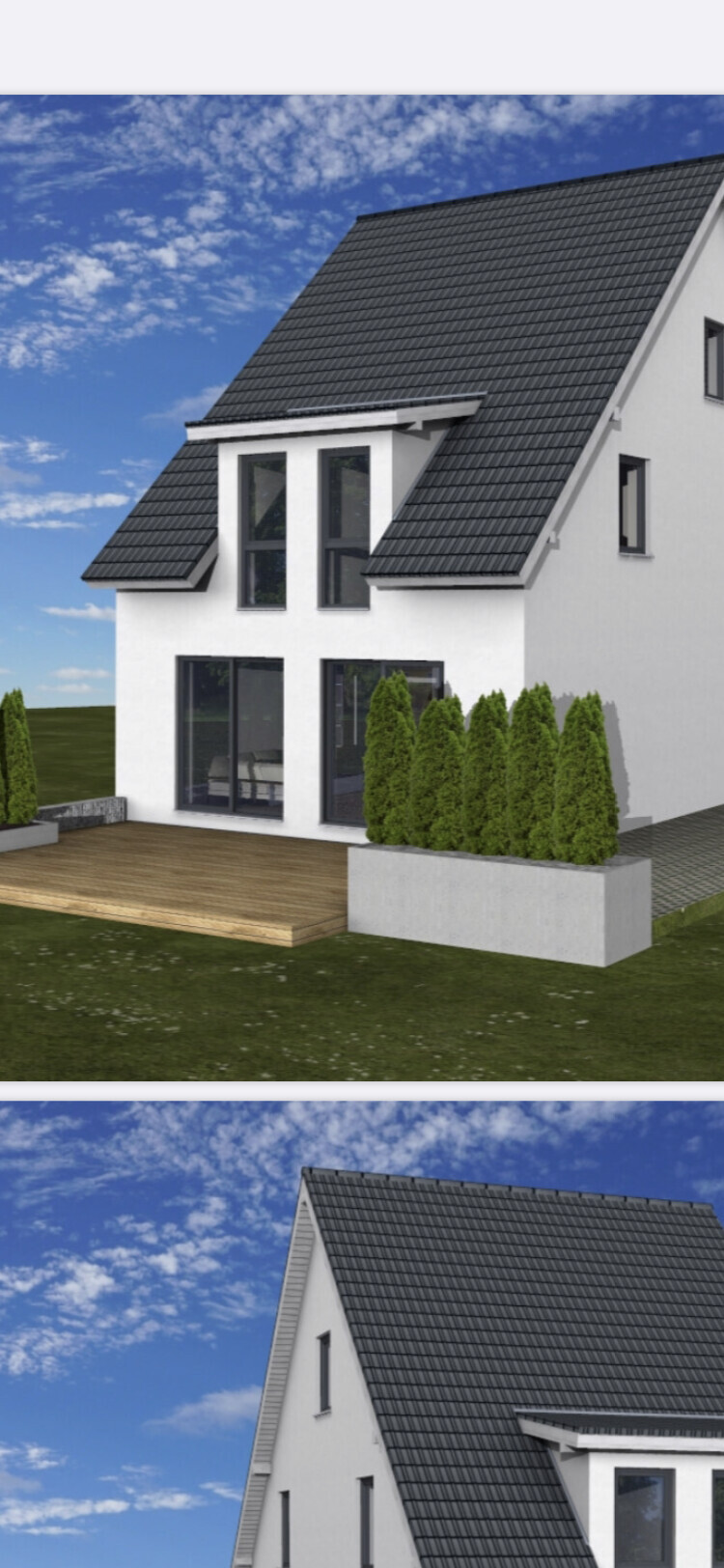
I have a small problem. We are extending an existing semi-detached house (each semi-detached unit is 7 meters (23 feet) wide). During the entire planning phase, a dormer measuring 3 meters (10 feet) wide was planned. Dormers of this size can also be found on neighboring houses in the area (same planning regulations). But not on the immediate neighbor’s house.
Yesterday, I had a phone call with the architect, who pointed out the planning regulations:
“The total width of dormers on each side of the building must not exceed half of the building’s width, and the width of each individual dormer must not be more than one third of the building’s width. The maximum dormer width is set at 3.0 meters (10 feet).
Side gables are allowed with a maximum width of half the building’s width. The combined width of dormers and side gables must not exceed half of the building’s width. The wall height of the side gables and the main building must be identical. The ridge of the side gables must be at least 1.0 meter (3 feet) below the ridge of the main building.”
According to this, the dormer would have to be 2.30 meters (7.5 feet) wide. I wonder how the neighbors managed to do it. All neighbors received their building permits via the simplified procedure.
Could it be that if the dormer extends over two rooms, it is counted as two separate dormers?
Does anyone here perhaps have an explanation?
Best regards
Sedax182 schrieb:
There is no fundamental decision.I can’t help but get the impression that additional fees are being generated through exemptions. Sedax182 schrieb:
It is also not considered a gable.How so? Sedax182 schrieb:
I think I’ll just have to accept it.If you want to save money, yes; otherwise, ask your neighbors. It’s hard to believe that so many have built illegally.Escroda schrieb:
I can’t help but feel that additional fees are being generated through exemptions. I have the same impression.
Especially since I would need an exemption because of the roof tile color anyway.
That’s how it was explained to me.
Escroda schrieb:
How so? It is considered a dormer.
Escroda schrieb:
If you want to save money, yes, otherwise ask the neighbors. It’s hard to imagine so many built illegally. I can’t imagine that either.
I also asked one neighbor again. He went through the simplified approval process under §66.
I would actually prefer the exemption procedure under §67 of the regional building code.
But that’s no longer possible because of the roof tile color.
What I don’t understand.

Sedax182 schrieb:
I would prefer to use the exemption procedure according to Section 67 of the state building code.
But that’s no longer possible because of the roof tile color.
Which I don’t understand. It’s actually quite simple:
Escroda schrieb:
I can’t help but feel that additional fees are being generated through exemptions. When it comes to the roof tile color, I believe this is proven: look at a flock of sheep — you immediately notice the black one, but spotting one with three ears would be quite difficult. In other words, a requirement for roof color is immediately undermined if even a single exception is allowed; making the rule (with the possibility of exemption) can only serve exactly the purpose the trickster imagines.
https://www.instagram.com/11antgmxde/
https://www.linkedin.com/company/bauen-jetzt/
Sedax182 schrieb:
But that’s no longer possible because of the brick color.
What I don’t understandWith a standard design confirmation, the client and planner confirm that everything complies with the regulations. This is then not reviewed further.
If you want to deviate from existing rules, this express procedure no longer applies. Someone must review and issue an official decision.
I find that completely reasonable.
guckuck2 schrieb:
With the clearance certificate, the client and the planner confirm that everything complies with the regulations. This is then not further reviewed.
If you want to deviate from the existing rules, this express process no longer applies. Someone has to review and approve it.
I find that more than reasonable. I understand what you mean!
But the brick color was included in the development plan through the principle resolution.
I don’t understand that.
Maybe my way of thinking is wrong.
But I understand it as: I am allowed to do it, yet even though I am allowed, I still have to ask for permission.
It just doesn’t sound very logical to me.
11ant schrieb:
It’s quite simple:
Once you look at the roof tile color, I consider it proven: look at a flock of sheep – you immediately spot the black one, but one with three ears sticking out would be quite noticeable. What I mean is: a roof color guideline is instantly ruined if you allow even a single exception; issuing the guideline (with the possibility of exemption) can only have exactly the purpose the skeptic imagines. Thank you.
That’s exactly how I see it as well.