
Hello,
I have the following problem and a few questions.
Basic details:
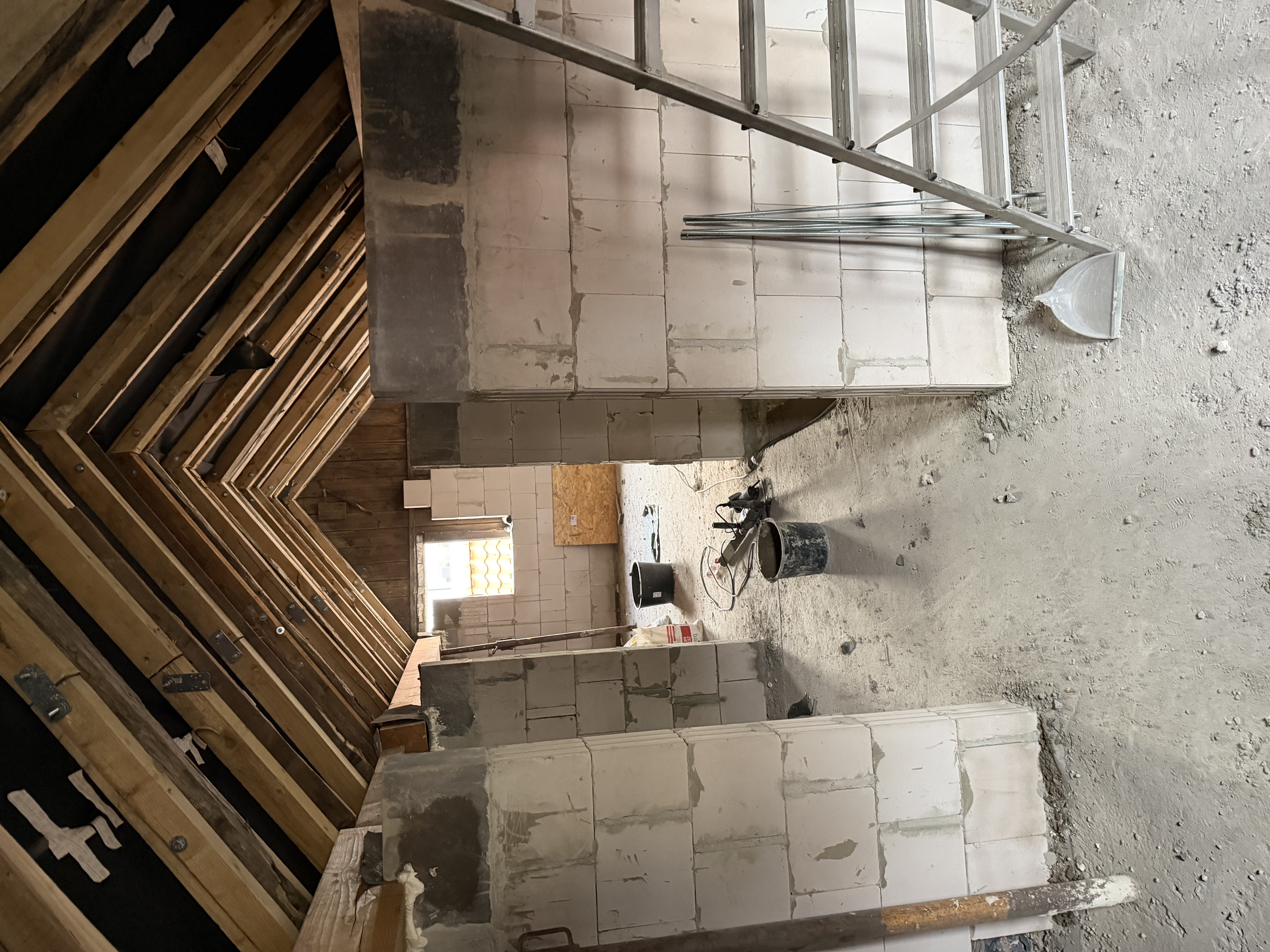
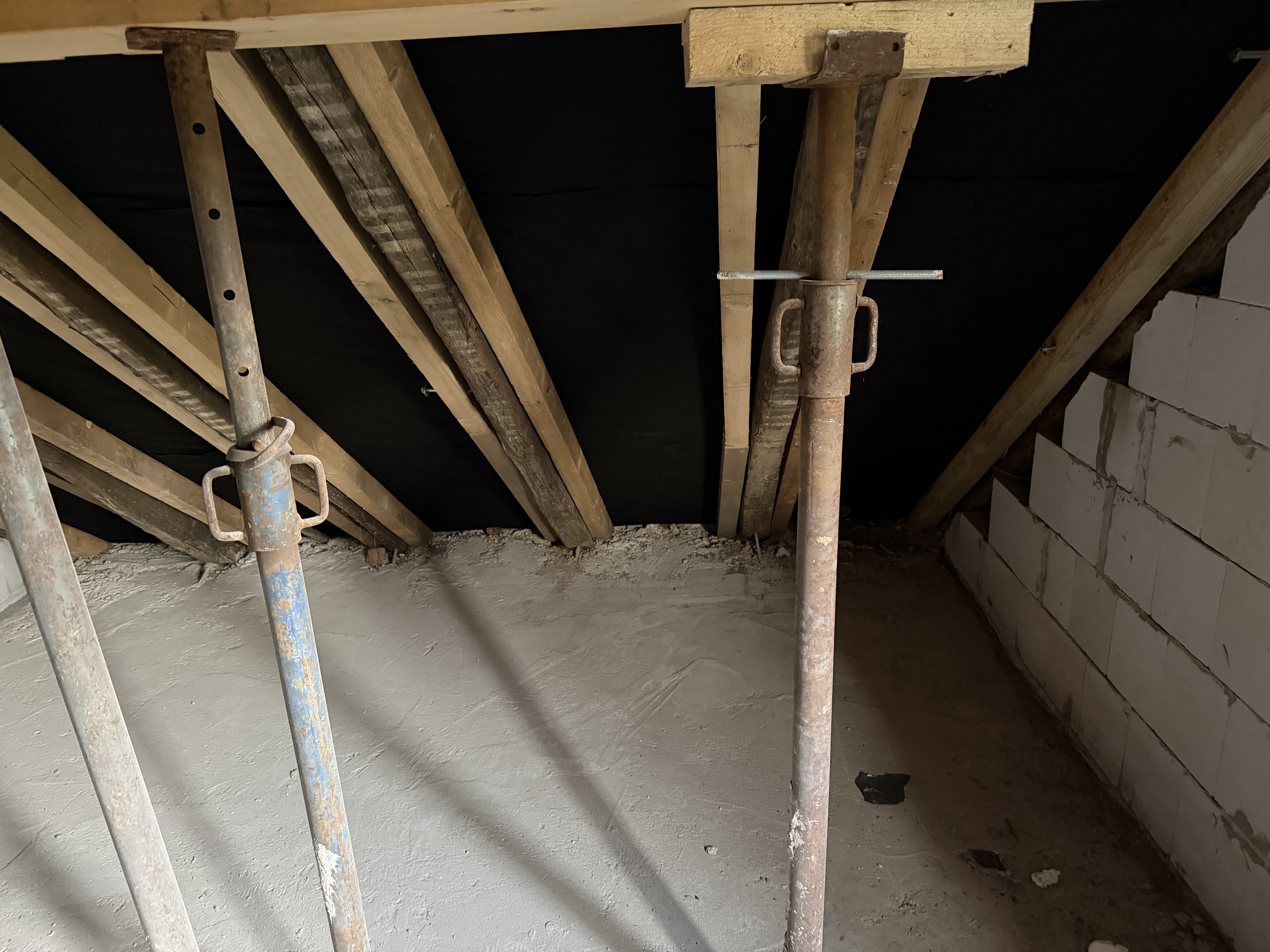
Approximately 5.3 meters (17 ft 5 in) rafters from ridge to attic floor (they pass through a concrete ceiling and end there at the wall below, before the external insulation)
Rafters on the left and right are reinforced and roughly straightened so that the roof (new)
is 12 meters (39 ft 4 in) long on each side
New underlay membrane placed tightly on the old eaves board and counter batten (some tension present)
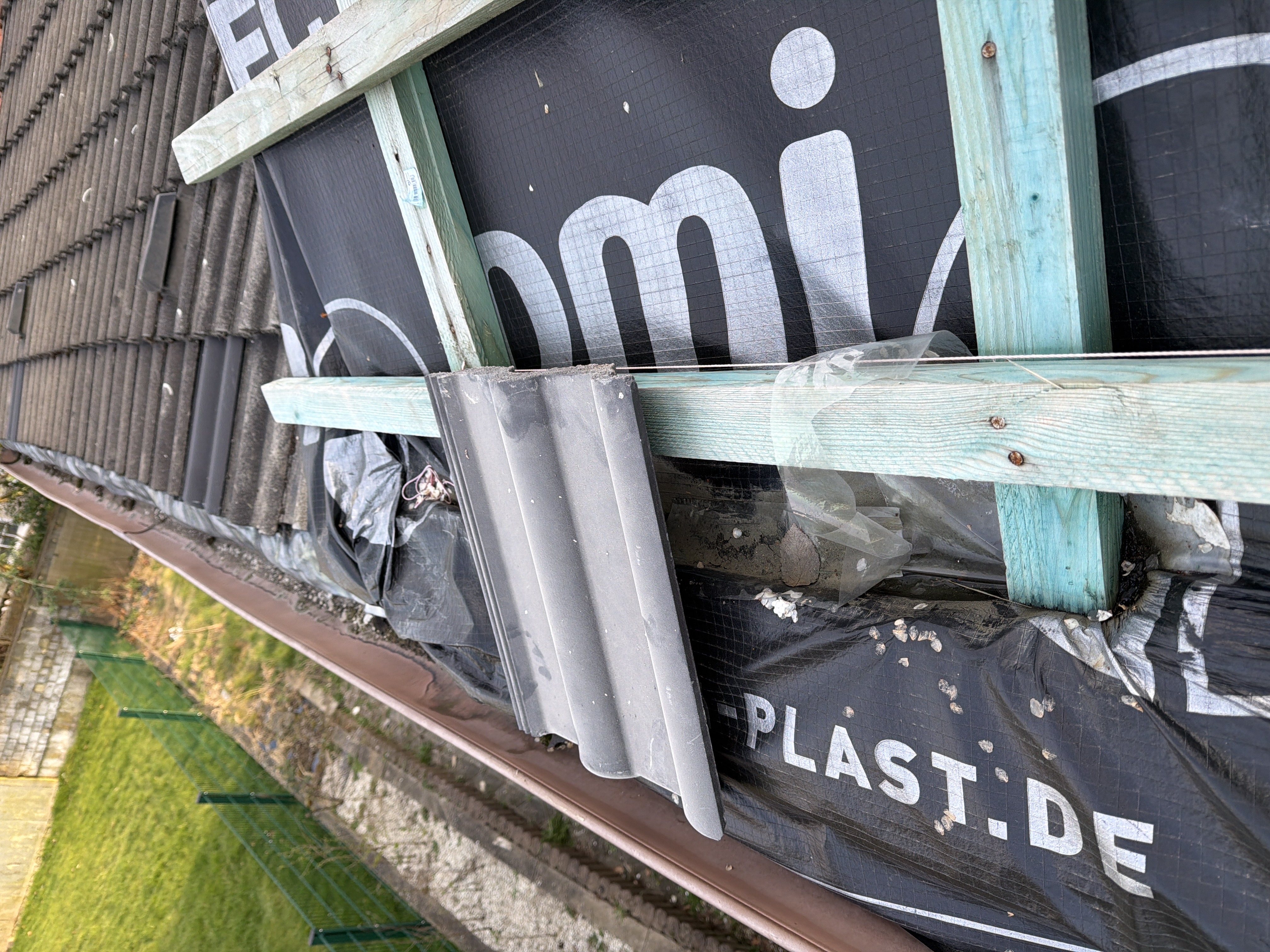
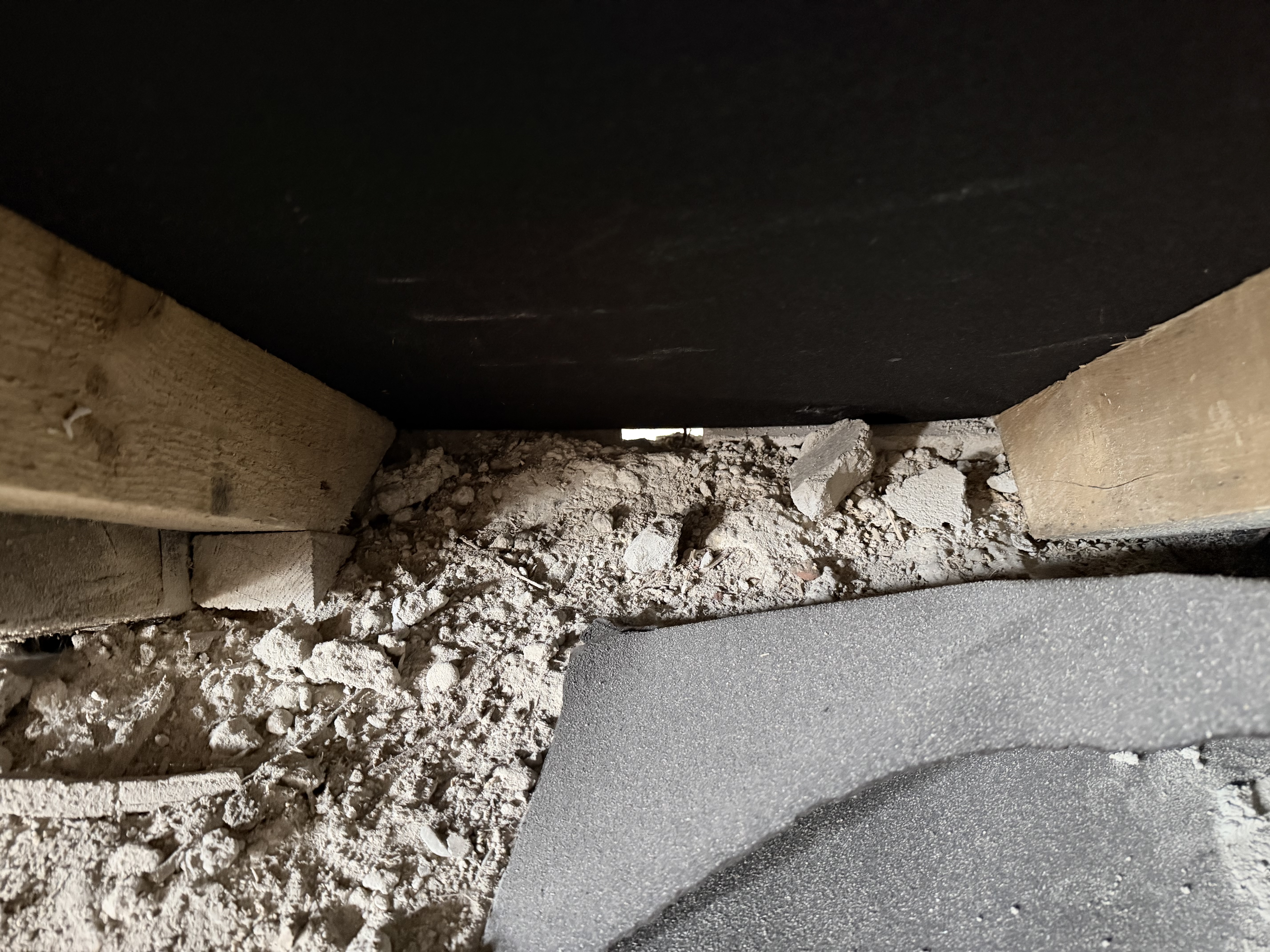
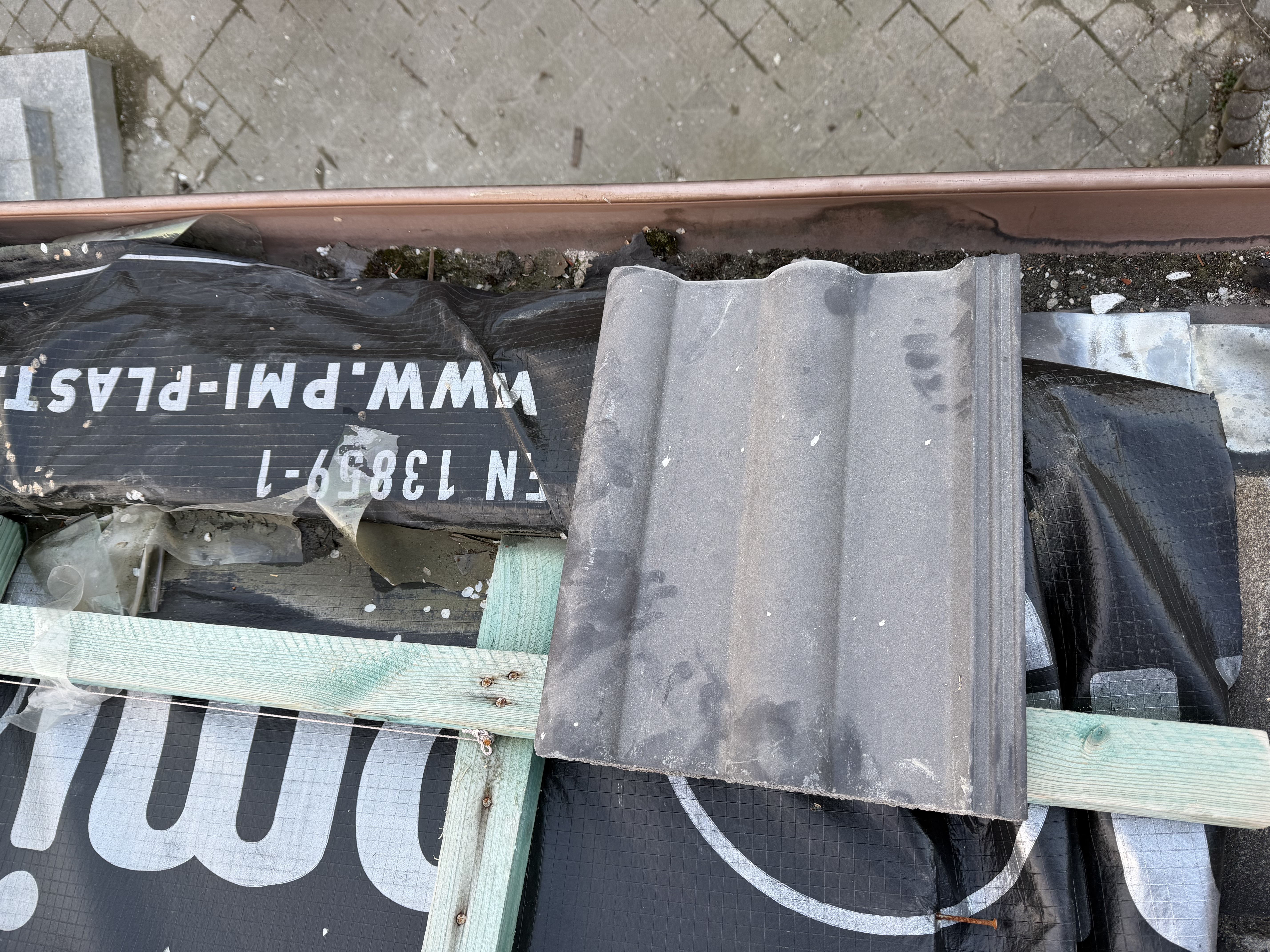
First roof batten is at the limit, removed from the eaves board, see photo
Now there is a water pocket forming there, which I want to fix if possible.
The gutter is plastic and needs to be adjusted anyway because it is slanting towards the middle, as the eaves board is only held on the 30 cm (12 inches) battens from the inside, supported just barely.
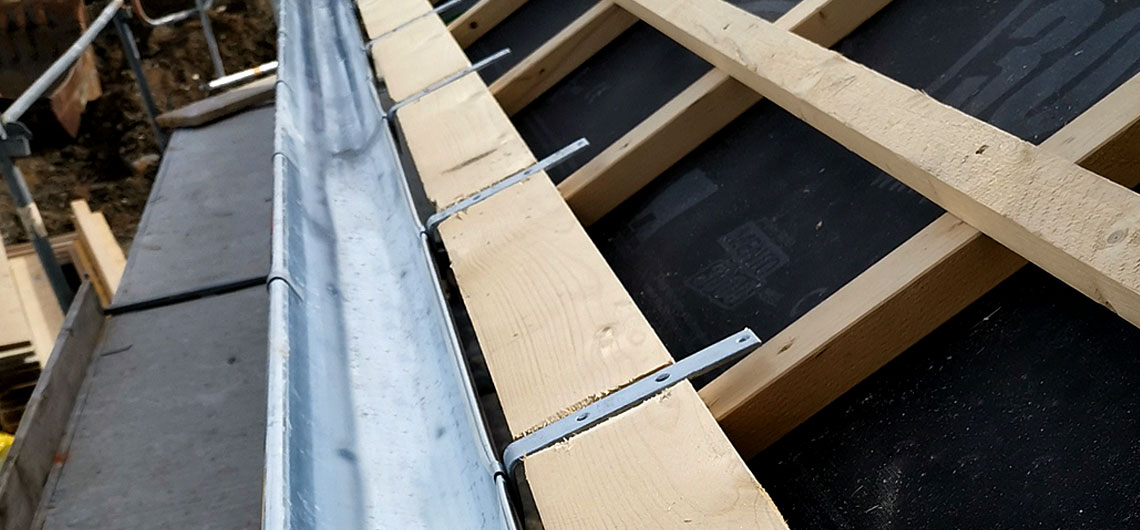
One idea was to use a wedge board, but I don’t think that will create a proper slope either if the board is placed on the rafters (with an additional batten or similar)?
Another idea is to put the eaves board on the counter batten and if any water gets under the roofing, then it would run out at the facade?
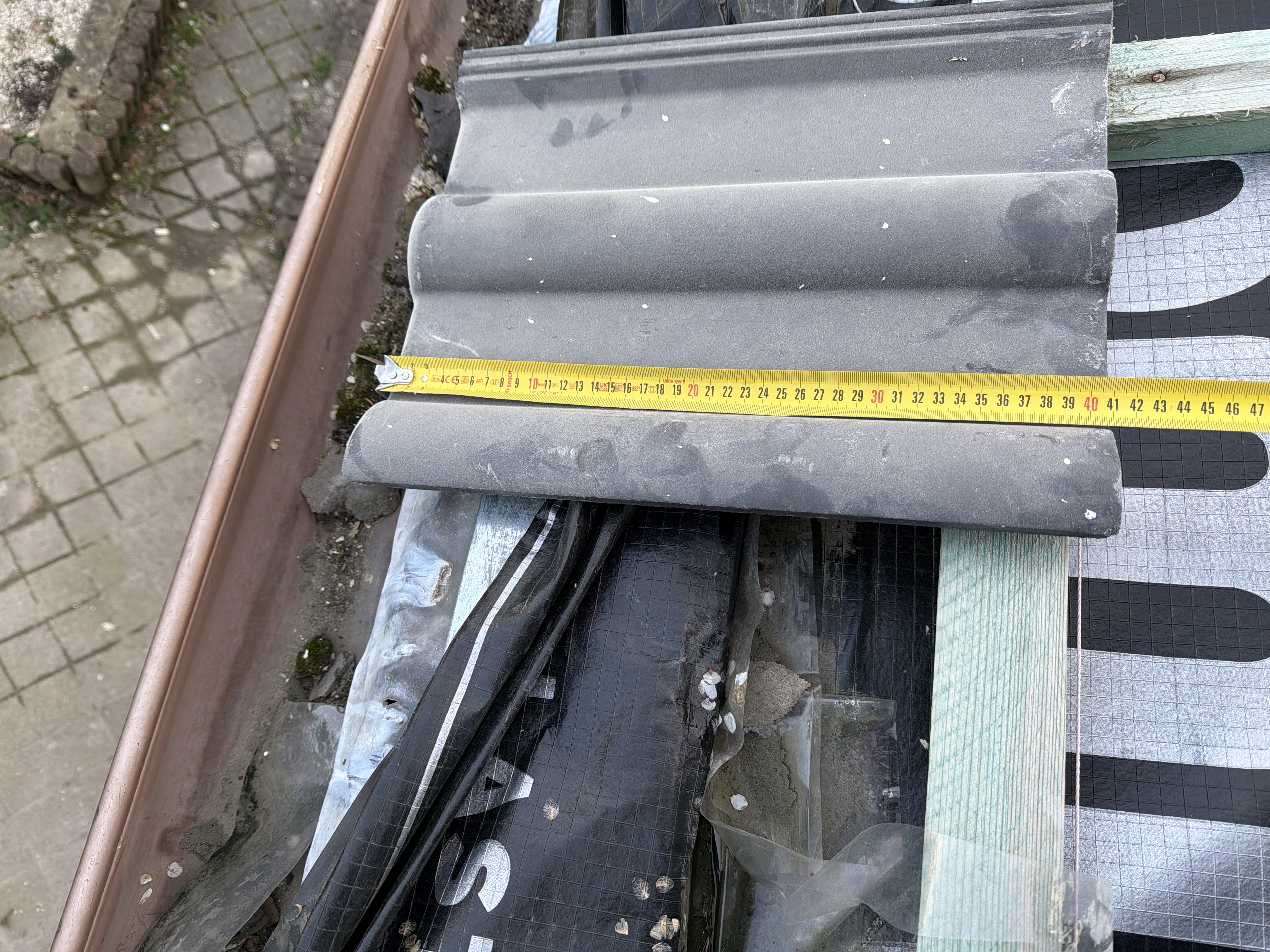
Additional question – the contractors (who will not return) used plain 8 cm (3 inch) nails on 38x58 mm (1.5 x 2.3 inch) battens; should we redo it with 12 cm (5 inch) galvanized screws? Both counter batten and roof batten are 38x58 mm (1.5 x 2.3 inch) and cannot be changed anymore. For the roof batten, would 10 cm (4 inch) or 8 cm (3 inch) nails be better because they have to go through the counter batten into the rafters?
Photos:
This is what I meant with the idea:
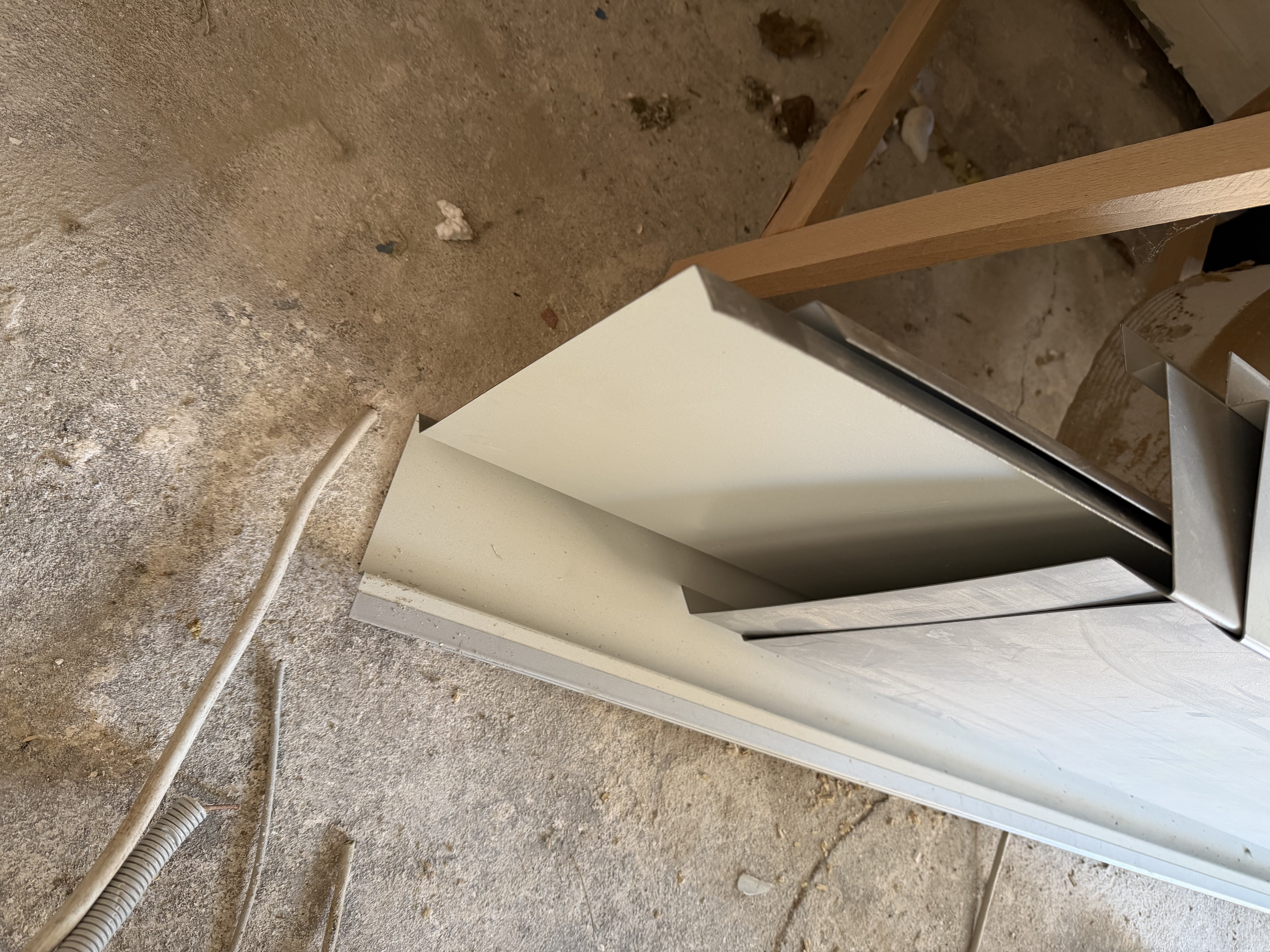
We also have these metal sheets, which were originally for the verge, possibly for use as eaves flashing?
Thank you very much
I have the following problem and a few questions.
Basic details:
Approximately 5.3 meters (17 ft 5 in) rafters from ridge to attic floor (they pass through a concrete ceiling and end there at the wall below, before the external insulation)
Rafters on the left and right are reinforced and roughly straightened so that the roof (new)
is 12 meters (39 ft 4 in) long on each side
New underlay membrane placed tightly on the old eaves board and counter batten (some tension present)
First roof batten is at the limit, removed from the eaves board, see photo
Now there is a water pocket forming there, which I want to fix if possible.
The gutter is plastic and needs to be adjusted anyway because it is slanting towards the middle, as the eaves board is only held on the 30 cm (12 inches) battens from the inside, supported just barely.
One idea was to use a wedge board, but I don’t think that will create a proper slope either if the board is placed on the rafters (with an additional batten or similar)?
Another idea is to put the eaves board on the counter batten and if any water gets under the roofing, then it would run out at the facade?
Additional question – the contractors (who will not return) used plain 8 cm (3 inch) nails on 38x58 mm (1.5 x 2.3 inch) battens; should we redo it with 12 cm (5 inch) galvanized screws? Both counter batten and roof batten are 38x58 mm (1.5 x 2.3 inch) and cannot be changed anymore. For the roof batten, would 10 cm (4 inch) or 8 cm (3 inch) nails be better because they have to go through the counter batten into the rafters?
Photos:
This is what I meant with the idea:
We also have these metal sheets, which were originally for the verge, possibly for use as eaves flashing?
Thank you very much
Hi,
as far as I can see, the underlay membrane is resting on the old fascia board, the roof deck is higher, and the counter battens are sagging at the bottom, causing water to accumulate. Basically, the problem doesn’t disappear just because the roofing material is installed. Water pockets tend to apply longitudinal and point loads to the membrane, which can lead to leaks over time. If you don’t raise the battens or level them out, the gutter might eventually overflow or water could be pushed under the membrane. A practical solution would be to fix the counter battens at the eaves level with the fascia board, possibly using spacers or slightly thicker wood so that water drains properly. You could also consider slightly tapering the fascia board – 1–2cm (0.4–0.8 inches) makes a big difference, especially with 5–6m (16–20 feet) eaves. Are you already wondering whether the gutter itself could be hung lower or if it’s better to adjust the battens?
as far as I can see, the underlay membrane is resting on the old fascia board, the roof deck is higher, and the counter battens are sagging at the bottom, causing water to accumulate. Basically, the problem doesn’t disappear just because the roofing material is installed. Water pockets tend to apply longitudinal and point loads to the membrane, which can lead to leaks over time. If you don’t raise the battens or level them out, the gutter might eventually overflow or water could be pushed under the membrane. A practical solution would be to fix the counter battens at the eaves level with the fascia board, possibly using spacers or slightly thicker wood so that water drains properly. You could also consider slightly tapering the fascia board – 1–2cm (0.4–0.8 inches) makes a big difference, especially with 5–6m (16–20 feet) eaves. Are you already wondering whether the gutter itself could be hung lower or if it’s better to adjust the battens?
I don’t quite understand what you mean by raising the battens. Do you mean putting the counter batten on the eaves? But that wouldn’t solve the issue with the underlay membrane, right? The distance there is quite short.
I’m a bit worried that cutting the batten might damage the underlay membrane, but I guess I will have to shorten it anyway.
The gutter could be lower but not closer. Appearance doesn’t matter to me.
The gutter is right next to the exterior wall:
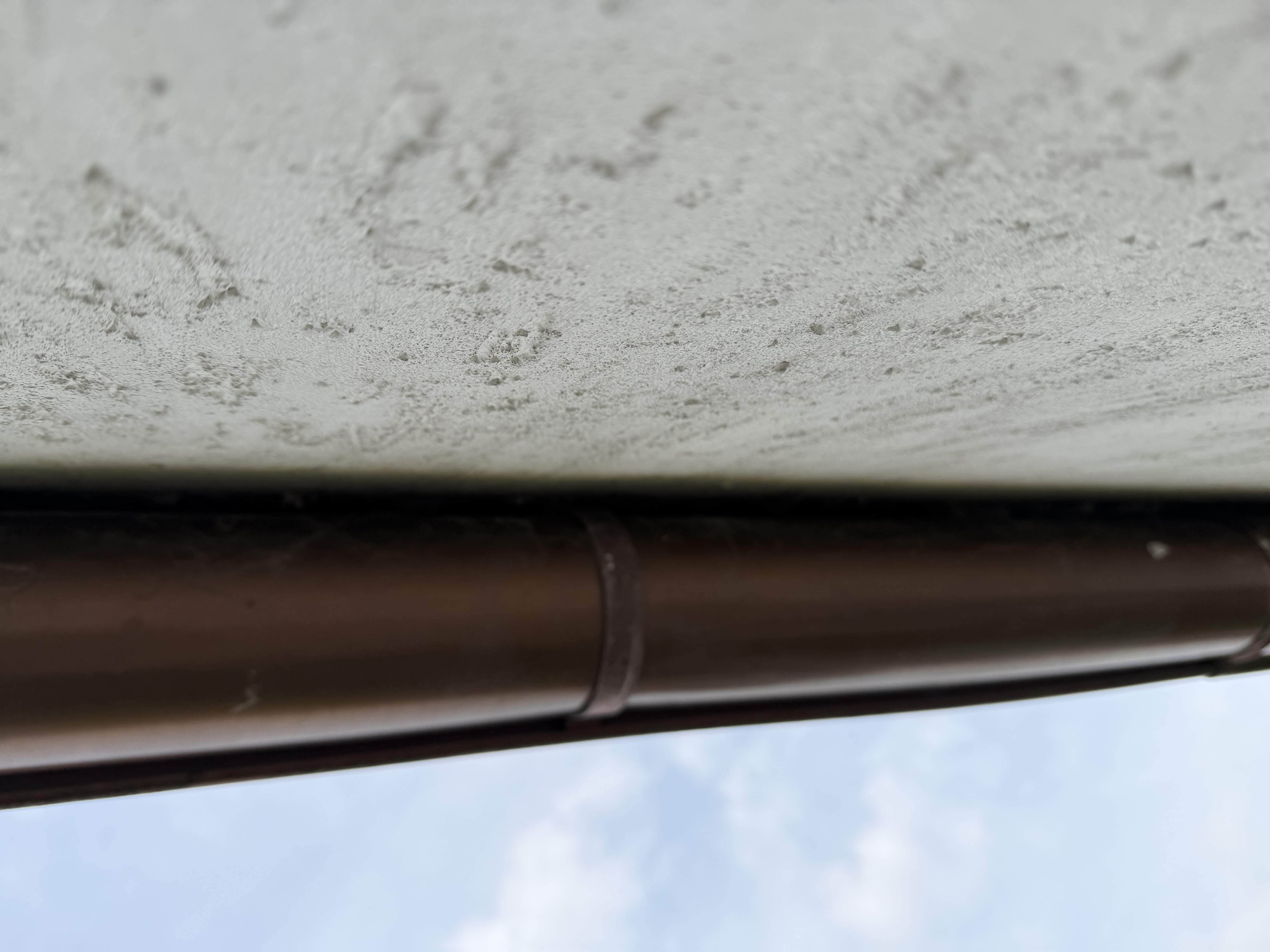
I’m a bit worried that cutting the batten might damage the underlay membrane, but I guess I will have to shorten it anyway.
The gutter could be lower but not closer. Appearance doesn’t matter to me.
The gutter is right next to the exterior wall:

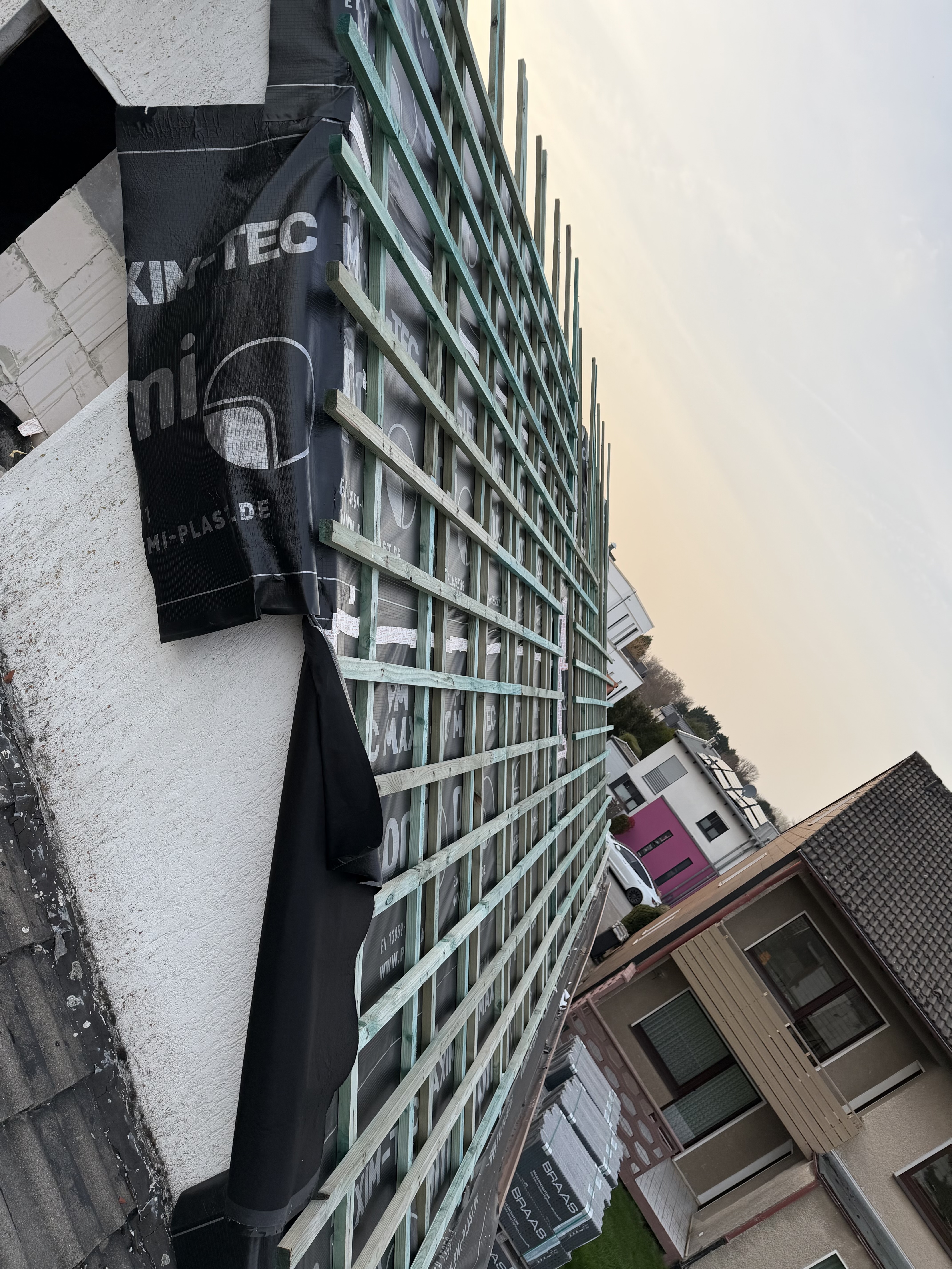
It’s the same old problem with newcomers: confusing story, missing connections everywhere, but plenty of close-up details (without any clear purpose). We know nothing at all about you and your project. No project description, no images showing the context. A general overview is missing (aerial view of the entire building, cross-section of the roof structure from the plans and photos from the inside, etc.). The first picture shows a low-pitched roof surface, at least “steeper” than the one in the background, but it’s hard to place. The text mentions rafters piercing a concrete ceiling, so right at the beginning you’ve already lost me before I could even start to understand. What on earth is a “water bag” supposed to be—does water running off the roof collect on its way to the gutter so that a pond forms there?
When it comes to renovation, refurbishment, or modernization, having an architect experienced in working with existing buildings (like @wpic here) is by no means less important than for new construction!
https://www.instagram.com/11antgmxde/
https://www.linkedin.com/company/bauen-jetzt/
When it comes to renovation, refurbishment, or modernization, having an architect experienced in working with existing buildings (like @wpic here) is by no means less important than for new construction!
https://www.instagram.com/11antgmxde/
https://www.linkedin.com/company/bauen-jetzt/
Here is an overview. There are no documents available for this house. It dates back to 1860 and has no plans or similar records. The concrete ceiling was added later.
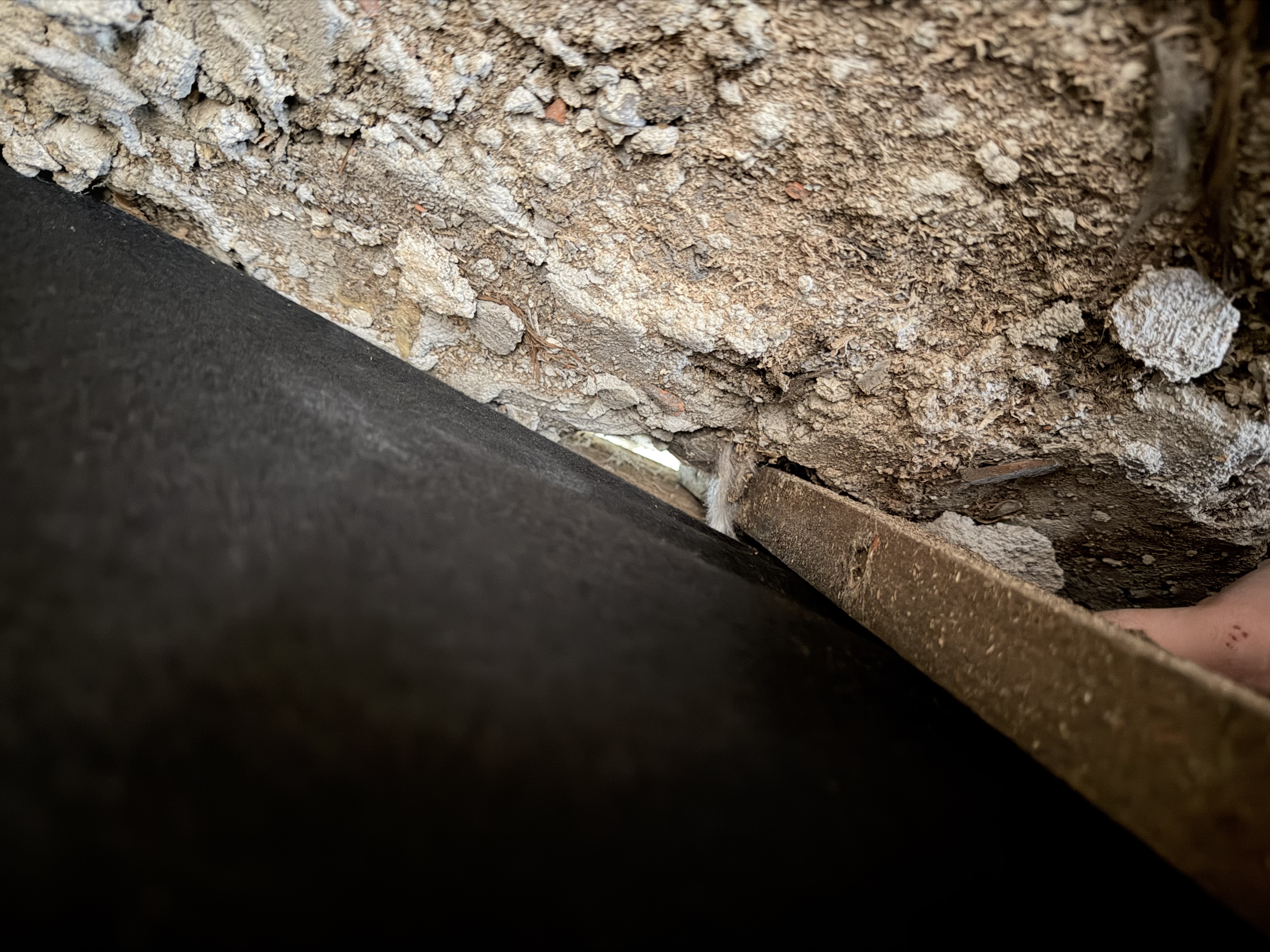
Water accumulates between the end of the counter batten and the fascia board, where it is quite dirty here:
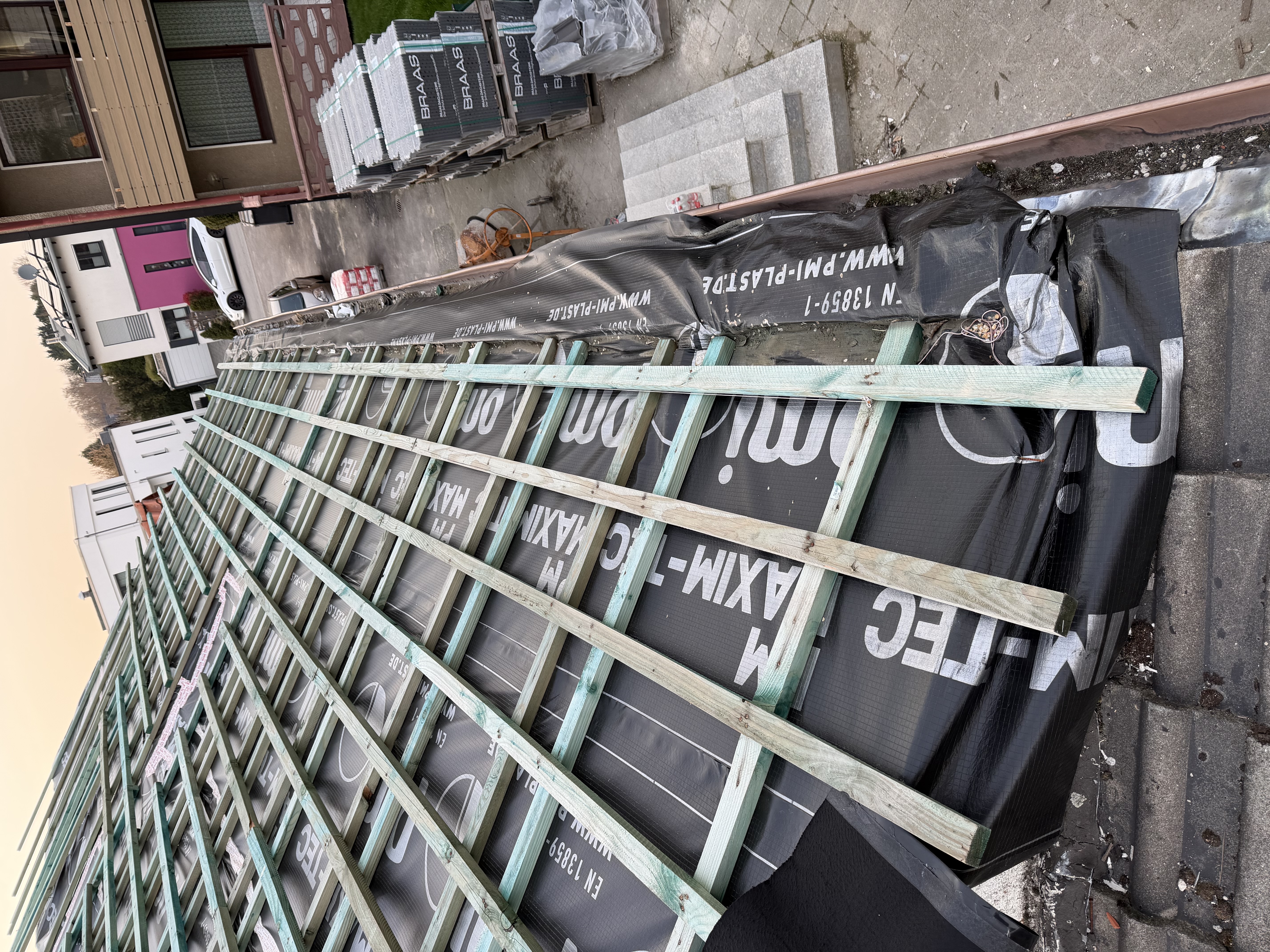
Here is a broader overview – a 120m² (1,292 sq ft) simple pitched roof with about a 36° slope.
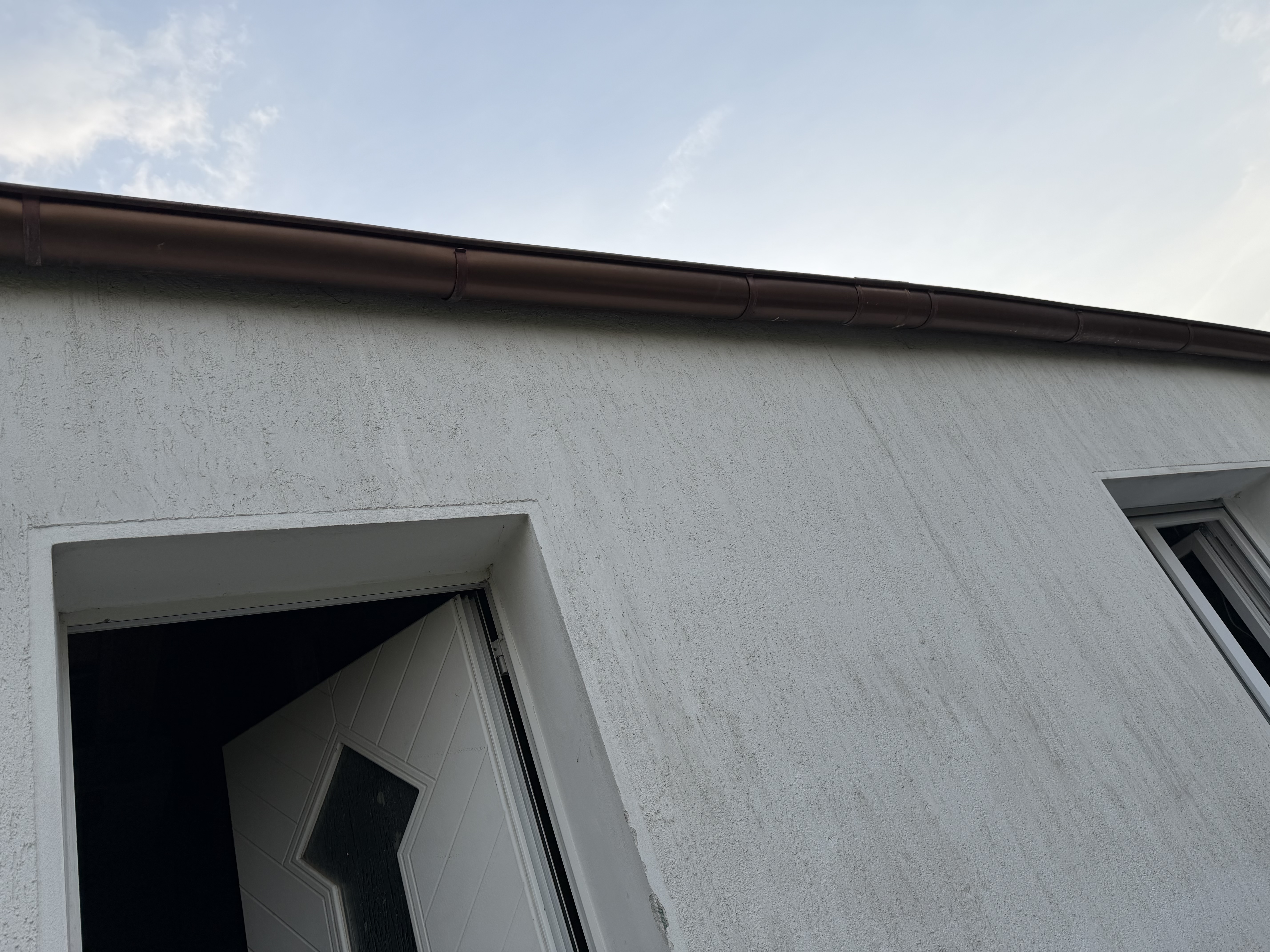
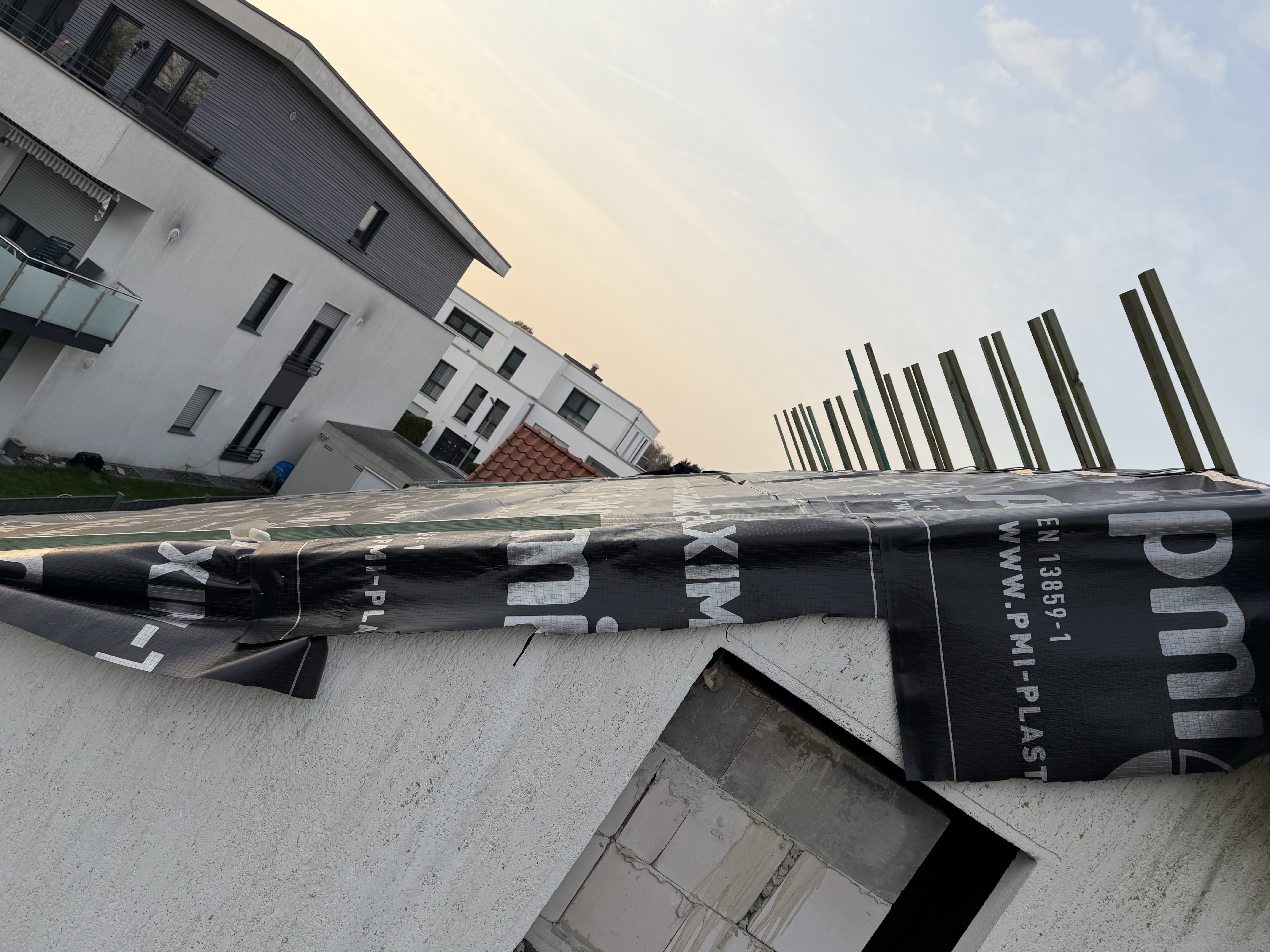
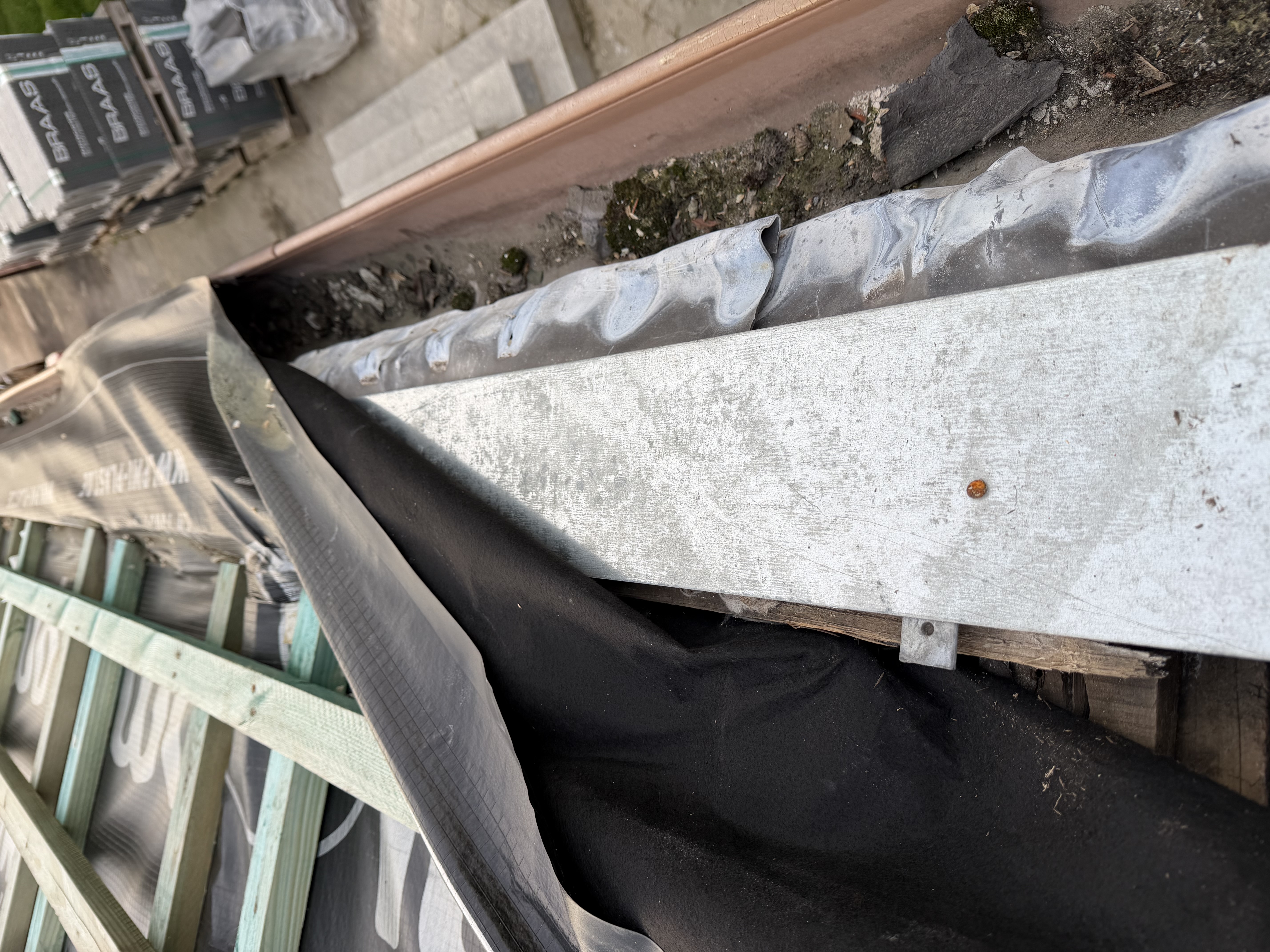
Water accumulates between the end of the counter batten and the fascia board, where it is quite dirty here:
Here is a broader overview – a 120m² (1,292 sq ft) simple pitched roof with about a 36° slope.
Similar topics