
Hello everyone,
I am facing a puzzle – and unfortunately, so is our site manager. The basecoat plaster was applied last summer. It was quite hot at the time. At first, everything was fine. After a while, these whitish discolorations appeared. We pointed this out to the plasterer, who applied another coat. However, that only lasted a few days.
Now the questions are: Does anyone know what might be causing this? And what could be done about it? Should I consider hiring an independent building surveyor?
Unfortunately, I don’t know which plaster or paint was used, but I will ask the plasterer.
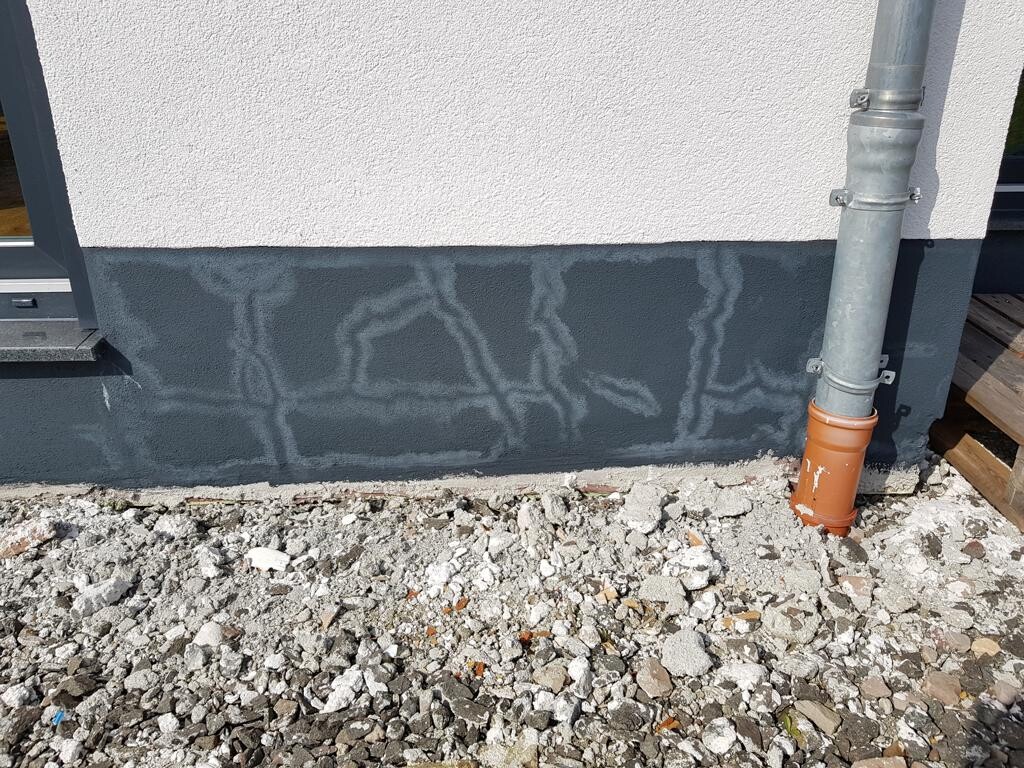
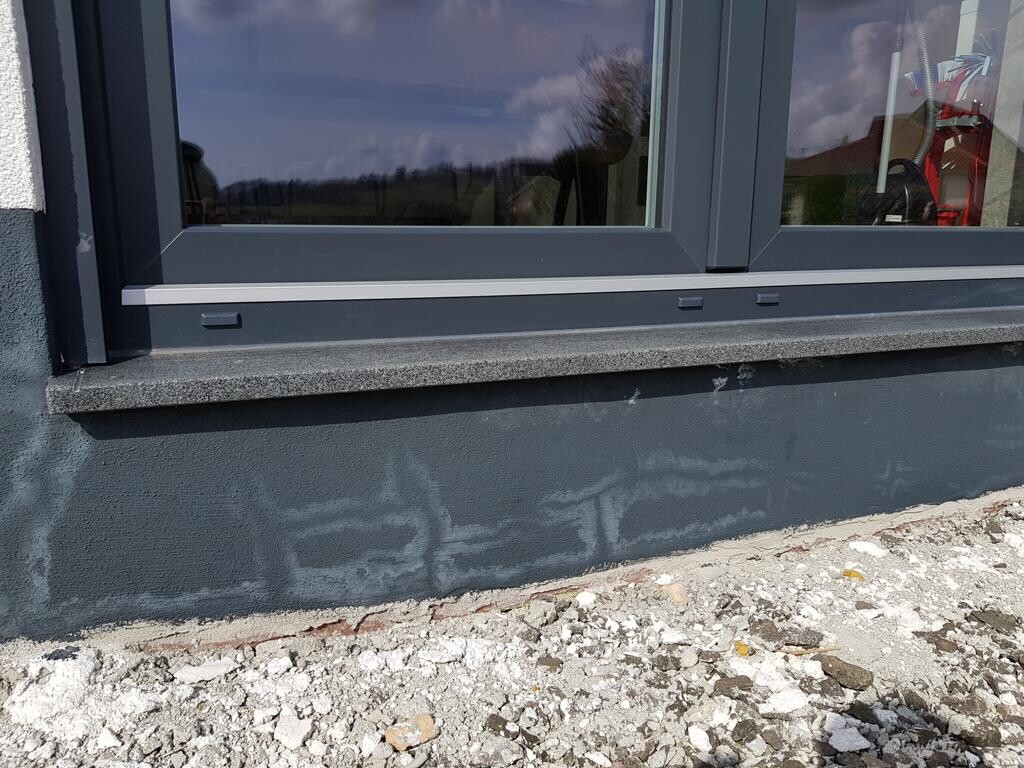
I am facing a puzzle – and unfortunately, so is our site manager. The basecoat plaster was applied last summer. It was quite hot at the time. At first, everything was fine. After a while, these whitish discolorations appeared. We pointed this out to the plasterer, who applied another coat. However, that only lasted a few days.
Now the questions are: Does anyone know what might be causing this? And what could be done about it? Should I consider hiring an independent building surveyor?
Unfortunately, I don’t know which plaster or paint was used, but I will ask the plasterer.
In the meantime, as recommended, I sent the pictures to Knauf. They responded promptly with an offer for a representative to come and take a look. So, we arranged a meeting with the builder, plasterer, and Knauf.
The representative said these are microcracks through which liquid is penetrating. Due to sunlight exposure, which is intensified by the anthracite color, the water evaporates back through the cracks, causing these efflorescence marks.
Knauf’s suggested solution: repainting a section of the base with a fiber-reinforced paint in the same color. We agreed on a length of about 2 meters (6.5 feet). If this solves the problem, the entire base will be painted the same way. If efflorescence reoccurs, the whole base area will be treated with citric acid to remove it, then repainted with the fiber-reinforced paint.
I will keep you updated.
The representative said these are microcracks through which liquid is penetrating. Due to sunlight exposure, which is intensified by the anthracite color, the water evaporates back through the cracks, causing these efflorescence marks.
Knauf’s suggested solution: repainting a section of the base with a fiber-reinforced paint in the same color. We agreed on a length of about 2 meters (6.5 feet). If this solves the problem, the entire base will be painted the same way. If efflorescence reoccurs, the whole base area will be treated with citric acid to remove it, then repainted with the fiber-reinforced paint.
I will keep you updated.
Hello Baraja,
I probably have the same issue: south-facing side, anthracite color, and micro-cracks with efflorescence. Additionally, there is no roof overhang on this side, so it is fully exposed to the rain. Our house is just under 10 years old, and this is the first time we have noticed a moisture problem on the inside at this spot.
Unfortunately, this spot also seems to be a thermal bridge, as the surface temperature on the inside is only 15–16°C (59–61°F) when it is -5°C (23°F) outside. So, I’m not sure if it is condensation or moisture penetrating from outside.
Has painting with fiber-reinforced paint helped? I would consider trying that in the summer.
Thanks in advance
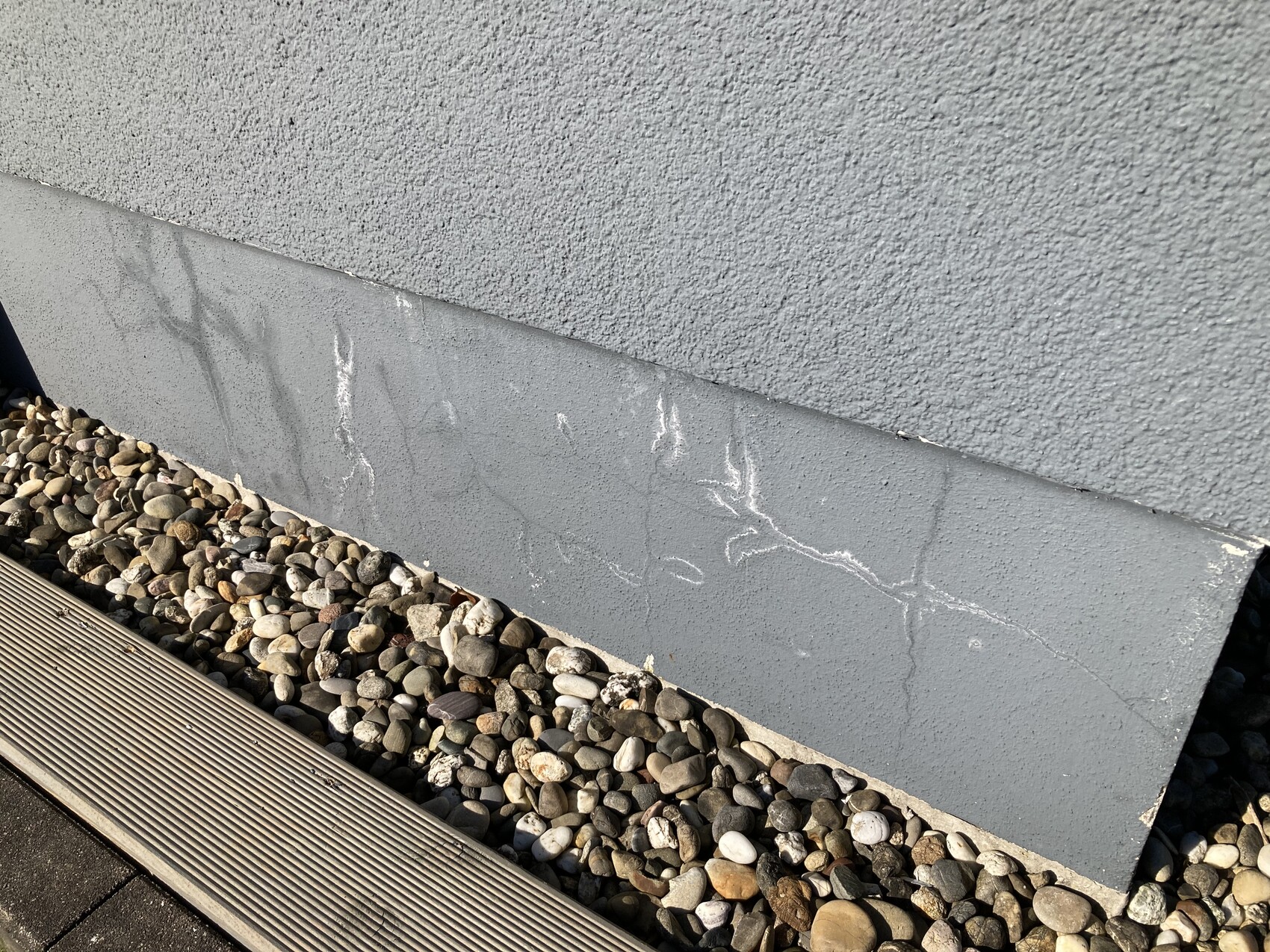
I probably have the same issue: south-facing side, anthracite color, and micro-cracks with efflorescence. Additionally, there is no roof overhang on this side, so it is fully exposed to the rain. Our house is just under 10 years old, and this is the first time we have noticed a moisture problem on the inside at this spot.
Unfortunately, this spot also seems to be a thermal bridge, as the surface temperature on the inside is only 15–16°C (59–61°F) when it is -5°C (23°F) outside. So, I’m not sure if it is condensation or moisture penetrating from outside.
Has painting with fiber-reinforced paint helped? I would consider trying that in the summer.
Thanks in advance
The entire base was painted. We then followed the recommendation to switch from anthracite to a light gray. A minor point of criticism here is that, of course, new light efflorescence is barely visible on a rather light (concrete-like) color. On the positive side, this color is less sensitive to sunlight.
In the area where gravel and flooring were installed, I sealed with a mineral waterproofing slurry (Knauf Sockeldicht), and before that, the obligatory studded membrane was applied.
So far, I have not seen any more cracks. Something seems to have worked.
In the area where gravel and flooring were installed, I sealed with a mineral waterproofing slurry (Knauf Sockeldicht), and before that, the obligatory studded membrane was applied.
So far, I have not seen any more cracks. Something seems to have worked.
Similar topics