
Hello everyone,
We are building on a slope and have received a proposal for pressure drainage.
Has anyone had experience with this? Normally, water flows downhill.
The drainage system involves a small pump that would pump the wastewater about 40 meters (130 feet) uphill, overcoming a height difference of approximately 6 meters (20 feet), which sounds promising.
We could save around 10,000€ by using this.
I would appreciate your opinions.
Good luck
We are building on a slope and have received a proposal for pressure drainage.
Has anyone had experience with this? Normally, water flows downhill.
The drainage system involves a small pump that would pump the wastewater about 40 meters (130 feet) uphill, overcoming a height difference of approximately 6 meters (20 feet), which sounds promising.
We could save around 10,000€ by using this.
I would appreciate your opinions.
Good luck
The shaft cover is not airtight. In the shaft from Jung (PKS something), in addition to the pressure pipe and supply line DN160, there are also two pre-prepared openings DN110 for technical installations and final ventilation.
The technical opening is used for the pump supply line and pressure bells (?) to measure the water level. There is an airtight plug for this. The final ventilation can be routed away from the shaft with DN110; there is a kind of tower for this.
So far, we have not noticed any odor, even during hot temperatures.
The technical opening is used for the pump supply line and pressure bells (?) to measure the water level. There is an airtight plug for this. The final ventilation can be routed away from the shaft with DN110; there is a kind of tower for this.
So far, we have not noticed any odor, even during hot temperatures.
D
drjack200021 Sep 2020 20:19Hello teh_M,
thank you. Then it seems we are on the right track here.
Good luck
thank you. Then it seems we are on the right track here.
Good luck
D
drjack200018 Jan 2021 19:57teh_M schrieb:
I installed exactly this pump type as a twin system because I need to pump both wastewater and rainwater. I have about a 1m (3 ft) elevation difference with a 15m (50 ft) pressure pipe.
It has only been running since January, but so far I am very satisfied. The pumps mostly run idle. The total runtime of the pumps is just under 5 hours, which means approximately $6 in electricity costs.
I haven't received an offer for annual maintenance yet. Could you please help me with this matter again? How did you solve the issue of the backflow loop? Our pump chamber is about 5.5m (18 ft) below the backflow level. It is difficult for us to simply install a backflow loop. The approved city application refers to DIN 12056. We need to protect against backflow here.
So far, my idea has been to set the chamber below the house level, and if water ever bypasses the pump (which ideally shouldn’t happen), the chamber will overflow and the water will run into the garden. The garden is slightly lower. That would be the lesser evil.
I would welcome further opinions or experiences.
Hmm, I’m not familiar with that standard. I didn’t install a backflow loop at all.
For me, the difference isn’t as significant as in your case (the slab is slightly at sewer level, the plot has a steep slope at the front).
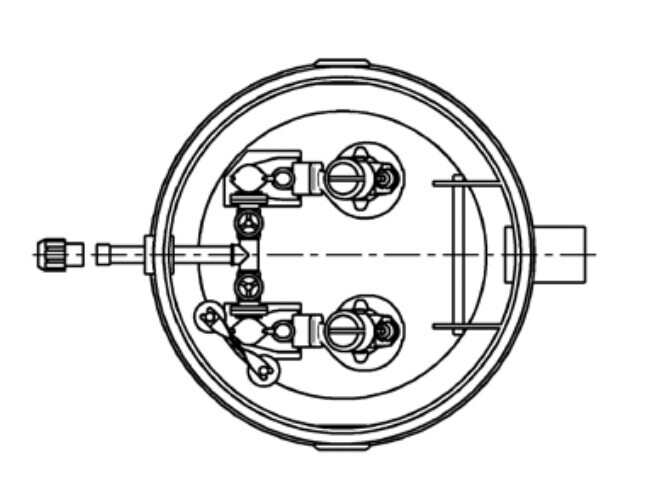
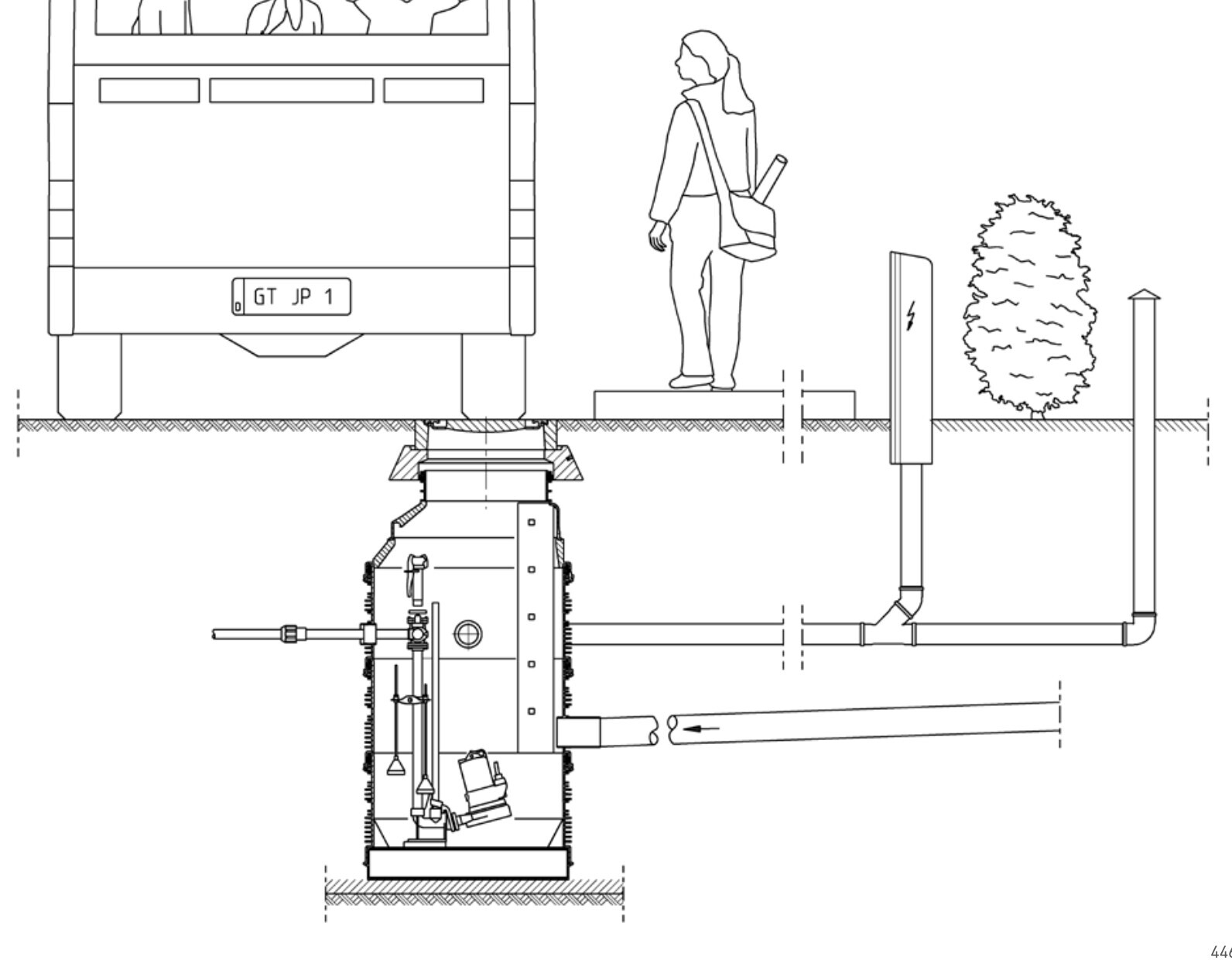
If you get the PKS-D1000-D40 (or something similar), Jung provides datasheets and such. I’ve attached two pictures.
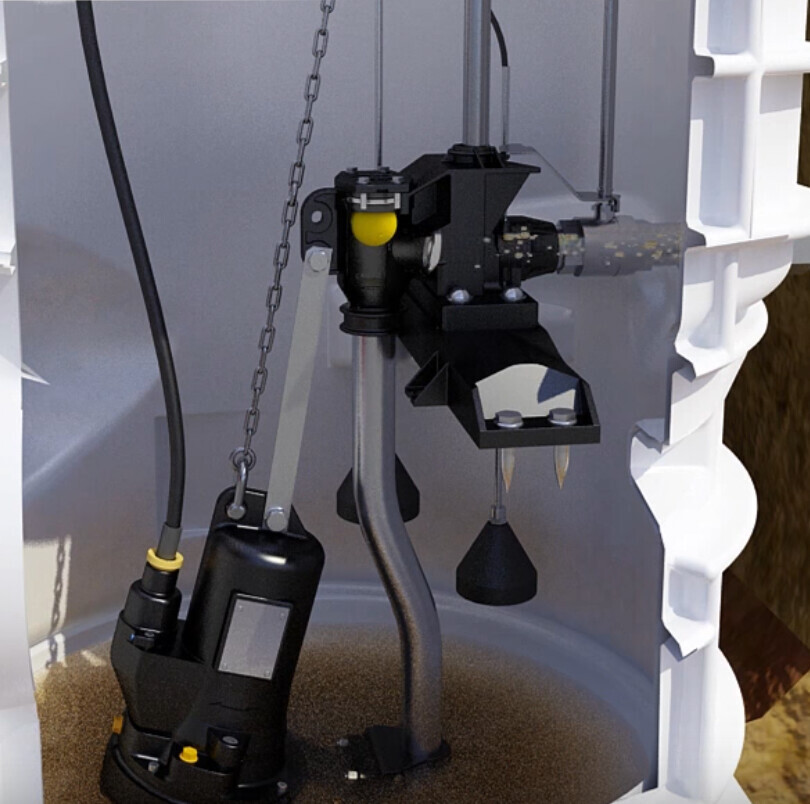
The top image shows two shut-off valves for the pressure outlet. In front of those, there are ball heads at the top of the riser pipe per pump that prevent backflow (third picture in yellow). I’m not sure if that already counts as backflow protection and replaces the backflow loop. That’s how it is for me 😀 You’d probably have to call Jung Pumps about that.
The critical case is a power outage. For that, I have an overflow system: first, the cistern fills up, then it discharges via a DN160 (6 inch) pipe—where rainwater normally drains—to the back part of the property. I will have to clean everything afterward, but the wastewater stays out of the house.
For me, the difference isn’t as significant as in your case (the slab is slightly at sewer level, the plot has a steep slope at the front).
If you get the PKS-D1000-D40 (or something similar), Jung provides datasheets and such. I’ve attached two pictures.
The top image shows two shut-off valves for the pressure outlet. In front of those, there are ball heads at the top of the riser pipe per pump that prevent backflow (third picture in yellow). I’m not sure if that already counts as backflow protection and replaces the backflow loop. That’s how it is for me 😀 You’d probably have to call Jung Pumps about that.
The critical case is a power outage. For that, I have an overflow system: first, the cistern fills up, then it discharges via a DN160 (6 inch) pipe—where rainwater normally drains—to the back part of the property. I will have to clean everything afterward, but the wastewater stays out of the house.
D
drjack200018 Jan 2021 20:56teh_M schrieb:
Hmm, I’m not familiar with the standard. I didn’t install any backflow loop at all.
In my case, the difference isn’t as big as yours (the slab is slightly at the sewer level, and the property slopes steeply at the front).
If you get the PKS-D1000-D40 (or something similar), Jung provides datasheets and so on. I attached 2 pictures.
The top picture shows 2 shut-off valves on the pressure outlet. Ahead of them are ball check valves at the top of the riser pipe for each pump, which prevent backflow (the 3rd picture in yellow). I don’t know if that already counts as backflow protection and replaces the backflow loop. That’s how I did it 😀 You’d have to contact Jung Pumps for clarification.
The critical case is when the power fails, and for that I have an overflow. First, the cistern fills up, then it drains through a DN160 (6-inch) pipe—normally for rainwater—towards the rear part of the property. Then I just have to clean everything out, but at least the wastewater stays out of the house.
[ATTACH alt="PKS_oben.png"]56298[/ATTACH][ATTACH alt="PKS_Seite.png"]56299[/ATTACH][ATTACH alt="Rückstau_Q.png"]56300[/ATTACH]D
drjack200018 Jan 2021 21:02Similar topics