
ᐅ Potential defects in installed mechanical ventilation ductwork – concreting will be done today
Created on: 9 Jun 2016 09:11
S
sirhc
Hello everyone,
I urgently need an assessment from someone with some experience in controlled residential ventilation, specifically regarding the installation.
Yesterday afternoon, the ducts were installed in the ceiling, the upper layer of reinforcement steel is currently being placed, and the concrete will be poured this afternoon.
Last night, I went through all the lines to check if everything looks okay. I found two issues:
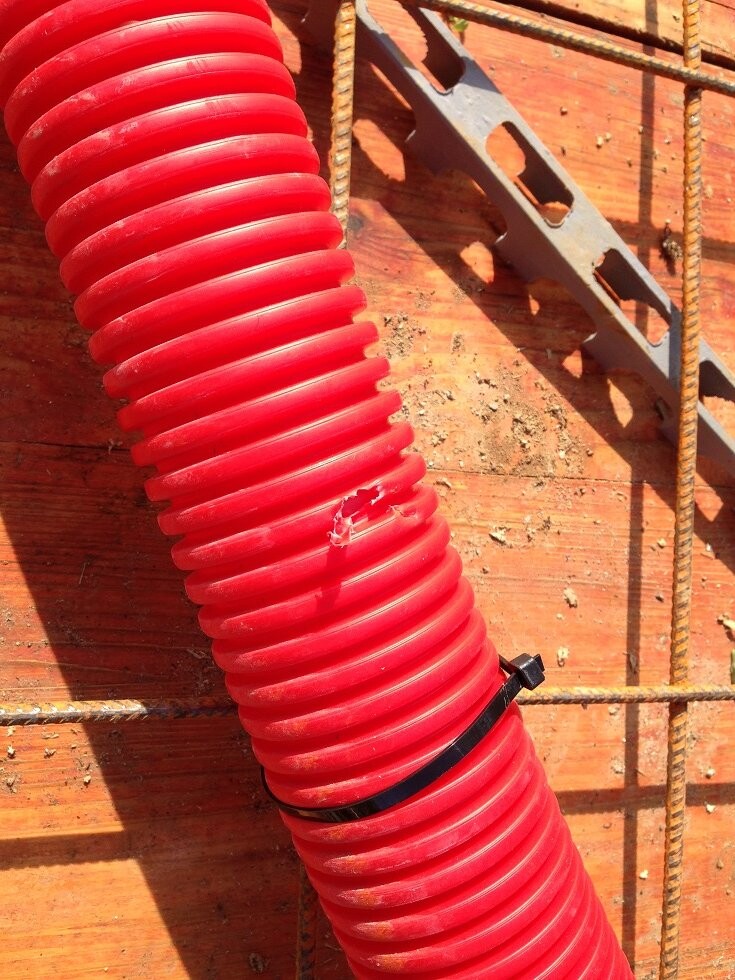
1. Hole in the duct: however, it’s not possible to see inside the pipe, so I assume the duct has both an outer and inner wall and the hole does not penetrate the inner wall. My question is how serious this is: does this section of duct need to be replaced, is simply sealing it with strong tape like duct tape sufficient, or is this only cosmetic and can be concreted over as is?
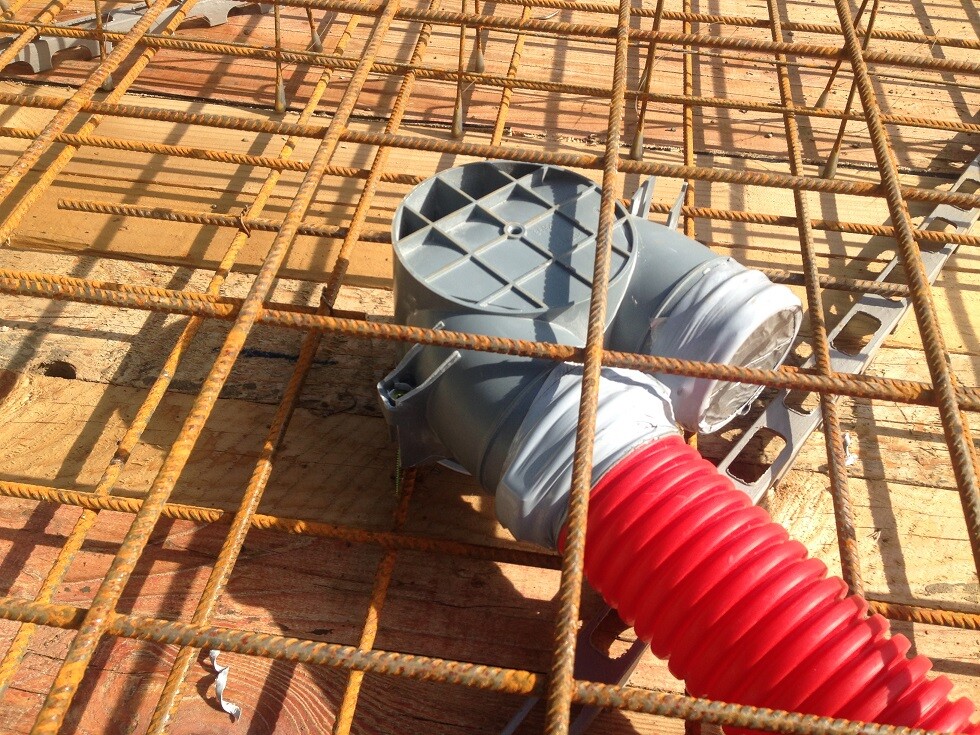
2. Valve wrapped with tape: unlike the other valves, this duct in the valve is additionally wrapped with tape, and while the other valves have the second connection sealed with a plastic cap, this one uses tape. I assume a locking mechanism is damaged and the original cap is missing. Here again, how serious is this: does the valve need to be replaced, or is this just a pragmatic fix that can be left as is?
Unfortunately, my installer has been unreachable since yesterday late afternoon and according to the office is out all day today. The office is trying to reach him and has the photos I sent yesterday, but I’m thinking about what to do if the concrete arrives this afternoon before the installer can respond. If necessary, I may have to seal the hole myself with duct tape, which is better than nothing. Also, I’m worried that more holes might appear after the upper reinforcement layer is installed, which I would then have to address.
Thanks for your help.
I urgently need an assessment from someone with some experience in controlled residential ventilation, specifically regarding the installation.
Yesterday afternoon, the ducts were installed in the ceiling, the upper layer of reinforcement steel is currently being placed, and the concrete will be poured this afternoon.
Last night, I went through all the lines to check if everything looks okay. I found two issues:
1. Hole in the duct: however, it’s not possible to see inside the pipe, so I assume the duct has both an outer and inner wall and the hole does not penetrate the inner wall. My question is how serious this is: does this section of duct need to be replaced, is simply sealing it with strong tape like duct tape sufficient, or is this only cosmetic and can be concreted over as is?
2. Valve wrapped with tape: unlike the other valves, this duct in the valve is additionally wrapped with tape, and while the other valves have the second connection sealed with a plastic cap, this one uses tape. I assume a locking mechanism is damaged and the original cap is missing. Here again, how serious is this: does the valve need to be replaced, or is this just a pragmatic fix that can be left as is?
Unfortunately, my installer has been unreachable since yesterday late afternoon and according to the office is out all day today. The office is trying to reach him and has the photos I sent yesterday, but I’m thinking about what to do if the concrete arrives this afternoon before the installer can respond. If necessary, I may have to seal the hole myself with duct tape, which is better than nothing. Also, I’m worried that more holes might appear after the upper reinforcement layer is installed, which I would then have to address.
Thanks for your help.


Here is what I found from my research:
+ More cost-effective installation since cutting insulation around the mechanical ventilation ducts is not necessary
+ Round ducts are more common, produced in larger quantities, and therefore cheaper than oval ducts
+ Less height needed for the floor construction, which is already significant due to underfloor heating, insulation, etc.
+ Easier installation of other components on the ceiling, as nothing is allowed to cross each other
What is your perspective on this?
Best regards
sirhc
+ More cost-effective installation since cutting insulation around the mechanical ventilation ducts is not necessary
+ Round ducts are more common, produced in larger quantities, and therefore cheaper than oval ducts
+ Less height needed for the floor construction, which is already significant due to underfloor heating, insulation, etc.
+ Easier installation of other components on the ceiling, as nothing is allowed to cross each other
What is your perspective on this?
Best regards
sirhc
S
Sebastian7910 Jun 2016 13:35I can only agree with the comments made by sirhc.
Hello Sebastian,
Did you receive my message from yesterday? It was supposed to be a personal message, but it seems to have ended up on the "wall" or something similar, so I couldn’t see it myself anymore.
Can you tell me the year and issue number of the CT edition about KNX? Yesterday, I read a post from you on that topic which was about 15 months old. 🙂 I’m also interested in what you ultimately implemented, since we are already off-topic...
Thanks and best regards!
Did you receive my message from yesterday? It was supposed to be a personal message, but it seems to have ended up on the "wall" or something similar, so I couldn’t see it myself anymore.
Can you tell me the year and issue number of the CT edition about KNX? Yesterday, I read a post from you on that topic which was about 15 months old. 🙂 I’m also interested in what you ultimately implemented, since we are already off-topic...
Thanks and best regards!
S
Sebastian7910 Jun 2016 13:56Oh no – just saw this now.
The output is probably already in the trash or in the moving container 😀
There was hardly anything in it anyway – so it’s not really useful information for someone who wants to implement KNX.
I don’t have KNX because I never saw any personal benefit in it and still don’t. I implemented everything I wanted using conventional methods – some of it was a bit of DIY, but it worked.
The output is probably already in the trash or in the moving container 😀
There was hardly anything in it anyway – so it’s not really useful information for someone who wants to implement KNX.
I don’t have KNX because I never saw any personal benefit in it and still don’t. I implemented everything I wanted using conventional methods – some of it was a bit of DIY, but it worked.