
ᐅ Poroton brick interior wall has black spots – mold or soot?
Created on: 2 Mar 2022 12:16
H
herrfield
Hello everyone,
We are currently building a single-family house using Wienerberger Poroton blocks.
All exterior walls and the interior walls on the ground floor are fine.
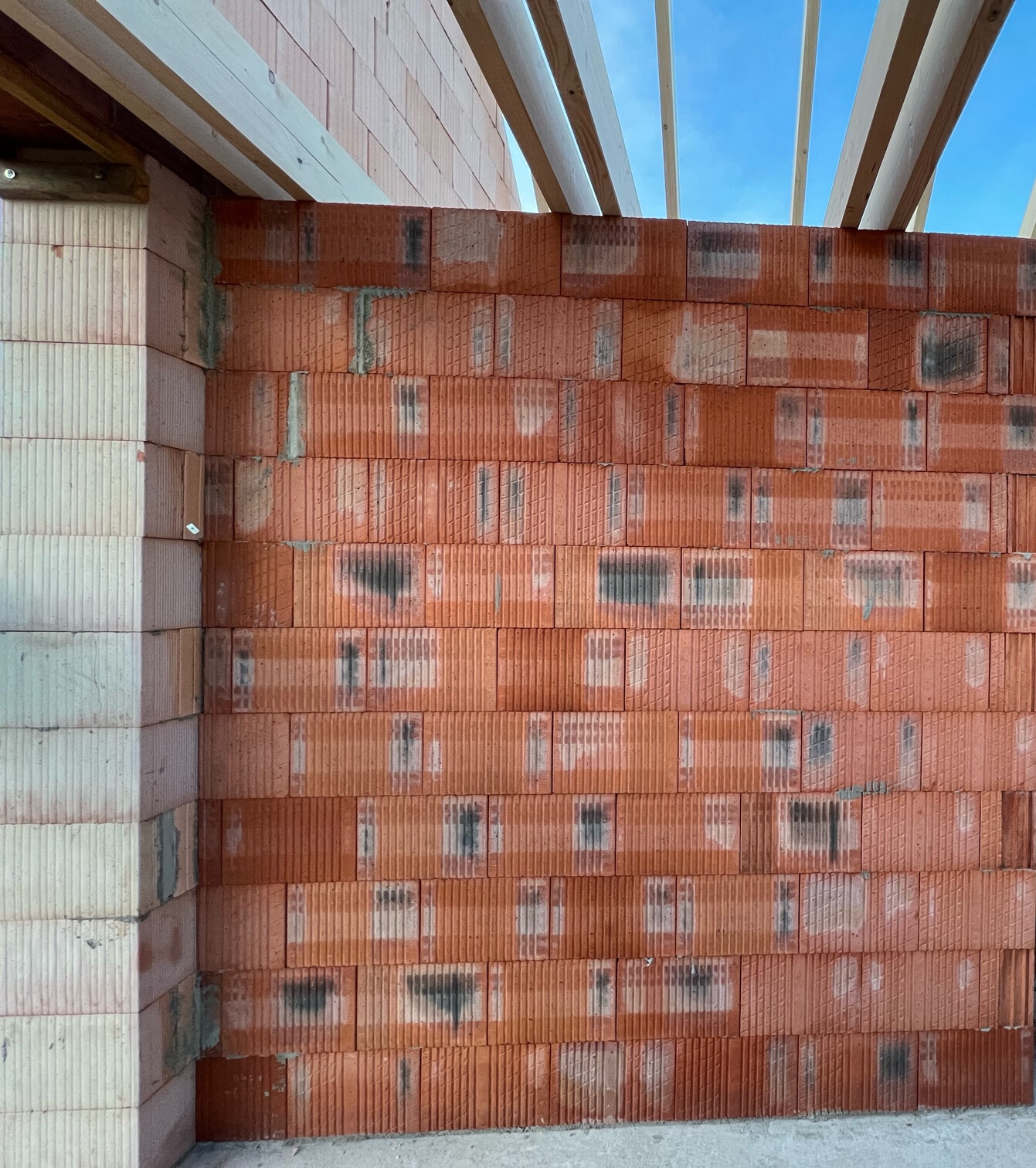
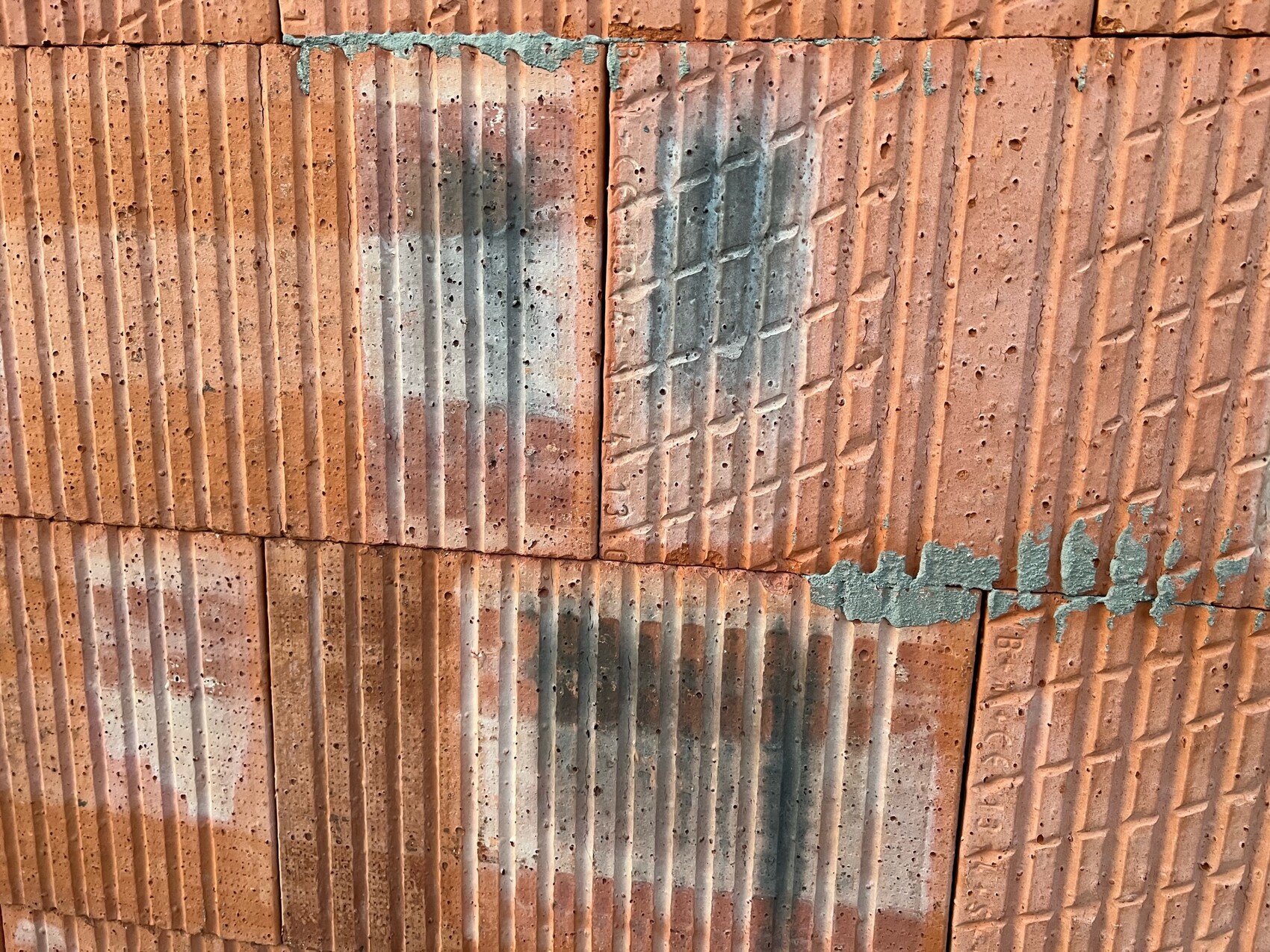
However, all interior walls in the attic level show black spots.
These are non-load-bearing walls, 11.5cm (5 inches) thick, made of unfilled Poroton bricks.
(To be precise, Wienerberger Poroton high-porosity hollow bricks, Plan-T, 11.5cm (5 inches) thick with a bulk density of 1.2.)
Since there has been a lot of rain and storms over the past weeks, I was concerned that the bricks might have absorbed too much moisture and started to mold.
I only noticed this now (March 1, 2022), after the roof structure was installed. The roof is about to be covered, and I fear it might soon be too late to fix anything, apply anti-mold treatment, or rebuild the walls.
Unfortunately, I have no idea whether this is necessary at all. Is this mold, or manufacturing-related scorch marks or similar?
I can’t find anyone who can tell me whether this is okay or if it is a defect.
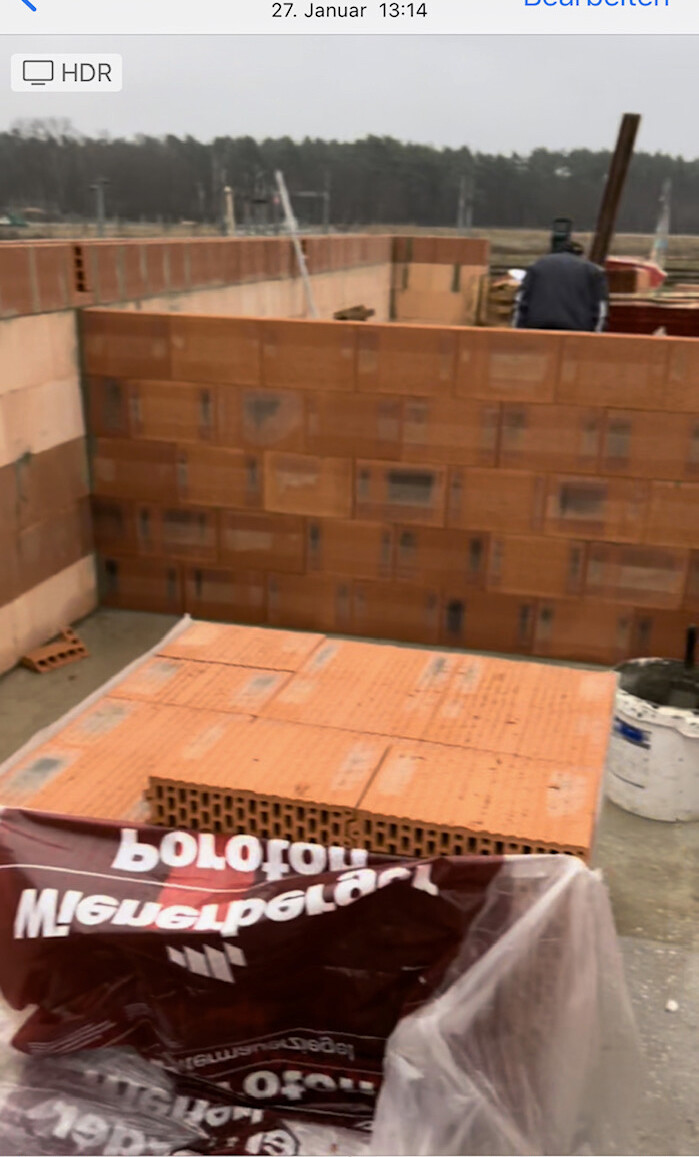
I also found a photo from the end of January, when the interior walls were being erected. Even then, there were black spots on the wall and on the bricks stacked on the pallet.
The bricks were delivered directly on pallets, lifted with a crane onto the attic floor, and built in within the following days. So it seems very unlikely that this is caused by excessive rain.
Is anyone familiar with this issue of spots on Poroton bricks?
Thanks in advance for your advice!
Best regards,
Daniel
We are currently building a single-family house using Wienerberger Poroton blocks.
All exterior walls and the interior walls on the ground floor are fine.
However, all interior walls in the attic level show black spots.
These are non-load-bearing walls, 11.5cm (5 inches) thick, made of unfilled Poroton bricks.
(To be precise, Wienerberger Poroton high-porosity hollow bricks, Plan-T, 11.5cm (5 inches) thick with a bulk density of 1.2.)
Since there has been a lot of rain and storms over the past weeks, I was concerned that the bricks might have absorbed too much moisture and started to mold.
I only noticed this now (March 1, 2022), after the roof structure was installed. The roof is about to be covered, and I fear it might soon be too late to fix anything, apply anti-mold treatment, or rebuild the walls.
Unfortunately, I have no idea whether this is necessary at all. Is this mold, or manufacturing-related scorch marks or similar?
I can’t find anyone who can tell me whether this is okay or if it is a defect.
I also found a photo from the end of January, when the interior walls were being erected. Even then, there were black spots on the wall and on the bricks stacked on the pallet.
The bricks were delivered directly on pallets, lifted with a crane onto the attic floor, and built in within the following days. So it seems very unlikely that this is caused by excessive rain.
Is anyone familiar with this issue of spots on Poroton bricks?
Thanks in advance for your advice!
Best regards,
Daniel
I have little experience with modern bricks in everyday use, but the "standard" bricks I regularly handle also come in different colors. This variation was even more pronounced in historical bricks. Otherwise, look for technical advisors from Wienerberger and send them an email or give them a call. I believe they are also interested in ensuring customer satisfaction. They would have to take responsibility in case of defective materials. You can find the contacts based on your postal code using the technical advisor search on the Wienerberger website. I have also contacted technical advisors from other areas, and none of them have been dismissive.
H
herrfield11 Mar 2022 09:44Thank you for your responses.
In the past few days, there has been a lot of sun and dry weather, so it doesn’t look as bad anymore. More gray than black.
There is also no mold or efflorescence that can be scraped off.
I also spoke with a Wienerberger field representative who had not seen any pictures. He confirmed that with Poroton there is no mold caused by firing, storage, or delivery on the shrink-wrapped pallet, even if the pallets have been sitting somewhere for a while.
He said it sounds like scorch marks, which apparently can occur occasionally.
However, these marks should not affect the bricks in terms of usability or their ability to hold plaster, etc.
My note: I assume that a Poroton brick can get mold if installed in a permanently damp environment, but that is not the case here since the bricks came “fresh” from the pallet.
Regardless, the construction manager also said these should be harmless scorch marks but has arranged for someone from Wienerberger to visit the construction site to take a look onsite.
In the past few days, there has been a lot of sun and dry weather, so it doesn’t look as bad anymore. More gray than black.
There is also no mold or efflorescence that can be scraped off.
I also spoke with a Wienerberger field representative who had not seen any pictures. He confirmed that with Poroton there is no mold caused by firing, storage, or delivery on the shrink-wrapped pallet, even if the pallets have been sitting somewhere for a while.
He said it sounds like scorch marks, which apparently can occur occasionally.
However, these marks should not affect the bricks in terms of usability or their ability to hold plaster, etc.
My note: I assume that a Poroton brick can get mold if installed in a permanently damp environment, but that is not the case here since the bricks came “fresh” from the pallet.
Regardless, the construction manager also said these should be harmless scorch marks but has arranged for someone from Wienerberger to visit the construction site to take a look onsite.

herrfield schrieb:
Regardless, the site manager also thought these must be harmless scorch marks but commissioned Wienerbegrer to send someone to the construction site to take a closer look.That’s good. Visually, the phenomenon reminds me of mold stains or freezer burn, but those are more or less subjective associations rather than actual diagnoses...https://www.instagram.com/11antgmxde/
https://www.linkedin.com/company/bauen-jetzt/
H
herrfield11 Mar 2022 11:40As fate would have it, we received a letter today directly from Wienerberger with an official statement.
I’ll copy the generally relevant part here:
"...Poroton bricks are coarse ceramic natural products, in which surface variations such as discolorations cannot be completely avoided due to manufacturing processes, despite the use of state-of-the-art production technology. For this reason, there are no standardized requirements regarding color and surface properties of masonry bricks in any technical regulations.
The observed discolorations in the form of dark spots on the brick surfaces are so-called reduction effects, caused by short-term fluctuations in oxygen supply during the firing process. The resulting partial darkening of the brick material is purely an optical issue and does not significantly affect masonry that will be plastered later. The detected discolorations have no impact on the physical properties of the masonry.
The firing process produces an irreversible chemical-physical material bonding in the bricks which, for example, cannot be dissolved by moisture.
Due to the reasons stated above, there is absolutely no risk of the reduction spots bleeding through the plaster, and the plaster can be applied according to the manufacturer’s instructions as well as the generally accepted rules of construction engineering.
For these reasons, the delivered bricks meet the required product properties and quality criteria despite the observed color differences and, when properly installed, can be considered a normal and secure substrate for plaster.
The compliance with the physical properties of the masonry, such as thermal insulation and load-bearing capacity, is ensured in all cases when processing guidelines from the general building approval or DIN EN 1996 are followed.
We are pleased to confirm that the delivered bricks meet the contractually guaranteed quality specifications.
..."
So, all good! 🙂
I’ll copy the generally relevant part here:
"...Poroton bricks are coarse ceramic natural products, in which surface variations such as discolorations cannot be completely avoided due to manufacturing processes, despite the use of state-of-the-art production technology. For this reason, there are no standardized requirements regarding color and surface properties of masonry bricks in any technical regulations.
The observed discolorations in the form of dark spots on the brick surfaces are so-called reduction effects, caused by short-term fluctuations in oxygen supply during the firing process. The resulting partial darkening of the brick material is purely an optical issue and does not significantly affect masonry that will be plastered later. The detected discolorations have no impact on the physical properties of the masonry.
The firing process produces an irreversible chemical-physical material bonding in the bricks which, for example, cannot be dissolved by moisture.
Due to the reasons stated above, there is absolutely no risk of the reduction spots bleeding through the plaster, and the plaster can be applied according to the manufacturer’s instructions as well as the generally accepted rules of construction engineering.
For these reasons, the delivered bricks meet the required product properties and quality criteria despite the observed color differences and, when properly installed, can be considered a normal and secure substrate for plaster.
The compliance with the physical properties of the masonry, such as thermal insulation and load-bearing capacity, is ensured in all cases when processing guidelines from the general building approval or DIN EN 1996 are followed.
We are pleased to confirm that the delivered bricks meet the contractually guaranteed quality specifications.
..."
So, all good! 🙂

Similar topics