
ᐅ Construction Defects – Rainwater and Wastewater Being Discharged into the Ground
Created on: 19 Oct 2024 10:57
P
papa1981Hello everyone.
I have been dealing with a major problem for the past five days and unfortunately don’t know how to proceed.
For a few weeks now, we have noticed a musty smell in our bedroom. I suspected a soil pipe located within the masonry.
I removed the floor tiles near the approximate location and found the connection. It was clear that the wall was damp (this was reported to the insurance company and is being inspected). Then I ran water through the soil pipe, and as I suspected, it leaked completely into the ground beside the pipe instead of flowing through it. The connection is leaking. After removing the joint, I could clearly see the poor workmanship. The soil pipe is 70 mm (approximately 2.8 inches) in diameter, but the joint is a 100 mm (approximately 4 inches) pipe. To fix it, someone used an adhesive sealant. A complete botch job!
Anyway, I also noticed that water still did not drain properly, even though there is a slope. After removing more tiles, I found a T-joint that was open at the top. Below the floor, they had used sand and soil, which over time also entered the pipe. I was able to check this precisely with a camera. I then started to fully vacuum the contents with a wet vacuum cleaner. When I reached a dead end, I suspected the pipe was blocked. I began looking for the manholes on my property according to the old building plans. According to the drainage department’s plans, there should only be one manhole for wastewater. However, I found two! The manhole supposedly for wastewater was actually the one for rainwater. I learned about the wastewater manhole through my neighbors. They had agreed years ago with the original owner to share this manhole. I have checked both manholes and ran water inside the house, flushed toilets, etc. Everything flowed out without problems. I assumed the blockage was on the rear side of the pipe and that a drain cleaning company was needed. The drain cleaner came but also couldn’t find the problem. The cleaner believes there is a pipe break and that the ground will need to be broken up to fix it. What surprised me was that during flushing, a smell began to come from the laundry room.
Wanting to investigate further, I vacuumed the pipe and inspected it with a camera. The pipe ends underground, and a yellow drainage pipe can be clearly seen. Due to the smell in the laundry room, I asked my wife to run water during the inspection. Shockingly, I saw the wastewater leaking directly into the soil. Why such poor workmanship was done here, I cannot say. The house was built in 1978, and we have owned it since March 2019. What puzzles me is that the drainage department or building authority has confirmed everything in writing regarding the drainage, and I have the document as well.
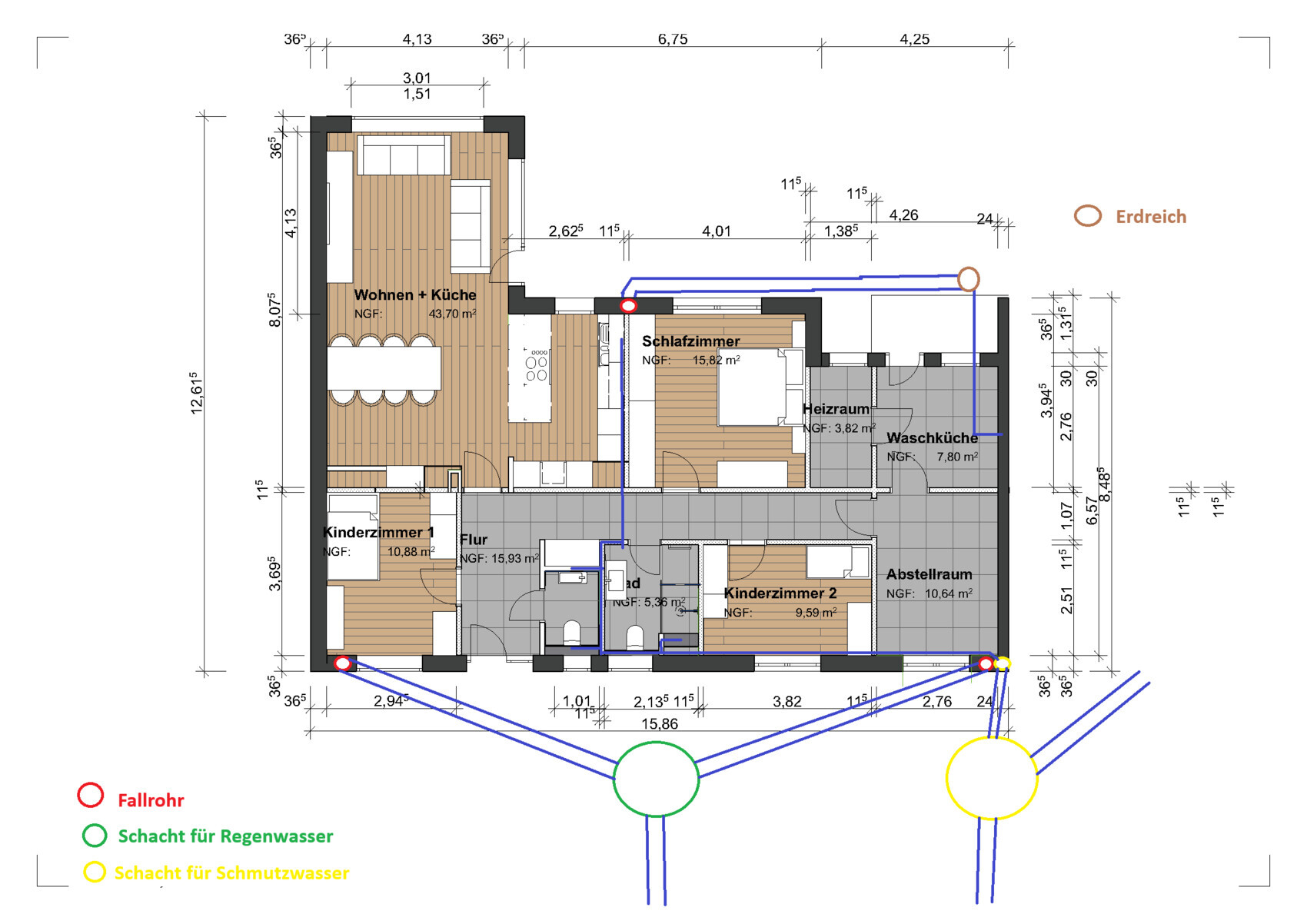
As I don’t know how to proceed, I would appreciate some advice. I have marked the current condition on the drawing.
My main concern is the connection in the laundry room, which needs to be connected to the wastewater system. What would be the best solution?
Is it possible to take legal action against the previous owner or the drainage authority? After all, I now have damage. Even just the exterior wall has become damp over the years.
House details: Bungalow from 1978 without a basement or upper floor.
Best regards
papa1981
I have been dealing with a major problem for the past five days and unfortunately don’t know how to proceed.
For a few weeks now, we have noticed a musty smell in our bedroom. I suspected a soil pipe located within the masonry.
I removed the floor tiles near the approximate location and found the connection. It was clear that the wall was damp (this was reported to the insurance company and is being inspected). Then I ran water through the soil pipe, and as I suspected, it leaked completely into the ground beside the pipe instead of flowing through it. The connection is leaking. After removing the joint, I could clearly see the poor workmanship. The soil pipe is 70 mm (approximately 2.8 inches) in diameter, but the joint is a 100 mm (approximately 4 inches) pipe. To fix it, someone used an adhesive sealant. A complete botch job!
Anyway, I also noticed that water still did not drain properly, even though there is a slope. After removing more tiles, I found a T-joint that was open at the top. Below the floor, they had used sand and soil, which over time also entered the pipe. I was able to check this precisely with a camera. I then started to fully vacuum the contents with a wet vacuum cleaner. When I reached a dead end, I suspected the pipe was blocked. I began looking for the manholes on my property according to the old building plans. According to the drainage department’s plans, there should only be one manhole for wastewater. However, I found two! The manhole supposedly for wastewater was actually the one for rainwater. I learned about the wastewater manhole through my neighbors. They had agreed years ago with the original owner to share this manhole. I have checked both manholes and ran water inside the house, flushed toilets, etc. Everything flowed out without problems. I assumed the blockage was on the rear side of the pipe and that a drain cleaning company was needed. The drain cleaner came but also couldn’t find the problem. The cleaner believes there is a pipe break and that the ground will need to be broken up to fix it. What surprised me was that during flushing, a smell began to come from the laundry room.
Wanting to investigate further, I vacuumed the pipe and inspected it with a camera. The pipe ends underground, and a yellow drainage pipe can be clearly seen. Due to the smell in the laundry room, I asked my wife to run water during the inspection. Shockingly, I saw the wastewater leaking directly into the soil. Why such poor workmanship was done here, I cannot say. The house was built in 1978, and we have owned it since March 2019. What puzzles me is that the drainage department or building authority has confirmed everything in writing regarding the drainage, and I have the document as well.
As I don’t know how to proceed, I would appreciate some advice. I have marked the current condition on the drawing.
My main concern is the connection in the laundry room, which needs to be connected to the wastewater system. What would be the best solution?
Is it possible to take legal action against the previous owner or the drainage authority? After all, I now have damage. Even just the exterior wall has become damp over the years.
House details: Bungalow from 1978 without a basement or upper floor.
Best regards
papa1981
Similar topics