
ᐅ Insulating plastic fittings/water pipes and underfloor heating under the screed?
Created on: 14 May 2016 17:48
A
AndreasW
Hello,
as shown in the two photos, the hot and cold water pipes are insulated. The plumber says the fittings (connectors) do not need to be insulated because they are made of plastic. Is this correct, or could this cause problems regarding thermal insulation, condensation, or noise?
The pipes are located under the screed, meaning there will be polystyrene insulation and a self-leveling screed on top.
The plumber suggests he could wrap fleece over them, but says it is not necessary. What is your opinion?
Best regards, Andreas

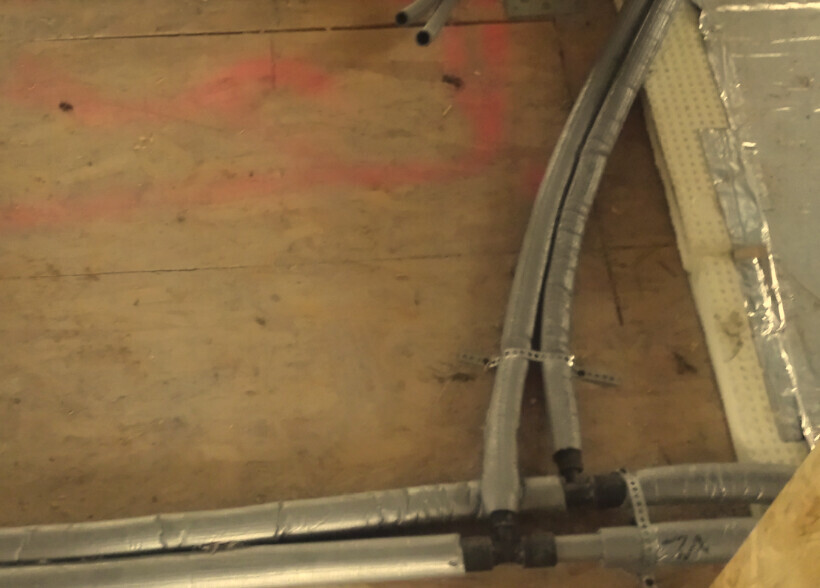
as shown in the two photos, the hot and cold water pipes are insulated. The plumber says the fittings (connectors) do not need to be insulated because they are made of plastic. Is this correct, or could this cause problems regarding thermal insulation, condensation, or noise?
The pipes are located under the screed, meaning there will be polystyrene insulation and a self-leveling screed on top.
The plumber suggests he could wrap fleece over them, but says it is not necessary. What is your opinion?
Best regards, Andreas
S
Sebastian7927 May 2016 12:03It keeps getting better....
A screed with underfloor heating always needs insulation – this has little to do with insulating a concrete slab. And that was the only point in the question...
But let’s leave it at that. I seriously doubt your professional qualifications and would rather call you a troll.
A screed with underfloor heating always needs insulation – this has little to do with insulating a concrete slab. And that was the only point in the question...
But let’s leave it at that. I seriously doubt your professional qualifications and would rather call you a troll.
S
Sebastian7927 May 2016 12:21And you call yourself a planner? I could literally laugh myself silly...
This isn’t about my floor construction – it’s about a question that hasn’t been answered so far.
On the ground floor, I have 16cm (6.3 inches) – and by the way, screed is usually 6-7cm (2.4-2.8 inches) thick to give you the proper coverage (except for flowing screed). The insulation lies directly on the structural subfloor – it does not float above the pipes.
Completely disqualified...
Do I really have to explain this to you as a layperson?
This isn’t about my floor construction – it’s about a question that hasn’t been answered so far.
On the ground floor, I have 16cm (6.3 inches) – and by the way, screed is usually 6-7cm (2.4-2.8 inches) thick to give you the proper coverage (except for flowing screed). The insulation lies directly on the structural subfloor – it does not float above the pipes.
Completely disqualified...
Do I really have to explain this to you as a layperson?
@Sebastian79 It’s obvious to everyone that you’re a beginner.
But now let’s talk about the floor construction, since you claim that potable water pipes can easily be installed within underfloor heating.
I took smaller numbers for you as an example.
So, according to your calculation, we now have a floor build-up of about 20 cm (8 inches) to be able to install potable water pipes in the underfloor heating.
Why did you only build 16 cm (6.3 inches)? Do you prefer your cold water a bit warmer? *laughing out loud
But now let’s talk about the floor construction, since you claim that potable water pipes can easily be installed within underfloor heating.
I took smaller numbers for you as an example.
So, according to your calculation, we now have a floor build-up of about 20 cm (8 inches) to be able to install potable water pipes in the underfloor heating.
Why did you only build 16 cm (6.3 inches)? Do you prefer your cold water a bit warmer? *laughing out loud
S
Sebastian7927 May 2016 12:35Go ahead and keep writing – it’s getting more and more amusing.
You are anything but a professional planner.
By the way, I only have 14cm (5.5 inches) above – which is completely normal. You’re just confusing other users here...
As I said, you haven’t even mentioned how you plan to do it otherwise.
You write as if the underfloor heating works like a continuous flow water heater – which is complete nonsense. Next, you’ll be talking about Legionella...
You are anything but a professional planner.
By the way, I only have 14cm (5.5 inches) above – which is completely normal. You’re just confusing other users here...
As I said, you haven’t even mentioned how you plan to do it otherwise.
You write as if the underfloor heating works like a continuous flow water heater – which is complete nonsense. Next, you’ll be talking about Legionella...
S
Sebastian7927 May 2016 12:54They are as warm as the cistern – or does it have built-in cooling?
I don’t know what adequate insulation is – I never claimed to know, either.
But please feel free to explain it to us. Also, tell us again how you solve this kind of issue. It’s getting boring to have to ask repeatedly.
Nothing will probably come of it anyway, since this is just standard – everywhere.
I don’t know what adequate insulation is – I never claimed to know, either.
But please feel free to explain it to us. Also, tell us again how you solve this kind of issue. It’s getting boring to have to ask repeatedly.
Nothing will probably come of it anyway, since this is just standard – everywhere.
Similar topics