
ᐅ Poorly executed plastering work in new construction – any experiences?
Created on: 28 Oct 2022 11:35
S
Sandra84
Hello everyone!
In my opinion, the plastering on our stairwell, as well as on some of our interior and exterior walls, is very poorly done (see pictures).
However, our construction company denies this.
Could you please give your assessment based on the pictures?
How would you handle this situation with the construction company?
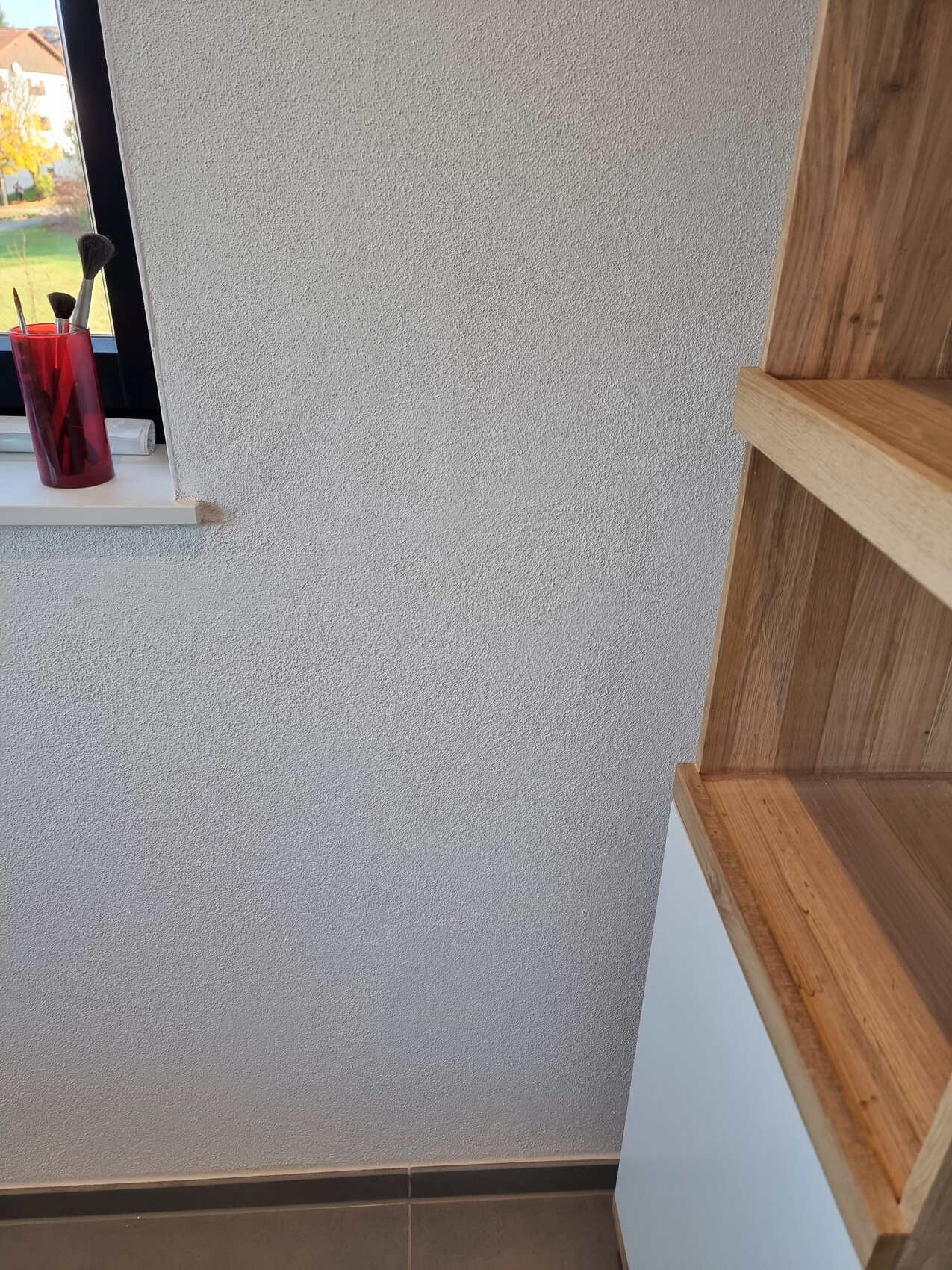
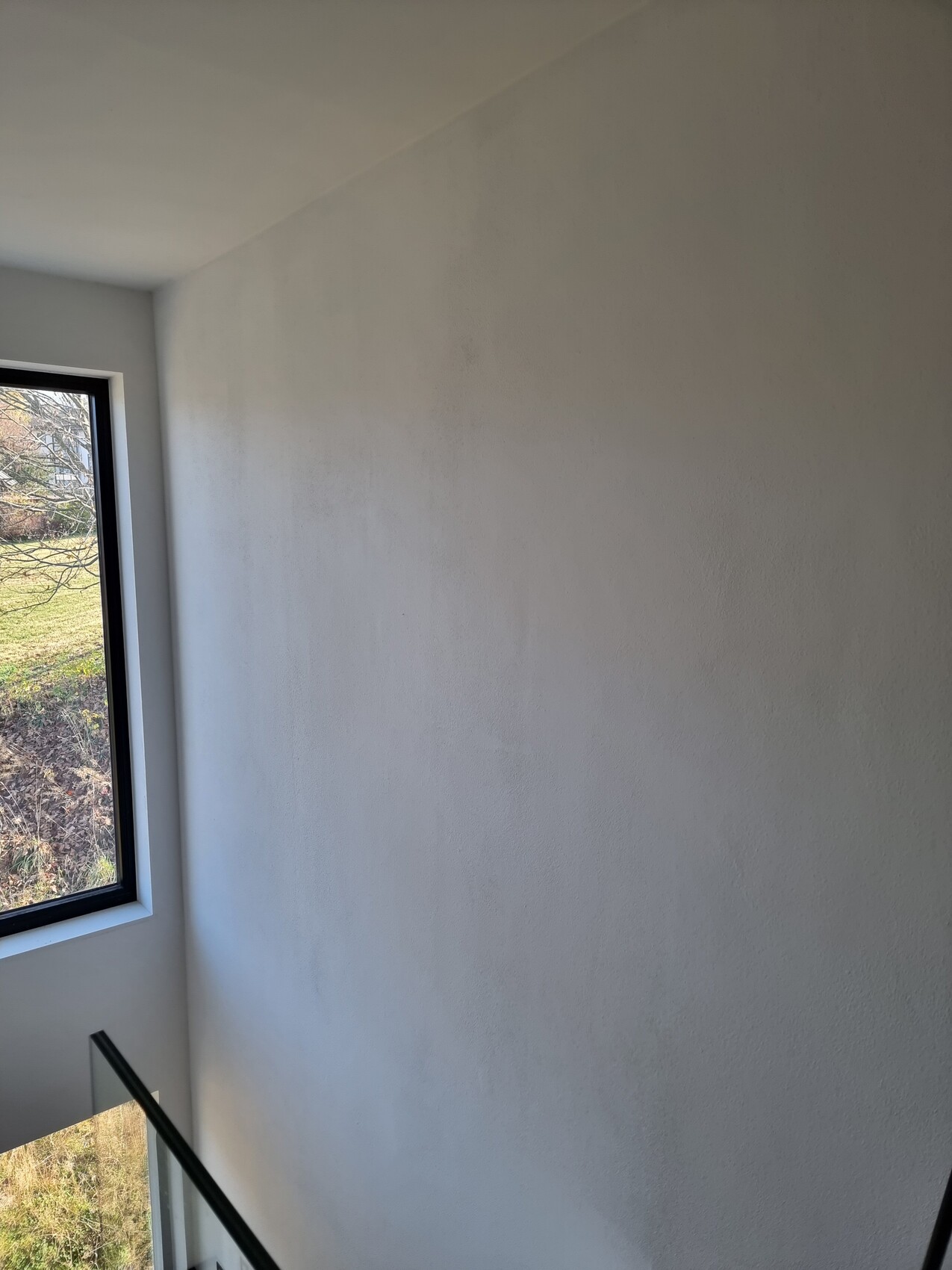
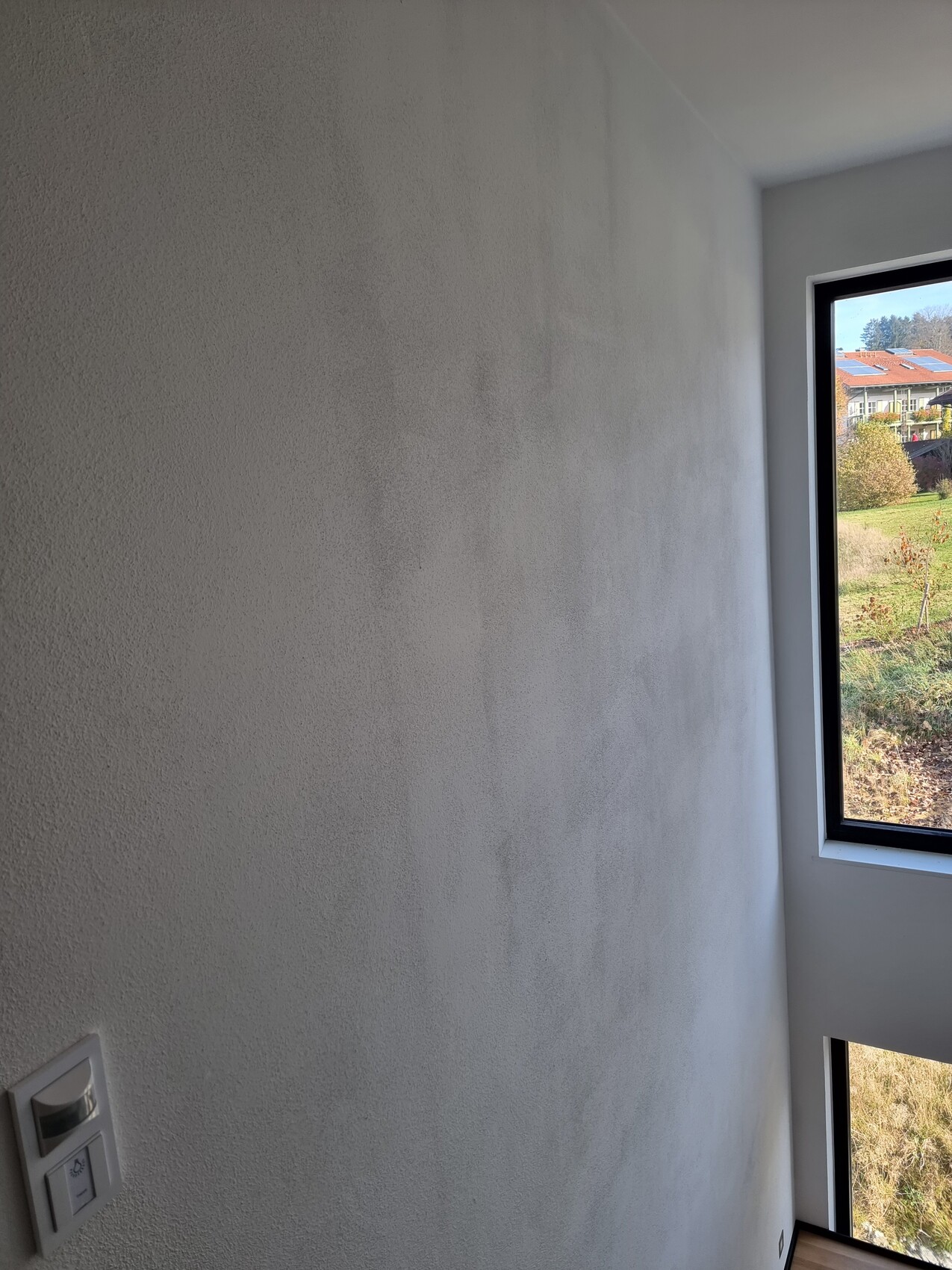
In my opinion, the plastering on our stairwell, as well as on some of our interior and exterior walls, is very poorly done (see pictures).
However, our construction company denies this.
Could you please give your assessment based on the pictures?
How would you handle this situation with the construction company?
We actually only noticed the issues once everything was painted and the lights were installed… before that, it looked quite good to us. The problems really became obvious when the doors were installed. On the upper floor, I have a door where the gap at the bottom between the frame and the wall is zero, but at the top around 2.10 meters (6 ft 11 in) height, there is a gap of 1.5 cm (0.6 inches)—just a hole. It’s incredible. We also have rooms that are perfect, and others that are absolutely terrible. At times, I feel like the plaster was absorbed into the wall after application, causing waves. So, it wasn’t that the plastering was done badly, but that something was done wrong with the substrate. Once painted and finished, it felt like we were in a charming old building—it was awful. Eventually, we became so dissatisfied that we hired a different plasterer after negotiations with the first company failed.
An amusing story is that my husband walked through the house with a 2-meter (6 ft 7 in) straightedge to measure unevenness, and afterwards the electrician wanted to quit. His boss called and said we were such demanding clients that it would only cause trouble, and he wanted to terminate the contract. Ah yes, those were quite the times.
We have a staircase quite similar to yours. Scaffolding was set up again, everything had to be covered up… then we applied a bonding primer and the new plasterer plastered over it. Afterwards, everything had to be primed again and repainted. It was hell. But some areas in our house also looked really bad.
In the bathroom, similar to the picture you shared showing just one window next to the uneven area: for such surfaces, we used the same approach, but the plasterer only did touch-ups and let it run out, if you know what I mean… It worked well with lime gypsum plaster, but it doesn’t work with cement plaster. It looks bad.
Therefore, my suggestion would be to have the really bad spots properly repaired… and accept the rest unless it looks as bad as it did in our house.
By the way, I’ve been inside all twelve houses that my neighbors have built one after another. All are Q2 finish. All were tip-top. The idea that Q3 should have been required here or that Q2 means a half-finished shell just isn’t true. Good companies can also do Q2 well.
An amusing story is that my husband walked through the house with a 2-meter (6 ft 7 in) straightedge to measure unevenness, and afterwards the electrician wanted to quit. His boss called and said we were such demanding clients that it would only cause trouble, and he wanted to terminate the contract. Ah yes, those were quite the times.
We have a staircase quite similar to yours. Scaffolding was set up again, everything had to be covered up… then we applied a bonding primer and the new plasterer plastered over it. Afterwards, everything had to be primed again and repainted. It was hell. But some areas in our house also looked really bad.
In the bathroom, similar to the picture you shared showing just one window next to the uneven area: for such surfaces, we used the same approach, but the plasterer only did touch-ups and let it run out, if you know what I mean… It worked well with lime gypsum plaster, but it doesn’t work with cement plaster. It looks bad.
Therefore, my suggestion would be to have the really bad spots properly repaired… and accept the rest unless it looks as bad as it did in our house.
By the way, I’ve been inside all twelve houses that my neighbors have built one after another. All are Q2 finish. All were tip-top. The idea that Q3 should have been required here or that Q2 means a half-finished shell just isn’t true. Good companies can also do Q2 well.
P
Pinkiponk30 Oct 2022 10:05Sandra84 schrieb:
...The only simple and cost-effective improvement I can think of is a kind of wall design like the one in the attached photo. At least then it looks intentional.It’s not what you were hoping for; I’m sorry about that and I hope you find a solution.
TmMike_2 schrieb:
But isn’t something like that measured with a straight edge? Can you take some photos of it with the straight edge?
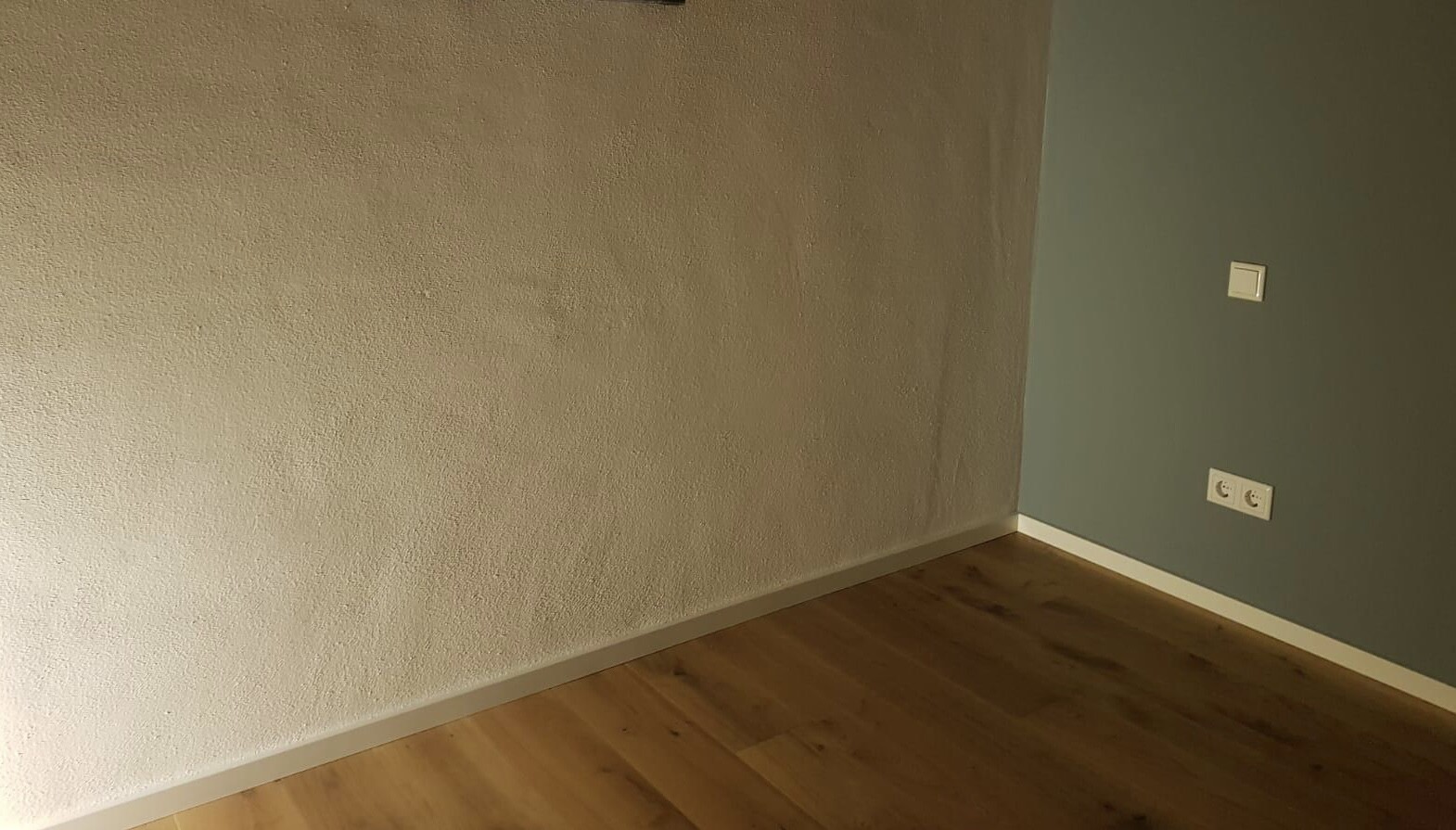
And why is this only being noticed now? Didn’t you check it after the interior plaster was done? Here is a picture with the spirit level!
I have pointed out several times to the construction company that it is uneven. They always denied it.
We haven’t measured it directly with a straight edge, which is why it’s only coming to light now.
 Winniefred30 Oct 2022 13:15
Snowy36 schrieb:
Actually, we only noticed it once it was painted and the lights were installed… before that, it actually looked quite good to our eyes… it really stood out when the doors arrived… upstairs, I have a door where the gap at the bottom between the door frame and wall is zero, but at the top of the door, around 2.10 meters (6 feet 11 inches), there is a 1.5cm (0.6 inch) gap, just a hole… incredible… we also have rooms that look fine and rooms that look awful… partly I feel like the plaster was absorbed into the wall after application, causing waves. So they didn’t plaster badly, but something was done wrong with the substrate. Once it was painted and wallpapered, it felt like we were living in a charming old building, it was horrendous. At some point, we were so dissatisfied that we hired a different plasterer after negotiations with the first company failed. Funny thing was, my husband walked around the house with a 2-meter (6 feet 7 inches) straight edge to check for unevenness, and then the electrician wanted to quit on us. His boss called and said we were such demanding customers it would only cause trouble and he wanted to cancel the contract. Oh yes, those were really wonderful times.
We have a very similar staircase to yours. A scaffold came back in, everything had to be covered again… then we applied bonding primer and the new plasterer worked on it. Afterwards, we had to prime everything again and repaint. It was a nightmare. But parts of our walls looked really bad as well.
In the bathroom, similar to the picture you showed with just the one window and uneven surfaces: for such areas we used the same approach but the plasterer only touched up and let it feather out, if you know what I mean… that worked well with lime gypsum plaster, but not with cement plaster. It looks bad.
That’s why my suggestion would be to have the very problematic spots repaired accordingly… and accept the rest unless it looks as bad as ours.
By the way, I’ve been inside all 12 houses my neighbors built one after another. All finished to Q2 standard. Everything was perfect. The idea that you would have needed Q3 here or that Q2 means a semi-raw condition is simply not true. Good companies do Q2 well.[ATTACH alt="verputzarbeiten-in-neubau-schlecht-ausgefuehrt-erfahrungen-603104-1.jpeg"]75879[/ATTACH]Wow, even our 100-year-old plaster on the ground floor looks better!! And the plaster I’ve done myself as an amateur in the house looks better than that...
Sandra84 schrieb:
Here is a picture of the mirror!
I pointed out to the construction company several times that it is uneven. They always denied it.
We didn’t measure it directly with a spirit level, so it’s only noticeable now. That’s a completely different level compared to the previous pictures!!!!
I don’t even know how this is possible. Did they install corner profiles? Is this the only wall that’s out of plumb, or are there others?
This can only happen with a warped level, basically.
Winniefred schrieb:
Wow, even our 100-year-old plaster on the ground floor looks better!! And what I’ve already replastered in the house as an amateur looks better than that... The tricky part is that it still falls within the DIN standard... And for the original poster, you’d need to measure how much it deviates over 2 meters (about 6.5 feet)... It’s best to read through the DIN regulations. Since our door looked exactly like that as well, the question is whether it’s within tolerance or not. If yes, then tough luck; if no, then get an expert to assess it.
Similar topics